Organic Lemongrass Essential Oil (Cymbopogon citratus) — Steam Distilled, 15 ml
- Regular Price
- $ 17.99
- Sale Price
- $ 17.99
- Regular Price
Sold Out
- Unit Price
- per
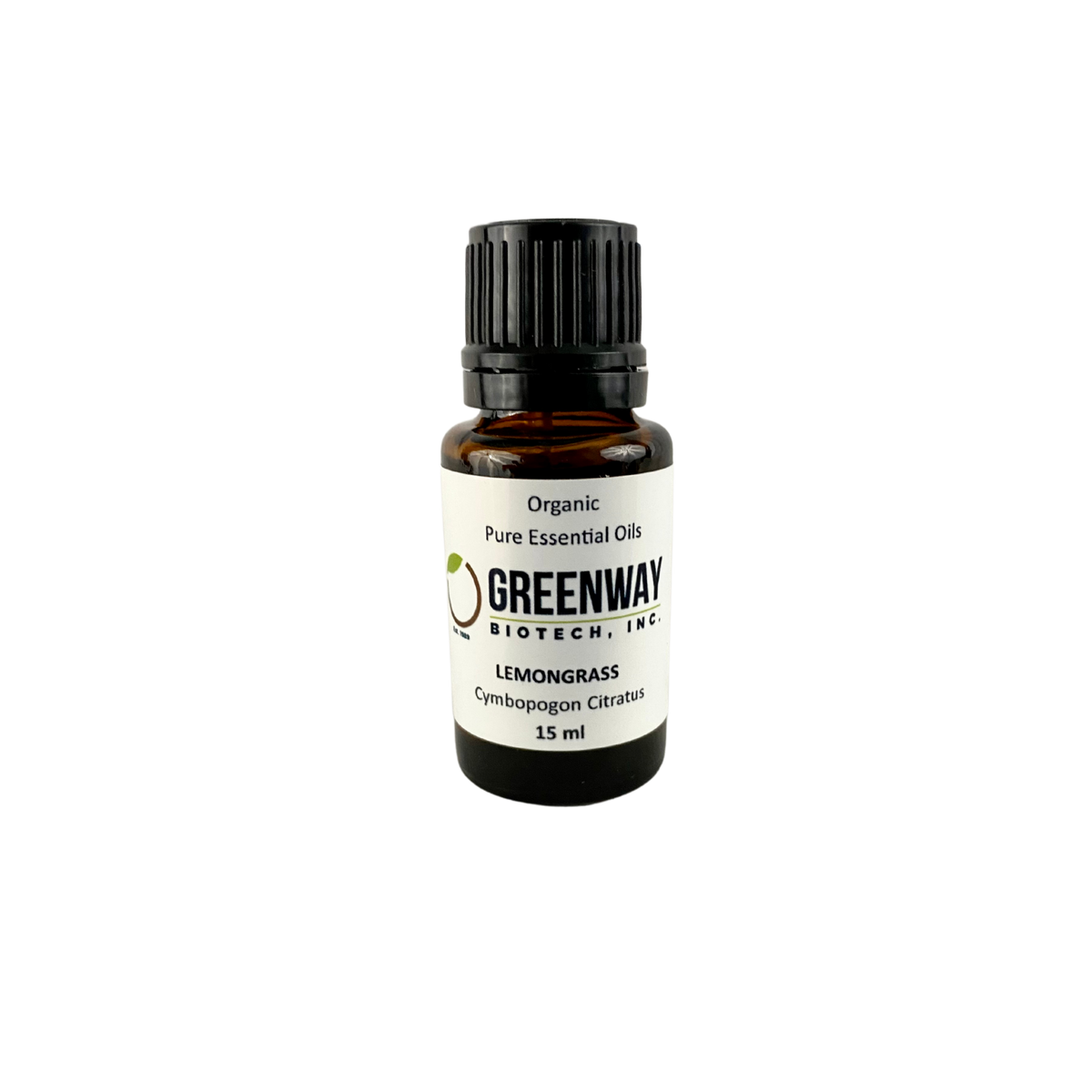
100% pure organic Cymbopogon citratus oil, steam-distilled from Sri Lankan lemongrass leaves and stalks. A bright herbal-citrus top note for aromatherapy diffusing, scalp-care blends, DIY cleaning sprays, and massage blends — rich in citral (65-85%) and protected in a 15 ml dark amber glass bottle. Steam-distilled, so non-phototoxic.
Find your size → See how to use itShips from California · 90-day guarantee · GC/MS available on request
100%
Pure organic Cymbopogon citratus
15ml
≈ 300 drops per bottle
65-85%
Citral — the headline aromatic compound
0.7%
Maximum topical dilution (sensitizer)
Steam-distilled lemongrass stores better than cold-pressed citrus and is used in smaller drop counts because of its strict 0.7% topical maximum. A 15 ml bottle stretches across many DIY blends — typically 2 to 3 years of cabinet life if stored properly.
| Size | Typical Duration | Uses per Bottle | Best For |
|---|---|---|---|
| 15 ml dark amber glass | 2-3 years sealed (cool dark place) | ~300 drops | Best starter size |
| Product Type | Single-origin steam-distilled essential oil |
|---|---|
| Size | 15 ml (≈ 300 drops) dark amber glass with euro dropper cap |
| Key Ingredient | Lemongrass Oil (Cymbopogon citratus) |
| Source / Origin | Certified-organic lemongrass farms in Sri Lanka |
| Grade / Purity | 100% pure, certified organic, GC/MS verified — no fillers, no carrier oils, no synthetic fragrance |
| Aroma | Fresh, citrusy, herbaceous — bright lemon-like scent with earthy, grassy undertones |
| Aromatic Note | Top note — high volatility; bright, immediate impression that fades within 1-2 hours |
| Extraction | Steam distillation from grass leaves and stalks |
| Phototoxic | No — steam-distilled, no furanocoumarins; safe for daytime topical use within the 0.7% limit |
| Max Topical Dilution | 0.7% per IFRA (skin sensitizer) — about 4 drops per tablespoon of carrier oil |
| Storage | Cool, dark place; cap tight; 2-3 year shelf life. See Safety section below for full guidance. |
Lemongrass earns its place in DIY cleaning, scalp-care blends, daytime aromatherapy, and natural deodorizing — anywhere a bright, grassy-citrus top note adds an unmistakable lift.
Three to five drops in a diffuser. The fresh herbal-citrus aroma is popular for workspace, kitchen, and outdoor-adjacent diffusing during warm months.
Six to eight drops mixed into 2 tablespoons of carrier oil (coconut or jojoba), massaged into the scalp, left for 30 minutes, then shampooed out. Popular DIY scalp-care application.
Ten to fifteen drops per 16 oz spray bottle with vinegar and water. Citral and limonene are well-known natural degreasers; the fresh aroma deodorizes as it cleans.
Up to four drops per tablespoon of carrier oil — the 0.7% topical maximum. Popular post-activity massage blend partner with lavender or peppermint.
Two drops per tablespoon of carrier oil for facial use — below the 0.7% maximum. Used in DIY toners and cleansers for shoppers who like a bright herbal-citrus scent profile.
Steam-distilled grass oil from Sri Lankan certified-organic farms. Different from cold-pressed citrus in three important ways — extraction, phototoxicity status, and how it stores.
Steam-distilled from organically-grown Cymbopogon citratus in Sri Lanka — a tropical climate that produces lemongrass with exceptionally high citral content (the compound that defines the lemony character). Sri Lankan and South Indian lemongrass have long been the global premium standard for the species.
Steam distillation captures the volatile aromatic compounds from the grass blades and stalks without using heat-sensitive cold pressing or chemical solvents. A practical consequence: steam-distilled oils do not carry the trace furanocoumarins responsible for phototoxicity in cold-pressed citrus oils. Translation: no UV-avoidance window after topical use, unlike lemon or grapefruit.
Citral (a mixture of two stereoisomeric monoterpene aldehydes, geranial and neral) makes up 65-85% of lemongrass oil. This is the same compound that gives lemon balm and lemon myrtle their unmistakable lemony aroma — and the compound that, in trace amounts, defines the aromatic identity of cold-pressed lemon oil. In lemongrass, citral is concentrated by an order of magnitude, which is what gives the oil its powerfully bright character and its strict 0.7% topical dilution limit.
High citral content makes lemongrass a documented contact sensitizer. IFRA sets the maximum topical dilution at 0.7% — meaningfully lower than orange (2.5%), lemon (2%), or pink grapefruit (4%). Translation: 4 drops per tablespoon of carrier oil is the ceiling for body application, 2 drops for facial use. Patch testing matters more here than for most EOs.
Each batch is independently analyzed by GC/MS to verify the constituent profile (citral, geraniol, myrcene, limonene) and screen for adulterants and species substitution. Lemongrass is commonly substituted with West Indian lemongrass (C. citratus) or cymbopogon flexuosus (East Indian lemongrass) — the chemical profiles differ. Lot-coded for traceability.
Distilled in Sri Lanka, hand-filled and inspected at our family-owned Madera, California facility — registered with the FDA. Two to three year shelf life sealed in a cool, dark place. Backed by a 90-day money-back guarantee on every bottle.
65-85% citral
The monoterpene aldehyde mixture that defines lemongrass
Lemongrass essential oil is dominated by a single compound — or more precisely, a single isomer pair: citral, a 50/50 mixture of two stereoisomeric monoterpene aldehydes (geranial, the trans isomer, and neral, the cis isomer). Together they make up 65-85% of the oil by weight. Citral is the compound responsible for the unmistakable "lemon" aroma that shows up in many otherwise unrelated plants — lemon balm, lemon myrtle, and cold-pressed lemon peel oil all owe their characteristic scent to citral, just in much lower concentrations than lemongrass.
The supporting cast rounds out the body. Geraniol (3-7%) adds a soft rose-floral undertone — the same compound found in geranium and rose oils. Myrcene (10-20%) contributes a slightly herbal-resinous balsamic character. Limonene (1-5%) adds a faint citrus background. Linalool (trace) brings a soft floral note. Together these supporting compounds give lemongrass its complexity beyond the citral headline — distinguishing it from a pure citral isolate or from synthetic "lemongrass fragrance."
Two practical implications follow from this chemistry. First, lemongrass is a documented contact sensitizer due to its high citral content — IFRA sets the maximum topical dilution at 0.7%, the lowest in the Greenway citrus and citrus-adjacent line. Patch testing is more important here than for most essential oils. Second, the oil stores meaningfully better than cold-pressed citrus oils — steam distillation produces a more stable product, and a 2-3 year shelf life sealed in dark amber glass is realistic. The trade-off: lemongrass is a top note but with less of cold-pressed citrus's bright, sparkling immediacy — its character is heavier and more herbaceous.
Constituent ranges below reflect typical batch profiles for steam-distilled Sri Lankan Cymbopogon citratus oil. The current-batch GC/MS report is available on request.
The dominant aldehyde pair. Carries the unmistakable lemony aroma and the well-documented natural-cleaning reputation that makes lemongrass popular in DIY surface sprays. Also the compound responsible for the strict 0.7% topical dilution limit.
A monoterpene with a slight herbal-resinous, balsamic character. Also a major component in hops, bay laurel, and lavender. Adds aromatic depth that distinguishes lemongrass from a citral isolate.
A monoterpene alcohol with a soft rose-floral character — also dominant in geranium, rose, and palmarosa oils. Contributes to the slightly sweet floral undertone in the lemongrass aromatic profile.
The dominant compound in expressed citrus oils, present here in supporting amounts. Adds a faint citrus background to the citral headline.
A soft floral terpene alcohol, the same compound that dominates lavender. Contributes a delicate floral background to the herbal-citrus profile.
Unlike cold-pressed citrus peel oils, steam distillation does not capture the trace furanocoumarins (bergapten, bergamottin) responsible for phototoxicity. Lemongrass is non-phototoxic at any topical concentration within the 0.7% maximum.
| Botanical Name | Cymbopogon citratus (DC.) Stapf |
|---|---|
| Common Names | Lemongrass, West Indian Lemongrass, Sri Lankan Lemongrass |
| Plant Part Used | Aerial parts — leaves and stalks (the green grass blades) |
| Extraction Method | Steam distillation |
| Country of Origin | Sri Lanka (certified organic) |
| Grade | 100% pure, certified organic, GC/MS verified |
| Color & Appearance | Pale yellow to amber, mobile liquid |
| Aroma Profile | Fresh, citrusy, herbaceous — bright lemon-like scent with earthy, grassy undertones |
| Aromatic Note | Top note (high volatility; 1-2 hour aromatic persistence) |
| Primary Constituent | Citral — geranial + neral (65-85%) |
| Net Volume | 15 ml (≈ 300 drops) |
| Container | Dark amber glass bottle with euro dropper cap and tamper-evident seal |
| Phototoxicity | Non-phototoxic — no UV avoidance window required |
| Maximum Topical Dilution | 0.7% per IFRA (Tisserand & Young, 2014) — sensitizer |
| Shelf Life | 2-3 years sealed in a cool, dark place |
| Packaged At | Greenway Biotech facility, Madera, California |
| Testing | Third-party GC/MS verification per batch; lot-coded for traceability |
Three primary use methods. Topical drop counts below stay within the IFRA 0.7% maximum from Tisserand & Young (2014). When in doubt, use less.
Quick answer: 2 drops per tablespoon of carrier oil for face (~0.3%); 4 drops per tablespoon for body (~0.7% max); 6-8 drops per 2 tablespoons for scalp pre-wash treatment. Patch test first.
| Use | Lemongrass Drops | Carrier Volume | Approx. Dilution |
|---|---|---|---|
| Facial blend | 2 drops | 1 tbsp (15 ml) | ~0.3% |
| Body oil / massage blend | 4 drops | 1 tbsp (15 ml) | ~0.7% (max) |
| Scalp pre-wash treatment | 6-8 drops | 2 tbsp (30 ml) | ~0.5-0.7% |
| Add to existing shampoo or conditioner | 1-2 drops | 1 oz product | ~0.1-0.2% |
Sensitizer — always dilute. Lemongrass's high citral content makes it a documented contact sensitizer. The 0.7% maximum is firm; do not exceed even if you've tolerated other essential oils at higher concentrations. Suitable carriers: jojoba (face — closely resembles skin's sebum), sweet almond (body massage), coconut (scalp pre-wash), fractionated coconut (roller bottles). Patch test on the inner forearm and wait 24 hours before broader use.
Quick answer: 3-5 drops in a diffuser for medium rooms; 1 drop on a cotton ball for personal aromatherapy; 1-2 drops on a tissue tucked nearby for desk-side use.
| Method | Lemongrass Drops | Duration / Base | Notes |
|---|---|---|---|
| Small room diffuser | 2-3 drops | 20-30 min | Bathroom, closet, small office |
| Medium room diffuser | 3-5 drops | 30-40 min | Bedroom, office, kitchen |
| Large room diffuser | 5-7 drops | 40-60 min | Living room, open kitchen |
| Cotton ball / tissue inhalation | 1 drop | As needed | Carry in a pocket or tuck near a workspace |
| Roller-bottle (very dilute) | 1-2 drops | 10 ml carrier oil | ~0.3-0.7% — pulse points only; lemongrass is potent |
Quick answer: 10-15 drops per 16 oz cleaning spray with vinegar, water, and an emulsifier.
Essential oils don't mix with bathwater, so we don't recommend adding them to a bath or to bath salts.
Lemongrass is a documented skin sensitizer with the lowest topical maximum in our citrus and citrus-adjacent line. The dilution rule isn't a recommendation — it's a hard ceiling. Four habits make this oil reliable.
Mix 1 drop of lemongrass in 1 tablespoon of carrier oil. Apply a small amount to the inner forearm and wait 24 hours. If no redness, itching, or burning appears, the dilution is workable for you. If irritation appears at this concentration (about 0.3%), lemongrass at any concentration is likely not the right oil for your skin.
Four drops per tablespoon of carrier oil is the body ceiling. Two drops per tablespoon for facial blends. The 0.7% limit is enforced by IFRA based on citral sensitization data — lemongrass is meaningfully more sensitizing than lemon (2% max) or orange (2.5% max), even though it smells similarly bright. Higher dilutions are not "stronger" here; they're more likely to cause a contact-sensitization reaction.
Steam-distilled lemongrass stores meaningfully better than cold-pressed citrus — 2-3 years is a realistic shelf life sealed in a cool, dark place. The dark amber glass handles UV light; you handle air by capping the bottle tightly after every use and not decanting into a larger half-empty bottle. Write the open-date on the label.
Lemongrass essential oil is for external use only. It is not the same as the culinary lemongrass stalks used in Thai and Vietnamese cooking. Essential oils are extremely concentrated, and the concentrated citral can irritate the digestive tract and mucous membranes. For culinary lemongrass flavor, use fresh or dried lemongrass stalks instead.
Lemongrass is sometimes confused with citronella (Cymbopogon nardus or C. winterianus) — both are in the same genus but they are different species with different aromatic and chemistry profiles. Citronella is sharper and grassier; lemongrass is sweeter and more lemony. The two are closely related, but they're not interchangeable in DIY blends.
The 0.7% topical ceiling is one of the lowest in commercial aromatherapy. If you're new to lemongrass and find the carrier-blend ratios more restrictive than other EOs you've used, that's working as intended — not a sign you should use more.
For aromatherapy use. Dilute before topical application. Keep out of reach of children. Essential oils are not intended to diagnose, treat, cure, or prevent disease.
Steam-distilled lemongrass and cold-pressed citrus oils both deliver bright top-note character, but they behave very differently in phototoxicity, topical limits, and shelf stability. This is how Greenway's citrus and citrus-adjacent options stack up.
| Oil | Aroma | Extraction | Phototoxic | Max Topical | Best For |
|---|---|---|---|---|---|
| Lemongrass (this product) | Herbal-citrus, grassy | Steam distilled | No | 0.7% | DIY cleaning, scalp pre-wash, daytime diffusing, post-activity massage |
| Lemon | Bright, sharp, clean | Cold pressed | Yes — 12 hr UV | 2% | Cleaning blends, daytime diffusing, kitchen freshening |
| Sweet Orange | Warm, sweet, rounded | Cold pressed | No | 2.5% | Daytime skincare, child-friendly diffusing, mood-lifting |
| Pink Grapefruit | Fresh, tangy, bitter-sweet | Cold pressed | Yes — 12 hr UV | 4% | Energy, mood, skincare; broader topical headroom |
Honest sorting — lemongrass is a specialist, not a workhorse. Here's when it shines and when it isn't the right pick.
Lemongrass is a bright top note that pairs naturally with floral middles, herbal middles, and other top-note citrus. These four make the most-reached-for partners across diffusing, cleaning, and scalp-care blends.
The universal floral middle note that balances lemongrass's herbal-citrus brightness. The standard blending partner across diffusing and massage blends.
Essential OilA cleansing middle note. The standard DIY-cleaning companion to lemongrass — both bring distinctive aromatic character to natural surface sprays.
Essential OilPairs with lemongrass for a refreshing daytime diffuser blend. Both are top-note oils with distinct aromatic profiles that complement rather than compete.
Essential OilBoth are bright top-note "lemon-family" oils with very different character. Lemon is sharper and cleaner; lemongrass is heavier and herbal. Together they create a layered citrus blend with depth.
Lemongrass has the lowest topical maximum in our citrus and citrus-adjacent line. The dilution rule isn't a recommendation — it's a hard ceiling. A short safety profile worth keeping in mind.
If your question isn't here, contact our team at questions@greenwaybiotech.com.
Yes. Our lemongrass essential oil is 100% pure, certified-organic Cymbopogon citratus, sourced from certified-organic farms in Sri Lanka. It contains no synthetic additives, fillers, fragrance oils, or carrier oils. It is steam-distilled from grass leaves and stalks and hand-bottled at our family-owned Madera, California facility.
Fresh, citrusy, and herbaceous — bright lemony scent with earthy, grassy undertones. Like fresh lemon peel mixed with cut green grass. It's a top note that announces itself immediately and fades within 1-2 hours. It is distinctly different from cold-pressed lemon essential oil: lemongrass is grassier and more herbal; lemon is sharper and cleaner.
No — lemongrass is non-phototoxic. Unlike cold-pressed citrus peel oils such as Lemon and Pink Grapefruit, lemongrass is extracted by steam distillation and does not contain furanocoumarins. You do not need to avoid sunlight after topical application. However, lemongrass is a documented skin sensitizer — always dilute to a maximum of 0.7% before applying to skin.
The IFRA maximum topical dilution is 0.7% — meaningfully lower than most other essential oils. In practice: 2 drops per tablespoon of carrier oil for the face (~0.3%), or 4 drops per tablespoon for body use (~0.7%, the maximum). Always patch test before broader use. The 0.7% ceiling is firm; do not exceed even if you've tolerated other essential oils at higher concentrations.
Lemongrass is classified as a skin sensitizer due to its high citral content (65-85% of the oil). Citral has documented contact-sensitization data, and IFRA sets the maximum topical dilution accordingly. Most other essential oils can be safely diluted to 2-2.5%; lemongrass requires the 0.7% ceiling to minimize the risk of contact-sensitization reactions. Higher dilutions are not "stronger" — they're more likely to cause irritation.
Both come from the Cymbopogon genus, but they're different species with different chemistry. Lemongrass (C. citratus) has a sweeter, more lemony aroma due to its high citral content — preferred for aromatherapy, scalp-care blends, and DIY cleaning. Citronella (C. nardus or C. winterianus) has a sharper, grassier scent with a different terpene profile — primarily known as an insect-repellent ingredient. They share family resemblance but are not interchangeable in blends.
For personal insect or mosquito repellent use specifically, we recommend using a properly formulated and registered product like our Buzz Away Bug Repellent (which includes lemongrass alongside several other plant oils, blended at concentrations tested for that specific use). Personal-use insect-repellent products in the United States require EPA registration under FIFRA, which our straight essential oils do not carry. DIY essential-oil sprays can be applied as personal-care or aromatherapy products at the 0.7% topical maximum, but we do not market lemongrass essential oil as an insect repellent.
No. This product is for external aromatherapy use only. While lemongrass is widely used in cooking (particularly in Thai, Vietnamese, and Sri Lankan cuisine), culinary applications use the whole grass stalk — fresh or dried — not the concentrated essential oil. Essential oils are extremely potent: a single 15 ml bottle represents a much larger volume of grass than you'd ever use in a single dish, and the concentrated citral can irritate the digestive tract and mucous membranes. For culinary lemongrass flavor, use fresh or dried lemongrass stalks instead.
Yes. Lemongrass is a popular DIY scalp-care ingredient — typically applied as a pre-wash treatment with a carrier oil. Mix 6-8 drops of lemongrass oil into 2 tablespoons of coconut or jojoba carrier oil (do not exceed 8 drops). Massage gently into the scalp, let sit for 30 minutes, then shampoo and condition as normal. Many users prefer this 1-2 times per week. Patch test on a small area of scalp before broader application; if irritation appears, discontinue use.
Use caution. Cats are particularly sensitive to essential oils — they lack the liver enzymes needed to metabolize many EO compounds, and citrus and citrus-adjacent oils are among the more problematic for them. Dogs are generally less sensitive but can still react to concentrated exposure. If diffusing lemongrass, ensure your pet can leave the room freely and discontinue use if you notice any signs of distress. Never apply essential oils directly to a pet's fur or skin without veterinary guidance.
Fractionated coconut oil, jojoba, and sweet almond oil are all excellent carriers. Fractionated coconut is lightweight and absorbs quickly — ideal for facial applications. Jojoba closely mimics the skin's natural sebum, making it a popular choice for scalp pre-wash treatments. Sweet almond is rich and nourishing — best for body massage.
Approximately 300 drops, depending on viscosity and dropper speed. At typical diffuser usage of 3-5 drops per session, a 15 ml bottle provides roughly 60-100 diffusing sessions — and because lemongrass is used in low drop counts for topical applications (4 drops per tablespoon is the body maximum), the bottle stretches even further for DIY blends.
Store in a cool, dark place with the cap tightly sealed (air is the main oxidation driver). The dark amber glass bottle protects against UV light, but avoid direct sunlight and heat sources. Unlike cold-pressed citrus oils, steam-distilled lemongrass stores well at room temperature — refrigeration is not required. Properly stored, the oil has a shelf life of approximately 2-3 years. Write the open-date on the label to track freshness.
One 15 ml dark amber glass bottle. Steam-distilled in Sri Lanka from certified-organic Cymbopogon citratus leaves and stalks; hand-filled in Madera, California. Free shipping on orders over $100 in the continental US, and a 90-day money-back guarantee.
Choose your size →Ships from California · 90-day guarantee · GC/MS reports above