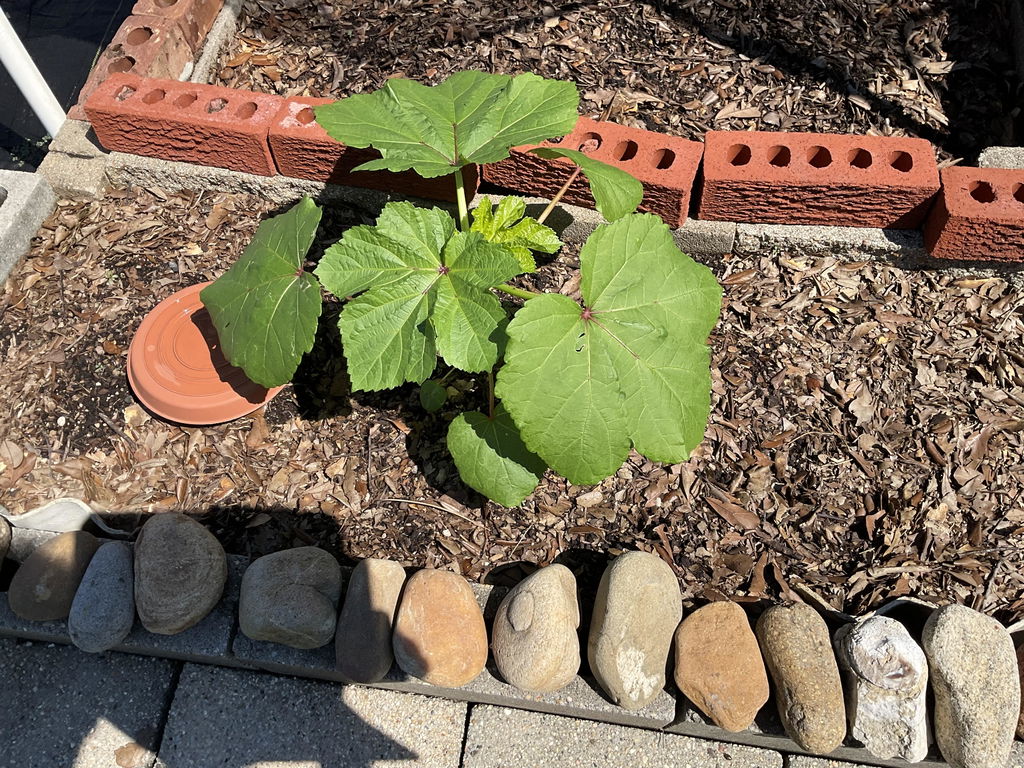
What's wrong with your plant? Start with the leaves.
Nutrient deficiencies leave a readable signature. Where the symptom appears tells you whether the nutrient can move inside the plant, what pattern it makes narrows it to a short list, and your soil pH and growing method usually explain why it happened. This tool walks those three questions in order, screens out the problems that only look like deficiencies, and then tells you exactly what to apply.
We've manufactured plant nutrition in Madera, California since 1989 — so the recommendations here come with real rates, not vague advice. Everything is CDFA registered and third-party tested for heavy metals.
What each deficiency looks like
Compare your plant against these. The two most useful comparisons on this page are iron versus manganese — both interveinal, but iron's veins are sharp and fine while manganese's are wide and blurry with grey speckling — and nitrogen versus sulfur, which look identical except that nitrogen starts at the bottom of the plant and sulfur starts at the top.


Reference images depict typical symptom patterns. Symptoms vary by crop, severity, and growing conditions — confirm with a soil or tissue test before treating.
Deficiency symptom quick reference
If you'd rather scan than answer questions, this table covers the same ground. Read down the location column first — it eliminates half the possibilities immediately.
| Nutrient | Shows up on | Pattern | Tell-tale sign | Common cause |
|---|---|---|---|---|
| Nitrogen | Oldest leaves | Uniform yellowing | Old leaves yellow then drop; top stays green | Leaching, exhausted mix |
| Phosphorus | Older leaves | Purple/red tint | Dull dark foliage, slow growth | Cold soil, pH extremes |
| Potassium | Oldest leaves | Margin scorch | Burnt edges, green center | Heavy fruiting, sandy soil |
| Magnesium | Older leaves | Interveinal | Inverted-V yellowing from margin inward | Coco coir, leaching, excess K |
| Sulfur | Newest leaves | Uniform yellowing | Looks like nitrogen but at the top | Sandy soil, sulfate-free feed |
| Calcium | New growth | Distortion, tip death | Blossom end rot; lettuce tip burn | Uneven watering (transport, not supply) |
| Iron | Newest leaves | Sharp interveinal | Fine green veins on yellow, near-white when severe | pH above 7.0 — lockout |
| Manganese | Young–middle | Diffuse interveinal | Blurry vein margins plus grey speckles | Alkaline or high-organic soil |
| Zinc | New growth | Little leaf / rosette | Short internodes, small bunched leaves | Alkaline soil, high phosphorus |
| Boron | Growing tips | Tip death, corky tissue | Hollow stems, cracked fruit, flower drop | Sandy soil, pH above 7 |
| Copper | New growth | Wilting, blue-green pallor | Limp shoot tips in moist soil | Peat and muck soils |
| Molybdenum | Older leaves | Pale, cupped margins | Whiptail in brassicas | Acidic soil — the reverse of most micros |
Common questions
How do I tell iron deficiency from magnesium deficiency? They both look interveinal.
Look at which leaves are affected, not the pattern. Iron is immobile, so it strands the newest leaves at the top of the plant while old leaves stay green. Magnesium is mobile, so the plant pulls it out of the oldest lower leaves to feed new growth. Same interveinal look, opposite ends of the plant. Iron chlorosis also tends to have sharper, finer green veins on a paler background, while magnesium yellowing often starts at the leaf margin and moves inward in a V shape.
My soil test says I have plenty of iron, so why is my plant chlorotic?
Because availability and quantity are different things. Above about pH 7.0, iron oxidizes into forms that plant roots cannot absorb — the iron is physically present and chemically useless. This is the single most common misdiagnosis in western gardening, where alkaline soils and hard irrigation water are the norm. The immediate fix is a chelated iron, which holds the iron in an absorbable form regardless of soil pH. The lasting fix is lowering soil pH with elemental sulfur, which takes a season but stops the problem recurring.
Is blossom end rot a calcium deficiency? Should I add calcium?
Usually not, and usually no. Blossom end rot is a calcium transport failure, not a soil calcium shortage. Calcium moves only in the water stream and cannot be redistributed once deposited, so when watering is inconsistent — or when fruit swells faster than water can supply it — the fruit tip is the first tissue to be starved even in calcium-rich soil. Most soils in the United States contain ample calcium. Fix the watering consistency, mulch to buffer soil moisture, and avoid heavy nitrogen during fruit set. Supplemental calcium genuinely helps in coco coir, in hydroponics using RO water, and in confirmed low-calcium sandy or acidic soils — but adding calcium to soil that already has enough will not stop the rot.
The symptoms match two nutrients. Which do I treat?
Treat the more likely one first, singly, and watch the new growth — existing damaged leaves will not recover, so improvement always shows in leaves that emerge after treatment. Give it 10–14 days. Treating multiple nutrients at once means you learn nothing about which was actually short, and micronutrients in particular antagonize each other: too much manganese induces iron deficiency, excess phosphorus induces zinc deficiency, and heavy potassium induces magnesium deficiency. If the first treatment does not move the needle in two weeks, that is your signal to test rather than to keep guessing.
How fast should I see improvement?
Foliar applications of mobile nutrients can green up new growth in 5–10 days. Soil applications of water-soluble fertilizers typically show in 1–2 weeks in warm soil. Organic amendments depend on soil biology and take 2–6 weeks, longer in cold soil. Structural corrections — lowering pH with sulfur, raising it with lime — take a full season and should be re-tested at 6–8 weeks. Damaged leaves never recover their color; judge every treatment by what grows next.
Should I just apply a complete fertilizer to cover everything?
It is a reasonable fallback when symptoms are ambiguous and the plant is generally underfed, and our crop-specific formulas include chelated micronutrients for exactly that reason. But it is a poor response to a clear single-nutrient symptom, for two reasons: applying nutrients the plant does not need can induce new deficiencies through antagonism, and you learn nothing about the underlying cause — so the problem returns next season. If the pattern is clear, treat what the pattern says.
Once you know what to apply, the fertilizer calculator gives you the exact rate for your method — hydroponic ppm, soil drench, foliar, or containers. Not sure where to start at all? Try the 2-minute Fertilizer Finder quiz, or browse by what you're growing.