Epsom Salt USP Grade (Magnesium Sulfate) — Bath, Foot Soak & Garden
- Regular Price
- $ 17.99
- Sale Price
- $ 17.99
- Regular Price
Sold Out
- Unit Price
- per


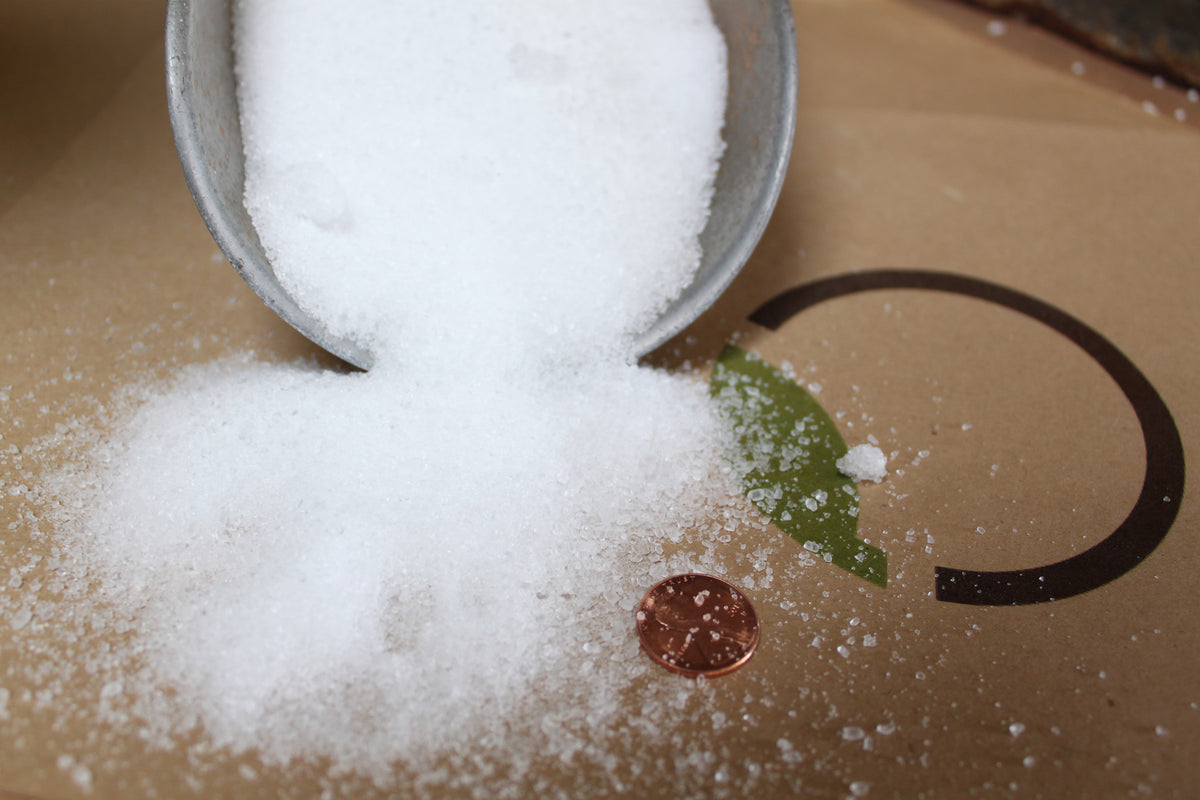


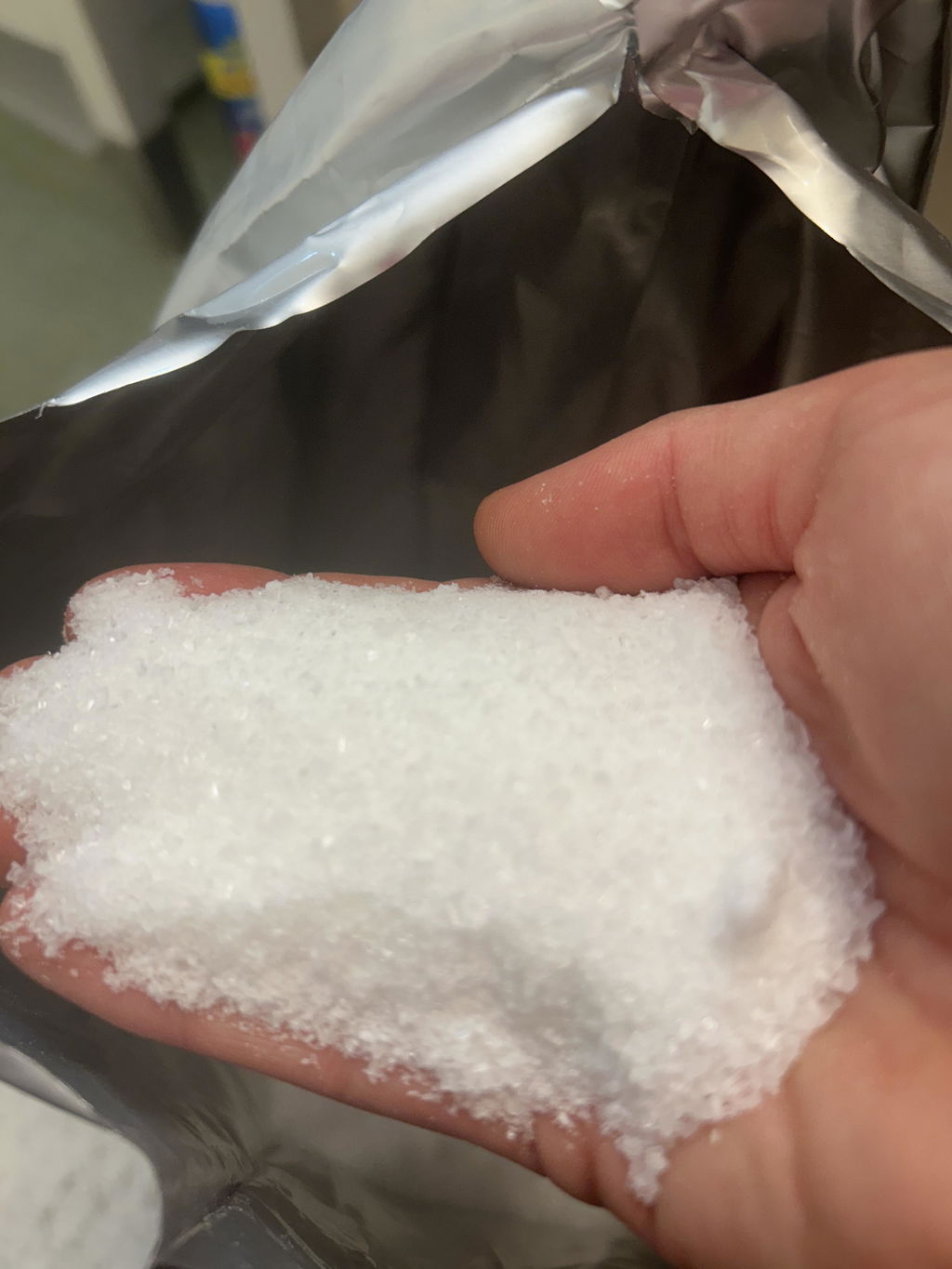
Pure pharmaceutical-grade magnesium sulfate heptahydrate (MgSO₄·7H₂O) for relaxing bath soaks, foot soaks, body scrubs, and magnesium-deficient plants. Fine-grain, fast-dissolving, third-party tested, with no added fragrance, dye, or filler. Sourced and packaged in the USA.
Find your size → See how to use itShips from California · 90-day guarantee · Lab documents below
USP
U.S. Pharmacopeia purity standard
~9.8%
Elemental magnesium by weight
~13%
Elemental sulfur for plant nutrition
35+yrs
Family-owned California maker
Duration estimates below assume one standard full bath (2 cups / ~400 g) two to three times per week. Adjust upward if you also do foot soaks or scrub blends. Stored properly, Epsom salt does not expire.
| Size | Typical Duration | Uses per Bag | Best For |
|---|---|---|---|
| 2 lb | ~2 weeks (regular bather) | ~4 full baths | Best starter size |
| 5 lb | ~5 weeks | ~11 full baths | Mid-size households |
| 10 lb | ~10 weeks | ~22 full baths | Frequent bathers, multi-use |
| 25 lb | ~6 months | ~55 full baths | Best value |
| Product Type | Pharmaceutical-grade magnesium sulfate bath salt |
|---|---|
| Sizes | 2 lb, 5 lb, 10 lb, 25 lb resealable bags |
| Key Ingredient | Magnesium Sulfate Heptahydrate (MgSO₄·7H₂O) |
| Source / Origin | Sourced within the United States; packaged in Madera, California |
| Grade / Purity | USP (United States Pharmacopeia) — pharmaceutical purity specification |
| Ingredients | 100% magnesium sulfate heptahydrate — no added fragrances, dyes, fillers, or preservatives |
| Free From | No fragrance, no dye, no filler, no preservative; vegan |
| Grain Size | Fine-grain, fast-dissolving in warm water (no gritty residue) |
| Typical Duration | 2-week to 6-month supply depending on bag size (see size table) |
| Shelf Life | Indefinite when stored sealed in a cool, dry place |
| Safety | External use only; not intended for ingestion. See Safety section below for full guidance. |
Epsom salt isn't a cure-all — it's a versatile, fragrance-free magnesium sulfate that fits naturally into bath, body, and garden routines. Here's where it earns its place.
Two cups per standard 40-gallon bath, dissolved in warm water. The unscented base lets you customize with essential oils — popular for evening wind-down routines.
Half a cup in a foot basin for tired feet after a long day. Many customers pair this with a hand or face cleansing routine for a brief reset.
A warm Epsom soak after exercise or yardwork — popular for evening recovery rituals. The warmth and the routine itself contribute as much as the mineral.
Mix equal parts Epsom salt with olive, jojoba, or coconut oil for a DIY body scrub. The fine granules exfoliate while the oil moisturizes.
One tablespoon per gallon as a foliar spray on plants showing interveinal chlorosis from confirmed magnesium deficiency. Magnesium-hungry crops only — see Band 8.
An unscented base is the right canvas for Lavender, Eucalyptus, or Peppermint — add drops after you're already in the tub.
Most bagged Epsom salt sold for garden or de-icing use is technical grade — adequate for the lawn, not for the bathtub. USP grade is a different specification altogether.
USP grade means our Epsom salt is manufactured and tested to the same purity, identity, and contaminant-limit standards used for pharmaceutical excipients. Hardware-store and agricultural grades meet a much looser specification — fine for de-icing, not what you want dissolving against your skin.
Every batch is independently tested for purity and screened for heavy metals. We don't use the absolute "heavy metal free" language some brands do — what we can say honestly is that results consistently come back well below required limits. The current batch test report is available on request.
Our smaller grain size dissolves in warm water without stirring. Add it while the tub fills and it's gone by the time you step in — no gritty residue at the bottom and no clumps to break up. Many customers comment on the dissolution speed compared to the chunkier grains they used before.
100% magnesium sulfate heptahydrate. No synthetic perfume, no colorant, no anti-caking agent. That clean base makes our Epsom salt compatible with sensitive skin and the right canvas for adding your own essential oils — popular pairings include lavender, eucalyptus, and peppermint.
The same pharmaceutical-grade bag works in your bathtub and in your tomato bed. One product, two uses — popular with home gardeners who want their personal care products to earn their shelf space.
Magnesium sulfate sourced from within the United States, packaged at our family-owned Madera, California facility — registered with the FDA. The same facility that has produced Greenway products since 1989. Backed by a 90-day money-back guarantee on every bag.
9.8% elemental Mg
Plus ~13% elemental sulfur — calculated below
Epsom salt is magnesium sulfate heptahydrate — formula MgSO₄·7H₂O, molecular weight 246.47 g/mol. Despite the name, it isn't a culinary salt. The "salt" describes the crystal structure: a magnesium cation paired with a sulfate anion, plus seven water molecules locked into the crystal lattice. First isolated from saline springs near Epsom, Surrey, England in the early 1600s — hence the name that stuck.
The elemental math: magnesium is 24.305 g/mol, so MgSO₄·7H₂O is 24.305 ÷ 246.47 = ~9.86% elemental magnesium by weight, plus ~13.0% sulfur. Per pound (453.6 g), that works out to ~44.7 g of elemental magnesium and ~59 g of elemental sulfur. Both ions matter — magnesium is the central atom of every chlorophyll molecule and supports muscle and nerve function in humans; sulfate contributes to plant protein synthesis and enzyme function.
"USP grade" is shorthand for compliance with the United States Pharmacopeia monograph for magnesium sulfate — a specification covering purity, identity, contaminant limits, and consistent batch quality. It's the same purity standard used for pharmaceutical excipients. Garden-grade or hardware-grade magnesium sulfate isn't tested to this specification and shouldn't be used in baths.
The ingredient list is short by design: one compound, no additives.
The complete formula. Contributes both magnesium (~9.8% by weight) and sulfate to the water when dissolved. White crystalline granules; highly water-soluble; non-flammable; biodegradable.
Allergen note: No common allergens. No fragrance, dye, filler, or preservative added. People with confirmed magnesium-sensitive skin or any open wound on the contact area should consult a healthcare provider before use.
| Chemical Name | Magnesium Sulfate Heptahydrate |
|---|---|
| Chemical Formula | MgSO₄·7H₂O |
| Molecular Weight | 246.47 g/mol |
| Elemental Magnesium Content | ~9.86% (24.305 / 246.47) |
| Elemental Sulfur Content | ~13.0% |
| CAS Number | 10034-99-8 |
| Grade | USP (United States Pharmacopeia) |
| Purity | ≥99.5% MgSO₄·7H₂O per USP monograph |
| Source | United States |
| Appearance | White crystalline granules; odorless |
| Solubility | ~710 g/L in water at 20 °C; highly water-soluble |
| Standard Preparation | 2 cups (~400 g) per standard 40-gallon bath — see Band 7 |
| Typical Bath Use | 2 cups per standard bath; ½ cup per foot basin |
| Safe Containers | Glass, ceramic, food-grade plastic, stainless steel |
| Packaged At | Greenway Biotech facility, Madera, California |
| Testing | Third-party lab tested; heavy metal screened (results consistently well below required limits) |
First use: The salt dissolves quickly in warm tub water with no stirring. The bath feels silkier than plain tap water — a subtle but noticeable difference.
Weeks 1-2: If you bathe consistently, you'll settle into your preferred amount (most start at 2 cups; some prefer 1.5 or 3). Pair with essential oils to find your favorite combination.
Long term: Many customers describe Epsom soaks as a reliable evening wind-down ritual — popular before bed two to three times a week. Use as a relaxation routine, not a treatment.
Three primary use methods. For a custom amount based on your tub or basin, use the calculator in the next section.
Quick answer: 2 cups (~400 g) per standard 40-gallon bath, dissolved in warm running water. Soak 20-30 minutes.
| Tub Size | Epsom Salt | Water Temp | Soak Time |
|---|---|---|---|
| Standard (~40 gal) | 2 cups (~400 g) | 98-102 °F | 20-30 min |
| Garden tub (60+ gal) | 3 cups (~600 g) | 98-102 °F | 20-30 min |
| Lighter starting amount | 1.5 cups (~300 g) | 98-102 °F | 15-20 min |
| Sitz bath (~6 in depth) | 1 cup (~200 g) | Comfortably warm | 15-20 min |
Tip: Add salt while the water is running for fastest dissolution. For an aromatic bath, stir in 10-15 drops of Lavender or 8-12 drops of Eucalyptus after you're already in the tub.
Quick answer: ½ cup (~100 g) per basin of warm water. Soak feet for 30-45 minutes.
Variation: Add 5-8 drops of Peppermint Essential Oil for a cooling finish — popular after long days on your feet.
Quick answer: 1 tablespoon per gallon as a foliar spray every two weeks, applied to plants showing confirmed magnesium deficiency (interveinal chlorosis).
| Method | Amount | Frequency | Notes |
|---|---|---|---|
| Foliar spray | 1 tbsp per gallon | Every 2 weeks | Apply early morning or evening; avoid midday heat |
| Soil application | 1 tbsp per foot of plant height | Monthly during growing season | Work into soil around base; water in thoroughly |
| Transplant drench | 1 tbsp per gallon | At planting | Helps reduce transplant stress for seedlings |
| Lawn topdress | 3 lbs per 1,250 sq ft | Spring & fall | Broadcast spread, then water in thoroughly |
Apply only when needed: Magnesium-hungry plants (tomatoes, peppers, roses, potatoes, citrus, leafy greens) often respond to supplementation when soil is genuinely deficient. Healthy plants in balanced soil don't benefit from added magnesium. Maintain a roughly 3:1 calcium-to-magnesium ratio for best plant health. For deep coverage, see How to Really Boost Your Garden with Epsom Salt.
Three steps for a standard bath. Use the calculator on the right for a custom amount based on your tub or basin size.
Aim for 98-102 °F (37-39 °C) — warmer than body temperature but comfortable for an extended soak. Test the water with your hand before you step in. If you have low blood pressure, are pregnant, or have any heart condition, check with your healthcare provider on water temperature.
Two cups (~400 g) for a standard 40-gallon tub. Pour it under the stream — the agitation dissolves the crystals as the tub fills. No stirring required with our fine-grain crystals. For a sitz bath, foot soak, or larger garden tub, use the calculator on the right to dial in the amount.
The first ten minutes are the warmth working through; the rest is for the routine. Many customers add essential oils after stepping in (10-15 drops max) so the aroma rises with the steam rather than evaporating before they enter.
A quick fresh-water rinse afterward is optional but pleasant. Pat dry rather than rubbing — your skin will feel silkier than usual, and aggressive towel-drying undoes that. Apply moisturizer or body oil to finish.
For external use only. Discontinue use if irritation occurs.
Magnesium sulfate, magnesium chloride, and other magnesium salts behave differently in water, on skin, and in the body. Pick by the job you want done.
| Feature | Format | Contains Sulfur | Garden Use | Best For |
|---|---|---|---|---|
| Epsom Salt (Magnesium Sulfate) (this product) | Fine-grain crystal, fast-dissolving | Yes (~13%) | Excellent (foliar & soil) | Bath soaks, body scrubs, garden magnesium |
| Magnesium Chloride Bath Flakes | Large flakes, very fast-dissolving | No | Not recommended | Bath soaks with a silky-water character; external use only |
| Magnesium Chloride USP | USP-grade powder/flakes | No | Not recommended | DIY magnesium oil; supplement-labeled oral use where applicable |
| Magnesium Oil Spray | Ready-to-use topical spray | No | Not recommended | Targeted topical magnesium without a bath |
Honest sorting — Epsom salt does some things very well and isn't the right pick for every routine.
Pair Epsom salt with these complementary products for evening wind-down baths, post-soak skincare, and foot care routines.
The classic bath oil pairing — calming floral aroma for evening wind-down soaks. Use 10-15 drops added after you're already in the tub.
Essential OilFresh, cooling aroma popular for spa-style steam experiences. Use 8-12 drops per bath. Pairs naturally with the warm soak.
Essential OilInvigorating and cooling — popular for foot soaks. Use 5-8 drops per foot basin or full bath.
SkincareThe natural follow-up to an Epsom foot soak — cooling peppermint, beeswax, and shea/cocoa butters for tired feet after drying.
Epsom salt is generally well-tolerated for external use. A few honest notes on PPE for bulk handling, storage, and what to do if something goes wrong.
If your question isn't here, contact our team at questions@greenwaybiotech.com.
For a standard 40-gallon bathtub, use 2 cups (about 400 g) of Epsom salt. Add it while the water is running for best dissolution. For a larger garden tub (60+ gallons), use 3 cups. For a lighter soak, 1.5 cups works well. For a sitz bath, use 1 cup per 6 inches of water depth. Use the calculator in the directions section above to dial in any other volume.
Many people enjoy Epsom salt soaks two to three times per week as part of an evening wind-down routine. There's no strict frequency limit for healthy adults using it externally. If you have any medical conditions, take medications, or are pregnant or nursing, check with your healthcare provider for personalized guidance.
Yes. Our magnesium sulfate is sourced from within the United States and packaged at our family-owned Madera, California facility — registered with the FDA. Every batch is third-party lab tested for purity and screened for heavy metals before it ships.
USP Grade means our Epsom salt meets the purity, identity, and contaminant-limit standards set by the United States Pharmacopeia for magnesium sulfate. It's the same specification used for pharmaceutical excipients. Hardware-store and garden-grade magnesium sulfate isn't tested to this specification — fine for de-icing, not what you want dissolving in your bath. USP Grade is a purity standard, not a use designation: it doesn't make a product automatically suitable for oral use.
No. Magnesium sulfate is a stable mineral compound with an indefinite shelf life. Store it in a cool, dry place in the resealable bag or another airtight container to prevent moisture absorption and clumping. It won't lose effectiveness over time even after years in storage.
Different compounds entirely. Epsom salt is magnesium sulfate (MgSO₄·7H₂O); table salt is sodium chloride (NaCl). Epsom contains magnesium and sulfur; table salt contains sodium and chlorine. The "salt" in both names refers to the crystal structure — a positively charged ion paired with a negatively charged one — not to the seasoning you put on food. They cannot be substituted for each other in any use case.
Yes — this is a popular way to customize the bath experience and one of the reasons we keep our Epsom salt fragrance-free. Add the oil after you've stepped into the tub (not while water is running) so the aroma rises with the steam rather than evaporating early. Popular pairings: Lavender (10-15 drops, calming), Eucalyptus (8-12 drops, spa-style steam), and Peppermint (5-8 drops, cooling).
No. Our fine-grain Epsom salt dissolves completely in bath water and is safe for standard plumbing and septic systems when used as directed. Magnesium sulfate is biodegradable and environmentally benign at normal bath-use concentrations — much lower environmental impact than fragranced or dyed bath products.
Yes, when used appropriately. Epsom salt supplies magnesium and sulfur — two plant nutrients — and is one of the fastest, most affordable corrections for genuine magnesium deficiency (visible as yellowing between leaf veins, with veins staying green). Apply only when deficiency is confirmed or suspected. Healthy plants in balanced soil don't benefit from added magnesium; excess can interfere with calcium uptake. See the garden tab in the How-to-Use section, the tree-stump removal guide, or the full garden boost guide for more.
Our USP Grade Epsom salt is pure magnesium sulfate with no added fragrances, dyes, or preservatives — a cleaner option for sensitive skin than scented bath products. If you're new to Epsom soaks, start with a smaller amount (1 cup instead of 2) and a shorter soak time (15 minutes instead of 30) to see how your skin responds. Discontinue immediately if irritation occurs.
This product is labeled and sold for external use only — bath soaks, foot soaks, body scrubs, and garden applications. It does not carry dietary-supplement labeling, so we don't provide oral-use directions. Our Magnesium Chloride USP is the Greenway magnesium product approved for oral use, subject to its current labeling. For ingestion-based use cases, talk to a healthcare provider.
Magnesium sulfate heptahydrate has the formula MgSO₄·7H₂O and a molecular weight of 246.47 g/mol. Magnesium itself is 24.305 g/mol. So 24.305 ÷ 246.47 = ~9.86% elemental magnesium by weight. Per pound of Epsom salt (453.6 g), that's roughly 44.7 g of elemental magnesium and ~59 g of elemental sulfur (the other ~13%). The remainder is oxygen and the seven water molecules locked into the crystal.
Sizes from a starter 2 lb up to a 25 lb best-value bag, sourced and packaged in the USA. Free shipping on orders over $100 in the continental US, and a 90-day money-back guarantee if Epsom salt isn't right for your routine.
Choose your size →Ships from California · 90-day guarantee · Lab documents above
Amazing quality epsom salt for a good price! Thank you guys for doing an amazing job!
Well packaged product showed up amazingly fast. I attempted to contact greenway many times by email and by the website listed phone number. I received exactly one response from Tom Fert saying that they could help me establish a weekend pickup. It has now been a couple weeks and I still don't have a weekend pickup date, and complete radio silence about getting copies of the 3rd party testing results that they claim on their website.
I am greatly concerned about the quality of the product if the company is not really willing to provide the data that it claims to have, and advertises as a selling point of its products. I am also concerned about dealing with a business who can't or won't communicate.
Excellent with the purchase and customer service
Very pleasant for sure. Definitely will buy again
I DID NOT RECEIVE THIS ORDER! Contacted Greenway Biotech, Inc. numerous times!
IT GREAT..............................................................................................................
Best ever Epsom salts for my bath.
Used product in the past and was very good.
Will definitely continue to buy
I love your products, and your service.
And I appreciate that your company takes time to answer questions.
I really like the smoothness of the water when bathing in the Epsom salt water & my muscles feel so relaxed afterward. I would definitely buy this product again
Free shipping and high quality products are hard to find. Greenway biotech always pulls through.
Loved it. Let me know about specials
Have not received it yet
Amazing experience and great product
I love the Epsom salt! It's a great product.
Love putting this Epson Salt in the bath and relaxing. I feel like it really helps me unwind and helps with achy muscles. I also sprinkle some on my plants and it seems to help them grow healthier.
I use a cup daily to soak in the tub for my back pain. Will buy again.
Grear
Delivery is super swift. Packaging is attractive. Customer service is cordial, informed, and sometimes includes sweet handwritten notes. But the best part is the quality and quantity of Greenway Biotech's Epsom Salt. Having it available 25, 50, or 75 pounds at a times means I can use 2 cups per bath and enjoy my soaks. It helps my insomnia immeasurably. I've been buying my Epsom Salt from Greenway Biotech for years and hope to do so for years to come. I've recently re-started gardening so I'm looking to Greenway to help me supplement my soil organically with many of their other products. I literally can't say enough good things about Greenway -- and they're about the only company of any kind I feel that way about.
Awesome product and fast shipping
Great product. Was super impressed with shipping time. So happy I found this company!
Fast shipping :-) Quality products!
Very relaxing 😌
I have been buying Epsom Salt from Greenway Biotech for years. Greenway's product is the best ever. Its quality is exceeded only by the company's amazing customer service and its shockingly swift delivery. Greenway and its Epsom Salt have set a standard for years in all three areas that any other company of any kind has yet to meet. Plus this latest order had a significant paisley design on its label -- aesthetically pleasing and contributing to raising awareness of a vital issue.
I haven't used this item yet but Im always impressed with your product. free shipping and affordable price keeps me loyal to greenway biotech over chem grow. thank you
never received it.
Aloha! I certainly appreciate this company and the product that actually comes from the earth and NOT man made as most other Epsom salts. I use it in various ways, mostly in the garden to enhance my plants' nutrition. Thank you, (Mahalo) for this wonderful product! I will certainly buy/recommend! Keoni
I make bath bombs and bath salts to give to friends and this site is by far the best deal around. Also great to fertilize my plants!
Big quantity of 25lb is great for the bulk price. I will continue to buy. Unscented is nice, so I can add my own scent whenever I want.
Very pleased with the whole transaction. It was shipped quickly & carefully. I would like to purchase this again but would like it in a finer ground option. The large crystals take longer to dissolve but are still a good quality product.
It was good experience. Will buy products sold by this company again.