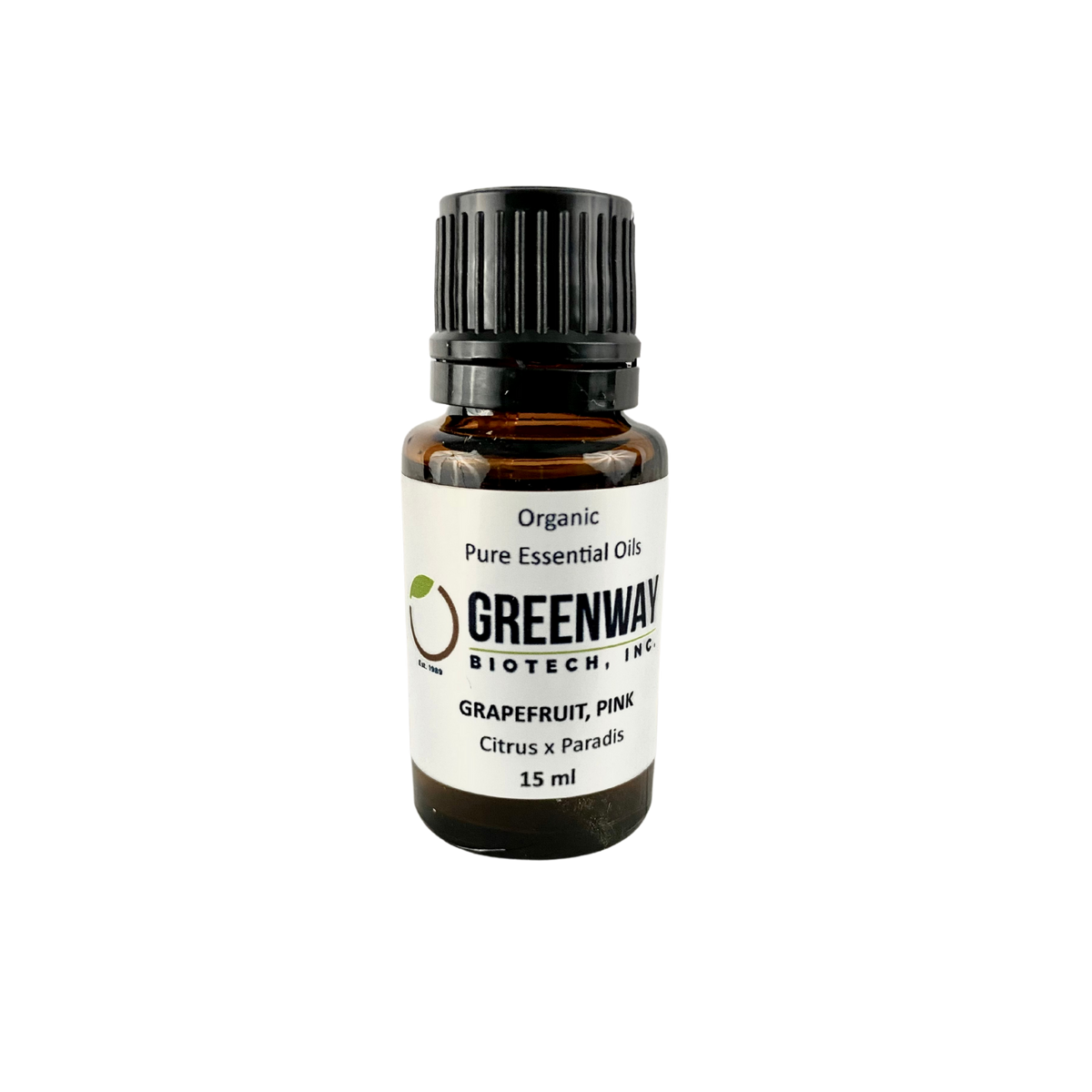
Pink grapefruit essential oil is dominated by a single compound: (R)-(+)-limonene, a monoterpene that makes up 88-95% of the oil. Limonene is the bright, fresh citrus note you smell when you cut into the peel of any citrus fruit — orange, lemon, lime, grapefruit, all share it as their dominant compound. Limonene is also a well-documented natural solvent and degreaser, which is why cold-pressed citrus oils show up in so many DIY cleaning sprays.
What gives pink grapefruit its distinctive bitter-sweet edge — different from sweet orange's roundness or lemon's sharpness — is a trace compound called nootkatone. Present in tiny amounts (well under 1% of the oil by weight), nootkatone is named for Alaska's Nootka cypress where it was first isolated, and it carries an enormous amount of grapefruit's aromatic identity. The supporting cast: myrcene (1-4%) adds a slight herbal-resinous tone, linalool a soft floral background, and α-pinene a faint pine-forest lift.
Two practical implications follow from this chemistry. First, the oil is phototoxic — cold-pressed citrus peel oils contain trace furanocoumarins (notably bergapten) that bind to skin and cause UV-sensitized burns. Second, that same limonene-rich composition means the oil oxidizes quickly in the presence of air, light, and heat. Both are real, both are manageable, and both are why this page repeats the 12-hour UV window and the refrigerate-after-opening guidance more than once.
Limonene (88-95%)
The dominant monoterpene of all expressed citrus oils. Responsible for the bright, fresh citrus character and the practical solvent/degreaser activity that makes this oil useful in DIY cleaning. Pink grapefruit has one of the highest limonene percentages of any commercial EO.
Myrcene (1-4%)
A monoterpene with a slight herbal-resinous, balsamic character. Also a major component in hops and bay laurel. Adds subtle complexity to the citrus headline.
Nootkatone (trace, ~0.1-1%)
Despite the trace concentration, nootkatone is responsible for much of grapefruit's distinctive bitter-sweet aromatic signature. Named for Nootka cypress where it was first isolated.
Linalool (trace-1%)
A soft, floral terpene alcohol — the same compound that dominates lavender. Contributes a delicate floral background to the citrus profile.
α-Pinene (trace-1%)
A monoterpene found across many conifers. Adds a faint pine-forest lift to the lower-volatility tail of the aromatic profile.
Furanocoumarins (trace)
Including bergapten and bergamottin. These are the compounds responsible for the phototoxicity profile — they bind to skin proteins and create UV-sensitized reactions. Cold-pressed peel extraction captures them; steam-distilled grapefruit oil would not.