Lettuce Fertilizer 8-15-36 | Chelated Micronutrients | Hydroponics, Soil & Foliar Application
- Regular Price
- $ 24.99
- Sale Price
- $ 24.99
- Regular Price
- $ 24.99
Sold Out
- Unit Price
- per


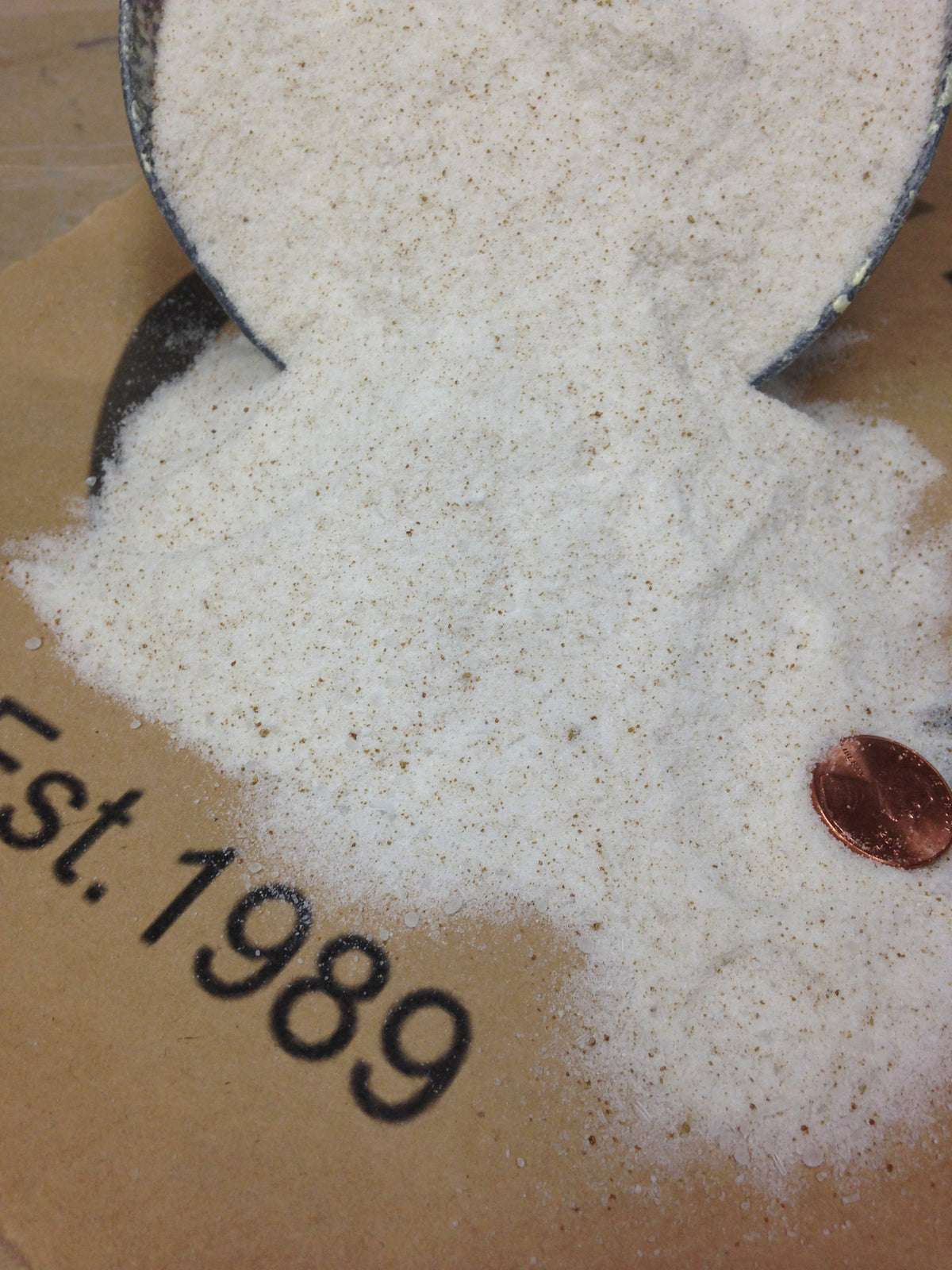


Water-soluble fertilizer for leafy greens · 8-15-36 · chelated micronutrients · CDFA registered
Lettuce Fertilizer 8-15-36 is a water-soluble fertilizer for lettuce, kale, spinach, cabbage, broccoli, and the other leafy crops named on its label. It supplies 36% soluble potash (K₂O), 15% available phosphate (P₂O₅), and 8% nitrogen, almost all of it nitrate, with EDTA-chelated iron, manganese, zinc, and copper plus boron and molybdenum. The label rate is 3 grams per plant every 4 to 6 weeks. With a soil test you can size a bed by the potash the test calls for, and in hydroponics you dose it to a potassium target.
It is a potash-rich supplement, not a complete program for leafy greens. It supplies 4.5 parts potash for every part nitrogen, while lettuce needs more nitrogen than that, so most of the crop’s nitrogen has to come from another fertilizer. It contains no calcium or magnesium. Keep its concentrate separate from calcium concentrates.
| Specification | Detail |
|---|---|
| Total nitrogen (N) | 8.00%: 7.50% nitrate nitrogen, 0.50% ammoniacal nitrogen |
| Available phosphate (P₂O₅) | 15.00% |
| Soluble potash (K₂O) | 36.00% |
| Iron (Fe) | 0.50%, all chelated |
| Zinc (Zn) | 0.30%, all chelated |
| Manganese (Mn) | 0.20%, all chelated |
| Boron (B) | 0.10% |
| Copper (Cu) | 0.05%, all chelated |
| Molybdenum (Mo) | 0.001% |
| Calcium, magnesium | None guaranteed |
| Derived from | Monopotassium phosphate, potassium sulfate, potassium nitrate, ammonium sulfate, iron EDTA, boric acid, manganese EDTA, copper EDTA, zinc EDTA, sodium molybdate |
| Form | White to off-white powder or fine granules. The Safety Data Sheet describes it as fully soluble at recommended use rates |
| In solution | 1 g of product per liter adds 80 ppm nitrogen (75 nitrate N, 5 ammoniacal N), 65 ppm phosphorus, 299 ppm potassium, 5 ppm iron, 3 ppm zinc, 2 ppm manganese, 1 ppm boron, 0.5 ppm copper, and 0.01 ppm molybdenum. 1 g per US gallon adds 21 ppm N, 17 ppm P, and 79 ppm K |
| Registration | Registered with the California Department of Food and Agriculture (CDFA); CDFA-approved label dated March 25, 2025 |
| Heavy-metal test | Tested by an independent laboratory (AgroLab/Matrix Sciences; sample received December 16, 2024; reported December 20, 2024): arsenic 0.34, cadmium 0.34, lead 0.34, nickel 1.29 mg/kg, mercury not detected. Arsenic, cadmium, and lead were well below California’s limits for fertilizers. See Product documents |
| Hazards | Harmful if swallowed. Avoid contact with eyes, open cuts, or sores, and avoid breathing dust. See Handling, storage & limitations |
| Package sizes | 1, 2, 5, 10, and 25 lb |
Percentages are by weight of product. One pound supplies 163 g (0.36 lb) of potash (K₂O), 68 g (0.15 lb) of available phosphate (P₂O₅), and 36 g (0.08 lb) of nitrogen, of which about 94% is nitrate nitrogen. Labels state phosphorus and potassium as oxides; the solution figures above convert them to elements with P = P₂O₅ × 0.436 and K = K₂O × 0.830, because hydroponic recipes are written in elemental ppm. The potassium sulfate and ammonium sulfate also supply some sulfur, but the label guarantees none. The iron, zinc, manganese, and copper come from EDTA chelates; the boron and molybdenum come from boric acid and sodium molybdate. Weigh the product: this page assumes no weight for a spoonful.
Choose it when a leafy crop needs potash and some phosphate, and you have another source of nitrogen, calcium, and magnesium.
The label names lettuce, kale, collard greens, spinach, cabbage, broccoli, bok choy, Swiss chard, beet greens, turnip greens, arugula, endive, watercress, and microgreens. Because it contains boron, keep to those crops: the label warns that boron-containing fertilizers used on other crops can cause serious injury.
The CDFA and UC Davis fertilization guidelines estimate that a harvested lettuce crop of 350 to 400 hundredweight per acre removes 70 to 110 lb of potash (K₂O). The Mid-Atlantic recommendations call for up to 200 lb of potash per acre for lettuce on soil low in potassium.
Dosed to a potassium target, it can supply the potash and phosphate in a leafy-green nutrient solution, with calcium nitrate in a separate stock for calcium and most of the nitrogen. University of Florida IFAS researchers grew NFT lettuce on a commercial 8-15-36 premix (not this product) combined with calcium nitrate and magnesium sulfate. See the hydroponic formula.
The label’s per-plant rate, 3 g every 4 to 6 weeks, lets you feed heads of lettuce, cabbage, broccoli, kale, collards, and chard by plant count. A soil test lets you size a whole bed by its potash need instead.
Use one of three bases: the label’s per-plant rate, a soil test’s potash recommendation for a bed or field, or a potassium target for a nutrient solution. Weigh the product. If the directions printed on your package differ from this page, contact us before applying.
Test first. Clemson Extension recommends a soil pH of 6.0 to 6.5 for lettuce and a soil test as the best guide to a crop’s fertilizer needs. For nutrient solutions, test your water for potassium, calcium, and magnesium before you mix.
| Plants | Product per application | Supplies per application | How often |
|---|---|---|---|
| 1 plant | 3 g | 1.08 g potash (K₂O), 0.45 g phosphate (P₂O₅), 0.24 g nitrogen | Every 4 to 6 weeks |
| 5 plants | 15 g | 5.4 g K₂O, 2.25 g P₂O₅, 1.2 g N | Every 4 to 6 weeks |
| 12 plants | 36 g | 13 g K₂O, 5.4 g P₂O₅, 2.9 g N | Every 4 to 6 weeks |
The label starts the first application at planting and times the last one just before the first harvest. It gives the amount as “3 grams (approximately ½ teaspoon)” per plant. This page uses the weight, because the weight of a teaspoon of this product has not been measured; a kitchen scale that reads to 0.1 g is enough. The label gives no rate for plants in containers of potting mix; email us before using it there.
At close spacing the per-plant rate adds up. Clemson Extension spaces head and butterhead lettuce 12 inches apart in rows 3 feet apart, and leaf lettuce 6 to 10 inches apart in rows 1 to 2 feet apart; the Mid-Atlantic recommendations set head and romaine lettuce 12 to 15 inches apart in rows 2 feet apart. At one plant per square foot, each application is 300 g per 100 sq ft, and two applications supply about 207 lb of potash per acre, about as much as the highest recommendation on this page (200 lb, for soil low in potassium). For closely spaced leaf lettuce, baby greens, and cut-and-come-again beds, size the bed by a soil test instead.
Placement. Clemson Extension advises placing sidedress fertilizer 4 to 6 inches from the plants to avoid burning the roots. Water it in afterward, and keep it off the leaves.
Formula. Pounds of product = pounds of potash (K₂O) your soil test recommends ÷ 0.36. Multiply by 453.6 for grams. The Mid-Atlantic recommendations apply potash before planting, broadcast and disked in.
| Source and crops | Low | Medium | High | Very high |
|---|---|---|---|---|
| Mid-Atlantic: lettuce, endive, escarole | 200 | 150 | 100 | 0 |
| Mid-Atlantic: spinach | 200 | 150 | 100 | 0 |
| Mid-Atlantic: broccoli, cabbage, kale, collards | 200 | 100 | 50 | 0 |
| Mid-Atlantic: turnip and mustard greens | 150 | 100 | 50 | 0 |
| UF/IFAS: lettuce, endive, escarole, broccoli, cabbage, Chinese cabbage, collards, kale, turnip, mustard | 120–150 | 100 | 0 | Not used (three levels) |
| K₂O recommended per acre | This product per acre | This product per 100 sq ft |
|---|---|---|
| 50 lb | 139 lb | 145 g (0.32 lb) |
| 100 lb | 278 lb | 289 g (0.64 lb) |
| 120 lb | 333 lb | 347 g (0.77 lb) |
| 150 lb | 417 lb | 434 g (0.96 lb) |
| 200 lb | 556 lb | 579 g (1.28 lb) |
Mid-Atlantic figures are from the 2026/2027 Mid-Atlantic Commercial Vegetable Production Recommendations; UF/IFAS figures are the season fertigation recommendations in its Florida fertilizer-management chapter (CV296, Mehlich-3 soil test, mineral soils). For California lettuce, the CDFA and UC Davis fertilization guidelines say potassium is not required when an ammonium acetate soil test is above 150 ppm, and that a harvested crop of 350 to 400 hundredweight per acre removes 70 to 110 lb of potash. Apply no more potash than your soil test calls for. Soil-test labs define low, medium, and high differently, so use the recommendation printed on your own report. Each pound of potash from this product also brings 0.42 lb of phosphate and 0.22 lb of nitrogen; on soils high in phosphorus, a potash-only source avoids adding phosphate the soil does not need.
At the label’s per-plant rate, this product supplies only 0.24 g of nitrogen per plant. Leafy crops need far more: University of Florida IFAS recommends 200 lb of nitrogen per acre for crisphead and romaine lettuce, the Mid-Atlantic recommendations 100 to 125 lb for leaf lettuce and 60 to 80 lb for iceberg, and the CDFA and UC Davis guidelines cap seasonal nitrogen at 150 to 180 lb for winter and spring lettuce and 100 to 140 lb for summer and fall. For home-garden lettuce, Clemson Extension sidedresses calcium nitrate at 2 lb per 100 ft of row once during the season; the Calcium Nitrate page gives Clemson’s rates for cabbage, broccoli, and collards. For calcium in soil, lime to the pH your soil test calls for, or use gypsum where calcium is low and pH is already on target, and keep the soil evenly moist: Clemson names drought and uneven soil moisture as the most significant causes of tipburn in lettuce.
Formula. Grams of product = (potassium target in ppm − potassium already in your water in ppm) × liters of final solution ÷ 299. Multiply US gallons by 3.785 to get liters. Dose it to the potassium target; calcium, magnesium, and most of the nitrogen come from other ingredients in a separate stock.
The University of Arizona Controlled Environment Agriculture Center (CEAC) leafy-green recipe targets 150 ppm nitrogen, 30 ppm phosphorus, 200 ppm potassium, 160 ppm calcium, 50 ppm magnesium, and 70 ppm sulfur at full strength, with half strength for about the first two weeks of propagation. Dosed to 200 ppm potassium, this product supplies the following:
| Nutrient | From this product at 0.67 g/L | CEAC leafy-green recipe | Supply the difference with |
|---|---|---|---|
| Potassium (K) | 200 | 200 | Nothing further |
| Phosphorus (P) | 44 | 30 | None; about 1.5 times the recipe |
| Nitrogen (N) | 54 (50 nitrate, 3.3 ammoniacal) | 150 | Calcium nitrate, in its own stock |
| Calcium (Ca) | 0 | 160 | Calcium nitrate, in its own stock |
| Magnesium (Mg) | 0 | 50 | Magnesium sulfate (Epsom salt) |
| Iron (Fe) | 3.3 | 2.0 | None; about 1.7 times the recipe |
| Manganese (Mn) | 1.3 | 0.45 | None; about 3 times the recipe |
| Zinc (Zn) | 2.0 | 0.30 | None; about 7 times the recipe |
| Boron (B) | 0.67 | 0.35 | None; about 2 times the recipe |
| Copper (Cu) | 0.33 | 0.05 | None; about 7 times the recipe |
| Molybdenum (Mo) | 0.007 | 0.05 | Only if a water or tissue test calls for it |
Calcium and nitrogen. Calcium nitrate 15.5-0-0 adds 190 ppm calcium and 155 ppm nitrogen for each gram per liter. To reach 160 ppm calcium from water with none, add 0.84 g per liter, which brings total nitrogen to about 184 ppm, above the recipe’s 150; from water that already has 30 ppm calcium, 0.68 g per liter brings it to about 160 ppm. The more calcium your water already supplies, the less calcium nitrate you add and the further nitrogen falls short: with 150 ppm calcium in the water, total nitrogen is about 62 ppm. In that case the recipe needs another nitrate source that adds no calcium or potassium; email us for help. In its tomato formula, University of Florida IFAS adds magnesium sulfate at 50 g per 100 liters (0.5 g per liter) for 50 ppm magnesium, in the same stock as the potash and phosphate, away from the calcium nitrate.
Micronutrients and phosphorus. At this dose the product supplies more iron, manganese, zinc, copper, and boron than the CEAC recipe (zinc and copper about 7 times as much, boron about twice as much) and about 1.5 times its phosphorus. Its guaranteed molybdenum is below the recipe’s. Do not add a micronutrient mix on top of it; add any micronutrient only if a water or plant tissue test calls for it. In a recirculating system, replace the solution on schedule rather than topping it up with more of this product, and email us if leaves show damage.
Potassium and calcium balance. University of Florida IFAS cautions that premixed fertilizers carry large amounts of potassium, and that potassium interferes with calcium uptake. Dose to your recipe’s potassium target rather than above it, and supply the calcium.
Separate stocks. Penn State Extension advises keeping calcium in a different stock tank from phosphates and sulfates, and the CEAC notes that concentrated calcium and sulfate form gypsum crystals. This product carries both phosphate and sulfate, so keep its concentrate apart from calcium nitrate or Cal-Mag.
Stock strength. The University of Florida IFAS tomato recipe dissolves 16 lb of a premix in a 30-gallon stock tank, about 64 g per liter, for injection at 1:100. A stock of this product for 200 ppm potassium at 1:100 is about 67 g per liter. Dissolve it in warm water and check that nothing settles out; if it does, use a lower injector ratio, which makes a weaker stock (for example, 1:100 instead of 1:200).
pH, EC, and solution changes. The Cornell CEA Hydroponic Lettuce Handbook considers pH 5.8 optimum (5.6 to 6.0 acceptable) and runs its lettuce ponds at an EC of about 1.2 mS/cm above that of the source water; the CEAC recipe sets pH at 5.6, and its full-strength recipe measures about 1.1 mS/cm on its own. Oklahoma State lists an EC of 1.2 to 1.8 mS/cm for hydroponic lettuce, advises checking pH and EC daily, and replacing the solution completely every two weeks. Cornell also keeps pond water no warmer than 25°C (77°F) and dissolved oxygen above 4 ppm. These are recipe and handbook figures, not the only correct values for every system.
This page gives no foliar rate. The label’s foliar directions give an amount per plant but not how much water to mix it in, so this page does not restate them. None of the university sources used for this page gives a foliar rate for a fertilizer of this kind on leafy crops. If you plan to spray, email questions@greenwaybiotech.com with your crop and sprayer volume first.
The label lists microgreens, but its per-plant rate does not fit trays sown thickly with seed, and it gives no rate for plants in containers of potting mix. This page gives no rate for either; email us with your growing medium and tray or pot size first. For baby greens and cut-and-come-again beds in garden soil, size the bed by a soil test.
Formulas. Per plant: grams of product = number of plants × 3. Beds by soil test: pounds of product = pounds of potash (K₂O) recommended for the area ÷ 0.36. Solutions: grams of product = (potassium target − potassium in your water, in ppm) × liters of final solution ÷ 299. Multiply pounds by 453.6 for grams.
Worked examples. 12 head lettuce plants at the label rate: 12 × 3 = 36 g per application, supplying 13 g of potash and 2.9 g of nitrogen; a 1 lb bag covers it and about 11 more applications like it. A 200 sq ft bed whose soil test recommends 3 lb of potash per 1,000 sq ft: 0.2 × 3 = 0.6 lb of K₂O, ÷ 0.36 = 1.67 lb (756 g) of product, supplying 113 g of phosphate and 60.5 g of nitrogen; a 2 lb bag covers it. A 50-gallon fresh batch of lettuce solution at the CEAC 200 ppm potassium target, from water with no potassium: 200 × 189.3 L ÷ 299 = 126.7 g of product, adding 54 ppm nitrogen and 44 ppm phosphorus; a 1 lb bag covers it, and calcium nitrate for 160 ppm calcium from water with 30 ppm is 129.5 g in the separate stock. A 30-gallon injector stock at 1:100 (3,000 gallons of final solution) at 200 ppm potassium, from water with 5 ppm: 16.34 lb (7,410 g) in the stock tank, 247 g per gallon of stock; a 25 lb bag covers it, and the calculator also shows any lower-price combination of smaller bags.
| Bag size | Per-plant doses of 3 g |
|---|---|
| 1 lb (454 g) | About 150 |
| 2 lb (907 g) | About 300 |
| 5 lb (2.27 kg) | About 760 |
| 10 lb (4.54 kg) | About 1,510 |
| 25 lb (11.3 kg) | About 3,780 |
The calculator below asks how many plants you are feeding, how large your bed is and what potash your soil test recommends, or the volume and potassium target of your nutrient solution. It applies the label’s per-plant rate or your test result, states the nutrients supplied, and recommends the smallest single bag that covers one application or batch, plus a lower-price bag combination when one exists. Prices, tax, and shipping are confirmed at checkout, and availability is confirmed when you add to cart.
The calculator needs JavaScript. If it does not appear, use the rate tables and formulas above to choose a size.
Potassium is the nutrient this product supplies most of. University of Minnesota Extension explains that potassium helps regulate the opening and closing of leaf stomata, which controls water loss and gas exchange, maintains turgor, and enhances the movement of sugars and starch in the plant. The CDFA and UC Davis guidelines estimate that a harvested lettuce crop removes 70 to 110 lb of potash per acre, while they cap seasonal nitrogen at 100 to 180 lb per acre, depending on the season. This product supplies 4.5 parts potash to one of nitrogen, which is why the nitrogen plan comes from another fertilizer. Lettuce takes up most of its nitrogen late: the CDFA and UC Davis guidelines report that 70 to 80% of it is taken up between heading and harvest, at up to 3 to 4 lb per acre per day.
Tipburn is a calcium problem inside the plant. Clemson Extension names drought and uneven soil moisture as its most significant causes, with high temperatures, wind, ammoniacal nitrogen, and rapid growth also contributing. The Cornell CEA Hydroponic Lettuce Handbook explains that it results from too little calcium reaching the young leaves when transpiration is low. Cornell growers blow air down onto the crop from overhead fans, and without that airflow they could not grow lettuce above a daily light integral of 12 mol/m²/d without tipburn. This product contains no calcium, and no fertilizer alone controls tipburn: calcium supply, steady moisture, airflow, light, and growth rate all play a part.
Its phosphate comes from monopotassium phosphate and its sulfur from potassium and ammonium sulfate. In concentrated form, calcium reacts with phosphate to form insoluble calcium phosphate and with sulfate to form gypsum, which is why nutrient recipes keep calcium nitrate in its own stock tank. Once each is diluted into the final solution they can be used together. Heat is a separate issue: Clemson Extension notes that high temperatures cause lettuce to bolt and turn bitter, and that Bibb lettuce turns bitter readily above 75°F. This describes plant nutrition in general; it is not a trial of this finished product.
Match the product to your crop and your soil or water test. Analyses are each product’s guarantee as shown on its page.
| Option | N–P₂O₅–K₂O | Potash per part nitrogen | Choose it when |
|---|---|---|---|
| Lettuce Fertilizer 8-15-36, this product | 8-15-36, chelated micronutrients | 4.5 | You grow the leafy crops on its label and need potash and some phosphate |
| Cucumber Fertilizer 8-16-36 | 8-16-36 | 4.5 | You grow cucumbers, squash, and melons; nearly the same N, phosphate, and potash guarantee as this product |
| Tomato Fertilizer 4-18-38 | 4-18-38 | 9.5 | You grow tomatoes and want less nitrogen per pound of potash |
| Pepper & Herb Fertilizer 11-11-40 | 11-11-40 | 3.6 | You grow peppers or herbs and want more nitrogen and less phosphate |
| Strawberry Fertilizer 8-12-32 | 8-12-32 | 4.0 | You grow strawberries |
| Potassium Sulfate 0-0-53 | 0-0-53, 17% sulfur | No nitrogen | You need potash only, on soil already high in phosphorus |
| Monopotassium Phosphate 0-52-34 | 0-52-34 | No nitrogen | You build a solution from single salts and need phosphorus and potassium without nitrogen |
None of these contains calcium or magnesium. Follow each product’s label for the crops it names.
It guarantees 8% nitrogen (7.5% nitrate, 0.5% ammoniacal), 15% available phosphate (P₂O₅), and 36% soluble potash (K₂O), plus 0.5% iron, 0.3% zinc, 0.2% manganese, and 0.05% copper, all chelated with EDTA, and 0.1% boron and 0.001% molybdenum. It contains no calcium or magnesium. Each pound supplies 163 g of potash, 68 g of phosphate, and 36 g of nitrogen.
The label’s soil rate is 3 grams per plant every 4 to 6 weeks, starting at planting, with the last application just before the first harvest. For 12 plants that is 36 g per application. Place it 4 to 6 inches from the stem and water it in. The label also prints this as approximately half a teaspoon; this page uses the weight because the weight of a teaspoon of this product has not been measured. For closely spaced leaf lettuce and baby greens, size the bed by a soil test instead.
Size it by a soil test: pounds of product equal the pounds of potash (K₂O) your test recommends, divided by 0.36, applied before planting and worked in. For example, 3 lb of potash per 1,000 sq ft on a 200 sq ft bed is 1.67 lb of product. The Mid-Atlantic recommendations call for up to 200 lb of potash per acre for lettuce on low-potassium soil and University of Florida IFAS up to 150 lb, less as the soil tests higher and none on the highest-testing soils. In California, the CDFA and UC Davis guidelines say lettuce needs no potassium when the soil test is above 150 ppm. Use the figure on your own report.
Yes. This product supplies only 0.24 g of nitrogen per plant at the label rate, and university nitrogen recommendations for lettuce run from 60 to 200 lb per acre, depending on type and season. For home-garden lettuce, Clemson Extension sidedresses calcium nitrate at 2 lb per 100 feet of row once during the season.
Dose it to your solution’s potassium target: grams = (target ppm K minus the K in your water) × liters of final solution ÷ 299. At the University of Arizona CEAC leafy-green target of 200 ppm potassium that is 0.67 g per liter, which also adds 54 ppm nitrogen and 44 ppm phosphorus. Supply calcium and most of the nitrogen with calcium nitrate in a separate stock tank, and magnesium with magnesium sulfate. Cornell considers pH 5.8 optimum for hydroponic lettuce. At this dose the product supplies more zinc, copper, manganese, and boron than the CEAC recipe, so do not add a micronutrient mix, and add any micronutrient only if a water or tissue test calls for it.
Not as concentrates. Calcium reacts with the phosphate and sulfate in this product to form insoluble calcium phosphate and gypsum, which settle out and can clog emitters. Dissolve each product separately, keep them in different stock tanks, and dilute each into the final solution, where they can be used together. Then check the final solution for cloudiness, EC, and pH.
No fertilizer can promise that, and this product contains no calcium. Tipburn happens when too little calcium reaches the young leaves. Clemson Extension names drought and uneven soil moisture as the most significant causes, with high temperatures, wind, rapid growth, and ammoniacal nitrogen also contributing. In hydroponics, the Cornell CEA Hydroponic Lettuce Handbook ties tipburn to low transpiration and controls it with airflow over the crop and by limiting light. Supply calcium separately, and keep moisture, airflow, and growth steady.
This page gives no foliar rate. The label’s foliar directions give an amount per plant but not how much water to mix it in, so this page does not restate them. None of the university sources used for this page gives a foliar rate for a fertilizer like this on leafy crops. If you plan to spray, email questions@greenwaybiotech.com with your crop and sprayer volume first.
The label lists microgreens, but its per-plant rate does not fit trays sown thickly with seed, and it gives no rate for plants in containers of potting mix, so this page gives no rate for either. Email us with your growing medium and tray or pot size first. For baby greens and cut-and-come-again beds in garden soil, size the bed by a soil test.
The label names lettuce, kale, collard greens, spinach, cabbage, broccoli, bok choy, Swiss chard, beet greens, turnip greens, arugula, endive, watercress, and microgreens. Because it contains boron, the label warns that use on other crops can cause serious injury, and because it contains molybdenum, do not use it on forage or pasture. For a crop not on that list, including culinary herbs, email us first.
Articles give background. For this product, use the rates and documents on this page.
The per-plant rate, crop list, and cautions come from the product label, the safety statements from the Safety Data Sheet, the heavy-metal limits from the California regulation listed last, and the soil-test, nitrogen, spacing, hydroponic, and plant-nutrition statements from the university and agency publications below, which explain crop nutrition but do not evaluate or endorse this product.
Rates and sources reviewed September 29, 2026.
Not sure whether to feed per plant or by soil test, or how to fit this product into a nutrient recipe? Email your crop, growing method, and soil or water test results to questions@greenwaybiotech.com, or call (562) 351-5168, Monday to Friday, 7 AM to 5 PM Pacific, and we will work through it with you.
Ready to buy? Calculate your amount & choose a bag
Every order carries a 90-day satisfaction guarantee, and we pack and ship from Madera, California. You can also choose a package weight from the size selector at the top of this page.
Greenway Biotech, Inc. is a family-owned fertilizer company in Madera, California, blending and packaging specialty fertilizers and soil amendments since 1989.