Cucumber Fertilizer 8-16-36 | Chelated Micronutrients | Hydroponics, Soil & Foliar Application
- Regular Price
- $ 24.99
- Sale Price
- $ 24.99
- Regular Price
- $ 24.99
Sold Out
- Unit Price
- per


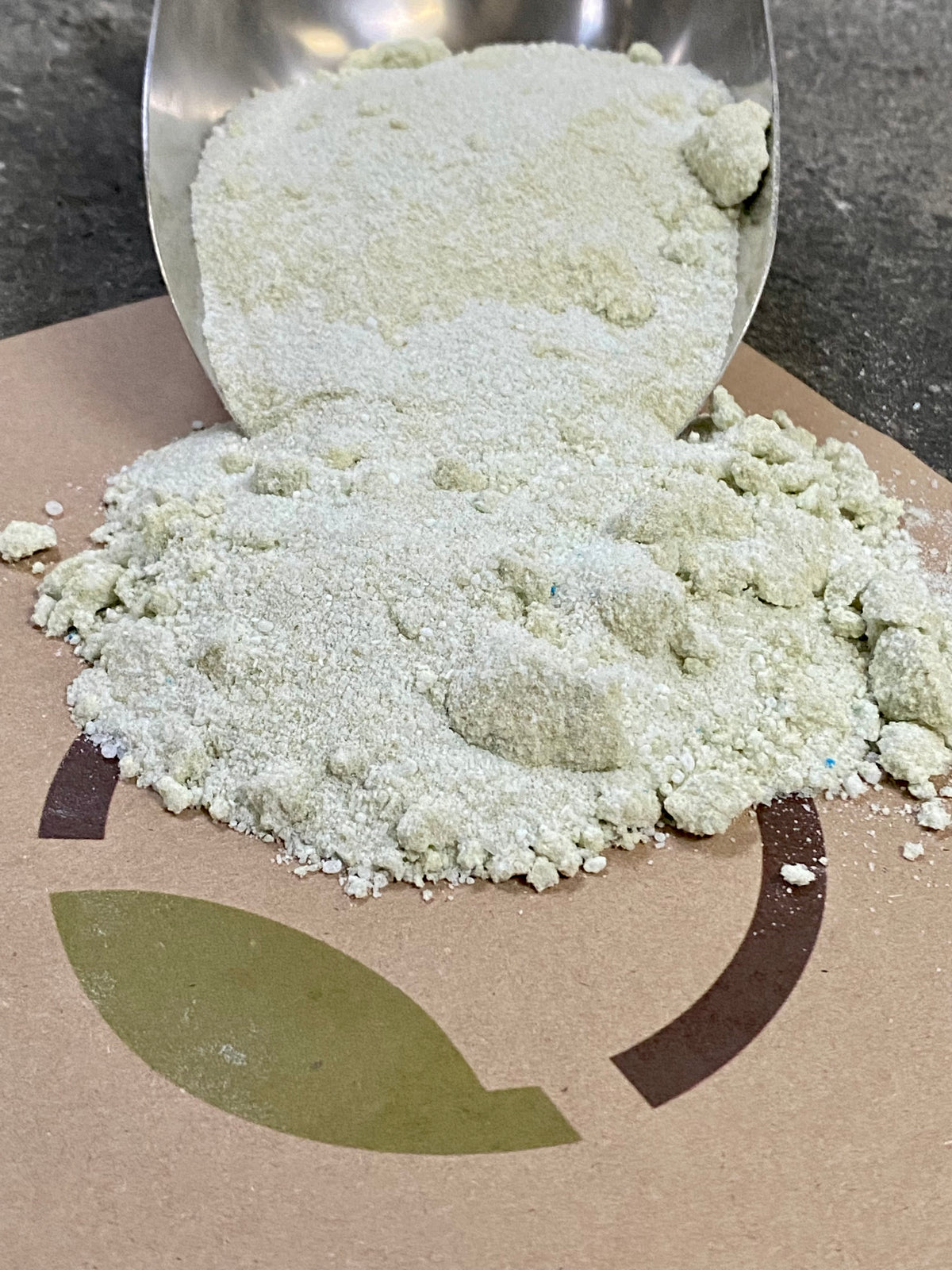


A water-soluble 8-16-36 formula engineered for cucumbers, melons, squash, and all cucurbit vine crops. Very high potassium drives crisp, sweet fruit and shelf life; controlled nitrogen keeps vines productive without runaway foliage; six chelated and mineral micronutrients round out a complete program. CDFA-registered and independently lab tested.
Find your size → Calculate how much I need36%
Soluble potash (K₂O) — built for heavy-fruiting cucurbits
16%
Available phosphate (P₂O₅) for flowering and fruit set
100%
Water soluble — clean for drip, NFT, Dutch buckets, and foliar
6micros
Iron, manganese, zinc, copper, boron, molybdenum included
Coverage assumes a typical greenhouse trellised cucumber program with weekly feeding through fruiting. Garden growers feeding by area will get more weeks per bag at lighter side-dress rates.
| Bag Size | Hydroponic Reservoir Weeks | Garden Coverage | Best For |
|---|---|---|---|
| 5 lb | ~6 weeks of a 100-gal fruiting reservoir | ~400 sq ft for a full season | Backyard gardens, small greenhouses |
| 25 lb | ~33 weeks of a 100-gal fruiting reservoir | ~2,000 sq ft for a full season | Most popular |
| 55 lb | ~73 weeks of a 100-gal fruiting reservoir | ~4,500 sq ft for a full season | Best value |
All cucurbits share the same nutritional shape — heavy potassium demand at fruiting, enhanced phosphorus for flowering, controlled nitrogen to keep energy moving into fruit instead of vine.
Slicing, pickling, English, Armenian, and Asian types. Works in greenhouse trellised production and outdoor field rows alike.
Cantaloupe, honeydew, watermelon, Galia, and specialty melons. High K₂O supports the sugar accumulation that drives flavor.
Summer squash, winter squash, butternut, acorn, delicata, and pumpkins. Long fruit-fill window benefits from sustained K supply.
Green, golden, and specialty varieties. Steady potassium helps maintain firmness and shape during continuous picking.
Decorative and edible gourds. Same vine-crop nutritional profile applies — high K₂O for fruit quality, controlled N for vine balance.
Any vine crop in the Cucurbitaceae family. If it climbs, sprawls, and sets heavy fruit on a vine, this is the right base formula.
A balanced formula spreads nutrients evenly across every stage, which is fine in theory and wrong in practice for fruiting cucurbits. This ratio is shaped around what these plants actually pull from the soil.
Cucumbers, melons, and squash are extremely heavy potassium feeders during fruit fill. Potassium supports water regulation inside fruit cells, activates sugar-transport enzymes, contributes to cell wall strength, and helps extend post-harvest shelf life. 36% soluble potash is sized for peak demand, not average demand.
Vine crops need enough nitrogen for healthy canopy, but excess N produces excessive foliage, delayed flowering, and energy diverted away from fruit. 8% N strikes the balance — adequate for healthy green growth without overcrowding the trellis or stalling fruit set.
16% available phosphate (P₂O₅) supports the rapid energy transfer of flower induction, fruit set, and root extension. Cucurbits set continuously through the season — phosphorus has to be available continuously, not front-loaded at transplant.
Dissolves clean in cold water with no residue. Safe through drip lines, Dutch buckets, NFT channels, ebb-and-flow systems, and pressurized foliar sprayers. No filter media, no settling, no rinse-out maintenance between feedings.
Iron, manganese, zinc, and copper are EDTA-chelated so they stay plant-available across the pH range tap water typically presents. Boron and molybdenum are supplied in highly available mineral forms — sodium molybdate and boric acid — because they don't benefit from chelation. Why chelated form matters →
Registered with the California Department of Food and Agriculture. Independently lab tested for heavy metal content by AgroLab/Matrix Sciences in December 2024 — results consistently well below required limits. Every bag is lot-coded, so any batch can be traced back to its production run and test certificate.
4.5: 1 K₂O to N
Potassium-to-nitrogen ratio of 8-16-36
Potassium is the dominant nutrient pulled by fruiting cucurbits. Inside the plant, potassium regulates stomatal opening (water use efficiency under heat), activates enzymes for sugar transport from leaf to fruit, and helps maintain turgor pressure inside developing fruit cells. When potassium supply runs short during peak fruit fill, plants compensate by pulling K from older leaves into developing fruit — visible as marginal scorch on the lower canopy, often misread as a watering problem.
The 4.5:1 K₂O-to-N ratio in 8-16-36 mirrors what cucurbits actually remove from the root zone during fruiting. Balanced 20-20-20 formulas produce roughly 1:1 K to N delivery, which works for lawns and ornamental foliage and falls short for fruiting vines. The mismatch shows up as lush vines with mediocre fruit — exactly the outcome controlled-nitrogen, high-potassium formulas are designed to avoid.
The 16% available phosphate (P₂O₅) supports continuous flowering and root extension. Phosphorus moves slowly through soil, so cucurbits — which flower throughout the season rather than in one burst — benefit from a fertilizer that keeps phosphate available with every feeding, not just at transplant.
For deeper background on these nutrients, see What's the Function of Nitrogen in Plants? and What's the Function of Phosphorus in Plants?
Rates for cucumbers, melons, squash, and all cucurbit vine crops. Select the tab for your growing method — hydroponic reservoirs, foliar spraying, or soil and container growing.
Quick answer: Feed by the plant — 1.4 g of 8-16-36 per plant at vining, 2.8 g at flowering, 4.2 g at fruiting. Dose Cal-Mag Plus and Calcium Nitrate per gallon, then adjust water to land your final measured EC in the cucumber range.
Amounts are per plant and stay fixed at any reservoir size — water volume only sets concentration. Cal-Mag Plus and Calcium Nitrate are dosed per gallon so final EC stays safe. The EC column is the final measured value after all nutrients are mixed, not the 8-16-36 fraction alone. Calcium Nitrate applies to RO or soft water only.
| Growth Stage | 8-16-36 (per plant) | Cal-Mag Plus | Calcium Nitrate (RO/soft only) | Water per Plant | Final EC | pH |
|---|---|---|---|---|---|---|
| Vining / Seedling | 1.4 g (¼ tsp) | 5 ml/gal | 1.5–2.0 g/gal | 0.9–1.1 gal | 1.5–1.8 EC | 5.8–6.2 |
| Flowering | 2.8 g (½ tsp) | 10 ml/gal | 2.3–2.7 g/gal | 1.3–1.5 gal | 2.1–2.5 EC | 5.8–6.2 |
| Fruiting | 4.2 g (¾ tsp) | 10 ml/gal | 2.3–2.7 g/gal | 1.9–2.1 gal | 2.2–2.6 EC max | 5.8–6.2 |
⚠️ Do not omit Calcium Nitrate at fruiting in RO or soft water. This formula contains no calcium — calcium and phosphate are chemically incompatible in concentrated solution — and fruiting is peak calcium demand for firm fruit and cell-wall integrity. In RO or soft water, keep Calcium Nitrate 15.5-0-0 in the reservoir from vining onward.
Mixing sequence: Fill to full water volume → dissolve Calcium Nitrate fully → add Cal-Mag Plus → add 8-16-36 last → adjust pH to 5.8–6.2 and verify final EC. Never combine concentrated calcium products directly with concentrated phosphate or sulfate fertilizers.
Hard tap water: use a water report. If starting water is above roughly 0.5 EC or already carries measurable calcium and magnesium, reduce Cal-Mag Plus and Calcium Nitrate accordingly. On pure RO, magnesium can run below the cucumber target — add a magnesium source only if water or tissue testing shows a deficiency.
Quick answer: A scant ¼ teaspoon (max 1 g by weight) of 8-16-36 per plant in at least 1 quart of water, every 10–14 days. Cucurbit leaves burn easily — measure light and never exceed 4.5 g per gallon.
Foliar safety check: Concentration is capped for burn-sensitive cucurbit foliage, which is thinner and more salt-sensitive than tomato or pepper leaves. The 1 g per quart rate equals 4 g per gallon, safely under the 4.5 g per gallon ceiling. A full level ¼ teaspoon weighs about 1.4 g, which would push a 1-quart mix over the limit — so keep the scoop scant or weigh it. Always test on a small leaf area 24–48 hours first. Do not apply in direct sun, during heat or drought stress, or above 85°F.
| Stage | Per Plant | Minimum Water | Frequency |
|---|---|---|---|
| Vining | Scant ¼ tsp (max 1 g) | 1 qt | Every 10–14 days |
| Flowering | Scant ¼ tsp (max 1 g) + Cal-Mag Plus 1.25 ml | 1 qt | Every 10–14 days |
| Fruiting | Scant ¼ tsp (max 1 g) | 1 qt | Every 7–10 days |
| Deficiency correction (any stage) | 2 g maximum | 2 qt minimum | Every 5–7 days, max 3 sprays |
Foliar best practices: Apply early morning or late afternoon and avoid open flowers. Spray to glistening — leaves wet but not dripping. Cover leaf undersides and add a non-ionic surfactant for waxy cucurbit foliage. Adjust spray solution to slightly acidic pH (~5.5–6.0) for best leaf uptake. Stop foliar feeding 7 days before harvest and rinse fruit before use. Foliar feeding supplements root feeding — it does not replace it.
Quick answer: This is a supplemental high-potassium feed, not a complete program — pair it with compost, a nitrogen source, and calcium. In the ground, dose by area: about 105 g (3.7 oz) per 100 sq ft worked in pre-plant, then side-dress at vining, flowering, and fruiting. In containers, feed by plant on the schedule below.
📋 Supplemental feed — plan nitrogen separately: 8-16-36 is a low-nitrogen, high-potassium supplement. Across a full season the soil program supplies roughly 385 g (13.6 oz) of product per 100 sq ft — strong on potassium but light on nitrogen, so add a separate nitrogen plan such as a balanced pre-plant fertilizer plus a nitrogen side-dress after bloom, guided by a current soil test. Soil is dosed by area; containers by plant.
| Stage | Soil (per 100 sq ft) | Container (per plant) |
|---|---|---|
| Pre-plant | ~105 g (3.7 oz), worked in | 2.8 g (½ tsp) into media |
| Vining | ~70 g (2.5 oz), side-dressed | 2.8 g (½ tsp) in 1.5 gal water minimum |
| Flowering | ~105 g (3.7 oz), side-dressed | 4.2 g (¾ tsp) in 2 gal water minimum |
| Fruiting | ~105 g (3.7 oz), side-dressed | 5.6 g (1 tsp) in 2.5 gal water minimum, or split across irrigations |
Container feeding: Liquid feed every 2–3 weeks; concentration is capped around 1.9–2.2 g per gallon to keep the drench safe in media where salts accumulate. Pair with Cal-Mag Plus at 5–10 ml per gallon depending on water hardness — coco and RO water need the higher end.
Soil supplement pairing: Gypsum (CaSO₄) at 3 lbs / 100 sq ft pre-plant provides calcium without changing pH. Use Epsom Salt only if a soil or tissue test confirms magnesium deficiency — container and coco media may need routine Mg supplementation. Calcium Nitrate can serve as a nitrogen and calcium side-dress during fruiting on arid or sandy soils, but do not stack it on already high-EC media.
Four steps and a calculator that matches your grow. Pick the tab that matches your growing method and feed on the schedule your stage calls for.
Always dissolve 8-16-36 in warm water in a separate container before adding it to a reservoir, drench, or sprayer. Dry-mixing with other fertilizers can produce inconsistent ratios; pre-dissolving guarantees you get the full rate every time.
In hydroponic mixing, calcium and concentrated phosphate will precipitate as white cloudiness if combined directly. Add Cal-Mag Plus (or pre-dissolved Calcium Nitrate) first and stir thoroughly, then add the 8-16-36 solution. Adjust pH after both are fully dispersed.
Seedlings and vegetative plants need lighter EC; flowering and fruiting plants need the full rate plus calcium support. Use the Application Rates tables for exact stage rates, then dial in by watching EC, runoff, and plant response.
Stop foliar feeding 7 days before harvest and rinse fruit before use. In soil, taper or skip the last scheduled side-dress as final fruit ripens. This is general practice, not crop failure insurance — flavor and shelf life benefit from a clean finish.
All four of our crop-specific water-soluble formulas share the same chelated-micronutrient backbone. The macronutrient ratios are tuned to the demand profile of each crop family.
| Product | NPK | K₂O : N Ratio | Best For | Notes |
|---|---|---|---|---|
| Cucumber Fertilizer 8-16-36 (this product) | 8-16-36 | 4.5 : 1 | All cucurbits — cucumbers, melons, squash, pumpkins, zucchini, gourds | Controlled N for trellised vines; high K for fruit quality |
| Tomato Fertilizer 4-18-38 | 4-18-38 | 9.5 : 1 | Fruiting nightshades — tomatoes, peppers, eggplant | Lower N and higher K than 8-16-36; ideal once nightshades are flowering |
| Pepper & Herb 11-11-40 | 11-11-40 | 3.6 : 1 | Peppers, basil, herbs, and crops needing balanced N–P with very high K | Higher N than tomato or cucumber formulas; supports pepper canopy |
| Strawberry Fertilizer 8-12-32 | 8-12-32 | 4.0 : 1 | Strawberries, brambles, small berry crops | Tuned to berry brix and runner management |
| Lettuce Fertilizer 8-15-36 | 8-15-36 | 4.5 : 1 | Lettuce, leafy greens, herbs grown for foliage | Similar ratio to cucumber but tuned for tip-burn resistance in leafy crops |
8-16-36 is purpose-built for one job: fruiting cucurbits at the stage when potassium demand peaks. It's an excellent fit for that. It's not the right base formula for every crop or every stage.
A vine-crop feeding program needs calcium, magnesium, and a way to push extra potassium during peak fruiting. These pair-products fill the gaps 8-16-36 deliberately leaves open.
Supplies the calcium cucumbers need for cell wall integrity and firm fruit development. Mandatory companion in hydroponic systems and recommended in soil — apply separately from 8-16-36 to avoid precipitation.
RO waterAn additional calcium source for RO and rainwater hydroponic systems where Cal-Mag Plus alone can fall short during peak fruit set. Provides a small nitrate-N boost too.
MagnesiumMagnesium support for chlorophyll production. Useful when soil or tissue testing indicates Mg deficiency, particularly in containers, coco media, and sandy soils.
Peak fruitA targeted potassium boost during peak fruiting weeks if EC or tissue testing suggests K is the limiting nutrient. Use sparingly — most programs don't need it.
Standard handling for a water-soluble specialty fertilizer. See the linked SDS for complete first aid and storage detail.
If your question isn't here, contact our team at questions@greenwaybiotech.com.
Cucumbers are extremely heavy potassium feeders during fruit fill. Potassium supports water pressure inside fruit cells, activates enzymes that move sugars from leaf to fruit, and contributes to cell wall strength and firmness. Adequate potassium can also help reduce the stress conditions that sometimes contribute to cucurbitacin accumulation and bitterness — though bitterness in cucumbers is also influenced by genetics, heat, irregular watering, and overall plant stress. 36% soluble potash is sized for peak demand rather than average demand, so plants have what they need at the moment of heaviest pull.
In hydroponic systems, keep pH between 5.8 and 6.2 across all stages. In soil, aim for 6.0–6.5. pH directly governs nutrient availability — outside these ranges, key nutrients like iron and phosphorus become locked out even when present in solution. For a deeper look at how pH interacts with nutrient uptake, see Sulfate vs Chelated Fertilizers.
Cucumber bitterness is caused by cucurbitacin compounds that accumulate mainly in response to plant stress — heat, irregular watering, poor nutrition, and variety genetics all play a role. Good nutrition can help reduce one of those stressors:
Combine good nutrition with consistent watering (avoid letting plants dry out), choose low-bitterness varieties where available, and supplement with Cal-Mag Plus during fruit development. No fertilizer can fully offset varietal genetics or severe environmental stress.
Yes — greenhouse trellised cucumbers are the standard reference profile for these rates. Feed per plant: about 1.4 g at vining, 2.8 g at flowering, and 4.2 g at fruiting, adjusting water to hold your final measured EC in range. Monitor EC closely — greenhouse plants under sustained light pressure can be more sensitive to EC drift than outdoor plants. Increase Cal-Mag support during rapid growth periods and adjust based on variety (European seedless types typically run higher EC than standard slicing types).
Container cucumbers feed in two phases. At potting, mix about ½ teaspoon of 8-16-36 per gallon of soil volume (roughly 2.8 grams per plant) thoroughly into the media. Then switch to a liquid feed of about ½ teaspoon per gallon of water — roughly 2.8 grams per plant — every 2 to 3 weeks, scaling down for seedlings and up as fruiting begins. Containers and coco media drain quickly and benefit from routine Cal-Mag Plus support for calcium and magnesium. The Guided Plan tab in the calculator above will build a full staged container schedule for your exact number of plants and pot size.
Feeding frequency depends on your method. In hydroponic reservoirs, feed at the full fruiting rate (about 4.2 g per plant) and replace the solution every 7 to 14 days, monitoring EC between changes. In soil, side-dress at first fruit set and repeat every few weeks as fruiting continues. In containers, run a liquid feed every 2 to 3 weeks, stepping up to the fruiting rate. Across all methods, fruiting is when potassium demand peaks, so this is the stage to stay consistent — and to pair with a separate calcium source like Cal-Mag Plus for firm fruit.
No. Calcium and concentrated phosphate react to form insoluble calcium phosphate, which precipitates out as white cloudiness and makes both nutrients unavailable. Always pre-dissolve each product separately in warm water, then add them to the reservoir in order: calcium source first (pre-dissolved Calcium Nitrate if used), then Cal-Mag Plus stock, then the 8-16-36 solution last. Adjust pH after everything is fully dispersed. Never combine calcium sources and concentrated 8-16-36 in the same stock tank.
Calcium and phosphorus are chemically incompatible in concentrated solution. When mixed, they form insoluble calcium phosphate that precipitates out and becomes unavailable to plants. Since this formula contains 16% available phosphate (P₂O₅), calcium has to be supplied separately. Cucumbers need consistent calcium for cell wall integrity and firm fruit development — use Cal-Mag Plus 2-0-0 and/or Calcium Nitrate 15.5-0-0 as companions throughout the season.
The fertilizer is hygroscopic, meaning it absorbs moisture from the air. Keep the bag sealed tight between uses and store in a cool, dry place out of direct sunlight. If it clumps from moisture exposure, simply break it up — efficacy is not affected. For long-term storage, double-bag inside a sealed plastic tub.
Yes. This formula works for all cucurbit crops including watermelons, cantaloupes, honeydew, squash, pumpkins, and gourds. All cucurbits share similar nutritional needs — high potassium for fruit quality, enhanced phosphorus for flowering, and controlled nitrogen to avoid excessive vine growth at the expense of fruit. Apply at the standard cucumber rates listed in the Application Rates tables.
Both are high-potassium, water-soluble formulas built on the same chelated-micronutrient backbone, but the macronutrient ratios are tuned to different crops. Cucumber 8-16-36 runs a 4.5:1 K to N ratio with controlled nitrogen suited to trellised cucurbit vines. Tomato Fertilizer 4-18-38 runs a higher 9.5:1 ratio with even lower nitrogen, ideal once nightshades like tomatoes, peppers, and eggplant are flowering. If you're growing cucumbers, melons, squash, or other cucurbits, 8-16-36 is the right base. For fruiting nightshades, reach for the tomato formula instead.
Stop foliar feeding 7 days before harvest and rinse fruit before use. In soil, taper or skip the final scheduled side-dress as the last fruit ripens. In hydroponic systems, many growers run plain pH-adjusted water for the last week to finish clean. This is general best practice for flavor and shelf life, not a fix for a specific problem — a clean finish simply tends to produce better-tasting, longer-keeping fruit.
No. Cucumber Fertilizer 8-16-36 is a synthetic water-soluble specialty fertilizer formulated from solution-grade mineral salts — not an OMRI-listed organic input. It's CDFA registered and independently lab tested. Growers who need OMRI-listed inputs should look at Bone Meal, Blood Meal, and other organic amendments instead.
From 5 lb home-garden bags to 55 lb commercial sacks. Orders over $100 ship free, and every bag is backed by our 90-day money-back guarantee. If 8-16-36 doesn't perform on your cucumbers, send back the unused portion for a full refund.
Choose your size →