Why Are My Plant's Leaves Turning Yellow? 8 Causes and How to Fix Them
•Posted on February 11 2022

Last updated: March 22, 2026
Written by: Amir Tajer, B.S.M.E., QAL — Co-Owner & Technical Director, Greenway Biotech
Reviewed against: UC Davis, Penn State, and Clemson University Extension plant nutrition guidelines
Disclosure: Greenway Biotech manufactures fertilizers and micronutrient products mentioned in this guide. Organic, synthetic, and non-Greenway approaches are also discussed where relevant.
⚡ Quick Facts: Yellow Leaves on Plants
- Common causes: Nutrient deficiency, overwatering, soil pH problems, pests — often in combination
- Direction of yellowing matters: Bottom-up = mobile nutrient (N, Mg); Top-down = immobile nutrient (Fe, Ca)
- First response: Check watering habits and soil pH before reaching for fertilizer
- Fast fix for N deficiency: Ammonium Sulfate 21-0-0 or Urea 46-0-0
- Fast fix for Mg deficiency: Epsom Salt as a soil drench or foliar spray
- Fast fix for Fe deficiency: Chelated Iron EDTA — a reliable chelated option for most garden situations
- Prevention: Soil test first, then select a balanced fertilizer matched to your crop
Yellow leaves on plants are one of the most common — and most misdiagnosed — problems in home gardens. Whether you're seeing yellowing leaves on houseplants, bottom leaves turning yellow on tomatoes, or new leaves yellowing on a recently transplanted shrub, the instinct is usually to grab a fertilizer and apply more of everything. But over-fertilizing a plant that's actually waterlogged, or treating for nitrogen deficiency when the real culprit is high soil pH, can make things considerably worse. This guide walks through all eight causes systematically so you can identify the real problem and apply the right solution.
The science behind yellow plant leaves is straightforward: without adequate chlorophyll, plant tissue loses its green pigmentation. Chlorophyll requires a steady supply of specific nutrients — especially nitrogen, magnesium, and iron — and the absence of any one of them can disrupt production. But nutrient supply is only half the story. How well roots can actually absorb those nutrients depends on watering, pH, temperature, and the presence of pests or disease.
Understanding which of these factors is triggering the yellowing leaves in your garden determines exactly which intervention will work.
Diagnose Before You Treat
Yellowing leaves rarely tell you one thing — they tell you a category. The pattern, location, and progression of yellowing are your diagnostic clues. The single most useful rule: older leaves yellow first when the plant can relocate that nutrient to new growth; newer leaves yellow first when it cannot. Before reaching for any product, spend two minutes asking these questions:
- Where is the yellowing starting? Bottom leaves first = mobile nutrient issue (nitrogen, magnesium, potassium). New growth first = immobile nutrient issue (iron, calcium, boron).
- Is it interveinal or whole-leaf? Yellowing between green veins = magnesium or iron deficiency. Uniform pale yellowing = nitrogen deficiency.
- What does the soil feel like? Wet and soggy = watering problem. Bone dry and pulling away from the pot = underwatering.
- Have you fertilized recently? If yes, overfeeding toxicity is possible — check for brown leaf tips and a white crusty residue on the soil surface alongside the yellowing.
💡 Is It Actually a Problem?
If only one or two of the oldest, lowest leaves are yellowing while the rest of the plant looks vigorous and is producing healthy new growth, this is often normal leaf senescence (aging) rather than a nutrient or disease issue. Most plants shed their oldest leaves as a natural part of their growth cycle. Concern is warranted when yellowing affects multiple leaf layers simultaneously, progresses rapidly upward, or is accompanied by spots, wilting, or distortion.
💡 The Most Common Mistake
Most gardeners treat yellow leaves by adding more fertilizer — but if the problem is overwatering, root rot, or high soil pH locking out nutrients, adding fertilizer will not help and may cause further damage. Diagnose the pattern first.
1. Nutrient Deficiency
Nutrient deficiency is among the most common causes of yellow leaves — and the most nuanced. Not all deficiencies look the same, and the same visual symptom can point to different nutrients depending on which leaves are affected and how the yellowing is distributed across the leaf.
The Four Most Common Deficiencies
Nitrogen (N) is the nutrient most often responsible for general yellowing. Because nitrogen is a mobile nutrient, the plant pulls it from older leaves to support new growth when supply is limited. The result is a characteristic pattern: uniform pale-yellow coloration that starts at the bottom of the plant and works upward[1]. A nitrogen-deficient plant often looks generally pale rather than spotted or splotchy. For a deeper look at nitrogen's role, see our article on the function of nitrogen in plants.
Magnesium (Mg) is the central atom of every chlorophyll molecule. When magnesium is insufficient, the plant cannot produce adequate chlorophyll, producing a distinctive interveinal chlorosis — yellowing between the leaf veins while the veins themselves remain green[2]. Like nitrogen, magnesium is mobile, so symptoms typically appear on older leaves first. The pattern — "leaves turn yellow but veins stay green" — is one of the most searched symptom descriptions in gardening.
Iron (Fe) deficiency looks superficially similar to magnesium deficiency, but appears first on young leaves at the top of the plant — iron is immobile. The yellowing between green veins is often more dramatic, and the contrast between yellow tissue and green veins is sharper. High soil pH is the most common cause of iron deficiency even when iron is physically present in the soil[3].
Calcium (Ca) deficiency symptoms often appear in new growth as tip burn, curled or distorted young leaves, and poor fruit development. Because calcium is immobile, older leaves are generally unaffected. Importantly, many calcium-related symptoms are tied to inconsistent watering, poor root uptake, or salt stress rather than simply a lack of calcium in the soil — which means adding calcium without addressing the root cause may not resolve the issue. Blossom end rot in tomatoes and peppers is the most well-known example.
Crop-Specific Examples
| Crop / Plant Type | Common Yellow Leaf Pattern | Likely Cause |
|---|---|---|
| Tomatoes | Lower leaves yellowing, progressing upward | Nitrogen deficiency, magnesium deficiency, cold stress, or early blight |
| Citrus | Interveinal chlorosis on new leaves | Iron or manganese deficiency — often triggered by high pH soil |
| ⭐ Houseplants / containers | Lower leaves yellow; soil stays wet | Overwatering — frequently misidentified as nutrient deficiency |
| Peppers | Distorted new growth + blossom end rot | Calcium uptake issue tied to inconsistent watering |
| Blueberries / acid-loving plants | New leaves yellowing uniformly | Iron or manganese lockout from soil pH too high (above 5.5 for blueberries) |
🔬 Did You Know?
Nutrients are divided into mobile and immobile categories. Mobile nutrients like nitrogen, magnesium, and phosphorus can travel from older leaves to younger tissue when supply is limited. Immobile nutrients like iron, calcium, and boron cannot — so their deficiency symptoms always appear first in new growth[4]. Knowing this distinction tells you which leaves to inspect first.
What to Do
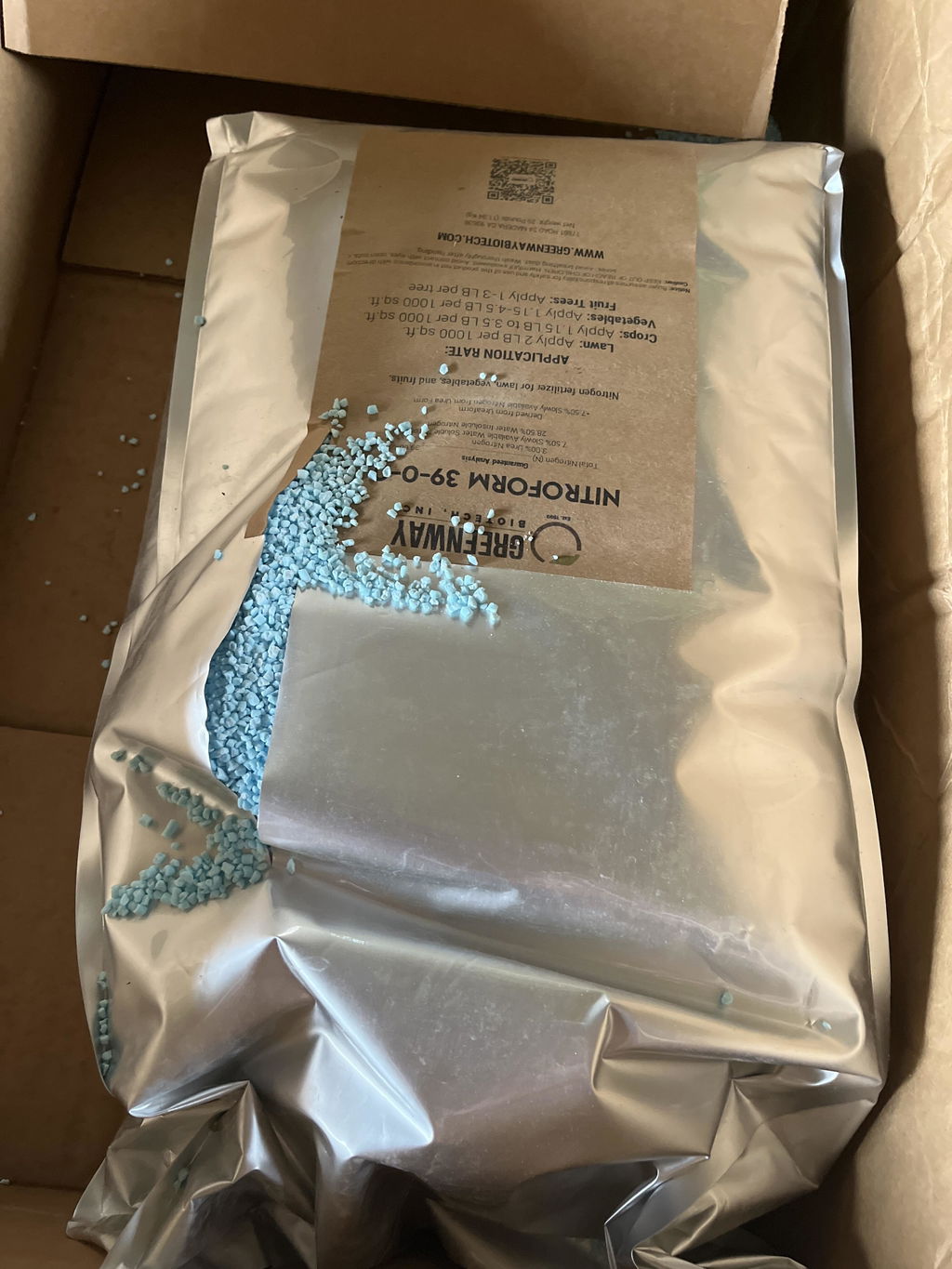
For nitrogen deficiency, a fast-acting water-soluble nitrogen source typically shows visible improvement within 7–14 days. Ammonium Sulfate 21-0-0 works well for acid-loving plants and high-pH soils where its acidifying effect is a secondary benefit. Urea 46-0-0 is the most nitrogen-dense option per dollar. For plants where sulfur is also a concern, Ammonium Sulfate delivers both in one application.
For magnesium deficiency, Epsom Salt (magnesium sulfate) applied as a soil drench or diluted foliar spray is a widely used, cost-effective correction. For situations where additional nitrogen is also needed alongside magnesium, Magnesium Nitrate 11-0-0 delivers both nutrients simultaneously.
For iron deficiency, a chelated form is important — non-chelated iron quickly becomes unavailable above pH 6.5. Chelated Iron EDTA 13% remains stable across a wider pH range and is suitable for most garden applications. For very high-pH soils, Chelated Iron DTPA 11% offers better stability above pH 7.0.
🌱 Recommended: Chelated Iron & Micronutrients
If you're seeing interveinal yellowing and suspect an iron or manganese deficiency, chelated forms provide more reliable correction across a range of soil pH levels than standard sulfate forms.
Shop Chelated Iron & Micronutrients2. Overwatering
Overwatering is consistently one of the top causes of yellow leaves in container and houseplants — often misidentified as a nutrient problem because the symptoms look similar. When soil stays saturated for extended periods, oxygen cannot reach the root zone. Without adequate oxygen, roots cannot perform the active transport processes that pull nutrients from soil into the plant[5]. The plant effectively becomes nutrient-deficient even when nutrients are physically present.
Persistent overwatering also creates conditions favorable to root rot, a fungal condition caused by Pythium and Phytophthora species. Root rot further compromises uptake and can be fatal if not addressed early. Signs of overwatering alongside yellowing include soft, mushy stems at the soil line, soil that stays wet for more than 3–4 days after watering, and a foul or sour odor from the potting mix.
⚠️ Check Before You Water
For container plants, insert your finger 2 inches into the soil before watering. If it feels moist, wait. Most plants do far better with slightly less water than slightly more. For in-ground plants, a simple soil moisture probe takes the guesswork out.
If overwatering is suspected, allow the soil to dry out significantly before resuming irrigation. For container plants with root rot symptoms, repotting into fresh, well-draining mix and trimming affected roots may be necessary. Applying fertilizer to an overwatered plant will not solve the problem and may worsen root damage.
3. Underwatering
Underwatering produces yellowing through a different mechanism but the same endpoint: inadequate nutrient uptake. Nutrient absorption requires water as the transport medium — roots cannot absorb dissolved minerals from dry soil. When plants are chronically underwatered, nutrient deficiency symptoms appear even when soil fertility is adequate.
Underwatered plants typically show additional signs alongside yellowing: wilting or drooping leaves, dry and cracking soil pulling away from pot edges, and leaves that feel papery or crispy at the edges rather than soft and yellowed throughout. Plants may improve noticeably within days of restoring adequate moisture, though already-yellowed leaves often will not fully recover — improvement shows primarily in new growth.
Sandy soils and unglazed terracotta containers dry out faster than clay soils or plastic containers, and may need more frequent watering during hot weather. Improving soil structure with organic amendments like Alfalfa Meal can increase water-holding capacity over time.
4. Too Much Light or Heat Stress
Light stress is often overlooked as a cause of yellowing, particularly for plants moved from indoors to direct outdoor sun or for seedlings placed under full sun before they've hardened off. Intense, unfiltered sunlight can bleach chlorophyll and damage the photosynthetic apparatus — a process called photo-oxidation. The leaves appear yellowed or whitened, often uniformly on the side facing the sun.
Heat stress works alongside light stress. When temperatures climb above a plant's optimal range, enzyme activity in the photosynthesis pathway slows or fails, and nutrient uptake is reduced even when soil conditions are adequate. This is particularly common in enclosed spaces like greenhouses during summer, where temperatures can exceed 90–100°F.
Gradual acclimation — moving plants to increasing sun exposure over 7–10 days before full outdoor placement — largely prevents light-stress yellowing in transplants. For established plants, shade cloth can reduce intensity during extreme heat events.
🔬 Did You Know?
Sunscald and heat stress amplify existing nutrient deficiencies. A plant that's marginally deficient in nitrogen or magnesium under mild conditions may show severe yellowing when heat stress is added. Correcting both factors simultaneously typically produces the fastest recovery.
5. Soil pH Imbalance: The Hidden Cause of Yellow Leaves
Soil pH may be the single most underappreciated cause of yellowing in home gardens. It is possible to have adequate nutrient levels in your soil — confirmed by a basic fertilizer test — and still experience significant yellowing because high or low pH is physically preventing roots from absorbing those nutrients.
The mechanism is straightforward: each nutrient has a pH range in which it exists in its plant-available ionic form. Outside that range, it converts to insoluble compounds that roots cannot absorb. Iron, for example, becomes largely unavailable above pH 7.0 — even if your soil contains plenty of it. Manganese and zinc follow similar patterns. At very low pH (below 5.5), calcium and magnesium availability drops sharply[3].
| Nutrient | Best Available pH Range | Yellowing Pattern When Deficient |
|---|---|---|
| Nitrogen (N) | 6.0–7.5 | Uniform yellowing, older leaves first |
| Magnesium (Mg) | 6.0–7.0 | Interveinal chlorosis, older leaves |
| ⭐ Iron (Fe) | 5.5–6.5 (best) | Interveinal chlorosis, newest leaves first |
| Manganese (Mn) | 5.5–6.5 | Interveinal chlorosis on younger leaves |
| Calcium (Ca) | 6.5–8.0 | Tip burn, distorted new growth |
| Zinc (Zn) | 5.5–7.0 | Small, distorted leaves; pale new growth |
If you're seeing unexplained yellowing despite regular fertilization, testing soil pH is often the fastest diagnostic step. A basic pH test kit from a garden center costs $10–15 and takes five minutes. For a more complete picture, a full soil test through your state's cooperative extension service typically costs $15–30 and reports pH, organic matter, and available nutrient levels — valuable before making major soil amendments. For a detailed guide, see our article on fertilizer toxicity vs. nutrient deficiency.
To lower pH in alkaline soils, Ammonium Sulfate 21-0-0 provides acidification alongside nitrogen fertilization. Elemental sulfur is another option for longer-term pH reduction. To raise pH in acidic soils, Dolomite Lime provides calcium and magnesium alongside pH correction.
6. Temperature Fluctuations
Temperature stress disrupts multiple processes involved in maintaining leaf color. Cold temperatures below 50°F (10°C) significantly slow root activity and nutrient uptake, particularly for nitrogen in ammonium form — which requires soil microbial conversion before plants can absorb it. This is why cool-season yellowing often responds well to nitrate-nitrogen forms like Calcium Nitrate 15.5-0-0, which remain immediately available without microbial conversion.
Tomatoes are particularly sensitive — chilling injury below 50°F disrupts enzyme function and nutrient transport, causing yellowing that can look identical to nitrogen or magnesium deficiency[6]. Plants moved from warm greenhouses to cooler outdoor temperatures often go through a yellowing period as they adjust.
Conversely, excessive heat above 95°F (35°C) reduces stomatal activity (the openings through which plants exchange gases), limiting CO₂ intake for photosynthesis and causing a cascade of stress symptoms including yellowing. Mulching to moderate soil temperature and providing afternoon shade during extreme heat events helps most warm-season crops maintain steady performance.
7. Insects and Pests
Sucking insects cause yellowing by physically extracting plant sap — the fluid that carries nutrients and photosynthates through the plant's vascular system. As sap is removed, the affected leaf tissue loses pigmentation and turns yellow. Damage often appears as small, stippled yellow dots before progressing to larger yellowed areas.
The most common culprits include aphids, spider mites, thrips, whiteflies, and scale insects. Aphids cluster on new growth and undersides of leaves; spider mites produce fine webbing alongside stippled yellow damage; thrips cause silvery, streaked yellowing. Nutrient-stressed plants are often more susceptible to pest attack, creating a compounding problem where deficiency and infestation reinforce each other.
⚠️ Check the Undersides First
Most leaf-feeding pests concentrate on the undersides of leaves where conditions are more protected. Turn leaves over during inspection — spider mites, aphid colonies, and whitefly eggs are often missed in topside-only checks.
Early detection dramatically improves management outcomes. Inspect plants weekly during peak growing season. For mild infestations, a strong stream of water dislodges aphids and mites effectively. Insecticidal soaps and neem oil are low-toxicity options for heavier pressure. Once pests are controlled, correcting any underlying nutrient deficiencies speeds recovery.
8. Fungal Disease
Several fungal diseases cause yellowing as a primary symptom. Fungal leaf spots often appear as yellow halos surrounding necrotic (brown or black) lesions. Downy mildew produces yellow patches on the upper leaf surface with gray-purple sporulation on the underside. Verticillium and Fusarium wilts cause yellowing that progresses up the plant as the fungus colonizes vascular tissue.
Fusarium and Pythium root rots produce yellowing by disrupting the root's ability to absorb water and nutrients — the aerial symptoms can look identical to nutrient deficiency or overwatering because the underlying mechanism (poor root function) is the same.
Fungal diseases spread through water splash, infected soil, and contaminated tools. Cultural practices that reduce leaf wetness — morning watering, adequate plant spacing, avoiding overhead irrigation — significantly reduce incidence. Removing infected plant material promptly and disposing of it away from the garden (not composting) limits spread. Copper-based fungicides provide broad-spectrum control for many foliar fungal diseases. If using Copper Sulfate, always follow labeled rates and dilution guidelines — copper can injure plant tissue if over-applied, and repeated use can accumulate in soil. For home garden use, a commercially formulated copper fungicide product with clear application directions is generally more practical than mixing from raw copper sulfate.
🔬 Did You Know?
Fungal and bacterial infections are often confused because they produce similar leaf symptoms. Bacterial infections typically produce water-soaked lesions that look greasy when held to light, while fungal infections usually produce dry, powdery, or concentric lesions. For a deeper look at telling them apart, see our guide on Fertilizer Toxicity vs. Nutrient Deficiency.
9. Fertilizer Burn and Salt Buildup
Too much fertilizer is a frequently overlooked cause of yellow leaves — particularly in containers and raised beds where salts accumulate over time. When excess fertilizer salts build up in the root zone, they interfere with the plant's ability to absorb water through osmosis. The result is a condition sometimes called "reverse osmosis burn": the plant becomes drought-stressed even when the soil is moist, causing yellowing, brown leaf tips and margins, and wilting.
In containers especially, repeated feeding without sufficient leaching allows salts to concentrate near the soil surface. A white or crusty deposit on the soil surface or along the inside rim of the pot is a common visual indicator of salt buildup. This can also cause pH drift over time as ammonium-based fertilizers acidify the growing medium with repeated use.
⚠️ Signs of Fertilizer Burn
Brown or scorched leaf tips and margins alongside yellowing, a white crusty residue on soil or pot rims, and wilting despite moist soil are the key indicators. If you've been feeding on a regular schedule and symptoms appeared shortly after a feeding, suspect salt buildup before adding more nutrients.
If overfertilization is suspected, flush container soil thoroughly with clean water — run several times the pot's volume through it to carry accumulated salts out of the drainage holes. Pause feeding for 1–2 weeks and monitor new growth before resuming. For in-ground beds, a deep watering to leach salts below the root zone is usually sufficient. See our detailed guide on fertilizer toxicity vs. nutrient deficiency for help distinguishing over-application from genuine deficiency symptoms.
Which Cause Is Most Likely? — Decision Framework
Yellow leaves look similar regardless of cause, but the pattern, timing, and associated conditions usually point clearly to one or two root causes. Use this decision framework before purchasing any product:
| What You're Observing | Most Likely Cause | First Step |
|---|---|---|
| Uniform pale yellowing starting from bottom leaves, working upward | Nitrogen deficiency | Apply fast-acting nitrogen fertilizer; water in thoroughly |
| Yellowing between veins on older leaves, veins remain green | Magnesium deficiency | Apply Epsom Salt drench (1 tbsp/gallon) or Mg Nitrate |
| ⭐ Yellowing between veins on young leaves at top of plant | Iron deficiency (often pH-related) | Test soil pH first; apply Chelated Iron EDTA if pH is below 7.0 |
| Soil wet for 5+ days, soft stems at soil line, foul odor | Overwatering / root rot | Stop watering; improve drainage; do NOT fertilize |
| Soil bone dry, leaves crispy and drooping | Underwatering | Water deeply; improve soil structure for retention |
| Yellowing despite regular fertilization; recent growth looks affected | Soil pH locking out nutrients | pH test; adjust with Dolomite Lime (raise) or Ammonium Sulfate (lower) |
| Stippled yellow dots; fine webbing or sticky residue | Spider mites or aphids | Inspect undersides; treat with water spray or insecticidal soap |
| Yellow halos with brown centers; spreading lesions | Fungal disease | Remove infected material; apply copper fungicide per label; improve airflow |
| Brown leaf tips and margins; white crust on soil; wilting despite moist soil | Fertilizer burn / salt buildup | Flush container with clean water; pause feeding 1–2 weeks; assess new growth |
💡 When Multiple Causes Are Present
It's common for two or three causes to be active simultaneously — for example, high soil pH locking out iron while also being underwatered. Address the most limiting factor first (usually watering or pH), wait two weeks, then reassess before adding more inputs.
Diagnosing Yellow Leaves: Symptom Table
Most plant problems show visible symptoms before they cause irreversible damage. The table below maps specific visual patterns to likely causes and interventions, prioritizing the most actionable first steps:
| Symptom | Likely Cause | Solution |
|---|---|---|
| Uniform pale yellowing from bottom leaves up; thin, spindly growth | Nitrogen deficiency | Apply Ammonium Sulfate 21-0-0 or Urea 46-0-0; water in immediately |
| Yellow between veins, green veins visible, older leaves affected | Magnesium deficiency | Apply Epsom Salt at 1 tbsp/gallon as soil drench; repeat in 2 weeks |
| Yellow between veins on newest growth; older leaves look normal | Iron deficiency (often pH > 7.0) | Test pH; apply Chelated Iron EDTA and adjust pH if above 7.0 |
| Tip burn, brown edges, distorted new growth | Calcium deficiency or salt burn | Apply Calcium Nitrate 15.5-0-0; flush soil if over-fertilization is suspected |
| General yellowing after heavy watering; soggy soil; foul smell | Overwatering / root rot | Stop watering; improve drainage; consider repotting; do NOT fertilize |
| Yellowing with wilting; dry soil; leaves crispy at tips | Underwatering / drought stress | Water deeply; add mulch; consider soil amendment for water retention |
| Bleached, whitened patches on sun-facing side only | Sunscald / light stress | Provide afternoon shade; gradually acclimate before full sun exposure |
| Stippled yellow dots across leaf surface; fine webbing | Spider mites | Wash with water spray; apply insecticidal soap; increase humidity |
| Yellow halos around brown or black lesions; spreading from plant to plant | Fungal leaf disease | Remove infected tissue; apply Copper Sulfate per label directions; improve airflow |
| Brown tips and edges; white crust on soil rim; wilting despite moist soil; recent heavy feeding | Fertilizer burn / salt buildup | Flush container thoroughly with clean water; pause fertilizer 1–2 weeks; monitor new growth |
💡 Pro Tip: Document Before You Treat
Take photos of problem symptoms before treatment. If the issue doesn't improve within 14 days, those photos are valuable context for your local cooperative extension service or master gardener hotline, who can often identify problems that don't respond to standard interventions.
🎯 Key Takeaways
- The direction and pattern of yellowing are the most important diagnostic clues — bottom-up indicates mobile nutrient deficiency (N, Mg); top-down indicates immobile nutrient deficiency (Fe, Ca)
- Nutrient deficiency is common but often secondary — high soil pH, overwatering, or pest damage may be the real root cause preventing uptake
- Soil pH testing is the most cost-effective diagnostic step when yellowing doesn't respond to standard fertilization — most micronutrient deficiencies are pH-related, not fertility-related
- For nitrogen deficiency, Ammonium Sulfate 21-0-0 and Urea 46-0-0 provide fast, reliable correction
- For magnesium deficiency, Epsom Salt as a soil drench or foliar spray typically shows visible improvement in new growth within 1–2 weeks
- For iron deficiency, chelated forms remain plant-available across a wider pH range than non-chelated iron — Chelated Iron EDTA works well for most garden situations; Chelated Iron DTPA offers better stability in high-pH soils above 7.0
- Overwatering is frequently misidentified as nutrient deficiency — check soil moisture and drainage before applying any fertilizer
- Fertilizer burn from salt buildup is another overlooked cause — look for white crusting on soil, brown leaf edges, and wilting despite moist soil; flush and pause feeding before adding more nutrients
- Address the most limiting factor first, wait two weeks, then reassess before layering in additional treatments
❓ Frequently Asked Questions
Why are my plant's leaves turning yellow even though I've been fertilizing regularly?
Regular fertilization doesn't guarantee nutrient uptake — it only guarantees nutrient supply. If soil pH is outside the optimal range for a given nutrient (typically 6.0–7.0 for most garden plants), nutrients remain physically present but chemically unavailable to roots. Test your soil pH before adjusting your fertilizer program. Overwatering can also prevent uptake by depriving roots of oxygen, making the plant behave as if it's nutrient-deficient even when the soil is well-stocked.
What's the fastest way to green up yellow leaves?
Speed depends on the cause. For nitrogen deficiency, a water-soluble nitrogen fertilizer like Ammonium Sulfate 21-0-0 typically shows visible green-up in new growth within 7–14 days. For magnesium deficiency, a foliar spray of Epsom Salt (1 tablespoon per gallon) can show improvement in 3–5 days as leaves absorb magnesium directly through their surface. Note that already-yellow leaves rarely turn fully green again — the improvement shows up in new growth emerging after treatment.
How do I tell the difference between nitrogen and magnesium deficiency?
Both cause yellowing on older leaves first, but the pattern differs. Nitrogen deficiency produces uniform, overall pale yellowing across the entire leaf — the whole leaf turns a lighter green or yellow. Magnesium deficiency produces interveinal chlorosis: the tissue between the leaf veins turns yellow while the veins themselves stay green. This distinctive "green network on yellow background" pattern is the hallmark of magnesium deficiency and helps distinguish it from nitrogen problems.
Can overwatering cause yellow leaves?
Yes — and it's one of the most common causes of yellowing in container plants. When soil stays waterlogged, roots are deprived of oxygen and can't perform the active transport processes that pull nutrients into the plant. The plant shows yellowing symptoms identical to nutrient deficiency even when the soil is fully fertilized. Check whether the soil feels consistently wet for 5 or more days after watering. If so, improve drainage, reduce watering frequency, and do not apply additional fertilizer until the plant has recovered.
Will yellow leaves turn green again after I fix the problem?
Existing yellow leaves typically don't fully recover their green color — chlorophyll degradation is largely irreversible in mature leaf tissue. What you'll see after correcting the underlying cause is new growth emerging healthy and green. Some mild deficiencies, particularly in young leaves, may partially recover. For this reason, early intervention matters: the sooner you identify and correct the problem, the more of the plant's productive leaf area you preserve.
Is it normal for lower leaves to turn yellow and drop off?
Yes — senescence (natural aging) of the lowest, oldest leaves is a normal process in many plants, particularly as they mature or enter new growth phases. If only the very lowest leaves are yellowing and the rest of the plant looks healthy, this is likely normal leaf aging rather than a deficiency or disease problem. Concern is warranted when yellowing progresses rapidly upward, affects multiple leaf layers simultaneously, or is accompanied by other symptoms like spotting, wilting, or distortion.
How does soil pH cause yellow leaves?
Each plant nutrient exists in different chemical forms depending on soil pH, and only certain forms can be absorbed by roots. Iron, manganese, and zinc, for example, become largely insoluble above pH 7.0 — meaning high-pH soils can contain abundant iron while plants are iron-deficient. Similarly, very acidic soils below pH 5.5 reduce calcium and magnesium availability. When yellowing doesn't respond to fertilization, testing soil pH is often the most useful diagnostic step, costing as little as $10 for a basic test kit.
Can too much fertilizer cause yellow leaves?
Yes. Excess fertilizer salts in the root zone interfere with water uptake, causing yellowing, brown leaf tips, and wilting even when soil is moist. In containers especially, repeated feeding without enough flushing allows salts to accumulate. Key signs include brown or scorched leaf edges (rather than uniform yellowing), wilting despite moist soil, and a white crusty deposit on the soil surface or pot rim. If you suspect overfertilization, flush the container thoroughly with clean water and pause feeding for 1–2 weeks before reassessing.
📚 Sources
- Nitrogen Management for Agronomic Crops — Penn State Extension
- Magnesium in Plant Nutrition — UC Davis Cooperative Extension
- Soil pH and the Availability of Plant Nutrients — Clemson University Extension HGIC
- Essential Plant Nutrients: Mobile vs. Immobile — Penn State Extension
- Overwatering Is the Most Common Cause of Early Plant Death — Clemson University HGIC
- Tomato Problems and Solutions — University of Maryland Extension
- Spider Mites in the Garden — University of Minnesota Extension
Comments
0 Comments
Leave a Comment