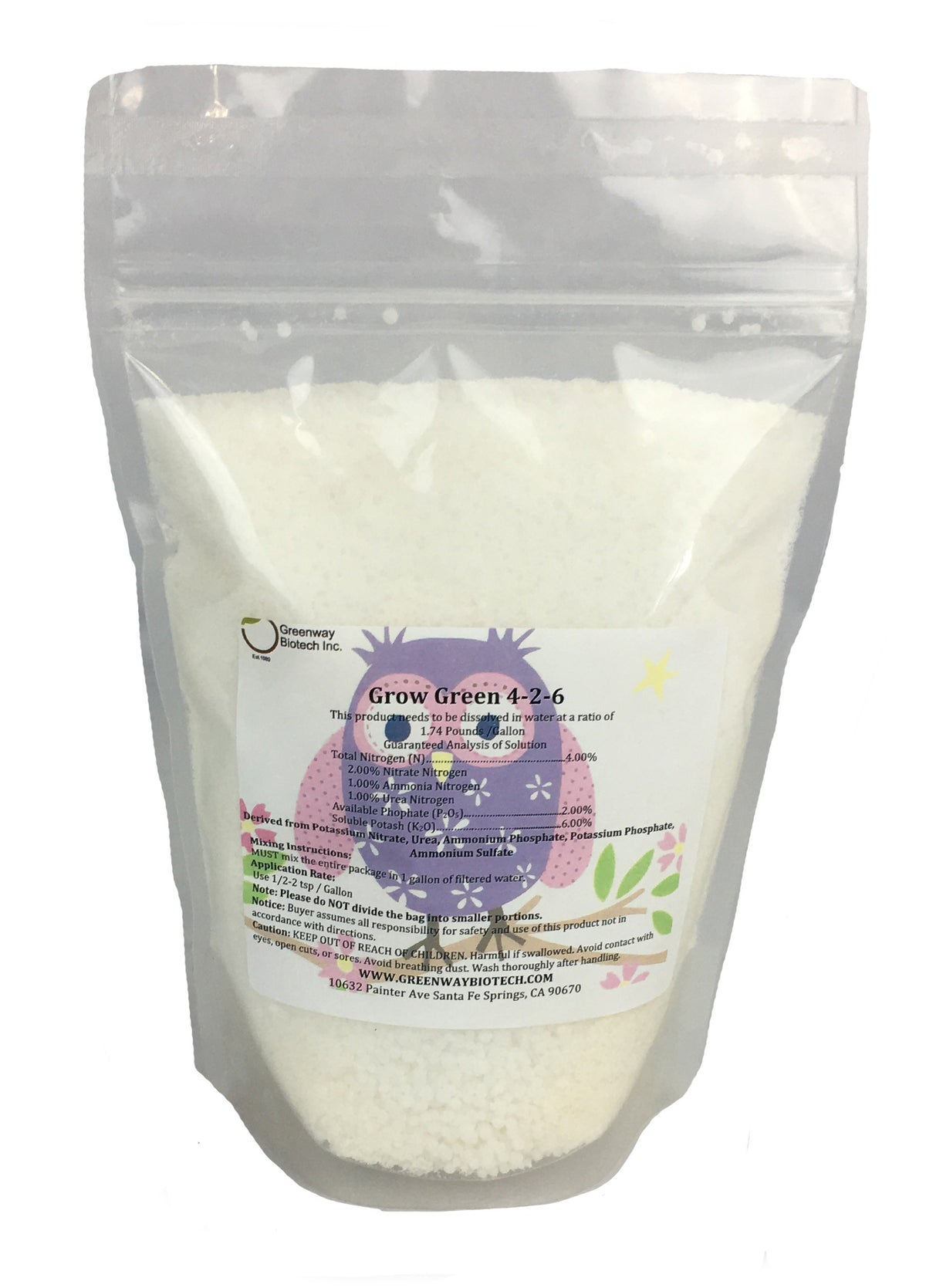
Grow Green 4-2-6 Concentrate – Complete Vegetative N‑P‑K
- Regular Price
- $ 27.99
- Sale Price
- $ 27.99
- Regular Price
Sold Out
- Unit Price
- $ 16.46per lb
Grow Green 4-2-6 Concentrate
Price per lb by size: larger sizes save up to 48%
| Size | Price | Per lb | Per lb vs 1.7 Pounds (Makes 1 Gallon) |
|---|---|---|---|
| 1.7 Pounds (Makes 1 Gallon) | $ 27.99 | $ 16.46 | – |
| 8.7 Pounds (Makes 5 Gallons) | $ 89.99 | $ 10.34 | 37% less |
| 17.4 Pounds (Makes 10 Gallons) | $ 169.99 | $ 9.77 | 41% less |
| 34.8 Pounds (Makes 20 Gallons) | $ 299.99 | $ 8.62 | 48% less |
Shipping costs and limits
- Continental US, Standard shipping: free on orders of $100 or more, $9.99 on orders under $50, and $14.99 from $50 up to $100.
- UPS and FedEx options are also offered at checkout, at their own rates.
- Orders placed by 11 AM Pacific on a business day ship the same day.
- Alaska, Hawaii, US territories, APO/FPO and international addresses: the cost is shown at checkout, and 2-day delivery isn’t available to Alaska, Hawaii or P.O. boxes.