Pepper and Herb Fertilizer 11-11-40 | Chelated Micronutrients | Hydroponics, Soil & Foliar Application
- Regular Price
- $ 24.99
- Sale Price
- $ 24.99
- Regular Price
- $ 24.99
Sold Out
- Unit Price
- per

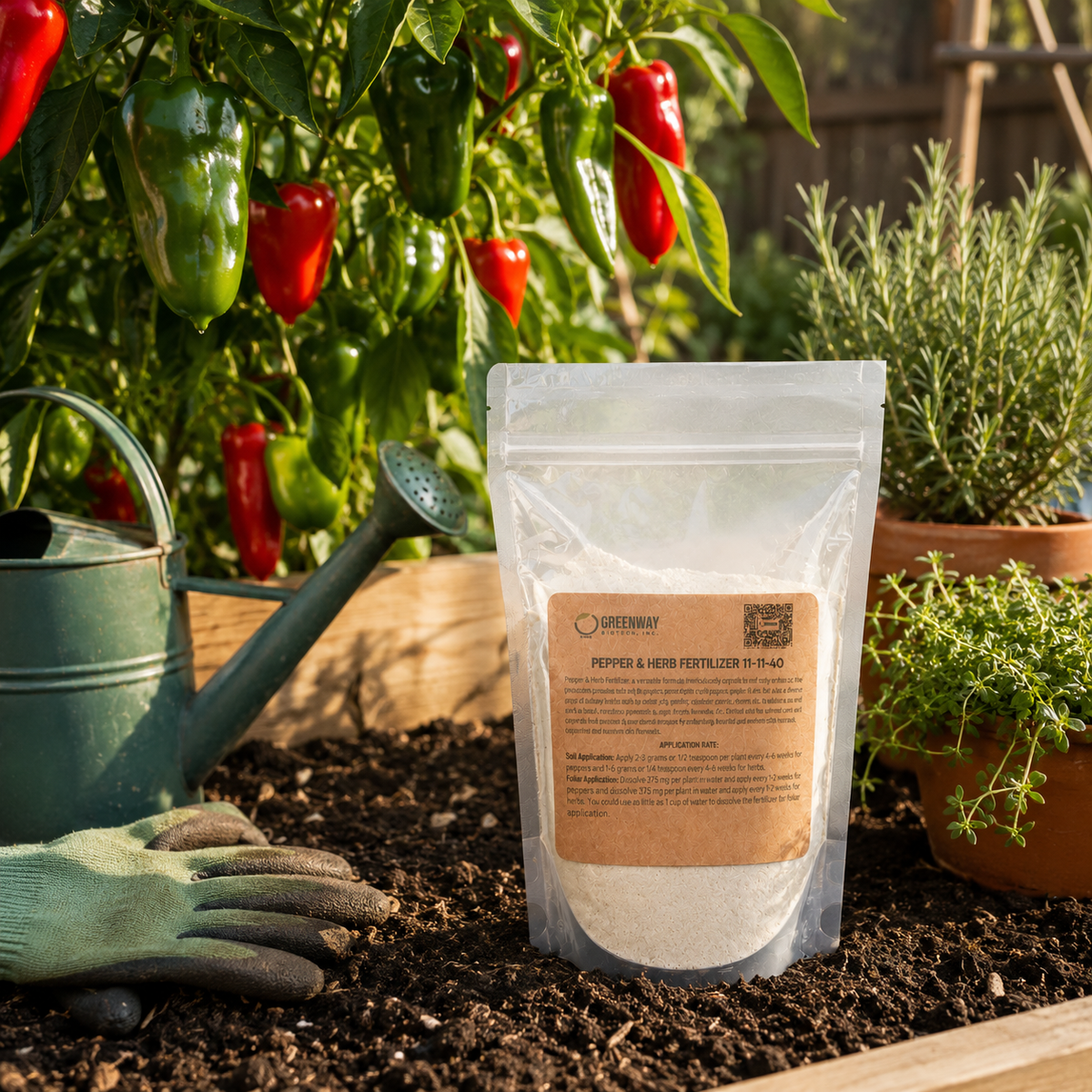




Water-soluble fertilizer for peppers and culinary herbs · 11-11-40 · chelated micronutrients · CDFA registered
Pepper & Herb Fertilizer 11-11-40 is a water-soluble fertilizer for peppers and for the culinary herbs named on its label, from basil, parsley, and cilantro to rosemary, sage, and thyme. It supplies 40% soluble potash (K₂O), 11% available phosphate (P₂O₅), and 11% nitrogen, almost all of it nitrate, with EDTA-chelated iron, manganese, zinc, and copper plus boron and molybdenum. Peppers get 1.5 grams per plant at transplanting, 3 grams at first flowers, and 4 grams every 4 to 6 weeks from fruit set through harvest; herbs get 1.5 grams per plant every 4 to 6 weeks. With a soil test you can size a bed by the potash the test calls for, and in hydroponics you dose it to a potassium target.
It is a potash-rich supplement, not a complete program. It supplies 3.6 parts potash for every part nitrogen, while university recommendations for peppers call for about as much nitrogen as potash, so most of the crop’s nitrogen has to come from another fertilizer. It contains no calcium or magnesium. Keep its concentrate separate from calcium concentrates.
| Specification | Detail |
|---|---|
| Total nitrogen (N) | 11.00%: 10.50% nitrate nitrogen, 0.50% ammoniacal nitrogen |
| Available phosphate (P₂O₅) | 11.00% |
| Soluble potash (K₂O) | 40.00% |
| Iron (Fe) | 0.50%, all chelated |
| Zinc (Zn) | 0.30%, all chelated |
| Manganese (Mn) | 0.20%, all chelated |
| Boron (B) | 0.10% |
| Copper (Cu) | 0.05%, all chelated |
| Molybdenum (Mo) | 0.001% |
| Calcium, magnesium | None guaranteed |
| Derived from | Monopotassium phosphate, potassium nitrate, ammonium sulfate, potassium sulfate, iron EDTA, boric acid, manganese EDTA, copper EDTA, zinc EDTA, sodium molybdate |
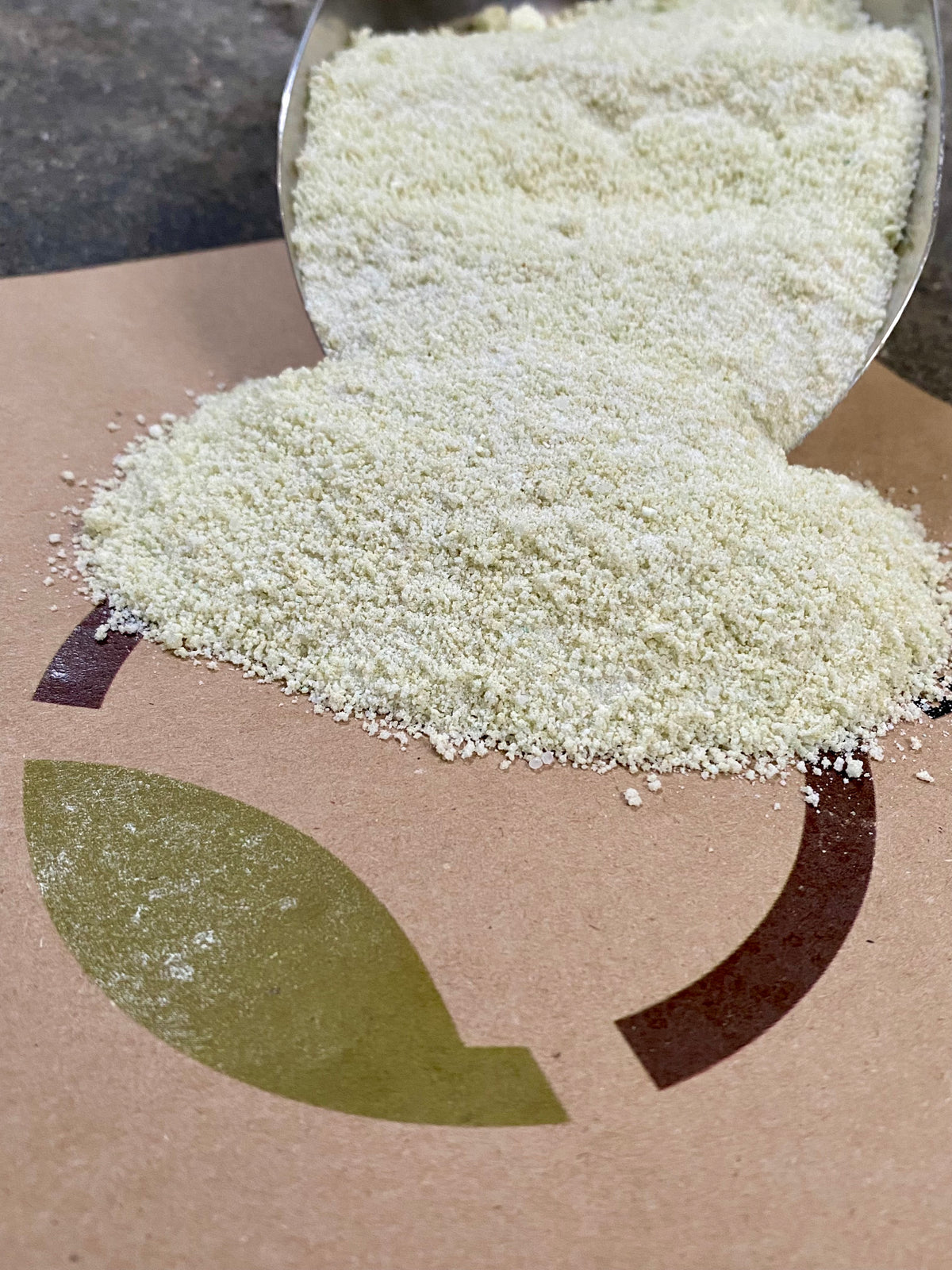
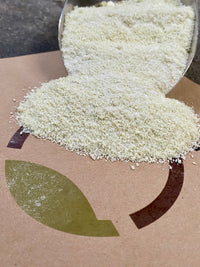
| Form | White to off-white crystalline powder or mixed granular and powdery material. The Safety Data Sheet describes it as fully water-soluble at recommended application rates |
| In solution | 1 g of product per liter adds 110 ppm nitrogen (105 nitrate N, 5 ammoniacal N), 48 ppm phosphorus, 332 ppm potassium, 5 ppm iron, 3 ppm zinc, 2 ppm manganese, 1 ppm boron, 0.5 ppm copper, and 0.01 ppm molybdenum. 1 g per US gallon adds 29 ppm N, 12.7 ppm P, and 88 ppm K |
| Registration | Registered with the California Department of Food and Agriculture (CDFA); CDFA-approved label dated April 29, 2025 |
| Heavy-metal test | Tested by an independent laboratory (AgroLab/Matrix Sciences; sample received December 16, 2024; reported December 20, 2024): arsenic 0.92, cadmium 0.01, cobalt 0.22, lead 0.33, nickel 2.01, selenium 5.66 mg/kg, mercury not detected. Arsenic, cadmium, and lead in the tested sample were well below California’s limits for fertilizers. See Product documents |
| Hazards | Harmful if swallowed. Avoid contact with eyes, open cuts, or sores, and avoid breathing dust. See Handling, storage & limitations |
| Package sizes | 1, 2, 5, 10, and 25 lb |
Percentages are by weight. One pound supplies 181 g (0.40 lb) of potash (K₂O), 50 g (0.11 lb) of available phosphate (P₂O₅), and 50 g (0.11 lb) of nitrogen, about 95% of it nitrate. Labels state phosphorus and potassium as oxides; the solution figures convert them to elements (P = P₂O₅ × 0.436, K = K₂O × 0.830), because hydroponic recipes use elemental ppm. The potassium and ammonium sulfate also supply some sulfur, which the label does not guarantee. Weigh the product: this page assumes no weight for a spoonful.
Choose it when peppers or the herbs on its label need potash and some phosphate, and you have another source of nitrogen, calcium, and magnesium.
The label names Capsicums such as bell peppers, sweet peppers, chili peppers, and guajillo chili. Feed 1.5 g per plant at transplanting, 3 g at first flowers, and 4 g every 4 to 6 weeks from fruit set through harvest, so the potash rises as the plants grow. Your soil test sets how many of the later feedings are needed.
The label names umbellifers such as celery, dill, parsnip, coriander (cilantro), parsley, and fennel, and mint-family herbs such as basil, rosemary, peppermint, sage, thyme, and lavender, and gives 1.5 g per herb plant every 4 to 6 weeks. It does not say which rate applies to celery and parsnip; size those by a soil test. University of Minnesota Extension advises fertilizing herbs lightly, because rich soils promote fast, lush growth but reduce essential-oil production, which lowers flavor and aroma.
Of Greenway’s high-potash crop formulas, it carries the most nitrogen for its potash: 0.28 lb of nitrogen with every pound of potash, against 0.22 lb in the cucumber and lettuce formulas and 0.11 lb in Tomato Fertilizer 4-18-38. It is still a potash source first. See Compare your options.
Dosed to a potassium target, it can supply the potash and part of the phosphate in a pepper nutrient solution, with calcium nitrate in a separate stock for calcium and most of the nitrogen. University of Florida IFAS grew shade-house peppers on a solution of 120 to 200 ppm potassium. See the hydroponic formula.
Use one of three bases for feeding the roots: the per-plant amounts by growth stage, a soil test’s potash recommendation for a bed or field, or a potassium target for a nutrient solution. The label also gives a foliar direction. Weigh the product. The pepper amounts by growth stage update the single per-plant rate on packages printed with the April 2025 label; contact us with any questions.
Test first. Clemson Extension advises following a soil test to keep the soil pH for peppers between 6.0 and 6.5, and calls a soil test the best guide to a crop’s fertilizer needs. University of Minnesota Extension says most herbs grow best in well-drained soil at pH 6.0 to 7.5. For nutrient solutions, test your water for potassium, calcium, and magnesium before you mix.
Peppers need more potash as they move from transplanting into flowering and fruiting, so Greenway’s amounts per plant rise with each stage: 1.5 g at transplanting, 3 g at first flowers, and 4 g every 4 to 6 weeks from fruit set through harvest. Keep feedings at least 4 weeks apart, even if your transplants were already flowering when you set them out. The weeks below follow the stages in the Mid-Atlantic pepper drip schedule and are approximate; Clemson Extension expects peppers to be ready for harvest about 70 to 85 days after transplanting. Weigh each dose on a pocket scale that reads to 0.1 g.
| Growth stage | About when | This product | Calcium nitrate (nitrogen and calcium) |
|---|---|---|---|
| Seedlings in trays | Before transplanting | A feeding solution of 0.3 g per liter (1.1 g per US gallon), 2 to 3 times a week; halve it while hardening off | 0.43 g per liter (1.6 g per US gallon), dissolved separately into the same water, unless your seed-starting mix already contains fertilizer; halve it while hardening off |
| Transplanting and early vegetative growth | Weeks 0 to 2 | 1.5 g per plant, 4 to 6 inches from the plant, watered in | None yet |
| Late vegetative growth | Weeks 3 to 4 | None | ½ lb per 100 sq ft or per 30 ft of row, 3 to 4 weeks after planting |
| Early flowering | Weeks 5 to 6, at first flowers | 3 g per plant, at least 4 weeks after the transplanting feeding | None |
| Fruit set and development | Weeks 7 to 8 | 4 g per plant, about 4 weeks after the first-flower feeding | The same amount again, 3 to 4 weeks after the first sidedress |
| Harvest period | Week 9 onward | 4 g per plant every 4 to 6 weeks while plants keep fruiting, only as your soil test allows | More only if needed; the Mid-Atlantic recommendations allow a smaller, third nitrogen sidedress later in the season |
What each dose supplies. 1.5 g supplies 0.6 g of potash (K₂O), 0.17 g of phosphate (P₂O₅), and 0.17 g of nitrogen; 3 g supplies 1.2, 0.33, and 0.33 g; and 4 g supplies 1.6, 0.44, and 0.44 g. For 12 pepper plants that is 18 g at transplanting, 36 g at first flowers, and 48 g at each feeding from fruit set on.
Seedlings. Utah State University Extension gives 100 ppm of nitrogen, phosphorus, and potassium as suitable for most vegetable transplants, feeds pepper-family transplants two to three times a week, and halves the feed while hardening them off. Dosed to that 100 ppm of potassium, this product adds only 33 ppm nitrogen and about 15 ppm phosphorus, so add the calcium nitrate (it brings nitrogen to 100 ppm and adds 82 ppm calcium) unless your seed-starting mix already contains fertilizer. Dissolve each product separately into the water, and halve both while hardening off.
How Greenway set the pepper amounts. The Mid-Atlantic pepper drip schedule, which is for daily injection rather than single plants, raises potash after a preplant application from 0.5 lb per acre per day in early vegetative growth to 1.8 lb at harvest on coarse soils testing low to medium in potassium. Converted to one plant at Clemson Extension’s spacing (12 inches apart in rows 3 feet apart, about 14,500 plants per acre), that is about 1.3 g of product for the first 4 weeks, 2.7 g for weeks 5 to 8, and 3.9 g for each 4 weeks after, rounded to 1.5, 3, and 4 g. Four feedings total 12.5 g per plant, about 160 lb of potash per acre. For a season the Mid-Atlantic recommendations call for 200 lb of potash per acre for peppers on soil testing low in potassium, 150 on medium, 100 on high, and none on very high: on high-testing soil skip the later feedings, on very high soil do not use this product, and count any potash fertilizer worked in before planting. Packages printed with the April 2025 label give 3 g (1/2 teaspoon) per pepper plant every 4 to 6 weeks; these amounts update it and supply about the same potash over a season.
Herbs. The label gives 1.5 g (¼ teaspoon) per herb plant every 4 to 6 weeks through the growing season. Herbs have no fruiting stage, and University of Minnesota Extension advises feeding them lightly. Herbs a foot apart receive about 58 lb of potash per acre from each application; four would supply about 230 lb, more than the Mid-Atlantic recommendations give parsley even on low-potassium soil, so on soil testing medium or higher use fewer applications or size the bed by a soil test. Do the same for celery and parsnip, whose per-plant rate the label does not give, and for cilantro, dill, parsley, and other herbs sown thickly from seed.
No rate is given for plants growing on in containers of potting mix, other than the seedling feed above; email us before using it there. The weight of a teaspoon of this product has not been measured, so weigh every dose.
Placement. Clemson Extension advises placing sidedress fertilizer 4 to 6 inches from the plants to avoid burning the roots. Water it in afterward, and keep it off the leaves.
Formula. Pounds of product = pounds of potash (K₂O) your soil test recommends ÷ 0.40. Multiply by 453.6 for grams. The Mid-Atlantic recommendations broadcast and disk in the season’s potash for peppers before planting, or supply it through a drip fertigation schedule.
| Source and crops | Low | Medium | High | Very high |
|---|---|---|---|---|
| Mid-Atlantic: peppers | 200 | 150 | 100 | 0 |
| Mid-Atlantic: parsley | 200 | 150 | 100 | 0 |
| Mid-Atlantic: celery | 250 | 150 | 100 | 0 |
| Mid-Atlantic: parsnips | 150 | 100 | 50 | 0 |
| UF/IFAS: pepper, parsley, and other vegetables in the same group | 120–150 | 100 | 0 | Not used (three levels) |
| UF/IFAS: celery | 150–250 | 100 | 0 | Not used (three levels) |
| K₂O recommended per acre | This product per acre | This product per 100 sq ft |
|---|---|---|
| 50 lb | 125 lb | 130 g (0.29 lb) |
| 100 lb | 250 lb | 260 g (0.57 lb) |
| 120 lb | 300 lb | 312 g (0.69 lb) |
| 150 lb | 375 lb | 390 g (0.86 lb) |
| 200 lb | 500 lb | 521 g (1.15 lb) |
| 250 lb | 625 lb | 651 g (1.43 lb) |
Mid-Atlantic figures are from the 2026/2027 Mid-Atlantic Commercial Vegetable Production Recommendations; UF/IFAS figures are from its Florida fertilizer-management chapter (CV296, Mehlich-3 soil test: low 35 ppm or less, medium 36 to 60, high above 60). Soil-test labs define low, medium, and high differently, so use the recommendation printed on your own report, and apply no more potash than it calls for. Each pound of potash from this product also brings 0.28 lb of phosphate and 0.28 lb of nitrogen; on soils high in phosphorus, a potash-only source avoids adding phosphate the soil does not need.
Through drip irrigation, by crop stage. Pounds of product = pounds of K₂O to inject ÷ 0.40. The Mid-Atlantic recommendations apply 25 to 50% of the season’s nitrogen and potash under the plastic mulch before planting, then inject the rest stage by stage:
| Crop stage | Weeks | Coarse soil or under 2% organic matter, testing low to medium in potassium | Fine soil or over 2% organic matter, testing optimum or high in potassium |
|---|---|---|---|
| Preplant, under the mulch | Before planting | 250 lb per acre (100 lb K₂O) | 125 lb per acre (50 lb K₂O) |
| Early vegetative | 1–2 | 1.25 lb per day (0.5 lb K₂O) | 0.63 lb per day (0.25 lb K₂O) |
| Late vegetative | 3–4 | 1.75 lb per day (0.7 lb K₂O) | 0.88 lb per day (0.35 lb K₂O) |
| Early flowering | 5–6 | 2.5 lb per day (1.0 lb K₂O) | 1.25 lb per day (0.5 lb K₂O) |
| Fruit development | 7–8 | 3.75 lb per day (1.5 lb K₂O) | 1.88 lb per day (0.75 lb K₂O) |
| Harvest period | 9–14; continue through an extended harvest | 4.5 lb per day (1.8 lb K₂O) | 2.75 lb per day (1.1 lb K₂O) |
The schedule assumes 7,260 feet of bed per acre (beds 6 feet apart), so 1 lb of product per acre per day is about 6.2 g per 100 feet of bed per day: about 7.8 g in early vegetative growth and 28 g at harvest on the coarse, lower-potassium soil. The Mid-Atlantic recommendations say to base the overall rate on a soil test and to adjust it for other bed widths. UF/IFAS, for Florida peppers on soil testing low in potassium with no potash before planting, injects 1.5 lb of K₂O per acre per day in weeks 1 and 2 after transplanting, 2.0 in weeks 3 and 4, 2.5 in weeks 5 to 11, 2.0 in week 12, and 1.5 in week 13, or 3.75 to 6.25 lb of this product. Use one schedule, not both. This product supplies only 0.28 lb of nitrogen per pound of potash, so inject most of the nitrogen from another tank, such as calcium nitrate.
Even at 4 g per plant, this product supplies only 0.44 g of nitrogen per pepper plant, while university recommendations call for 100 to 180 lb of nitrogen per acre for peppers (Mid-Atlantic) or 200 lb (UF/IFAS). In soil without drip, the Mid-Atlantic recommendations put the potash down before planting and split the nitrogen by stage: 50 lb per acre before planting, 50 lb after first fruit set, and 25 to 30 lb later if needed. For home-garden peppers, Clemson Extension sidedresses calcium nitrate at ½ lb per 100 sq ft or per 30 ft of row, 3 to 4 weeks after planting and again 3 to 4 weeks later, as the Calcium Nitrate page does, and notes that lots of foliage with few blooms and fruit shows too much nitrogen. Clemson also advises against over-fertilizing basil, because rapid growth reduces its flavor. For calcium in soil, lime to the pH your soil test calls for, or use gypsum where calcium is low and pH is on target; Clemson ties blossom-end rot in peppers to a calcium deficiency within the plant and advises keeping the soil uniformly moist, but not saturated.
Formula. Grams of product = (potassium target in ppm − potassium already in your water in ppm) × liters of final solution ÷ 332. Multiply US gallons by 3.785 to get liters. Dose it to the potassium target; calcium, magnesium, and most of the nitrogen come from other ingredients in a separate stock.
UF/IFAS grew bell peppers in composted pine bark under shade structures (HS368) on a solution that changes at first flower: 80 ppm nitrogen, 50 ppm phosphorus, 120 ppm potassium, 150 ppm calcium, and 40 ppm magnesium from transplant to first flower, and 130 ppm nitrogen, 50 ppm phosphorus, 200 ppm potassium, 150 ppm calcium, and 50 ppm magnesium after first flower. Dose this product to the potassium target for your plants’ stage, and switch at first flower.
| Dose and nutrients | Transplant to first flower | After first flower |
|---|---|---|
| Potassium target | 120 ppm | 200 ppm |
| This product per liter of final solution | 0.36 g | 0.60 g |
| This product per US gallon | 1.37 g | 2.28 g |
| Nitrogen it adds (solution target) | 40 ppm (80) | 66 ppm (130) |
| Phosphorus it adds (solution target) | 17 ppm (50) | 29 ppm (50) |
| Calcium and magnesium it adds (solution targets) | None (150 Ca, 40 Mg) | None (150 Ca, 50 Mg) |
After first flower, at 0.60 g per liter, this product supplies the following:
| Nutrient | From this product at 0.60 g/L | UF/IFAS pepper solution | Supply the difference with |
|---|---|---|---|
| Potassium (K) | 200 | 200 | Nothing further |
| Phosphorus (P) | 29 | 50 | A phosphorus source without potassium, if you want the full 50 |
| Nitrogen (N) | 66 (63 nitrate, 3 ammoniacal) | 130 | Calcium nitrate, in its own stock |
| Calcium (Ca) | 0 | 150 | Calcium nitrate, in its own stock |
| Magnesium (Mg) | 0 | 50 | Magnesium sulfate (Epsom salt) |
| Iron (Fe) | 3.0 | 2.8 | Nothing further |
| Manganese (Mn) | 1.2 | 0.8 | None; about 1.5 times the solution |
| Zinc (Zn) | 1.8 | 0.3 | None; about 6 times the solution |
| Boron (B) | 0.60 | 0.7 | Nothing further |
| Copper (Cu) | 0.30 | 0.2 | None; about 1.5 times the solution |
| Molybdenum (Mo) | 0.006 | 0.05 | Only if a water or tissue test calls for it |
Calcium and nitrogen. Calcium nitrate 15.5-0-0 adds 190 ppm calcium and 155 ppm nitrogen per gram per liter. Raising calcium to 150 ppm from water with 30 ppm takes 0.63 g per liter and brings total nitrogen to about 164 ppm after first flower, above the solution’s 130; from water with no calcium, 0.79 g per liter brings it to about 189 ppm. Before first flower, with potassium at 120 ppm, the same calcium brings nitrogen to about 138 ppm against 80. Calcium nitrate cannot add calcium without nitrogen; email us if you want to hold both targets. UF/IFAS keeps magnesium sulfate in the same stock as the premix, away from calcium nitrate; as Epsom salt (about 10% magnesium), 0.5 g per liter adds about 50 ppm.
Micronutrients and phosphorus. At this dose the product supplies about as much iron and boron as the UF/IFAS solution, about 1.5 times the manganese and copper, 6 times the zinc, one-eighth of the molybdenum, and three-fifths of the phosphorus. Do not add a micronutrient mix; add a micronutrient only if a water or tissue test calls for it. In a recirculating system, replace the solution on schedule rather than topping it up with this product, and email us if leaves show damage.
Potassium and calcium balance. UF/IFAS cautions that high potassium can interfere with a plant’s ability to absorb calcium and magnesium, and in its tomato work links excess potassium with blossom-end rot. Dose to your recipe’s potassium target rather than above it, and supply the calcium.
Separate stocks. Penn State Extension advises keeping calcium in a different stock tank from phosphates and sulfates, and UF/IFAS describes one tank of calcium nitrate and another of a premix without calcium. This product carries both phosphate and sulfate, so keep its concentrate apart from calcium nitrate or Cal-Mag.
Stock strength. The UF/IFAS tomato recipe dissolves 16 lb of premix plus 10 to 12 lb of magnesium sulfate in a 30-gallon tank for injection at 1:100: about 64 g of premix per liter, or 112 g per liter in all. A 1:100 stock of this product for 200 ppm potassium, from potassium-free water, is about 60 g per liter, or 110 g per liter with magnesium sulfate for 50 ppm magnesium. Dissolve it in warm water and check that nothing settles out; if it does, use a lower injector ratio, which makes a weaker stock (for example, 1:100 instead of 1:200).
pH, EC, and solution changes. UF/IFAS targets pH 5.8 to 6.2 in its hydroponic tomato guide, which it calls a suitable base for pepper solutions. Oklahoma State lists pH 5.5 to 6.0 and an EC of 0.8 to 1.8 mS/cm for hydroponic peppers, advises checking pH and EC daily, and replacing the solution every two weeks. For herbs it lists EC and pH of 1.0 to 1.6 and 5.5 to 6.0 for basil, 1.0 to 1.6 and 5.5 to 6.5 for sage, 1.8 to 2.2 and 6.0 to 6.5 for parsley, and 1.8 to 2.4 and 6.5 for celery. The UF/IFAS pepper table gives no EC, so track your own solution’s EC. Dose herbs to your own recipe’s potassium target; for basil, Cornell’s Neil Mattson recommends 40 to 60 ppm magnesium, as reported by the e-GRO program. These are guide figures, not the only correct values for every system.
| Crop | Product per plant | Water per plant | Strongest mix | How often |
|---|---|---|---|---|
| Peppers | 575 mg (0.575 g) | At least 1 cup (240 mL) | 2.4 g per liter (9.2 g per US gallon) | Every 1 to 2 weeks |
| Herbs | 375 mg (0.375 g) | At least 1 cup (240 mL) | 1.6 g per liter (6.0 g per US gallon) | Every 1 to 2 weeks |
The label says to dissolve 575 mg per pepper plant or 375 mg per herb plant in water, and that you could use as little as 1 cup of water. This page reads that as at least 1 cup for each plant’s dose, the strongest mix the label describes. For 12 pepper plants, that is 6.9 g in at least 12 cups (0.75 gallon) of water. Use more water, never less, and try the spray on a few plants before a whole planting. Keep calcium concentrates out of the spray tank.
Extension sources treat foliar feeding as a supplement. University of Minnesota Extension notes that most nutrients are taken up through the roots, and the Mid-Atlantic recommendations say it is generally difficult to supply ample major and secondary nutrients through the leaves. Keep the soil or solution program as the main source.
Formulas. Per plant: grams of product = number of pepper plants × 1.5 at transplanting, × 3 at first flowers, or × 4 from fruit set; or number of herb plants × 1.5. Seedlings: 0.3 g per liter of feeding solution. Beds by soil test: pounds of product = pounds of potash (K₂O) recommended for the area ÷ 0.40. Solutions: grams of product = (potassium target − potassium in your water, in ppm) × liters of final solution ÷ 332. Foliar: 0.575 g per pepper plant or 0.375 g per herb plant, each in at least 1 cup of water. Multiply pounds by 453.6 for grams.
Worked examples. 12 pepper plants through four feedings: 18 g at transplanting, 36 g at first flowers, and 48 g at each of the next two feedings, 150 g in all; a 1 lb bag covers it. A 1-gallon seedling feed: about 1.1 g. A 200 sq ft bed whose soil test recommends 3 lb of potash per 1,000 sq ft: 0.2 × 3 = 0.6 lb of K₂O, ÷ 0.40 = 1.5 lb (680 g) of product, supplying 75 g of phosphate and 75 g of nitrogen; a 2 lb bag covers it. A 50-gallon fresh batch of pepper solution at the UF/IFAS 200 ppm potassium target, from water with no potassium: 200 × 189.3 L ÷ 332 = 114 g of product, adding 66 ppm nitrogen and 29 ppm phosphorus; a 1 lb bag covers it, and calcium nitrate for 150 ppm calcium from water with 30 ppm is 119.5 g in the separate stock. A 30-gallon injector stock at 1:100 (3,000 gallons of final solution) at 200 ppm potassium, from water with 5 ppm: 14.7 lb (6,669 g) in the stock tank, 222 g per gallon of stock; a 25 lb bag covers it, and the calculator also shows any lower-price combination of smaller bags.
| Bag size | Pepper plants, four feedings (12.5 g each) | Herb doses of 1.5 g |
|---|---|---|
| 1 lb (454 g) | About 36 | About 300 |
| 2 lb (907 g) | About 72 | About 600 |
| 5 lb (2.27 kg) | About 180 | About 1,510 |
| 10 lb (4.54 kg) | About 360 | About 3,020 |
| 25 lb (11.3 kg) | About 900 | About 7,560 |
The calculator below asks what you are feeding and how, applies the stage amount, the label’s rate, or your test result, states the nutrients supplied, and recommends the smallest single bag that covers one application or batch, plus any lower-price combination. Prices, tax, and shipping are confirmed at checkout, and availability when you add to cart.
The calculator needs JavaScript. If it does not appear, use the rate tables and formulas above to choose a size.
Potassium is the nutrient this product supplies most of. University of Minnesota Extension explains that potassium helps regulate the opening and closing of leaf stomata, which controls water loss and gas exchange, maintains turgor, and enhances the movement of sugars and starch in the plant. University recommendations for peppers call for roughly equal amounts of nitrogen and potash over a season: 100 to 180 lb of nitrogen and up to 200 lb of potash per acre in the Mid-Atlantic, 200 lb of nitrogen and up to 150 lb of potash in Florida. This product supplies 3.6 parts potash to one of nitrogen, which is why the nitrogen plan comes from another fertilizer. About 95% of its nitrogen is nitrate.
Blossom-end rot is a calcium problem inside the plant. The Mid-Atlantic recommendations attribute it in peppers to reduced calcium uptake and movement into the fruit at low soil moisture, and advise proper soil calcium, nutrient balance, and uniform, favorable soil moisture. This product contains no calcium, and no fertilizer alone controls blossom-end rot.
Pepper heat is set mostly by the variety and the growing conditions. New Mexico State University explains that heat level results from the plant’s genetics and its interaction with the environment, that temperature and water influence it, and that a mild cultivar becomes hotter under any kind of stress in the field. None of the university sources used for this page says that potassium or any fertilizer makes peppers hotter.
Its phosphate comes from monopotassium phosphate and its sulfur from potassium and ammonium sulfate. In concentrated form, calcium reacts with phosphate to form insoluble calcium phosphate and with sulfate to form gypsum, which is why nutrient recipes keep calcium nitrate in its own stock tank. Once each is diluted into the final solution they can be used together. This describes plant nutrition in general; it is not a trial of this finished product.
Match the product to your crop and your soil or water test. Analyses are each product’s guarantee as shown on its page.
| Option | N–P₂O₅–K₂O | Potash per part nitrogen | Choose it when |
|---|---|---|---|
| Pepper & Herb Fertilizer 11-11-40, this product | 11-11-40, chelated micronutrients | 3.6 | You grow peppers or the herbs on its label and need potash with some nitrogen and phosphate |
| Tomato Fertilizer 4-18-38 | 4-18-38 | 9.5 | You grow tomatoes and want less nitrogen and more phosphate per pound of potash |
| Cucumber Fertilizer 8-16-36 | 8-16-36 | 4.5 | You grow cucumbers, squash, and melons |
| Lettuce Fertilizer 8-15-36 | 8-15-36 | 4.5 | You grow lettuce and the leafy greens on its label |
| Strawberry Fertilizer 8-12-32 | 8-12-32 | 4.0 | You grow strawberries |
| Potassium Sulfate 0-0-53 | 0-0-53, 17% sulfur | No nitrogen | You need potash only, on soil already high in phosphorus |
| Monopotassium Phosphate 0-52-34 | 0-52-34 | No nitrogen | You build a solution from single salts and need phosphorus and potassium without nitrogen |
None of these contains calcium or magnesium. Each crop formula contains boron, so follow each product’s label for the crops it names.
It guarantees 11% nitrogen (10.5% nitrate, 0.5% ammoniacal), 11% available phosphate (P₂O₅), and 40% soluble potash (K₂O), plus 0.5% iron, 0.3% zinc, 0.2% manganese, and 0.05% copper, all chelated with EDTA, and 0.1% boron and 0.001% molybdenum. It contains no calcium or magnesium. Each pound supplies 181 g of potash, 50 g of phosphate, and 50 g of nitrogen.
For peppers, 1.5 g per plant at transplanting, 3 g at first flowers, and 4 g every 4 to 6 weeks from fruit set through harvest, keeping feedings at least 4 weeks apart; for herbs, 1.5 g per plant every 4 to 6 weeks. For 12 pepper plants that is 18 g, 36 g, and 48 g. Place it 4 to 6 inches from the plant and water it in. Packages printed with the April 2025 label give a single rate of 3 g per pepper plant; these stage amounts update it. Weigh the dose, because the weight of a teaspoon of this product has not been measured. No rate is given for plants growing on in containers of potting mix, other than the seedling feed, so email us before using it there.
Seedlings in trays: a feeding solution of 0.3 g per liter (1.1 g per US gallon), two to three times a week, with 0.43 g per liter of calcium nitrate dissolved separately into the same water for nitrogen unless the seed-starting mix already contains fertilizer; halve both while hardening off. At transplanting: 1.5 g per plant. At first flowers, at least 4 weeks later: 3 g. From fruit set, about 4 weeks after that: 4 g every 4 to 6 weeks through harvest, only as your soil test allows. In the garden, nitrogen comes from calcium nitrate: Clemson Extension sidedresses it 3 to 4 weeks after planting and again 3 to 4 weeks later. Greenway set these amounts from the rise in potash through the Mid-Atlantic pepper drip schedule, which this page also gives for drip systems; in hydroponics, the University of Florida IFAS pepper solution raises potassium from 120 ppm before first flower to 200 ppm after.
Size it by a soil test: pounds of product equal the pounds of potash (K₂O) your test recommends, divided by 0.40, applied before planting and worked in. For example, 3 lb of potash per 1,000 sq ft on a 200 sq ft bed is 1.5 lb of product. For peppers, the Mid-Atlantic recommendations call for up to 200 lb of potash per acre on low-potassium soil and University of Florida IFAS up to 150 lb, less as the soil tests higher and none on the highest-testing soils. Use the figure on your own report.
The label names Capsicums such as bell, sweet, chili, and guajillo peppers; umbellifers such as celery, dill, parsnip, coriander (cilantro), parsley, and fennel; and mint-family herbs such as basil, rosemary, peppermint, sage, thyme, and lavender. Basil, cilantro, and parsley are on that list, at 1.5 g per herb plant every 4 to 6 weeks; the label does not say which rate applies to celery and parsnip, so size those by a soil test. Herbs need little fertilizer: University of Minnesota Extension advises fertilizing lightly, because rich soils reduce essential-oil production and flavor. Because the product contains boron, the label warns that use on other crops can cause serious injury, and because it contains molybdenum, do not use it on forage or pasture. For a crop not on the label, email us first.
Yes, for peppers. This product supplies only 0.17 to 0.44 g of nitrogen per pepper plant per feeding, and university recommendations call for 100 to 200 lb of nitrogen per acre for peppers. For home-garden peppers, Clemson Extension sidedresses calcium nitrate at 1/2 lb per 100 square feet or per 30 feet of row, 3 to 4 weeks after planting and again 3 to 4 weeks later. Do not overdo it: Clemson notes that lots of foliage with few blooms and fruit shows over-fertilization with nitrogen. Herbs need far less.
Dose it to your solution’s potassium target: grams = (target ppm K minus the K in your water) × liters of final solution ÷ 332. The University of Florida IFAS pepper solution raises potassium at first flower: 120 ppm from transplant to first flower is 0.36 g per liter, and 200 ppm after first flower is 0.60 g per liter, which also adds 66 ppm nitrogen and 29 ppm phosphorus. Supply calcium and most of the nitrogen with calcium nitrate in a separate stock tank, and magnesium with magnesium sulfate. Oklahoma State lists pH 5.5 to 6.0 and an EC of 0.8 to 1.8 mS/cm for hydroponic peppers. At the after-flower dose the product supplies about 6 times the zinc in the UF/IFAS solution, so do not add a micronutrient mix, and add any micronutrient only if a water or tissue test calls for it.
Yes, as the label directs: dissolve 575 mg (0.575 g) per pepper plant or 375 mg per herb plant in water and apply every 1 to 2 weeks. The label says you could use as little as 1 cup of water; this page reads that as at least 1 cup for each plant’s dose, which is at most 2.4 g per liter for peppers and 1.6 g per liter for herbs. Use more water, never less, and try it on a few plants first. Extension sources treat foliar feeding as a supplement, because most nutrients are taken up through the roots.
Not as concentrates. Calcium reacts with the phosphate and sulfate in this product to form insoluble calcium phosphate and gypsum, which settle out and can clog emitters. Dissolve each product separately, keep them in different stock tanks, and dilute each into the final solution, where they can be used together. Then check the final solution for cloudiness, EC, and pH.
No fertilizer can promise that. New Mexico State University explains that pepper heat results from the plant’s genetics and its interaction with the environment: temperature and water influence it, and a mild variety becomes hotter under any kind of stress in the field. None of the university sources used for this page says that potassium or any fertilizer makes peppers hotter. Choose the variety for the heat you want.
No fertilizer can promise that, and this product contains no calcium. Blossom-end rot happens when too little calcium reaches the developing fruit. Clemson Extension advises keeping the soil uniformly moist, but not saturated, and the Mid-Atlantic recommendations advise proper soil calcium, nutrient balance, and uniform soil moisture. University of Florida IFAS cautions that high potassium can interfere with calcium uptake, so apply no more potash than your soil test calls for, and supply calcium separately.
Articles give background. For this product, use the rates and documents on this page.
The herb and foliar rates, crop list, and cautions come from the label; the pepper amounts by growth stage are Greenway’s, set as explained under Application rates; the safety statements come from the Safety Data Sheet; and the rest come from the publications below, which explain crop nutrition but do not evaluate or endorse this product.
Rates and sources reviewed October 12, 2026.
Not sure whether to feed per plant or by soil test, or how to fit this product into a nutrient recipe? Email your crop, growing method, and soil or water test results to questions@greenwaybiotech.com, or call (562) 351-5168, Monday to Friday, 7 AM to 5 PM Pacific, and we will work through it with you.
Ready to buy? Calculate your amount & choose a bag
Every order carries a 90-day satisfaction guarantee, and we pack and ship from Madera, California. You can also choose a package weight from the size selector at the top of this page.
Greenway Biotech, Inc. is a family-owned fertilizer company based in Madera, California, blending and packaging specialty fertilizers and soil amendments in California since 1989.
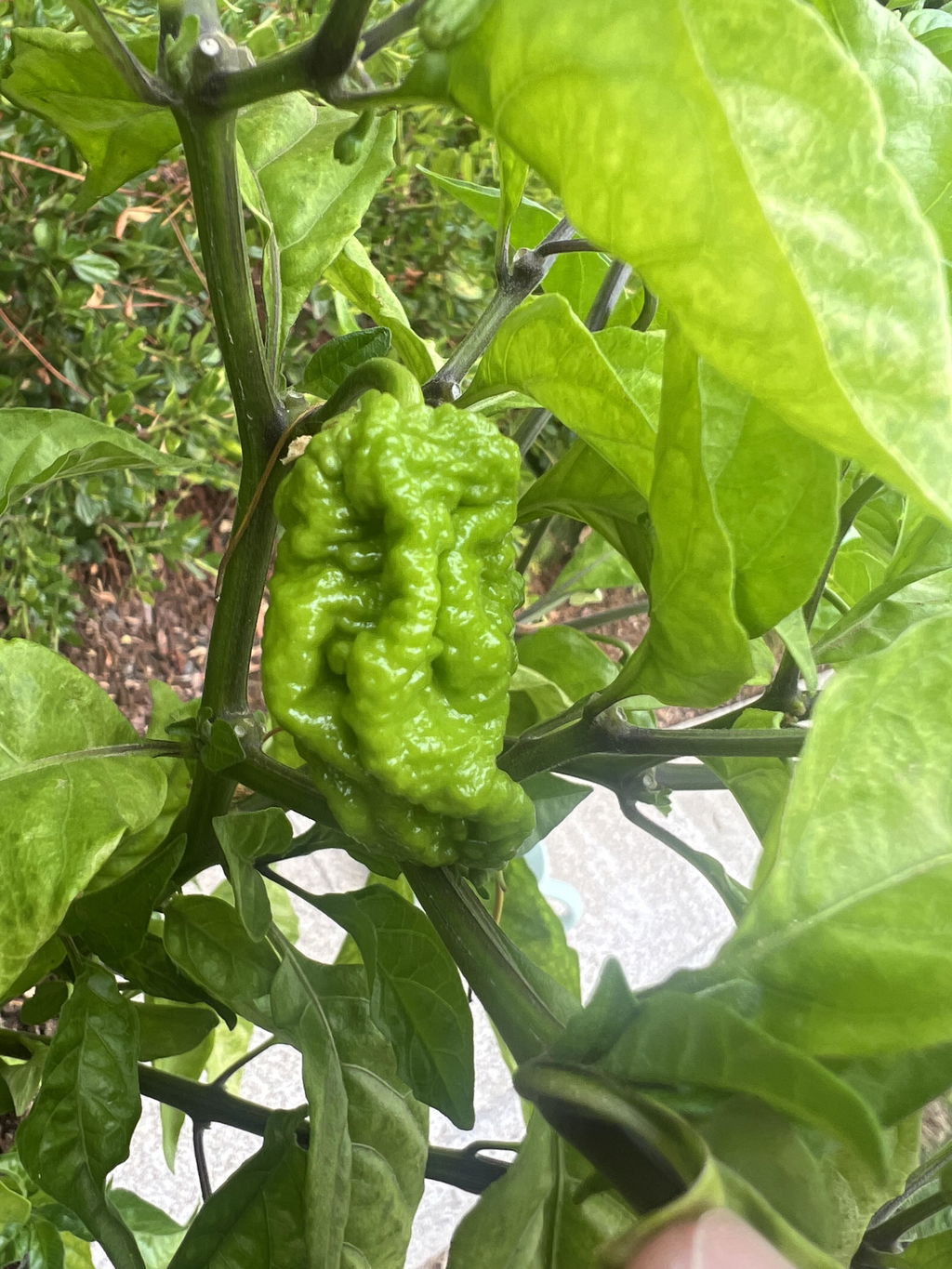
It’s been a week since I applied this product. Within this week I gained 8 more Carolina Reaper pepper fruit. The leaves also look darker green.
Perfect for our hot peppers, huge boost in plant health and vigor with application
Just started using this season and can already see good results.
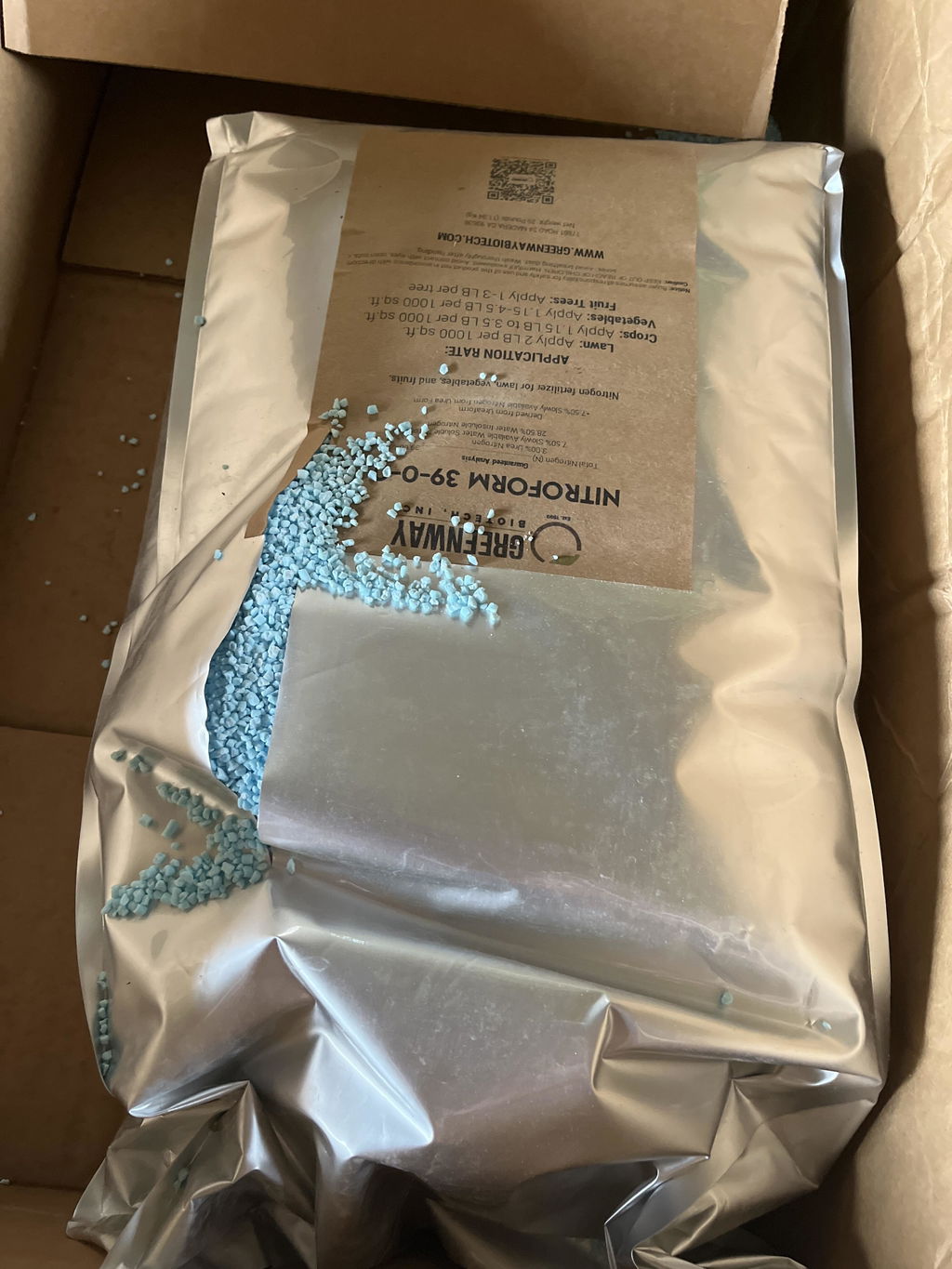
Item received was damaged, The FedEx driver had to put the damaged envelope in a plastic bag to keep the chemicals off of his skin, At least a half a bound of the fertilizer had spilled out. I sent an email to the questions dept and got no reply regarding the shipping. Please do better when shipping these chemicals...
We sincerely apologize for this completely unacceptable shipping experience and understand your concerns about the damaged packaging.
You are absolutely right to be frustrated, and we take full responsibility for the packaging failure that caused your fertilizer to spill during shipping. No customer or delivery driver should have to deal with damaged packages, regardless of the product inside.
We want to clarify that we have not received any emails from you in our customer service system - it's possible there was a technical issue or the message didn't reach us. We would have responded immediately had we received your inquiry, as customer safety and satisfaction are our top priorities.
While our fertilizer is not a toxic chemical and is safe for handling, we completely understand the driver's caution with any unknown spilled substance, and the packaging failure is still entirely unacceptable on our part.
We recently switched to new compostable packaging as part of our sustainability efforts, but we're aware this has unfortunately led to an increase in shipping damage. We're actively working on sourcing more durable alternatives that will better protect your order during transit while maintaining our environmental commitment.
If you haven't already, please contact us directly at questions@greenwaybiotech.com so we can provide you with a full replacement or refund immediately. We're committed to making this right and ensuring you have a much better experience going forward.
Thank you for bringing this issue to our attention, and we apologize again for the inconvenience.
Not sure who the idiot is that thought putting chemicals in a paper bag and mailing them across the country was a good idea but you need to fire them immediately. When I opened the package the chemicals went everywhere. I have bought from you for many years - never again
We are truly sorry for this terrible experience and completely understand your frustration.
You're absolutely right to be upset - this packaging failure is unacceptable, especially for a loyal customer who has supported us for many years. We take full responsibility for this mess.
We recently switched to compostable paper-based packaging as part of our sustainability efforts, but we're now aware this has created serious shipping problems. While our organic fertilizer is not a toxic chemical and is safe to handle, having any product spill during shipping is completely unacceptable and creates an unnecessary mess and safety concern.
We're actively working to source more durable compostable packaging alternatives that will properly protect your order during transit while maintaining our environmental commitment.
Please contact us directly at questions@greenwaybiotech.com if you haven't already so we can provide you with a full refund and cover any cleanup costs this may have caused. We know we've broken your trust after years of loyalty, and while we understand if you choose not to order again, we're committed to making this right.
We value the years of business you've given us and are deeply sorry we've let you down with this packaging decision.
Nice packaging, but it got damp in transit and leaked! I appreciate your prompt delivery and I am anxious to see the results from using this fertilizer.
Thank you.
Does a great job. Plants are happy. It's a bit expensive though considering jacks and southern ag 20-20-20 is like 75 for 25lbs. They have much lower levels of micros but I'm not sure if the difference is worth the price disparity.
Your Fertilizer has always worked for us and is excellent for our pepper production.
Two applications on my plants and they are looking much better, lots of new green growth
It was a good experience. I had a problem and sent a picture. The problem was corrected in about 48 hrs. This is a good company to do business with.
This pepper fertilizer seemed to work over night. Only days after the first application new leaves popped out. I have since transplanted my starters from inside the house under a lamp to the backyard. Plants are up six inches. Impressive.
Great service. Very friendly
My pepper plant had no leaves, but the stem was still green, after the fertilizer, leaves are sprouting nicely and it’s looking like a plant again!
This product work excellent for our pepper program and now we are going to use it on our Herbs.
It was excellent and is continues to be a great product. It will become a standard for us yearly now on our pepper programs.
The results I'm getting with this fertilizer are amazing!
I've always grown peppers and chillies before but never had great results.
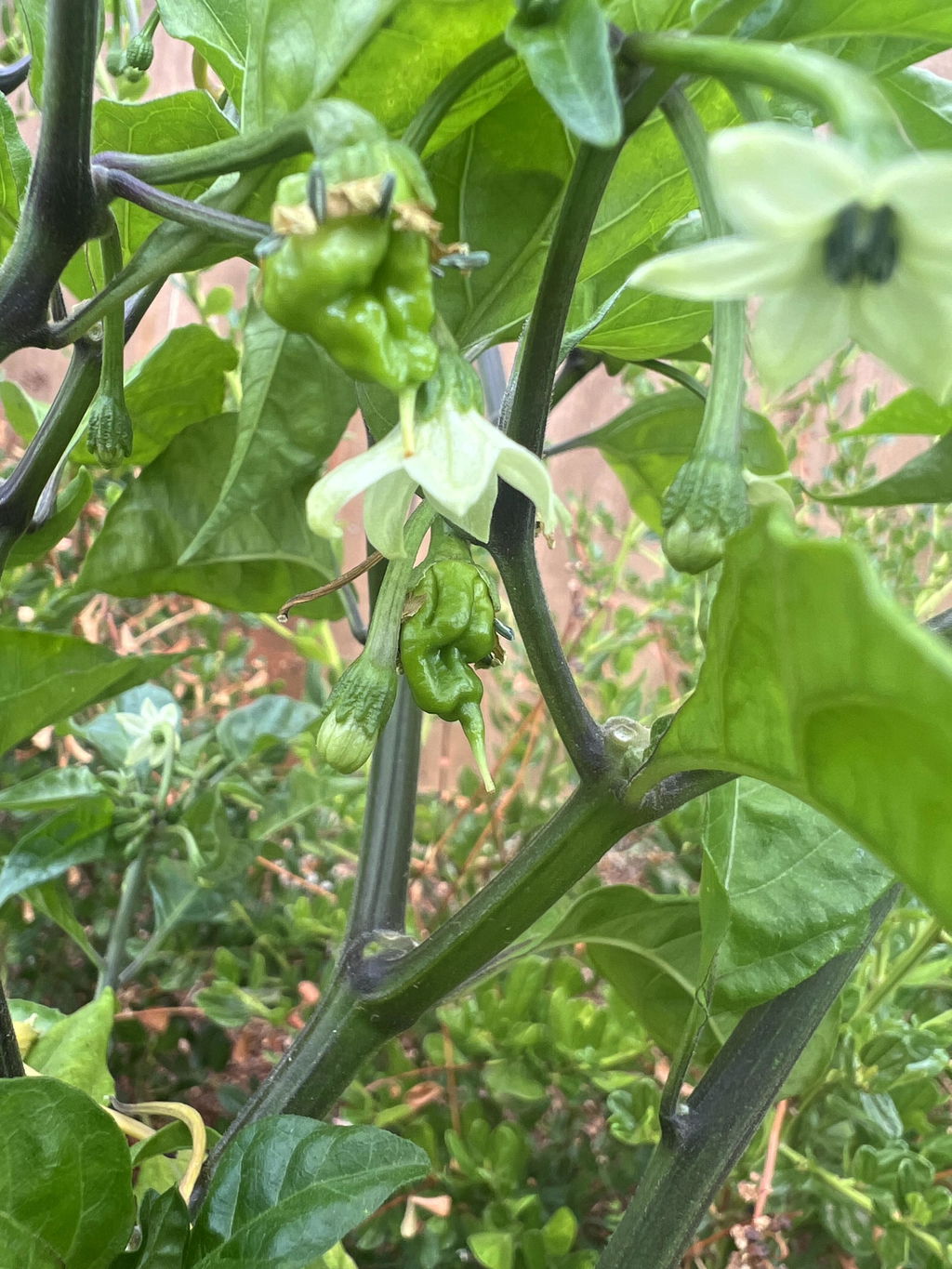
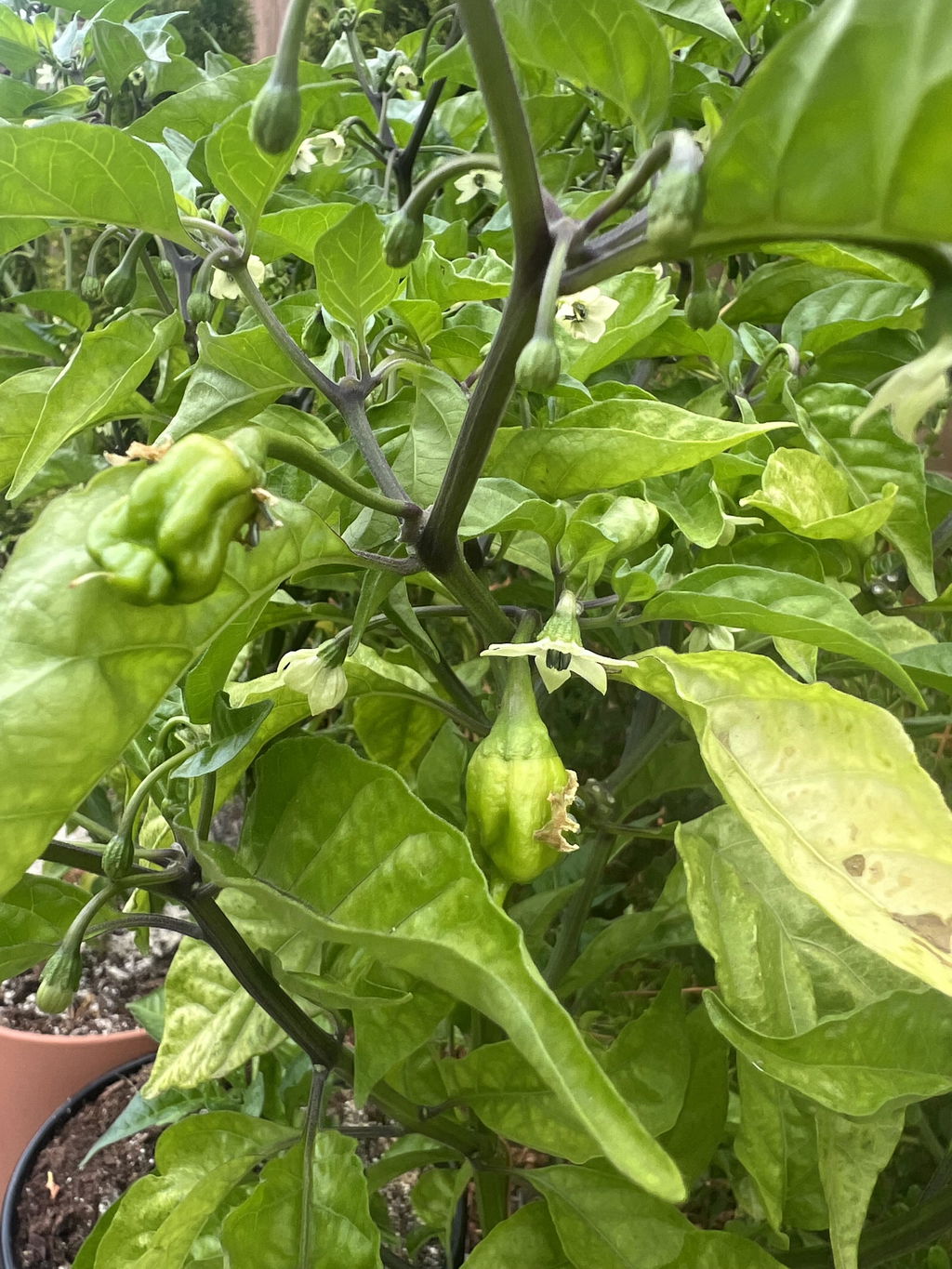
I came across this pepper & herb fertilizer and with in days of using it I saw happier healthier plants immediately. There all thriving now and look beautiful, lush and green. Not to mention all my plants are fruiting like crazy! I'll continue to use this for as long as it's available.
Don't know yet since I have not received the item
I have been using this for a couple of months now and it seems like it’s a good fertilizer for pepper, all of the ones I have used it on are doing great.
Every year I grow tomatoes and hot peppers. Usually I get an ok quantity of tomatoes, and enough peppers for one batch of hot sauce, 6-10 peppers on each plant. This year after using the "Pepper & Herb Fertilizer I have more than 3x as many peppers and SO many tomatoes. The crop was amazing! I've already purchased a new bag in preparation for next year.
This product has brought stunning results!
So far good. Interesting product. Ask me in two months.
first year with hydro and this product, sounds easier than weeding regular garden
What a great product. Simple to use and with all necessary nutrients for my plants. I will switch from General Hydroponics to this for sure.
Simple to use...luv this
Doesn't work for me at all, don't see any improvement with my pepper plants
I bought 5 fertilizers. I've only used one so far but it's been great! I saw new growth the very next day! Fantastic product!
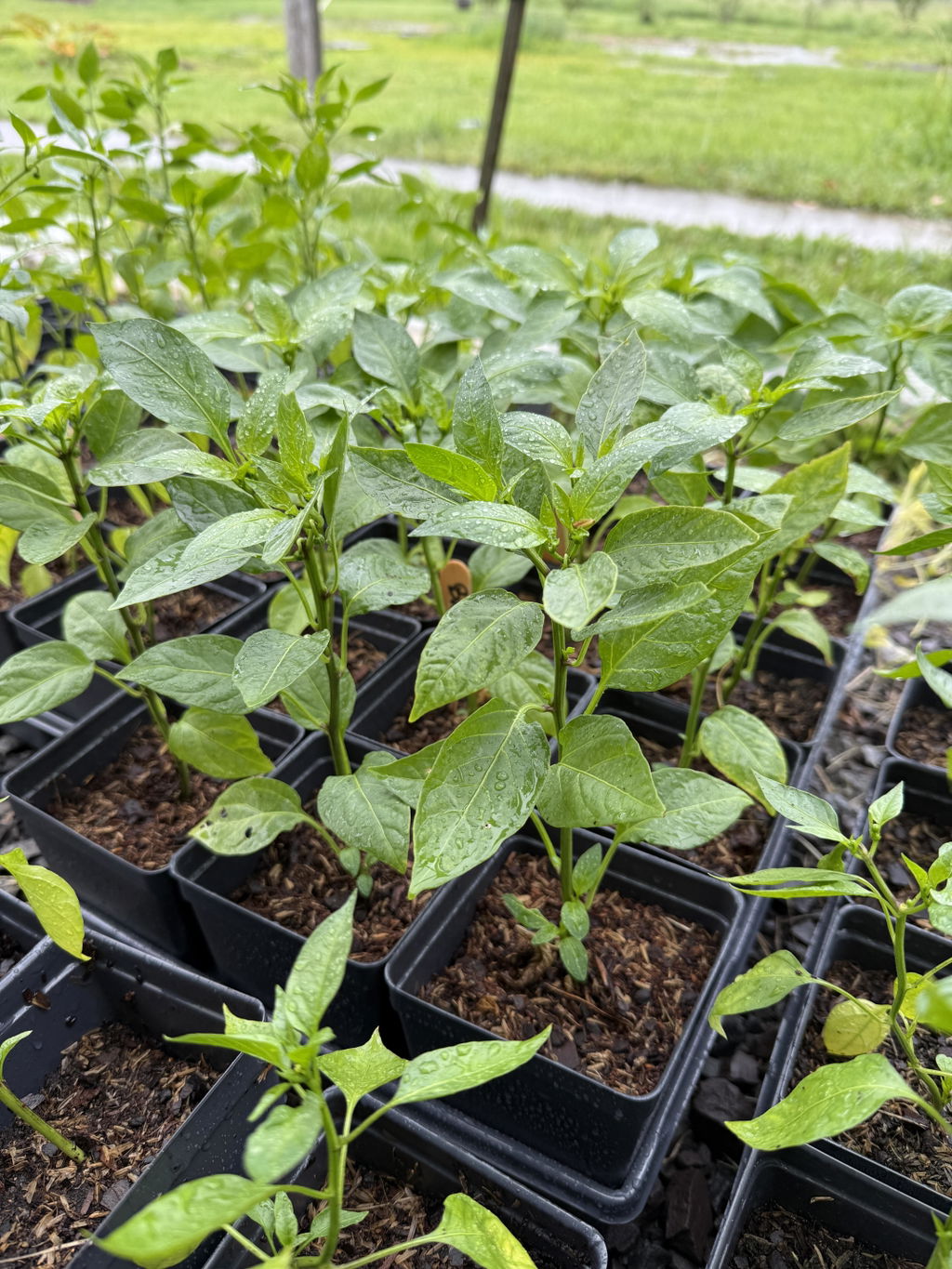
I start about 200 or so pepper, tomato, vegetable, herb, and flower plants from seed in my basement under artificial light. I'd used another brand of fertilizer for years with mediocre results. I started using the Greenway Biotech pepper and herb fertilizer and WOW is all I can say. They are so so so much healthier than previous years. Can't wait to see how they continue to do later this year. I also have the other Greenway Biotech fertilizers for specific plants (tomato fertilizer, vegetable, and flower) which I plan to use when the plants get bigger and grow outside.
After using this fertilizer my peppers grew fast in a week and are blooming flowers or starting buds.
Attentive and quick service, these guys rock!