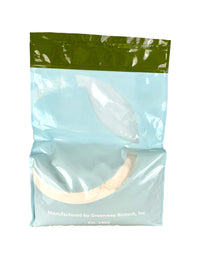
Continental US, Standard shipping: free on orders of $100 or more, $9.99 on orders under $50, and $14.99 from $50 up to $100.
UPS and FedEx options are also offered at checkout, at their own rates.
Orders placed by 11 AM Pacific on a business day ship the same day.
Alaska, Hawaii, US territories, APO/FPO and international addresses: the cost is shown at checkout, and 2-day delivery isn’t available to Alaska, Hawaii or P.O. boxes.
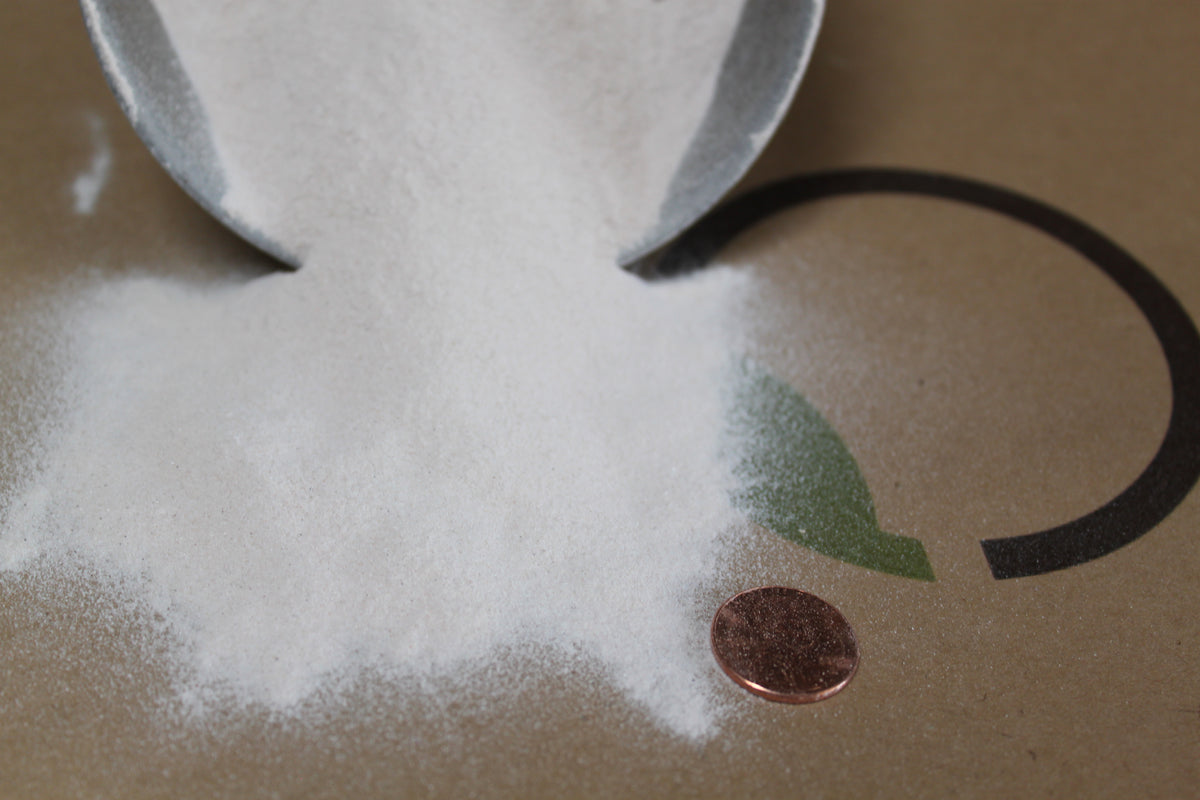
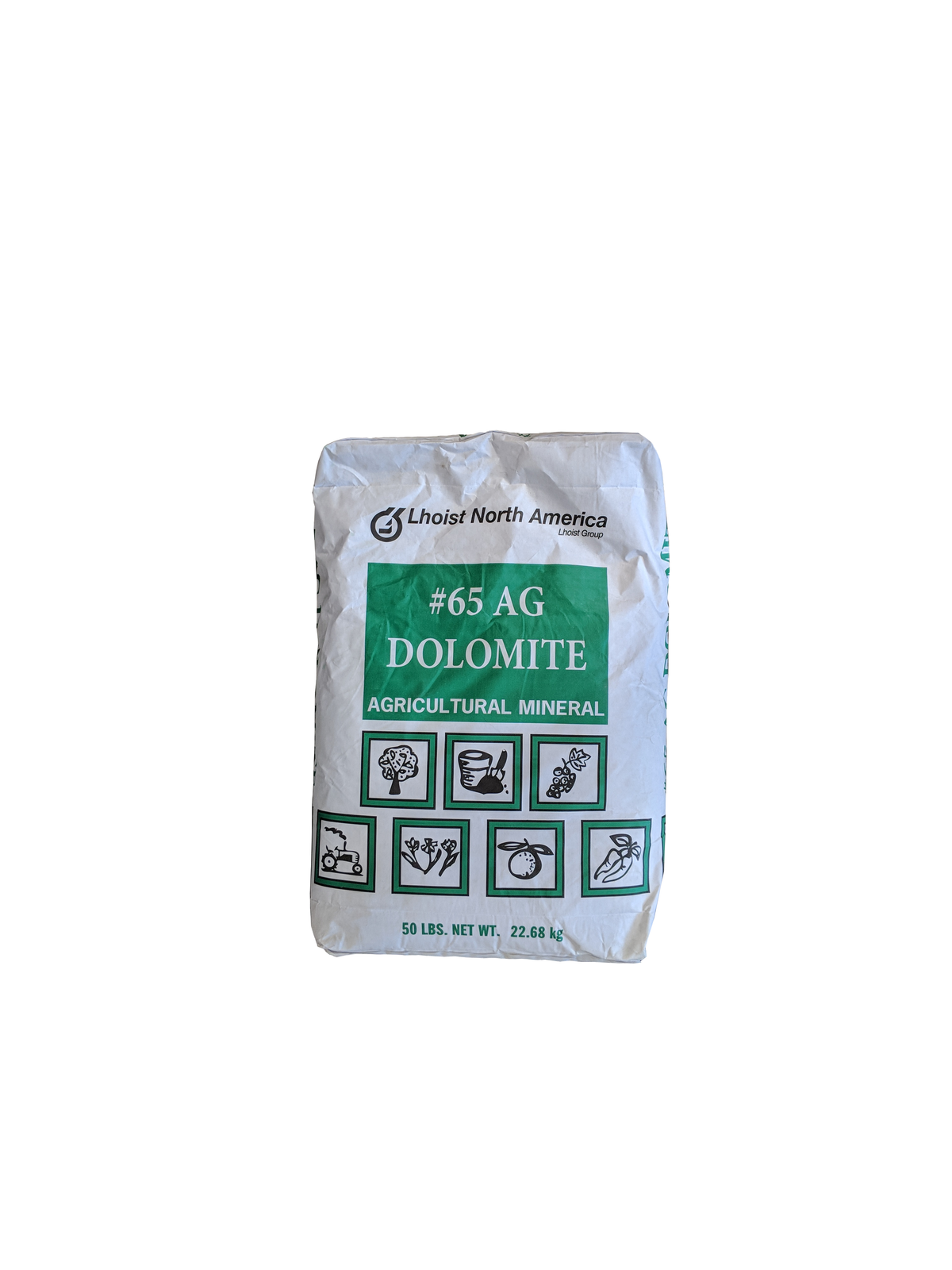
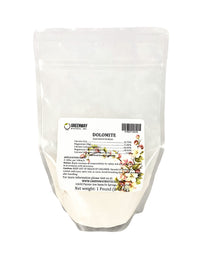
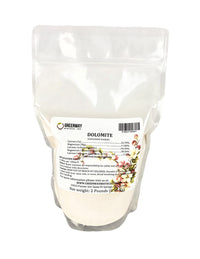
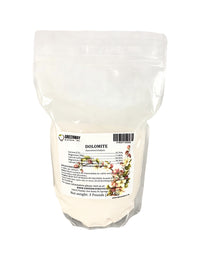
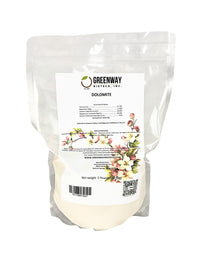
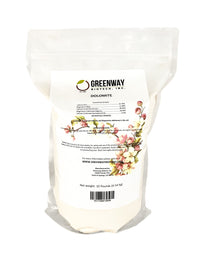
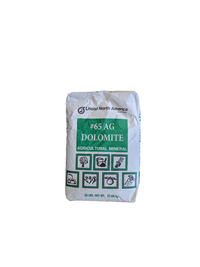
Dolomite is ground dolomitic limestone, a calcium magnesium carbonate, with 22.7% calcium and 11.8% magnesium. It raises the pH of acidic soil and supplies both nutrients. Mix it into beds before planting, spread it on lawns and under trees and shrubs, and add it to peat-based potting mixes, which are strongly acidic.
It is for acidic soil only. UC IPM finds high pH common in California soils and says raising it is not usually needed, so check the pH first; a home test kit is enough to start. Dolomite works slowly, over months. It is not for blueberries, azaleas, and other acid-loving plants, or for soil that is already high in magnesium.
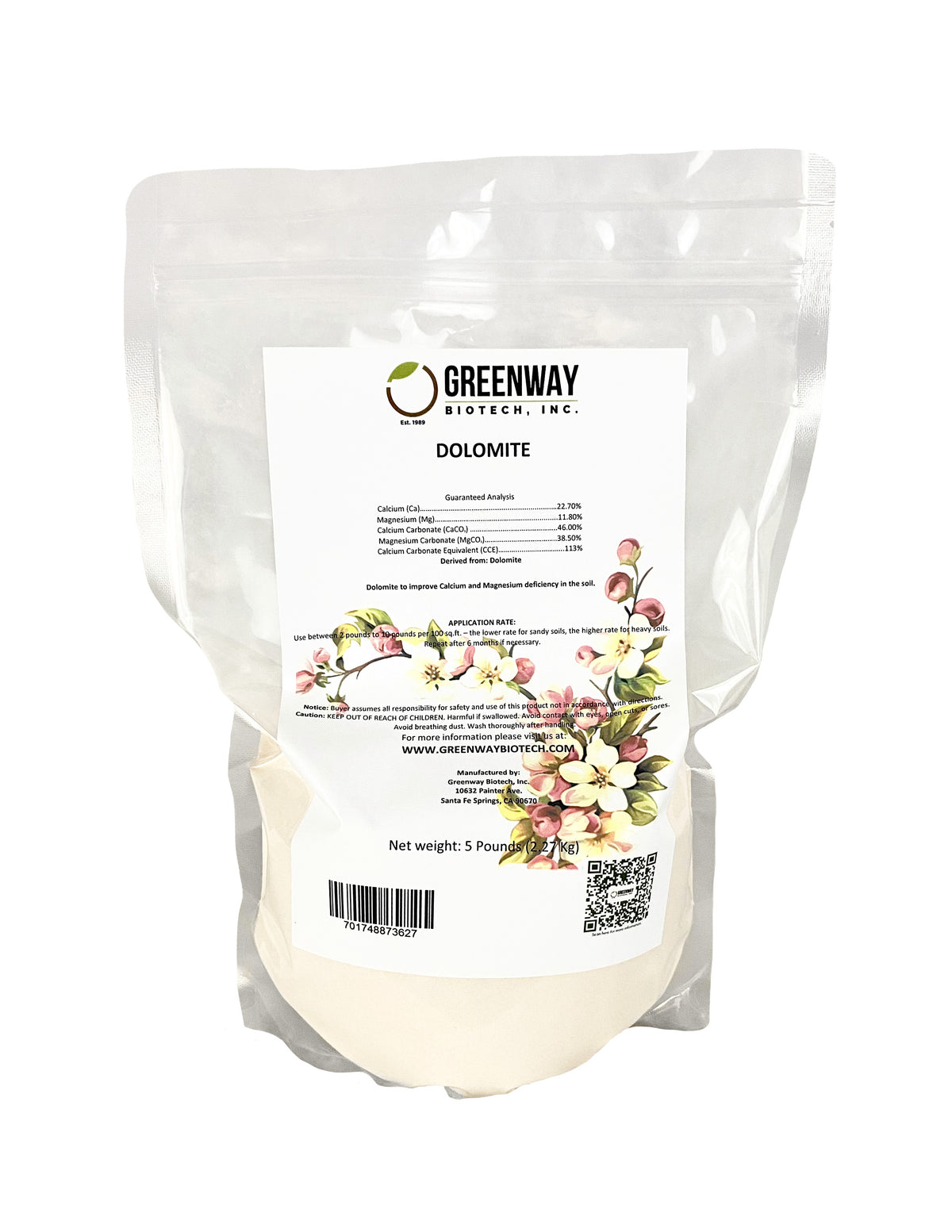
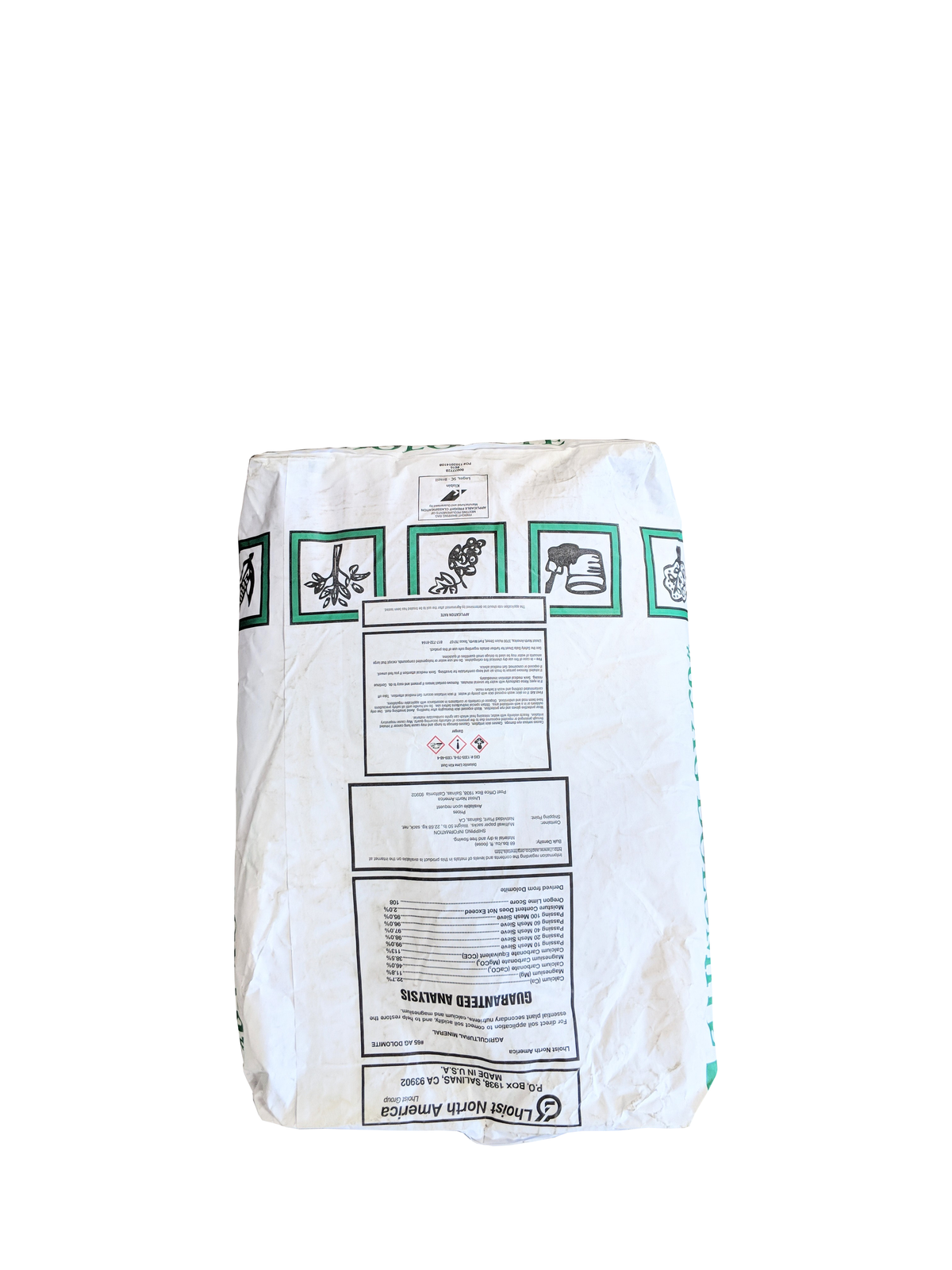
22.7% Ca · 11.8% Mg Calcium and magnesium carbonate; raises soil pH as it reacts
5–10 lb per 100 sq ft Oregon State’s general rate mixed in before planting, where the soil is acidic
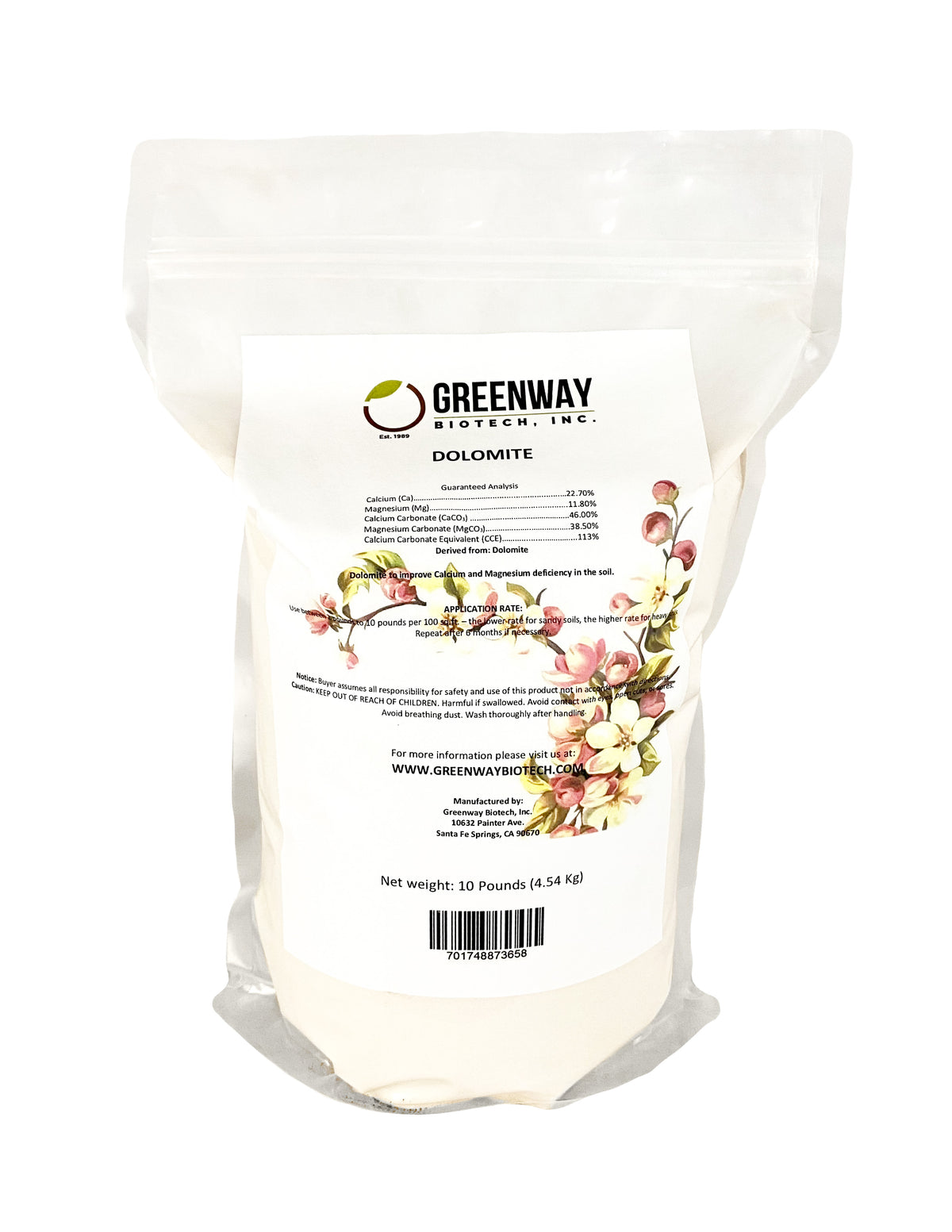
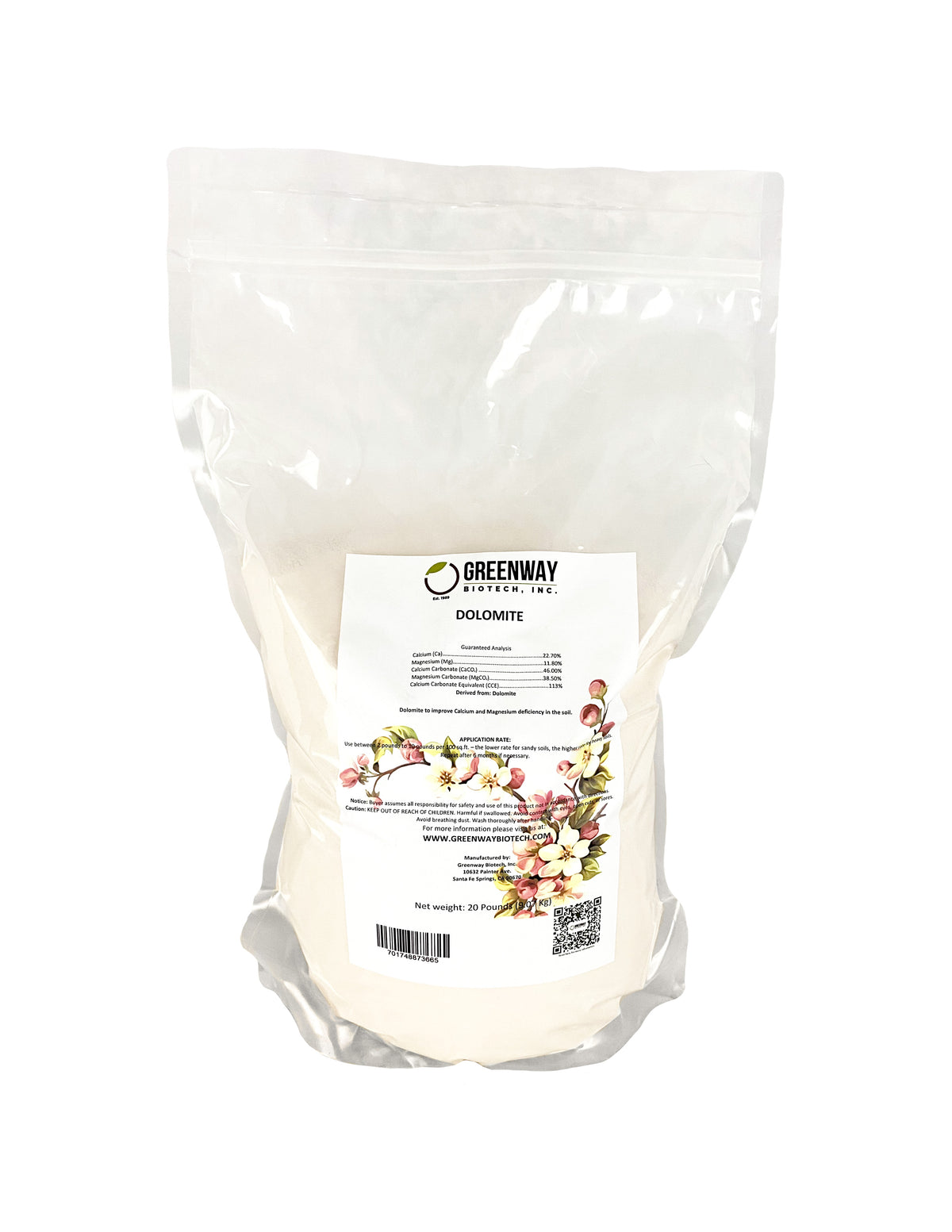
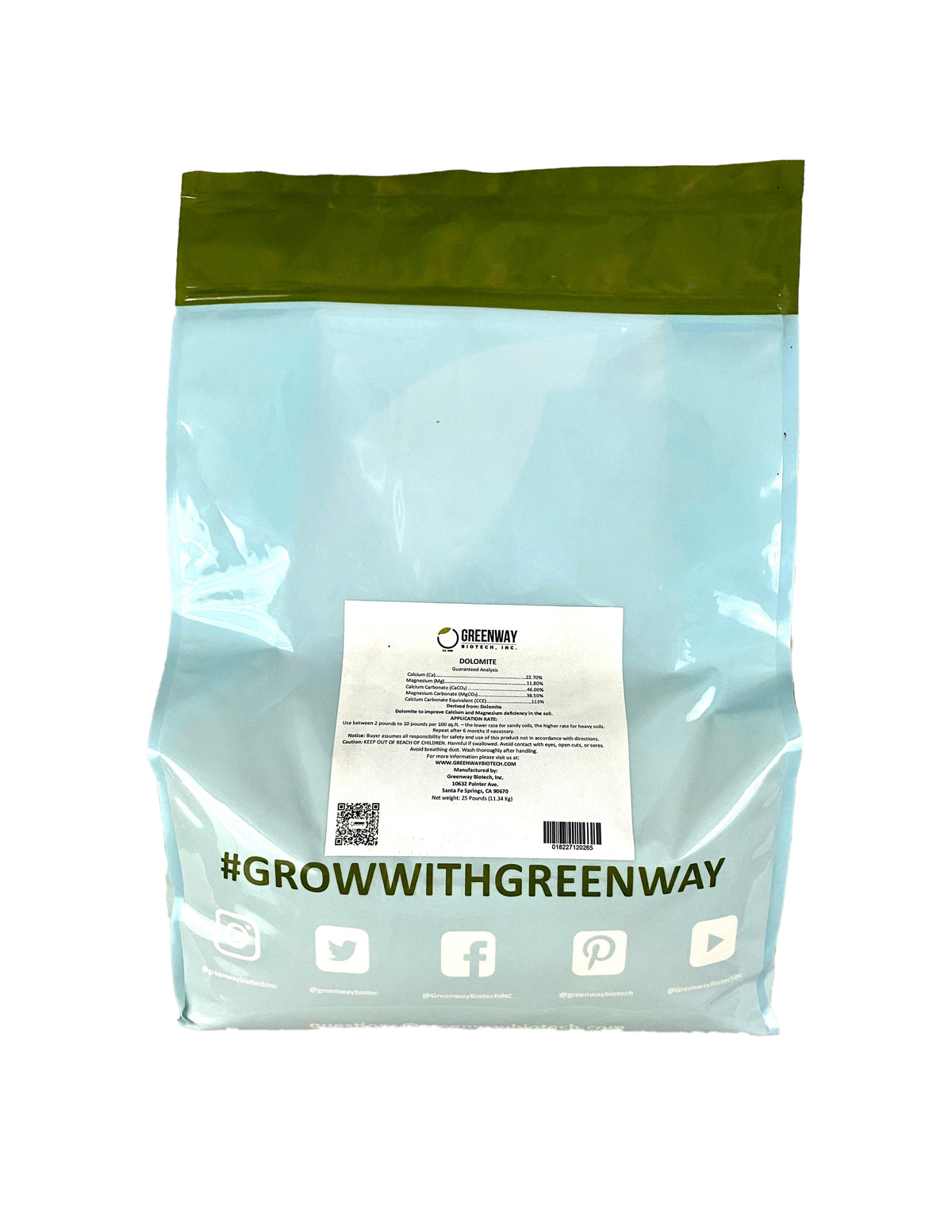
1–50 lb bags Eight sizes; the calculator turns your pH reading and area into an amount and a bag size
Product facts & composition
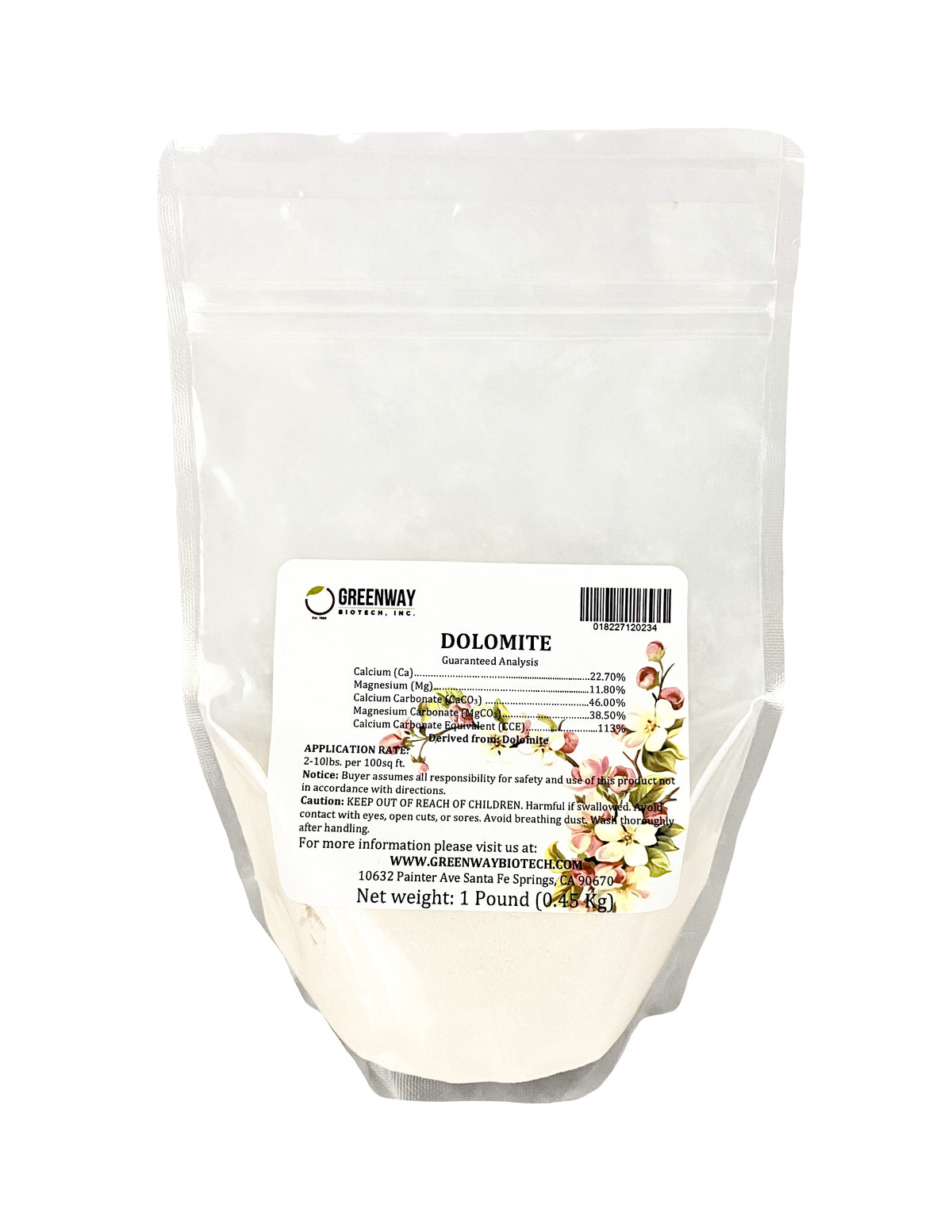
Analysis and product specifications, Greenway Biotech Dolomite Lime
Specification
Detail
Calcium (Ca)
22.7%
Magnesium (Mg)
11.8%
Material
Dolomitic limestone: calcium magnesium carbonate, CaMg(CO₃)₂, more than 95%; crystalline silica (quartz) under 3% (safety data sheet)
Neutralizing value
UC Cooperative Extension lists dolomite at 110% of the neutralizing value of calcium carbonate; from this product’s calcium and magnesium it works out to about 105%. Extension lime rates are written for ground limestone, and this page uses them as given.
Physical form
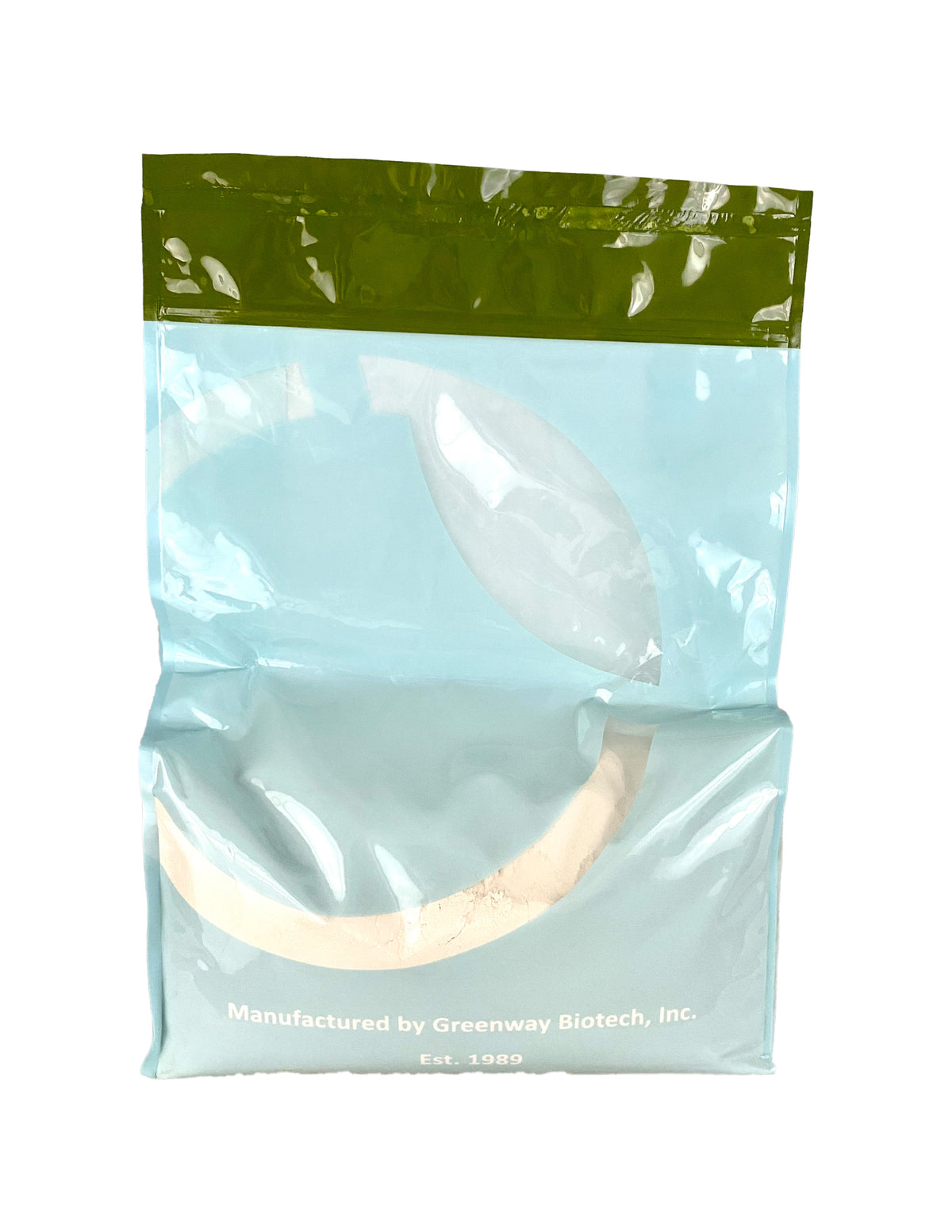
White, grayish-white, red, or pinkish powder; odorless; specific gravity 2.6–2.9 (safety data sheet)
In water
Does not dissolve to feed plants through water; it reacts with acid in the soil. Not for sprays, drip, or hydroponics.
Hazards (SDS)
Health rating 1 (slight). The dust irritates eyes and the respiratory tract; avoid breathing it.
Registration
CDFA-registered fertilizing material
Package sizes
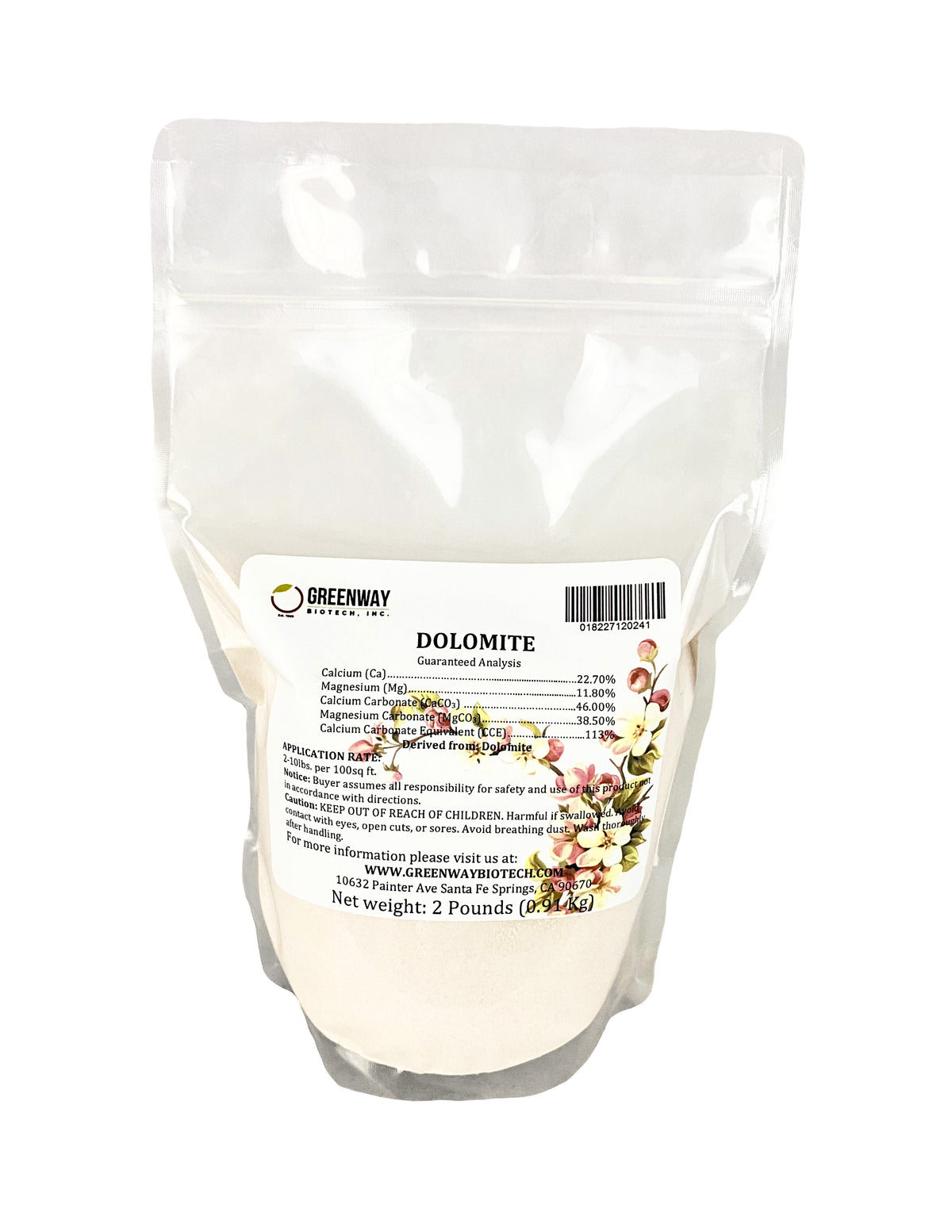
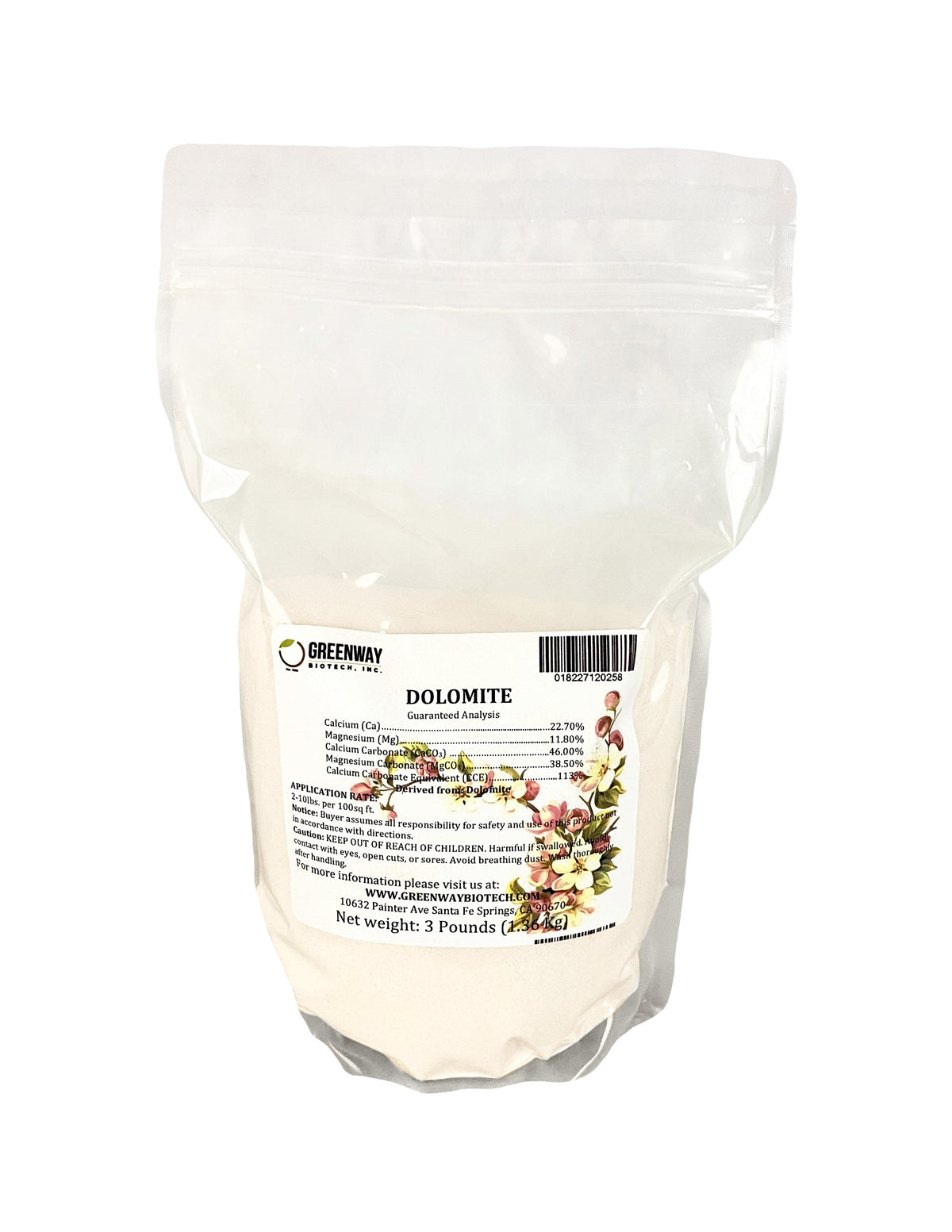
1, 2, 3, 5, 10, 20, 25, and 50 lb (the 50 lb may ship as two 25 lb bags)
Packed by
Greenway Biotech, Inc., Madera, California
Percentages are by weight of product: 10 lb of dolomite contains 2.27 lb of calcium and 1.18 lb of magnesium. Lime recommendations are written as pounds of ground limestone per area, and every amount on this page is product weight.
Best uses & benefits
Use it where a pH test reads low. Oregon State grows vegetables best at pH 6.0–7.0, and University of Maryland puts the best range for lawns at 6.0–6.8. In California, UC IPM finds acidic soils mostly in conifer forests and high-rainfall areas, and in Coast Range subsoils exposed by grading; most other soils need no lime.
Acidic vegetable and flower beds
Oregon State’s general rate is 5–10 lb per 100 sq ft mixed into the soil before planting. UC Cooperative Extension sizes the amount by soil texture and pH reading, from 2.3 lb per 100 sq ft for sand to 10.6 lb for clay loam per pH unit.
Lawns
University of Maryland recommends dolomitic lime for raising pH on low-magnesium soils, applies lime ideally in fall, and splits anything over 50 lb per 1,000 sq ft into two applications six months apart.
Trees, shrubs, and established beds
For established plants, Oregon State spreads 5 lb per 100 sq ft on the surface. Limestone moves only ½ to 1 inch a year down through soil (UConn), so it acts on the root zone slowly.
Peat-based potting mixes
Sphagnum peat has a pH of about 4. University of Vermont neutralizes it with 8.5 lb of ground limestone per cubic yard of peat, and prefers dolomite because it supplies both calcium and magnesium.
Acidic soil low in magnesium
Cornell and UConn choose dolomitic limestone when a soil test also calls for magnesium; acidic soils are typically low in both calcium and magnesium (UConn).
Where it is a poor fit
Neutral or alkaline soil. UC IPM finds high pH common in California and says raising it is not usually needed there. High pH reduces the iron, manganese, and zinc available to plants and causes yellowing of new growth, so do not add lime without a pH reading below the target.
Blueberries, azaleas, rhododendrons, and other acid-loving plants. Oregon State keeps them below pH 6.0, preferably 4.5–5.5. To lower pH for them, use Organic Elemental Sulfur Powder.
Soil already high in magnesium. Dolomite adds magnesium as it raises pH. UConn uses calcitic (high-calcium) limestone when a soil test shows magnesium above optimum.
Compost piles. Cornell’s compost research found that adding lime to a pile increases ammonia odor, so compost does not need it.
Application rates & directions
Every rate below is product weight and names its source, a university Extension publication listed in section 13. A lab soil test with a lime recommendation gives the best amount. Without one, a home pH kit or meter tells you whether the soil needs lime at all, and the tables below give a starting amount.
Check the pH first. Lime only where the reading is below the target, usually pH 6.0 for vegetables, flowers, lawns, and fruit trees. Test the top 6 inches of a bed, or the top few inches of a lawn, in several spots and mix the samples.
Without a lab soil test: starting amounts
Dolomite starting amounts from a home pH reading, by use
Situation
Amount
How and when
Source
Vegetable or flower bed, pH below 6.0, before planting
5–10 lb per 100 sq ft; by soil texture and pH in the next table
Mix into the top 6 inches. No more than 10 lb per 100 sq ft tilled in at one time; apply the rest months later
Oregon State EC 1503; UC Cooperative Extension; UConn
Lawns, trees, shrubs, and established beds, pH below 6.0
5 lb per 100 sq ft (50 lb per 1,000 sq ft)
Spread on the surface, ideally in fall, and water in. No more than 50 lb per 1,000 sq ft at once; retest before repeating
Oregon State EC 1503; University of Maryland; UNH
Keeping the pH once it is in range
5 lb per 100 sq ft every other year
Retest every 3–4 years and skip it if the pH is still in range
UConn; University of Maryland
Peat-based potting mix
8.5 lb per cubic yard of peat: 5 oz (143 g) per cubic foot, or 19 g per gallon of peat
Mix it evenly into the dry peat before wetting and planting
University of Vermont
pH 6.0 or above, or no pH reading
None
High pH is common in California, and raising it is not usually needed there
UC IPM
Beds: by soil texture and pH reading
Limestone to raise soil pH one unit in the top 7 inches, UC Cooperative Extension (Vossen), converted from tons per acre to pounds per 100 sq ft
Soil texture
From pH 4.5 to 5.5
From pH 5.5 to 6.5
Sand or loamy sand
2.3 lb per 100 sq ft
2.8 lb
Sandy loam
3.7 lb
6.0 lb
Loam
5.5 lb
7.8 lb
Silt loam
6.9 lb
9.2 lb
Clay loam
8.7 lb
10.6 lb
Use part of a row for part of a pH unit: a loam at pH 5.5 needs about 3.9 lb per 100 sq ft to reach 6.0 and 7.8 lb to reach 6.5; a loam at pH 5.0 needs about 10.6 lb to reach 6.5, so till in 10 lb now and the rest later. Sandy soils need the least lime, and clay soils the most. For heavy clay, muck, or soil below pH 4.5, use a lab soil test. UConn tills no more than 10 lb per 100 sq ft into the top 6 inches at one time, or spreads no more than 5–7 lb on the surface, and splits a larger amount over months or seasons.
Vegetable and flower beds
Apply in fall if you can: Oregon State limes in fall so it has time to react, Clemson applies limestone two to three months before planting, and Cornell three or four months ahead when the pH has far to go. Spread it evenly and mix it into the top 6 inches, because limestone moves only ½ to 1 inch a year on its own (UConn). It needs moisture to react (Clemson). Retest three to six months later (Oregon State). UConn expects 6 to 12 months or more for the full change.
Lawns
University of Maryland puts the best pH for turf at 6.0–6.8 and says growth suffers below 5.5. Spread 50 lb per 1,000 sq ft, ideally in fall, and never on snow or frost-covered turf. Spread half in one direction and half crosswise for even coverage (UNH), then water it in. If a lab test calls for more than 50 lb per 1,000 sq ft, apply 50 lb now and the rest about six months later: for 85 lb, apply 50 lb and then 35 lb (University of Maryland). Test the lawn every three to four years.
Fruit trees, shrubs, and established beds
For plants already in the ground, Oregon State spreads 5 lb per 100 sq ft on the surface. Under a tree, measure the area under the canopy: a canopy 10 ft across covers about 79 sq ft and takes about 3.9 lb. Keep it a few inches away from the trunk, rake it lightly into any mulch, and water it in. Before planting an orchard or shrub border, lime the whole area by the bed table and mix it in.
Peat-based potting mixes
University of Vermont adds 8.5 lb of ground limestone per cubic yard of sphagnum peat, about 5 oz (143 g) per cubic foot or 95 g per 5-gallon bucket of peat, and prefers dolomite because it supplies both calcium and magnesium. Count only the peat in the mix: a mix of half peat and half compost or perlite takes half as much per cubic foot of mix. Weigh it on a kitchen scale and mix it thoroughly into the dry peat before wetting.
Lab soil tests and farm fields
A lab lime recommendation is written as ground limestone in pounds per 1,000 sq ft or tons per acre; use that amount of dolomite. UC Cooperative Extension’s field table above, in its original units, runs from 0.5 ton per acre (sand, pH 4.5 to 5.5) to 2.3 tons per acre (clay loam, pH 5.5 to 6.5) for a 7-inch layer. Choose dolomite when the test also shows low magnesium, and calcitic limestone when magnesium is above optimum (UConn). On the farm scale, ask us for a bulk quote.
Do not over-lime. Cornell warns that over-liming, especially sandy soils low in organic matter, can reduce yields, and that an over-limed soil is hard to bring back down. High pH reduces iron, manganese, and zinc availability (UC IPM). Lime only below the target, stay within the amounts above, and retest before you repeat.
How to use dolomite
Test the pH. Use a home kit, a meter, or a lab soil test, and sample several spots. Lime only if the reading is below the target, usually 6.0. A lab test also shows whether magnesium is low.
Pick the amount. Use section 4: the bed table by soil texture and pH, 5 lb per 100 sq ft for lawns and established plants, 8.5 lb per cubic yard of peat for potting mix, or the lab recommendation.
Measure and spread. Weigh the amount for your area. Spread it evenly on a calm day, half in one direction and half crosswise, with gloves, safety glasses, and a dust mask.
Mix in and water. In beds, mix it into the top 6 inches. On lawns and around established plants, water it in. Fall is the best time; leave two to three months before planting where you can.
Retest before repeating. Retest three to six months later. Split large amounts: no more than 10 lb per 100 sq ft tilled in, or 50 lb per 1,000 sq ft on the surface, at one time.
Calculator & choosing a size
Formulas. Beds: lb per 100 sq ft from the texture table for the part of each pH band between your reading and the target × square feet ÷ 100. Lawns and established plants: 5 lb × square feet ÷ 100. Potting mix: 8.5 lb × cubic yards of peat (1 cubic yard = 27 cubic feet = 202 gallons). Lab test: the recommended pounds of limestone per 1,000 sq ft × square feet ÷ 1,000.
Worked examples. A 10 × 10 ft loam bed at pH 5.5, raised to 6.5: 7.8 lb; a 10 lb bag. A 4 × 8 ft sandy loam bed at pH 5.0, raised to 6.0: 1.5 lb; a 2 lb bag. A 1,000 sq ft lawn at pH 5.6: 50 lb; a 50 lb bag. A fruit tree with a canopy 10 ft across: 3.9 lb; a 5 lb bag. Two cubic feet of peat for potting mix: 10.1 oz (286 g); a 1 lb bag.
What each bag covers at three of the rates on this page
Bag
Lawn or established plants at 5 lb per 100 sq ft
Bed tilled in at 10 lb per 100 sq ft
Peat for potting mix at 8.5 lb per cubic yard
1 lb
20 sq ft
10 sq ft
3.2 cu ft
2 lb
40 sq ft
20 sq ft
6.4 cu ft
3 lb
60 sq ft
30 sq ft
9.5 cu ft
5 lb
100 sq ft
50 sq ft
15.9 cu ft
10 lb
200 sq ft
100 sq ft
1.2 cu yd
20 lb
400 sq ft
200 sq ft
2.4 cu yd
25 lb
500 sq ft
250 sq ft
2.9 cu yd
50 lb
1,000 sq ft
500 sq ft
5.9 cu yd
About the calculator. Choose the job: a bed from a home pH reading and soil texture, a lawn or established planting, a peat-based potting mix, or a lab lime recommendation. It applies the rate from section 4, splits amounts above the one-time limits, shows the calcium and magnesium supplied, and recommends a bag. Bag suggestions use the current price and stock of all eight sizes, 1 to 50 lb. Tax and shipping are added at checkout.
The calculator needs JavaScript. If it does not appear, use the formulas, examples, and table above to choose a size.
How dolomite works
Soil acidity is hydrogen ions held in the soil. Dolomite is a carbonate: as it dissolves in acidic soil water, the carbonate consumes hydrogen ions, releasing carbon dioxide and water, and leaves calcium and magnesium behind for plant roots and the soil’s exchange sites. Overall, CaMg(CO₃)₂ + 4 H⁺ → Ca²⁺ + Mg²⁺ + 2 CO₂ + 2 H₂O.
The reaction is slow. Dolomite barely dissolves in water, so it reacts only where it touches acidic soil. Clemson finds that finer limestone particles work faster and that lime reacts slowly in dry soil, because moisture is essential. Limestone moves only ½ to 1 inch a year down through soil, so it is mixed into the root zone, and the full pH change can take 6 to 12 months or more (UConn). Sandy soils need less lime than clay soils for the same pH change (Clemson; UC Cooperative Extension), because clay and organic matter hold more acidity.
pH controls nutrient availability, which is why the target matters in both directions. Below about 5.5, lawns grow poorly (University of Maryland). Above the target, high pH reduces iron, manganese, and zinc availability (UC IPM). The evidence on this page concerns dolomitic limestone as a material; it is not a trial of this finished product.
Compare your options
Pick by whether the soil pH needs to rise and which nutrient the soil test shows is low.
Dolomite Lime compared with other calcium, magnesium, and pH products
Option
Supplies
Effect on soil pH
Choose it when
Dolomite Lime, this product
22.7% calcium and 11.8% magnesium, released as it reacts
Epsom Salt for Plants: magnesium that dissolves in water, where the pH is already right.
Organic Elemental Sulfur Powder: the opposite job, lowering pH for acid-loving plants. Do not apply it to the same ground as lime.
Bone Meal 3-15-0: phosphate where a soil test is low in phosphorus.
Spread fertilizers separately. Lime raises pH where it lands, and Cornell finds that higher pH increases ammonia loss, so do not mix dolomite with ammonium fertilizers or fresh manure before spreading. Apply lime first, mix it in, and add fertilizer at planting.
Handling, storage & limitations
Hazards. The safety data sheet rates health hazard 1, slight. The dust irritates eyes and the respiratory tract, and the product contains under 3% crystalline silica (quartz), so avoid breathing the dust.
Protective equipment. Safety glasses with side shields or goggles, gloves, and clothing that covers arms and legs; a NIOSH-approved respirator where dust exceeds exposure limits (safety data sheet). Spread on a calm day and keep children and pets away until it is watered in.
Storage. Keep the bag sealed in a dry place; damp dolomite cakes and spreads unevenly. Store it away from acids, which react with carbonates and release carbon dioxide.
Application limits. Lime only below the target pH, within the amounts on this page, and not on blueberries, azaleas, rhododendrons, or other acid-loving plants. Do not spread it on frozen or snow-covered ground.
Not animal feed. Greenway Biotech Dolomite Lime is sold as a soil amendment, not as a feed or supplement for animals.
First aid (from the safety data sheet). Eyes: flush with plenty of water, holding the eyelids open, and do not rub; get medical attention if irritation persists. Skin: brush off the dry powder, then wash with water. Inhaled: move to fresh air and get medical attention. Swallowed: do not induce vomiting; get medical attention or call Poison Control at 1-800-222-1222.
Disposal. Dispose of unused product and containers according to local, state, and federal rules.
Frequently asked questions
What is dolomite lime used for?
Dolomite lime is ground dolomitic limestone with 22.7% calcium and 11.8% magnesium. It raises the pH of acidic soil and adds both nutrients. Gardeners mix it into acidic beds before planting, spread it on acidic lawns and under trees and shrubs, and add it to peat-based potting mixes. It is for acidic soil only and is not for acid-loving plants such as blueberries and azaleas.
How do I know if my soil needs dolomite?
Test the pH. A home kit or meter is enough to start; a lab test adds the exact lime amount and the magnesium level. Lime only if the pH is below the target, usually 6.0 for vegetables, flowers, lawns, and fruit trees. UC IPM finds high pH common in California soils and says raising it is not usually needed there, so many California gardens need no lime at all.
How much dolomite do I use per 100 square feet of garden?
Oregon State’s general rate is 5 to 10 lb per 100 sq ft mixed in before planting. By UC Cooperative Extension’s table, raising pH from 5.5 to 6.5 takes about 2.8 lb per 100 sq ft in sand, 6 lb in sandy loam, 7.8 lb in loam, and 10.6 lb in clay loam. UConn tills in no more than 10 lb per 100 sq ft at one time and splits larger amounts.
How much dolomite do I put on my lawn?
If the pH is below 6.0, spread 50 lb per 1,000 sq ft (5 lb per 100 sq ft), the rate Oregon State uses for established lawns and the most University of Maryland applies at one time. Spread it evenly, ideally in fall, and water it in. If a lab test calls for more, apply the rest about six months later, and retest before you repeat.
How long does dolomite take to work?
Months. Dolomite reacts only where it touches moist, acidic soil, and UConn expects 6 to 12 months or more for the full pH change. Finer particles react faster, and dry soil slows it down (Clemson). Apply it in fall or two to three months before planting, mix it into beds, and retest three to six months later (Oregon State).
Should I use dolomite or regular garden lime?
Both raise pH. Dolomite adds magnesium as well as calcium, so Cornell, UConn, and University of Maryland choose it when the soil is also low in magnesium. Calcitic (high-calcium) limestone adds calcium only, so UConn uses it when soil magnesium is above optimum. A lab soil test shows which one your soil needs.
What if my soil is already high in magnesium?
Use calcitic (high-calcium) limestone instead. Dolomite adds magnesium as it raises pH, and UConn switches to calcitic limestone when a soil test shows magnesium above optimum. Soils formed from serpentine rock are naturally high in magnesium (UC Cooperative Extension). A home pH kit does not measure magnesium, so if you suspect it is high, get a lab soil test, which reports it, before you lime.
Can I use dolomite in potting mix?
Yes. Sphagnum peat has a pH of about 4, and University of Vermont adds 8.5 lb of ground limestone per cubic yard of peat, about 5 oz (143 g) per cubic foot or 95 g per 5-gallon bucket of peat. It prefers dolomite because it supplies calcium and magnesium. Count only the peat in your mix, and blend it in thoroughly before wetting.
Can too much dolomite harm my plants?
Yes. Cornell warns that over-liming, especially sandy soils low in organic matter, can reduce yields, and that an over-limed soil is hard to bring back down. High pH reduces iron, manganese, and zinc availability and causes yellowing of new growth (UC IPM). Lime only below the target pH, stay within the amounts on this page, and retest before repeating.
Should I add dolomite to my compost pile?
It is not needed. Cornell’s compost research found that adding lime to a pile increases ammonia odor, a sign of nitrogen escaping as gas. Add dolomite to the soil where the pH test calls for it, and add finished compost separately.
Articles give background. For this product, use the directions and documents on this page.
Product documents & sources
Product label, Safety Data Sheet, and heavy-metal test results: available on request. Email questions@greenwaybiotech.com with the product name and we will send the current documents.
Where the rates and statements on this page come from
The rates come from the university Extension publications below, converted to pounds per 100 sq ft where they give tons per acre; they explain soil management and do not certify or endorse this product.
Not sure whether your soil needs lime, or whether dolomite or another product fits? Email your pH reading or soil test, your soil type, and what you are growing to questions@greenwaybiotech.com or call (562) 351-5168, Monday to Friday, 9 AM to 3 PM Pacific, and we will work through it with you. Every order carries a 90-day satisfaction guarantee, and Standard shipping is free on orders over $100 to the continental US.
Greenway Biotech, Inc. has been a family-owned fertilizer company in California since 1989. This product is packed at our facility in Madera, California, and is a CDFA-registered fertilizing material.
5 stars: 18 (100%)
4 stars: 0 (0%)
3 stars: 0 (0%)
2 stars: 0 (0%)
1 star: 0 (0%)
L
Lisa Konigsberg
Just what I ordered
Just what I ordered. Order processing and shipping
Progress tracking was Good. Thank you.
F
Fran Mahaffey
Missing product
I ordered 2 one pound bags and only received one still waiting on the other one to arrive.
T
Tenny Anderson
Minerals
Great
D
DENNIS CARLUCCI
Great product, great service!
Have been using Dolomite for years to keep bottom-end-rot away from my tomatoes. Wasn't always easy to find until I found the product here.
J
Joan Wagner
Dolomite
Fast arrival and used in an Earth Box as directed.
S
Stephen Blake
Real Dolomite
Takes time but works great! Will be back if I need more.
S
Suzanne Cerrone
Dolomitic Lime
Great. Arrived quickly and exactly as expected.
J
Jeanie Carr
Great
fast shipping quality product and good prices
D
Debra Graves
Satisfied Customer
Very easy to use for my large City Pick planter
D
DENNIS CARLUCCI
Dolomite will be used for tomato soil to prevent blossum end rot.
I know this item will work as I have purchased the same from you before. Great service!!! Received this within a couple of days - from across the country!
G
Gerald McGrath
Satisfied returning customer.
Very happy with the overall experience last year and after a speedy delivery this year expect the same results this growing season.
C
Cindy Uhlemann
Great Purchase
Purchased dolomite for my earth box last week and I haven't used it yet. The descriptions online were excellent and I could tell I was purchasing the right product for my use. The quantity was exactly what I needed with no left over sitting in the shed. The price was right. Service was excellent! Thank you!
S
Suzanne T.
nice product and company
fast shipping, nice product.
T
Tonya R.
The shipping is great! It doesn't take 6 to 8 weeks to deliver like the other company has a high ...
Yes, and plus more, we have dealt with this company for a year and the company will go out of their way to satisfy customers.
T
Tonya R.
We just bought a 100 pounds and it's worth every penny. We are very happy!
We love the way Amazon takes care of their customers! Amazon is GREAT!
D
David C.
dolomite
fast shipping, excellent results.
J
Joyce H.
Dolomite
I add dolomite to the planting mix that I use to fill my Earthboxes. I would never transplant or sow seeds to my Earthboxes without Dolomite.
R
Rhonda W.
Dolomite
Excellent! I use it as a supplement for my dairy goats. It is a nice fine powder so they consume it with no problem. Great product. This is the 3rd or 4th time I've purchased this product and I will continue as long as I have goats.
My MSM is decreasing my osteoarthritis pain, especially in my hands
My product arrived intact. I started taking it as soon as I went into the kitchen. I mixed it with my daily Metamucil, but there was no discernible taste. I am working on making it a habit each morning. The pain from my osteoarthritis, especially in my hands, is decreasing. I expect it to continue to improve. Thank you for my MSM.
You did not send me MSM Powder, you sent me Magnesium Chloride powder. I tried contacting you 3 times, by email & phone and you didn't have the courage & honesty to return my messages & rectify the situation. I even offered to text you a photo of the mag chloride.