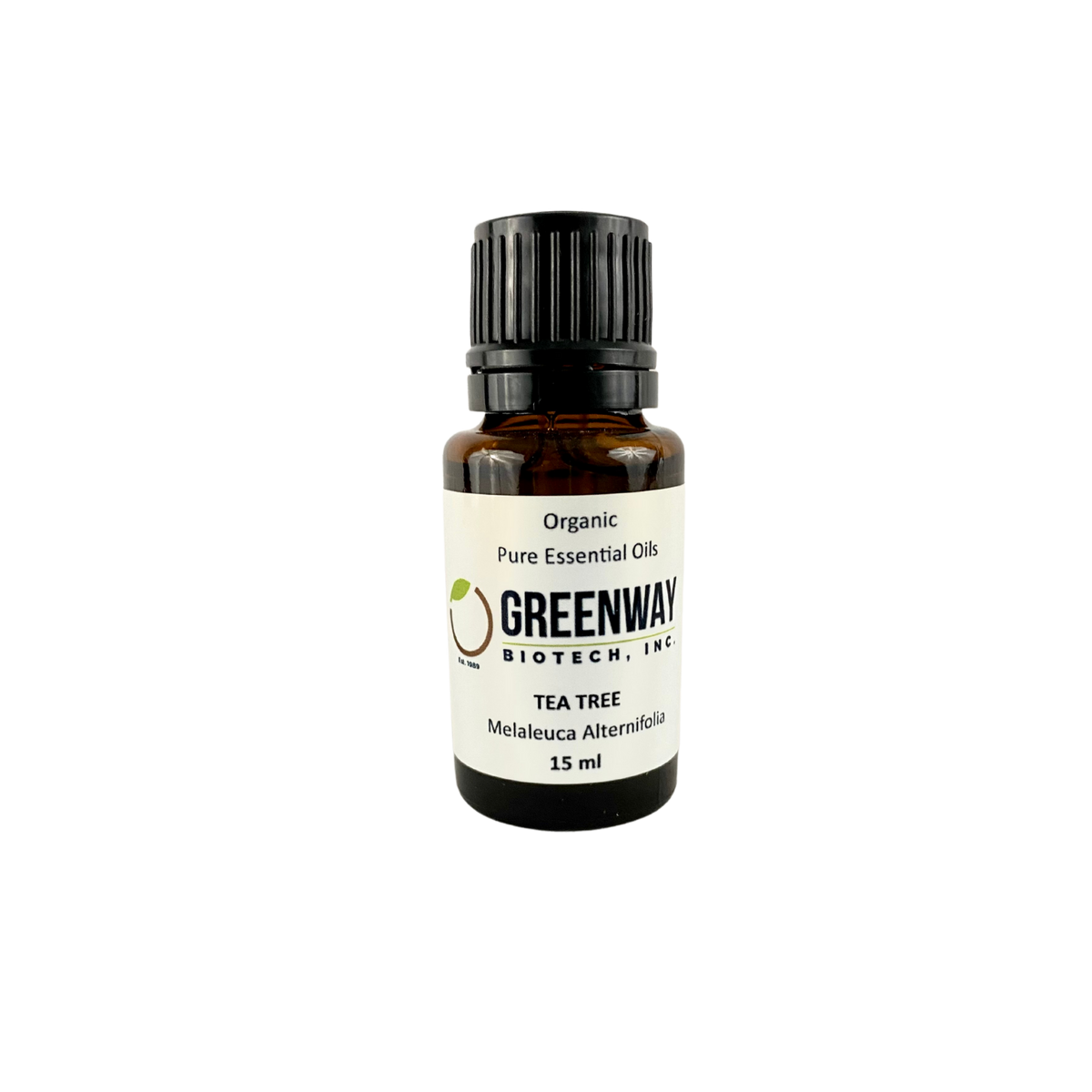
Tea tree is a small tree native to Australia's New South Wales, where Aboriginal Australians have used the leaves for centuries. The essential oil is steam-distilled from the leaves and is defined by its high terpinen-4-ol content (30-48%), alongside γ-terpinene, α-terpinene, 1,8-cineole, and α-terpineol. It is one of the most extensively researched essential oils, and its composition is governed by an international standard, ISO 4730, which sets the quality criteria for genuine tea tree oil.
The single most important practical thing to understand about tea tree is oxidation. Tea tree oil breaks down faster than most oils when exposed to air, heat, and light, and as it oxidizes it forms peroxides and other compounds that are noticeably more irritating and sensitizing to skin than fresh oil. This is why storage is not an afterthought with tea tree: refrigerate after opening, keep the cap sealed, and replace within 1-2 years. If the aroma turns harsh or chemical, retire it from skin use (it is still fine for cleaning).
Tea tree also carries a small risk of skin sensitization even when fresh, so a patch test before first use matters more here than with gentler oils. And unlike some oils, tea tree is toxic if swallowed — it is strictly an external-use oil, and accidental ingestion is a poison-control matter.
As a middle note, tea tree brings body and longevity to a blend, bridging fresh top notes and deeper bases. It is non-phototoxic, so there is no UV-avoidance window after diluted topical use.
One ingredient — pure steam-distilled tea tree oil. Its character comes from the natural constituent profile below.
What to Expect
First impression: Fresh, sharp, herbaceous, and a little medicinal — clean and camphoraceous, like a cleaner, greener eucalyptus.
On skin (diluted): Best used fresh and well diluted. Patch test first — tea tree can sensitize some skin, and oxidized oil more so.
Storage: the one oil where refrigeration genuinely matters. Keep it cold and sealed, and replace it on schedule.