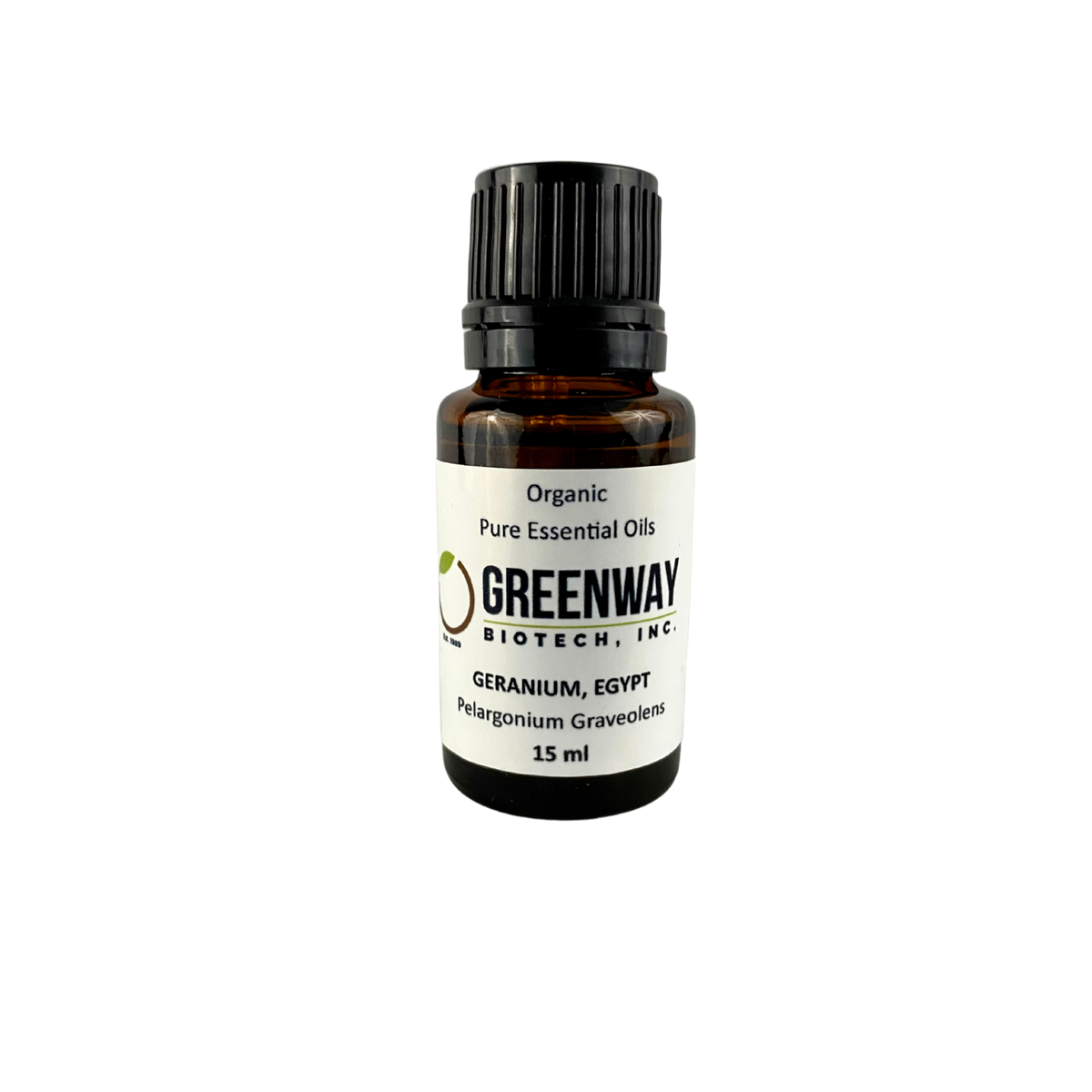
What makes Egyptian geranium read as "rose-like" is chemistry, not coincidence. The two dominant aromatic compounds are citronellol (22-32%) and geraniol (12-18%) — two monoterpenols that together account for roughly a third to a half of the entire oil and that also appear as major constituents in rose otto. When you smell rose in geranium, you're smelling the same molecules.
The profile diverges from there. Rose otto carries higher levels of phenethyl alcohol and 2-phenylethanol (the "lush wet-rose" character). Egyptian geranium has more linalool (4-10%, a soft floral background note also found in lavender), more citronellyl formate (a fruity ester), and more isomenthone and guaia-6,9-diene from the leaves and stems. The result: less of the pure-blossom velvet of rose, more green herbaceous body and a subtle citrus-sweet finish. Different oils, overlapping vocabulary.
That same chemistry sets the topical safety limit. High geraniol and citronellol content can sensitize skin with frequent prolonged exposure on the same area — Tisserand & Young set the recommended maximum at 1.5%. Translation: keep facial blends under 1%, body massage blends under 1.5%, rotate with other oils rather than using geranium daily on the same patch of skin, and patch test before first use.
Constituent ranges below reflect typical batch profiles for steam-distilled Egyptian Pelargonium graveolens. The current-batch GC/MS report is available on request.
Citronellol (22-32%)
The dominant monoterpenol — responsible for the soft, rosy character. Also a major component of rose otto. Contributes to the 1.5% topical-dilution ceiling because of skin-sensitization potential at higher cumulative exposures.
Geraniol (12-18%)
The second monoterpenol that gives rose its rosy character; also found here. Sweet, slightly fruity, deeply floral. Co-responsible (with citronellol) for the rose-adjacent profile and for the topical dilution limit.
Linalool (4-10%)
A soft, floral terpene alcohol also dominant in lavender. Rounds out the headline monoterpenols with a gentle floral background.
Citronellyl Formate (trace-5%)
A fruity-floral ester. Adds the subtle sweet-citrus finish at the back of the aroma profile.
Isomenthone (trace-7%)
A minty-floral ketone from the leaves and stems. Contributes to the slight green herbaceous quality that distinguishes geranium from pure rose.
Guaia-6,9-diene (trace-3%)
A sesquiterpene from the leaf material. Adds soft woody depth to the lower-volatility tail of the aromatic profile.