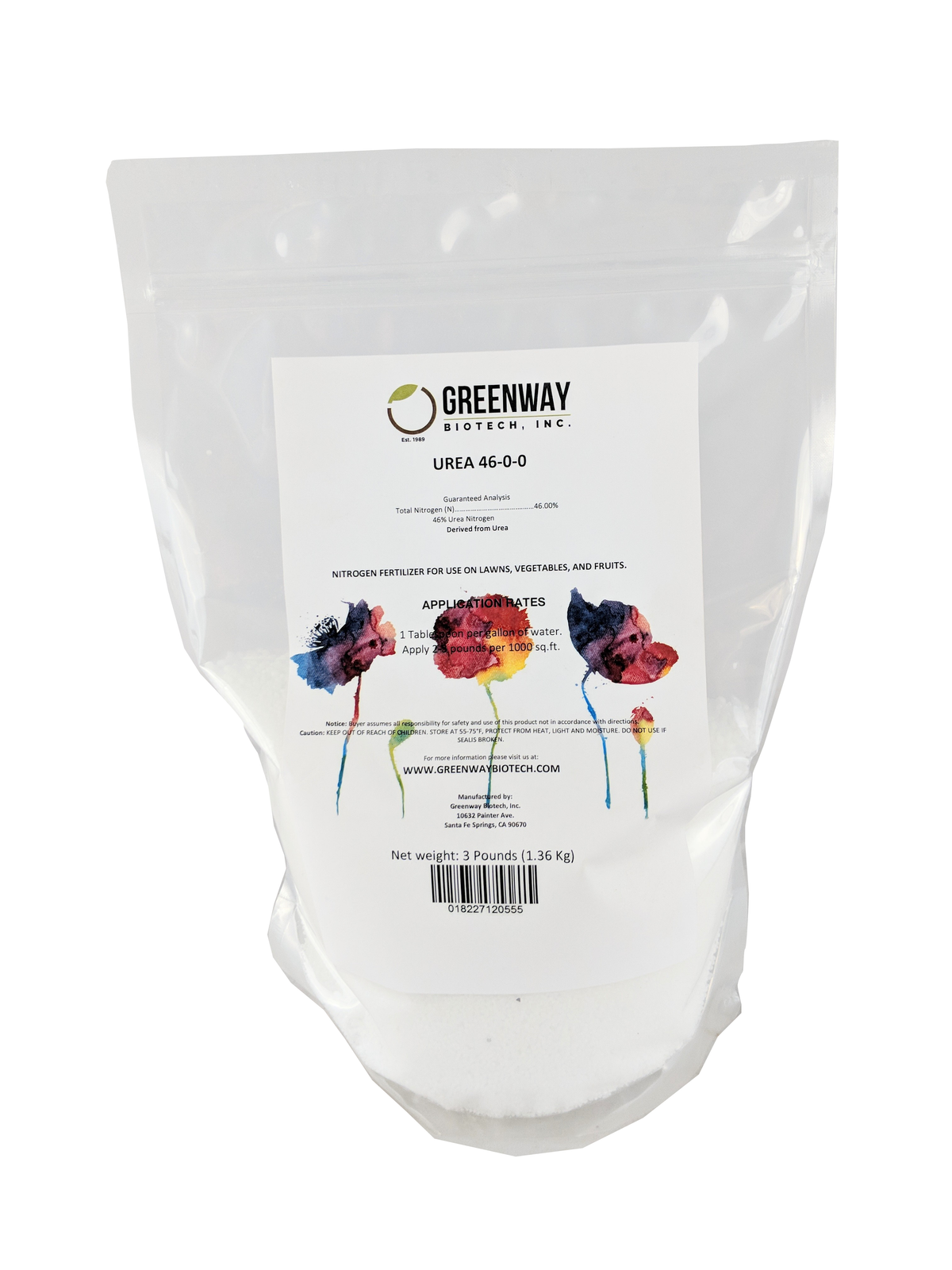
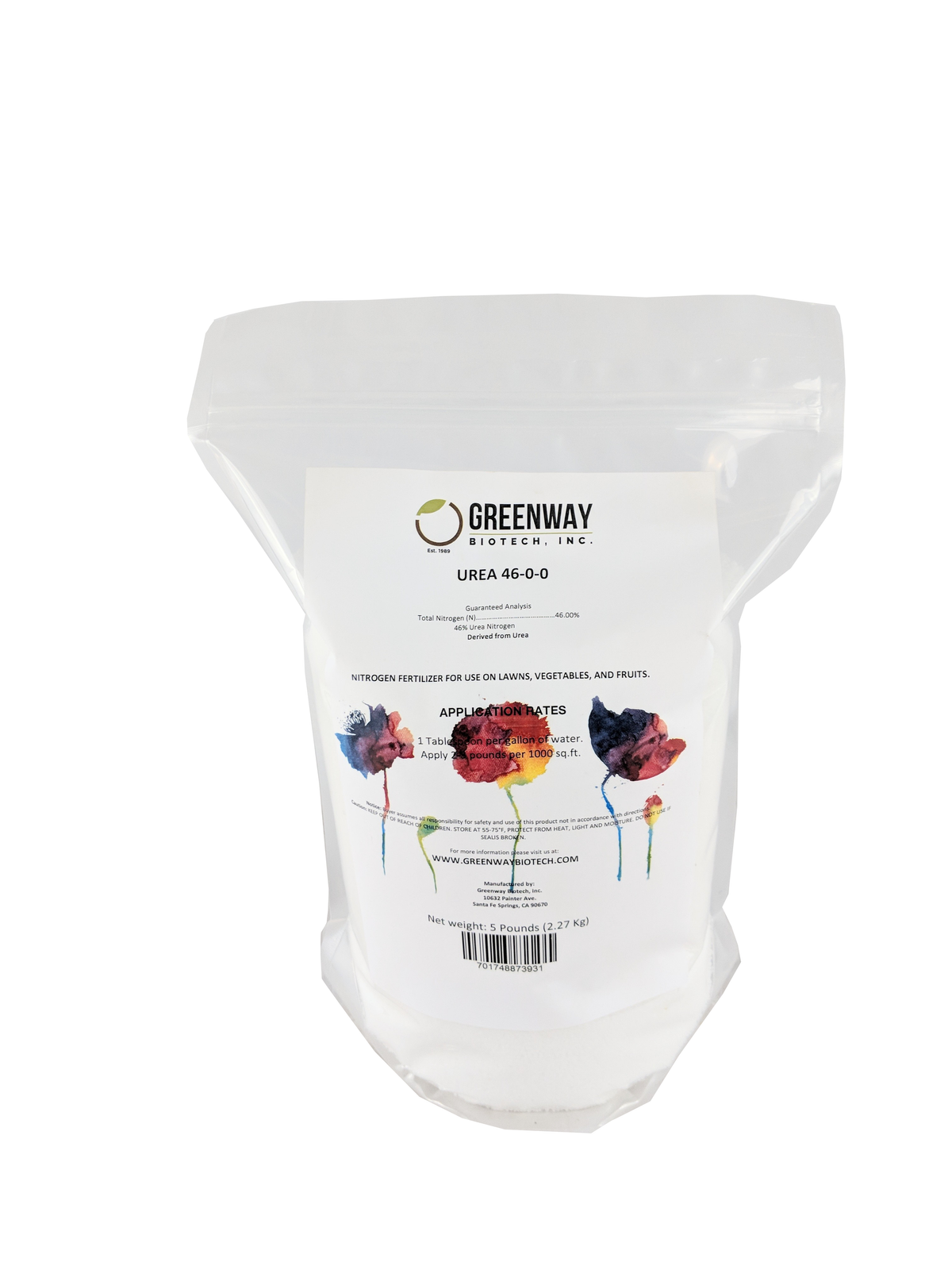
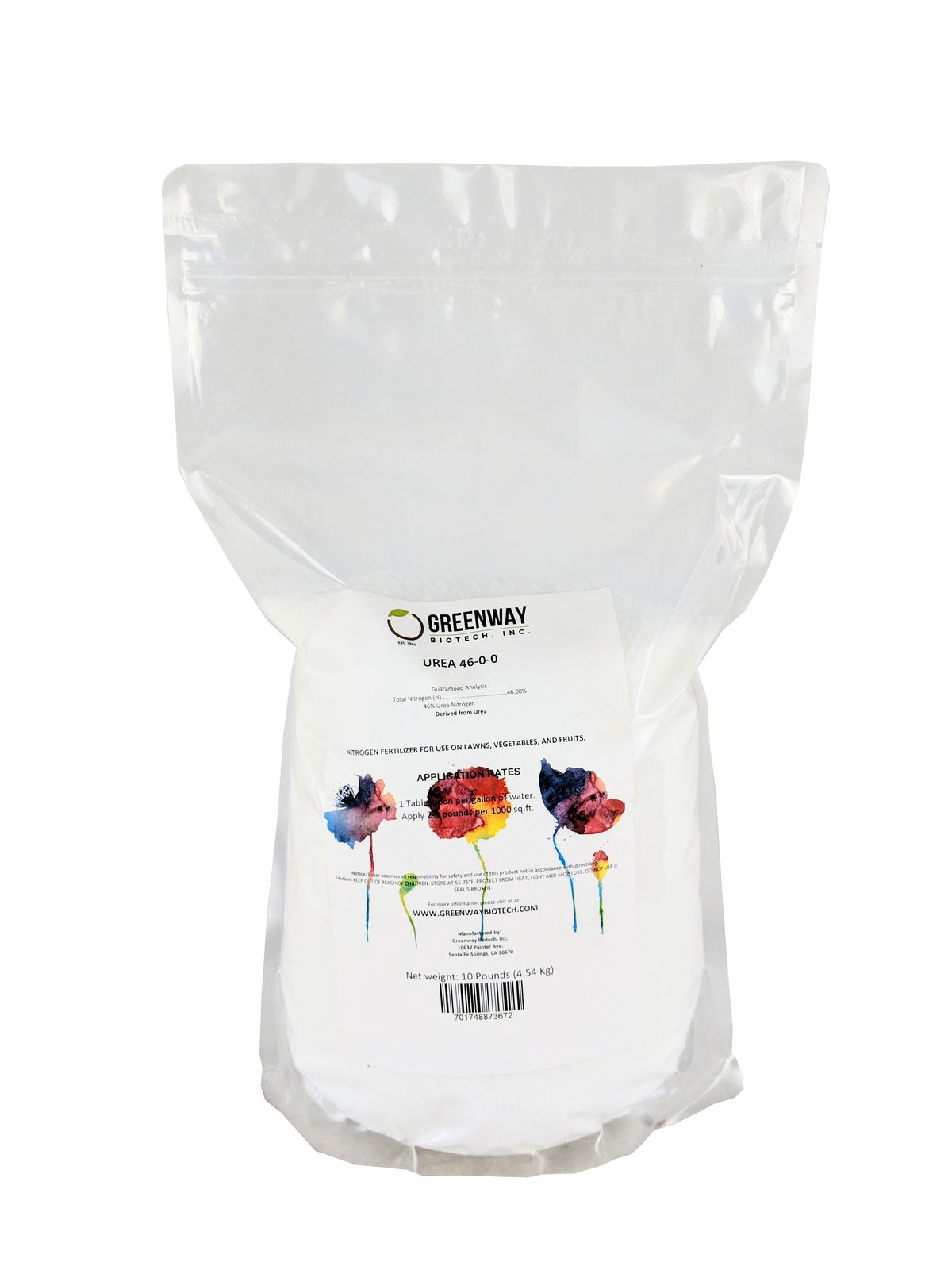
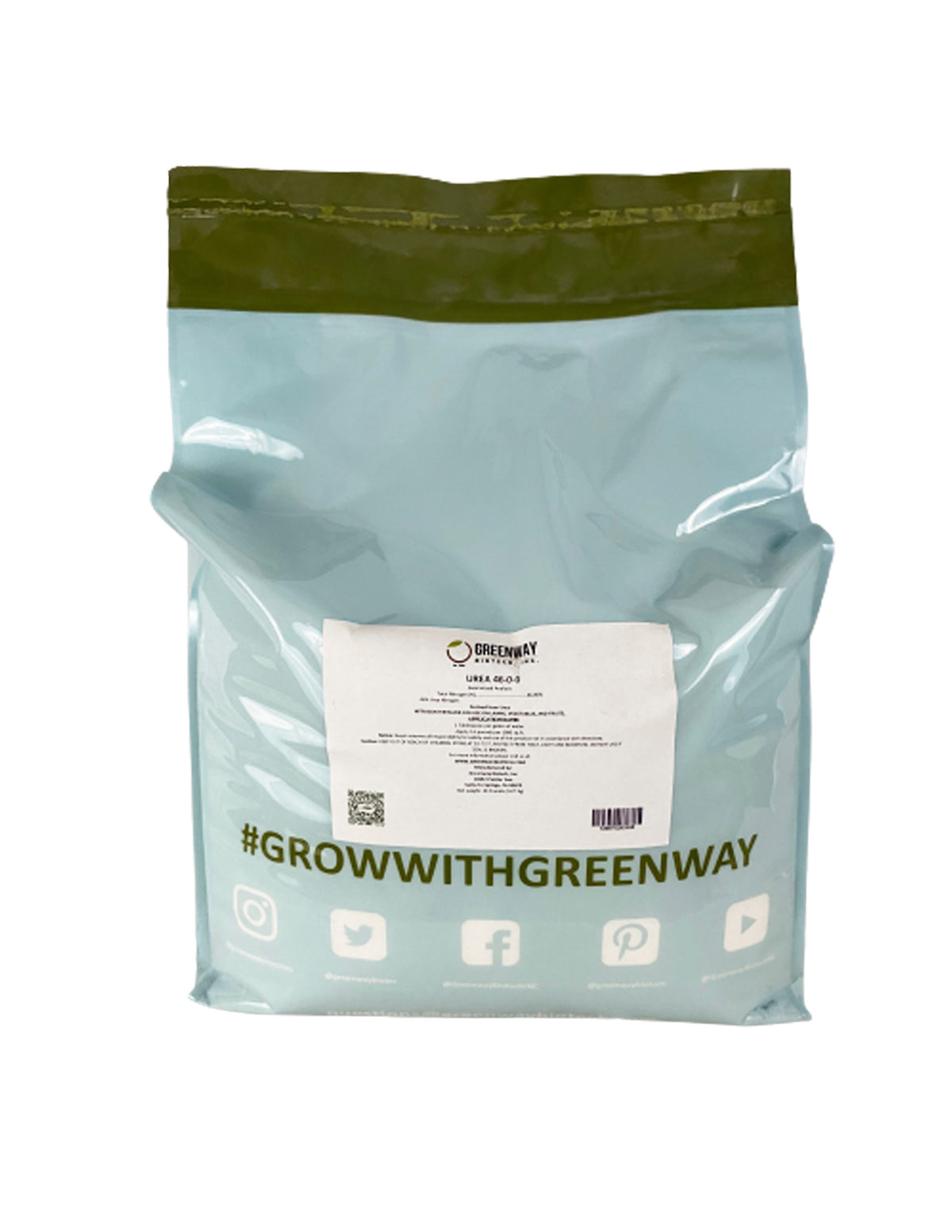
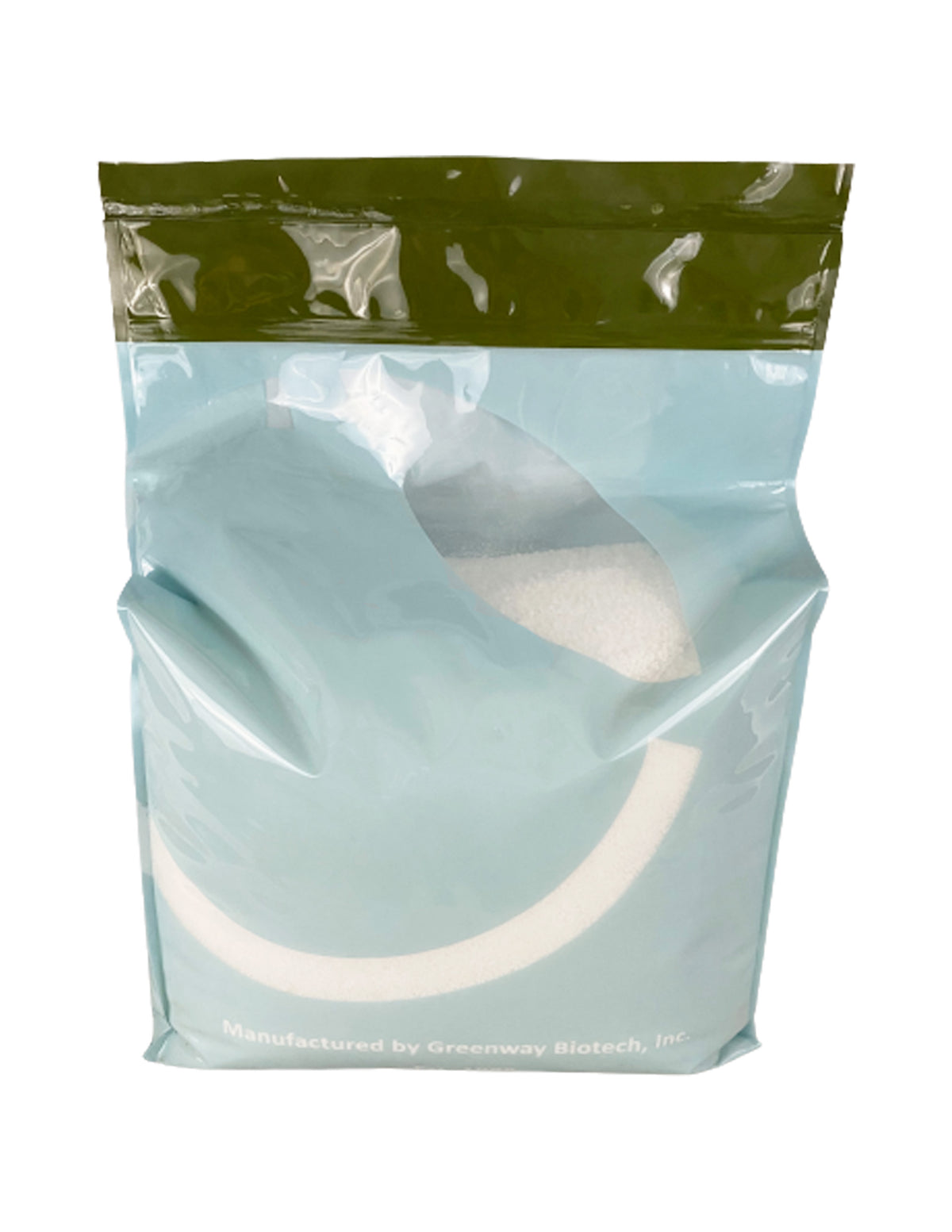
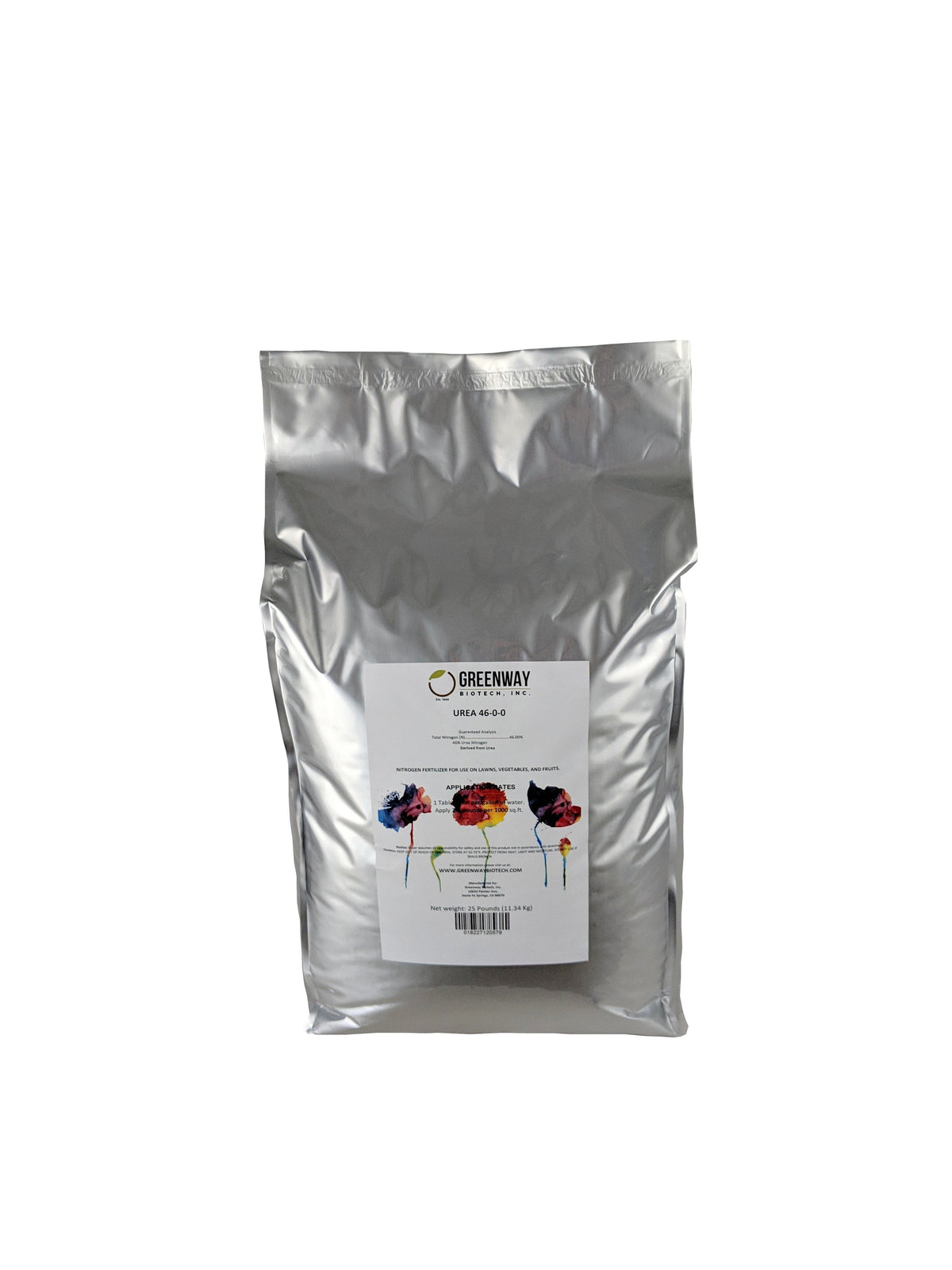
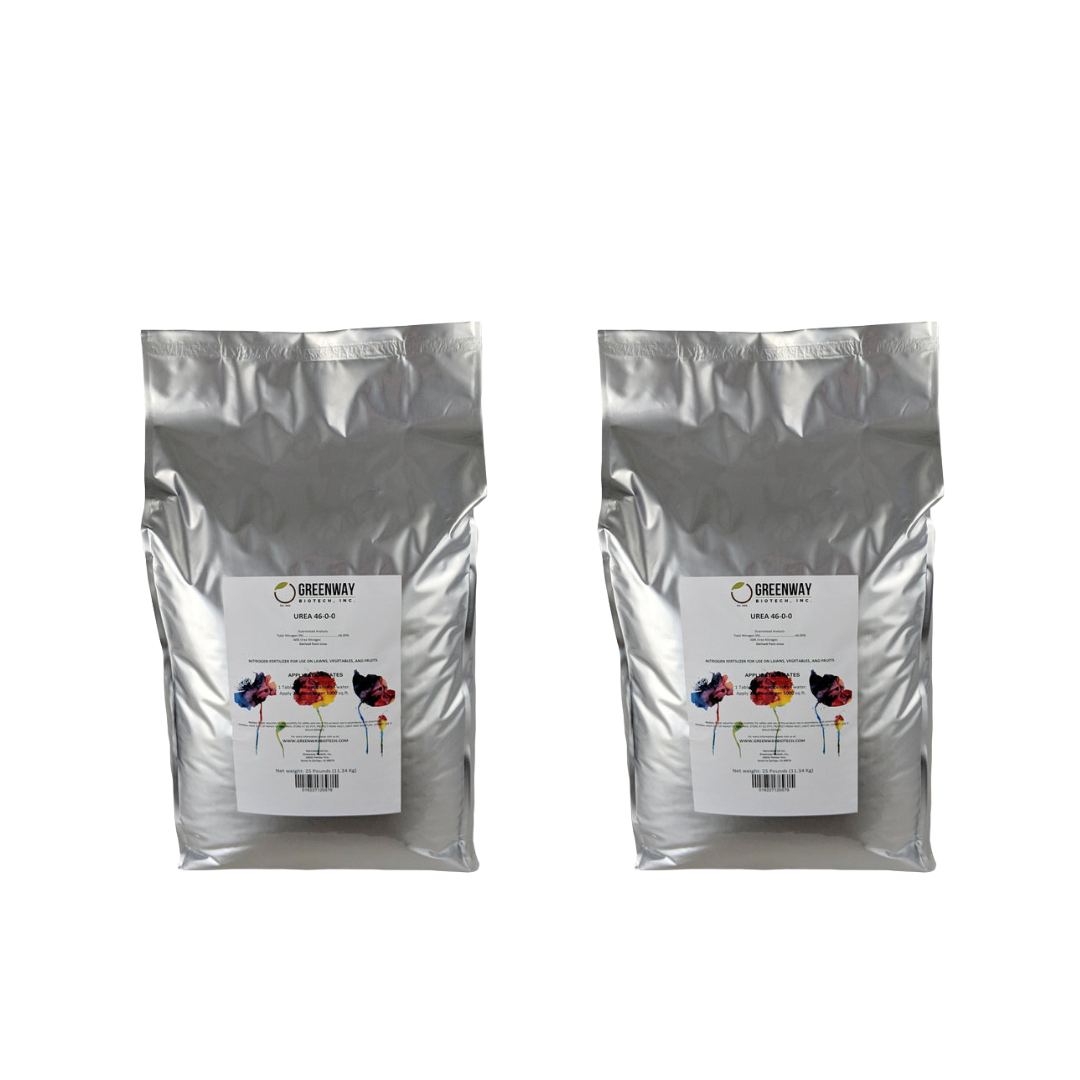
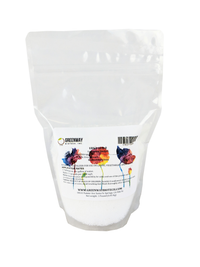
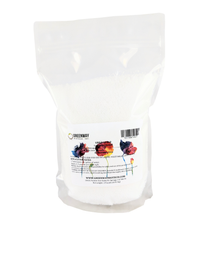
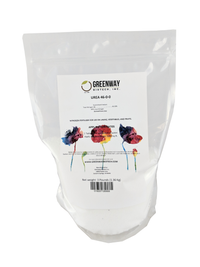
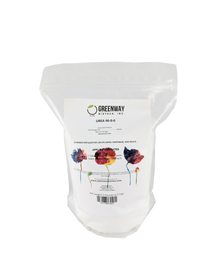
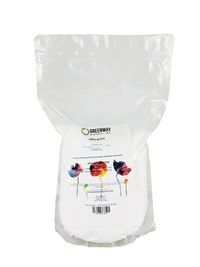
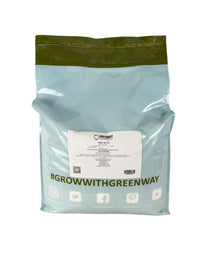
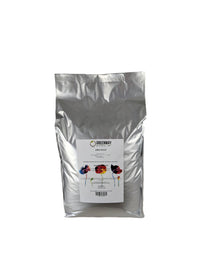
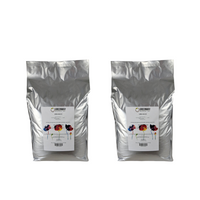
Urea Fertilizer 46-0-0
- Regular Price
- $ 18.99
- Sale Price
- $ 18.99
- Regular Price
Sold Out
- Unit Price
- $ 18.99per lb
Urea Fertilizer 46-0-0
Price per lb by size: larger sizes save up to 85%
| Size | Price | Per lb | Per lb vs 1 Pound |
|---|---|---|---|
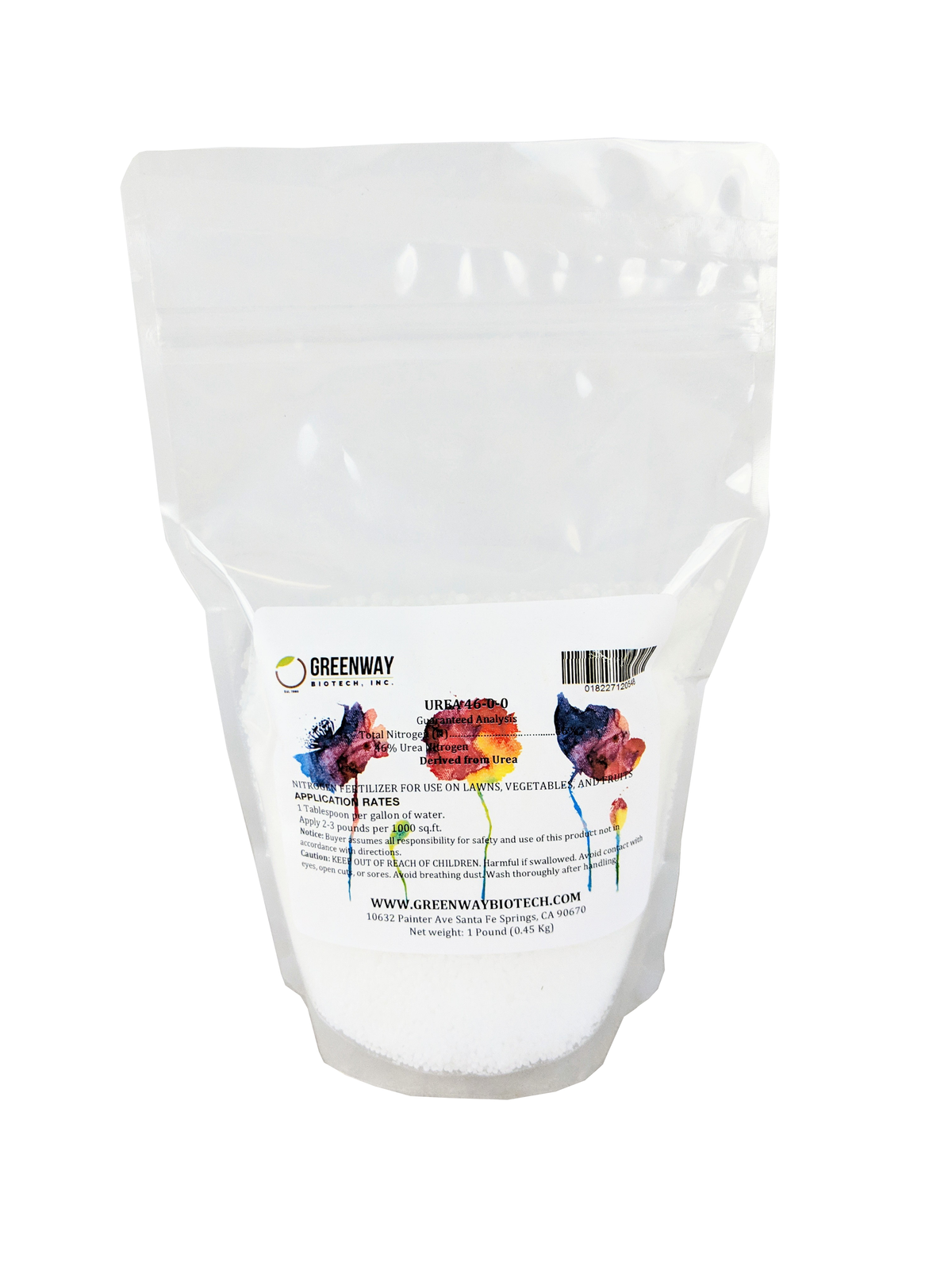
| 1 Pound | $ 18.99 | $ 18.99 | – |
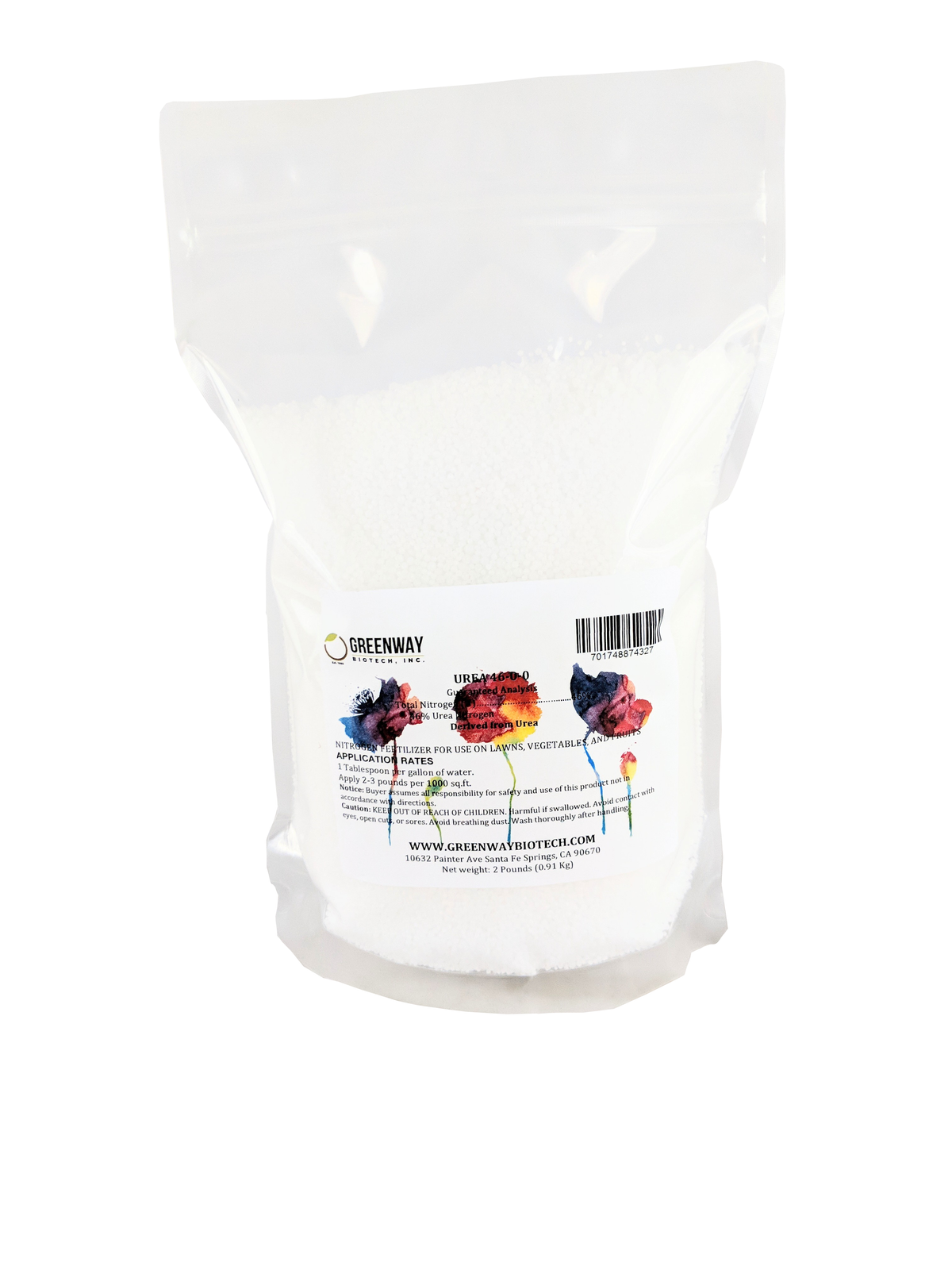
| 2 Pounds | $ 22.99 | $ 11.50 | 39% less |
| 3 Pounds | $ 26.99 | $ 9.00 | 53% less |
| 5 Pounds | $ 31.99 | $ 6.40 | 66% less |
| 10 Pounds | $ 49.99 | $ 5.00 | 74% less |
| 20 Pounds | $ 69.99 | $ 3.50 | 82% less |
| 25 Pounds | $ 79.99 | $ 3.20 | 83% less |
| 50 Pounds (2 x 25 pound bags) | $ 146.99 | $ 2.94 | 85% less |
Shipping costs and limits
- Continental US, Standard shipping: free on orders of $100 or more, $9.99 on orders under $50, and $14.99 from $50 up to $100.
- UPS and FedEx options are also offered at checkout, at their own rates.
- Orders placed by 11 AM Pacific on a business day ship the same day.
- Alaska, Hawaii, US territories, APO/FPO and international addresses: the cost is shown at checkout, and 2-day delivery isn’t available to Alaska, Hawaii or P.O. boxes.
- The 2 x 25 lb size ships as two separate 25 lb bags.