FREE SHIPPING ON ALL ORDERS OVER $100 (CONTINENTAL US ONLY!)

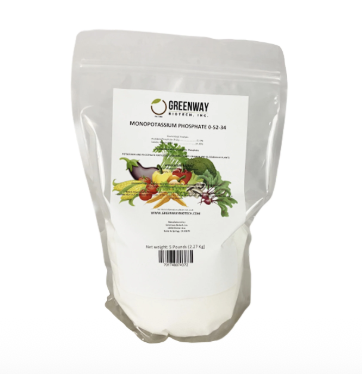
Monopotassium Phosphate (MKP) Fertilizer 0-52-34, Water-Soluble

Nitrogen-free 0-52-34 phosphorus and potassium salt for flowering, fruit set, fertigation and hydroponics.

  • Good for: Bloom and fruiting stages in hydroponic, fertigation and foliar programs.
  • How it’s used: Dissolve fully in water and feed through drip, a foliar spray or a hydroponic tank.
  • Keep in mind: Adds no nitrogen, and never mix it with calcium fertilizers in the same concentrated tank.
Regular Price
$ 109.99
Sale Price
$ 109.99
Regular Price
Sold Out
Unit Price
$ 11.00per lb

Weight: 10 Pounds

Specifications
Grade
0-52-34 (52% P₂O₅, 34% K₂O); technical grade, 100% water-soluble
Chemical name
Monopotassium phosphate (KH₂PO₄)
CAS number
7778-77-0
Registration
CDFA-registered fertilizer
Sizes
1 Pound, 2 Pounds, 3 Pounds, 5 Pounds, 10 Pounds, 25 Pounds, 50 Pounds (or 2 x 25 pound bags)
Price per lb by size: larger sizes save up to 70%
SizePricePer lbPer lb vs 1 Pound
1 Pound $ 29.99 $ 29.99 –
2 Pounds $ 39.99 $ 20.00 33% less
3 Pounds $ 49.99 $ 16.66 44% less
5 Pounds $ 59.99 $ 12.00 60% less
10 Pounds $ 109.99 $ 11.00 63% less
25 Pounds $ 234.99 $ 9.40 69% less
50 Pounds (or 2 x 25 pound bags) $ 449.99 $ 9.00 70% less
Shipping costs and limits
  • Continental US, Standard shipping: free on orders of $100 or more, $9.99 on orders under $50, and $14.99 from $50 up to $100.
  • UPS and FedEx options are also offered at checkout, at their own rates.
  • Orders placed by 11 AM Pacific on a business day ship the same day.
  • Alaska, Hawaii, US territories, APO/FPO and international addresses: the cost is shown at checkout, and 2-day delivery isn’t available to Alaska, Hawaii or P.O. boxes.
  • The 50 lb size may ship as two 25 lb bags.

Full shipping policy

Water-soluble phosphorus and potassium · 0-52-34

About Monopotassium Phosphate (MKP) 0-52-34

Monopotassium Phosphate 0-52-34 is potassium dihydrogen phosphate (KH₂PO₄), a single water-soluble salt. It guarantees 52% available phosphate (P₂O₅) and 34% soluble potash (K₂O) and contains no nitrogen. Gardeners use it for tomatoes, vegetables, and fruit trees where a soil test shows low phosphorus, and as a leaf spray; hydroponic and fertigation growers use it to supply phosphorus, and part of the potassium, in a nutrient solution.

Because it adds no nitrogen, a complete feed needs a separate nitrogen source, and because it is a phosphate, its concentrate must be kept apart from calcium concentrates such as calcium nitrate. Base every amount on your soil test, the spray table, or your recipe, and weigh it.

  • 52% P₂O₅ Available phosphate
  • 34% K₂O Soluble potash. No nitrogen
  • 38 g per gallon Makes a 1% leaf spray, the manufacturer’s strength for young vegetable leaves. The calculator works out plants, trees, sprays, and solutions

Product facts & composition

Guaranteed analysis and product specifications, Greenway Biotech Monopotassium Phosphate 0-52-34
SpecificationDetail
Total nitrogen (N)None (the grade is 0-52-34)
Available phosphate (P₂O₅)52%
Soluble potash (K₂O)34%
CompositionMonopotassium phosphate (potassium dihydrogen phosphate, KH₂PO₄, CAS 7778-77-0), listed at 100% on the Safety Data Sheet
FormWhite or colorless crystals or granular powder, odorless, according to the Safety Data Sheet
Solubility208 g per liter of water at 20 °C (68 °F), according to the Safety Data Sheet
Solution pH4.2 to 4.9 for a 1% solution, according to the Safety Data Sheet
In solutionFor solution math, 52% P₂O₅ × 0.4364 = 22.7% P and 34% K₂O × 0.8302 = 28.2% K by product weight, so 1 g per liter adds 227 ppm P (520 ppm as P₂O₅) and 282 ppm K; 1 g per US gallon adds 60 ppm P and 75 ppm K.
RegistrationRegistered with the California Department of Food and Agriculture (CDFA)
HazardsNot classified as hazardous under OSHA’s Hazard Communication Standard; dust can mechanically irritate the eyes and airways. See Handling, storage & limitations
Package sizes1, 2, 3, 5, 10, 25, and 50 lb (the 50 lb size may ship as two 25 lb bags)

Percentages are by weight of product. Pure potassium dihydrogen phosphate works out to 52.2% P₂O₅ and 34.6% K₂O, so the 0-52-34 guarantee sits just under the pure compound. Calculate from the guaranteed figures, and weigh the product: this page gives no spoon or cup conversions.

Best uses & benefits

Choose it when your nutrient recipe or soil test calls for phosphorus and the potassium that comes with it fits your program.

Hydroponic and fertigation recipes

UF/IFAS notes that monopotassium phosphate is the most common phosphorus source in commercial premixed hydroponic fertilizers, and the Cornell, Penn State, and UF/IFAS recipes on this page all use it. 1 g per liter of final solution adds 227 ppm phosphorus and 282 ppm potassium.

Recipes that set nitrogen separately

It contains no nitrogen, so the rest of a recipe sets the nitrogen and its ammonium share: the Cornell and UF/IFAS recipes take nitrogen from calcium nitrate and potassium nitrate, with a little ammonium nitrate in Cornell’s lettuce recipe and in UF/IFAS’s last tomato stage. Monoammonium Phosphate 12-61-0, by contrast, brings ammonium with its phosphorus.

Tomatoes, vegetables, and fruit trees that test low in phosphorus

Iowa State Extension and the University of Minnesota give phosphate rates by soil test for vegetable and flower gardens, fruit trees, shrubs, and berries. This page turns them into grams per plant and per tree, and the potash this product adds counts toward the soil test’s potash recommendation. See the amounts.

Leaf sprays

The manufacturer’s directions for this product give a 1% spray (38 g per gallon) on young leaves of most vegetables and field crops, and strengths and timing for stone fruits, citrus, grapes, olives, and bananas. Sprays supplement soil feeding; they do not replace it.

Where it is a poor fit

  • Soil that already tests high in phosphorus. Iowa State and Minnesota recommend no garden phosphate above 25 ppm (Bray-P1) or 18 ppm (Olsen-P). Minnesota warns that excess phosphorus on high-testing soils can degrade water quality.
  • Soil that tests high in potassium but low in phosphorus. Iowa State recommends no garden potash above 200 ppm potassium. Monoammonium Phosphate 12-61-0 or the granular Monoammonium Phosphate 11-52-0 supplies phosphorus without potash.
  • A bloom feed for plants that are not short of phosphorus. Washington State University Extension horticulturist Linda Chalker-Scott found no scientific evidence that roses need high levels of phosphate, notes that non-agricultural soils generally have adequate phosphate, and reports that added phosphate reduces root colonization by mycorrhizal fungi. Flowering is a growth stage, not a sign that the soil needs phosphorus; use it where a soil test or recipe calls for it.
  • A complete fertilizer. It supplies no nitrogen, calcium, magnesium, sulfur, or micronutrients.
  • Mixing with calcium or magnesium fertilizers. Calcium and phosphate form insoluble precipitates in concentrated stock solutions, and the manufacturer’s directions say not to mix this product with calcium or magnesium fertilizers. Keep calcium nitrate in a separate stock tank, and keep calcium and magnesium fertilizers out of the spray tank.
  • Pest or disease control. It is sold and registered as a fertilizer, not a pesticide, so this page makes no disease-control claim.
  • Certified organic production. It is a manufactured mineral salt, and we do not sell it for certified organic production.

Application rates & directions

Find what you are feeding, then weigh the amount; a kitchen scale works. Soil amounts depend on the phosphorus level on your soil test, leaf sprays follow the manufacturer’s directions for this product, and nutrient solutions follow your recipe. The calculator does the math for any number of plants, trees, or gallons.

Tomatoes, peppers, and other vegetables

Find your soil test’s phosphorus level in the first column and read across. Apply it once, before planting: spread each plant’s amount over its 3 × 3 ft space, or the bed amount over the bed, and work it into the top 4 to 6 inches.

Monopotassium Phosphate 0-52-34 per vegetable plant and per 100 sq ft of vegetable or flower bed, by soil-test phosphorus. Rates of 0.40, 0.30, 0.20, and 0.10 lb of phosphate (P₂O₅) per 100 sq ft from Iowa State Extension and the University of Minnesota (BU-01731, Table 23); level names from Minnesota’s Table 6
Soil-test phosphorusEach tomato or vegetable plant (3 × 3 ft of space)Each 100 sq ft of bed
Low: Bray-P1 0–5 ppm, Olsen-P 0–3 ppm31 g349 g (0.77 lb)
Medium: Bray-P1 6–10, Olsen-P 4–724 g262 g (0.58 lb)
High: Bray-P1 11–15, Olsen-P 8–1116 g174 g (0.38 lb)
High: Bray-P1 16–25, Olsen-P 12–187.9 g87 g (0.19 lb)
Very high: Bray-P1 over 25, Olsen-P over 18NoneNone

The per-plant amount assumes about 3 × 3 feet for each plant; Iowa State spaces caged tomatoes 2½ to 3 feet apart and sprawling plants 3 to 4 feet apart. For other spacing, use the calculator. Every gram also adds 0.34 g of potash (K₂O). Your lab report names the test: Minnesota uses Bray-P1 on soils at pH 7.4 or below and Olsen-P above. These tables come from the Upper Midwest and are not split by crop; critical levels differ by crop and season, and the California lettuce guideline suggests a small starter for winter and spring lettuce at Olsen-P levels up to about 55–60 ppm. If your lab or state Extension service gives a phosphate recommendation in pounds of P₂O₅, use the soil test report formula below.

No soil test? Get one before adding phosphorus to soil. The University of Minnesota says a soil test is needed for accurate fertilizer recommendations, and Washington State University Extension notes that non-agricultural soils generally have adequate phosphate. Minnesota warns that excess phosphorus on high-testing soils can degrade water quality.

Already planted? Phosphorus barely moves in soil, so these sources work it in before planting and give no amount to sprinkle around plants already growing. For plants already in the ground, the manufacturer’s 1% leaf spray (below) is the option on this page; apply the soil amount before your next planting.

Pears, apples, and other fruit trees, shrubs, and berries

Measure across the branches from tip to tip, find your soil test’s phosphorus level, and read across. Each tree amount covers the ground under the branches and 2 feet beyond the branch tips, the area the University of Minnesota fertilizes. For shrubs and berries, measure the bed, row, or hedge you will fertilize.

Monopotassium Phosphate 0-52-34 per fruit tree by branch spread, and per 100 sq ft of shrubs or berries, by soil-test phosphorus. Rates of 0.20, 0.10, and 0.05 lb of phosphate (P₂O₅) per 100 sq ft from the University of Minnesota (BU-01731, Tables 6 and 27); Iowa State Extension gives the same rates for trees and shrubs
Soil-test phosphorusTree, branches 6 ft across10 ft across15 ft across20 ft acrossEach 100 sq ft of shrubs or berries
Low: Bray-P1 0–5 ppm, Olsen-P 0–3 ppm137 g269 g1.09 lb (495 g)1.74 lb (789 g)174 g (0.38 lb)
Medium: Bray-P1 6–10, Olsen-P 4–769 g134 g247 g395 g87 g (0.19 lb)
High: Bray-P1 11–25, Olsen-P 8–1834 g67 g124 g197 g44 g (0.10 lb)
Very high: Bray-P1 over 25, Olsen-P over 18NoneNoneNoneNoneNone

Minnesota applies phosphorus to established fruit trees, shrubs, and berries in spring or fall. Phosphorus barely moves in soil, so for an established tree Minnesota places it below the surface: make holes 12 to 18 inches deep and about 2 feet apart with a soil auger, from at least 3 feet out from the trunk to 2 feet beyond the branch tips, divide the amount equally among the holes, and mix it into the soil used to refill them. For a new tree, shrub, or berry planting, work it into the top 4 to 6 inches before planting; around established shrubs and berries, spread it evenly and work it lightly into the soil. Iowa State notes that healthy, vigorous trees and shrubs in home landscapes generally do not need fertilizer, so feed them only where a soil test shows a need.

Potash. This product adds potash with its phosphorus, so compare it with what your potassium test calls for. Where Iowa State recommends no potash (over 200 ppm potassium for gardens, over 150 ppm for trees and shrubs), a phosphorus source without potash, such as Monoammonium Phosphate 12-61-0, fits better. If you need more potash than it adds, use a potassium-only fertilizer such as Potassium Sulfate 0-0-53.

Potash (K₂O) recommended by soil-test potassium (Iowa State Extension), in lb per 100 sq ft, to compare with the potash this product adds
Soil-test potassium (ppm)Vegetable and flower gardensTrees and shrubs
0–500.400.20
51–1000.300.10
101–1500.200.05
151–2000.100
Over 20000

Leaf sprays (the manufacturer’s directions)

The manufacturer’s directions for this 0-52-34 give the spray strengths below. A 1% spray is 1 kg per 100 liters: 10 g per liter, or 38 g per US gallon. Weigh the product, dissolve it in the full amount of water, and spray the leaves.

Leaf-spray strengths and timing from the manufacturer’s directions for this 0-52-34 product, with the weight of product per gallon and per liter of water
PlantsSpray strengthPer US gallon of waterPer liter of waterWhen
Most vegetables and field crops, including tomato and pepper, young leaves1%38 g10 gNo schedule given
Vegetables and field crops, mature leaves or more tolerant cropsUp to 2%Up to 76 gUp to 20 gNo schedule given
Peach, plum, cherry, apricot, and other stone fruits1–2%38–76 g10–20 g2 to 4 sprays from fruit set to fruit coloring
Citrus1–3%38–114 g10–30 g2 or 3 sprays a month apart during early fruit development, starting 1 month after fruit set
Table grapes1–2%38–76 g10–20 g1 spray at fruit set and 1 during ripening
Wine grapes2%76 g20 g1 spray at fruit set and 1 during ripening
Olives3–5%114–189 g30–50 g1 in early spring, 2 during fruit development, and 1 during fruit sizing and oil filling
Bananas1–2%38–76 g10–20 g2 to 6 sprays
  • Start at the low end, and test first. The manufacturer advises spraying a small area before treating a whole crop, to see whether the spray causes any damage.
  • Keep the tank simple. Do not mix it with calcium or magnesium fertilizers, such as calcium nitrate or Epsom salt, in the spray tank. Iron, manganese, zinc, and copper in the same tank must be chelated.
  • Sprays supplement soil feeding; they do not replace it. The manufacturer describes leaf sprays as an optional supplement where plants need high phosphorus and potassium. University field trials found no yield benefit from monopotassium phosphate sprays on corn (Iowa State, one season in 1999, where 5 lb per acre reduced yield by about 3%) or potato (UF/IFAS, two 3% sprays).
  • Pears and apples. The manufacturer gives no spray strength for them. Its programs for commercial pear and apple orchards in the Benelux countries and Germany spray 5 to 10 kg per hectare (4.5 to 8.9 lb per acre) 3 to 4 times from 6 weeks after flowering, with the final rate set by leaf analysis, and spray no fertilizer for 2 to 3 weeks after flowering, to avoid scorch. For a backyard tree, use the soil table above.

Florida citrus groves (UF/IFAS Extension). UF/IFAS recommends 8 lb of K₂O per acre per application for mature citrus trees, from sources that include potassium nitrate and monopotassium phosphate. In this product that is 23.5 lb per acre, which also supplies 12.2 lb of P₂O₅. UF/IFAS reports that post-bloom sprays in late April have been found to increase fruit size and yield, and reports no fruit burn when 15 lb of monopotassium phosphate per acre was applied in 32.5 gallons of water per acre, or in 10 gallons by airplane; those examples used less than the full rate, and it gives no spray volume for the full rate. At the manufacturer’s 1–3% citrus strength, 23.5 lb needs about 94 to 282 gallons of water per acre; set the volume with your grove advisor.

Hydroponic and fertigation nutrient solutions

Formula. Grams of product = phosphorus target (ppm P) × liters of final solution ÷ 226.9. Multiply US gallons by 3.785 for liters. If your recipe writes the target as P₂O₅, multiply it by 0.4364 first. Each ppm of phosphorus from this product also brings 1.24 ppm of potassium.

University phosphorus targets for nutrient solutions that use monopotassium phosphate, with the weight of this 0-52-34 product that supplies them in the final solution
TargetSourcePer 100 US galPer 1,000 LPotassium it adds
31 ppm PCornell modified Sonneveld recipe for lettuce, leafy greens, and herbs (51.5 g of monopotassium phosphate per 100 gal); also the Penn State Extension recipe example51.7 g137 g38.6 ppm K
39 ppm PUniversity of Arizona CEAC recipe for tomato, cucumber, and pepper, as published by Cornell (64.9 g per 100 gal)65.1 g172 g48.5 ppm K
50 ppm PUF/IFAS hydroponic tomato, every growth stage; its Formula 3 dissolves 5.5 lb in a 30-gallon stock tank injected at 1:10083.4 g220 g62.2 ppm K

Count the potassium and the nitrogen. This product supplies only part of each recipe’s potassium: Cornell’s lettuce recipe totals 210 ppm K, and UF/IFAS’s tomato targets run from 120 to 200 ppm K, with the rest coming from potassium nitrate, potassium sulfate, or potassium chloride. It supplies no nitrogen, so the recipes take theirs from calcium nitrate and potassium nitrate, with a little ammonium nitrate in some. If your water already carries phosphorus or potassium, subtract it from the target.

Keep it away from calcium concentrates, and test hard water. The manufacturer’s directions say not to mix it with calcium or magnesium fertilizers: use two tanks, or apply them at different times. Cornell notes that calcium can combine with phosphates and sulfates to form insoluble precipitates, so the Cornell, Penn State, and UF/IFAS recipes keep calcium nitrate in one stock tank and this product in the other. Magnesium sulfate never goes in the calcium tank. To follow the manufacturer’s directions exactly, dissolve it in a third tank or apply it at a different time; with two tanks, the university recipes put it with this product, so if you follow one, check that stock for cloudiness. Recipes name the tanks differently (Cornell’s phosphate tank is B, UF/IFAS’s is A), so go by the contents, not the letter. The two concentrates meet only in the diluted final solution, and at recipe strength that solution holds calcium, phosphate, and sulfate together: Cornell’s lettuce recipe carries 90 ppm calcium with 31 ppm phosphorus. Hard source water is a separate risk in drip and fertigation lines: UC Agriculture and Natural Resources reports that phosphorus fertilizers injected into irrigation water with more than about 40–50 ppm calcium or magnesium (2.5 meq/L) may form precipitates that are difficult to dissolve out of emitters. Before injecting, jar-test: mix the fertilizer into your water at the concentration that will occur in the line, let it stand overnight, and look for cloudiness or sediment.

It dissolves up to about 208 g per liter at 20 °C (Safety Data Sheet), far above what the recipes use: UF/IFAS’s Formula 3 stock holds about 22 g per liter. A 1% solution measures pH 4.2 to 4.9, so measure pH and EC after mixing. For soil crops on drip, inject phosphorus only where a soil test, tissue test, or advisor calls for it: for drip-irrigated processing tomatoes, UC Davis specialist Tim Hartz writes that in-season phosphorus fertigation is seldom necessary when adequate phosphorus was applied before or at planting.

California field and vegetable crops (California Crop Fertilization Guidelines)

Phosphate guidelines per acre from the CDFA–FREP and UC Davis California Crop Fertilization Guidelines (Olsen, or bicarbonate, soil test), with the weight of this 0-52-34 product that supplies them and the potash it adds
Crop and soil testGuideline (lb P₂O₅ per acre)This product per acrePotash it adds per acre
Processing tomato, Olsen-P below 10 ppm60–100115–192 lb39–65 lb K₂O
Processing tomato, 10–20 ppm50–8096–154 lb33–52 lb K₂O
Processing tomato, above 20 ppmUnlikely to respond; a small starter may help root growth in cold soilNo rate givenNone
Lettuce, below 10 ppmUp to 200 may be needed, especially when soil is below 60 °FUp to 385 lbUp to 131 lb K₂O
Lettuce, 30–40 ppmNo more than 100No more than 192 lbUp to 65 lb K₂O
Lettuce starter, winter or spring, 40 to 55–60 ppm2038 lb13 lb K₂O

These are California field guidelines, not home-garden rates, and the lettuce guideline gives no figure between 10 and 30 ppm. The tomato figures are the total for the year, including any starter; the guideline applies most preplant phosphorus in a band and places a starter band 1 to 2 inches below the seed. The lettuce guideline bands about 2 inches below and 2 inches to the side of the seed row and keeps high-analysis fertilizers a safe distance from the plants. The guidelines are written for phosphate; count the potash this product adds toward the crop’s potassium.

From a soil test report

Formula. Pounds of this product = pounds of P₂O₅ your report calls for ÷ 0.52. The potash it adds = pounds of product × 0.34. If the report gives pounds per acre, divide by 43.56 for pounds per 1,000 sq ft. For example, 60 lb of P₂O₅ per acre is 115 lb of this product per acre, adding 39 lb of K₂O. Apply it the way the report says, and count the potash toward the report’s potassium recommendation.

Your package label

This page gives university rates matched to your soil test or recipe and the manufacturer’s spray strengths, and does not restate the directions printed on your package. If the directions on your package differ from this page, email questions@greenwaybiotech.com before applying.

Uses with no amount on this page

This page gives no amount for lawns, transplant starter solutions, aquaponics, or watering containers or houseplants with this product alone, and no spray strength for pears, apples, or plants not in the spray table. For lawns and other crops, apply your soil report’s P₂O₅ recommendation with the formula above, or email questions@greenwaybiotech.com with your plants, growing method, and soil or water test.

How to use Monopotassium Phosphate 0-52-34

  1. Test first. For soil, get a test that reports phosphorus and potassium, and skip phosphorus where it tests very high. For solutions, know your recipe’s phosphorus target and your water’s calcium and magnesium.
  2. Find the amount and weigh it. Use the tables or the calculator. A kitchen scale that reads to 1 g covers plants, trees, and sprays; a scale reading to 0.1 g helps with small batches of nutrient solution.
  3. Work it in, spray it, or dissolve it. For plants and beds, spread it and work it into the soil before planting. For an established tree, divide it among holes around the tree. For a spray, dissolve it in the full amount of water and try it on a small area first. For solutions, dissolve it in part of the water, then add it to the batch or to the phosphate stock tank, never to a calcium concentrate.
  4. Check sprays and solutions. Check the area you test for damage before spraying the rest. A solution is acidic, so measure pH and EC after mixing; with hard water, jar-test first and watch for cloudiness or sediment.
  5. Retest before repeating. A soil amount is one application; retest the soil before adding phosphorus again. Follow the spray timing in the table, and keep phosphate out of drains and waterways.

Calculator & choosing a size

Formulas. Plants, beds, trees, and shrubs: pounds of product = square feet ÷ 100 × the lb of P₂O₅ per 100 sq ft for your soil test ÷ 0.52, where a tree’s square feet are the circle out to 2 feet beyond its branch tips. Leaf sprays: grams of product = gallons of water × 37.85 × spray strength in percent. Solutions: grams of product = ppm P target × liters of final solution ÷ 226.9. Soil test reports: pounds of product = pounds of P₂O₅ recommended ÷ 0.52. Multiply pounds by 453.6 for grams.

Worked examples.

  • Six caged tomato plants, 3 feet apart, in soil testing medium (Bray-P1 8 ppm, 0.30 lb P₂O₅ per 100 sq ft): 6 × 9 sq ft = 54 sq ft; 54 ÷ 100 × 0.30 ÷ 0.52 = 141 g (0.31 lb), about 24 g per plant; a 1 lb bag covers it.
  • One pear tree with branches 10 feet across, in soil testing medium (Olsen-P 6 ppm, 0.10 lb P₂O₅ per 100 sq ft): the circle out to 2 feet beyond the branch tips is 154 sq ft; 154 ÷ 100 × 0.10 ÷ 0.52 = 134 g; a 1 lb bag covers it.
  • A 2-gallon leaf spray for tomatoes at 1%: 2 × 37.85 = 76 g; a 1 lb bag covers it.
  • A 100-gallon hydroponic reservoir mixed fresh at 31 ppm P: 31 × 378.5 L ÷ 226.9 = 51.7 g of product, adding 38.6 ppm potassium; a 1 lb bag covers it.
  • A 30-gallon stock tank injected at 1:100 for 50 ppm P in the final solution: 50 × 11,356 L ÷ 226.9 = 2,502 g (5.52 lb) in the tank, 83.4 g per gallon of stock, treating 3,000 gallons; a 10 lb bag covers it, and a 5 lb plus a 1 lb bag covers it for less.
What each bag covers: tomato or vegetable plants with 3 × 3 ft each in soil testing medium (23.55 g per plant, one application), a 1% leaf spray (37.85 g per gallon), or hydroponic solution at 31 ppm phosphorus (51.7 g per 100 gallons)
Bag sizeVegetable plants, medium soil test1% leaf spraySolution at 31 ppm P
1 lb (454 g)19 plants11.9 gal877 gal
2 lb (907 g)38 plants23.9 gal1,750 gal
3 lb (1,361 g)57 plants35.9 gal2,630 gal
5 lb (2,268 g)96 plants59.9 gal4,380 gal
10 lb (4,536 g)192 plants119 gal8,770 gal
25 lb (11,340 g)481 plants299 gal21,900 gal
50 lb (22,680 g)962 plants599 gal43,800 gal

The calculator below asks what you are feeding and then, depending on your answer, the number of plants or trees and your soil test, the crop and the water in your sprayer, the solution volume and phosphorus target, or the phosphate your soil test report calls for. It applies the amounts from the tables above, states the phosphorus and potassium supplied, and recommends the smallest bag that covers one application, spray tank, or batch, plus a lower-price combination of bags when one exists. Prices, tax, and shipping are confirmed at checkout, and availability is confirmed when you add to cart.

The calculator needs JavaScript. If it does not appear, use the rate tables and formulas above to choose a size.

How monopotassium phosphate works

In water, monopotassium phosphate dissolves into potassium (K⁺) and dihydrogen phosphate (H₂PO₄⁻) ions, and its solution is acidic: pH 4.2 to 4.9 at 1%, according to the Safety Data Sheet. Because it carries no nitrogen, a recipe can set its phosphorus with this product and its nitrogen with nitrate salts. In a concentrate, its phosphate meets any calcium present: Cornell notes that calcium can combine with phosphates and sulfates to form insoluble precipitates, which is why recipes keep the two concentrates in separate tanks and let the injectors combine them in the diluted line.

In soil, phosphate moves very little. The University of Minnesota explains that phosphorus forms insoluble compounds and barely moves in soil, which is why it should be worked in rather than left on the surface. In alkaline soils, fertilizer phosphorus usually reacts with calcium to form calcium phosphate minerals (Midwest Vegetable Production Guide), and the California guidelines add that phosphorus is less available in cold, wet soils and where free lime is present.

More is not better. Colorado State Extension notes that excessive phosphorus fertilizer can aggravate iron and zinc deficiencies, and Washington State University Extension reports that excess phosphate reduces mycorrhizal activity in roots. This describes phosphorus nutrition in general; it is not a trial of this finished product.

Compare your options

Match the product to what your recipe or soil test calls for. Analyses are each product’s guarantee as shown on its page.

Monopotassium Phosphate 0-52-34 compared with other Greenway phosphorus and potassium sources
OptionSuppliesChoose it whenLimitation
Monopotassium Phosphate 0-52-34, this product52% P₂O₅, 34% K₂O; no nitrogen; water-solubleA recipe or soil test calls for phosphorus, and the potassium it adds fitsSupplies potassium whether or not you need it; no nitrogen
Monoammonium Phosphate 12-61-061% P₂O₅, 12% ammoniacal N; water-solubleA recipe needs phosphorus and can use some ammonium, or soil is high in potassiumAll of its nitrogen is ammonium; no potassium
Monoammonium Phosphate 11-52-052% P₂O₅, 11% ammoniacal N; granularYou are spreading or banding phosphorus on soilNot for fertigation, drip, foliar sprays, or hydroponics
Potassium Sulfate 0-0-5353% K₂O, 17% sulfur; no phosphorusYou need potassium without phosphorusSupplies no phosphorus or nitrogen

Handling, storage & limitations

  • Hazards. Not classified as hazardous under OSHA’s Hazard Communication Standard, according to the Safety Data Sheet. Dust may mechanically irritate the eyes and airways and cause coughing and sneezing. Not for human or animal consumption.
  • Protective equipment. Wear safety glasses and gloves when handling the powder, and a particulate mask or approved respirator where dust is not well ventilated. Wash your hands after handling, and do not eat, drink, or smoke while using it.
  • Storage. Keep it in the original closed container in a dry place, away from heat and moisture. It absorbs moisture and may cake if left open. Keep it away from strong oxidizers and strong bases, and out of reach of children.
  • Spills and the environment. Scoop up spills without raising dust. Keep spilled material and its runoff out of surface waterways: the Safety Data Sheet lists phosphates as contributing to eutrophication, which feeds algae growth in lakes and streams.
  • Use limits. Weigh every application and base it on your recipe or a soil test. Keep its concentrate separate from calcium concentrates. It adds no nitrogen and is not a complete fertilizer.
  • First aid. Eyes: rinse right away with plenty of water and remove contact lenses if easy to do; get medical attention if irritation occurs. Skin: wash with soap and water; get medical attention if irritation develops. Inhaled: move to fresh air; get medical attention if respiratory symptoms occur. Swallowed: rinse the mouth with water and do not induce vomiting unless medical personnel tell you to; if a large amount is swallowed, call a physician immediately. Never give anything by mouth to an unconscious person.
  • Emergency numbers from the Safety Data Sheet. CHEMTREC, 24 hours: 1-800-424-9300 (domestic) or +1-703-527-3887 (international).

Frequently asked questions

What is the difference between MKP 0-52-34 and MAP 12-61-0?

Both are water-soluble phosphates. MKP (monopotassium phosphate) supplies 52% available phosphate (P₂O₅) and 34% soluble potash (K₂O) with no nitrogen. MAP 12-61-0 (monoammonium phosphate) supplies 61% P₂O₅ and 12% nitrogen, all of it ammonium, with no potassium. Choose MKP when a recipe needs phosphorus without adding ammonium and the potassium fits; choose MAP 12-61-0 when the recipe can use some ammonium or the soil is already high in potassium.

How much do I use for my tomato plants?

Go by a soil test. For a tomato or other vegetable plant with about 3 × 3 feet of space, Iowa State and University of Minnesota Extension rates work out to 31 g of this product per plant where soil phosphorus tests low (Bray-P1 0–5 ppm or Olsen-P 0–3 ppm), 24 g where it tests medium (6–10 or 4–7 ppm), 16 g or 7.9 g where it tests high, and none where it tests very high (over 25 or over 18 ppm). Spread each plant’s amount over its space and work it into the top 4 to 6 inches, once, before planting. A whole bed takes 349 g down to 87 g per 100 sq ft. For plants already growing, the manufacturer’s directions give a leaf spray of 38 g per gallon of water (1%) on young leaves of most vegetables.

How much do I use for a pear or other fruit tree?

Measure across the branches from tip to tip and go by a soil test. Using University of Minnesota rates over the ground out to 2 feet beyond the branch tips, a tree with branches 10 feet across takes 269 g where soil phosphorus tests low (Bray-P1 0–5 ppm or Olsen-P 0–3 ppm), 134 g where it tests medium, 67 g where it tests high, and none where it tests very high. For an established tree, divide it among holes 12 to 18 inches deep and 2 feet apart, from 3 feet out from the trunk to 2 feet beyond the branch tips, in spring or fall. Iowa State Extension notes that healthy, vigorous trees in home landscapes generally do not need fertilizer.

Can I spray it on leaves?

Yes. The manufacturer’s directions give a 1% spray (38 g per gallon of water, or 10 g per liter) on young leaves of most vegetables and field crops, up to 2% on mature leaves or more tolerant crops, 1–2% for stone fruits and table grapes, 1–3% for citrus, and 3–5% for olives, with timing for each. Spray a small area first, and keep calcium and magnesium fertilizers out of the tank. Sprays supplement soil feeding: university field trials on corn and potato found no yield benefit from them. The manufacturer gives no spray strength for pears or apples.

How much do I add to a hydroponic reservoir?

Grams of product = your phosphorus target in ppm P × liters of final solution ÷ 226.9. For 31 ppm P, the level in Cornell’s modified Sonneveld recipe, that is 51.7 g per 100 US gallons; for UF/IFAS’s 50 ppm P for hydroponic tomatoes, 83.4 g per 100 gallons. Each ppm of phosphorus also adds 1.24 ppm of potassium, so count it in your recipe. Weigh the product on a scale.

Can I mix it with calcium nitrate or Epsom salt?

Calcium nitrate: never in the same concentrate or spray tank. Calcium combines with phosphates to form insoluble precipitates that settle out and can clog emitters, so keep calcium nitrate in its own stock tank; injected at the same time, the two meet in the water line, where they are diluted. Epsom salt: keep it out of the spray tank, as the manufacturer’s directions say. In hydroponic stock tanks, the Cornell, Penn State, and UF/IFAS recipes dissolve magnesium sulfate with this product, although the manufacturer keeps magnesium fertilizers separate; if you follow a recipe, check the stock for cloudiness.

Is it a bloom booster?

It is not sold as one. It supplies phosphorus and potassium with no nitrogen. Washington State University Extension horticulturist Linda Chalker-Scott found no scientific evidence that roses need high levels of phosphate for any reason, and notes that non-agricultural soils generally have adequate phosphate. Use it where a soil test or your nutrient recipe calls for phosphorus, at the rates on this page.

Will it lower the pH of my nutrient solution?

It is acidic: a 1% solution measures pH 4.2 to 4.9, according to the Safety Data Sheet. How far it moves your solution depends on the amount and on your water’s alkalinity, so measure pH and EC after mixing and adjust to your recipe’s target.

How much phosphorus and potassium does it add?

The label states phosphorus and potassium as oxides: 52% P₂O₅ and 34% K₂O. For solution math, that is 22.7% phosphorus (P₂O₅ × 0.4364) and 28.2% potassium (K₂O × 0.8302) by product weight, so 1 g per liter of solution adds 227 ppm P and 282 ppm K, and 1 g per US gallon adds 60 ppm P and 75 ppm K.

Can it control powdery mildew?

It is sold and registered as a fertilizer, not a pesticide, so we make no disease-control claim for it and give no rate for that use. For powdery mildew, use a product registered for it and follow its label.

Is it organic?

No. It is a manufactured mineral salt, and we do not sell it for certified organic production. If you farm under organic certification, your certifier decides which inputs you may use.

Related guides & articles

Articles give background. For this product, use the weighed rates and documents on this page.

Product documents & sources

  • Safety Data Sheet (PDF): composition, guaranteed analysis, hazards, handling, storage, first aid, and emergency numbers. Version 5.0, January 2026.
  • Product label: the guaranteed analysis is printed on every package. A PDF copy is not posted on this page yet. See Your package label under Application rates.
Where the rates and statements on this page come from

The garden, tree, solution, field, and Florida citrus figures on this page come from the university publications below; the leaf-spray strengths and timing come from the manufacturer’s published directions for this product; the composition, hazard, storage, and first-aid statements come from the Safety Data Sheet above. They are listed for growers, advisors, and anyone who wants to check them. The publications explain plant nutrition in general; they do not evaluate or endorse this product.

Rates and sources reviewed October 28, 2026.

Help choosing & next step

Not sure how much your recipe needs, or whether your soil needs phosphorus? Email your crop, growing method, and recipe or soil test results to questions@greenwaybiotech.com, or call (562) 351-5168, Monday to Friday, 7 AM to 5 PM Pacific, and we will work through it with you.

Ready to buy? Calculate your amount & choose a bag

Every order carries a 90-day satisfaction guarantee, and we pack and ship from Madera, California. You can also choose a package weight from the size selector at the top of this page.

Greenway Biotech, Inc. is a family-owned company that has blended and packaged specialty fertilizers in California since 1989, today from Madera.

  • 5 stars: 50 (83%)
  • 4 stars: 3 (5%)
  • 3 stars: 2 (3%)
  • 2 stars: 0 (0%)
  • 1 star: 5 (8%)
A
Anonymous
Monopotassium Phosphate 0-52-34

Good product. Thanks

J
JeffR.
Im using this bag for growing crystals but im

Im using this bag for growing crystals but im going to buy another 2lbs bag for next veggie season

T
Tatyana Rozin
My roses are very

My roses are very happy

S
Swen

The right product for my need

A
Anonymous
Perfect for dragon fruit flowering

Perfect for dragon fruit flowering.

D
David M. T.
Iv used this product before and this is my second time purchasing it and it works good enhancing

Iv used this product before and this is my second time purchasing it and it works good enhancing my produce just as expected.

A
Ann TROUT
We have been using this for several years to use in our fertigation system

We have been using this for several years to use in our fertigation system. Dissolves fairly well. Research the recommended water temperature for optimal dissolution.

a
andre jenkins
Mad

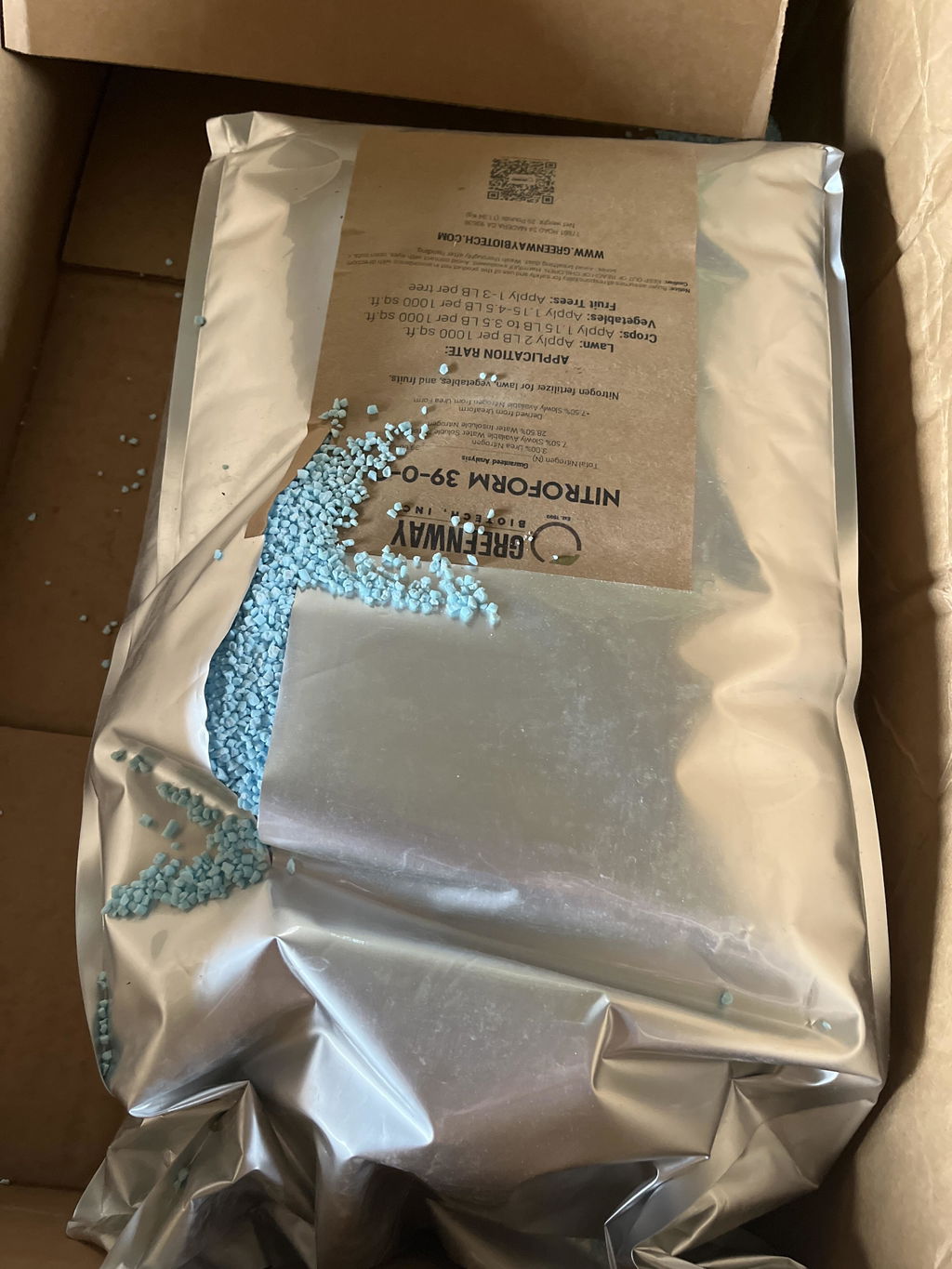
My package was bust open

V
Vivian Chiang
Monopotassium Phosphate 0-52-34

The best!!! Nothing can replace!

M
Melanie Padilla
Great, consistent service

The quality is so good. If you ever have too much stock on hand, I'd like an opportunity to purchase at a larger volume.

E
Evgeny Bronshtein
Item didn't arrived

Haven't received it

D
Danny Keovilavong
Thumbs up!

Good But price doubled…. Not good

L
Lee Roberts
Multiple Buyer

Multiply Buyer back for more. What else is there to say???

G
Guy Colyer
Great company

Easy company to do business with from A to Z

T
Thomas Gurney
Good stuff

It’s a great no frills monopotassium phosphate. Extremely fast shipping.

k
kathryn miller
Great Service

Needed this for a lettuce crop. After calling about every place in the country I found this company and their service was great.

w
william O'Bryan
Good food for flowers and fruits.

Excellent ! Fine results , great harvest.

G
Greg Moore
Amazing results

50% increase in flower size after weekly
Application

T
Tung Do
Bad delivery.

Still not received my order. Schedule delivery on September/2 but today September/8 still not see it.

J
Joseph Brooks
Monopotassium

So far so good. Will know the full results on October.

R
Richard Hartwick
Awsome

Made a huge difference in the plants. Thanks

R
Ronald Roberts
excellant

Great from start to finished arrived extremely fast

D
Dan Boustead
Reliable Service

The MKP product is a critical ingredient in our vineyard spray program. I trusted Greenway Biotech to deliver on time and they performed. Thank you again for great customer service!

t
tanya lin
Little too much money for the amount of fertilizer

Order and delivery was great. Value is not so good. It was a small package for almost $24

I
Igor Malamud
Looks like it worked for my tomato plants

My tomatoe plants were dying.
This stuff healed them.

S
Svetlana Shevcun
Monopotassium Phosphate

This is a very useful fertilizer but there not many places to get it from. My experience with his company was highly positive. The package came as promissed and contained the ordered item.

S
Svetlana DeGrey
Good product!

I purchased this product for the first time, and I already used it once. Looks like my plants took this fertilized well, they are thriving as they should.

M
Michael Wasiloff
Perfect

Nicely shipped A++++

V
Viktoriia Puryk

Good price, fast delivery

R
Robert keller

Not spring yet aint used it

C
Clayton Thomas

I will be a continued customer!!! A+ service all round for your company....

Y
YAO HSIEN FU
Broken Bag

The shipped good appeared as a broken bag with a bunch of tapes on it.

N
Nancy McKown
good stuff comes in little bags

i will be using this from now on.