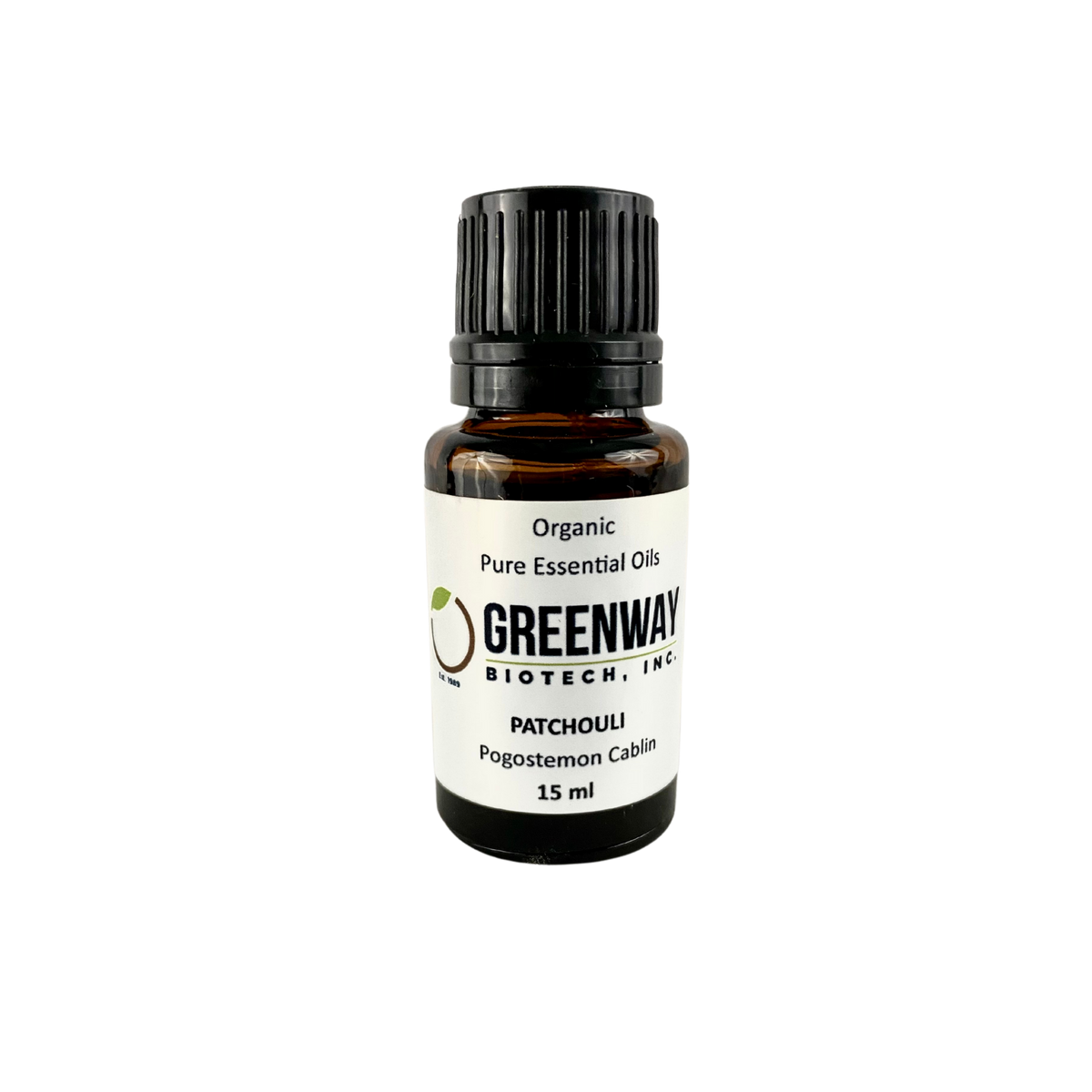
Patchouli oil is steam-distilled from the dried leaves of Pogostemon cablin, a bushy herb in the mint family native to tropical Southeast Asia. Its character comes from a rich blend of sesquiterpenes — most importantly patchoulol (patchouli alcohol) at 25-35%, alongside α-bulnesene, α-guaiene, seychellene, and pogostol. Patchoulol is so central to the oil that the perfume industry uses it as the quality marker for patchouli.
Patchouli is a classic base note. Base notes are made of large, heavy molecules that evaporate slowly, so they linger far longer than the light molecules of citrus or herbal top notes. That slow evaporation is exactly why patchouli is prized in natural perfumery as a fixative — it anchors a blend and helps lighter scents hold on longer.
It is also one of the very few essential oils that improves with age. Where high-limonene citrus oils oxidize and turn harsh, patchouli mellows: over months and years the sharper notes soften and the deep, sweet, woody character becomes more pronounced. A well-stored bottle can last 4-8 years or longer, which is unusual among essential oils and part of patchouli's appeal to collectors.
On skin, patchouli is non-phototoxic and generally well-tolerated at recommended dilutions, though, like any concentrated oil, it should always be diluted in a carrier first.
One ingredient — pure steam-distilled patchouli leaf oil. Its depth comes from the natural sesquiterpene profile below.
What to Expect
First impression: Deep, earthy, musky, and unmistakable — patchouli is a polarizing scent that people tend to either love immediately or find intense. Sweet, woody, slightly spicy undertones sit beneath the earthiness.
In blends: A base note and fixative — it grounds brighter top notes and makes a blend last. Start with one drop; patchouli dominates quickly. It pairs beautifully with citrus, florals, and warm spices.
Over time: It gets better. The aroma deepens and smooths over months and years. No refrigeration needed; just keep it cool, dark, and sealed.