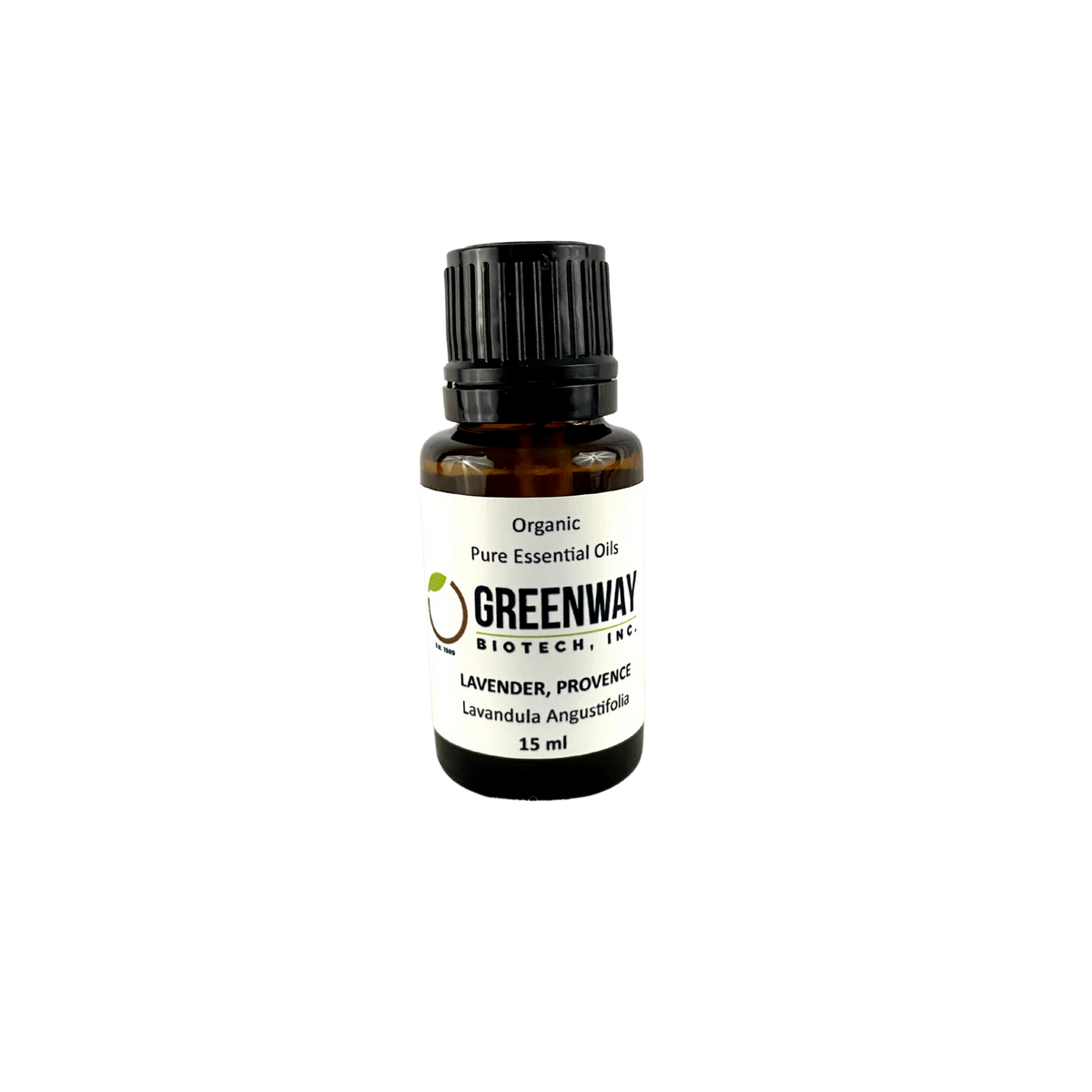
True lavender essential oil is dominated by two compounds in a near-balanced ratio: linalool (25-38%), a monoterpene alcohol, and linalyl acetate (25-45%), an ester of linalool with acetic acid. Together they typically account for half to three-quarters of the oil by weight. The ratio between them — roughly 1:1 in premium Provence lavender — is what makes the aroma read as "lavender" rather than as something sharper or more medicinal. Tip too far toward linalool and the oil reads as raw and rosemary-adjacent; tip toward linalyl acetate and it reads as soft and almost fruity. Provence-grown angustifolia consistently lands in the sweet spot.
The supporting cast rounds out the body. Lavandulol and lavandulyl acetate — named for the plant itself — add the characteristic herbaceous-floral signature. Terpinen-4-ol contributes a soft woody note. β-Caryophyllene, a sesquiterpene also found in black pepper, anchors the lower-volatility tail and gives the oil more staying power than most middle notes. 1,8-cineole (camphor-like) appears in trace amounts in true lavender; the higher it goes, the more the oil starts behaving like lavandin or spike lavender.
Practical implications. Lavender is one of the best-tolerated essential oils across most skin types and is non-phototoxic — no UV-avoidance window required. That said, modern aromatherapy practice recommends dilution for all topical use. While lavender is sometimes referenced as "safe undiluted" in older literature, documented contact-sensitization cases (particularly with oxidized oil) have led safety authors like Tisserand & Young to recommend dilution as standard practice. Cap tight, dark glass, and reasonable rotation will handle the rest.
Constituent ranges below reflect typical batch profiles for steam-distilled Provence Lavandula angustifolia. The current-batch GC/MS report is available on request.
Linalool (25-38%)
The monoterpene alcohol that carries lavender's freshness. Also dominant in many other floral oils and one of the most common compounds across plant aromatic profiles. Contributes the bright, slightly herbal first impression.
Linalyl Acetate (25-45%)
The ester that softens linalool's edges and gives true lavender its characteristic sweet, slightly fruity quality. The compound that most clearly distinguishes L. angustifolia from lavandin or spike lavender.
Lavandulol (trace-5%)
Named for the plant itself. A monoterpene alcohol with a soft herbaceous-floral character — part of what makes lavender smell unmistakably like lavender rather than a generic floral.
Terpinen-4-ol (trace-6%)
A monoterpene alcohol also found in tea tree oil. Contributes a soft woody-spicy undertone that adds depth to the lower-volatility tail.
β-Caryophyllene (trace-7%)
A sesquiterpene also found in black pepper and clove. Adds slight peppery-woody depth and helps the oil hold its character longer than most middle notes.
1,8-Cineole (trace, <1%)
The compound that dominates eucalyptus. In true Provence lavender it appears in trace amounts; higher cineole percentages indicate adulteration with lavandin or substitution with spike lavender.