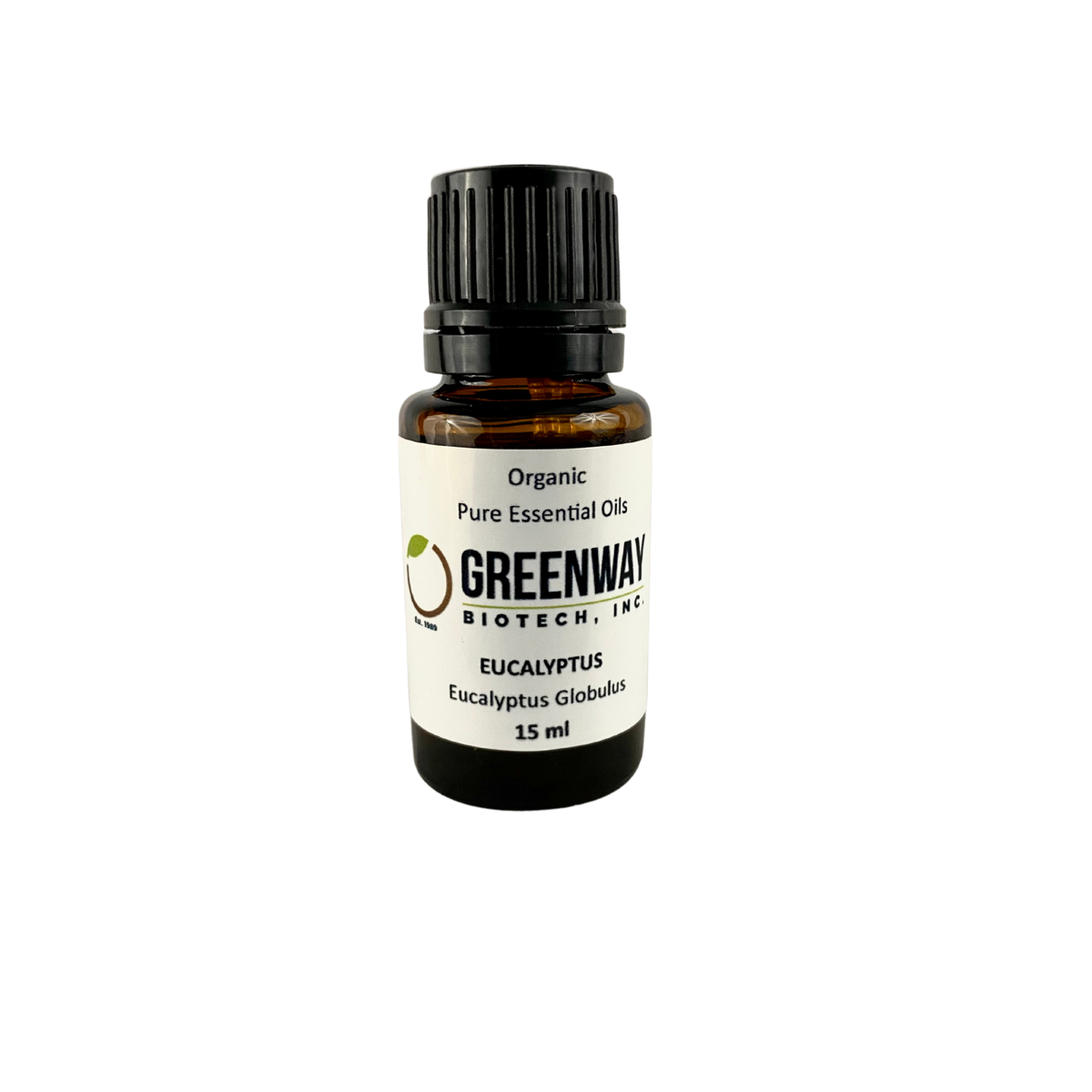
Eucalyptus essential oil is dominated by 1,8-cineole (also called eucalyptol) — a monoterpenoid ether that makes up roughly 60-85% of Eucalyptus globulus leaf oil. Cineole is what creates the bright, camphoraceous, slightly cooling first impression that makes eucalyptus instantly recognizable. It is also the compound that earns this oil its place in chest rubs, vapor balms, and aromatherapy blends marketed for clear-breathing rituals across many cultures.
The supporting cast matters too. α-Pinene (2-10%) adds a pine-forest freshness; limonene contributes a soft citrus undertone; globulol and α-terpineol round out the lower-volatility tail of the aromatic profile. None of these are dominant on their own — together they shape the difference between a flat-feeling cineole isolate and the textured complexity of true steam-distilled eucalyptus oil.
The practical implication for users: this is a top-note oil. It announces itself immediately and fades within the first hour. Pair it with middle notes (rosemary, tea tree, lavender) and base notes (patchouli, vetiver) for blends that hold their structure longer than eucalyptus alone would.
1,8-Cineole / Eucalyptol (60-85%)
The dominant monoterpenoid ether — responsible for the fresh, cooling, camphoraceous character. The compound that defines what most people recognize as "eucalyptus oil."
α-Pinene (2-10%)
A monoterpene found across many conifers and the fresh-cut character of pine needles. Adds forest-bright lift to the eucalyptus profile.
Limonene (trace-5%)
The bright citrus monoterpene also dominant in sweet orange. Contributes a soft, subtly sweet citrus undertone beneath the cineole headline.
Globulol (trace-5%)
A sesquiterpene alcohol named for the species itself. Adds slight woody depth to the lower-volatility tail of the aroma profile.
α-Terpineol (trace-3%)
A monoterpene alcohol with a soft floral-pine character. Contributes to the rounded, slightly sweet quality that sits behind the cineole.