Chelated Iron DTPA Fertilizer 11% Fe
- Regular Price
- $ 31.99
- Sale Price
- $ 31.99
- Regular Price
- $ 29.99
Sold Out
- Unit Price
- per


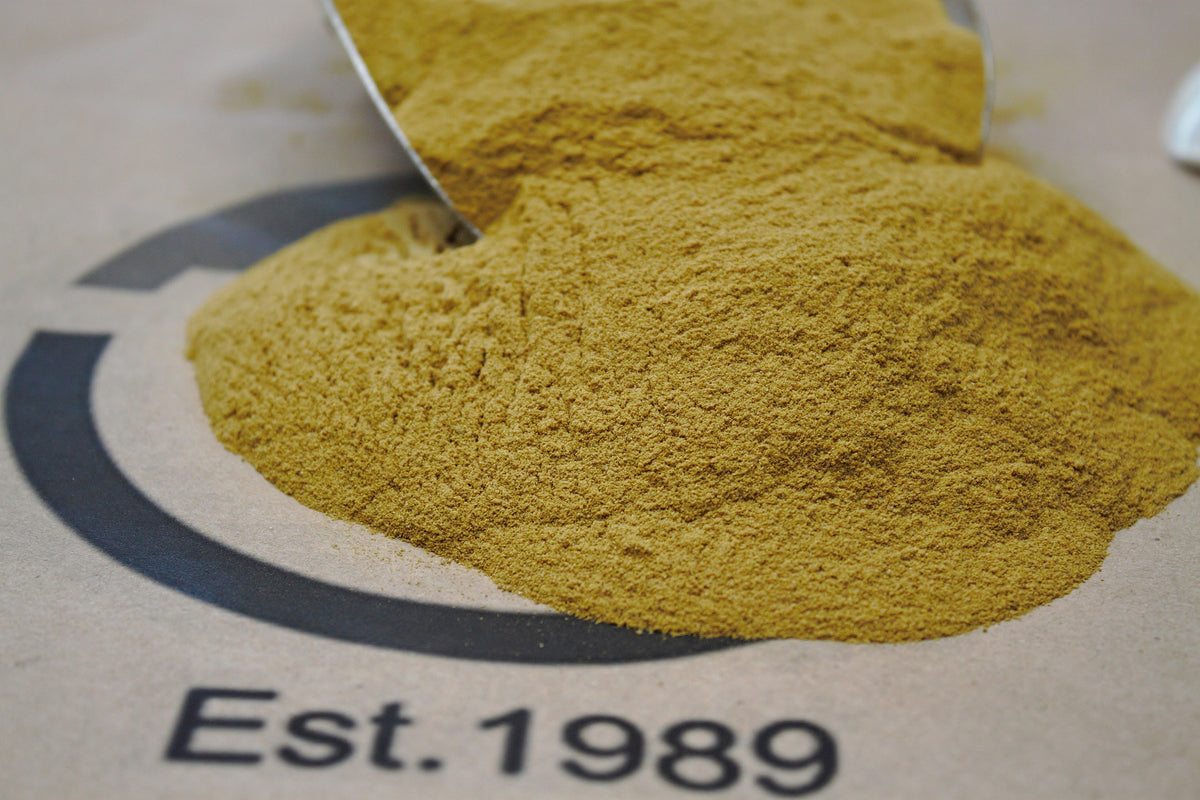


Water-soluble iron micronutrient · 11% Fe · DTPA chelated
Chelated Iron DTPA is a fully chelated, water-soluble powdered iron fertilizer with a guaranteed 11% iron, all of it chelated by DTPA. Use it to prevent or correct a confirmed iron deficiency through the soil, through drip, sprinkler, or furrow irrigation, or as a buffered foliar spray when soil application is impractical, or as the weighed iron ingredient in a hydroponic or fertigation recipe. It is a single micronutrient, not a complete fertilizer.
Its most important limitation is pH. DTPA holds iron in solution better than EDTA as pH rises, but its stability is already declining near pH 7.5, and the chelate does nothing to lower soil pH or remove bicarbonate alkalinity. Confirm that yellowing is iron deficiency, and measure root-zone pH, before you apply it.
| Specification | Detail |
|---|---|
| Iron (Fe) | 11.00% |
| Chelated iron (Fe) | 11.00%. The label declares all of the iron as chelated. |
| Derived from | Iron diethylenetriaminepentaacetate (Fe-DTPA). The safety data sheet identifies the material as ferric diethylenetriaminepentaacetate, sodium salt, CAS 12389-75-2, at 90–100% of the product. |
| Nitrogen, phosphate, potash | None declared. This is a micronutrient source, not an N–P₂O₅–K₂O fertilizer. |
| Physical form | Fully chelated, water-soluble powder |
| Solubility | Dissolves in water or fluid fertilizer and can be dry-blended with water-soluble fertilizers (manufacturer’s label). Light degrades Fe-DTPA in solution; see How it works. |
| Hazard classification (SDS, March 2025) | Not classified as hazardous under OSHA HazCom 2012; no signal word. The package label still directs: keep out of reach of children, harmful if swallowed, avoid eye contact and dust. |
| Package sizes | 1 lb, 2 lb, 5 lb, and 25 lb |
| Packaged by | Greenway Biotech, Inc., Madera, California |
Percentages are by weight of product: 1 oz of product contains 0.11 oz (3.1 g) of iron, a 1 lb bag contains 1.76 oz (49.9 g) of iron, and a 25 lb bag contains 2.75 lb of iron. Every rate on this page is stated as product weight; the elemental iron it delivers is shown beside it. In solution, 1 gram of product dissolved in 1 liter of final solution supplies 110 mg/L of iron.
Choose this product when the diagnosis, not the color of the leaf alone, points to one of these situations. Iron chlorosis is a common symptom, and it is often caused by something other than a lack of iron in the soil.
Vegetable, field, tree, and vine crops on the manufacturer’s label, applied broadcast or through irrigation. The manufacturer states that soil application is the preferred use. Colorado State University Extension notes that in alkaline soils iron is rapidly fixed into forms roots cannot absorb; a chelate keeps the applied iron in solution longer.
University of Florida IFAS reports that at pH 7.5 about half of DTPA-chelated iron remains chelated, compared with 2.5% for EDTA and all of it for EDDHA. DTPA is the practical step up from EDTA in that range; above it, an EDDHA chelate is the more reliable choice.
A single-nutrient, water-soluble iron source for a complete nutrient program, dosed by weight to the iron concentration your recipe specifies. Account for the iron already in your source water and base fertilizer, and shade the reservoir, because light degrades Fe-DTPA.
The manufacturer’s label gives buffered foliar sprays for vegetable, field, tree, vine, and citrus crops with per-acre rates, minimum spray volumes, and timing. A foliar spray reaches the leaf quickly but treats the leaves that are sprayed; it does not change the soil condition that caused the deficiency.
Every rate below is product weight unless the label prints a volume. The complete direction set comes from the manufacturer’s label for this same 11% iron DTPA: soil and fertigation rates per acre with the label’s crop lists, an individual-tree rate per inch of trunk diameter, ornamental directions as printed, and foliar and aerial rates with spray volumes, timing, and pH buffering. The current Greenway package label is described separately below. University Extension context for greenhouse drenches and nutrient solutions has its own headings, and every source is listed in section 13. Confirm iron deficiency and measure root-zone pH before applying any of these.
Weigh it. This product’s density has not been measured, so no gram equivalent is given for the teaspoon measures the manufacturer prints for ornamental shrubs and trees; use those measures as printed. Everything else is weighed: a scale reading to 0.1 g for garden, tree, and reservoir amounts, and pounds on a larger scale for field and orchard blocks.
| Crop group (as listed on the label) | Label rate | Per 1,000 sq ft | Elemental iron per acre | Method |
|---|---|---|---|---|
| Vegetable crops: beans, celery, cucumbers, lettuce, melons, onions, peas, peppers, potatoes, sweet corn, tomatoes | 2½–7½ lb per acre | 0.92–2.76 oz (26.0–78.1 g) | 0.28–0.83 lb Fe | Dissolve in water or fluid fertilizer, or dry-blend with water-soluble fertilizers, for uniform coverage; or dissolve and meter into drip, sprinkler, or furrow irrigation |
| Field crops: alfalfa, corn, dry beans, peas, forage grasses, rice, safflower, sorghum, sugar beets, sugarcane | 2½–7½ lb per acre | 0.92–2.76 oz (26.0–78.1 g) | 0.28–0.83 lb Fe | Same |
| Tree and vine crops: almond, apple, apricot, avocado, berry, cherry, citrus, grape, mango, olive, pear, peach, pistachio, plum, walnut | 2½–10 lb per acre, or ½–2½ oz per inch of tree diameter for individual trees | 0.92–3.67 oz (26.0–104.1 g) | 0.28–1.10 lb Fe | Per acre for a planted block. For individual trees, blend the weighed amount with soil or sand, or sprinkle it directly and uniformly on the soil under the drip line, then water in |
| Ornamental shrubs and trees: azaleas, gardenias, junipers, pines, roses | 4 tsp for small shrubs, up to 4 tsp per inch of tree diameter for large trees and shrubs (volume as printed; no gram equivalent) | — | — | Sprinkle uniformly under the drip line and water in |
The manufacturer’s rates are for broadcast application; its label warns that using them for spot or banded applications may cause phytotoxicity. Start at the low end of any range unless a soil or tissue interpretation for the crop supports more, measure the area actually treated, spread or meter the weighed amount uniformly, and water it in. Do not add automatic repeat soil applications: one application per confirmed need, then reassess the crop and the pH before treating again.
For a single tree or vine, the manufacturer’s label gives ½–2½ oz of product per inch of trunk diameter (14–71 g per inch). Measure the trunk diameter, multiply, and start at ½ oz per inch unless the diagnosis supports more. Worked example: a 4-inch-diameter apple tree has a range of 2–10 oz (57–284 g) of product, delivering 6–31 g of iron; begin at 2 oz. Sprinkle it uniformly on the soil under the drip line, or blend it with soil or sand first, keep it off the trunk, and water it in. The per-inch direction is for individual trees; for a planted orchard or vineyard block, use the per-acre rate.
| Crop group | Label rate | Spray volume | Timing and conditions |
|---|---|---|---|
| Vegetable and field crops, ground equipment | ⅓–1⅓ lb per acre (151–605 g) | Sufficient for thorough coverage, 25 gal per acre minimum | When iron deficiency is confirmed and soil application is impractical |
| Tree and vine crops, excluding citrus | 1–2 lb per acre (454–907 g) | Sufficient for thorough coverage, 25 gal per acre minimum | Dormant or delayed dormant before bloom, then after full bloom at 2–3 week intervals as needed |
| Deciduous crops with fruit present | 1 lb per acre (454 g) | 50–100 gal per acre | Same program, reduced rate while fruit is on the tree |
| Citrus | 1–2 lb per 100 gal of cover spray (4.5–9.1 g per gallon) | Full cover spray | Any time except during bloom |
| Aerial application | ⅓ lb per acre (151 g) | At least 10 gal per acre | Licensed aerial application; follow the applicable foliar timing |
For every foliar use: buffer the spray solution to pH 6–6.5, apply enough volume for thorough coverage (the label notes that coverage and wetting agents often enhance uptake), and do not spray plants that are suffering from moisture stress. The manufacturer permits application in water or in combination with most pesticides; when there is any doubt, apply the spray to a small test area first to check for phytotoxicity. Start at the low end of a range. These are the manufacturer’s directions for this exact analysis; they do not transfer to ferrous sulfate, Fe-EDTA, or any other iron product.
The Greenway package label carries the same guaranteed analysis and prints household-measure directions (teaspoons per gallon for foliar sprays and teaspoons per pot for container plants) with a repeat interval. Those are volume measures for which no product density has been measured, and the manufacturer’s label carries no such schedule, so this page does not restate or convert them. Follow the weighed manufacturer directions above; the renewed Greenway label will adopt them. If your package prints different directions, ask us before applying.
This is not a label direction. UMass and UConn Extension describe a corrective substrate drench for iron-deficient greenhouse crops of 4–8 oz of a 10% Fe-DTPA product per 100 gal, repeated every 3 or 4 weeks only if needed, with the foliage and flowers rinsed immediately afterward because concentrated iron on the leaf can cause brown or black spots. That drench delivers about 30–60 mg/L of iron; the same iron from this 11% product is 3.6–7.3 oz (103–206 g) per 100 US gal, or about 1.0–2.1 g per gallon. Start at the low end, apply enough to wet the whole root ball, and confirm substrate pH and a real iron deficiency first: the same Extension source lists petunia, calibrachoa, diascia, nemesia, scaevola, argyranthemum, ivy geranium, basil, pansy, snapdragon, and vinca among crops that are sensitive to excess iron.
The manufacturer’s label covers fertigation as a way to deliver the soil rates above through irrigation. It gives no target concentration for a recirculating hydroponic reservoir, and no single iron concentration fits every crop and recipe, so this page does not pick one for you. University of Florida IFAS, for example, formulates hydroponic tomato solutions at 2.8 mg/L iron from a chelated iron source across all growth stages; your recipe may differ. Take the iron target from your complete recipe, subtract the iron already present from source water and the base fertilizer, and dose only the difference. An EC or TDS meter measures total dissolved salts and cannot tell you the iron concentration.
Dosing by weight. Product (g) = additional iron needed (mg/L) × final solution volume (L) ÷ 110. One gram of product in one liter supplies 110 mg/L of iron, so 3.44 g raises 100 US gal (378.5 L) by 1 mg/L. Dissolve the weighed amount in water first and add it to a dilute, compatible solution, never to a concentrated phosphate stock tank. Shade or cover the reservoir.
Worked example: a 100 US gal reservoir (378.5 L), recipe target 2.8 mg/L Fe, with 0.3 mg/L already supplied by the water and base fertilizer. Additional iron = 2.5 mg/L × 378.5 L = 946 mg, which is 946 ÷ 110 = 8.6 g of product. Small doses: when the calculated amount is under 1 g, make a 10.0 g/L measuring stock (weigh 10.0 g, dissolve, make up to exactly 1,000 mL; each mL holds 1.1 mg of iron) and measure mL of stock = mg of iron ÷ 1.1 with graduated equipment, not spoons. Label the stock, keep it out of light, and keep it secured.
Formulas. Soil by area: product (lb) = acres × manufacturer rate (2½–7½ lb per acre for vegetable and field crops, 2½–10 lb per acre for tree and vine blocks); square feet ÷ 43,560 = acres; multiply pounds by 453.6 for grams. Individual trees or vines: product (oz) = trunk diameter (inches) × ½ to 2½, per tree. Foliar by area: product (lb) = acres × label rate (⅓–1⅓ lb for vegetable and field crops; 1–2 lb for trees and vines, 1 lb with fruit present; ⅓ lb aerial), in at least 25 gal per acre (50–100 gal with fruit present; 10 gal aerial). Citrus cover spray: product (lb) = gallons of spray ÷ 100 × 1 to 2. Greenhouse drench (Extension reference): product (g) = drench liters × 30 to 60 ÷ 110. Reservoir: product (g) = (recipe target − iron already present, in mg/L) × final liters ÷ 110.
Worked examples. A 2,000 sq ft vegetable bed with confirmed iron chlorosis: 2,000 ÷ 43,560 × 2½–7½ lb = 0.11–0.34 lb, which is 52–156 g; start at 52 g, and a 1 lb bag covers it. One 4-inch apple tree: 4 × ½ to 2½ oz = 2–10 oz (57–284 g), start at 2 oz; a 1 lb bag. A 3 acre orchard block by soil at the low end: 3 × 2½ lb = 7½ lb, which takes more than one bag; the calculator finds the lowest-price combination that covers it. A foliar spray on 3 acres of tomatoes at the low end: 3 × ⅓ lb = 1 lb in at least 75 gal, buffered to pH 6–6.5; a 1 lb bag. A 50 gal greenhouse drench at 30 mg/L: 189.3 L × 30 ÷ 110 = 52 g. A 100 gal reservoir at a 2.8 mg/L target with 0.3 mg/L already present: 8.6 g.
The calculator below applies these directions, shows the full range with the conservative end as the starting amount, states the iron delivered and, for sprays, the minimum spray volume, and recommends the lowest-price bag combination that covers one application (and the least-leftover combination when that differs). Prices are shown in USD; tax and shipping are added at checkout, and availability is confirmed when you add to cart.
The calculator needs JavaScript. If it does not appear, use the formulas and worked examples above to choose a size.
Iron is abundant in most soils but becomes unavailable as pH rises: University of Florida IFAS notes that ferrous iron oxidizes to the plant-unavailable ferric form above about pH 5.3, and that iron deficiency often occurs once soil pH exceeds 7.4. A chelating agent wraps the iron ion in a soluble complex that resists that precipitation and immobilization on its way to the root. How long the complex holds depends on the agent and the pH. IFAS reports that at pH 6.0 all three common iron chelates are fully stable, while at pH 7.5 only EDDHA-iron remains fully chelated, DTPA-iron is about half chelated, and EDTA-iron is about 2.5% chelated. That is why Fe-DTPA is a step up from Fe-EDTA for neutral to moderately alkaline root zones, and why 7.5 should be read as the edge of its useful range rather than a guarantee.
Inside the plant, iron is needed for chlorophyll synthesis and for the electron-transport proteins of photosynthesis and respiration. It is barely mobile once in the tissue, so a shortage shows first as interveinal chlorosis on the youngest leaves. Colorado State University Extension adds that overwatering, compaction, and girdling roots produce the same symptom by starving roots of oxygen, which is why diagnosis precedes treatment.
Fe-DTPA is sensitive to light in solution. Albano and Miller (HortScience, 2001) found that irradiating nutrient solutions caused loss of both the iron chelate and soluble iron, an iron-rich precipitate, and a rise in pH, faster at higher irradiance, and that filtering out blue and ultraviolet wavelengths eliminated the degradation. Opaque or shaded reservoirs and stock containers preserve the dose. Fe-DTPA supplies available iron; it does not acidify the root zone or remove bicarbonate alkalinity. The evidence above concerns iron chelates generally; it is not a trial of this finished product.
The chelating agent, not the iron itself, decides how high a pH the product tolerates. Match the chelate to your measured root-zone or solution pH. Analyses are each product’s label guarantee as shown on its page.
| Option | Iron | Choose it when | Limitation |
|---|---|---|---|
| Chelated Iron DTPA 11% Fe, this product | 11% Fe, chelated with DTPA | Neutral to moderately alkaline root zones, fertigation, buffered foliar sprays on listed crops, and hydroponic or aquaponic solutions that run above the range EDTA tolerates | About half chelated at pH 7.5; degrades in light; does not lower pH |
| Chelated Iron EDTA 13% Fe | 13% Fe, chelated with EDTA | Mildly acidic root zones and nutrient solutions held at or below about pH 6.5, where it carries more iron per pound | Loses iron rapidly as pH rises; about 2.5% chelated at pH 7.5 |
| Fe-EDDHA chelate (not a Greenway product) | Typically about 6% Fe | Strongly alkaline and calcareous soils above about pH 7.5, where IFAS reports it remains fully chelated | Lower iron content per pound; not sold by Greenway |
| Ferrous Sulfate 20% Fe | 20% Fe as ferrous sulfate, unchelated | Acidic soils and programs that specifically call for iron sulfate | Unchelated iron oxidizes and precipitates as pH rises; a poor fit for recirculating solutions |
For the general comparison of sulfate and chelated forms, read sulfate vs. chelated fertilizers.
California Proposition 65 warning (from the safety data sheet): this product can expose you to chemicals including arsenic, cadmium, and lead, which are known to the State of California to cause cancer and reproductive harm. For more information go to www.P65Warnings.ca.gov.
The full handling and first-aid directions are in the Safety Data Sheet.
It is a water-soluble micronutrient fertilizer containing 11% iron, all of it chelated by DTPA, for preventing and correcting iron deficiency. Choose it over Fe-EDTA when the root zone or nutrient solution runs neutral to moderately alkaline: University of Florida IFAS reports that at pH 7.5 about half of DTPA-chelated iron is still chelated, compared with 2.5% for EDTA. Below about pH 6.5, Chelated Iron EDTA carries more iron per pound; above about pH 7.5, an EDDHA chelate is the more reliable choice.
Iron deficiency appears as yellow tissue between green veins on the youngest leaves first, because iron moves poorly within the plant. Manganese and zinc deficiencies look similar but usually start on older leaves, and overwatering, compaction, and girdling roots produce the same yellowing by starving roots of oxygen. Check drainage and roots, measure root-zone pH, and use a tissue or soil test in doubtful cases before applying iron.
The manufacturer’s label for this 11% iron DTPA gives 2½–7½ lb per acre for vegetable and field crops and 2½–10 lb per acre for tree and vine crops, which is 0.92–2.76 oz (26–78 g) and 0.92–3.67 oz (26–104 g) per 1,000 sq ft. Dissolve it in water or fluid fertilizer, dry-blend it with a water-soluble fertilizer, or meter it through drip, sprinkler, or furrow irrigation, spread it uniformly, and water it in. Start at the low end, and do not concentrate a broadcast rate into a spot or band, because phytotoxicity may result. These are product-label directions, not university recommendations.
The manufacturer’s label gives ½–2½ oz of product per inch of trunk diameter for an individual tree. A 4-inch-diameter tree has a range of 2–10 oz (57–284 g); begin at 2 oz unless the diagnosis supports more. Sprinkle it uniformly on the soil under the drip line, or blend it with soil or sand first, keep it off the trunk, and water it in. For a planted orchard or vineyard block, use the per-acre rate of 2½–10 lb instead. For ornamental shrubs and trees the label prints 4 tsp for small shrubs and up to 4 tsp per inch of tree diameter; use those volume measures as printed, because no gram equivalent has been measured for this product.
Yes, when soil application is impractical, on the crops the manufacturer lists. Its directions are ⅓–1⅓ lb per acre for vegetable and field crops and 1–2 lb per acre for tree and vine crops other than citrus, each in at least 25 gal of spray per acre; 1 lb per acre in 50–100 gal for deciduous crops with fruit present; 1–2 lb per 100 gal of cover spray for citrus, any time except during bloom; and ⅓ lb per acre in at least 10 gal by air. Buffer the spray to pH 6–6.5, cover thoroughly, do not spray moisture-stressed plants, and test a small area when in doubt. A foliar spray treats the leaves it reaches; it does not fix the soil condition behind the deficiency.
Dose to the iron concentration your recipe specifies, after subtracting the iron already supplied by your water and base fertilizer; this page does not choose a target for you. Product in grams = additional iron needed in mg/L × final liters ÷ 110, so 3.44 g raises 100 US gallons by 1 mg/L. For example, raising a 100 gal reservoir from 0.3 to 2.8 mg/L iron takes 2.5 × 378.5 ÷ 110 = 8.6 g of product. Weigh it, dissolve it separately, add it to the dilute solution, and shade the reservoir, because light degrades Fe-DTPA. An EC or TDS meter cannot measure iron.
Not on the manufacturer’s label. UMass and UConn Extension describe a corrective drench of 4–8 oz of a 10% Fe-DTPA product per 100 gal, which delivers about 30–60 mg/L of iron; the same iron from this 11% product is 3.6–7.3 oz (103–206 g) per 100 US gal. Start at the low end, wet the whole root ball, rinse the foliage and flowers immediately because concentrated iron can spot leaves, and repeat every 3–4 weeks only if needed. Confirm substrate pH and an actual iron deficiency first; petunia, calibrachoa, pansy, snapdragon, basil, and several other crops are sensitive to excess iron.
Fe-DTPA is commonly chosen for aquaponics because it stays chelated better than Fe-EDTA at the near-neutral pH those systems usually run, though its stability is already declining near pH 7.5. Neither the manufacturer’s label nor this page gives an aquaponic dosing schedule: measure the dissolved iron with a validated iron test, dose by weight only against a confirmed shortfall using the reservoir formula above, add it in small increments rather than one large correction, and keep the water out of direct light. Follow your system designer’s guidance for fish.
The manufacturer permits application in water, with fluid fertilizers, dry-blended with water-soluble fertilizers, and in combination with most pesticides. Follow every tank-mix partner’s label, dissolve ingredients separately, combine them only in a dilute compatible solution, and keep the chelate out of concentrated phosphate stock tanks. Jar-test unfamiliar mixtures and apply any new spray to a small test area first; a clear jar does not establish crop safety.
No. The chelate protects the applied iron from precipitating; it does not lower pH or neutralize bicarbonate alkalinity. If high pH or alkaline irrigation water caused the deficiency, correct the iron supply with this product and manage the pH or water chemistry as a separate part of the program.
Neither. DTPA is a synthetic chelating agent, and this product does not carry an OMRI listing or an organic input registration; growers under certification should get product-specific approval from their certifier before use. It is sold for plant nutrition only and is not registered as a pesticide, fungicide, or algaecide.
Articles give background. For this product, use the directions and documents on this page.
The soil, fertigation, individual-tree, ornamental, foliar, and aerial directions come from the manufacturer’s label for this same 11% iron DTPA; the greenhouse drench, nutrient-solution example, chelate-stability, diagnosis, and light-sensitivity statements come from the university Extension publications and the peer-reviewed paper below. They are listed for growers, advisors, and certifiers who want to check them; the Extension sources explain nutrient management and do not certify or endorse this product.
Rates and sources reviewed September 14, 2026.
Not sure whether the yellowing is iron, or which chelate fits your pH? Email your crop, root-zone or solution pH, acreage or tree diameters, spray volume, and intended method to questions@greenwaybiotech.com or call (562) 351-5168, Monday to Friday, 7 AM to 5 PM Pacific, and we will work through it with you. Every order carries a 90-day satisfaction guarantee.
Ready to buy? Calculate & choose a bag
Or choose a package weight from the size selector at the top of this page. Have your crop, growing method, pH reading, and treatment area, tree diameters, spray volume, or reservoir volume ready; for nutrient solutions, include the other fertilizers and the water analysis.
Greenway Biotech, Inc. is a family-owned fertilizer manufacturer in Madera, California, blending and packaging specialty fertilizers and soil amendments since 1989.