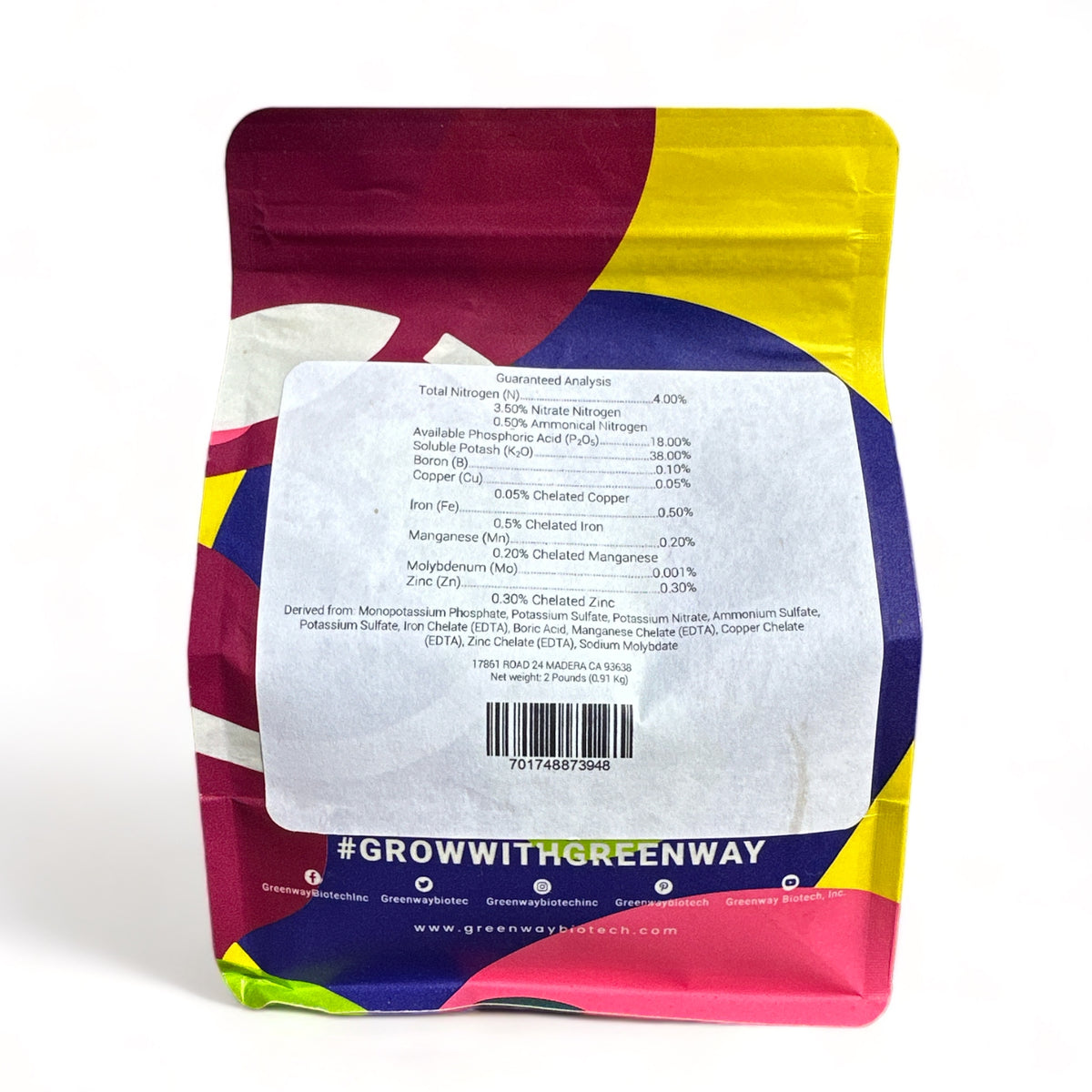
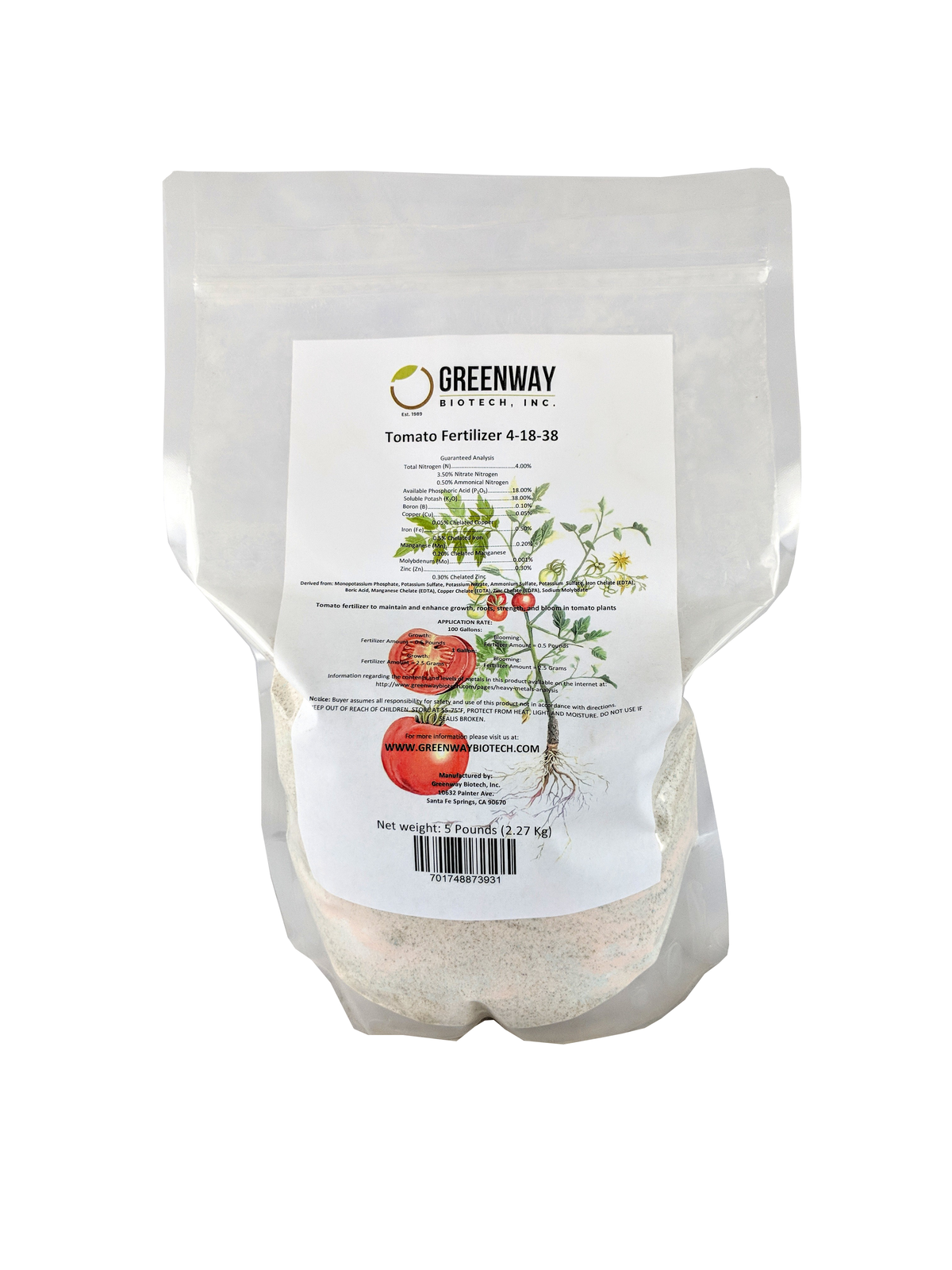
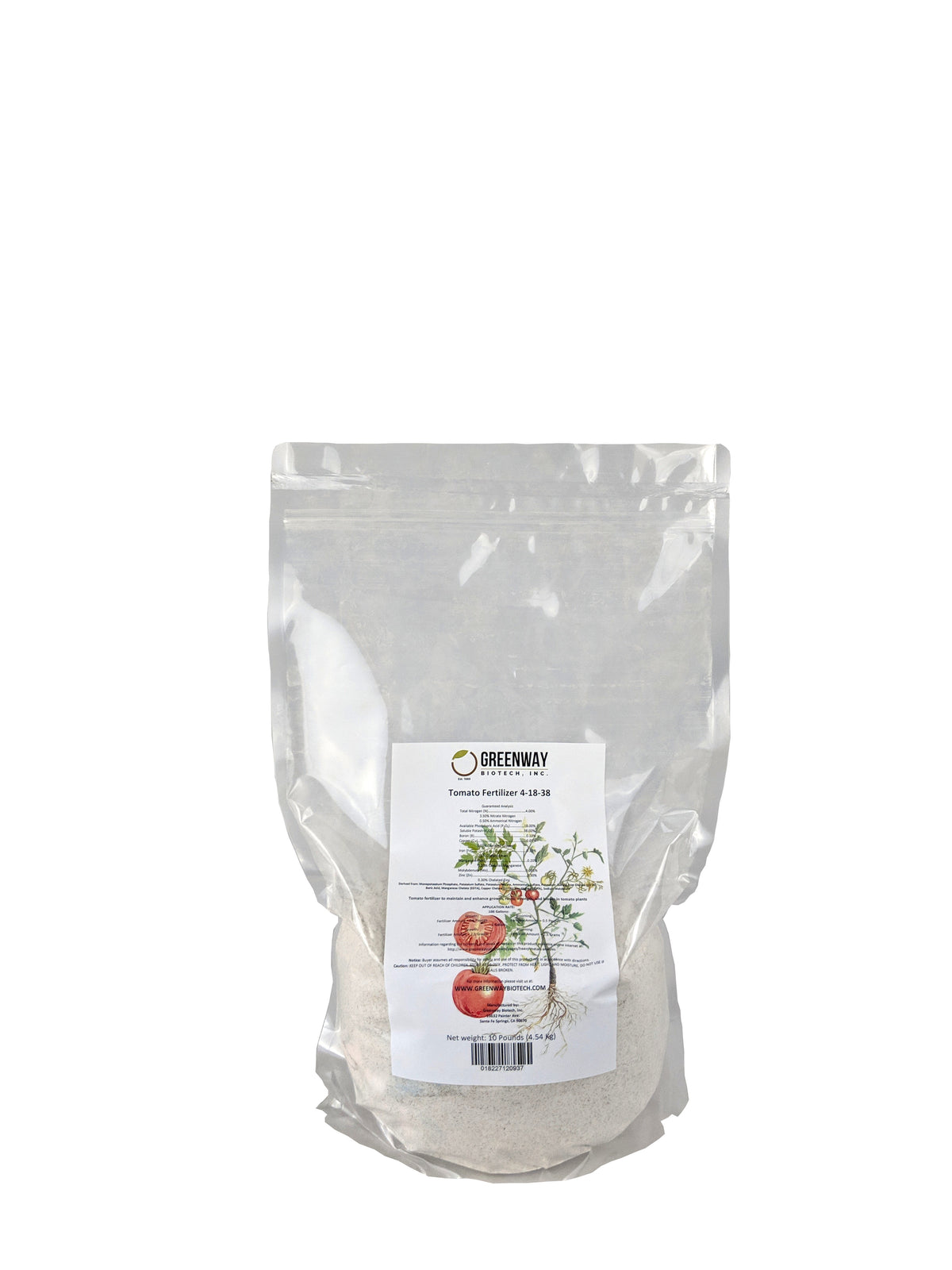
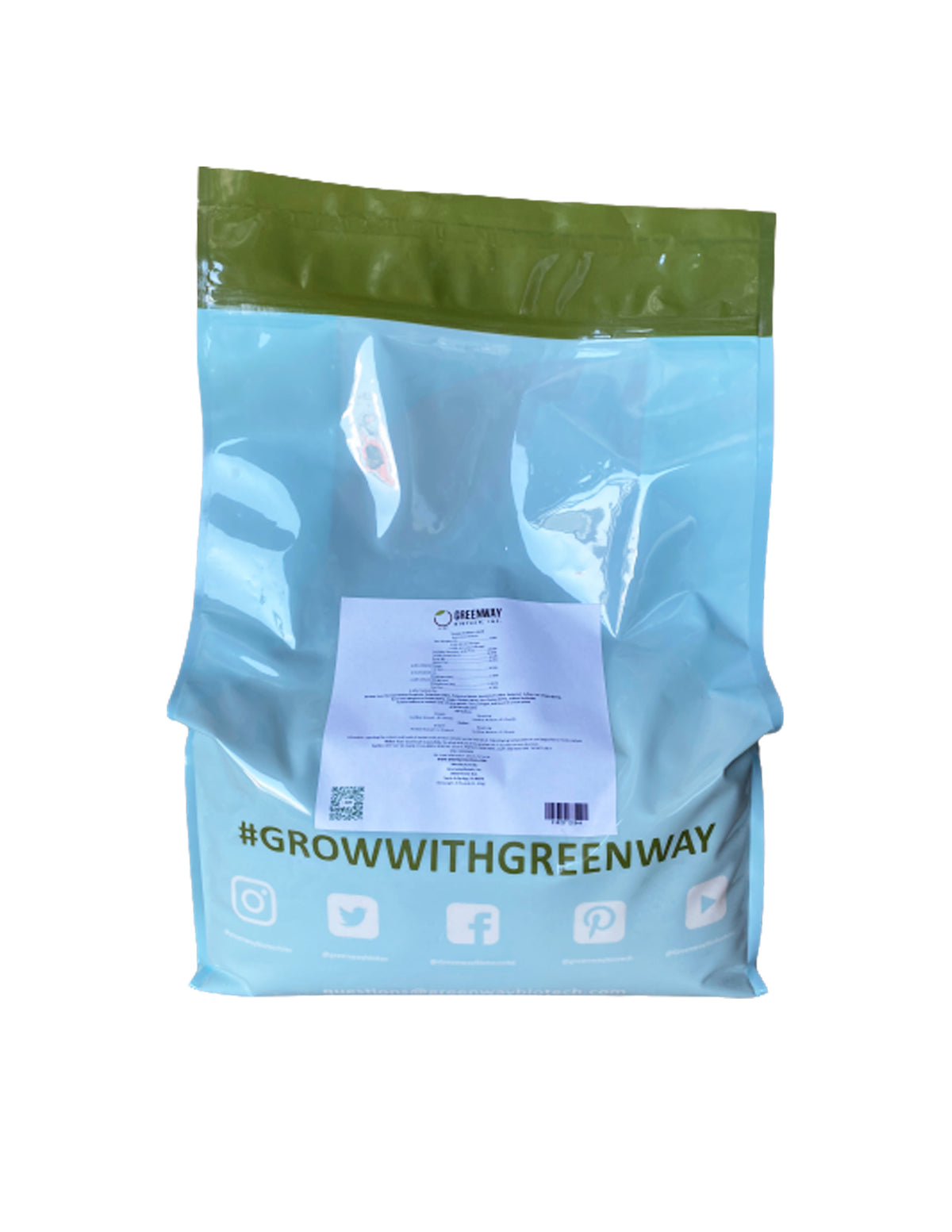


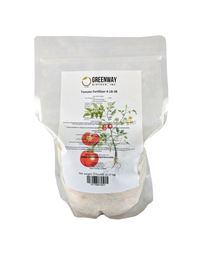
Tomato Fertilizer 4-18-38 | Chelated Micronutrients | Hydroponics, Soil & Foliar Application
- Regular Price
- $ 24.99
- Sale Price
- $ 24.99
- Regular Price
- $ 24.99
- Unit Price
- per
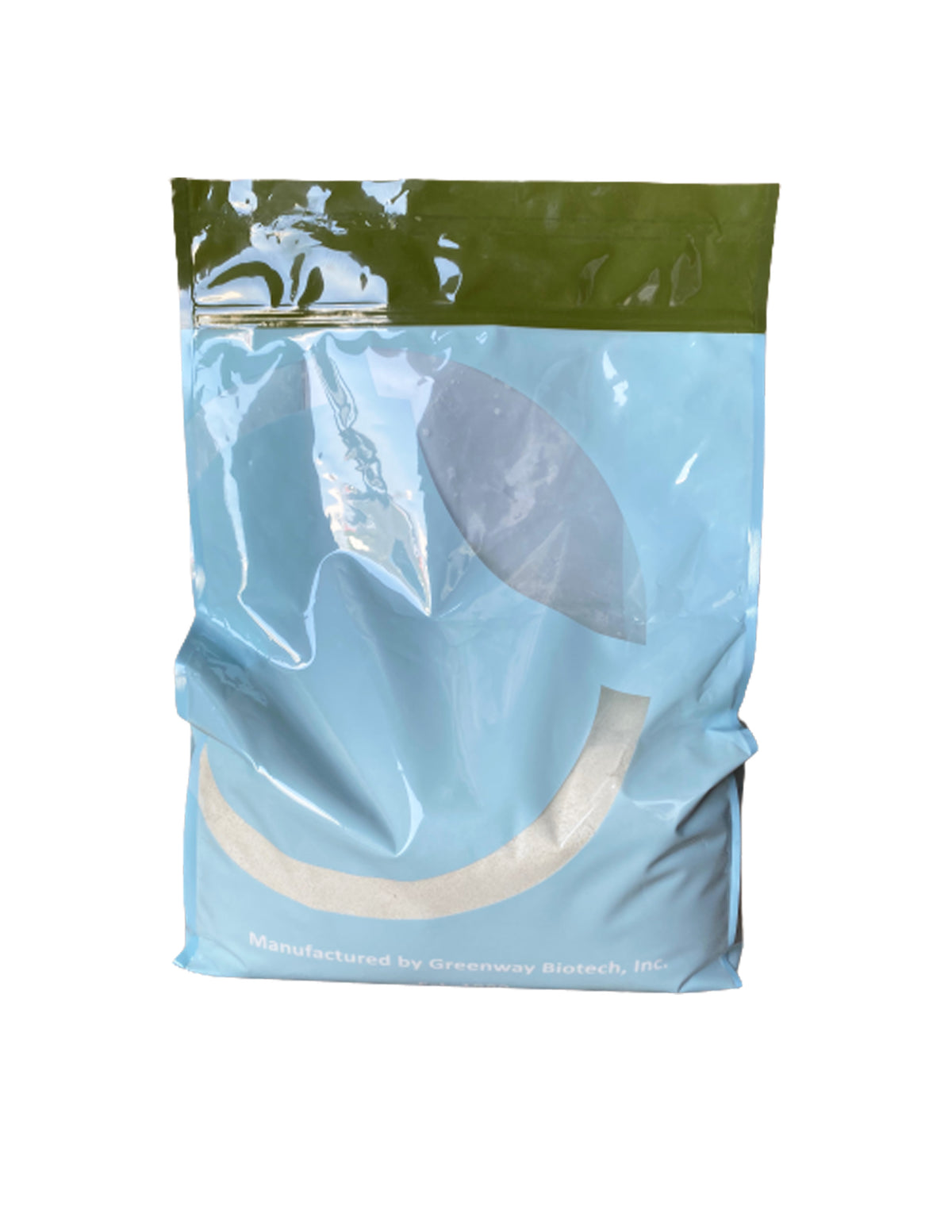
Tomato Fertilizer 4-18-38
Elevate your tomato harvest with our premium water-soluble 4-18-38 formula — well suited to fruiting nightshade crops, with chelated micronutrients and high potassium for exceptional fruit development.
Ideal Applications
FEATURES
⚖️ Optimized 4-18-38 Ratio
Engineered specifically for fruiting nightshades. Low nitrogen (4%) prevents excessive foliage while very high potassium (38%) drives exceptional fruit size, flavor, and shelf life.
🛡️ Supports Plant Structural Strength
High potassium can help strengthen cell walls, which may support the plant's general structural resilience during the growing season. Chelated copper and manganese contribute to key enzymatic and structural functions that support overall plant health.
🚫 Tested for Heavy Metals
Every batch is independently lab tested for heavy metal content — results consistently well below required limits — so you can grow food for your family or customers with confidence in what you're feeding your plants.
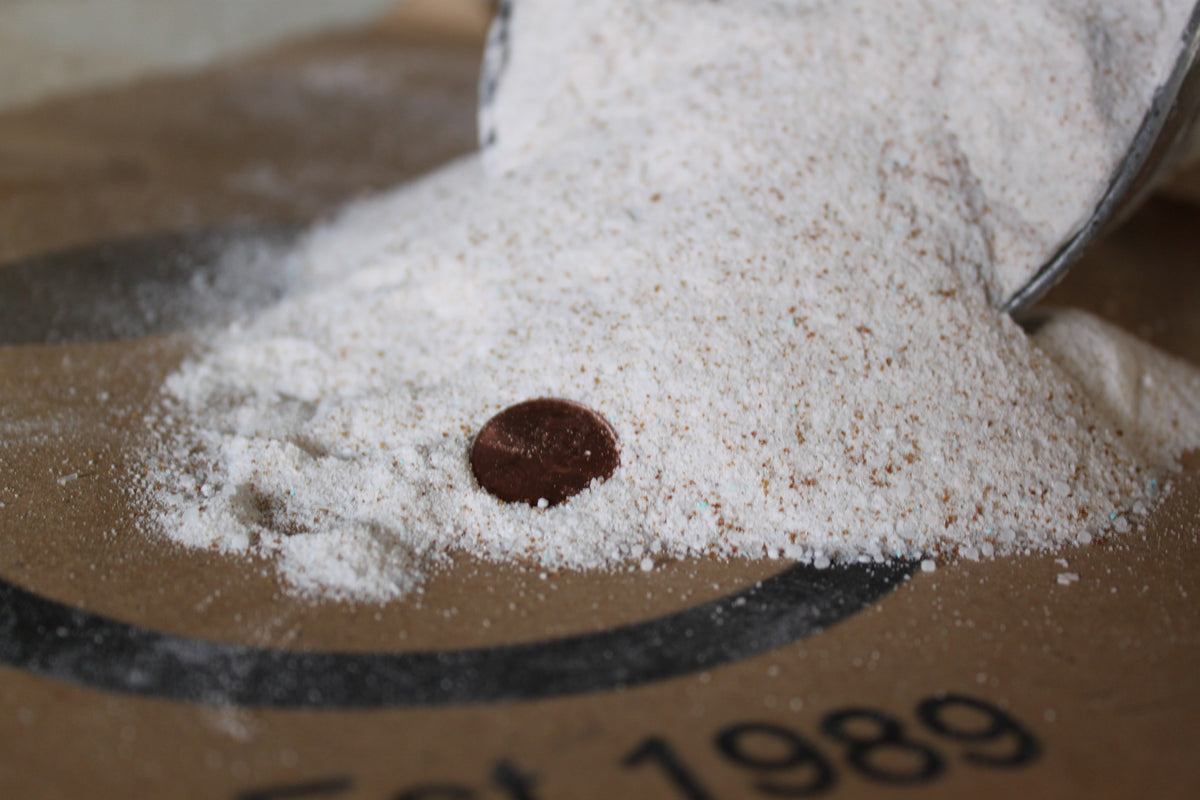
🌊 100% Water Soluble
Dissolves instantly in cold water with zero residue. Safe for drip lines, Dutch buckets, NFT systems, and foliar sprayers.
🍅 Maximum Fruit Development
The 38% potassium drives cell expansion for larger tomatoes, enhances sugar transport for better flavor, and strengthens cell walls for longer shelf life.
🌸 Superior Flowering & Fruit Set
18% available phosphate (P₂O₅) promotes abundant flower formation, strong root systems, and reliable fruit set — reducing blossom drop and improving overall yield.
💧 Soil, Hydroponic & Foliar Versatility
Equally effective in garden soil, raised beds, containers, all hydroponic systems (DWC, NFT, Dutch buckets, drip), and as a foliar spray. Scales from a single potted plant to full commercial acreage through fertigation.
🔬 Complete Micronutrient Package
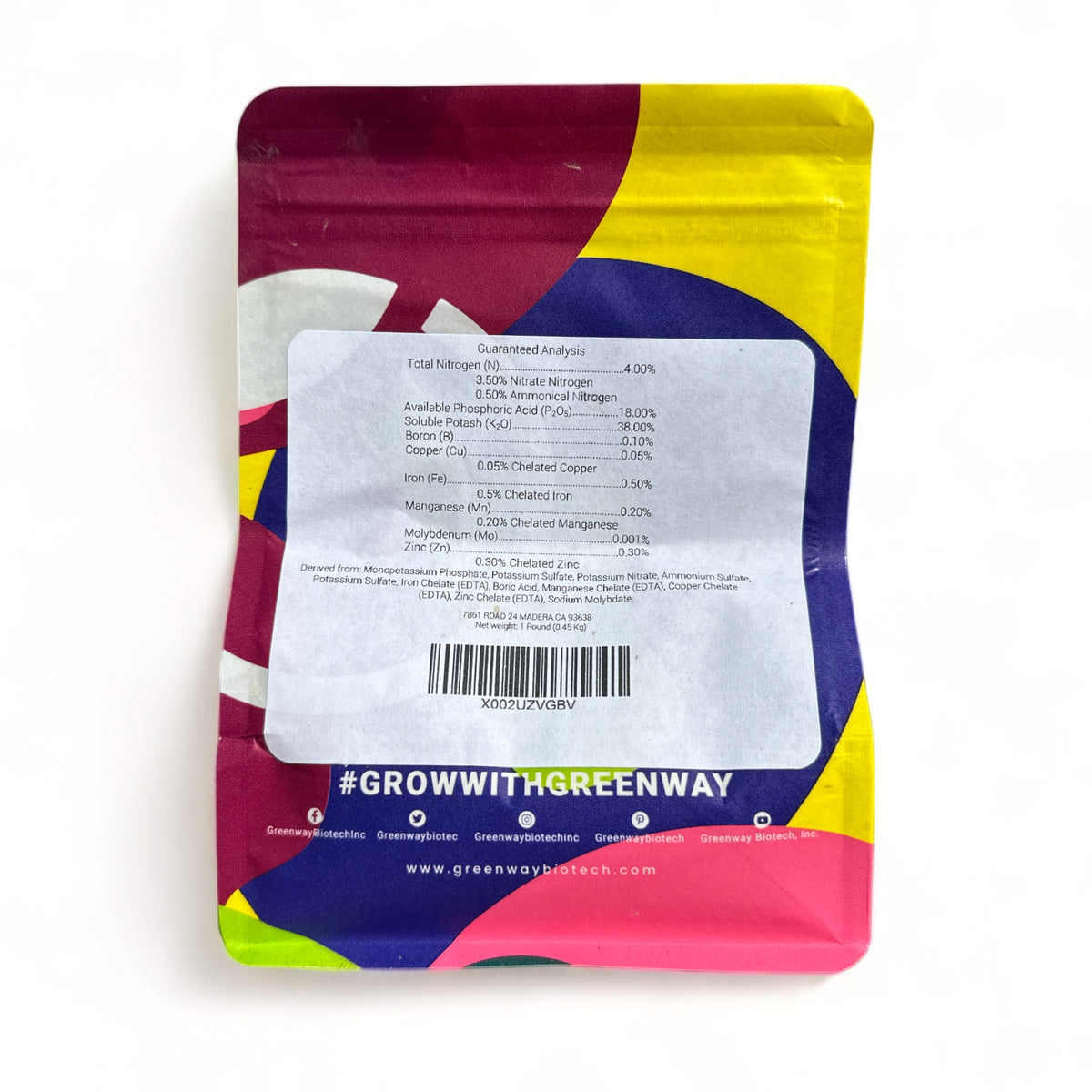
All six essential micronutrients in precise ratios for nightshade crops — iron, manganese, zinc, and copper are EDTA-chelated to prevent lockout in high-pH water, while boron and molybdenum are supplied in highly available mineral forms.
🥗 Supports a Nutrient-Rich Harvest
Adequate iron, zinc, and boron availability throughout the season supports normal plant physiological processes. Research suggests that mineral-sufficient plants may produce fruit with more complete nutritional profiles compared to deficient crops.
📋 CDFA Registered & Lab Verified
Registered with the California Department of Food and Agriculture. Third-party lab tested for guaranteed analysis, purity, and compliance with state fertilizer standards.
DERIVED FROM
Our 4-18-38 formula is blended from premium-grade, solution-grade raw materials — each chosen for purity, solubility, and plant availability.
Macronutrient Sources
Monopotassium Phosphate (MKP) 0-52-34
Primary phosphorus and potassium source. Fully water-soluble with low salt index.
Potassium Sulfate 0-0-53
Additional potassium plus sulfur for enzyme activation and protein synthesis.
Ammonium Sulfate 21-0-0
Ammoniacal nitrogen source that helps lower root-zone pH for better nutrient uptake.
Micronutrient Sources
Chelated Iron EDTA
EDTA-protected iron for chlorophyll synthesis. Stays available even in alkaline conditions.
Chelated Manganese EDTA
EDTA-chelated for photosynthesis enzyme activation and overall plant health support.
Chelated Zinc EDTA
EDTA-chelated zinc for auxin production, fruit set, and protein synthesis.
Chelated Copper EDTA
EDTA-chelated copper for lignin synthesis and cell wall structural support.
Boric Acid
Highly available boron source for cell wall formation and pollination. Not chelated — supplied in mineral form.
Sodium Molybdate
Trace molybdenum source for nitrogen metabolism and enzyme function. Not chelated — supplied in mineral form.
SCIENCE BEHIND THE FORMULA
4-18-38: Engineered for Nightshade Crop Performance
Understanding why our 4-18-38 formula works so well for tomatoes and nightshade crops requires looking at the unique nutritional demands of these plants throughout their growth cycle.
🌿 Nitrogen — 4% (Controlled Growth)
Tomatoes need minimal nitrogen during fruiting. Too much causes lush foliage but poor fruit production and delayed ripening. Our 4% provides just enough for healthy photosynthesis without competing with fruit development. This directs the plant's energy where it matters — into your tomatoes.
🌸 Phosphorus — 18% (Flowers & Roots)
Phosphorus drives ATP synthesis (the plant's energy currency), nucleic acid and phospholipid production, and active root development — all of which peak during reproductive growth. Elevated available phosphate (P₂O₅) during this window ensures robust flowering and reliable fruit set, along with strong seed development within the fruit.
⭐ Potassium — 38% (Fruit Quality)
Tomatoes are among the most potassium-demanding crops, especially during fruiting. Potassium is known to activate more than 60 plant enzyme systems and directly controls fruit size through cell expansion, flavor through sugar transport, and firmness through strong cell walls — all of which contribute to improved post-harvest shelf life.
Essential Micronutrients
🧲 Iron (Fe) 0.10%
Chelated EDTA. Essential for chlorophyll synthesis and enzyme function. Prevents interveinal chlorosis (yellowing between leaf veins), especially in alkaline or high-pH conditions.
⚙️ Manganese (Mn) 0.05%
Chelated EDTA. Activates enzymes for photosynthesis and nitrogen metabolism. Important for pollen germination, which can directly impact fruit set rates.
🌱 Zinc (Zn) 0.05%
Chelated EDTA. Required for auxin production and protein synthesis. Improves fruit set and prevents stunted growth and small leaf syndrome.
🔗 Copper (Cu) 0.05%
Chelated EDTA. Involved in lignin synthesis for strong cell walls. Supports fruit quality and firmness through structural integrity.
🧱 Boron (B) 0.02%
Boric Acid (mineral form — not chelated). Critical for cell wall formation and sugar transport. Supports pollination success and helps prevent hollow fruit development.
🔬 Molybdenum (Mo) 0.0005%
Sodium Molybdate (mineral form — not chelated). Serves as the cofactor for nitrate reductase, the enzyme that converts nitrate into a form plants can use for protein synthesis. Though required in only trace amounts, deficiency can cause interveinal chlorosis and stunted growth.
Why High Potassium?
🍅 Bigger Tomatoes
Potassium regulates water uptake and cell expansion for larger, juicier tomatoes with improved weight and density.
🛡️ Structural Plant Resilience
Strengthens cell walls and supports the plant's general structural integrity, which may contribute to improved tolerance of environmental stressors — including heat, drought, and physical stress — during the growing season.
🍯 Better Flavor
Increases sugar content and improves acid balance for superior taste — the difference between grocery store and garden-fresh.
📦 Longer Shelf Life
Enhances firmness and reduces post-harvest deterioration, keeping your tomatoes fresh longer after picking.
💧 Drought Tolerance
Improves stomatal function and water use efficiency, helping plants cope during hot, dry periods.
🌡️ Stress Resistance
Helps plants recover from temperature extremes, transplant shock, and environmental stress during the growing season.
APPLICATION RATES & DIRECTIONS
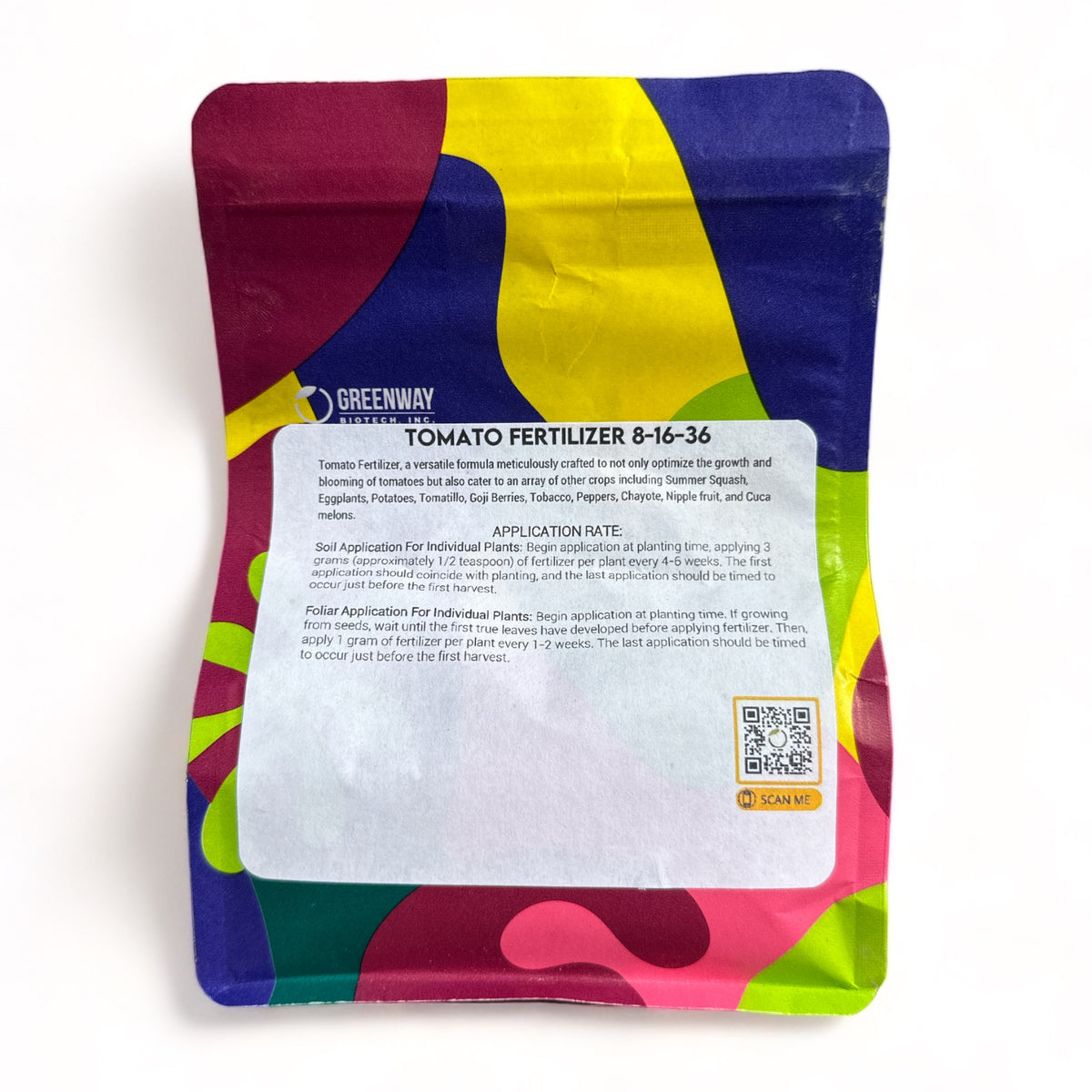
Below are recommended starting rates for tomatoes, peppers, eggplants, and other nightshade crops. Adjust based on plant size, soil conditions, and growth stage.
Soil Application
| Application Method | Rate | Frequency | Notes |
|---|---|---|---|
| Per Plant | 3g (½ tsp) | Every 4-6 weeks | Apply around base |
| Per 100 sq ft | 0.75-1.25 lbs | Every 4-6 weeks | Broadcast evenly |
| Per Acre | 24-38 lbs | Every 4-6 weeks | Through irrigation |
Foliar Application
| Application Method | Rate | Frequency | Coverage |
|---|---|---|---|
| Per Plant | 1–2g per gallon of water | Every 1-2 weeks | Spray to runoff |
| Per 100 sq ft | 1–2g per gallon; apply approx. 1 gallon per 100 sq ft | Every 1-2 weeks | Early morning best |
Hydroponic Application (per 100 gallons)
| Growth Stage | 4-18-38 Amount | Cal-Mag Plus | pH Range | EC/PPM* |
|---|---|---|---|---|
| Vegetative Growth | 0.5 lbs | 500ml-1L | 6.4-6.6 | 1200 PPM |
| Blooming/Fruiting | 0.5 lbs | 1L | 6.1-6.3 | 1700 PPM |
*PPM targets reflect the combined solution including Cal-Mag Plus additions.
Optimal Feeding Through Growth Stages
Seedling (Week 0-3): Half strength weekly + Cal-Mag 2.5ml/gal
Vegetative (Week 3-6): Full strength biweekly + Cal-Mag 5ml/gal
Flowering (Week 6-9): Weekly applications + Cal-Mag 7.5ml/gal
Fruiting (Week 9+): Weekly applications + Cal-Mag 10ml/gal
HOW TO USE
Soil & Container Growing
- Dissolve the recommended amount in water (1-2 gallons per application).
- Apply around the base of each plant, avoiding direct contact with stems and foliage.
- Water thoroughly after application to move nutrients into the root zone.
- Apply every 4-6 weeks during the growing season.
- For best results, supplement with Cal-Mag Plus between fertilizer applications.
Hydroponic Systems
- Fill your reservoir with fresh water.
- Add Cal-Mag Plus first and stir thoroughly.
- Add Tomato Fertilizer 4-18-38 and stir until completely dissolved.
- Check and adjust pH to 6.1-6.3 for fruiting stage or 6.4-6.6 for vegetative stage.
- Verify EC/PPM levels match your target growth stage.
- Monitor and top off reservoir as needed, replacing solution every 1-2 weeks.
Foliar Spray
- Dissolve 1–2g per gallon of water in a spray bottle or backpack sprayer.
- Apply early morning or late afternoon to avoid leaf burn.
- Spray both upper and lower leaf surfaces until runoff.
- Repeat every 1-2 weeks during active growth.
- Do not apply during peak sun hours or when temperatures exceed 90°F.
Pro Tip: Hydroponic Mixing Order Matters
Always add Cal-Mag Plus to your reservoir first and stir thoroughly before adding 4-18-38. Calcium fertilizers and high-phosphorus fertilizers should not be combined in concentrated form — doing so can cause precipitation, resulting in white cloudiness and reduced nutrient availability.
When Tomato Fertilizer 4-18-38 Is the Right Choice
- Growing tomatoes, peppers, eggplants, tomatillos, or other fruiting nightshades
- Fruiting stage when potassium demand peaks
- Hydroponic systems requiring 100% water-soluble nutrients
- Foliar feeding for rapid micronutrient correction — test on a small area first
When to Consider Other Options
- Growing leafy greens or herbs — try Lettuce Fertilizer 8-15-36 for higher nitrogen
- Growing strawberries — try Strawberry Fertilizer 8-12-32 for optimized berry ratios
- Growing cucumbers or melons — try Cucumber Fertilizer 8-16-36 for vine crop ratios
- Seedling/early vegetative stage only — consider a balanced formula like Grow Green 4-2-6 until flowering begins
TOMATO FERTILIZER CALCULATOR
SAFETY & HANDLING
Personal Protective Equipment (PPE)
- Wear gloves and eye protection when handling dry powder or concentrated solutions
- Avoid inhaling dust — use in well-ventilated areas or wear a dust mask when measuring
- Wash hands thoroughly after handling
Storage Guidelines
- Store in a cool, dry place in the original sealed container
- Product is hygroscopic — it will absorb moisture from the air if exposed
- Keep out of direct sunlight and away from heat sources
- If powder clumps from moisture exposure, break it up — efficacy is not affected
- Keep away from children and pets
Application Precautions
- Do not mix dry fertilizer with other products before dissolving in water
- Do not apply foliar sprays during peak sun hours or when temperatures exceed 90°F
- Avoid direct contact with plant stems and foliage when applying to soil
- Water thoroughly after soil application to prevent root burn
First Aid
- Eye contact: Flush with clean water for 15 minutes. Seek medical attention if irritation persists
- Skin contact: Wash affected area with soap and water
- Ingestion: Do not induce vomiting. Contact Poison Control (1-800-222-1222) or seek medical attention
- Inhalation: Move to fresh air. Seek medical attention if symptoms persist
Refer to the Safety Data Sheet (SDS) for complete safety information.
COMPLETE YOUR SYSTEM
Build a complete nightshade feeding program by pairing 4-18-38 with these essential companions.
Cal-Mag Plus 2-0-0
Helps reduce blossom end rot and calcium deficiencies. Critical for tomato fruit development in both soil and hydroponic systems.
AlternativeCalcium Nitrate 15.5-0-0
Another calcium source option. Provides a small nitrogen boost during the vegetative stage.
BoostEpsom Salt (Magnesium Sulfate)
Magnesium for chlorophyll production. Enhances green color, photosynthesis, and overall plant vigor.
FREQUENTLY ASKED QUESTIONS
Why is the potassium (38%) so high in this formula?
Tomatoes are among the most potassium-demanding crops, especially during fruiting. Potassium is known to activate more than 60 plant enzyme systems and directly controls fruit size and weight, sugar content and flavor, and post-harvest shelf life. The 38% ensures your plants have consistent potassium availability during the critical fruiting period when demand peaks.
What pH should I maintain for tomatoes?
Tomatoes prefer slightly acidic conditions. For hydroponics, keep pH between 6.1-6.3 during fruiting or 6.4-6.6 during vegetative growth. For soil growing, aim for 6.2-6.5. pH directly affects nutrient availability — outside these ranges, key nutrients like iron and phosphorus become locked out even when present in the solution.
How do I help prevent blossom end rot?
Blossom end rot is caused by calcium deficiency in developing fruit. Our formula does not contain calcium because calcium and phosphorus should not be mixed together in concentrated stock solution — combining them directly can form insoluble calcium phosphate that precipitates out and becomes unavailable to plants. That's why any high-phosphorus fertilizer should be paired with a separate calcium source applied independently.
This formula can still be part of a reduced-BER approach: the controlled nitrogen level helps limit excessive vegetative growth that could otherwise compete for available calcium, and consistent feeding keeps the plant's overall mineral balance on track. Supplement with a dedicated calcium source and maintain consistent, even watering — calcium uptake depends on steady moisture as well as availability.
Recommended calcium sources:
- Cal-Mag Plus 2-0-0 — best for hydroponic systems and container growing
- Calcium Nitrate 15.5-0-0 — water-soluble option with a small nitrogen boost
- Gypsum (Calcium Sulfate) — excellent calcium source that won't alter soil pH
- Bone Meal 3-15-0 — slow-release organic calcium and phosphorus for soil gardens
Can I use this for all tomato and pepper varieties?
Yes. This formula is well-suited for all nightshade family plants including tomatoes (beefsteak, cherry, roma, heirloom), all pepper types (bell, hot, sweet), eggplants (standard and Asian varieties), tomatillos, and specialty crops like goji berries. It can also be used for potatoes, though potato programs often benefit from a soil test given their distinct yield and tuber-quality requirements. Larger plants like beefsteak tomatoes may need approximately 25% more fertilizer than cherry tomatoes due to their greater biomass. Note: sweet potatoes are not nightshades and have different nutritional needs — this formula is not recommended for them.
Why does potassium matter so much for fruit quality?
Potassium is the nutrient most directly linked to fruit quality in nightshade crops. It regulates water movement into cells (bigger fruit), drives sugar transport from leaves to fruit (better flavor), and strengthens cell walls (firmness and longevity). Our article on The Role of Potassium in Fruit Development covers this in depth with research-backed guidance.
How do I store the powder?
Our fertilizer is highly hygroscopic, meaning it absorbs moisture from the air. Keep the bag sealed tight between uses and store in a cool, dry place out of direct sunlight. If it clumps from moisture exposure, simply break it up — the efficacy is not affected.
What role does nitrogen play at just 4%?
The low 4% nitrogen is intentional. During fruiting, excessive nitrogen causes lush foliage at the expense of fruit production and delays ripening. Our 4% provides just enough to maintain healthy green leaves for photosynthesis without diverting energy from fruit development. For more on nitrogen's role, read our article What's the Function of Nitrogen in Plants?
Why doesn't this fertilizer contain calcium?
Calcium and phosphorus should not be mixed together in concentrated stock solution. Combining them directly can form insoluble calcium phosphate that precipitates out and becomes unavailable to plants. Since our formula contains 18% available phosphate (P₂O₅), calcium is best applied separately — dilute each independently before combining in the working solution. Use Cal-Mag Plus 2-0-0 or Calcium Nitrate 15.5-0-0 as a companion product.
GROW WITH CONFIDENCE
Important details on quality, returns, sustainability, and charitable efforts that set our product apart.
Product Quality Guaranteed
- Manufactured in Madera, California, USA
- Tested by independent third-party laboratories for purity and guaranteed analysis
- Registered with the California Department of Food and Agriculture (CDFA)
- Independently tested for heavy metals — results consistently well below required limits
- 100% chelated micronutrients (Fe, Mn, Zn, Cu) for maximum bioavailability
Hassle-Free Return Policy
If you're not completely satisfied, we offer a 90-day money-back guarantee. Simply return the unused portion in its original packaging, and we'll process a full refund. No questions asked.
Environmental Responsibility
We're committed to sustainable practices, including:
- Recyclable packaging materials
- Precise nutrient formulation to reduce environmental runoff
- Support for integrated pest management (IPM) practices
- Promoting efficient nutrient delivery systems like hydroponics
Charitable Contributions
1% of all profits go to our foundation, focused on improving educational opportunities for children in agricultural communities.
About Greenway Biotech, Inc.
Family-owned and operated since 1989, Greenway Biotech, Inc. has been helping growers — from backyard gardeners to commercial operations — achieve better results for over 35 years. Manufactured in Madera, California, our fertilizers are formulated with the same commitment to quality and transparency we've held since day one.
DOCUMENTS
DISCOVER MORE
- What's the Function of Nitrogen in Plants? — Understand why 4% nitrogen is the sweet spot for fruiting crops
- What's the Function of Phosphorus in Plants? — Learn how phosphorus drives flowering and root development
- The Role of Potassium in Fruit Development — Why 38% potassium transforms tomato quality and yield
HAVE QUESTIONS?
Check out our full FAQ page or reach out to our team for personalized advice.