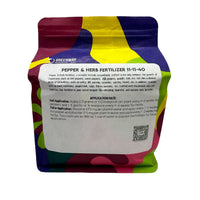
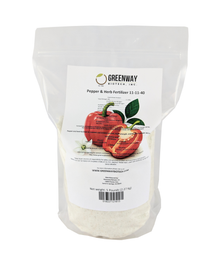
Pepper and Herb Fertilizer 11-11-40 | Chelated Micronutrients | Hydroponics, Soil & Foliar Application
- Regular Price
- $ 24.99
- Sale Price
- $ 24.99
- Regular Price
- $ 24.99
- Unit Price
- per
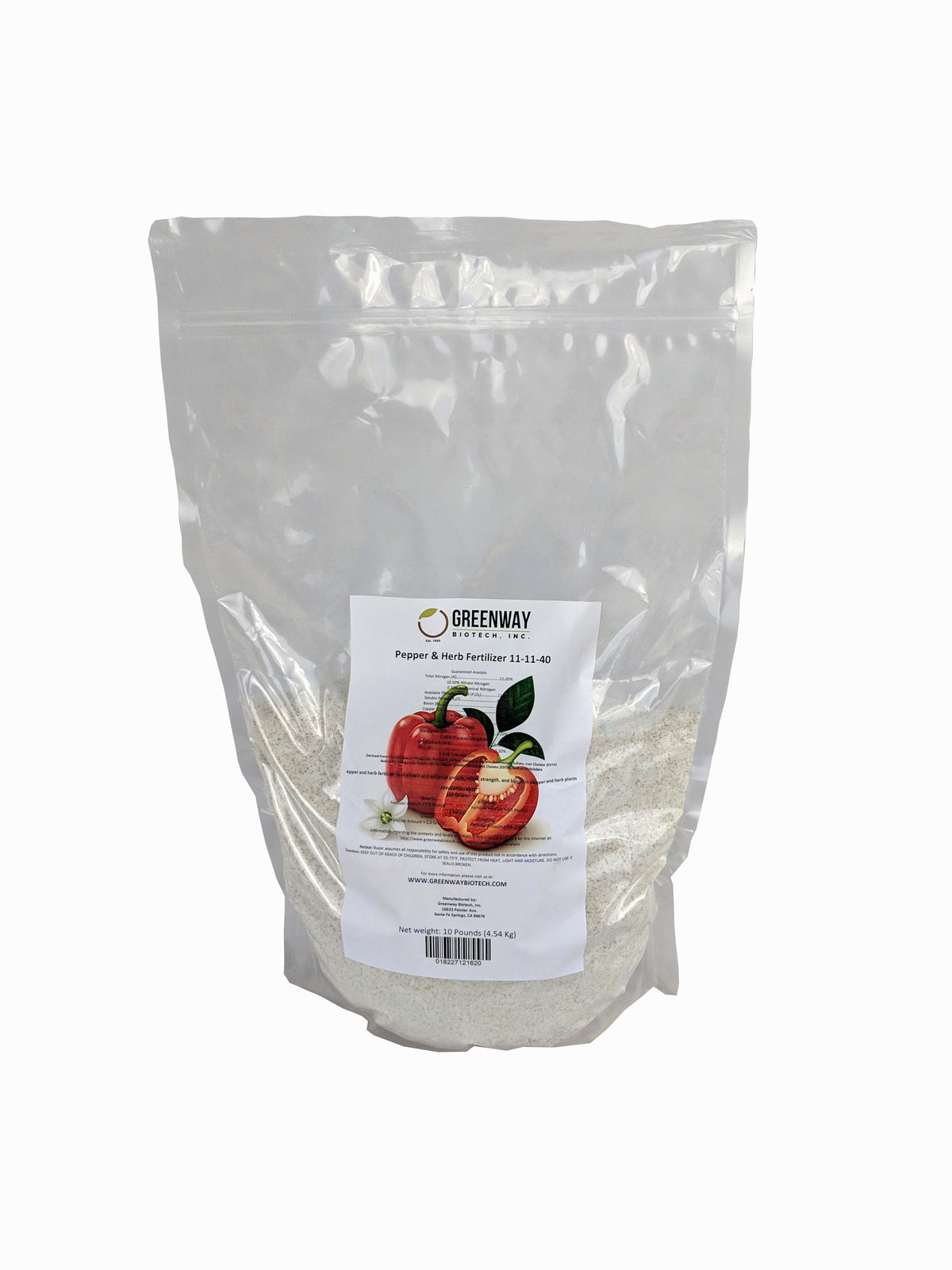
Pepper & Herb Fertilizer 11-11-40
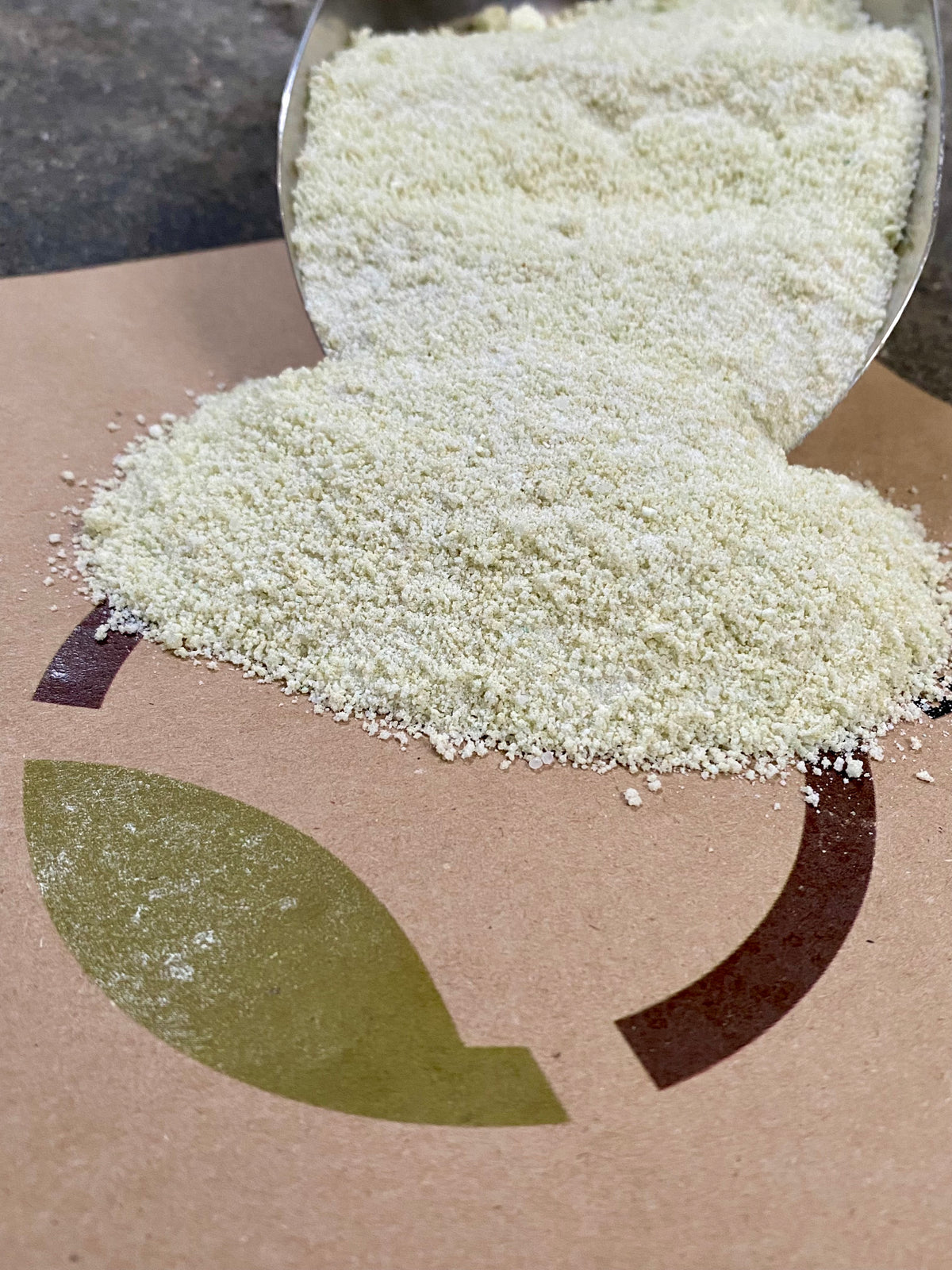
Water-soluble fertilizer for peppers, culinary herbs, and aromatic crops. High soluble potash (40% K₂O) supports fruit quality, flavor intensity, and strong plant performance in soil, containers, and hydroponic systems.
Ideal Applications
✅ Best For
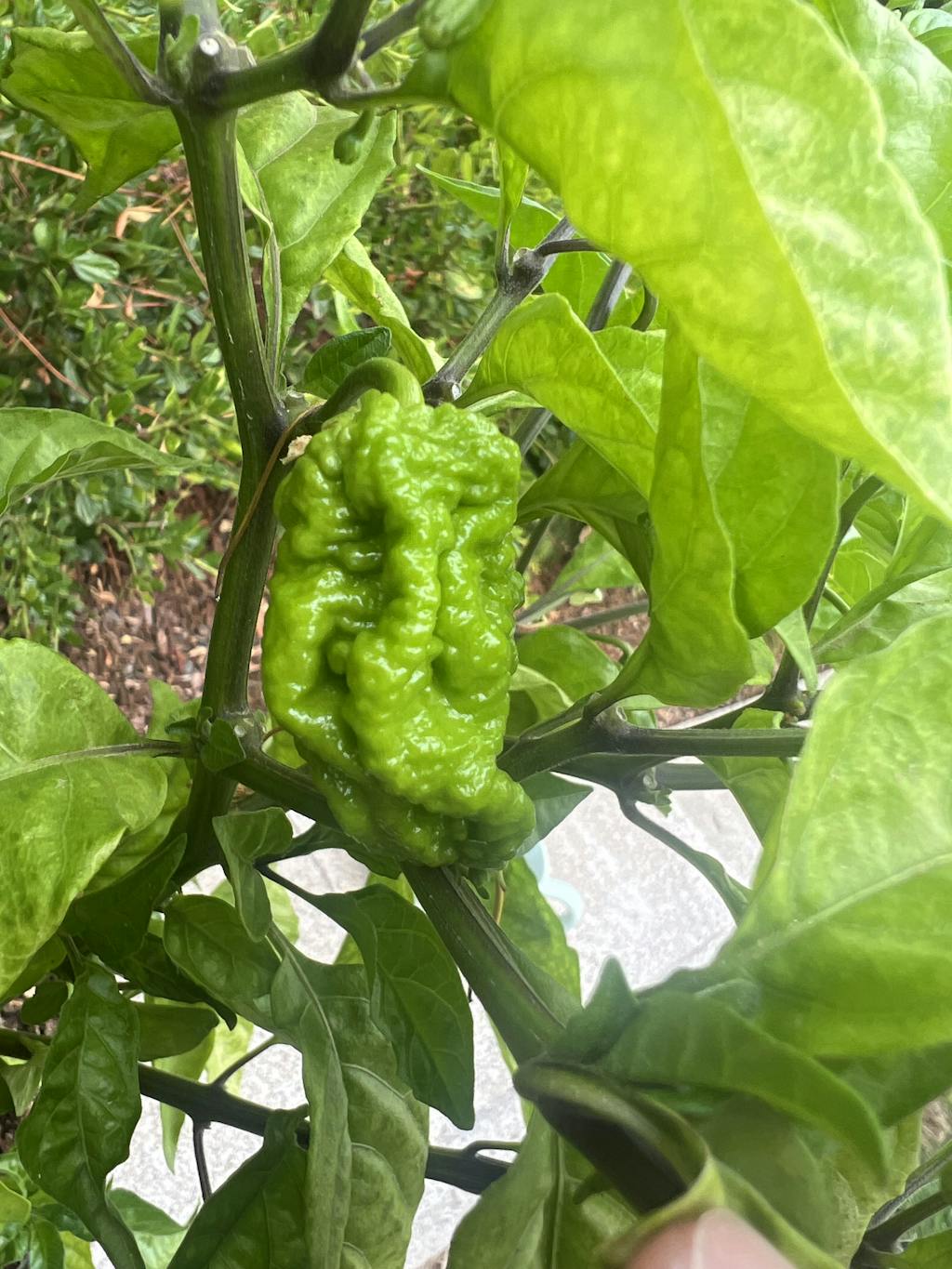
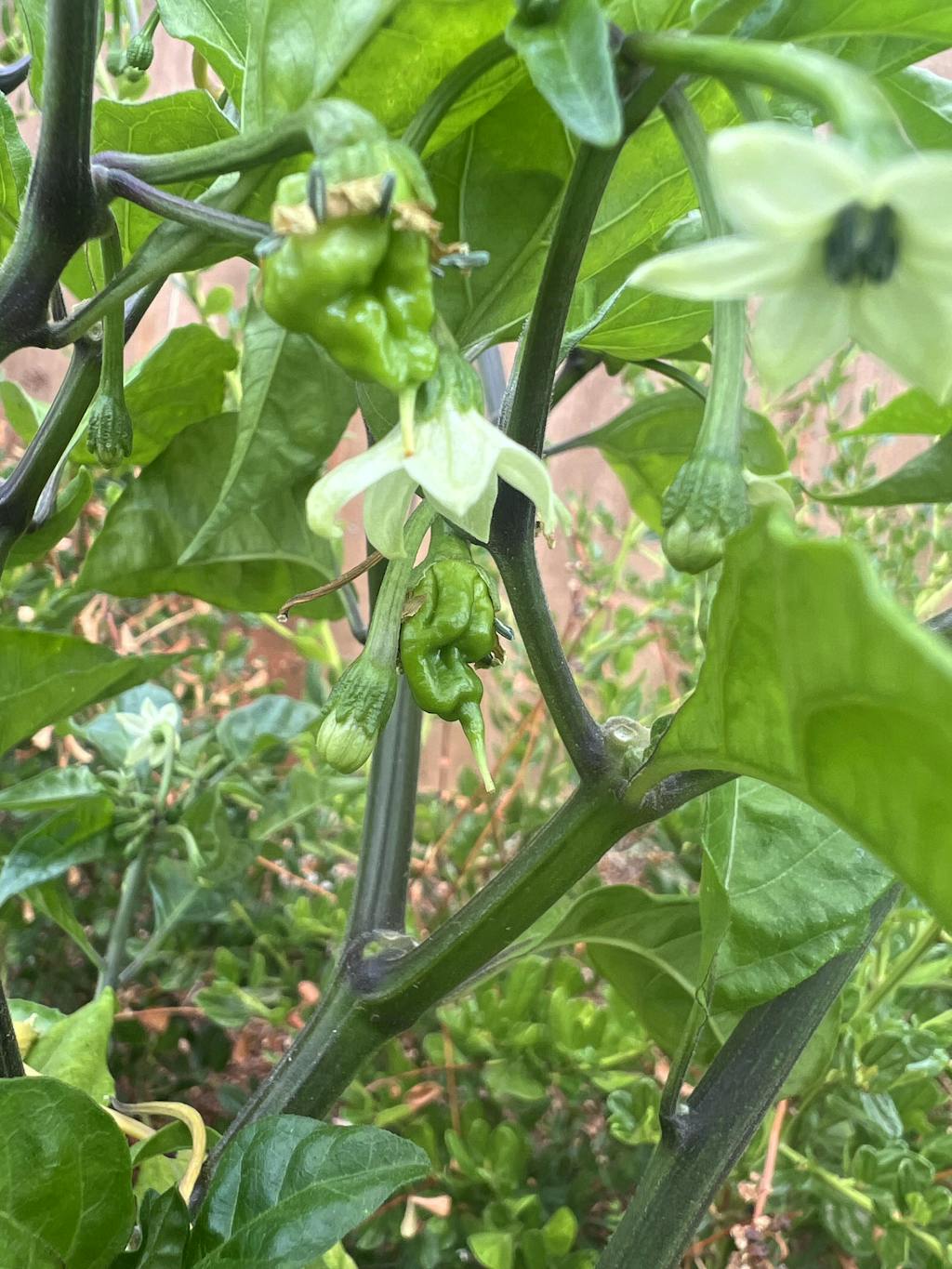
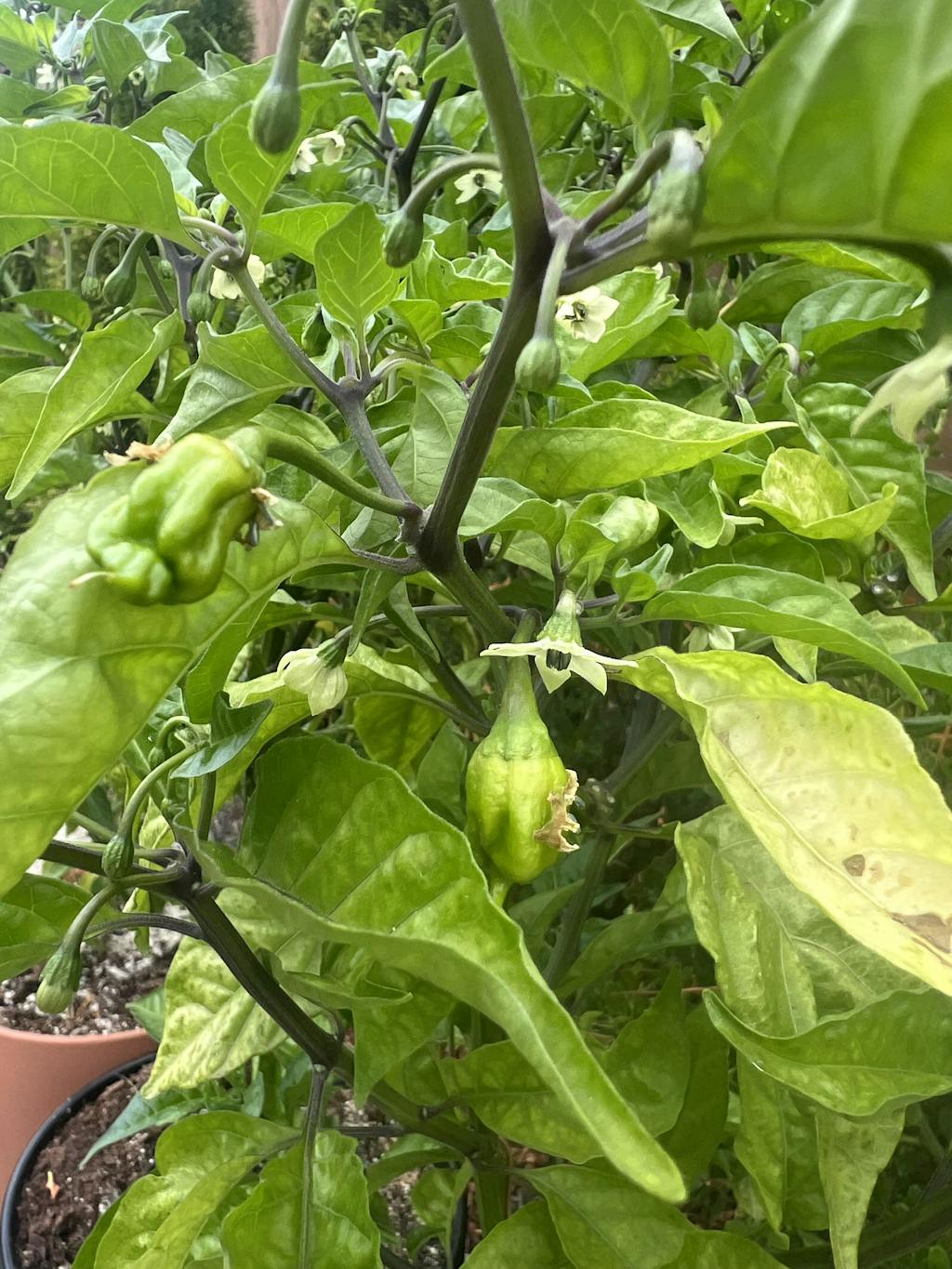
- Fruiting peppers — bell, hot, sweet, and ornamental varieties
- Aromatic herbs — basil, oregano, thyme, rosemary, sage
- Soil, containers, grow bags, fertigation, and hydroponic systems
- Flowering through fruit development when potassium demand peaks
⚠️ Not Ideal As a Standalone
- Lettuce, spinach, and other nitrogen-hungry leafy greens — try Lettuce Fertilizer 8-15-36
- Seedling-only feeding programs that need a mild starter formula
- Calcium-inclusive one-part hydro formulas — calcium must be supplemented separately
FEATURES
⚖️ Balanced Nitrogen & Phosphate with High Potash
11% nitrogen and 11% available phosphate (P₂O₅) support healthy foliage and root development, while 40% soluble potash (K₂O) supports fruit quality, capsaicin development, and flavor and aroma intensity in herbs under proper growing conditions.
🌶️ High Potash for Fruiting Peppers
High soluble potash (K₂O) supports the nutrient balance associated with strong pepper performance and heat potential, especially during flowering and fruit development when potassium demand peaks.
🌿 Supports Aroma & Flavor Intensity
High soluble potash supports the flavor and aroma compounds in basil, oregano, thyme, rosemary, and other culinary herbs — resulting in more potent flavor and fragrance at harvest under proper growing conditions.
🔬 EDTA-Chelated Micronutrients
Iron, manganese, zinc, and copper are EDTA-chelated to help improve availability across a broad working pH range compared with non-chelated forms. Boron and molybdenum are included in mineral form for complete nutrition.
🧪 Tested for Heavy Metals
Every batch is independently lab tested for heavy metal content and registered with the California Department of Food and Agriculture (CDFA).
🌊 100% Water Soluble
Dissolves readily in room-temperature water with minimal residue when mixed properly. Compatible with drip lines, Dutch buckets, NFT systems, and foliar sprayers.
🌱 Multi-System Compatible
Works in soil, containers, raised beds, and all major hydroponic systems including DWC, NFT, Dutch buckets, and drip irrigation.
🛡️ Plant Vigor & Stress Tolerance
Adequate potash supports water regulation, turgor pressure, and osmotic balance — contributing to overall plant vigor, better stress tolerance, and healthier plants better able to manage environmental pressures.
📦 Supports Fruit Firmness & Storage Quality
Adequate potash supports fruit firmness and post-harvest quality — contributing to better storage and market appeal when applied consistently through the fruiting period.
🎯 Crop-Specific Engineering
Formulated specifically for peppers, culinary herbs, and aromatic crops rather than as a one-size-fits-all general garden fertilizer.
DERIVED FROM
Our 11-11-40 formula is blended from premium-grade raw materials selected for maximum solubility, plant availability, and purity. Every ingredient is sourced for professional hydroponic and soil applications.
Macronutrient Sources
Potassium Nitrate
Dual-source of potassium (46%) and nitrogen (13%). Highly soluble and chloride-free.
Monopotassium Phosphate
Provides phosphorus (52%) and potassium (34%) for flowering, root development, and energy transfer.
Potassium Sulfate
Chloride-free potassium source (53%) with sulfur (17%) for flavor compound development.
Ammonium Sulfate
Nitrogen (21%) and sulfur (24%) for amino acid synthesis and vegetative growth support.
Micronutrient Sources
Chelated Iron EDTA
EDTA-protected iron (13% Fe) for chlorophyll synthesis and photosynthesis efficiency.
Chelated Manganese EDTA
EDTA-protected manganese for enzyme activation and supporting aromatic compound development in herbs.
Chelated Zinc EDTA
EDTA-protected zinc for auxin production, fruit set, and aromatic compound synthesis.
Chelated Copper EDTA
EDTA-protected copper (14% Cu) for enzyme activity, lignin-related structural functions, and color development.
Boric Acid
Mineral-form boron (17% B) for cell wall formation, sugar transport, and supporting flower retention in peppers.
Sodium Molybdate
Mineral-form molybdenum (39% Mo) for nitrogen metabolism and nitrate reduction enzyme function.
SCIENCE BEHIND THE FORMULA
11-11-40: Formulated for Peppers, Herbs & Aromatics
This formula addresses the unique nutritional demands of peppers and herbs, where potassium plays a major role in fruit quality, flavor intensity, and harvest performance. The balanced N and P₂O₅ ratio supports healthy growth without excessive vegetation that delays fruiting.
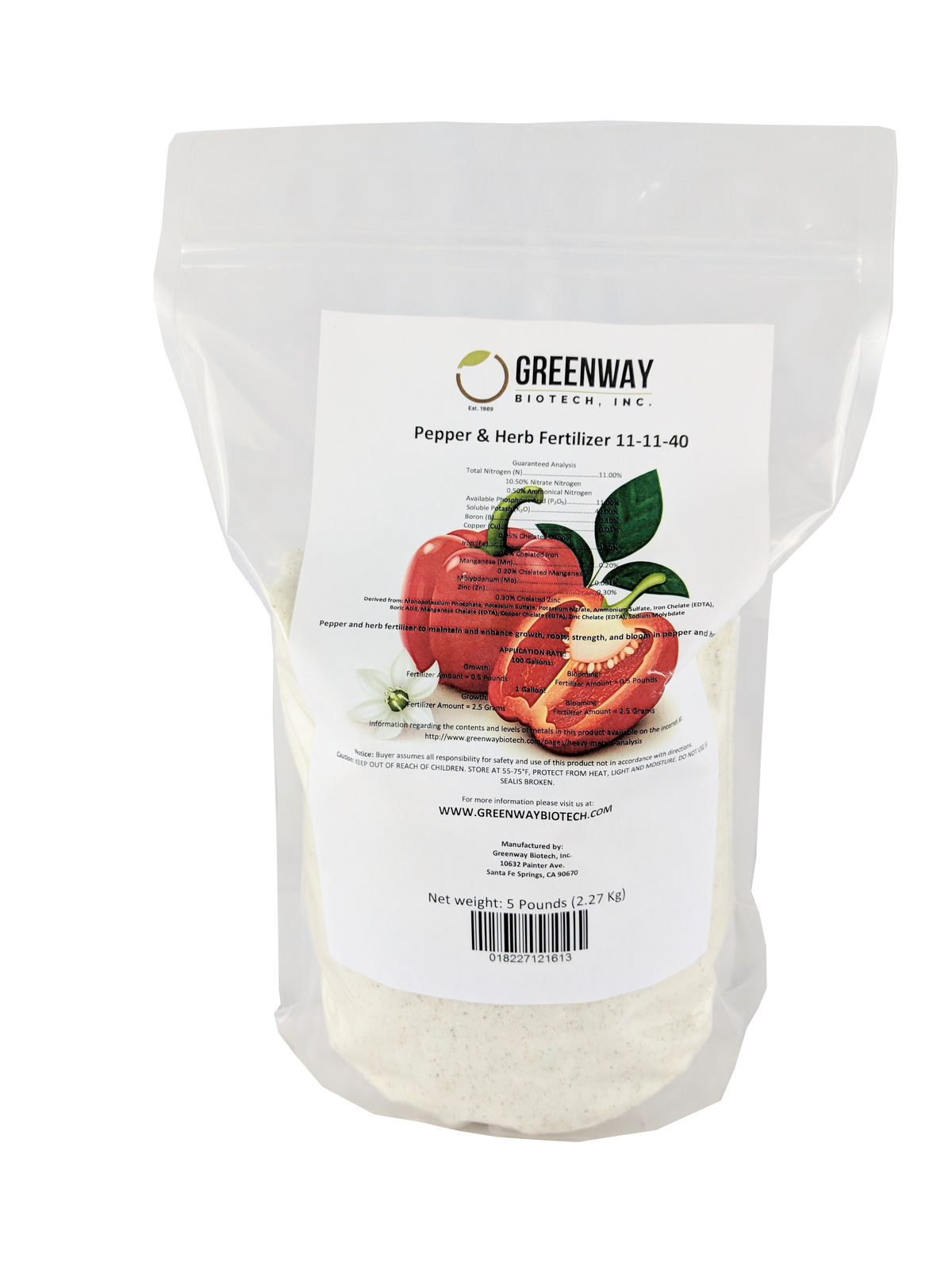
Guaranteed Analysis
| Total Nitrogen (N) | 11.00% |
| 10.50% Nitrate Nitrogen | |
| 0.50% Ammoniacal Nitrogen | |
| Available Phosphate (P₂O₅) | 11.00% |
| Soluble Potash (K₂O) | 40.00% |
| Micronutrients (EDTA chelated unless noted): | |
| Boron (B) — mineral form | 0.10% |
| Copper (Cu) — EDTA chelated | 0.05% |
| Iron (Fe) — EDTA chelated | 0.50% |
| Manganese (Mn) — EDTA chelated | 0.20% |
| Molybdenum (Mo) — mineral form | 0.001% |
| Zinc (Zn) — EDTA chelated | 0.30% |
🌿 Nitrogen — 11% (Balanced Foliage)
Moderate nitrogen maintains healthy leaf growth and chlorophyll production without triggering excessive vegetation that delays flowering and reduces capsaicin or the flavor compounds that make culinary herbs more potent.
🌸 Available Phosphate — 11% P₂O₅ (Flowers & Oils)
Balanced phosphate promotes abundant flowering, strong root development, and energy transfer (ATP) critical during fruit set and seed formation.
⭐ Soluble Potash — 40% K₂O (Flavor & Quality)
High potash supports the nutritional conditions associated with strong flavor and aroma potential in culinary herbs, capsaicin development in hot peppers, and improved fruit quality — helping crops reach their quality potential under proper growing conditions.
Essential Micronutrients
🔬 Iron (Fe) 0.50%
EDTA chelated. Helps improve iron availability across a broad working pH range. Essential for chlorophyll synthesis, photosynthesis, and preventing interveinal yellowing.
🔬 Manganese (Mn) 0.20%
Chelated EDTA form. Activates photosynthesis enzymes and supports the development of aromatic flavor compounds in culinary herbs.
🔬 Zinc (Zn) 0.30%
Chelated EDTA form. Required for auxin production, protein synthesis, fruit set in peppers, and aromatic compound development.
🔬 Copper (Cu) 0.05%
Chelated EDTA form. Involved in enzyme activity, lignin-related structural functions, and fruit color development.
🔬 Boron (B) 0.10%
Mineral form (boric acid). Critical for cell wall formation, sugar transport, and supporting flower retention in peppers.
🔬 Molybdenum (Mo) 0.001%
Mineral form (sodium molybdate). Essential for nitrogen fixation and nitrate reduction. Deficiency causes yellowing and stunting.
Why High Soluble Potash (40% K₂O)?
Peppers and many aromatic herbs respond strongly to adequate potassium, especially during flowering and fruit development. When potassium needs are fully met, research shows it supports the quality characteristics growers care about most:
🌶️ Pepper Quality & Heat Potential
Potash supports the nutrient balance associated with capsaicin development and heat potential in hot peppers, especially during flowering and fruiting when demand peaks.
🌿 Aromatic Herbs
Supports flavor and aroma intensity in basil, oregano, thyme, and other culinary herbs — helping them taste and smell more potent at harvest under proper growing conditions.
🛡️ Plant Vigor & Stress Tolerance
Adequate potash supports water regulation, turgor pressure, and osmotic balance — contributing to overall plant vigor and better stress tolerance under demanding growing conditions.
📦 Post-Harvest Quality
Supports fruit firmness and post-harvest quality when applied consistently through the fruiting period.
💧 Drought Tolerance
Helps regulate stomatal function and water use efficiency, improving stress resistance during dry periods.
🎨 Vibrant Colors
Supports pigment development for brighter, more attractive produce with stronger visual market appeal.
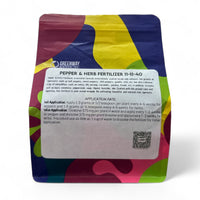
APPLICATION RATES & DIRECTIONS
Recommended rates for peppers, herbs, and umbellifers. Adjust based on plant size, soil conditions, and growth stage.
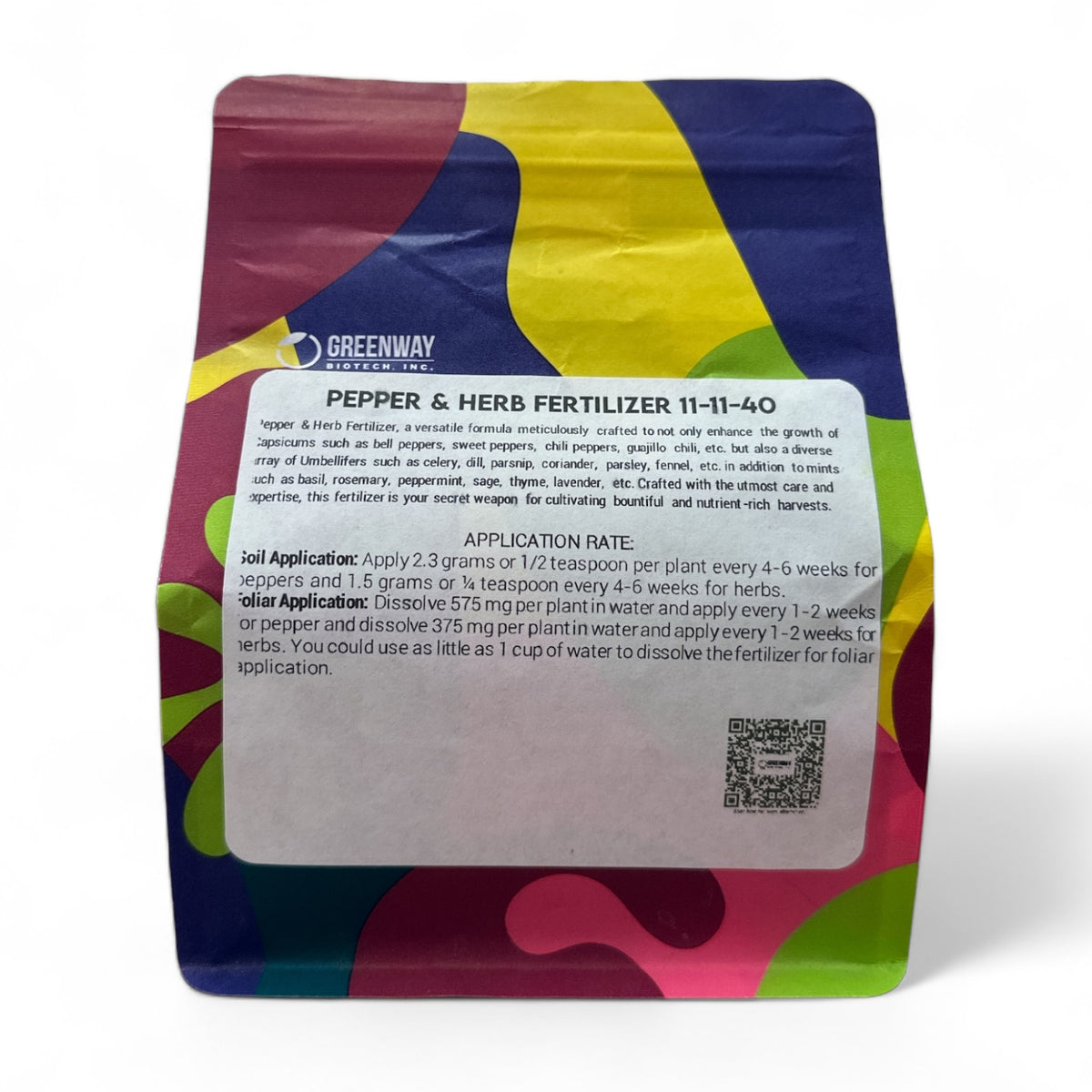
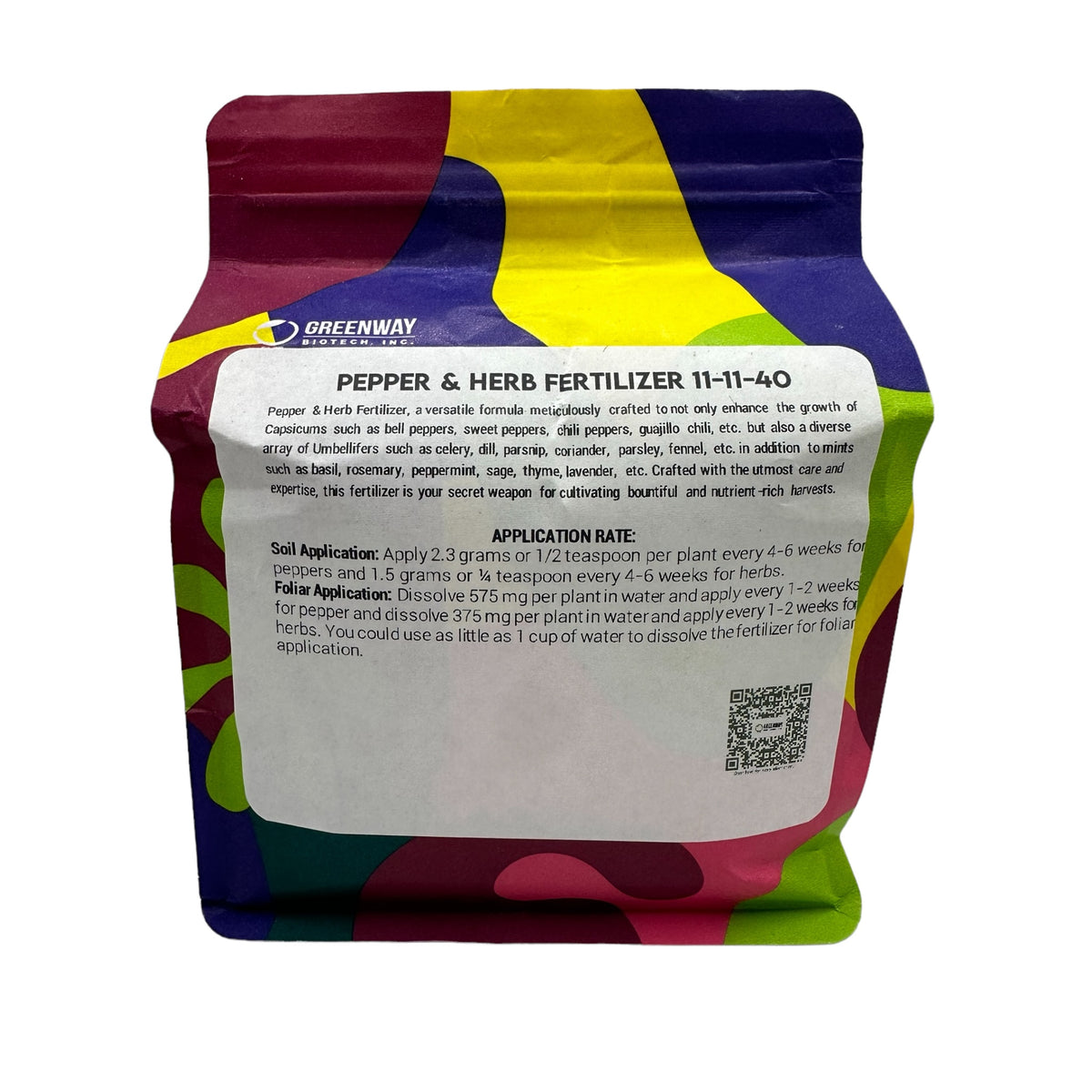
Soil Application — Peppers
| Application Method | Rate | Frequency | Notes |
|---|---|---|---|
| Per Plant | 3g (½ tsp) | Every 4–6 weeks | Apply around base, water in |
| Per 100 sq ft | 0.75–1.25 lbs | Every 4–6 weeks | Broadcast evenly |
| Per Acre | 325–545 lbs | Every 4–6 weeks | Through irrigation — see field crops note below |
Soil Application — Herbs & Umbellifers
| Application Method | Rate | Frequency | Notes |
|---|---|---|---|
| Per Plant | 1.5g (¼ tsp) | Every 4–6 weeks | Apply around base, water in |
| Per 100 sq ft | 0.7–1.15 lbs | Every 4–6 weeks | Broadcast evenly |
| Per Acre | 300–500 lbs | Every 4–6 weeks | Through irrigation — see field crops note below |
Field Crops — Commercial Application
Important: Potassium and nitrogen programs for field-scale pepper and herb production should always be based on a current soil test and estimated crop removal. The acreage ranges above are general reference figures for medium-testing soils at typical yield goals. Actual rates may be higher or lower depending on your soil test level, expected yield, soil texture, and local extension recommendations. Consult your local Cooperative Extension service or certified crop advisor for variety- and region-specific guidance.
Hydroponic Application (per 100 gallons)
| Crop / Stage | 11-11-40 Amount | Cal-Mag Plus | pH Range | Target EC (approx. PPM) |
|---|---|---|---|---|
| Peppers — Growth | 0.5 lbs | 500ml–1L | 6.2–6.5 | 2.7 EC (~1350 ppm, 700 scale) |
| Peppers — Blooming | 0.5 lbs | 1L | 5.8–6.2 | 3.0 EC (~1500 ppm, 700 scale) |
| Herbs — Growth | 0.25 lbs + N boost* | 500ml | 6.2–6.5 | 1.4 EC (~700 ppm, 700 scale) |
| Herbs — Blooming | 0.25 lbs + N boost* | 500ml–1L | 5.8–6.2 | 1.5 EC (~750 ppm, 700 scale) |
*For herbs, add 1–2 tablespoons of Calcium Nitrate per 100 gallons to supplement nitrogen levels.
Hydroponic notes: PPM values are approximate and depend on meter scale (500 or 700 scale) — EC is the preferred reference for consistency. Recipes assume separate calcium supplementation via Cal-Mag Plus or Calcium Nitrate. Source water alkalinity and calcium/magnesium content may require recipe adjustments — RO or low-alkalinity water is recommended for best results. For recirculating systems, monitor EC, pH, and plant response rather than relying on recipe alone.
Foliar Application (Advanced Use Only)
| Crop Type | Rate | Frequency | Coverage |
|---|---|---|---|
| Peppers | 1–1.5g per gallon | Every 1–2 weeks | Spray to runoff — early morning or evening only |
| Herbs | 0.75–1g per gallon | Every 1–2 weeks | Light coverage — early morning or evening only |
Optimal Feeding Through Growth Stages (Peppers)
Plant Density Assumptions (per 100 gallons)
- Peppers: ~65–75 plants (larger spacing needed)
- Herbs: ~150–200 plants (closer spacing possible)
- Mixed System: ~100–120 plants
HOW TO USE
Soil & Garden Beds
- Measure 3g (½ tsp) per pepper plant or 1.5g (¼ tsp) per herb plant.
- Sprinkle evenly around the base of each plant, staying 2–3 inches from the stem.
- Water thoroughly to dissolve the fertilizer into the root zone.
- Repeat every 4–6 weeks throughout the growing season.
Container & Potted Plants
- Dissolve 1–2g per gallon of water for container peppers, or 0.5–1g per gallon for potted herbs.
- Water plants with the solution until it drains from the bottom.
- Apply every 2–3 weeks during active growth.
- Flush containers with plain water monthly to prevent salt buildup.
Container & Grow Bag Feeding Guide
| Container Size | Dissolve Rate | Frequency | Notes |
|---|---|---|---|
| Small potted herbs (1–2 gal) | 0.5g per gallon | Every 2–3 weeks | Light feeding — herbs need less than peppers |
| 3–5 gallon pepper containers | 1g per gallon | Every 2–3 weeks | Apply until slight runoff at the base |
| 7–10 gallon containers / grow bags | 1.5–2g per gallon | Every 2–3 weeks | Increase to weekly during heavy fruiting |
| All container sizes | Plain water flush | Once monthly | Flush thoroughly to prevent salt accumulation |
Hydroponic Systems
- Fill reservoir with clean water. RO or low-alkalinity source water is recommended — hard water may require recipe adjustment.
- Add Cal-Mag Plus first and allow to mix for 5 minutes.
- Add 11-11-40 fertilizer at the recommended rate for your crop and stage.
- Check and adjust pH (peppers 5.8–6.5, herbs 6.2–6.8).
- Verify EC is within target range before irrigating. Monitor plant response and adjust as needed — EC targets in the recipe table are approximate and depend on meter scale.
- Change reservoir completely every 7–10 days for recirculating systems.
Foliar Application
- Dissolve at the recommended rate (1–1.5g/gal for peppers, 0.75–1g/gal for herbs).
- Spray only in early morning or late evening to minimize burn risk.
- Cover tops and undersides of leaves until just dripping.
- Repeat every 1–2 weeks during active growth and fruiting.
Pro Tip: Supporting Peak Flavor & Heat Potential at Harvest
Advanced growers only — results are variety- and environment-dependent. Some experienced growers slightly reduce irrigation 1–2 days before harvest (without wilting) to concentrate flavor compounds, and harvest peppers when fully ripe and herbs in early morning after dew dries. Consistent potassium feeding through the fruiting period may help crops reach their quality potential. These techniques require careful judgment — they are not universally recommended and can stress plants if applied incorrectly.
When Pepper & Herb 11-11-40 Is the Right Choice
- Growing any type of pepper — bell, hot, sweet, or ornamental
- Culinary herbs where flavor and aroma intensity matter
- Hydroponic systems where precise nutrient ratios are essential
- Fruiting and flowering stages where potassium demand peaks
- Commercial operations needing a consistent, scalable formula
When to Consider Other Options
- Heavy-feeding leafy greens (lettuce, spinach) that need more nitrogen — Lettuce Fertilizer 8-15-36 is better suited
- Tomatoes that benefit from higher phosphorus during fruiting — Tomato Fertilizer 4-18-38 is better suited
- Strawberries and berries with different K:P needs — Strawberry Fertilizer 8-12-32 is better suited
- Cucumbers and melons that need higher phosphorus — Cucumber Fertilizer 8-16-36 is better suited
PEPPER & HERB FERTILIZER CALCULATOR
SAFETY & HANDLING
Personal Protective Equipment (PPE)
- Wear gloves and eye protection when handling powder
- Avoid inhaling dust — use in well-ventilated areas or wear a dust mask
- Wash hands thoroughly after handling
Storage Guidelines
- Store in a cool, dry place in the original sealed container
- Keep out of direct sunlight and away from heat sources
- This product is hygroscopic — it absorbs moisture from the air. Keep sealed tightly between uses
- If powder clumps, break it up before use — clumping does not affect efficacy
- Keep away from children and pets
Application Precautions
- In hydroponic systems, always add Cal-Mag Plus first, then 11-11-40 fertilizer
- Use separate stock tanks for calcium fertilizers and other concentrated fertilizer salts; always dilute each independently before combining in the main tank
- Avoid direct contact between concentrated fertilizer and plant stems or foliage
- Apply foliar sprays in early morning or late evening to minimize leaf burn risk
- Do not exceed recommended application rates — over-fertilization can cause nutrient burn
- Flush hydroponic reservoirs and container soils periodically to prevent salt accumulation
First Aid
- Eye contact: Flush with clean water for 15 minutes. Seek medical attention if irritation persists
- Skin contact: Wash affected area with soap and water
- Ingestion: Do not induce vomiting. Contact Poison Control (1-800-222-1222) or seek medical attention
- Inhalation: Move to fresh air. Seek medical attention if symptoms persist
Refer to the Safety Data Sheet (SDS) for complete safety information.
COMPLETE YOUR SYSTEM
Build a complete pepper and herb nutrition program with these complementary products:
Cal-Mag Plus 2-0-0
Supports calcium nutrition during flowering and fruit set. Critical for pepper fruit development. Add to hydroponic reservoirs before 11-11-40.
HerbsCalcium Nitrate 15.5-0-0
Nitrogen supplement for leafy herbs like basil and cilantro. Adds calcium while supporting lush foliage growth during vegetative stages.
BoostEpsom Salt (Magnesium Sulfate)
Magnesium for chlorophyll production and sulfur for amino acid synthesis. Supports green color and photosynthesis efficiency.
FREQUENTLY ASKED QUESTIONS
Will this make my peppers hotter?
Research shows that when potassium needs are fully met, this nutrient supports the nutrient balance associated with capsaicin development — helping peppers reach their heat potential under proper growing conditions. For best results, apply consistently through fruit development and harvest when fully ripe. To learn more about how potassium supports plant quality, see our article on What's the Function of Potassium (K) in Plants?
How can I maximize flavor and aroma intensity in culinary herbs?
To bring out the best flavor and aroma in culinary herbs: reduce watering slightly 1–2 days before harvest (without wilting), harvest in early morning after dew dries, apply extra 11-11-40 during flowering, and provide slightly cooler nighttime temperatures. Consistent potassium feeding helps support the natural flavor compounds that make herbs like basil, oregano, and thyme more potent at harvest. For a deep dive on choosing the right fertilizer for your herb garden, see Best Fertilizer for Pepper & Herb.
Do leafy herbs need extra nitrogen?
Yes, herbs like basil and cilantro benefit from extra nitrogen during vegetative growth. For hydroponics, add 1–2 tablespoons of Calcium Nitrate per 100 gallons for both nitrogen and calcium. For soil, supplement with fish emulsion or blood meal every 2–3 weeks during active growth. For more on nitrogen's role, see What's the Function of Nitrogen (N) in Plants?
What pH should I maintain?
pH requirements vary between peppers and herbs. Peppers prefer pH 5.8–6.2 during blooming and 6.2–6.5 during vegetative growth. Most culinary herbs generally prefer pH 6.2–6.8, with slightly higher values acceptable for many species. Always check pH after mixing nutrients and adjust before feeding.
What is the best fertilizer ratio for pepper plants?
For fruiting peppers, a high-potash formula like 11-11-40 is well suited from the flowering stage through harvest. Potassium demand peaks during fruit development, and a potash-forward ratio helps support fruit quality, color, and overall performance. During early vegetative growth, a more balanced formula with higher nitrogen can help establish strong foliage first. See What's the Function of Potassium (K) in Plants? for more background.
Do peppers need more potassium or nitrogen?
It depends on the growth stage. During vegetative growth, nitrogen drives leaf development and overall plant size. Once flowering begins and through fruiting, potassium becomes the dominant demand — it supports fruit set, quality, and heat potential in hot peppers. This 11-11-40 formula is designed specifically for that fruiting window, with balanced nitrogen and phosphate to maintain healthy plants and high soluble potash (40% K₂O) to support fruit development. For guidance on selecting the right pepper fertilizer at each stage, see Best Fertilizer for Peppers.
Can I use pepper fertilizer for basil and other herbs?
Yes — this formula works well for most culinary herbs, particularly aromatic varieties like basil, oregano, thyme, rosemary, and sage where flavor and aroma intensity at harvest matters. Use the herb rates (1.5g per plant or 0.7–1.15 lbs per 100 sq ft) rather than pepper rates, as herbs generally have lower overall nutrient demand. For leafy herbs like cilantro and parsley that need more nitrogen push during vegetative growth, supplement with 1–2 tablespoons of Calcium Nitrate per 100 gallons in hydroponic systems or use a fish emulsion in soil.
What is the difference between this and Tomato Fertilizer 4-18-38?
Both are high-potash formulas designed for fruiting crops, but they differ in their N-P balance. Our Tomato Fertilizer 4-18-38 has much higher phosphate (18% P₂O₅) and lower nitrogen (4%), making it better suited for heavy phosphorus feeders like tomatoes during flowering and fruit set. This 11-11-40 formula has equal nitrogen and phosphate with even higher potash, making it better suited for peppers — which need more sustained nitrogen through fruiting — and for aromatic herbs where high potash supports flavor and aroma intensity.
Why doesn't this formula contain calcium?
Calcium and phosphate are chemically incompatible in concentrated solution — when mixed, they form insoluble calcium phosphate that becomes unavailable to plants. Since our formula contains 11% available phosphate (P₂O₅), calcium must be applied separately. Use Cal-Mag Plus 2-0-0 or Calcium Nitrate 15.5-0-0 as a separate addition — always add it to the reservoir first, before the 11-11-40, and use separate stock tanks for concentrated solutions.
How do I store the powder?
This fertilizer is hygroscopic — it absorbs moisture from the air. Keep the bag sealed tight between uses and store in a cool, dry place out of direct sunlight. If the powder clumps, simply break it up before use. Clumping does not affect efficacy or nutrient content.
Can I use this for ornamental peppers and flowering herbs?
Yes. The balanced nitrogen and phosphate with high soluble potash supports color development, bloom duration, and overall plant vigor in ornamental varieties. Use pepper application rates for ornamental peppers and herb rates for flowering herb species.
What crops is this formula best suited for?
This formula is well suited for all pepper varieties (bell, jalapeño, habanero, ghost, Thai, poblano), culinary herbs (basil, cilantro, oregano, thyme, rosemary, sage, mint, parsley), and umbellifers (dill, fennel, celery, caraway, chervil). For micronutrient details, see Essential Micronutrients for Healthier Plants.
Can I use this in containers or grow bags?
Yes — containers and grow bags are one of the best environments for this formula. Dissolve at the container rate (0.5–2g per gallon depending on pot size) and water until you see slight runoff from the base. Repeat every 2–3 weeks during active growth, and flush containers with plain water once a month to prevent salt buildup. See the Container & Grow Bag Feeding Guide in the How to Use section for specific rates by pot size.
Is this fertilizer good for jalapeños, habaneros, and ghost peppers?
Yes. This formula is well suited for both sweet and hot pepper varieties. The high soluble potash (40% K₂O) supports the nutrient balance associated with strong pepper performance across all Capsicum species — from mild bells to superhot varieties like ghost, scorpion, and Carolina reaper — especially from flowering through fruit development when potassium demand peaks.
Can I use this in drip irrigation or fertigation?
Yes. Because this formula is 100% water soluble, it works well in drip systems, inline injectors, and fertigation programs. Dissolve completely in water before injecting, run at the correct dilution for your system, and always keep calcium products (Cal-Mag Plus or Calcium Nitrate) in a separate concentrated stock tank. Jar-test any unfamiliar combinations before running them through your irrigation lines.
GROW WITH CONFIDENCE
Quality & Purity Standards
- Manufactured in California, USA — family-owned and operated since 1989
- Independently tested by third-party laboratories for quality assurance
- Registered with the California Department of Food and Agriculture (CDFA)
- Every batch tested for heavy metal content — view latest heavy metal analysis
Hassle-Free Return Policy
Not satisfied? We offer a 90-day money-back guarantee. Return the unused portion in its original packaging for a full refund.
Environmental Responsibility
- Recyclable packaging materials
- Formulated for targeted crop nutrition to help minimize waste
- Support for eco-friendly farming methods
- Ongoing research into sustainable solutions
Charitable Contributions
1% of all profits go to the Greenway Foundation, focused on improving educational opportunities for children. Learn more at greenway.foundation.
About Greenway Biotech, Inc.
Family-owned and operated since 1989, Greenway Biotech, Inc. has spent 35+ years formulating specialty fertilizers and wellness products from our facility in Madera, California. We believe gardens — and their humans — deserve better. That commitment to quality, transparency, and agronomic accuracy drives everything we make.
DOCUMENTS
DISCOVER MORE
- Best Fertilizer for Pepper & Herb — How to choose and apply the right formula for your crop
- Best Fertilizer for Peppers — Stage-by-stage nutrition guide for bell, jalapeño, and hot peppers
- What's the Function of Nitrogen (N) in Plants?
- What's the Function of Phosphorus (P) in Plants?
- What's the Function of Potassium (K) in Plants?
- What is the Best Potassium Fertilizer?
- Essential Micronutrients: Boost Your Garden Soil for Healthier Plants
HAVE QUESTIONS?
Check out our full FAQ page or contact our experts for personalized advice.