Dolomite
- Regular Price
- $ 19.99
- Sale Price
- $ 19.99
- Regular Price
- $ 17.99
Sold Out
- Unit Price
- per
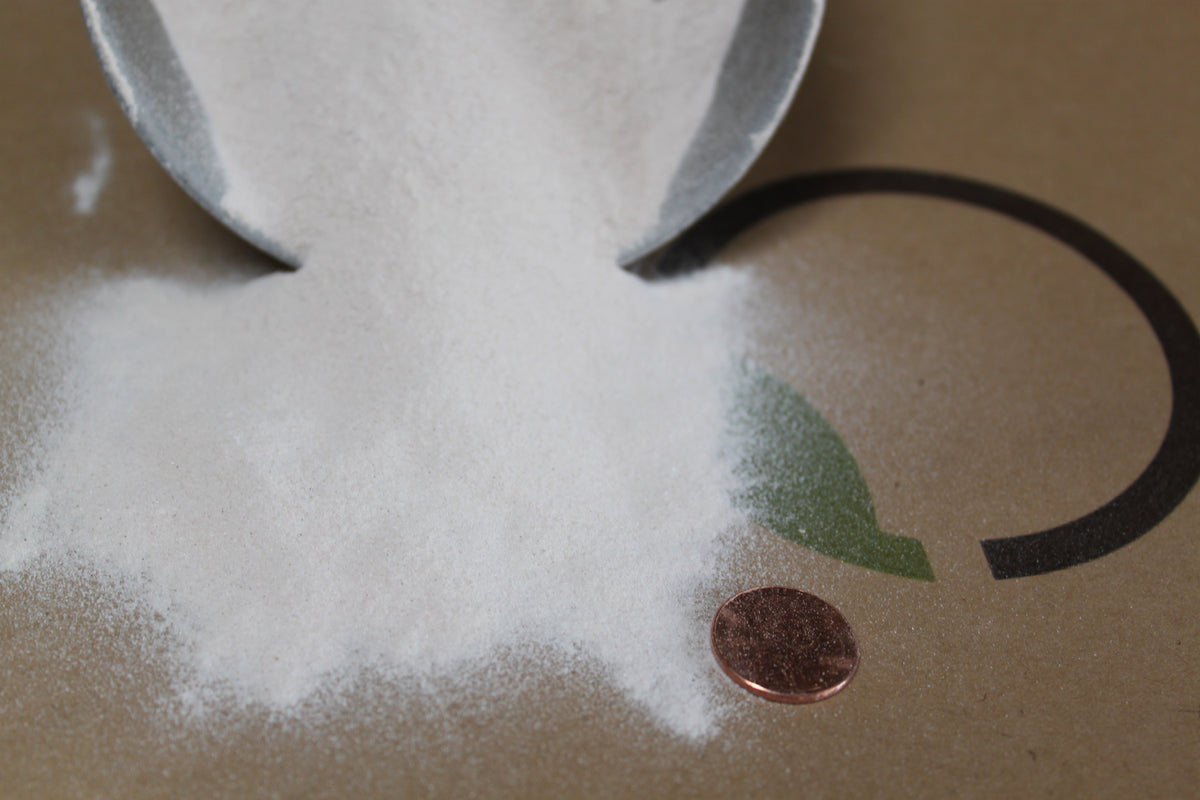
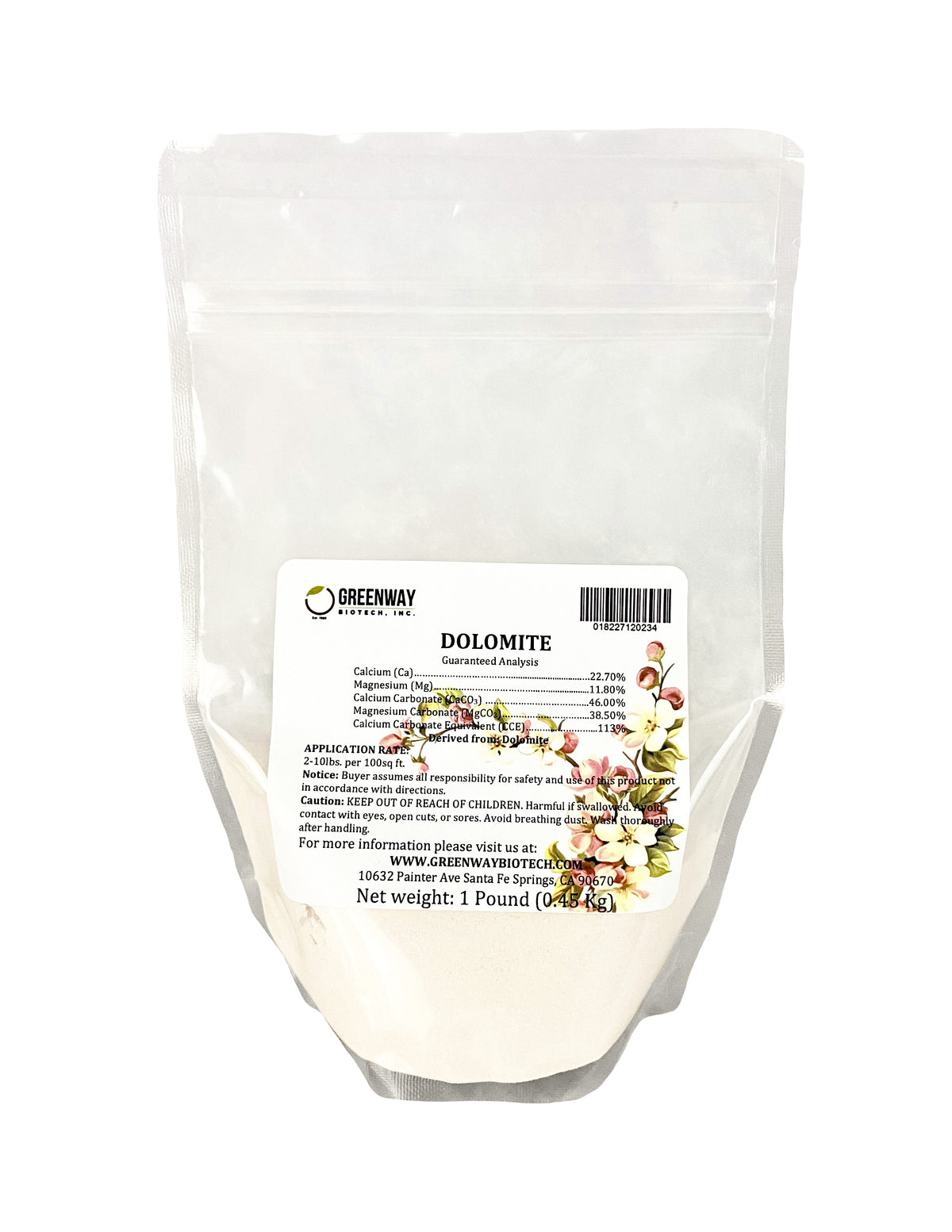
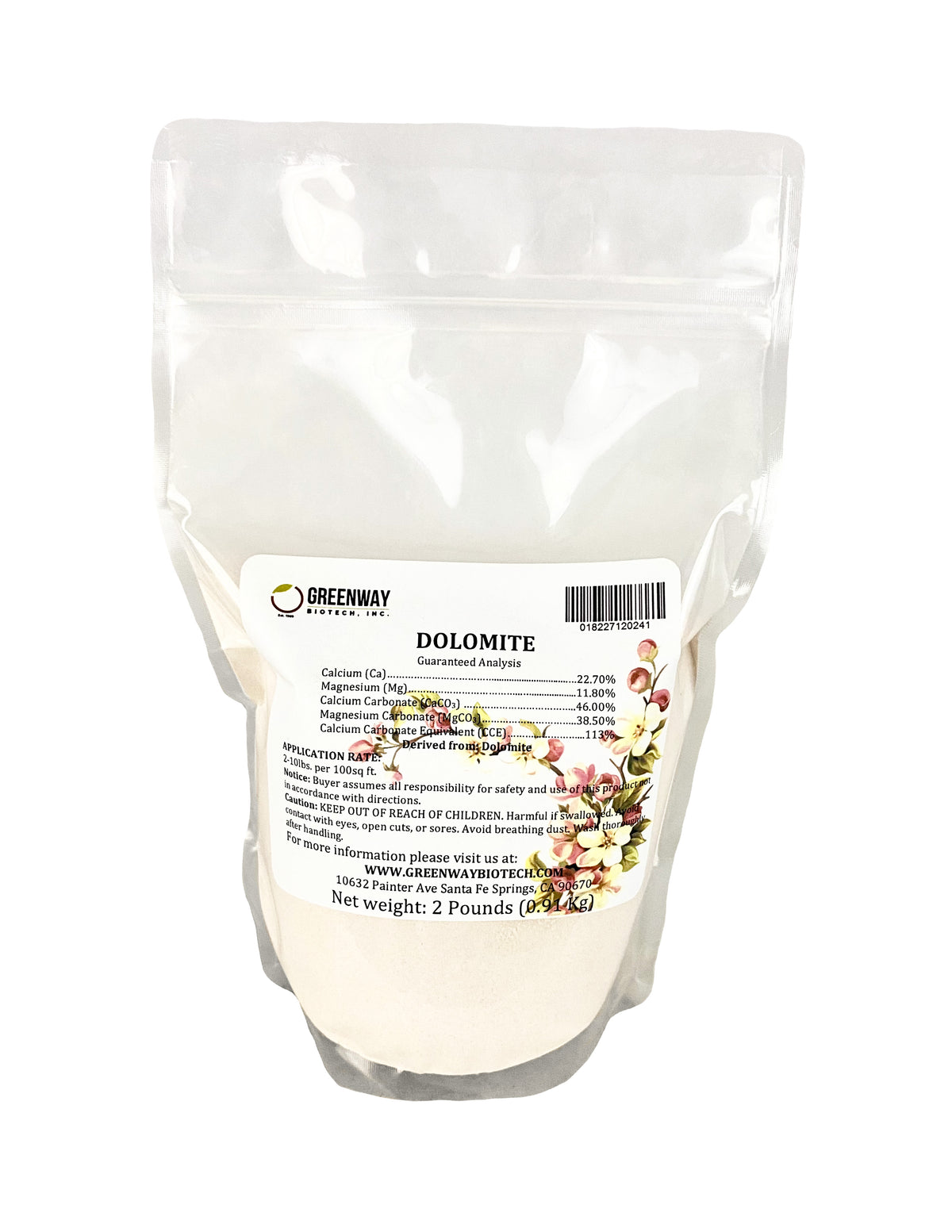
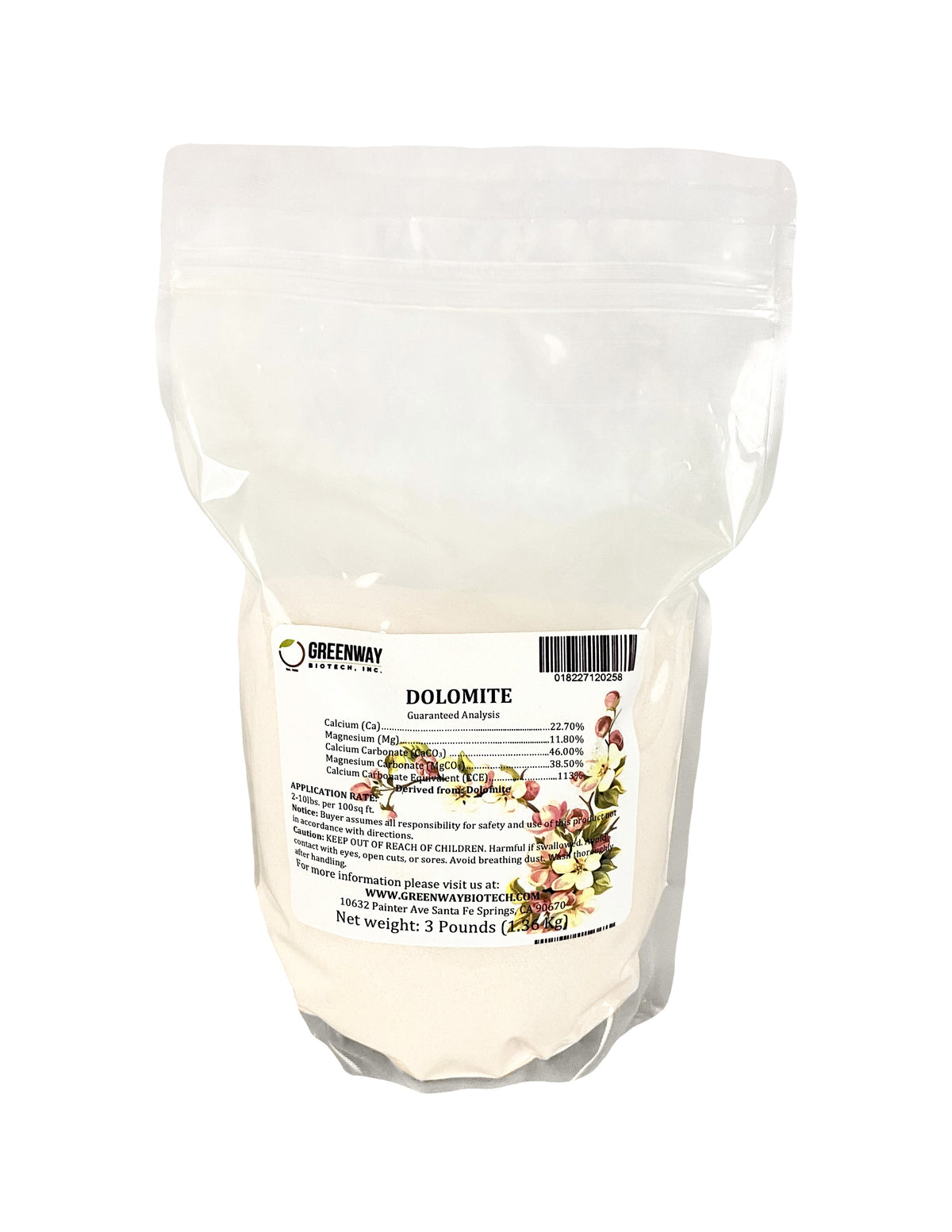
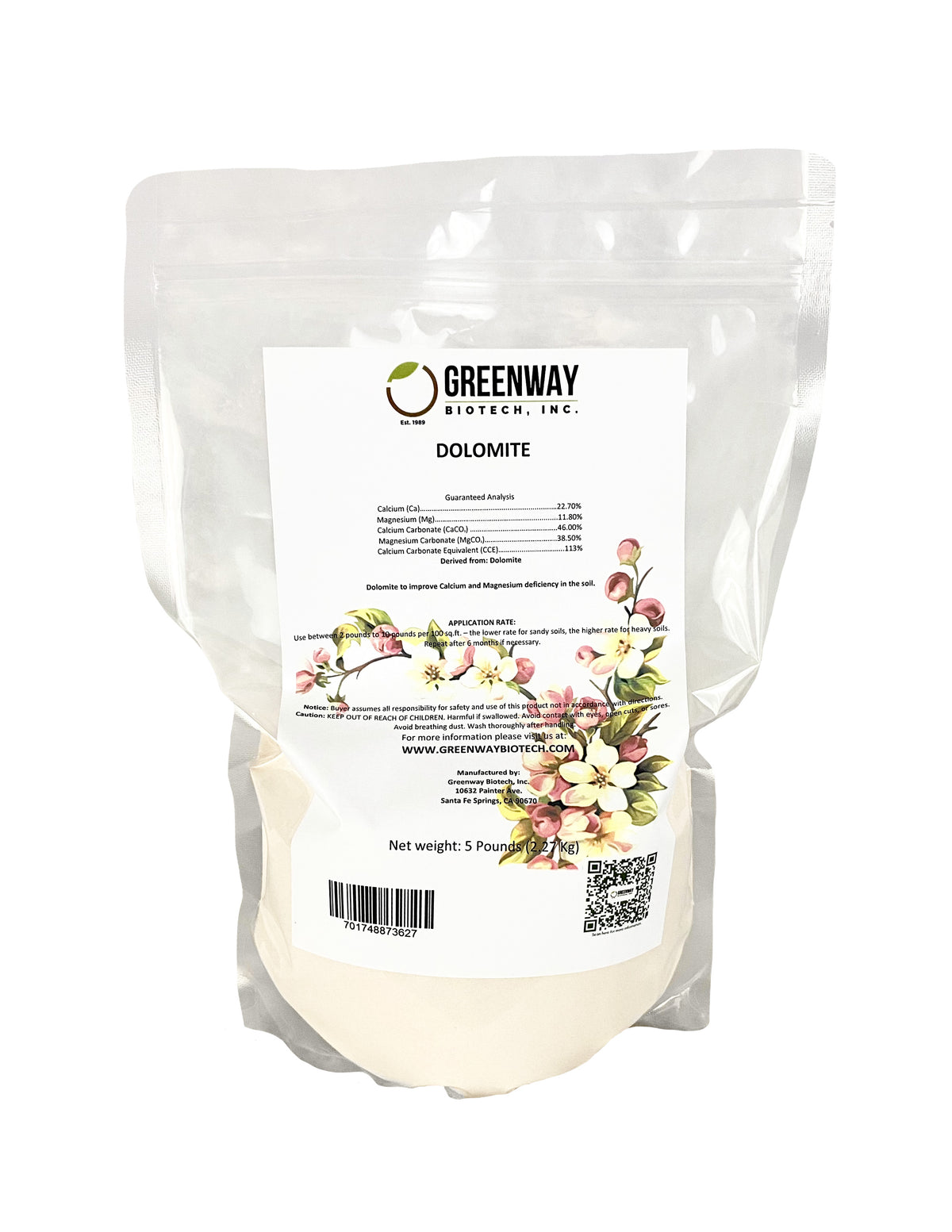
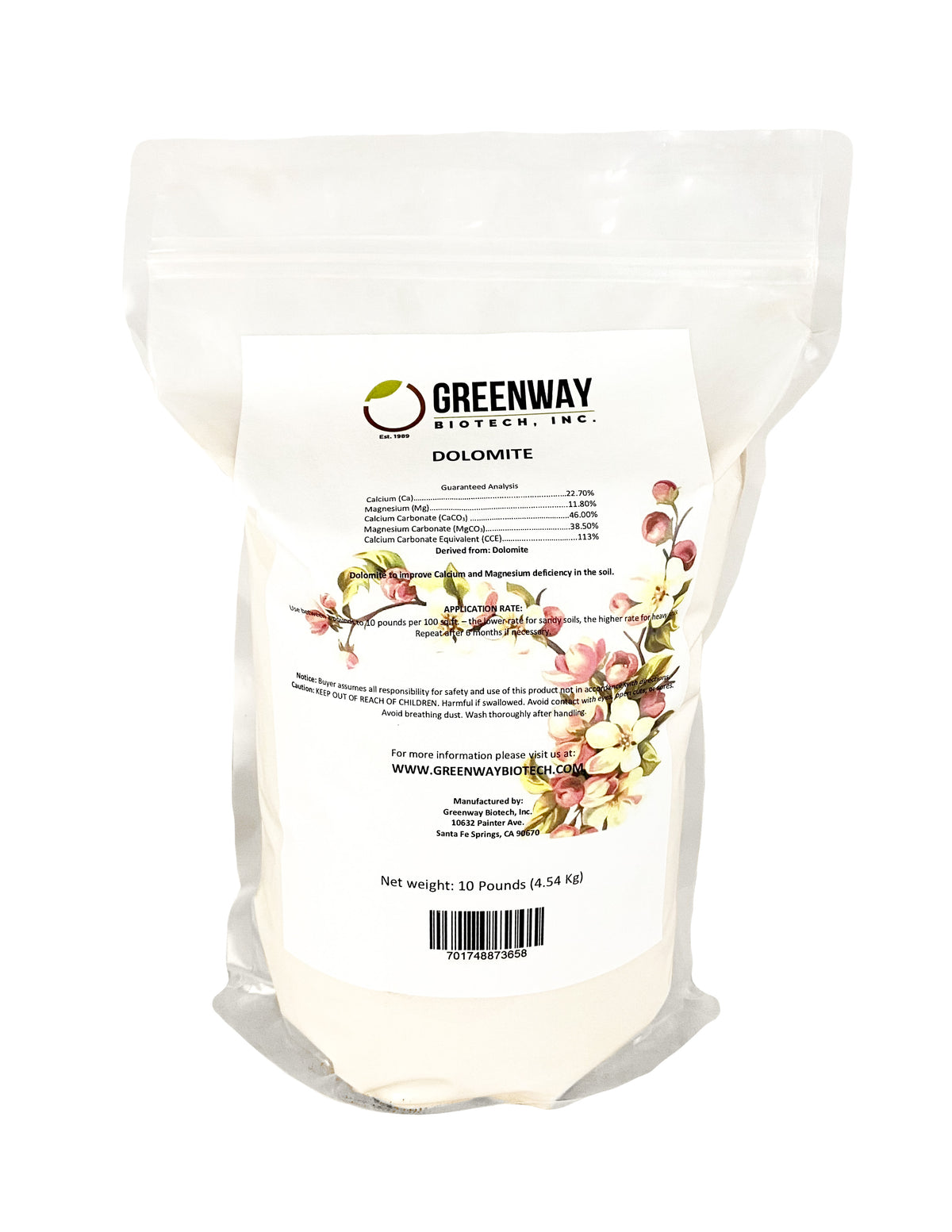
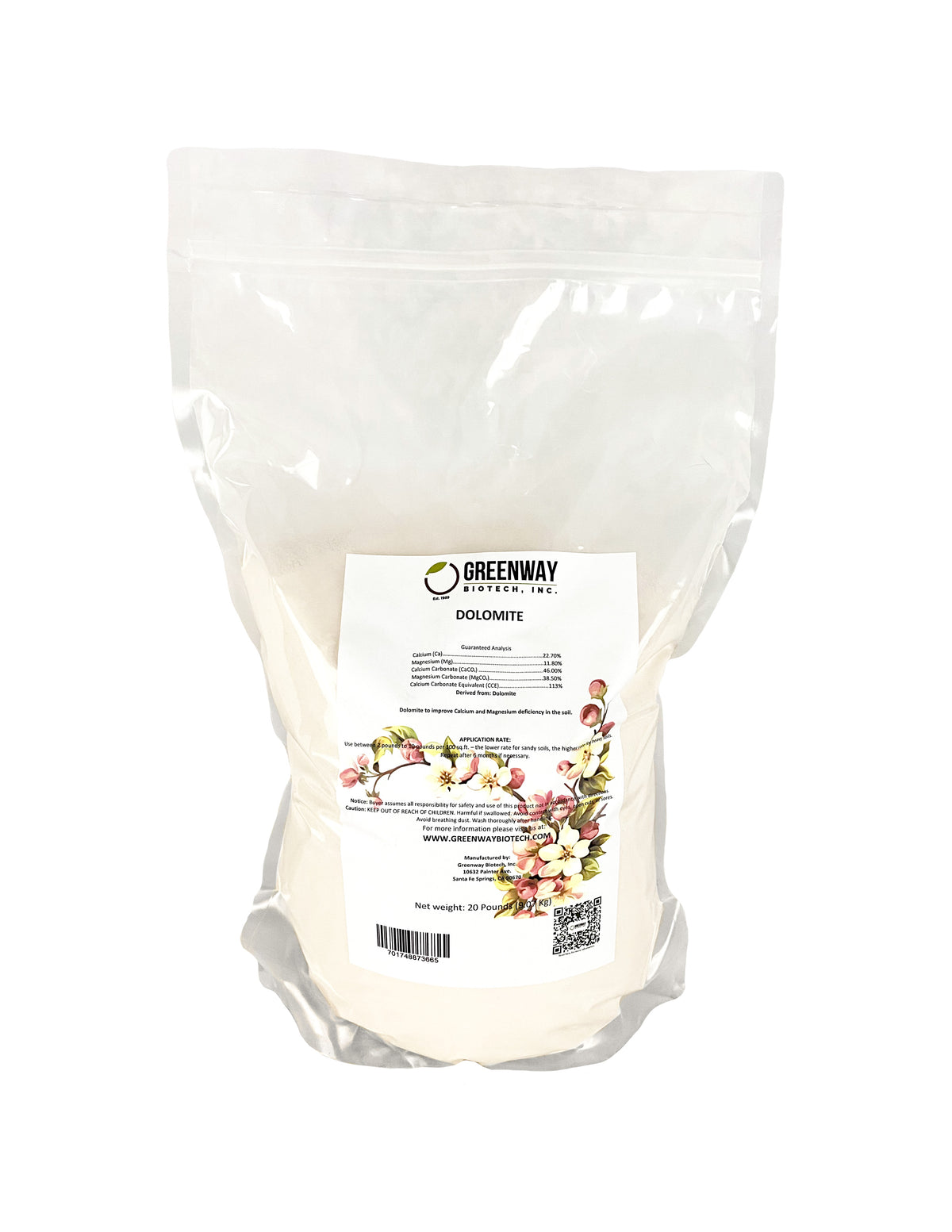
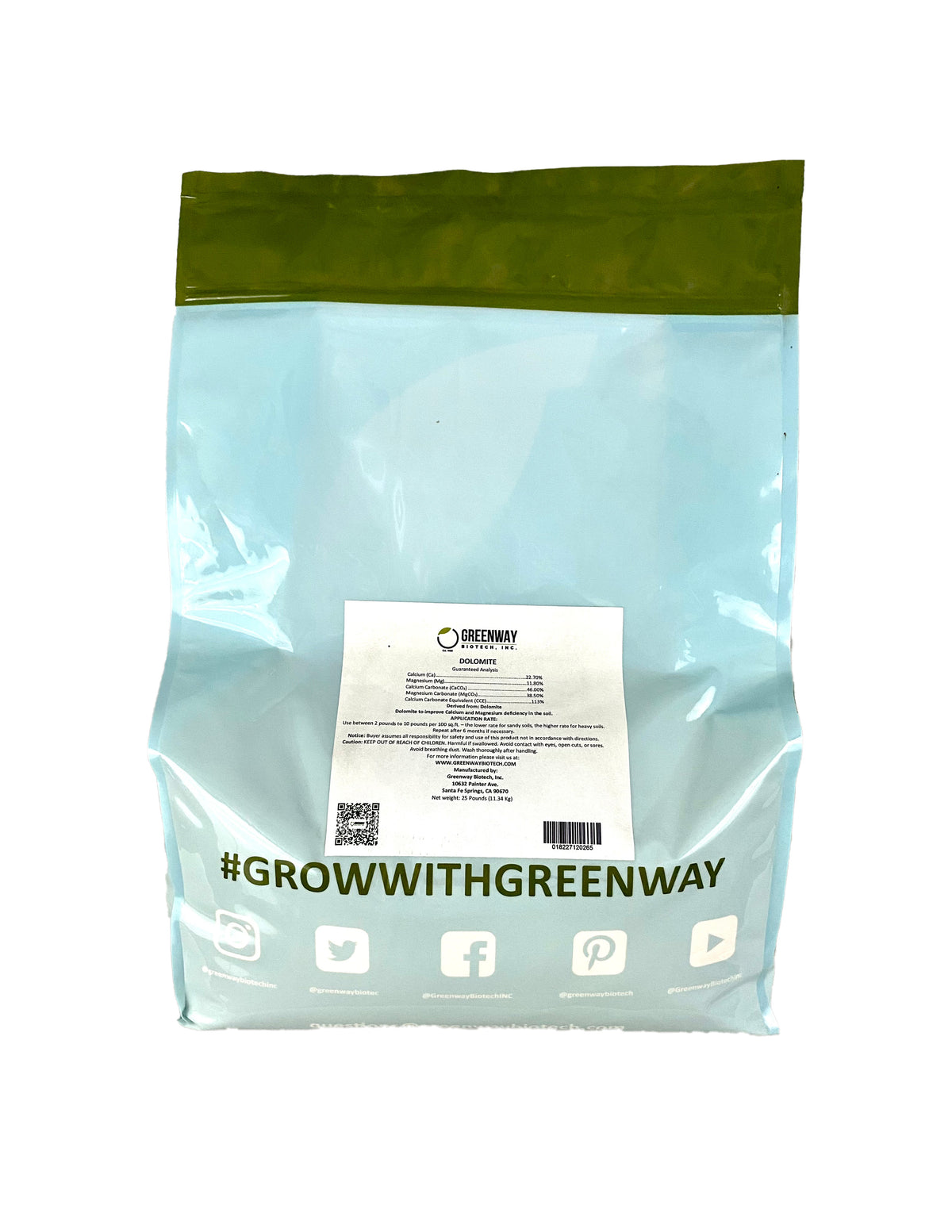
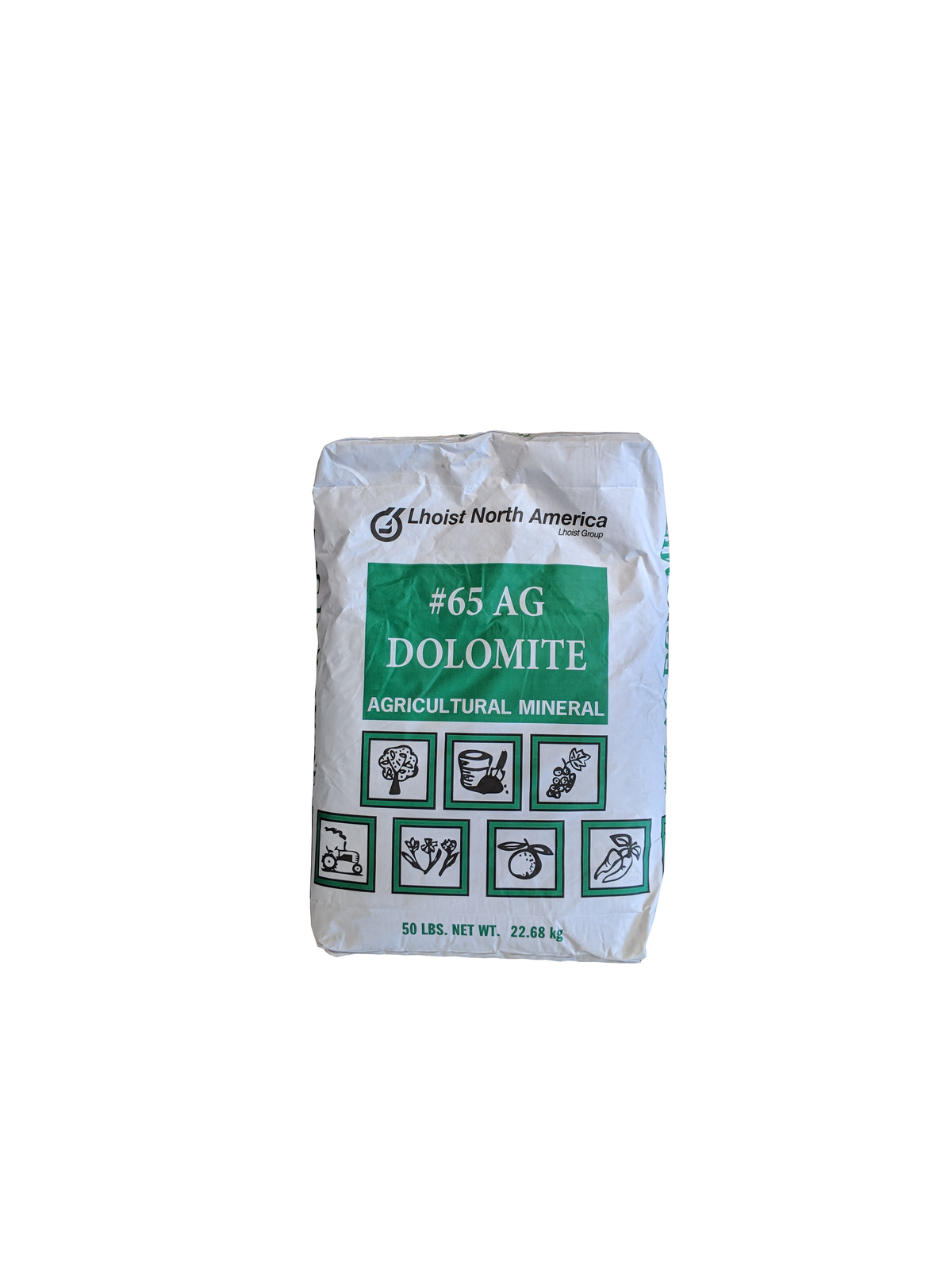
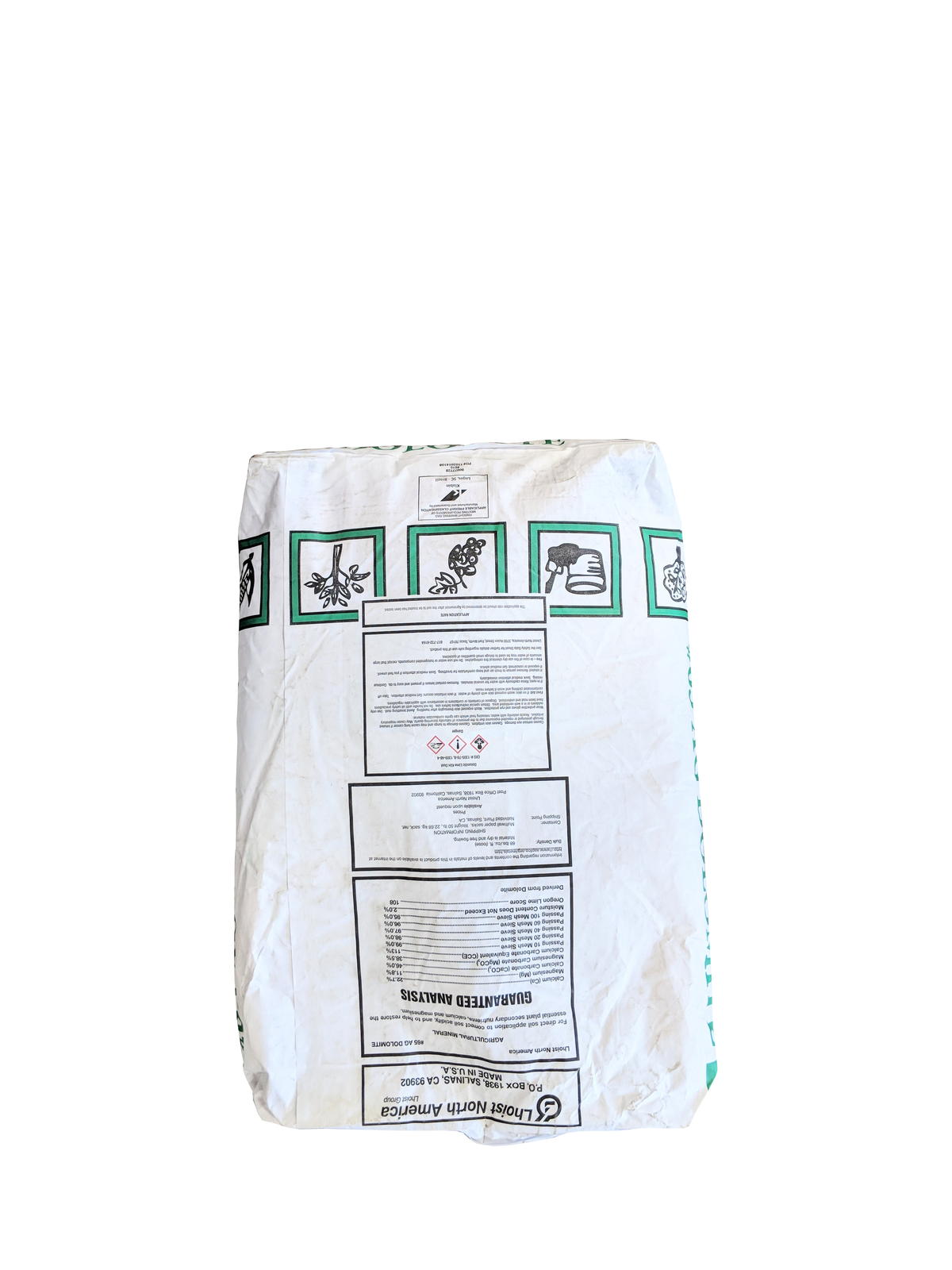
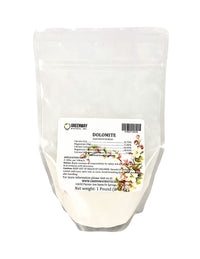
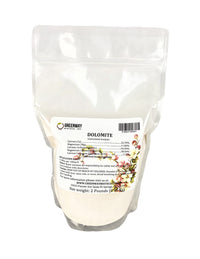
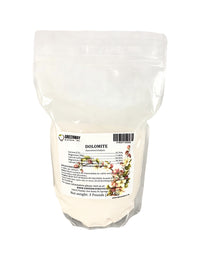
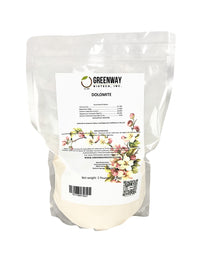
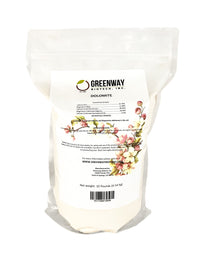
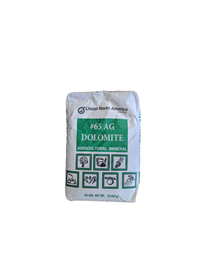
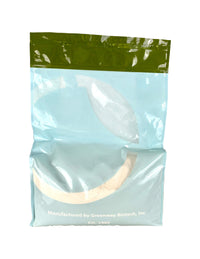
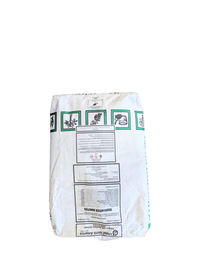
A finely ground natural limestone that neutralizes acidic soil while supplying both calcium and magnesium — two nutrients most lime products deliver only one of. CDFA registered, made in the USA, and third-party lab tested. Apply weeks before planting for stable, season-long pH correction.
Find your size → Calculate how much I need22.7%
Calcium — cell walls, root tips, fruit integrity
11.8%
Magnesium — central atom of chlorophyll
2:1
Near-natural Ca:Mg ratio for balanced uptake
35+yrs
Family-owned since 1989, Madera CA
Coverage assumes a typical garden bed correction rate of 5 lbs per 100 sq ft on loamy soil. Sandy soils need less; heavy clay soils need more — confirm the right rate using the calculator below after a soil test.
| Bag Size | Garden Coverage | Fruit Trees | Best For |
|---|---|---|---|
| 5 lb | ~100 sq ft | ~1 tree | Container mixes, raised beds, spot corrections |
| 10 lb | ~200 sq ft | 1–2 trees | Most popular Small home gardens |
| 25 lb | ~500 sq ft | 3–5 trees | Standard vegetable garden or flower bed |
| 50 lb | ~1,000 sq ft | 6–10 trees | Best value Lawns, orchards, large gardens |
📦 Shipping Note: Depending on your location, 50 lb bags may ship as two 25 lb bags for easier handling.
Dolomite is the broadest-utility liming material on the market — wherever pH is low and both Ca and Mg are needed, this is the workhorse.
Brassicas (cabbage, broccoli, kale), beets, asparagus, and spinach respond well to lime. Apply 3–4 weeks before planting and work into the top 6–8 inches of soil.
Annual or biannual lime applications balance the acidifying effect of nitrogen fertilizer. UConn and MSU Extension cap a single application at 50 lbs per 1,000 sq ft.
Apples, cherries, and most pome and stone fruit prefer near-neutral pH. Broadcast under the drip line — never piled against the trunk.
Clematis, delphinium, and most perennials thrive in pH 6.0–7.0. Avoid acid-loving flowers like azaleas and hydrangeas (for blue blooms) where lime is not appropriate.
A light dusting between layers buffers acidic breakdown products, reduces sulfur odors, and enriches finished compost with calcium and magnesium.
Peat moss is naturally acidic (~pH 4.0). The Cornell Peat-Lite formula calls for ~20 lbs dolomite per cubic yard of peat to neutralize and supply Ca + Mg.
Most lime products deliver only calcium. Dolomite corrects pH and feeds two of the three most commonly deficient secondary nutrients in a single, slow-release application.
Calcium strengthens plant cell walls and supports active root tip development. Adequate calcium nutrition may help support fruit calcium status — which research links to lower incidence of blossom end rot in tomatoes and tip burn in lettuce. For a faster-acting calcium source that does not raise pH, see Gypsum (Calcium Sulfate).
Magnesium sits at the center of every chlorophyll molecule and activates more than 300 plant enzymes. Without it, photosynthesis falters and older leaves develop interveinal chlorosis — the classic yellow-between-green-veins symptom of Mg deficiency.
The roughly 2:1 calcium-to-magnesium ratio in dolomite mirrors what plants typically uptake, which can help reduce the cation antagonism that happens when high-calcium amendments are applied without matching magnesium.
Magnesium carbonate dissolves more gradually than pure calcium carbonate, so dolomite buffers pH over months rather than producing a rapid spike. The slower curve is more forgiving — less likely to overshoot the target pH range.
Registered with the California Department of Food and Agriculture as a fertilizing material. Independently tested for heavy metals by third-party laboratories, with results consistently well below required limits.
Most beneficial soil bacteria thrive at pH 6.0–7.5. Correcting acidity with dolomite can create a more hospitable environment for the microbial communities that drive nutrient cycling. See Soil Microbes & Plant Health for more on the underground food web.
CaMg(CO3)2dolomite
Calcium-magnesium carbonate — the double-carbonate mineral
Soil acidity is the accumulation of hydrogen ions (H⁺) on the soil exchange complex. Dolomite neutralizes that acidity through a straightforward carbonate reaction: CaMg(CO₃)₂ + 4 H⁺ → Ca²⁺ + Mg²⁺ + 2 CO₂ + 2 H₂O. The calcium and magnesium ions enter the soil solution and the soil exchange complex; the hydrogen ions are consumed; carbon dioxide and water are the byproducts.
Two properties make dolomite distinct from calcitic lime. First, every unit of mineral that dissolves releases both calcium and magnesium in a roughly 2:1 ratio — close to what most plants take up — instead of calcium alone. Second, the magnesium carbonate fraction dissolves more slowly than calcium carbonate, giving dolomite a more gradual and longer-buffered pH response than pure calcitic lime. The same property that makes dolomite slower to react also makes it more forgiving: overshooting target pH is less likely.
The reaction is moisture- and temperature-dependent. Below 50°F, soil microbial and chemical activity slows enough that the carbonate dissolution stalls. Above 50°F, with adequate moisture, the bulk of the pH rise typically occurs in the first 2–6 months after application — though full equilibration in heavy clay soils can take longer. Particle size matters too: finely ground material has more surface area for the reaction, which is why agricultural-grade powdered dolomite reacts faster than coarse pelletized grades.
For deeper coverage of magnesium's role in plant nutrition, see What's the Function of Magnesium (Mg) in Plants? and Why Are Plant Leaves Turning Yellow?
Rates are drawn from university extension recommendations (UConn, MSU, Cornell, UVM) and peer-reviewed agronomic references. A current soil test with buffer pH is always the best foundation — these tables are general guidance, not a substitute for testing.
Quick answer: 2–10 lbs per 100 sq ft depending on soil type, worked into the top 6–8 inches of soil 3–4 weeks before planting.
| Soil Type | Rate | Source | Timing & Notes |
|---|---|---|---|
| Sandy soil | 2–4 lbs / 100 sq ft | UConn Ext. | Light soils need less; re-test pH after 6 months |
| Loamy soil (standard) | 5 lbs / 100 sq ft | UConn Ext.; UMass Amherst | Apply 3–4 weeks before planting; work into top 6–8 in. |
| Clay soil — light | 7 lbs / 100 sq ft | UConn Ext. | Heavy soils need higher rates and longer reaction time |
| Clay soil — heavy | 8–10 lbs / 100 sq ft | UConn Ext.; UMass Amherst | Split into two applications 6 months apart if over 50 lbs / 1,000 sq ft |
| Calcium-demanding crops (brassicas, asparagus, beets) | 5–8 lbs / 100 sq ft | UConn Ext.; UMass Amherst | Test soil first; consider gypsum if pH is already adequate |
📋 Soil Test First: Always test soil pH before applying. These rates are general benchmarks based on typical soil test levels and crop demand. Actual rates should be confirmed by a current soil test with buffer pH and consultation with your local cooperative extension service, as needs vary significantly by soil type, organic matter, and regional conditions.
Sources: UConn Home & Garden Education Center; University of Massachusetts Amherst Center for Agriculture, Food & Environment; Michigan State University Extension lime recommendations.
Quick answer: Up to 50 lbs per 1,000 sq ft maximum in a single application. Once pH is in the mid-6s, drop to 50 lbs per 1,000 sq ft every other year for maintenance.
| Lawn Condition | Rate | Source | Timing & Notes |
|---|---|---|---|
| pH below 5.5 — corrective | 25–50 lbs / 1,000 sq ft | MSU Ext. | Check pH of top 0–3 in. soil; do not exceed 50 lbs / 1,000 sq ft in one pass |
| Significant correction needed (large pH gap) | Split: 50 lbs / 1,000 sq ft, repeat at 6 months | UConn Ext.; Univ. of Maryland Ext. | Two applications 6 months apart prevent overshooting target pH |
| Maintenance (pH already in mid-6s) | 50 lbs / 1,000 sq ft every 2 years | UConn Ext. | Apply late fall or winter when lawn is dormant; water in lightly |
| Mild correction (pH 5.5–6.0) | 25 lbs / 1,000 sq ft | MSU Ext. | Topdress; do not pile on dormant turf |
⚠️ Single-application maximum: Do not exceed 50 lbs per 1,000 sq ft in a single pass. If a soil test calls for more than that, split into two applications six months apart to avoid overshooting target pH and locking out manganese, boron, and iron.
Sources: UConn Home & Garden Education Center; Michigan State University Extension; University of Maryland Extension.
Quick answer: The lower your starting pH, the more dolomite you need. A buffer-pH soil test will dial this in more precisely than table values alone.
| Current pH | Target pH | Rate / 100 sq ft | Time to Full Effect |
|---|---|---|---|
| 4.0 | 6.5 | ~12 lbs | 3–6 months |
| 4.5 | 6.5 | ~10 lbs | 3–6 months |
| 5.0 | 6.5 | ~7 lbs | 2–4 months |
| 5.5 | 6.5 | ~5 lbs | 2–3 months |
| 6.0 | 6.5 | ~2–3 lbs | 1–2 months |
Sandy vs. clay adjustment: Sandy soils have lower buffering capacity — reduce rates by roughly 20%. Heavy clay soils have higher buffering capacity — increase rates by roughly 20–40%.
Sources: UConn Home & Garden Education Center; Michigan State University Extension lime recommendations; Clemson Extension Lime Rate Calculator methodology.
Quick answer: 8.5–20 lbs of dolomite per cubic yard of peat moss is the standard range from Cornell and UVM for soilless mixes.
| Mix Type / Use | Rate | Source | Notes |
|---|---|---|---|
| Cornell Peat-Lite Mix (foundational soilless mix) | ~20 lbs / cubic yard of peat | Cornell — Boodley & Sheldrake, 1982 | Neutralizes peat acidity (pH ~3.5–4.0) and supplies Ca + Mg |
| Standard greenhouse peat mix | ~8.5 lbs / cubic yard of peat | Grubinger, Univ. of Vermont | Lower target pH; preferred over calcitic for Mg supply |
| Small-scale potting mix | ~1 cup / cubic foot | UVM Extension | ~¼ cup per 6 gallons of peat moss; mix thoroughly before wetting |
| EarthBox-style container (per ~2 ft³ media) | ~1 lb (≈2 cups) dolomite | EarthBox setup instructions |
Why peat needs dolomite: Peat moss is naturally acidic (pH ~3.5–4.0). Without a liming agent in the mix, container crops grow in conditions well below their optimal pH range — and miss the Ca and Mg that soilless media don't supply. Dolomite is preferred over calcitic lime for peat mixes because it delivers both nutrients in one ingredient.
Sources: Cornell Peat-Lite Mix formula (Boodley and Sheldrake, 1982); Grubinger, Vern — University of Vermont Extension; EarthBox container gardening setup guidelines.
Quick answer: 1–4 tons per acre is typical for corrective field liming. Soil test with buffer pH is essential — never broadcast field rates without one.
| Crop / Use | Rate | Source | Notes |
|---|---|---|---|
| General field crop liming | 1–4 tons / acre | UConn Ext.; MSU Ext. | Most corrective applications fall in this range |
| Very acidic soils (pH 4.8–5.2) | 3–5 tons / acre | MSU Ext. | Plow down or deep incorporate |
| Mg-deficient acid soils | ≥ 0.5 ton / acre (11% Mg dolomite) | MSU Ext. | Apply before planting |
| Alfalfa (target pH 6.8) | Per soil test, often 2–4 tons / acre | MSU Ext. | Liming to pH 6.8 is essential for alfalfa stand establishment |
| Most field crops, pasture (target pH 6.5) | Per soil test, typically 1–3 tons / acre | MSU Ext. | Standard target for corn, soybean, hay grasses |
| No-till maintenance | 0.5–1 ton / acre annually or biannually | UConn Ext.; MSU Ext. | Maintains pH in the surface 2–3 inches |
| Established fruit trees | 5–8 lbs per tree (broadcast under drip line) | OSU Ext.; UConn Ext. | Never pile against the trunk; water in thoroughly |
📋 Soil Test First: Field crop lime rates are general guidelines based on typical soil test levels and crop pH requirements. Actual rates should be confirmed by a current soil test with buffer pH and consultation with your local cooperative extension service, as needs vary significantly by soil type, crop variety, and regional conditions.
Particle size matters: Most state agricultural lime laws (e.g., North Carolina) require that for dolomitic limestone, at least 35% passes a 100-mesh screen and 90% passes a 20-mesh screen. Greenway Biotech dolomite is a finely ground powder for fast soil contact and quick reaction.
Sources: UConn Home & Garden Education Center; Michigan State University Extension lime recommendations; Oregon State University Extension; North Carolina Department of Agriculture lime regulations.
Quick answer: 1–2 cups per cubic foot, sprinkled between layers as the pile is built.
| Compost Material | Rate | Source | Notes |
|---|---|---|---|
| Mostly browns (high-carbon) | ~0.5 cup / cubic ft | UVM Ext. | Light dusting; most well-made compost doesn't need much |
| Mixed greens & browns (balanced C:N) | ~1 cup / cubic ft | UVM Ext. | Standard rate for general home composting |
| Mostly greens (high-nitrogen, acidic byproducts) | ~1.5 cups / cubic ft | UVM Ext. | Buffers acidity from rapid microbial breakdown |
| With manure | ~2 cups / cubic ft | UVM Ext. | Reduces sulfur and ammonia odors significantly |
Why lime in compost: A light dusting of dolomite between layers buffers the acidic breakdown products of decomposition, reduces sulfur-based odors, and enriches the finished compost with calcium and magnesium. Most well-aerated compost doesn't strictly need lime, but it can help — especially with high-nitrogen or manure-heavy piles.
Sources: University of Vermont Extension composting guidelines.
Dolomite is forgiving but not instant. Soil-test first, apply weeks ahead of planting, and let the carbonate reaction run its course before retesting.
Use a home pH test kit or send a sample to a state extension lab. A buffer-pH test is the most accurate way to size your lime application — never guess based on the color of the soil or the look of the plants.
Use a drop or rotary spreader for lawns and large beds; spread by hand for small garden areas. Aim for even coverage — concentrated patches raise pH unevenly and can lock out micronutrients in spots.
For garden beds, work dolomite into the top 6–8 inches of soil with a tiller or garden fork. For lawns and established perennials, water in lightly to begin the reaction and settle the dust. Apply 3–4 weeks before planting at minimum.
Do not apply to blueberries, azaleas, rhododendrons, or potatoes — these crops require pH 4.5–5.5 and will not benefit from liming. If your soil is too alkaline for these crops, use Elemental Sulfur Powder instead to gradually lower pH.
Dolomite is the right pick when soil pH is low AND magnesium is needed. For other situations, here's how it compares to common alternatives. For more on choosing, see Best Calcium Fertilizer for Your Garden.
| Product | Calcium | Magnesium | Effect on pH | Best For |
|---|---|---|---|---|
| Dolomite Lime (this product) | 22.7% | 11.8% | Raises (slow, stable) | Acidic soils needing both Ca and Mg |
| Gypsum (Calcium Sulfate) | ~23% | None | Neutral (no change) | Calcium without raising pH; clay flocculation; sodic soil reclamation |
| Epsom Salt (Magnesium Sulfate) | None | ~10% | Neutral (no change) | Fast-acting Mg correction; soluble for foliar or fertigation |
| Elemental Sulfur Powder | None | None | Lowers (microbial, gradual) | Acidifying alkaline soil for blueberries, azaleas, rhododendrons |
| Calcium Nitrate 15.5-0-0 | 19% | None | Near-neutral | Fast water-soluble calcium + N for hydroponics and fertigation |
| Cal-Mag Plus 2-0-0 | ~3% | ~1% | Near-neutral | Water-soluble Ca + Mg + chelated Fe for hydroponic programs |
Dolomite is the standard pick for acid soils needing both calcium and magnesium — but it's not universal. Here's how to decide.
Once pH and base Ca/Mg are corrected, layer in complementary amendments based on what your soil test calls for.
Adds calcium and sulfur and improves drainage in clay soils — without raising pH further. Pair with dolomite for severe Ca demand or sodic soil reclamation.
Fast MgFast-acting soluble magnesium for foliar correction when dolomite's slow release is not fast enough — pH-neutral, dissolves immediately in water.
pH DownThe companion product for the opposite problem — gradually lowers soil pH for blueberries, azaleas, and rhododendrons. Never apply with lime in the same season.
Organic Ca + PSlow-release phosphate plus ~24% calcium from organic, non-GMO bovine bone. Builds calcium and phosphorus reserves over a full season.
Dolomite is a low-hazard mineral powder, but it's still a fine dust — treat it accordingly.
If your question isn't here, contact our team at questions@greenwaybiotech.com.
Dolomite lime is a naturally occurring limestone containing both calcium carbonate (CaCO₃) and magnesium carbonate (MgCO₃), giving it about 22.7% calcium and 11.8% magnesium. Calcitic lime is composed almost entirely of calcium carbonate — it raises pH faster but supplies only calcium. Dolomite is slower-acting, longer-buffered, and the better choice when a soil test shows magnesium deficiency alongside low pH. Read more in our article The Helpful Benefits of Dolomite Lime in Your Garden.
The best time to apply is in fall, giving the lime a full winter to react before spring planting. At minimum, apply 3–4 weeks before planting. Spread evenly, work into the top 6–8 inches of soil, and water thoroughly. Always test pH first to determine the correct rate, and retest after 3–6 months to evaluate the effect.
Pro tip: If your soil test calls for more than 50 lbs per 1,000 sq ft, split into two applications six months apart to avoid overshooting target pH.
Plants that prefer near-neutral pH (6.0–7.0) are the best candidates: brassicas (cabbage, broccoli, kale), beets, asparagus, spinach, alfalfa, apple and cherry trees, most lawn grasses, and flowers like clematis and delphinium. Alfalfa in particular performs best at pH 6.8 — slightly higher than most crops — making dolomite the standard pre-establishment amendment.
Acid-loving plants such as blueberries, azaleas, rhododendrons, potatoes, and hydrangeas (when you want blue flowers) generally prefer lower soil pH (4.5–5.5) and are not good candidates for liming. Sensitivity varies by cultivar — check your specific plant's pH preference before applying. For more on calcium's role in plant health, see Best Calcium Fertilizer for Your Garden.
Magnesium deficiency typically appears as interveinal chlorosis — yellowing between leaf veins while the veins themselves stay green — on older, lower leaves first. It's common in sandy soils, heavily leached soils, and soils that have received repeated high-calcium applications without matching magnesium. Dolomite's 11.8% Mg content can help correct the deficiency over several months as the carbonate dissolves.
For an immediate response, combine dolomite with fast-acting Epsom Salt (Magnesium Sulfate) as a soil drench or foliar spray — Epsom Salt dissolves immediately and supplies Mg the same day. Read more in What's the Function of Magnesium in Plants? and 8 Reasons Why Your Plant's Leaves Are Turning Yellow.
Yes. Sprinkle about 1 cup per cubic foot between layers as you build the pile (more for nitrogen-heavy or manure-heavy piles, less for predominantly brown material). Dolomite buffers the acidic byproducts of decomposition, reduces sulfur-based odors, supports microbial activity by holding the pile in a healthier pH range, and adds calcium and magnesium to the finished compost. For more on how soil pH and soil life interact, see Soil Microbes & Plant Health.
Yes. Over-liming is a real risk. Raising soil pH above about 7.5 can lock out manganese, boron, iron, and zinc — creating deficiencies even in soils that have adequate amounts of those nutrients. Always apply based on a soil test result, never guess, and retest before reapplying. If you suspect you've over-limed, Elemental Sulfur Powder can be used to gradually lower pH back toward the target range.
Dolomite can supply calcium and magnesium as part of large-animal mineral programs at low inclusion rates, but it has important limitations. For dairy and beef cattle, dolomite is NOT a recommended primary magnesium source for grass tetany prevention — the magnesium in raw dolomite is poorly absorbed compared to magnesium oxide. Tennessee Extension PB 1749 specifically recommends magnesium oxide or magnesium sulfate (not dolomite) for tetany supplementation.
For laying hens, dolomite should NOT be used as the calcium source — the magnesium content (over 10%) competes with calcium for absorption and can reduce eggshell quality. Use calcitic limestone or oyster shell for layer feed instead. Greenway Biotech Dolomite Lime is sold as an agricultural soil amendment, not as feed.
Greenway Biotech dolomite has a pH of approximately 8–9 in pure form. Once it's worked into acidic soil and starts to react, it raises soil pH toward neutral (6.5–7.0). It will not push soil pH above its own pH — but it can easily push soil above target if over-applied, which is why a soil test is essential before broadcasting.
No. Greenway Biotech dolomite is naturally occurring limestone, mined and ground to powder. It is not hydrolyzed, calcined, or chemically processed in any way, and contains no synthetic additives or binders. CDFA registered as a fertilizing material and independently lab tested for heavy metals.
One cup of Greenway Biotech dolomite weighs approximately 0.8 pounds. This is useful for compost applications and small-batch potting mixes where measuring by volume is easier than measuring by weight.
Available in 5, 10, 25, and 50 lb sizes — from a single raised bed to a full acre. Free shipping on orders over $100 (continental US). Backed by our 90-day money-back guarantee.
Choose your size →