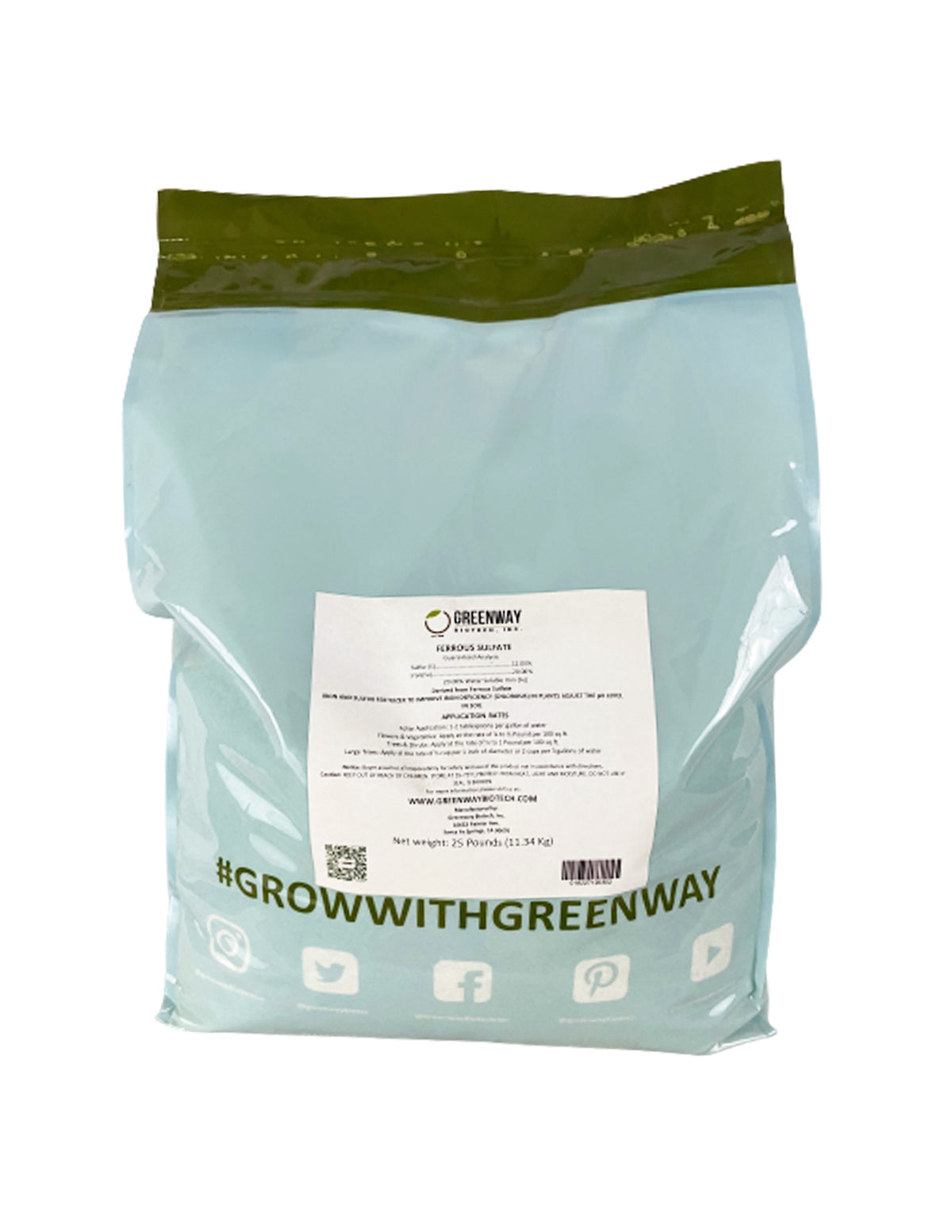

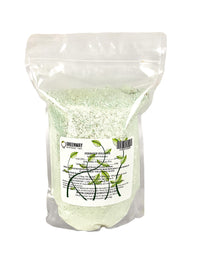
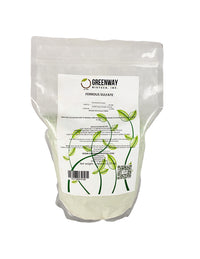
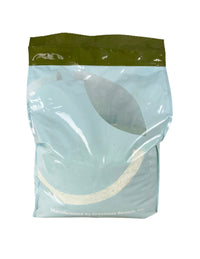
Organic Ferrous Sulfate (Iron Sulfate) | 20% Iron (Fe)
- Regular Price
- $ 19.99
- Sale Price
- $ 19.99
- Regular Price
- $ 18.99
- Unit Price
- per
Ferrous Sulfate 20% Iron Fertilizer for Plants & Iron Chlorosis
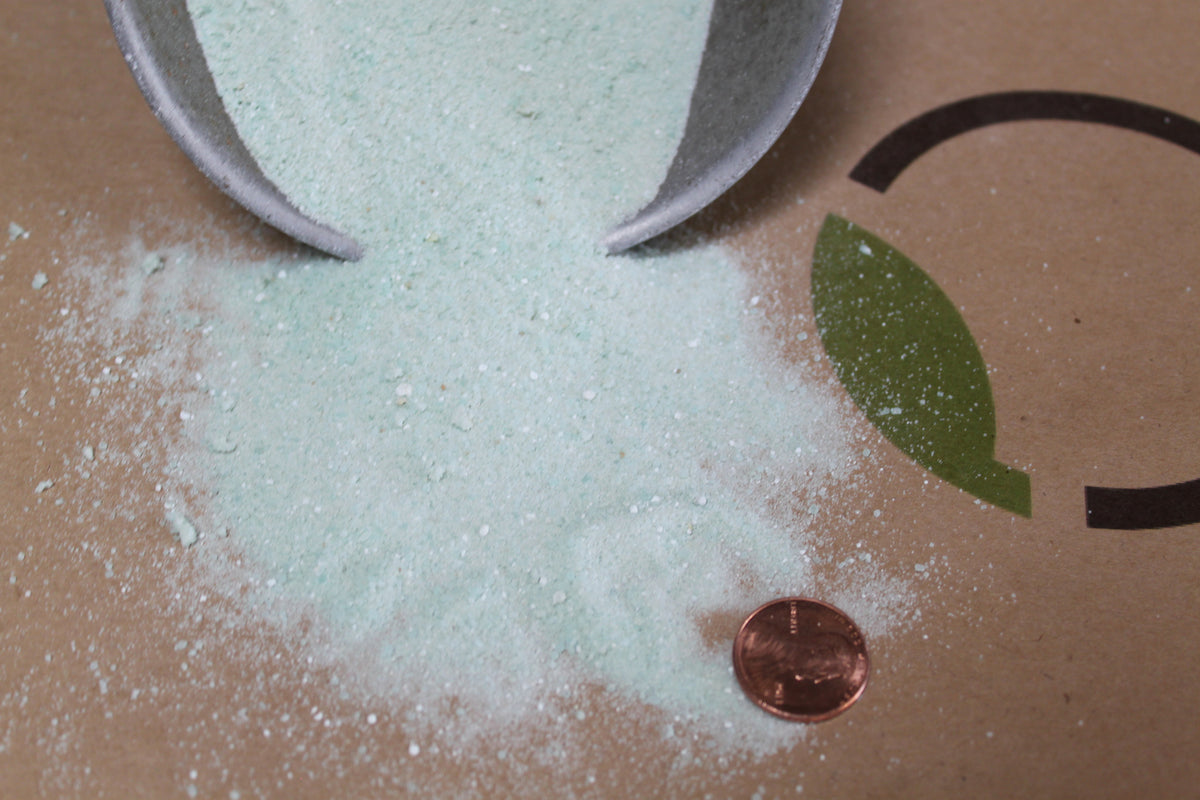
High-purity ferrous sulfate heptahydrate (iron sulfate, FeSO₄·7H₂O) for correcting iron-deficiency chlorosis, supplying sulfur, and supporting pH management in alkaline soils. Ideal for lawns, trees, shrubs, ornamentals, and garden beds. Trusted by growers since 1989 — lab tested and packaged in California.
Ideal Applications
FEATURES
🔬 20% Elemental Iron
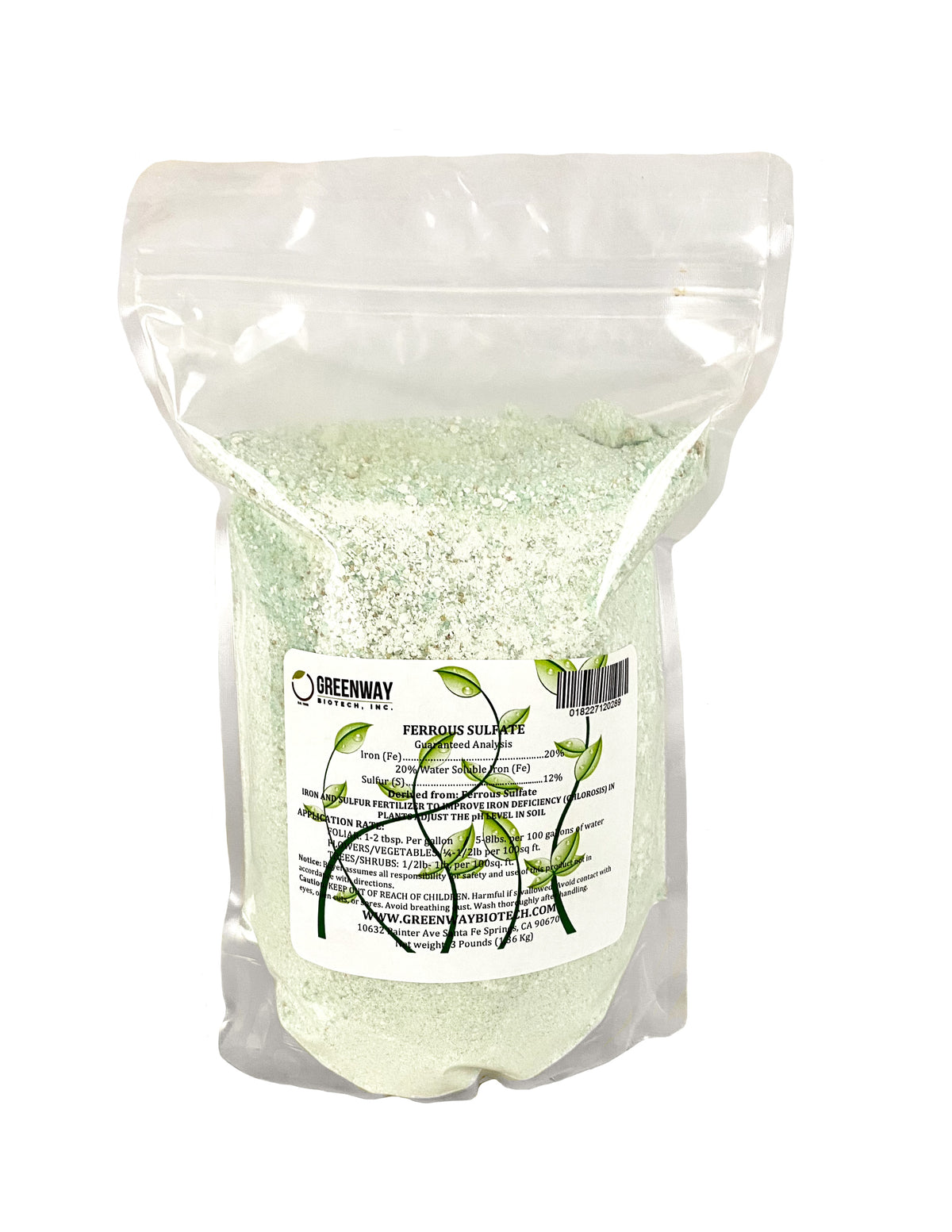
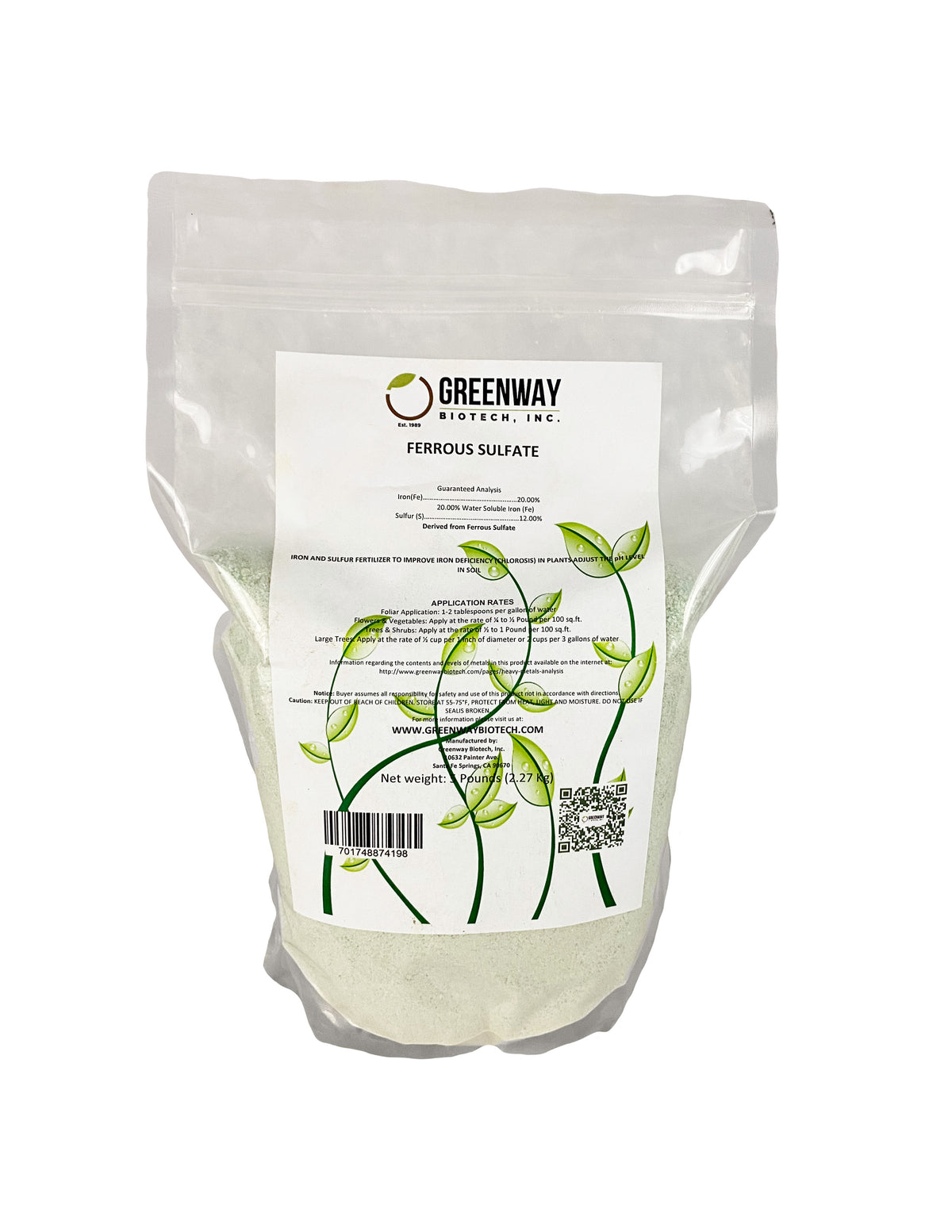
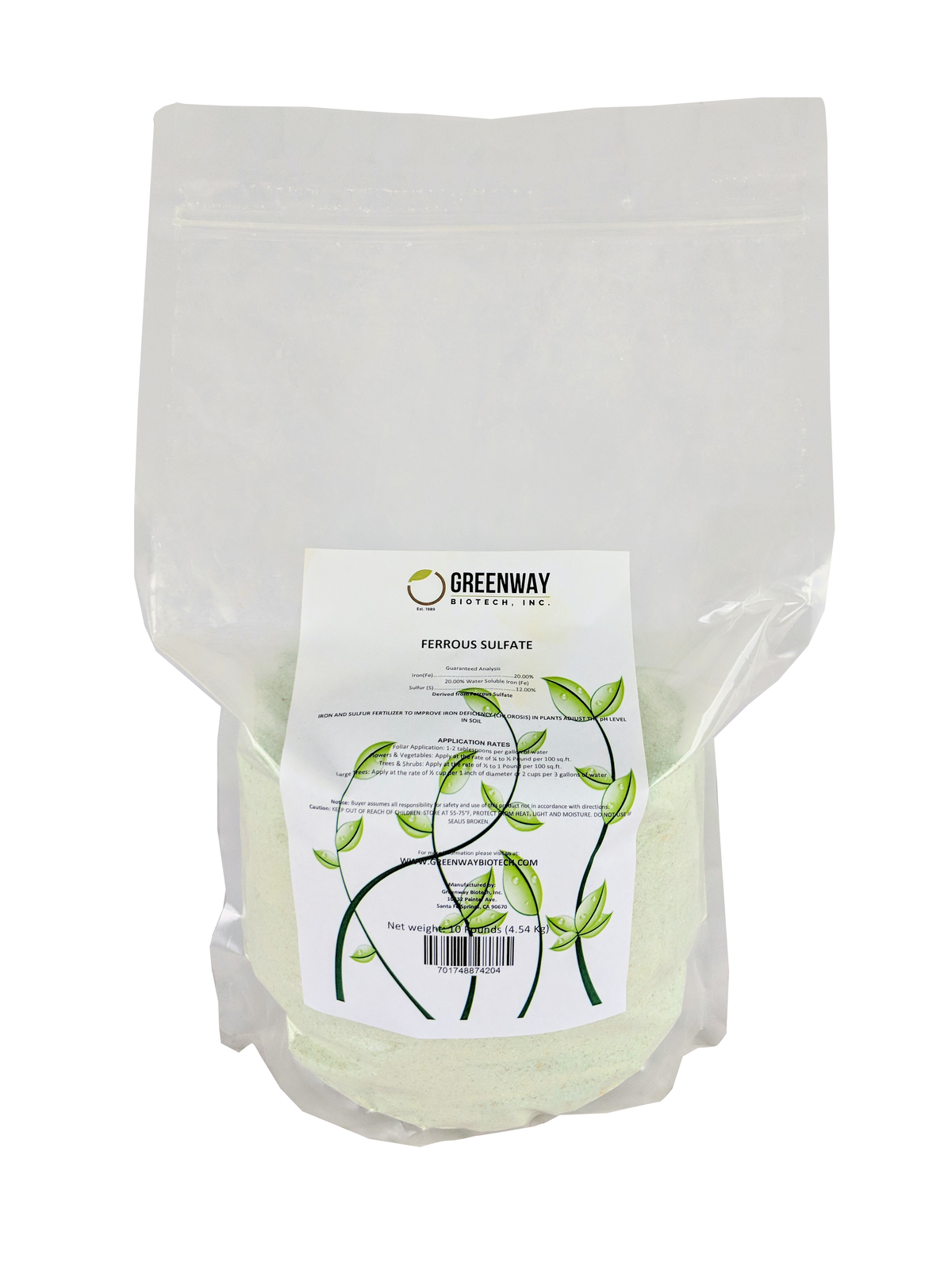
Ferrous sulfate heptahydrate (FeSO₄·7H₂O) delivers 20% soluble iron in the Fe²⁺ form, which is more quickly available to plants than ferric (Fe³⁺) sources — particularly effective when applied as a foliar spray.
⚡ 100% Water Soluble
Dissolves completely with no inert fillers. Apply as a soil drench or foliar spray. For fertigation use, always jar-test first and verify water pH and equipment compatibility before injecting into irrigation lines.
🌿 Corrects Chlorosis Fast
Foliar applications can produce a visible greening response in new growth within days. Soil applications support longer-term correction, especially where soil pH and bicarbonate conditions are also being managed.
📊 Supports Soil pH Management
Oxidation of Fe²⁺ releases hydrogen ions that help lower soil pH over time — a useful dual benefit in alkaline soils where pH and iron availability are both limiting. Highly buffered or calcareous soils may require repeated applications.
🌾 Corrects Iron & Supplies Sulfur
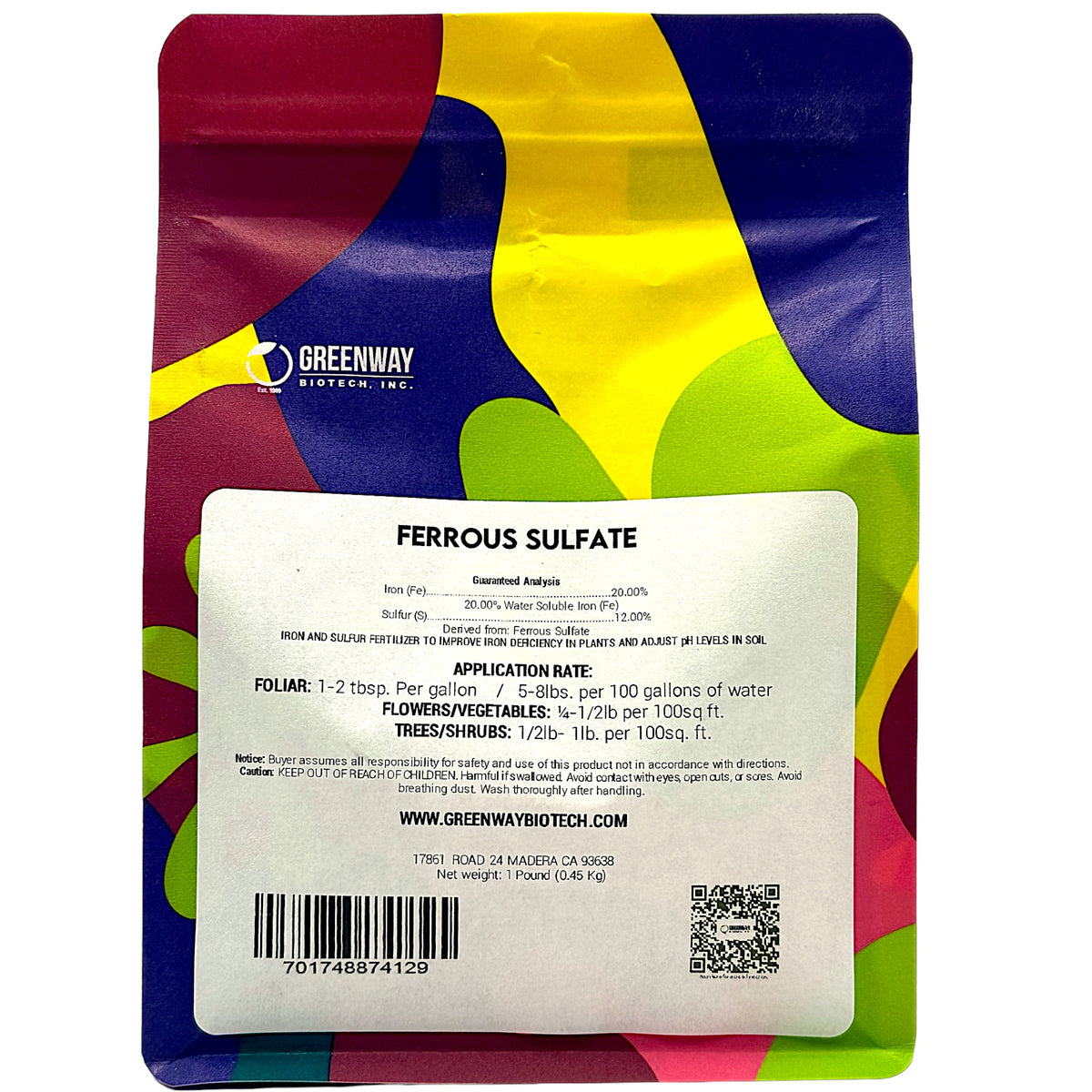
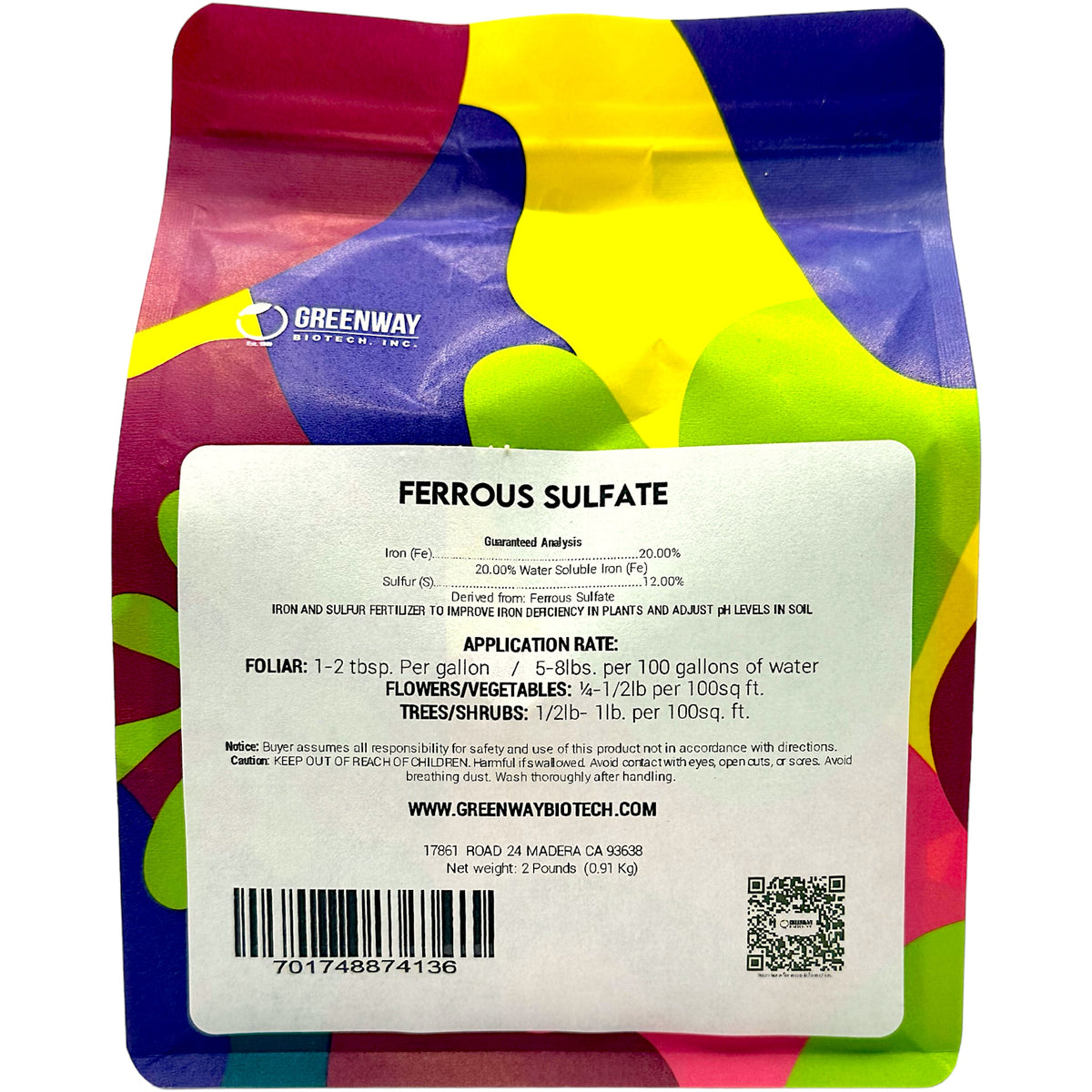
Supplies 20% iron and 11.5% sulfur. Sulfur is provided in sulfate form for direct plant uptake. Soil acidification depends on the oxidation chemistry after application — not sulfate alone.
🛡️ Anti-Caking Technology
Calcium carbonate conditioner is included at low levels to maintain free-flowing granule consistency during storage and application. Its effect on product performance at the amounts used is expected to be minimal.
🇺🇸 Packaged in California
Packaged at our FDA-registered facility in Madera, California. Each batch is independently tested for purity and heavy metal content before release.
🧪 Independently Lab Tested
Third-party laboratory analysis confirms iron concentration and screens for heavy metal content — documentation available on our certificates page.
🫐 Broad Plant Compatibility
Suitable for ornamentals, fruit trees, vegetables, turf, blueberries, azaleas, and iron-sensitive plants in alkaline or compacted soils. Best results where soil pH can be actively managed alongside iron applications.
♻️ Minimal Residue
Iron and sulfate are both essential plant nutrients — no synthetic organic residues. A naturally occurring mineral salt used in agriculture for over a century.
DERIVED FROM
Greenway Biotech Ferrous Sulfate is sourced as a single high-purity compound. The heptahydrate crystal form is selected for maximum water solubility and bioavailability.
Iron Source
Ferrous Sulfate Heptahydrate (FeSO₄·7H₂O)
Crystalline iron(II) sulfate with seven water molecules. The Fe²⁺ oxidation state is the form plants absorb most readily. Provides 20% elemental iron and 11.5% sulfur. High-purity grade ensures consistent analysis and minimal impurities.
Flow Agent
Calcium Carbonate (CaCO₃)
Food-grade conditioner included at low levels to maintain free-flowing granule consistency during storage and application. Its effect on iron availability and soil pH at the amounts used is expected to be minimal.
SCIENCE BEHIND THE FORMULA
Fe — Iron (20%)
Cofactor in chlorophyll synthesis, electron transport chains (ferredoxin), and over 100 enzymatic reactions. Iron deficiency blocks chlorophyll formation, causing interveinal chlorosis on young leaves. Fe²⁺ is the ionic form absorbed at the root surface; Fe³⁺ must first be reduced before uptake can occur.
S — Sulfur (11.5%)
Component of cysteine, methionine, and glutathione. Provided in sulfate form for direct plant uptake. Soil acidification after ferrous sulfate application depends on oxidation and hydrolysis chemistry — not the presence of sulfate alone.
Why Fe²⁺ (Ferrous) Over Fe³⁺ (Ferric)?
Most iron in soil exists as insoluble Fe³⁺ (ferric) compounds, especially above pH 6.5. Plants must first reduce Fe³⁺ to Fe²⁺ at the root surface before uptake can occur. Ferrous sulfate supplies iron in a readily soluble form that helps correct deficiency quickly — particularly as a foliar spray. In alkaline soils, dissolved Fe²⁺ can re-oxidize relatively quickly, so repeated applications or chelated iron may provide more durable results depending on soil conditions.
Why Iron Deficiency Is Common in Western Soils
Iron is the fourth most abundant element in the Earth's crust, yet deficiency is widespread in soils with pH above 7.0. At high pH, Fe²⁺ rapidly oxidizes to insoluble Fe(OH)₃. High-bicarbonate irrigation water further raises root zone pH and can contribute to recurring chlorosis even after treatment — addressing water alkalinity is often part of a complete management program.
Soil pH Mechanism
When ferrous sulfate is applied to soil, it undergoes oxidation: 4FeSO₄ + O₂ + 8H₂O → 4Fe(OH)₃ + 4H₂SO₄. The sulfuric acid produced releases H⁺ ions, helping lower soil pH over time. The reaction rate depends on soil moisture, temperature, and microbial activity, making ferrous sulfate a generally faster-acting acidifier than elemental sulfur, which requires bacterial oxidation and is slower in cool or compacted soils. In strongly calcareous soils, ferrous sulfate alone may not produce durable pH reduction without repeated seasonal applications.
APPLICATION RATES & DIRECTIONS
Iron deficiency presents as interveinal chlorosis — yellow tissue between green veins — beginning on the youngest leaves. Confirm deficiency before applying; excess iron can compete with manganese and zinc uptake.
Garden & Landscape (Soil Application)
| Plant Type | Rate per 100 sq ft | Approx. Measure |
|---|---|---|
| Flowers & Vegetables | ¼–½ lb | ½–1 cup |
| Trees & Shrubs | ½–1 lb | 1–2 cups |
| Large Trees | ½ cup per inch trunk diameter | Apply under drip line |
Foliar Spray
| Deficiency Level | Rate | Frequency |
|---|---|---|
| Preventive | 0.5–1 tbsp/gallon | Monthly |
| Mild | 1 tbsp/gallon | Every 2–3 weeks |
| Moderate | 1–1.5 tbsp/gallon | Every 2 weeks |
| Severe | 1.5 tbsp/gallon — repeat after observing plant response | Weekly until corrected |
Soil pH Adjustment (per 1,000 sq ft)
| Current pH | Target pH | Sandy Soil | Loam Soil | Clay Soil |
|---|---|---|---|---|
| 8.5 | 6.5–6.8 | 230 lbs | 285 lbs | 345 lbs |
| 8.0 | 6.5–6.8 | 140 lbs | 170 lbs | 230 lbs |
| 7.5 | 6.5–6.8 | 55 lbs | 90 lbs | 115 lbs |
| 7.0 | 6.5–6.8 | 10 lbs | 20 lbs | 35 lbs |
Specialty Applications
| Use | Rate | Method |
|---|---|---|
| Lawn Moss Management | 5 lbs/1,000 sq ft | Broadcast dry; follow all label directions |
| Structure Moss (roofs, walks) | 3 oz/gallon water | Spray; rinse after 24 hrs to prevent staining |
| Hydroponics (with caution) | Use only in carefully controlled formulations | Not preferred for recirculating systems — chelated iron sources are more suitable for most crops. Monitor EC closely if used. |
HOW TO USE
Foliar Spray (Fastest Results)
- Dissolve 0.5–1 tbsp of ferrous sulfate per 1 gallon of water as a starting rate. Use warm water for faster dissolution.
- Fill a clean sprayer and apply to foliage until leaves are evenly wet but not dripping.
- Spray in the early morning or evening — avoid midday heat to reduce leaf scorch risk.
- Test on a small area of sensitive plants first; wait 24 hours before full application.
- Repeat every 1–2 weeks until new growth shows healthy green color. Increase rate cautiously only after observing plant response.
- Avoid tank-mixing with phosphate-containing fertilizers. Monitor phosphorus levels in soils prone to recurring iron chlorosis.
Soil Application
- Measure the treatment area in square feet and calculate required amount from the Application Rates table.
- Broadcast granules evenly over the soil surface or work into the top 2–3 inches.
- Water thoroughly after application to begin dissolving and moving iron into the root zone.
- For trees, apply under the drip line — not against the trunk — at ½ cup per inch of trunk diameter.
- Sweep any granules off concrete, brick, or stone surfaces immediately to prevent staining.
Fertigation
- Ferrous sulfate may be used in some irrigation applications where water quality, pH, and equipment compatibility have been verified.
- Always jar-test first. Avoid combining with incompatible inputs (phosphates, calcium fertilizers, highly alkaline water) in the same tank.
- Use separate stock tanks for ferrous sulfate and other concentrated fertilizer salts. Dilute each independently before combining in the main tank.
Lawn Moss Management
- For lawns, broadcast 5 lbs per 1,000 sq ft dry following all label directions. Moss typically turns black within 7–10 days; rake out dead moss before reseeding.
- For roofs and structures, dissolve 3 oz per gallon and spray. Allow 24 hours of contact time, then rinse thoroughly to prevent surface staining.
- Test on a small area first. For long-term moss management, address the underlying conditions — shade, compaction, drainage, and soil pH — that favor moss growth.
pH Adjustment
- Test current soil pH with a reliable meter or test kit before applying.
- Use the pH Adjustment table to determine a starting rate for your soil type and current pH. Treat these figures as estimates — actual response varies with soil buffering, free lime, and irrigation water alkalinity.
- Broadcast evenly and water in. Re-test pH after 4–6 weeks before applying additional product.
- Work in stages — do not attempt to change pH more than 0.5–1.0 units per application. Strongly calcareous soils may require repeated seasonal applications.
Hydroponics & Soilless Systems
Pro Tip: Combine Foliar + Soil for Severe Chlorosis
When plants show severe interveinal chlorosis (leaves nearly white), a foliar spray provides a rapid cosmetic response while a simultaneous soil application helps address the underlying pH condition. Apply foliar first for the quick visual improvement, then broadcast soil product and water in. For best long-term results, also address irrigation water alkalinity if bicarbonate levels are high.
When Ferrous Sulfate Is the Right Choice
- Soil pH is above 7.0 and plants show interveinal chlorosis on new growth
- You need a fast-acting iron source for immediate foliar correction
- You want to support soil pH reduction while simultaneously supplying iron
- Lawn moss management is needed and the product is labeled for that use
- Acid-loving plants (blueberries, azaleas, gardenias, camellias) are struggling in alkaline conditions
When to Consider Other Options
- Soil pH is already below 6.5 — iron deficiency at low pH may indicate a different nutrient interaction; consider Chelated Iron EDTA 13% for better stability across pH ranges
- Hydroponic or soilless systems — use Chelated Iron DTPA 11% for pH-stable iron in nutrient solution
- Soil is strongly calcareous — repeated applications of ferrous sulfate alone may not produce durable pH correction; consult your local extension service
- Symptoms appear on older leaves first — this pattern suggests a different deficiency (manganese or nitrogen), not iron
FERROUS SULFATE CALCULATOR
SAFETY & HANDLING
Personal Protective Equipment (PPE)
- Wear gloves when handling dry product — ferrous sulfate can stain skin and cause mild irritation with prolonged contact
- Wear safety glasses when mixing concentrated solutions or applying as a spray
- Consider a dust mask (N95) when handling in windy conditions to avoid inhalation of fine powder
- Wear old or protective clothing — ferrous sulfate causes permanent rust-colored stains on fabric
Storage Guidelines
- Store in a cool, dry location away from heat sources and direct sunlight
- Keep in the original sealed bag or transfer to an airtight container — ferrous sulfate is hygroscopic and will absorb moisture and cake if exposed to humid air
- Store away from alkaline materials (lime, wood ash) which can neutralize the product
- Keep out of reach of children and pets
- Do not store in metal containers — ferrous sulfate is corrosive to iron and steel
Application Precautions
- Staining risk: Keep product away from concrete, stone, brick, siding, and light-colored surfaces. Stains are very difficult to remove once dry
- Do not over-apply: Excessive iron can antagonize manganese and zinc uptake. Always apply based on measured deficiency, not as a general preventive at high rates
- Protect nearby plants: At moss-control rates (5 lbs/1,000 sq ft), the product will also temporarily discolor and stress turfgrass — this is normal and recovery occurs within 2–3 weeks
- Water bodies: Do not allow product to wash into natural waterways, ponds, or storm drains at landscape rates
- Not preferred for soilless/hydroponic systems — use chelated iron forms (EDTA or DTPA) for reliable results in recirculating nutrient solutions
- Compatibility: Avoid mixing with lime, wood ash, or phosphate fertilizers. Use separate stock tanks and jar-test before fertigation
First Aid
- Eye contact: Flush immediately with clean water for 15 minutes, holding eyelids open. Seek medical attention if irritation persists
- Skin contact: Rinse thoroughly with soap and water. Remove stained clothing. Seek medical attention if irritation develops
- Ingestion: Do not induce vomiting. Rinse mouth with water and drink 1–2 glasses of water. Contact Poison Control (1-800-222-1222) or seek medical attention immediately
- Inhalation: Move to fresh air. If breathing difficulty persists, seek medical attention
Refer to the Safety Data Sheet (SDS) for complete safety information.
COMPLETE YOUR SYSTEM
Chelated Iron — pH-Stable Alternatives
Chelated Iron EDTA 13%
EDTA-chelated iron stays plant-available across a wider pH range. Ideal for mixed plantings where soil pH cannot be easily lowered.
Chelated Iron DTPA 11%
DTPA chelate is one of the most reliable choices for hydroponic and soilless systems. Remains stable in nutrient solution up to pH 7.0.
Complementary Micronutrients
Chelated Manganese EDTA
Manganese deficiency presents similarly to iron chlorosis. Correct both when symptoms are ambiguous or when pH is above 7.5.
Chelated Zinc EDTA
Zinc availability also declines at high pH. Often deficient alongside iron in alkaline, calcareous soils.
Soil Acidification Support
Ammonium Sulfate 21-0-0
Among the most acidifying nitrogen sources available. Pairs with ferrous sulfate for a sustained, multi-season pH reduction program in alkaline soils.
Gypsum (Calcium Sulfate)
Improves soil structure in sodic or compacted soils without significantly changing pH — a good complement when structure, not pH, is the limiting factor.
FREQUENTLY ASKED QUESTIONS
Ferrous Sulfate vs. Chelated Iron — Which Is Right for You?
| Factor | Ferrous Sulfate 20% Fe | Chelated Iron EDTA 13% | Chelated Iron DTPA 11% |
|---|---|---|---|
| Best soil pH range | Below 7.0 | Up to pH 6.5 | Up to pH 7.0 |
| Soil application | ✅ Yes | ✅ Yes | ✅ Yes |
| Foliar application | ✅ Yes (with care) | ✅ Yes | ✅ Yes |
| Hydroponics | ⚠️ Not preferred | ⚠️ Stable to pH 6.5 | ✅ Preferred (stable to pH 7.0) |
| Soil pH support | ✅ Yes — acidifying | ❌ No pH effect | ❌ No pH effect |
| Moss management | ✅ Yes (label use) | ❌ No | ❌ No |
| Relative cost | Lowest | Higher | Higher |
What causes iron deficiency chlorosis in plants?
Iron chlorosis occurs when plants cannot access sufficient Fe²⁺ for chlorophyll synthesis, producing the characteristic yellow tissue between green veins on young leaves. The most common cause is not a lack of iron in the soil — it is high soil pH (above 7.0) that converts soluble Fe²⁺ into insoluble Fe(OH)₃ that roots cannot absorb. Other contributing factors include waterlogged soils, high phosphorus levels, and soils high in bicarbonate from irrigation water. Ferrous sulfate corrects both the iron deficiency and the underlying pH condition. For a deeper look at how iron functions in plant growth, see What Are the Effects of Iron on Plant Growth?
How quickly will ferrous sulfate correct yellowing leaves?
Foliar applications typically show a visible greening response in new growth within 5–10 days as iron becomes available directly through the leaf surface. Existing chlorotic leaves will not fully green back — improvement is most obvious in the new growth that emerges after treatment. Soil applications work more gradually, acidifying the root zone over 2–6 weeks as the product oxidizes and reacts with soil minerals. For severe or persistent chlorosis, combining a foliar spray for immediate response with a soil application for long-term correction gives the best outcome.
Will ferrous sulfate stain my driveway or patio?
Yes — this is one of the most important handling precautions. Ferrous sulfate causes rust-brown stains on concrete, stone, brick, pavers, and painted surfaces that are very difficult to remove once the iron oxidizes and sets into the material. Always sweep dry granules off hardscape immediately after application before watering. Rinse foliar spray off sidewalks and driveways right away. If staining does occur, oxalic acid-based rust removers can reduce (though rarely eliminate) discoloration.
Can I use ferrous sulfate in hydroponics or container systems?
Ferrous sulfate is not recommended for hydroponic or soilless nutrient solutions. Fe²⁺ is unstable in solution and rapidly oxidizes to Fe³⁺ (insoluble) at pH levels above 5.5–6.0, precipitating out of solution. For hydroponic and container applications, Chelated Iron DTPA 11% (stable to pH 7.0) or Chelated Iron EDTA 13% (stable to pH 6.5) are more suitable choices. For more on choosing between sulfate and chelated iron, see Sulfate vs. Chelated Fertilizers: Key Differences.
How does ferrous sulfate work for lawn moss management?
Ferrous sulfate is commonly used as part of lawn moss management programs — iron at the rates used for moss control is toxic to moss cells at concentrations that established turfgrass can generally tolerate. At 5 lbs per 1,000 sq ft, moss typically turns black within 7–10 days. After it turns black, rake it out thoroughly before overseeding bare areas. For lasting results, address the underlying conditions that favor moss — shade, compaction, poor drainage, and low soil pH. Follow all label directions. For more tips on long-term moss management, see The Real Reason Why Moss Keeps Growing in Your Garden.
Is ferrous sulfate safe around pets and wildlife?
Once watered in and dry, ferrous sulfate at normal fertilizer rates poses minimal risk to pets walking on treated areas. However, direct ingestion of dry product can cause gastrointestinal upset in dogs and cats — keep pets off treated areas until the product has been thoroughly watered in and the soil surface is dry. Do not allow product to wash into water features or natural ponds where fish are present, as iron toxicity can affect aquatic life at elevated concentrations.
What is the difference between ferrous sulfate and chelated iron?
Ferrous sulfate supplies iron as the free Fe²⁺ ion — effective and economical in acid to neutral soils (pH below 6.5–7.0), but rapidly converts to insoluble Fe³⁺ in alkaline conditions. Chelated iron (EDTA or DTPA) binds iron inside an organic molecule that protects it from reacting with soil pH, keeping it plant-available across a broader pH range. For most alkaline garden soils, starting with ferrous sulfate and monitoring pH response is a practical first approach. For a full comparison, see Sulfate vs. Chelated Fertilizers: Key Differences and Garden Benefits.
GROW WITH CONFIDENCE
Quality & Purity Standards
- High-purity ferrous sulfate heptahydrate with confirmed 20% elemental iron analysis
- Independently tested by third-party laboratory for iron concentration and heavy metal content
- Packaged at our FDA-registered facility in Madera, California
- Calcium carbonate anti-caking agent ensures consistent flow and accurate application
- Every batch tested for heavy metals — documentation available on request
Returns & Guarantee
We stand behind every product with a 90-day money-back guarantee. If you are not completely satisfied, return the unused portion in its original packaging and we will process a full refund. See our Returns & Shipping page for complete details.
Sustainability
- Precision dosing guidance reduces over-application and nutrient runoff
- Resealable packaging extends product shelf life and reduces waste
- Iron and sulfate are naturally occurring mineral nutrients with no synthetic organic residues
- Supporting soil health through pH management reduces long-term fertilizer dependency
Charitable Contributions
1% of all profits support our foundation focused on improving educational opportunities for children. Learn more at greenway.foundation.
About Greenway Biotech, Inc.
Greenway Biotech, Inc. has been formulating and distributing high-quality fertilizers and plant nutrition products since 1989 — over 35 years serving commercial growers and home gardeners across the United States. Based in Madera, California, our products are packaged at our FDA-registered facility and backed by independent third-party testing. We are committed to technical accuracy, regulatory compliance, and practical products that work.
DOCUMENTS
DISCOVER MORE
Learn how to diagnose iron deficiency, compare iron sources, and build a longer-term chlorosis correction plan.
- The Real Reason Why Moss Keeps Growing in Your Garden — Identify and fix the root causes
- A Guide to Natural Herbicides, Pesticides and Fungicides — Including ferrous sulfate as a natural moss killer
- What Are the Effects of Iron on Plant Growth? — How iron deficiency develops and how to fix it
- Sulfate vs. Chelated Fertilizers: Key Differences — When to use ferrous sulfate vs. chelated iron
- What Is the Best Organic Way to Get Rid of Moss in Your Lawn? — Step-by-step application guide
HAVE QUESTIONS?
Check out our full FAQ page or contact our experts for personalized advice.