Kelp Meal Fertilizer 2-0-4
- Regular Price
- $ 21.99
- Sale Price
- $ 21.99
- Regular Price
- $ 21.99
Sold Out
- Unit Price
- per
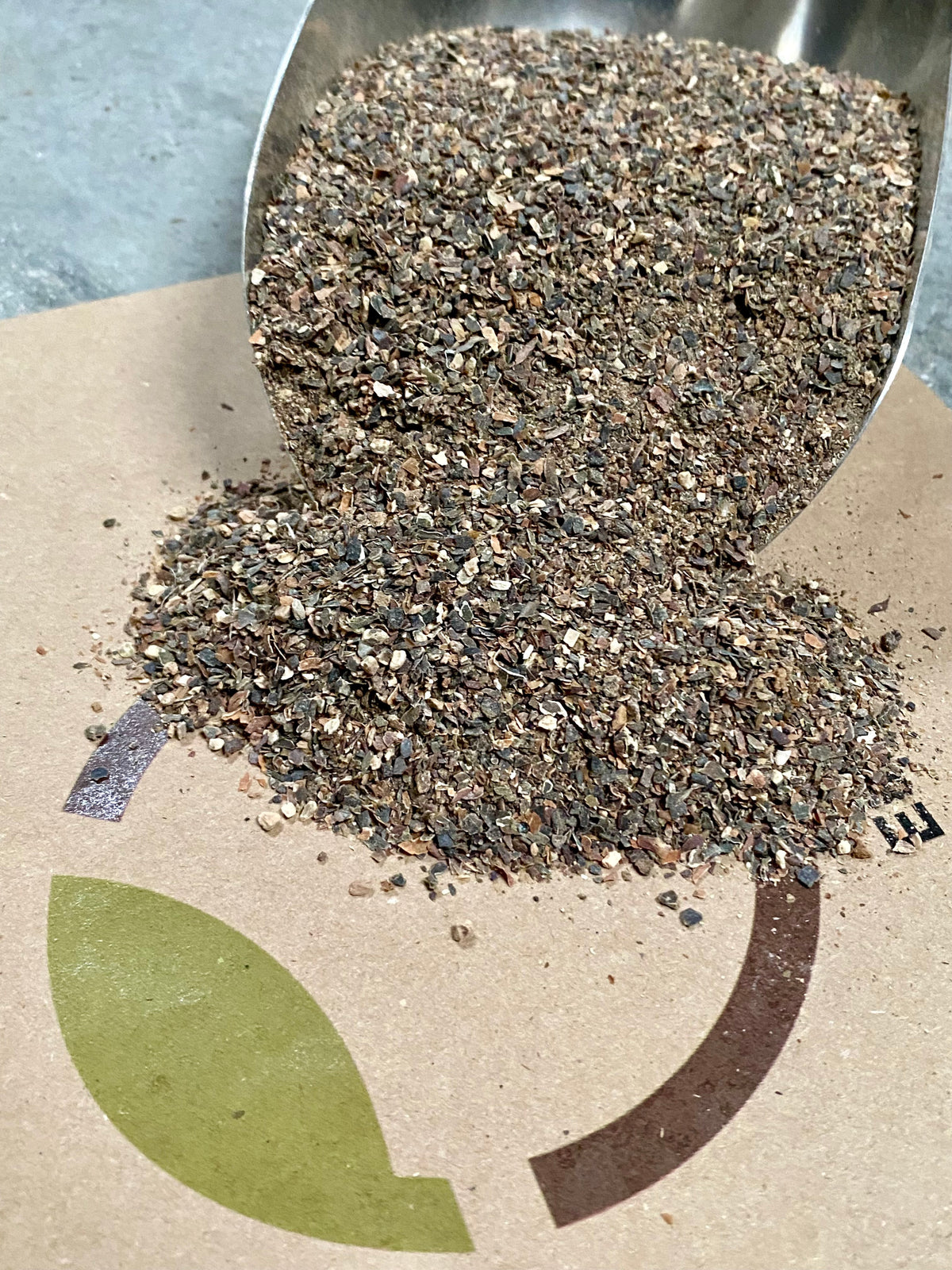
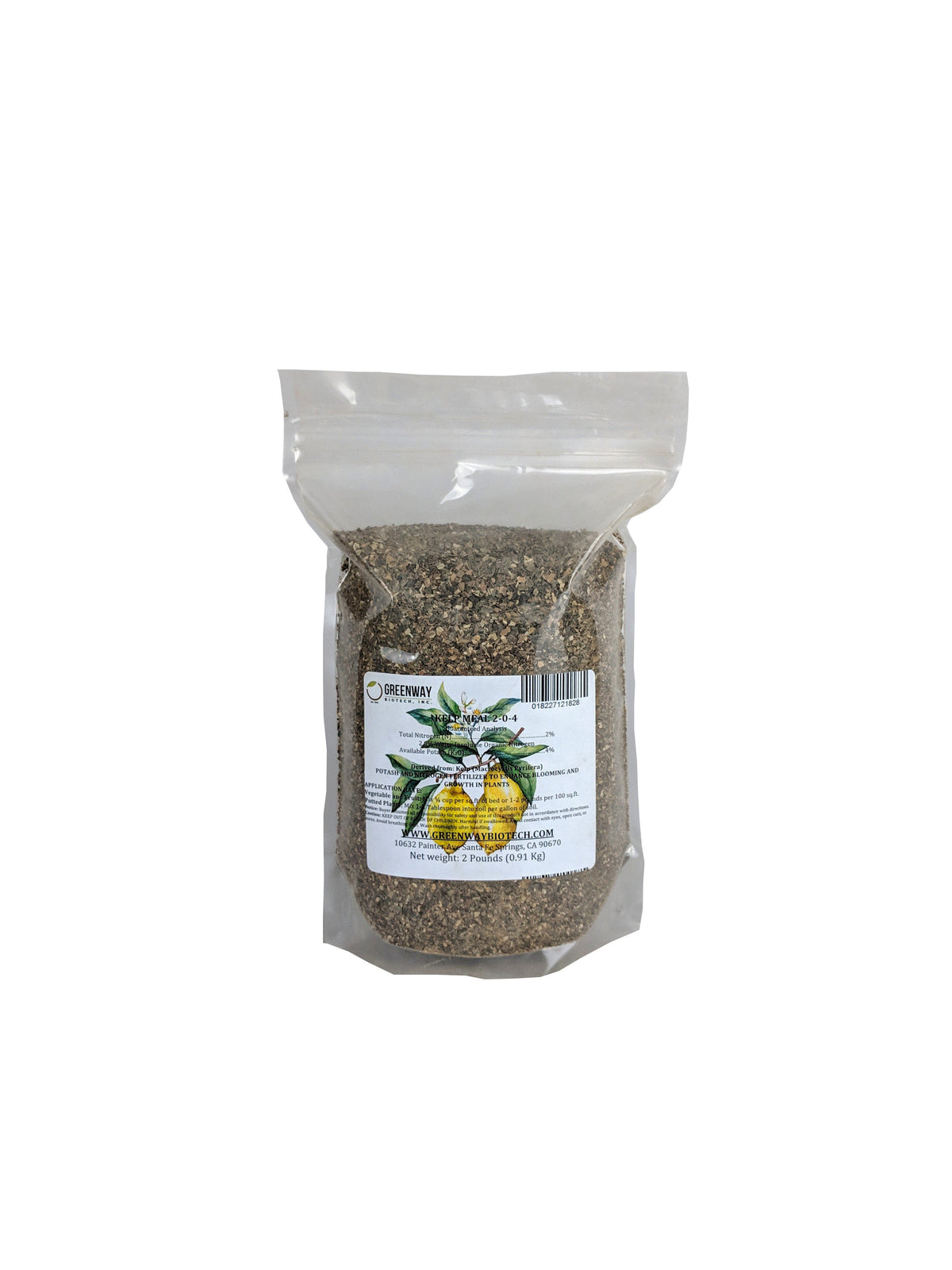
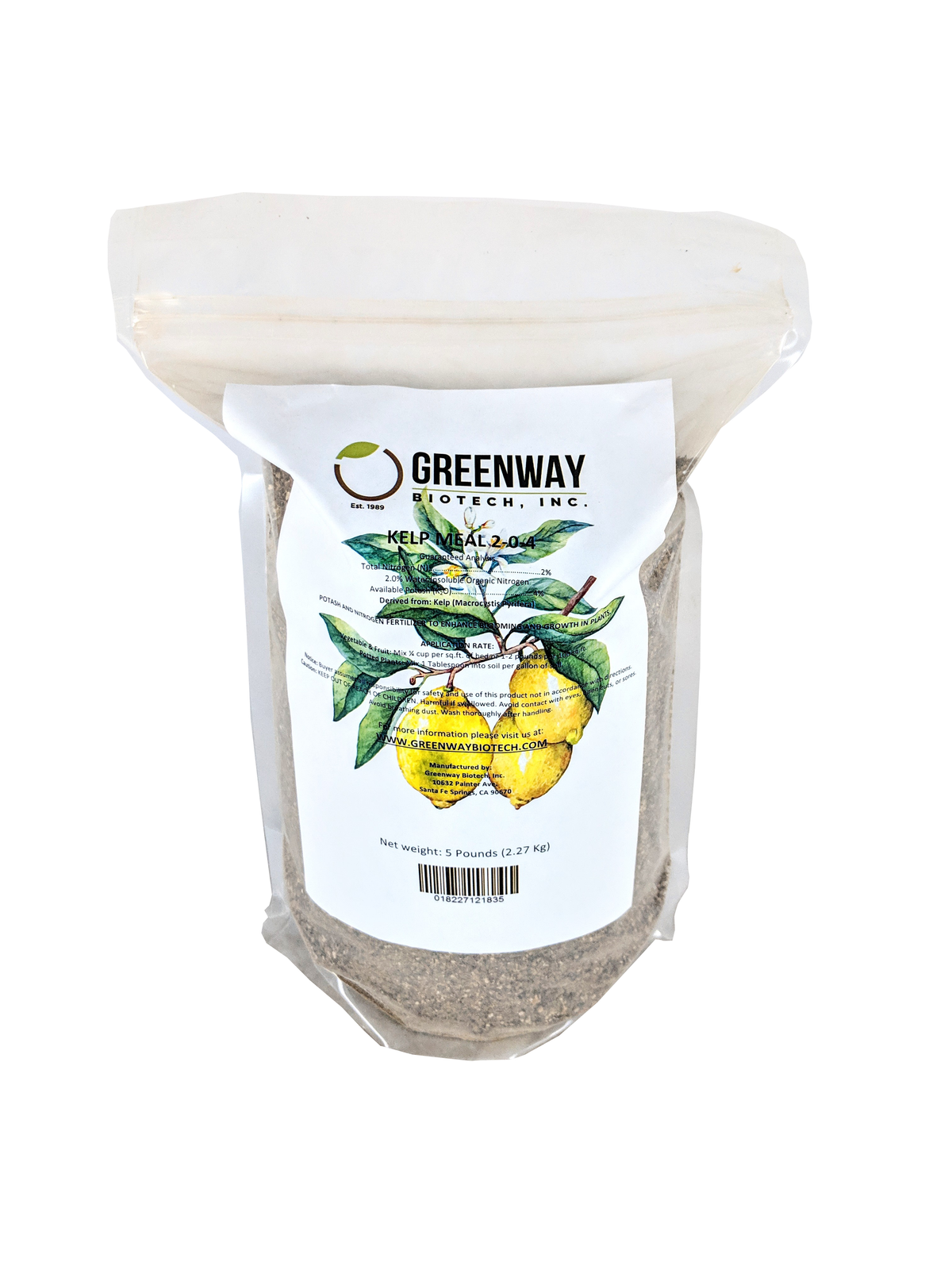
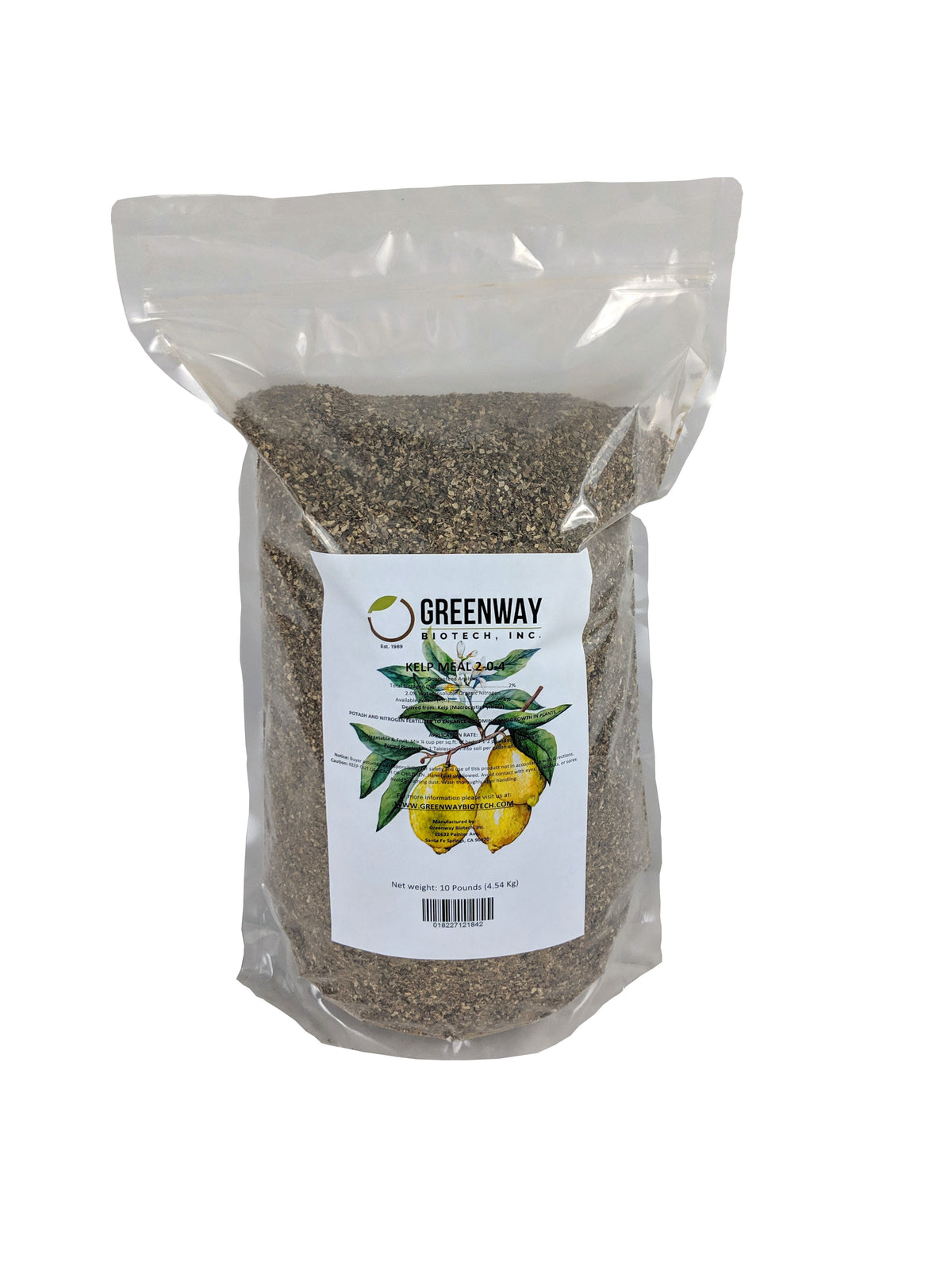
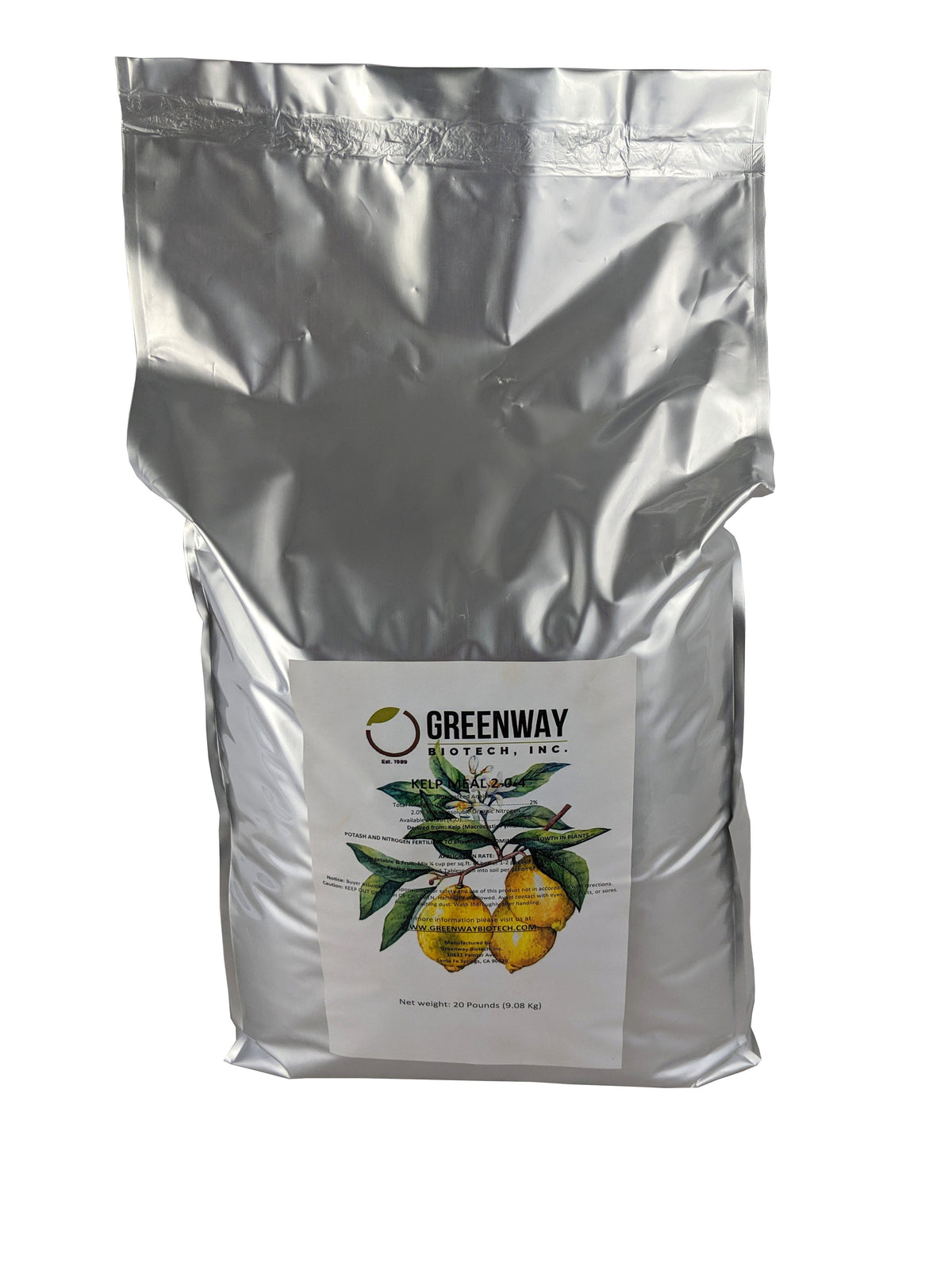
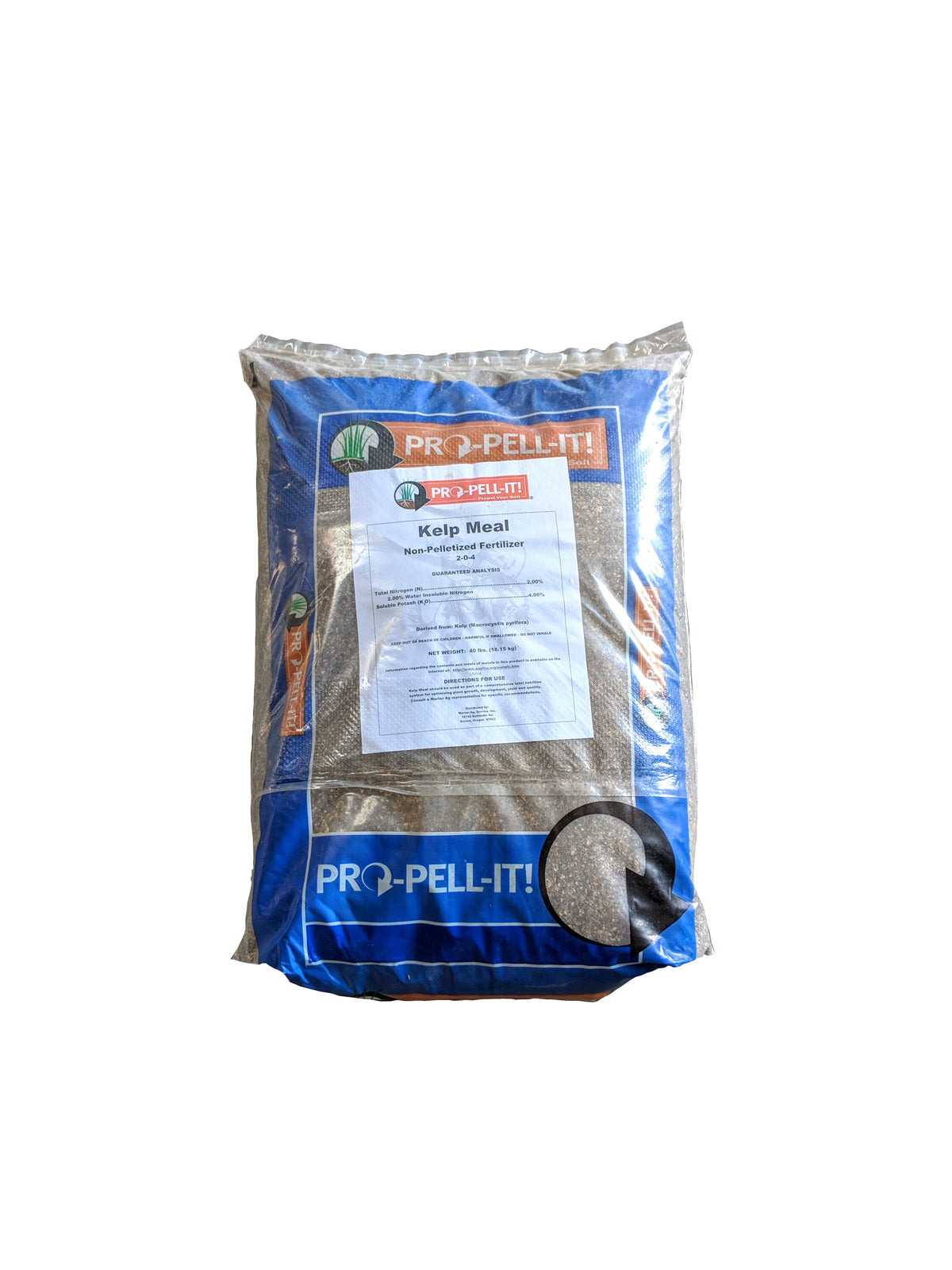
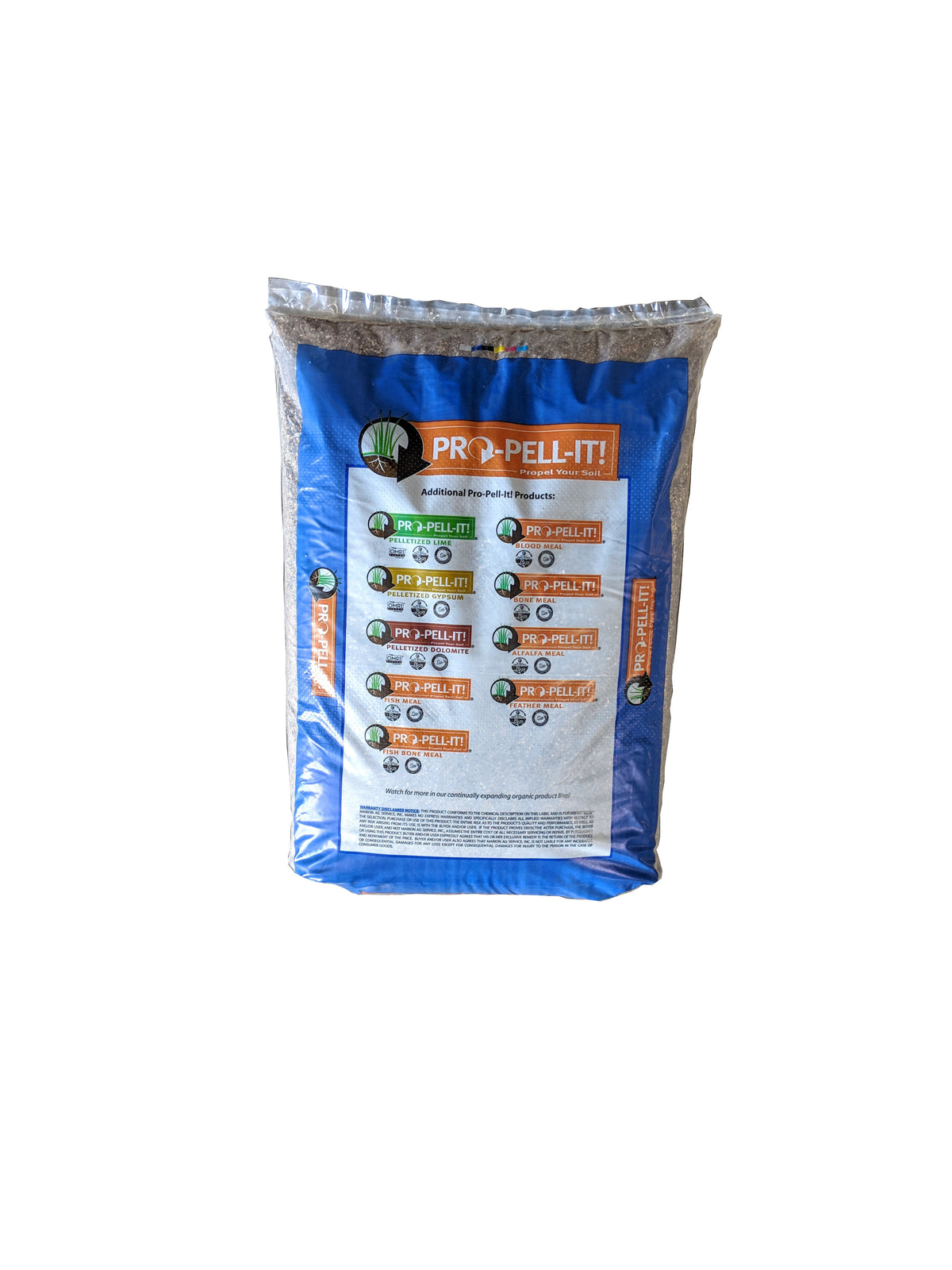
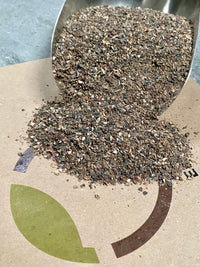
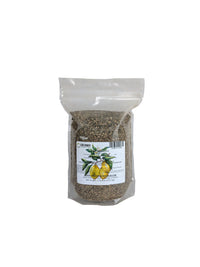
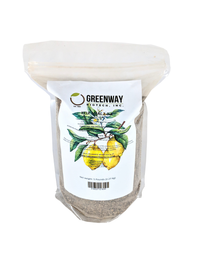
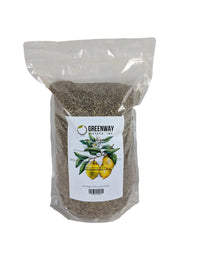
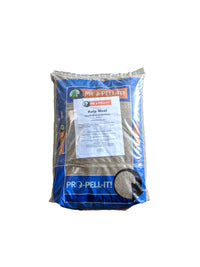
Repackaged from OMRI Listed® Ascophyllum nodosum, our kelp meal delivers 60+ ocean-sourced trace minerals, natural cytokinins, auxins, gibberellins, and stress-fighting betaines. Slow release over 4–6 months. CDFA registered, third-party lab tested, and built to support — not replace — your nitrogen and phosphorus program.
Find your size → Calculate how much I need60+elements
Ocean-sourced trace minerals in naturally balanced proportions
4% K₂O
Soluble potash for stomatal regulation and stress tolerance
4–6months
Slow microbial breakdown for season-long feeding
35+yrs
Family-owned California fertilizer manufacturer
Coverage is calculated at the standard biostimulant rate of 1 lb per 100 sq ft. For new bed prep or transplant pockets at lighter rates, your bag will go further. See the Application Rates section for exact rates by use case — and remember kelp meal is a supplement to your N and P program, not a stand-alone fertilizer.
| Bag Size | Garden Coverage | Transplant Pockets | Best For |
|---|---|---|---|
| 1 lb | ~100 sq ft | ~50 transplants (1 tsp each) | Trial & container gardens |
| 2 lb | ~200 sq ft | ~100 transplants | Raised beds & small plots |
| 5 lb | ~500 sq ft | ~250 transplants | Most popular |
| 10 lb | ~1,000 sq ft | ~500 transplants | Backyard vegetable gardens |
| 25 lb | ~2,500 sq ft | ~1,250 transplants | Market gardens & orchards |
| 50 lb | ~5,000 sq ft | ~2,500 transplants | Best value |
Kelp meal earns its place in the program when the goal is biostimulation, trace mineral supplementation, or stress mitigation — not when you need a rapid nitrogen or phosphorus push.
1 tsp per planting hole, mixed into backfill. Kelp's auxins can support rapid root establishment and may help reduce transplant shock.
Apply 1–2 weeks before anticipated frost, heat, or drought. Research suggests betaines may support osmotic regulation during temperature extremes.
0.5–1 tablespoon per gallon of media at mixing time. Adds trace minerals and growth hormones to soilless mixes that lack them.
0.5–1 lb per 100 sq ft worked into the top 3 inches. A foundational biostimulant layer to pair with your N and P amendments.
0.5–1 lb per inch of trunk diameter, broadcast around the drip line. Annual spring application, watered in thoroughly.
1/4 cup per gallon water, steeped 24–48 hours, then diluted 1:10. Use as a foliar spray or soil drench every 2–4 weeks.
Peer-reviewed literature (Cornell Cooperative Extension, University of São Paulo) consistently values kelp meal as a biostimulant and trace mineral source — not a macronutrient fertilizer. Here's what the research suggests it actually does.
Iron, manganese, zinc, copper, boron, molybdenum, cobalt, iodine, selenium, calcium, magnesium, sulfur — and more than 50 additional elements in naturally balanced proportions from ocean water. Pair with chelated micros like Chelated Iron EDTA when a specific deficiency needs targeted correction.
The biostimulant compounds in Ascophyllum nodosum have been studied for their role in cell division, root elongation, flowering initiation, and osmotic stress regulation. Bhardwaj et al. 2021 (Plants, MDPI) found a 0.10% ANE concentration optimal for shoot growth — more is not better.
Unlike water-soluble salts, kelp meal releases nutrients gradually as soil microbes break it down. Best mineralization above 55°F. Apply at planting or once soils have warmed for the most predictable release curve.
Our kelp meal is repackaged from OMRI Listed® Ascophyllum nodosum, suitable for use in certified organic crop production. CDFA registered, third-party lab tested for heavy metals with results consistently well below required limits.
Kelp meal contains no significant available phosphate (P₂O₅), which makes it easy to pair with phosphorus sources without overloading. Stack with Bone Meal 3-15-0 or Fish Bone Meal 4-17-0 when bloom support is needed.
At 2% N and slow microbial release, kelp meal will not burn roots at recommended rates. Mix 1 tsp into the planting hole, set the transplant, water in — no buffer layer required. For seed starting, use at half the container rate.
0.10% ANE
The peer-reviewed optimum — not "more is better"
Kelp meal is not a concentrated nutrient source. At 2-0-4 it provides modest nitrogen and meaningful potassium, but published research consistently shows the value lies elsewhere — in the biostimulant compounds and 60+ trace minerals that NPK salts simply do not contain. The Cornell Cooperative Extension Sugar Kelp Fertilizer Pilot Study (Menasha & Aller, 2020) tested dry kelp meal as both a low-rate biostimulant (75 lbs/acre) and a high-rate amendment (150 lbs/acre) and found measurable soil chemistry improvements without yield loss when paired with reduced synthetic fertilizer.
Bhardwaj et al. 2021 (Plants, MDPI) tested Ascophyllum nodosum extract concentrations on Vigna aconitifolia and found 0.10% optimal for shoot growth, with diminishing or suppressing effects above 0.50%. This establishes a principle that runs counter to typical fertilizer thinking: with biostimulants, the dose-response curve plateaus and then turns negative. Doubling the rate does not double the benefit.
The active compounds are well-characterized. Auxins promote lateral root formation and cell elongation. Cytokinins drive cell division and delay leaf senescence. Gibberellins support stem elongation and flowering initiation. Betaines, the stress-protective compounds, may help plants maintain osmotic balance and membrane stability under frost, heat, and drought — which is why kelp meal is often applied 1–2 weeks before an anticipated stress event rather than during one. To get the most out of these compounds, keep rates moderate and pair kelp meal with a primary N source.
For deeper coverage of how organic amendments feed soil biology, see The 5 Fertilizers That Will Also Encourage Soil Health and What is the Best Kelp Fertilizer?
Rates below are adapted from peer-reviewed and university extension research on 1-0-2 Ascophyllum nodosum kelp meal, halved to reflect this product's 2-0-4 nutrient concentration. For biostimulant-only use (the research-supported primary role), use the upper end of each range.
Quick answer: 0.5–1 lb per 100 sq ft for new beds; 1–1.5 lb per 100 sq ft as an established-bed side-dress.
| Use Case | Rate | Source | Notes |
|---|---|---|---|
| New bed prep | 0.5–1 lb per 100 sq ft | Cornell Ext. (adj. for 2-0-4) | Work into top 3" of soil before planting |
| Established bed side-dress | 1–1.5 lb per 100 sq ft | UMass Amherst | Twice per season; broadcast and lightly incorporate |
| Leafy greens & salad crops | 0.5–1 lb per 100 sq ft | WSU Ext. | Pre-plant only; pair with N source for heavy feeders |
| Tomatoes, peppers (per plant) | 1 tbsp at planting + monthly side-dress | Cornell Ext. | Combine with bone meal at transplant |
| Root vegetables (carrots, beets) | 0.5 lb per 100 sq ft | WSU Ext. | Incorporate deeply to support root zone access |
| Berries & perennials | 0.5–1 lb per 100 sq ft | UMass Amherst | Spring and post-harvest applications |
📋 Soil test first: Rates above are general guidelines based on typical soil test levels and biostimulant research literature. Actual rates should be confirmed by a current soil test and consultation with your local cooperative extension service. Kelp meal is a supplement, not a stand-alone NPK source — pair with a primary N source like Blood Meal 13-0-0 or Feather Meal 12-0-0 for heavy feeders.
Sources: Cornell Cooperative Extension (Menasha & Aller, 2020, NEIWPCC Sugar Kelp Fertilizer Pilot Study); UMass Amherst Center for Agriculture, Food & Environment; Washington State University Extension (C180 Organic Fertilizers); Utah State University Extension (Koenig, Selecting and Using Organic Fertilizers).
Quick answer: 1 teaspoon per planting hole, mixed into the backfill soil.
| Plant Type | Rate | Source | Notes |
|---|---|---|---|
| Vegetable seedlings (tomato, pepper, brassicas) | 1 tsp per hole | Cornell Ext. (adj. for 2-0-4) | Mix with backfill; water in well |
| Cell-tray seedlings (lettuce, greens) | 0.5 tsp per hole | Cornell Ext. | Lower rate for smaller root systems |
| Larger transplants (4-inch pots) | 1–2 tsp per hole | UMass Amherst | Mix into root zone, not direct contact |
| Shrubs & perennials | 1–2 tbsp per planting hole | UMass Amherst | Mix into backfill soil |
| Seed-starting medium | 0.5 tbsp per gallon | Cornell greenhouse trials | Half the standard container rate |
| Bare-root tree planting | 0.25–0.5 lb per hole | UMass Amherst | Mix with backfill; avoid direct root contact |
💡 Why so low: Older retail labels often suggested 1/4 cup per transplant. Current peer-reviewed research (Cornell, Bhardwaj 2021) consistently finds biostimulant benefits at much lower rates, with no additional yield benefit at higher rates. The 1 tsp rate aligns with current extension guidance.
Sources: Cornell Cooperative Extension greenhouse transplant trials (Menasha & Aller, 2020); Bhardwaj et al. 2021 (Plants, MDPI); UMass Amherst Center for Agriculture, Food & Environment.
Quick answer: 0.5–1 tablespoon per gallon of potting media, mixed in at potting time.
| Use Case | Rate | Source | Notes |
|---|---|---|---|
| Standard container mix | 0.5–1 tbsp per gallon | Cornell Ext. (adj. for 2-0-4) | Mix thoroughly into media before planting |
| By volume (potting mix batches) | 1–1.25 lb per cubic yard | Cornell Ext. | Larger-batch potting media formulations |
| Top-dress monthly maintenance | 0.5 tsp per 6" pot | UMass Amherst | Sprinkle on soil surface, water in |
| Houseplants | 0.5 tsp per gallon of media | UMass Amherst | Lower rate; one-time amendment at repotting |
| Hanging baskets | 1 tbsp per basket at potting | UMass Amherst | Mixed into bottom third of media |
Note on water retention: Kelp meal's alginic acids may help improve moisture retention in fast-draining container media. Pair with a primary N source for heavy-feeding container crops — kelp alone is not enough nitrogen for production-scale containers.
Sources: Cornell Cooperative Extension transplant trial findings (Menasha & Aller, 2020) on kelp-amended media at 50% reduced liquid fertilizer rates; UMass Amherst Center for Agriculture, Food & Environment container gardening guidance.
Quick answer: 0.5–1 lb per inch of trunk diameter, broadcast around the drip line once per year.
| Use Case | Rate | Source | Notes |
|---|---|---|---|
| Fruit trees & ornamentals (annual) | 0.5–1 lb per inch trunk diameter | UMass Amherst (adj. for 2-0-4) | Broadcast under drip line, rake in lightly |
| Roses | 1/4 cup per established bush | UMass Amherst | Spring application; pair with a P source |
| Berry shrubs (blueberry, raspberry) | 0.5 lb per established shrub | UMass Amherst | Spring & post-harvest applications |
| Grape vines | 0.5 lb per established vine | UMass Amherst | Early spring, worked into top 2" |
| Established perennial beds | 0.5 lb per 100 sq ft | UMass Amherst | Spring side-dress around clumps |
📋 Watering matters: Trees and shrubs benefit from deep watering after kelp meal application to begin microbial breakdown. Soil temperatures must be above 55°F for meaningful mineralization — early-spring applications in cold soils will sit dormant until conditions warm.
Sources: UMass Amherst Center for Agriculture, Food & Environment (tree and shrub fertilization guidance); Washington State University Extension; Utah State University Extension.
Quick answer: 100–200 lb per acre as nutrient-equivalent; 200–400 lb per acre for full biostimulant effect. 5 lb per 1,000 sq ft for lawns.
| Use Case | Rate | Source | Notes |
|---|---|---|---|
| Field broadcast — nutrient-equivalent | 100–200 lb per acre | Cornell Ext. (adj. for 2-0-4) | Pair with reduced-rate synthetic or organic N program |
| Field broadcast — biostimulant rate | 200–400 lb per acre | Cornell Ext. high-rate trials | Incorporate to 3" pre-plant; one application per season |
| Vegetable transplant trials | 75–150 lb per acre (1-0-2 equiv.) | Menasha & Aller 2020 (NEIWPCC) | Halve for 2-0-4 product; pair w/ reduced 10-10-10 |
| Lawn (spring) | 5 lb per 1,000 sq ft | UMass Amherst (adj. for 2-0-4) | Optional fall application at same rate |
| Compost enrichment | 2–5 lb per cubic yard compost | WSU Ext. | Adds trace minerals and biological activity |
📋 Soil test first: Field crop application rates are general guidelines based on typical soil test levels, crop removal estimates, and biostimulant research literature. Actual rates should be confirmed by a current soil test and consultation with your local cooperative extension service. Kelp meal does not provide enough N for heavy-feeding row crops — pair with primary N and P sources.
Sources: Cornell Cooperative Extension Sugar Kelp Fertilizer Pilot Study (Menasha & Aller, 2020, NEIWPCC); Bhardwaj et al. 2021 (Plants, MDPI); UMass Amherst Center for Agriculture, Food & Environment; Washington State University Extension (C180 Organic Fertilizers); Utah State University Extension.
Quick answer: 1/4 cup kelp meal per gallon water, steep 24–48 hours, strain, dilute 1:10, apply every 2–4 weeks.
| Use Case | Rate | Source | Notes |
|---|---|---|---|
| Brew concentrate | 1/4 cup per gallon water | UMass Amherst | Steep 24–48 hours, stir occasionally |
| Dilution before use | 1:10 (1 part concentrate to 10 parts water) | UMass Amherst | Strain through cheesecloth first |
| Foliar spray | Diluted tea, light mist coverage | Cornell Ext. | Early morning or late evening only; never over 85°F |
| Soil drench | Diluted tea at typical watering volume | Cornell Ext. | Apply to root zone, water in if surface dries |
| Frequency | Every 2–4 weeks during active growth | UMass Amherst | Adjust based on plant response, not calendar |
Foliar safety check: Foliar applications of kelp tea should be a light mist coverage, applied in early morning or late afternoon when leaf stomata are most receptive. Avoid spraying in temperatures above 85°F, in direct sunlight, or just before rain. Test on a small area first.
Sources: Cornell Cooperative Extension greenhouse trials (Menasha & Aller, 2020) on 0.5% and 1.0% kelp extract drench rates; UMass Amherst Center for Agriculture, Food & Environment liquid fertilizer guidance.
Kelp meal works through microbial breakdown, not water solubility — which means it needs soil contact, soil moisture, and warm-enough soil temperatures to release. Below is the four-step pattern that applies to most use cases, plus a calculator that translates the rates into bag-size recommendations.
Garden beds, transplant pockets, containers, and trees all use different rates. The rates above are halved from standard 1-0-2 research because this is a 2-0-4 product — do not double-apply.
Surface application without incorporation can mold or attract pets. Rake, hoe, or till into the top 3 inches of soil. For transplants, mix into the backfill before setting the plant.
Water begins the microbial breakdown process. Soil temperatures above 55°F speed mineralization; below that, kelp meal sits dormant until conditions warm. Spring application in cold soils is fine — just expect a delayed release.
At 2% N, kelp meal alone is not enough for heavy feeders. Pair with Blood Meal 13-0-0, Feather Meal 12-0-0, or Urea 46-0-0 for nitrogen-hungry crops. Use kelp for what it does well — biostimulation and trace minerals.
Kelp meal sits in a unique spot in the organic amendment lineup — high in trace minerals and biostimulant hormones, low in macronutrients. Here's how it stacks against the other meals you might consider for a complete program.
| Product | N-P₂O₅-K₂O | Trace Minerals | Release | Best For |
|---|---|---|---|---|
| Kelp Meal 2-0-4 (this product) | 2-0-4 | 60+ elements | Slow (4–6 mo) | Biostimulant, stress prep, trace minerals |
| Alfalfa Meal | 2.5-0-2.5 | Some (incl. triacontanol) | Fast (2–4 wk) | Biostimulant + nitrogen, soil-builder |
| Blood Meal | 13-0-0 | Few | Medium (6–8 wk) | Fast organic nitrogen for heavy feeders |
| Bone Meal | 3-15-0 | Calcium-rich | Slow (3–4 mo) | Phosphorus for bloom and root systems |
| Feather Meal | 12-0-0 | Few | Slow (3–4 mo) | Slow-release organic nitrogen |
| Azomite | 0-0-0 | ~70 trace elements | Very slow | Pure trace mineral amendment, no hormones |
Kelp earns its place as a biostimulant and trace mineral supplement — not as a primary fertilizer. Here's the honest split.
Published research uniformly pairs kelp meal with a primary nitrogen source. Here are the four amendments most commonly stacked alongside kelp in organic programs.
Adds the available phosphate (P₂O₅) kelp lacks. Essential for root development and flowering in organic programs.
Fast NitrogenThe fast-release organic nitrogen kelp's 2% N cannot deliver. For corn, tomatoes, brassicas, and other heavy feeders.
Biostimulant StackAdds triacontanol biostimulant compound to complement kelp's auxins, cytokinins, and gibberellins.
Soil StructureImproves soil structure and adds calcium without changing pH. Strong companion for kelp in heavy clay soils.
Kelp meal is low-risk compared to high-N organic amendments, but a few handling and application rules still apply.
If your question isn't here, contact our team at questions@greenwaybiotech.com.
Most published kelp meal research uses 1-0-2 Ascophyllum nodosum meal — the typical North American product. Our kelp meal is 2-0-4, roughly twice the nutrient concentration, so research-based rates need to be halved to deliver equivalent nutrients. Beyond that, Bhardwaj et al. 2021 (Plants, MDPI) found biostimulant concentrations above 0.50% can suppress growth rather than enhance it — the dose-response curve is not linear. Current peer-reviewed research consistently favors lower rates than older retail labels suggested.
No — and the published research is clear on this. Cornell, Utah State, Colorado State, and Washington State extension services all classify kelp meal as a biostimulant and micronutrient supplement, not a primary fertilizer. At 2% N and 4% K₂O it does not contain enough macronutrients for heavy-feeding crops. Pair it with a primary N source like Blood Meal 13-0-0 or Feather Meal 12-0-0, and a P source like Bone Meal 3-15-0 if you need flowering or root support.
Kelp contains naturally occurring compounds called betaines and other osmolytes that have been studied for their role in maintaining cellular function during temperature extremes. Research suggests that applying kelp meal 1–2 weeks before an anticipated stress event — not during — gives plants time to build up these protective compounds. Hedge language matters here: research suggests kelp may support stress tolerance, but it is not a guaranteed prevention treatment.
For most vegetable transplants, mix 1 teaspoon of kelp meal directly into the backfill soil before setting the transplant. Water in well. This rate (lower than older 1/4-cup recommendations) reflects current peer-reviewed research on biostimulant dose-response — more is not better. The auxins in kelp may support faster lateral root formation, which can help reduce transplant shock during the first 1–2 weeks.
Kelp meal typically releases nutrients over 4–6 months through microbial breakdown. The rate depends heavily on soil temperature — mineralization slows significantly below 55°F — as well as soil moisture and microbial activity. Spring applications in warm soils will release more quickly than fall applications in cooling soils. For deeper coverage, see The 5 Fertilizers That Will Also Encourage Soil Health.
Our kelp meal is repackaged from OMRI Listed® Ascophyllum nodosum material, suitable for use in certified organic crop production under USDA NOP standards. The product is also CDFA registered and independently lab tested for heavy metals, with results consistently well below required limits. Contact us at questions@greenwaybiotech.com if you need documentation for your certifier.
Potassium regulates stomatal function (how plants control water loss and gas exchange), strengthens cell walls, and drives sugar transport for fruit quality and flower development. Research suggests adequate K nutrition may support plant defense responses and stress tolerance. For a deeper look, read What's the Function of Potassium (K) in Plants?
Iron, manganese, zinc, copper, boron, and molybdenum are essential cofactors for enzyme activation, chlorophyll synthesis, and protein formation — required in small quantities but limiting when absent. Most agricultural soils are deficient in one or more trace elements, which can limit plant performance even when NPK is adequate. Kelp's 60+ ocean-sourced elements offer a broad supplemental profile in naturally balanced proportions.
Kelp meal has minimal impact on soil pH. It's naturally close to neutral and generally safe to use in most garden soils without adjustment concerns. Long-term consistent use may have a very slight acidifying effect as organic matter breaks down, but this is typically beneficial and easy to monitor with an inexpensive soil pH test.
Kelp meal has a mild, natural ocean scent — noticeably milder than blood meal, fish meal, or composted manure. The scent dissipates quickly once kelp meal is worked into the soil and watered in. Many gardeners find it pleasant compared to other organic amendments.
Surface mold or white fungal growth can appear when kelp meal is left sitting on moist soil without being incorporated. This is harmless microbial activity — a sign that beneficial decomposers are breaking the product down. To avoid it, work kelp meal into the top 3 inches of soil and water it in after application rather than leaving it as a dry surface layer.
When applied as directed and worked into the soil, kelp meal is generally safe in gardens frequented by pets. Discourage pets from eating concentrated product directly, as any organic material can cause digestive upset in large quantities. Water the product into the soil after application so it is no longer accessible on the surface.
Available in 1, 2, 5, 10, 25, and 50 lb bags. Free shipping on orders over $100, 90-day money-back guarantee, and the support of a family-owned California fertilizer manufacturer that's been doing this since 1989.
Choose your size →