Monoammonium Phosphate Fertilizer 11-52-0
- Regular Price
- $ 21.99
- Sale Price
- $ 21.99
- Regular Price
- $ 21.99
Sold Out
- Unit Price
- per
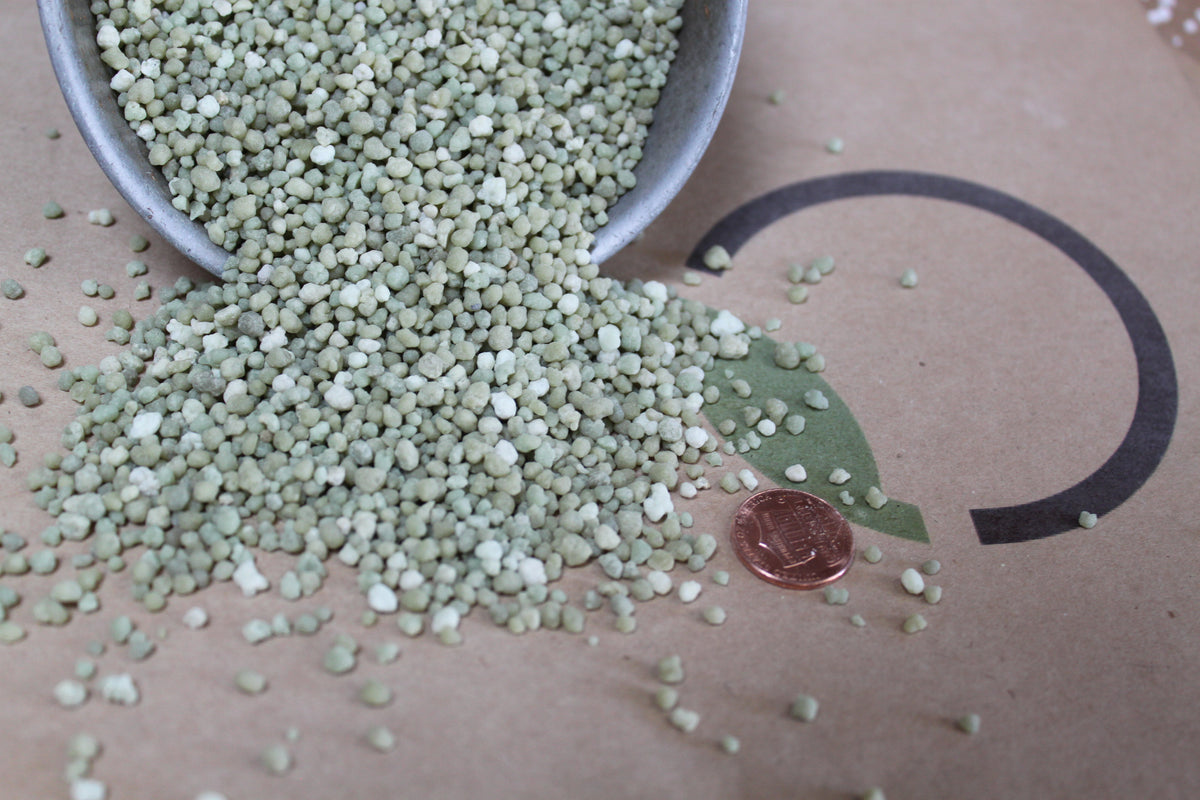
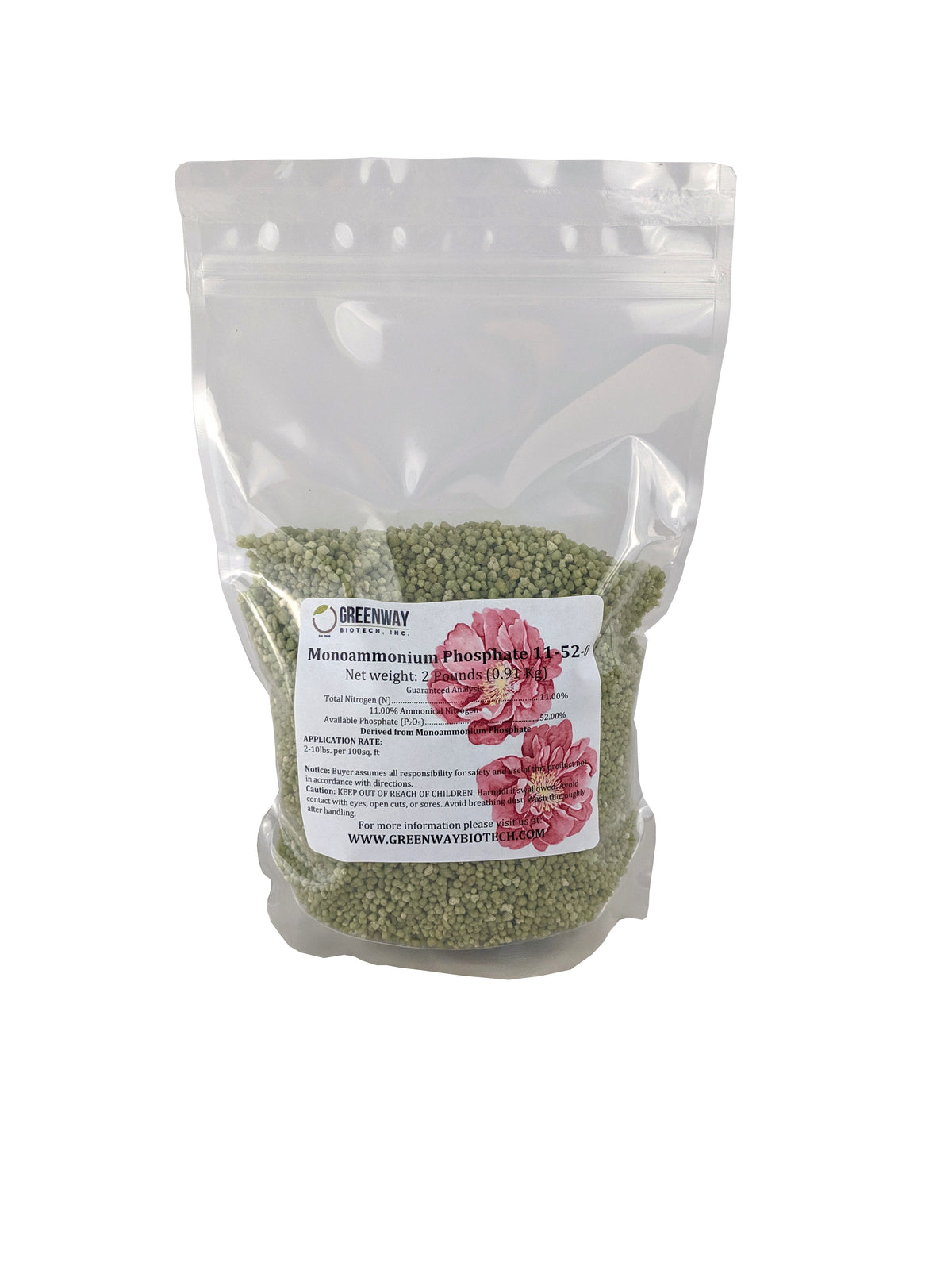
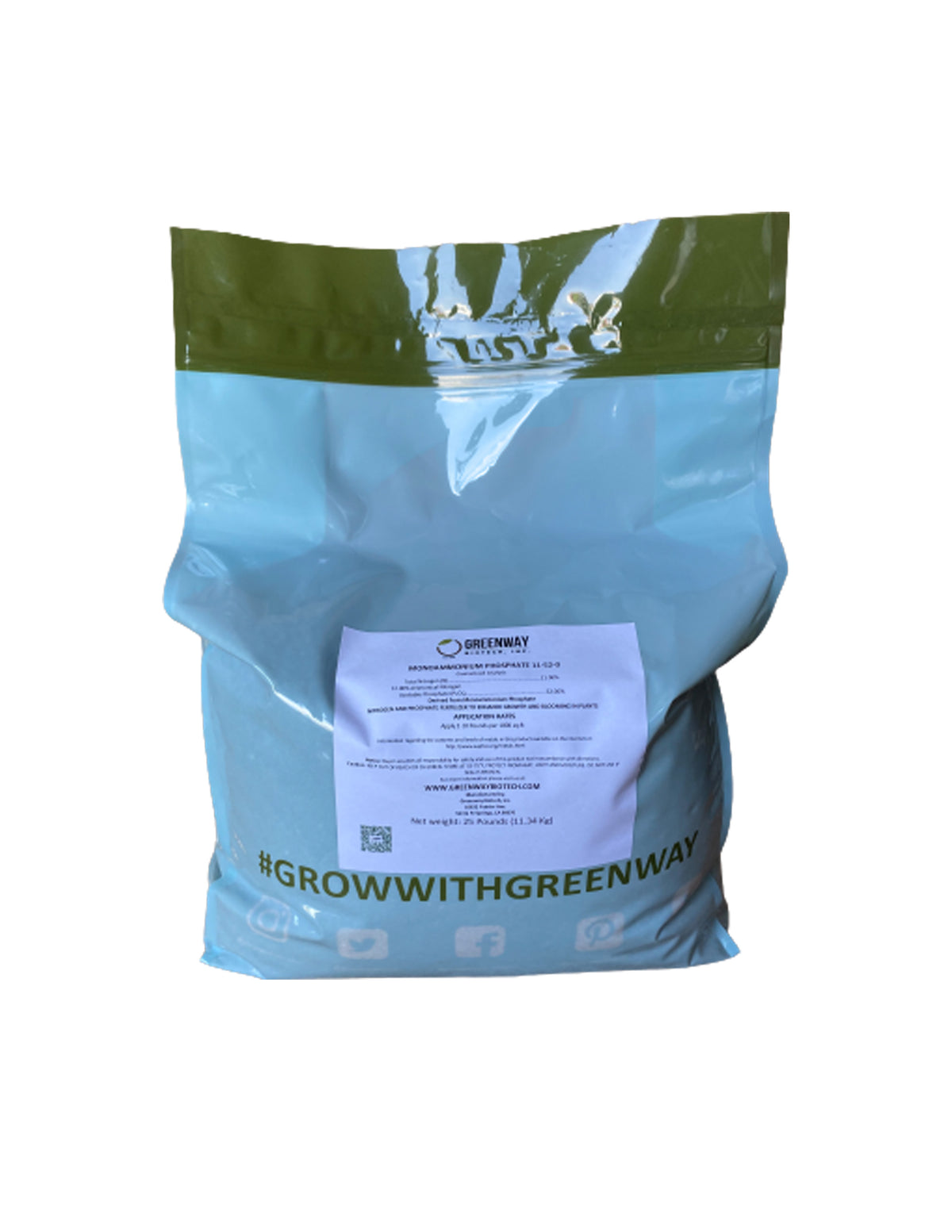
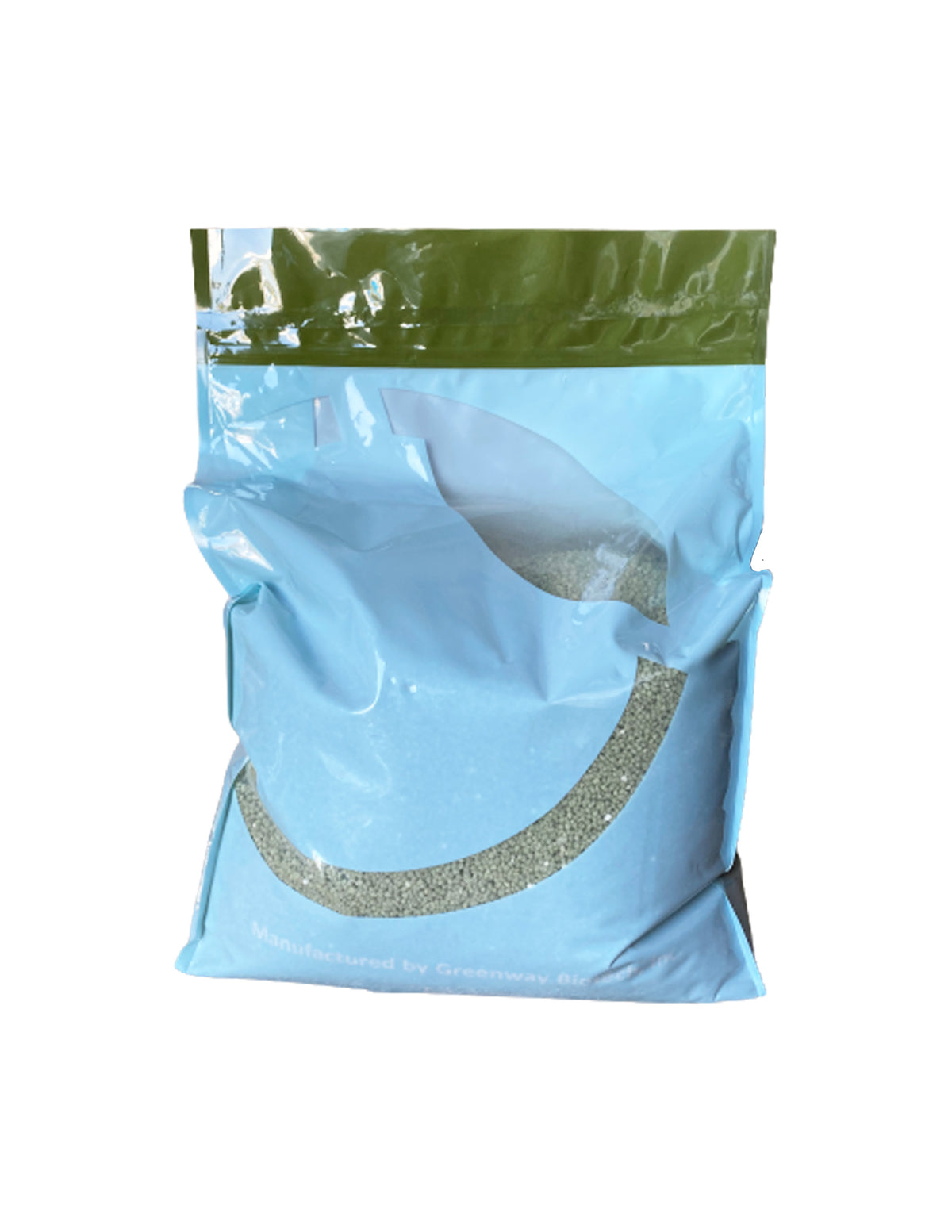
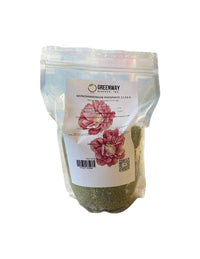
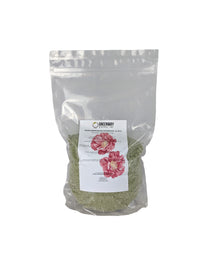
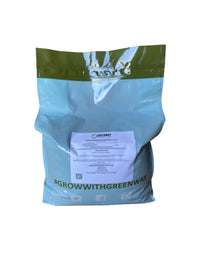
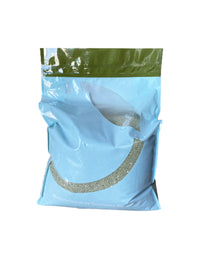
A CDFA-registered agricultural-grade granular MAP delivering 52% available phosphate (P₂O₅) and 11% ammoniacal nitrogen. Engineered for direct soil application — broadcast, band, side-dress, or pre-plant incorporate — with uniform granules that spread cleanly through rotary and drop spreaders. Independently lab tested for heavy metals.
Find your size → Calculate how much I need52%
Available phosphate (P₂O₅) per pound
11%
Ammoniacal nitrogen, leach-resistant
1.92lb
Of product per 1 lb P₂O₅ needed
35+yrs
Family-owned California manufacturer
Coverage estimates assume broadcast application at common maintenance rates. Adjust for your soil-test recommendation — high-testing soils require less, low-testing soils may require more. Use the calculator below for precise numbers.
| Bag Size | Garden @ 3 lb / 100 sq ft | Field @ 100 lb / acre (starter) | Best For |
|---|---|---|---|
| 2 lb | ~67 sq ft | — | Trial / single bed prep |
| 5 lb | ~167 sq ft | — | Raised beds, small gardens |
| 10 lb | ~333 sq ft | — | Most popular Home garden |
| 25 lb | ~833 sq ft | ~0.25 acre | Large garden, multi-tree orchard |
| 50 lb | ~1,667 sq ft | ~0.5 acre | Best value Field, commercial |
MAP 11-52-0 fits any program where soil-applied phosphorus is the goal — from a backyard tomato bed to a 50-acre starter band.
2×2 band placement at planting drives early root growth on cold soils. Critical placement: within 1.5–2.0 inches of the seed for the starter effect.
Replace phosphorus removed by previous crops. Soil-test-guided rates for corn, soybeans, wheat, and small grains based on extension recommendations.
Side-dress tomatoes, peppers, and squash at first flower — phosphorus supports flower development and early fruit set.
Spring or post-harvest application at the drip line. Spread under canopy, scratch in, water deeply. Split for young trees.
Pre-plant incorporation supports bloom production in petunias, marigolds, zinnias, tulips, and daffodils where phosphorus demand is high.
MAP is preferred over DAP on calcareous soils — the acidic reaction zone around each granule (pH 3.5–4.5) keeps phosphate plant-available where high pH normally locks it up.
A granular grade made for spreader equipment, soil incorporation, and band placement — not for fertigation or foliar feeding.
More than three times the P₂O₅ content of bone meal (15%) and well above triple superphosphate (46%). Fewer pounds per acre. Less freight, less handling, less storage. For deep coverage on phosphorus sources, see What Is the Best Phosphorus Fertilizer?
Ammonium-form nitrogen (NH₄⁺) binds to soil cation exchange sites and resists leaching. The localized acidic reaction zone around each dissolving granule supports phosphorus availability — a meaningful advantage on alkaline soils above pH 7.4.
Uniform granule size flows cleanly through 2×2 placement equipment (two inches beside, two inches below the seed) — the standard banding position for corn and soybean starter. Penn State Extension research supports rates around 100 lb/acre in the 2×2 band when soil fertility is adequate.
Registered with the California Department of Food and Agriculture under fertilizer regulations. Nutrient analysis is guaranteed on the label and matches the values cited on this page — not estimates, not marketing.
Tested for heavy metal content with results consistently well below required limits — an important consideration for food gardens, edible crops, and commercial growing operations.
52% P₂O₅
Monoammonium phosphate · NH₄H₂PO₄
Phosphorus is the energy currency of plant biology. Every ATP molecule — the chemical that powers active nutrient uptake, protein synthesis, and cell division — is built around a triphosphate group. When a phosphorus-limited plant runs short on ATP, it cannot pump nitrate, potassium, or trace metals across root cell membranes efficiently. The result is often a plant that looks deficient in everything because it lacks the energy infrastructure to absorb anything.
MAP delivers phosphorus as the dihydrogen phosphate ion (H₂PO₄⁻) and the ammonium ion (NH₄⁺). As each granule dissolves into the soil profile, water carries the ions a short distance from the granule, creating a localized reaction zone with a pH around 3.5–4.5. On calcareous and high-pH soils where phosphate would normally precipitate as insoluble calcium phosphate, this acidic micro-environment keeps phosphate plant-available long enough for roots to intercept it. This is the structural reason MAP is preferred over DAP in alkaline soils above pH 7.4.
Practical implication: phosphorus moves very slowly through soil — typically less than an inch per year by diffusion. Granule placement relative to the root zone matters more than the absolute application rate. Banding two inches beside and two inches below the seed (the 2×2 placement) puts phosphorus where roots can intercept it during the critical first weeks of growth. Broadcasting on the surface without incorporation, by contrast, leaves much of the phosphate above the active root zone.
For a deeper look at phosphorus chemistry and how it differs from nitrogen and potassium, see What's the Function of Phosphorus (P) in Plants?
Rates below are drawn from current university extension recommendations (Penn State, Kansas State, Michigan State, South Dakota State, OSU/Purdue/MSU Tri-State, UT Extension). A current soil test is the only way to dial in your actual rate — the numbers below are research-backed planning ranges, not substitutes for soil-test-driven recommendations.
Quick answer: ~100 lb/acre of 11-52-0 in a 2×2 starter band when soil fertility is adequate (Penn State Extension); in-furrow rates are much lower due to salt-injury risk.
| Crop / Placement | Rate of 11-52-0 | Source | Notes |
|---|---|---|---|
| Corn & soybean 2×2 band (general) | ~100 lb/acre | Penn State Ext. | Supplies ~11 lb N and 52 lb P₂O₅/acre when soil fertility is adequate |
| Corn & soybean 2×2 band (low-P soils) | Up to ~200 lb/acre | Penn State Ext. | Hard ceiling: N + K₂O in the band must not exceed 70 lb/acre at 2" from seed |
| Targeted P₂O₅ (starter, balance broadcast) | ~38–58 lb/acre | AGVISE, K-State Ext. | Limit starter to 20–30 lb P₂O₅/acre, broadcast the remainder |
| Corn in-furrow (30" rows, pop-up) | ~55–70 lb/acre maximum | K-State Ext. | Salt-injury ceiling: 6–8 lb N + K₂O per acre in direct seed contact |
| Winter wheat / barley seed-row | Up to ~135 lb/acre | Penn State Ext. | Seed-row ceiling: 15 lb N or 30 lb N + K₂O per acre |
📋 Soil Test First: Starter rates depend on current Bray-P1, Olsen, or Mehlich-3 soil-test phosphorus levels. The numbers above are research-backed planning ranges for crops at adequate fertility; low-testing soils may require more, and high-testing soils may require less or none. The effective starter zone is within 1.5–2.0 inches of the seed.
Sources: Penn State Extension; Kansas State Research & Extension (Scandia Irrigation Experiment Field); AGVISE Laboratories; Mosaic / UMN Extension on MAP advantage in pH > 7 soils.
Quick answer: Broadcast rates are driven by soil-test P and crop removal — commonly 90–145 lb/acre for typical maintenance.
| Crop / Yield Goal | P₂O₅ Need | Rate of 11-52-0 | Source |
|---|---|---|---|
| Soybean maintenance (60 bu/acre) | 48 lb P₂O₅/acre | ~90 lb/acre | MSU Ext. (Staton & Steinke, 2021) |
| Corn maintenance (180–200 bu/acre) | 65–75 lb P₂O₅/acre | ~125–145 lb/acre | Tri-State Recommendations (OSU / Purdue / MSU) |
| Wheat (80 bu/acre) | ~48 lb P₂O₅/acre | ~92 lb/acre | SDSU Ext. (Wheat chapter) |
| General build-up situations | varies by soil test | 100–200 lb/acre | Tri-State Recommendations |
📋 Soil Test First: Broadcast rates above are typical maintenance estimates based on crop-removal calculations and average soil-test levels. Use a current soil test (Bray-P1, Olsen, or Mehlich-3 depending on region) and the recommendation table for your state's cooperative extension before finalizing rates. Rates above 200 lb/acre in a single year are rarely justified.
Sources: Michigan State University Extension (Staton & Steinke, 2021); OSU / Purdue / MSU Tri-State Fertilizer Recommendations; South Dakota State University Extension; Ohio State University Extension worksheet (P₂O₅ ÷ 0.52 = lb 11-52-0).
Quick answer: 3–5 lb per 100 sq ft worked into the top 6" of soil before planting, or side-dressed at first flower for fruiting vegetables.
| Use Case | Rate | Source | Method & Timing |
|---|---|---|---|
| New garden bed prep | 5–10 lb per 100 sq ft | OSU Ext. soil prep guidance | Till into top 6" before planting |
| Vegetables (general) | 3–5 lb per 100 sq ft | OSU Ext. | Incorporate or rake in before planting |
| Tomatoes / peppers side dress | 3–5 lb per 100 sq ft | UT Extension | At first flower, 4–6" from stem |
| Root vegetables (potatoes, carrots) | 4–6 lb per 100 sq ft | OSU Ext. | Incorporate at bed preparation |
| Flowering annuals / bulbs | 2–3 lb per 100 sq ft | UT Extension | Before bud formation; incorporate |
Note: Home garden rates above are typical extension recommendations for crops at moderate soil-test P levels. A simple home soil-test kit or extension lab analysis is the most reliable way to confirm whether your beds actually need phosphorus — overapplication beyond soil need does not improve plant performance.
Sources: Oregon State University Extension; University of Tennessee Extension; Ohio State University Extension home-garden phosphorus guidance.
Quick answer: 3–8 lb per tree spread at the drip line, scratched in, and watered deeply — rate scales with tree size.
| Tree Size | Rate per Tree | Source | Method & Timing |
|---|---|---|---|
| Young trees (< 4" trunk diameter) | 3–5 lb per tree | OSU Ext. fruit-tree fertilization | Split into 2–3 applications; spread at drip line; water deeply |
| Mature trees (4"+ trunk diameter) | 5–8 lb per tree | OSU Ext. | Spread under full canopy; scratch in; water deeply |
| Orchard floor broadcast | 200–300 lb/acre | OSU Ext.; CSU Ext. | Incorporate or water in thoroughly; early spring or post-harvest |
Note: Tree rates are general guidelines for established orchard fertility. Apply early spring before bud break and/or post-harvest to restore reserves — do not apply to drought-stressed or dormant cold-soil trees. Keep granules 6" away from the trunk.
Sources: Oregon State University Extension (fruit tree fertilization); Colorado State University Extension (Master Gardener Notes); UMass Amherst Center for Agriculture, Food & Environment.
Granular MAP is straightforward to apply — the discipline is in placement and watering, not in mixing.
Square feet for gardens and lawns; row feet for side-dressing; acres for field crops. The calculator handles the conversion.
The rate tables above give planning ranges. A soil test ($25 from your county extension lab) tells you whether you actually need phosphorus and how much.
Broadcast or drop spreader for large areas; shallow furrow 4–6 inches from plant stems for side-dressing; band placement (2×2) at planting for row crops.
Phosphorus moves slowly through soil. Tilling, raking, or watering moves granules off the surface and into the root zone where they actually feed the plant.
MAP is a concentrated salt — direct contact can burn. Maintain band-placement distance (2" from seed) or side-dress distance (4–6" from stem).
A side-by-side look at granular MAP, water-soluble MAP, MKP, and bone meal. See our full guide on choosing the best phosphorus fertilizer.
| Product | P₂O₅ | N / K₂O | Form | Best For |
|---|---|---|---|---|
| MAP 11-52-0 (this product) | 52% | 11% N / 0% | Granular — soil only | Broadcast, band, side-dress; calcareous and high-pH soils |
| MAP 12-61-0 | 61% | 12% N / 0% | Water-soluble powder | Fertigation, foliar, hydroponics |
| MKP 0-52-34 | 52% | 0% N / 34% K₂O | Water-soluble powder | Bloom-phase P+K with zero nitrogen; hydroponic bloom |
| Bone Meal 3-15-0 | 15% | 3% N / 0% | Granular organic | Organic programs; slow-release P with 24% Ca |
Granular 11-52-0 is built for soil application. Liquid systems and organic programs have better-suited options.
A balanced fertility program needs nitrogen, potassium, and often calcium and magnesium alongside phosphorus.
MAP has 0% K₂O. Sulfate-form potassium adds K for fruit quality and stress tolerance without chloride buildup.
Calcium + Nitrate-NNitrate-N to balance MAP's ammonium-N, plus 19% calcium. Apply separately — do not mix in concentrated solution with phosphate sources.
NitrogenThe most concentrated solid nitrogen source. Pair with MAP when phosphorus demand is met but vegetative growth needs a separate N boost.
MagnesiumMagnesium for chlorophyll production and phosphorus uptake support — especially valuable in sandy soils where Mg leaches.
Granular MAP is a concentrated mineral salt. Standard handling precautions apply.
If your question isn't here, contact our team at questions@greenwaybiotech.com.
MAP 11-52-0 (this product) is a granular agricultural grade designed for direct soil application — broadcasting, side dressing, banding, and pre-plant incorporation. Granules dissolve gradually as irrigation or rainfall moves through the soil.
MAP 12-61-0 is a technical-grade water-soluble powder with 61% available phosphate (P₂O₅), formulated for complete dissolution in water. Use it for fertigation, foliar feeding, and hydroponic systems where a liquid-soluble phosphorus source is required.
For a deeper comparison, see our guide on choosing the best phosphorus fertilizer.
No. This granular grade is intended for soil application, not liquid feeding. It is not formulated for complete dissolution in water and will leave undissolved material that can clog fertigation systems, drip injectors, and stock tanks. For fertigation or foliar spraying, use MAP 12-61-0 (Water Soluble) instead.
Penn State Extension research supports approximately 100 lb/acre of 11-52-0 in a 2×2 starter band when soil fertility is adequate — that supplies about 11 lb N and 52 lb P₂O₅ per acre. On low-testing soils the rate can go higher, up to about 200 lb/acre, but with a hard ceiling: N + K₂O in the band must not exceed 70 lb/acre when placed 2 inches from the seed.
For in-furrow (direct seed contact), the rate is much lower — K-State Extension research caps salt-sensitive crops at approximately 6–8 lb N + K₂O per acre in seed contact, which translates to roughly 55–70 lb of 11-52-0 per acre in-furrow on corn at 30-inch rows.
Divide the P₂O₅ recommendation by 0.52. So to apply 60 lb P₂O₅/acre, you need 60 ÷ 0.52 = approximately 115 lb of 11-52-0 per acre, which incidentally delivers about 12.7 lb of N per acre (115 × 0.11).
The calculator above runs this math automatically and accounts for unit conversions (sq ft, row feet, acres).
Field crops: Spring application is preferred over fall, especially on soils with pH above 7.4, to minimize phosphorus fixation (per MSU Extension).
Vegetables: Work into soil before planting, then side dress when plants begin flowering. For root crops, apply at bed preparation.
Fruit trees: Apply in early spring before bud break, and optionally post-harvest to restore nutrient reserves. Split applications for young trees — 2–3 smaller doses are preferred over one large application.
Lawns: Cool-season grasses in early fall; warm-season grasses in late spring. Incorporate before seeding for new lawns.
Over time, yes — the ammoniacal nitrogen in MAP can contribute to gradual soil acidification as nitrification occurs. This may be beneficial on alkaline soils above pH 7.5 where high pH reduces phosphorus and micronutrient availability. On already-acidic soils (below pH 6.0), monitor pH periodically and apply lime if needed. A soil test before application is always recommended.
The acidifying effect is one of MAP's structural advantages on calcareous soils — the acidic reaction zone around each dissolving granule (pH 3.5–4.5) keeps phosphate plant-available where high pH would normally lock it up. Mosaic and UMN Extension both confirm MAP's advantage over DAP in soils above pH 7.
Calcium and phosphate ions react in concentrated contact to form insoluble tricalcium phosphate, which reduces the availability of both nutrients. Apply MAP and Calcium Nitrate 15.5-0-0 at separate times or in separate passes, and let irrigation water move them independently through the soil at normal dilution.
For crops with high calcium demand — tomatoes, peppers, squash — this means applying calcium nitrate as a separate side dress or as a properly-diluted soil drench rather than blending the two in concentrated solution. The same precaution applies to other calcium-containing fertilizers.
Coverage depends on application rate and method. General guidelines:
Use the calculator above for precise amounts based on your area and crop type.
Crops with high phosphorus demand see the most benefit: flowering annuals (petunias, marigolds, zinnias), bulbs (tulips, daffodils), roses, fruiting vegetables (tomatoes, peppers, squash, melons), root vegetables (potatoes, carrots, beets, onions), and commercial field crops (corn, soybeans, cotton, small grains, tree fruits). For more on this, see our article on fertilizers that improve fruit yield.
Phosphorus-sensitive plants such as proteas and grevilleas should receive reduced rates or phosphorus-free alternatives.
No. MAP is a synthetic mineral salt produced by reacting anhydrous ammonia with phosphoric acid, then granulating the resulting monoammonium phosphate. It is not approved for certified organic programs. If you need an organic-certified phosphorus source, consider Bone Meal 3-15-0 or Fish Bone Meal 4-17-0 — both deliver phosphate alongside naturally-occurring calcium.
SDS, product label, and heavy metal analysis available for download. Need anything else? Email questions@greenwaybiotech.com.
Available in 2, 5, 10, 25, and 50 lb sizes. Free shipping on orders over $100 in the continental US. Backed by our 90-day money-back guarantee — if you're not satisfied, return the unused portion for a full refund.
Choose your size →