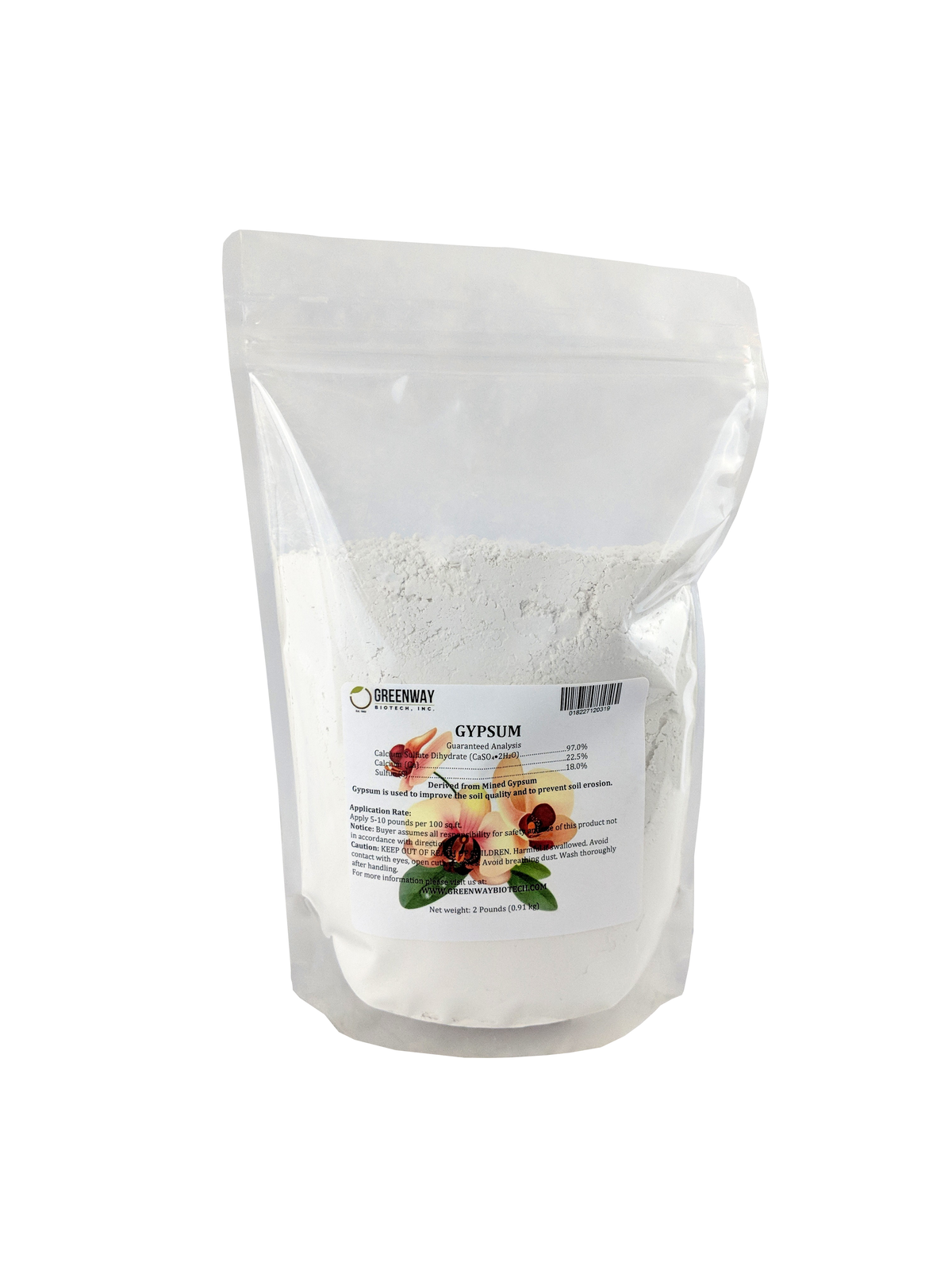
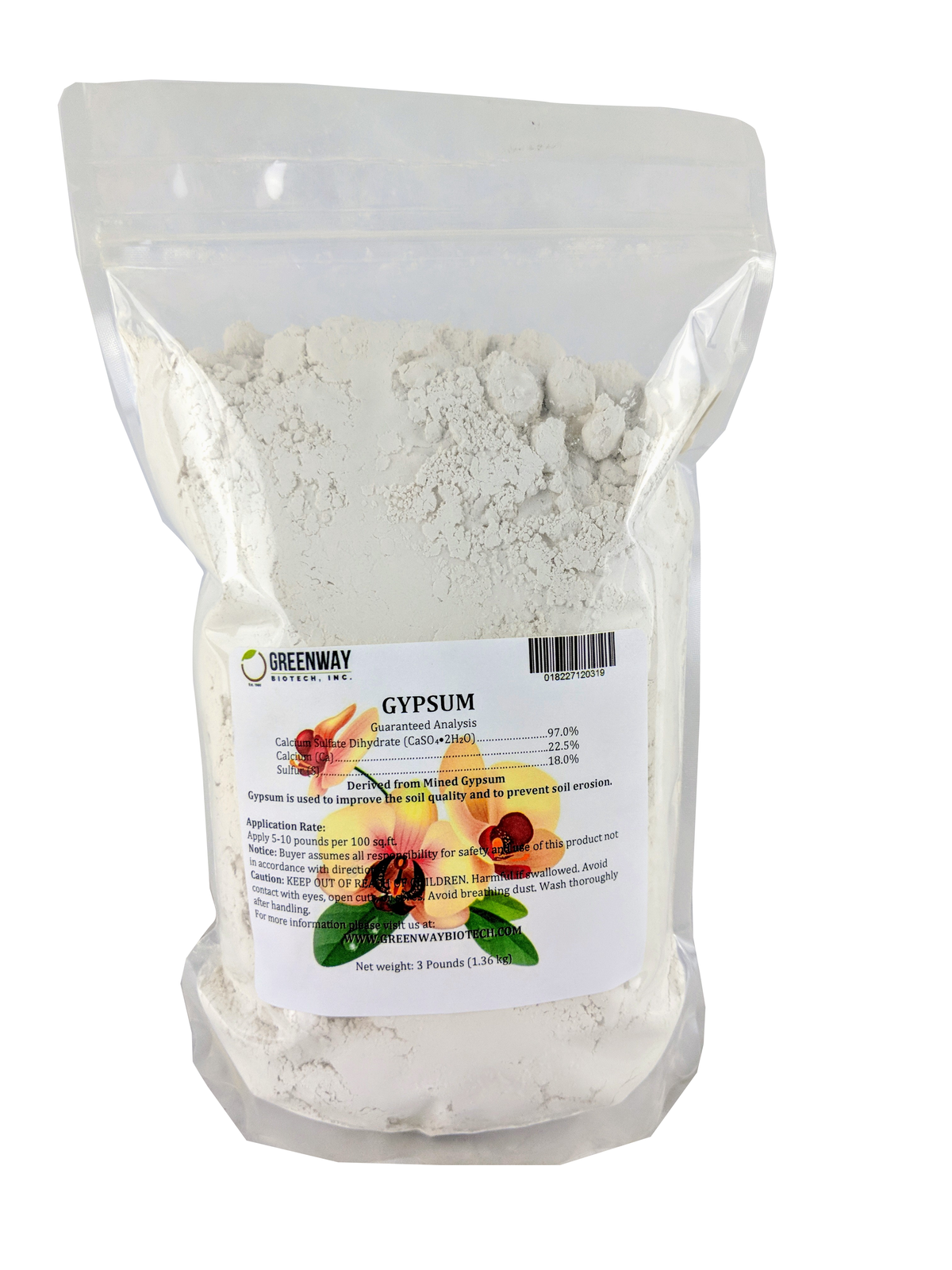
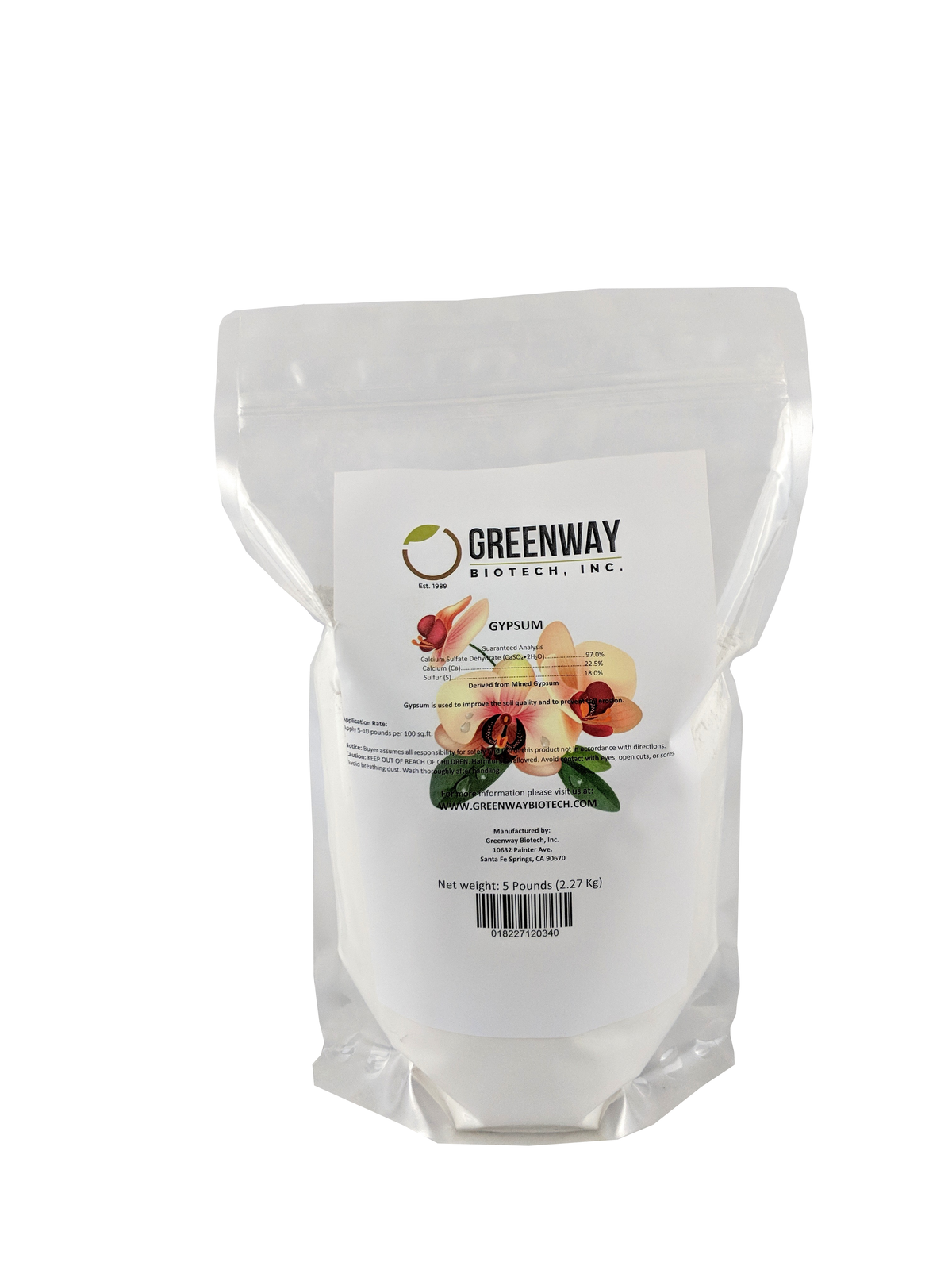
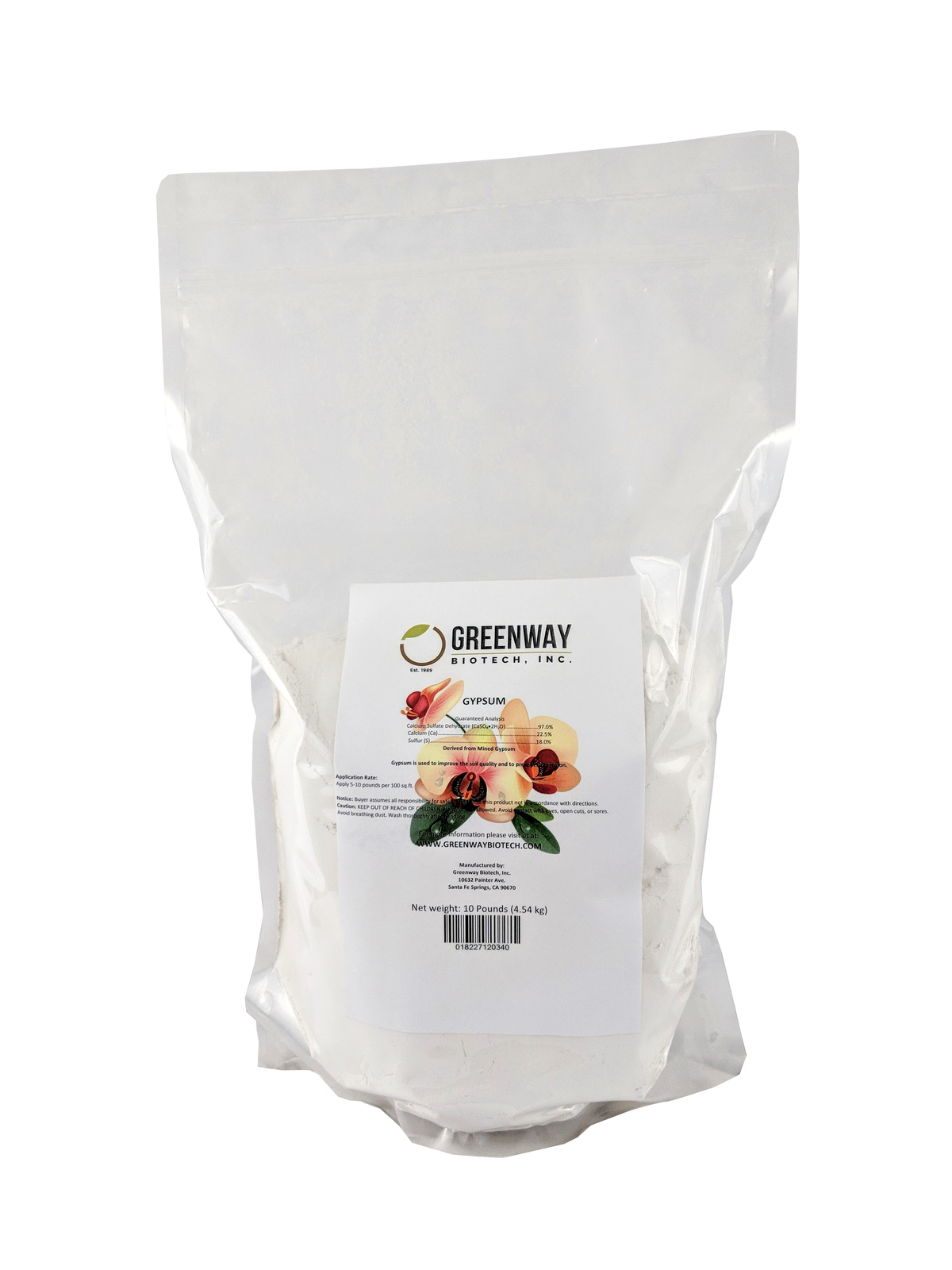
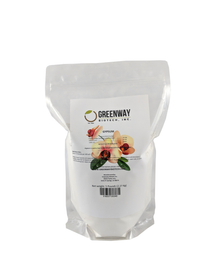
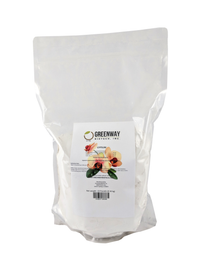
Gypsum
- Regular Price
- $ 19.99
- Sale Price
- $ 19.99
- Regular Price
- $ 18.99
- Unit Price
- per
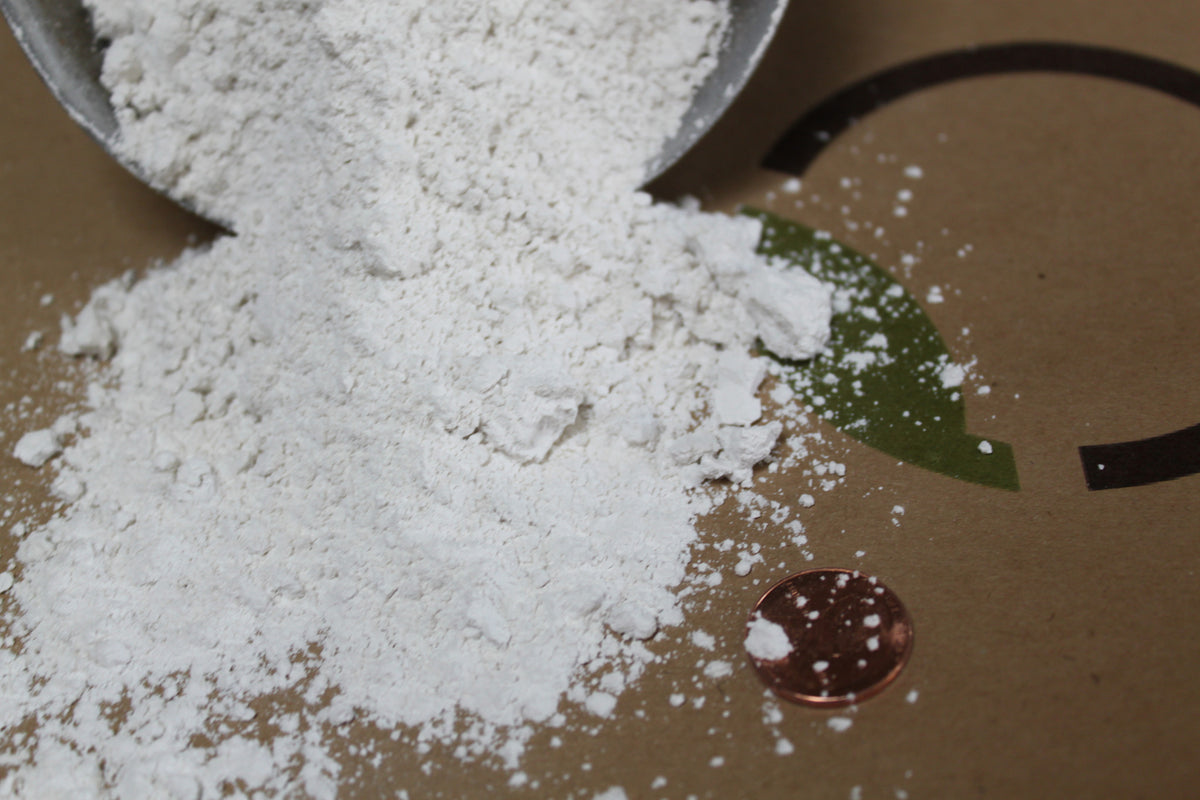
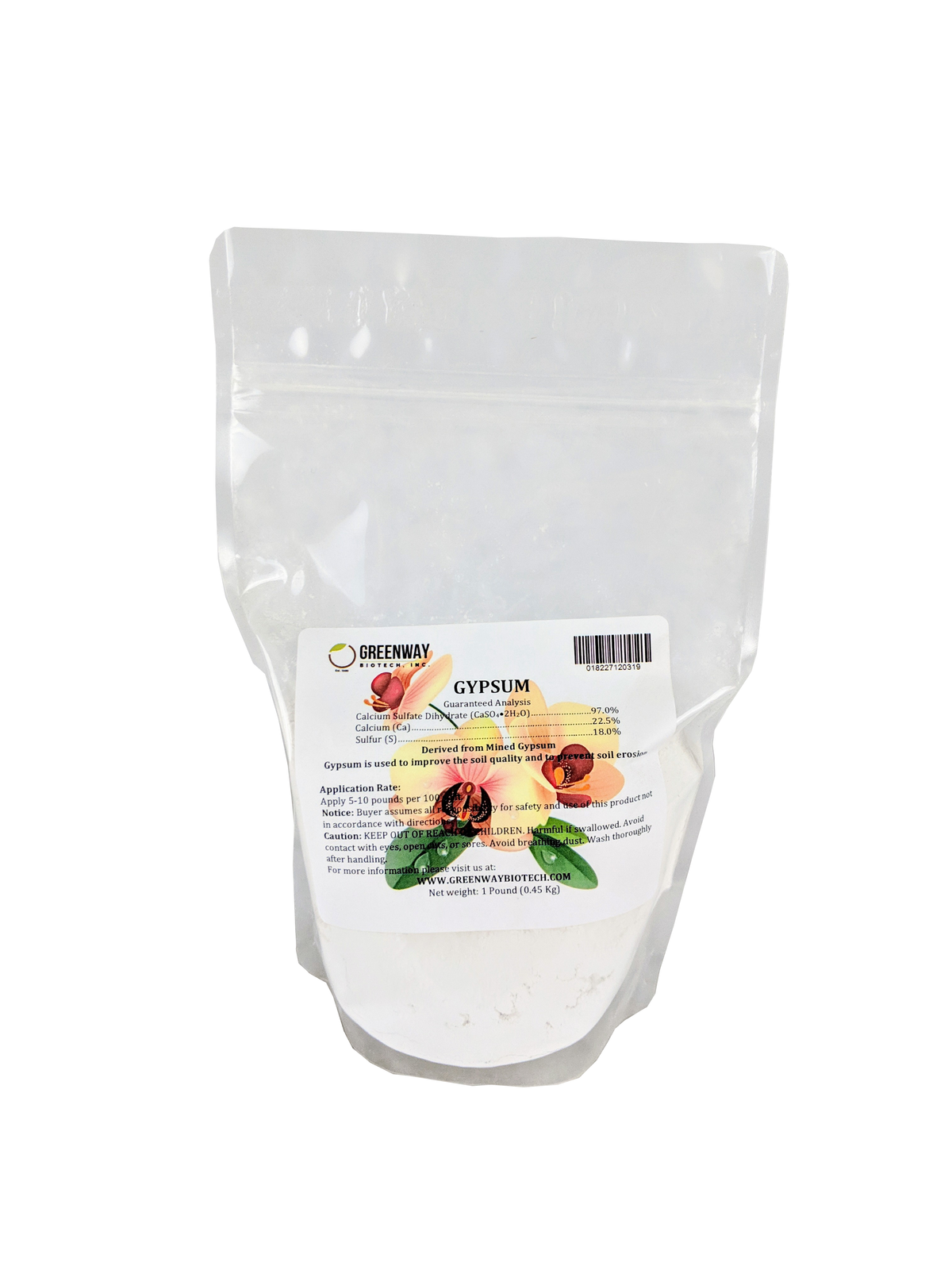
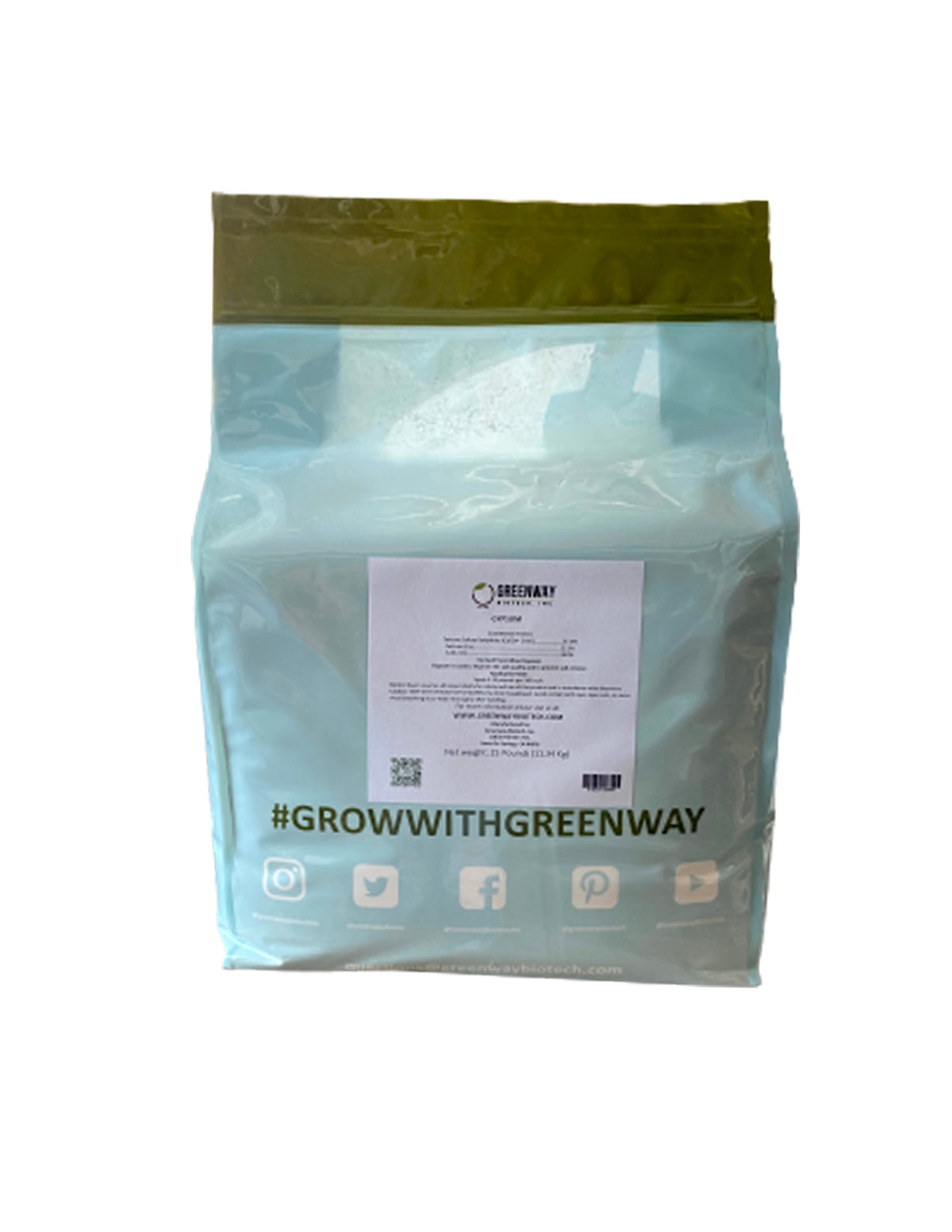
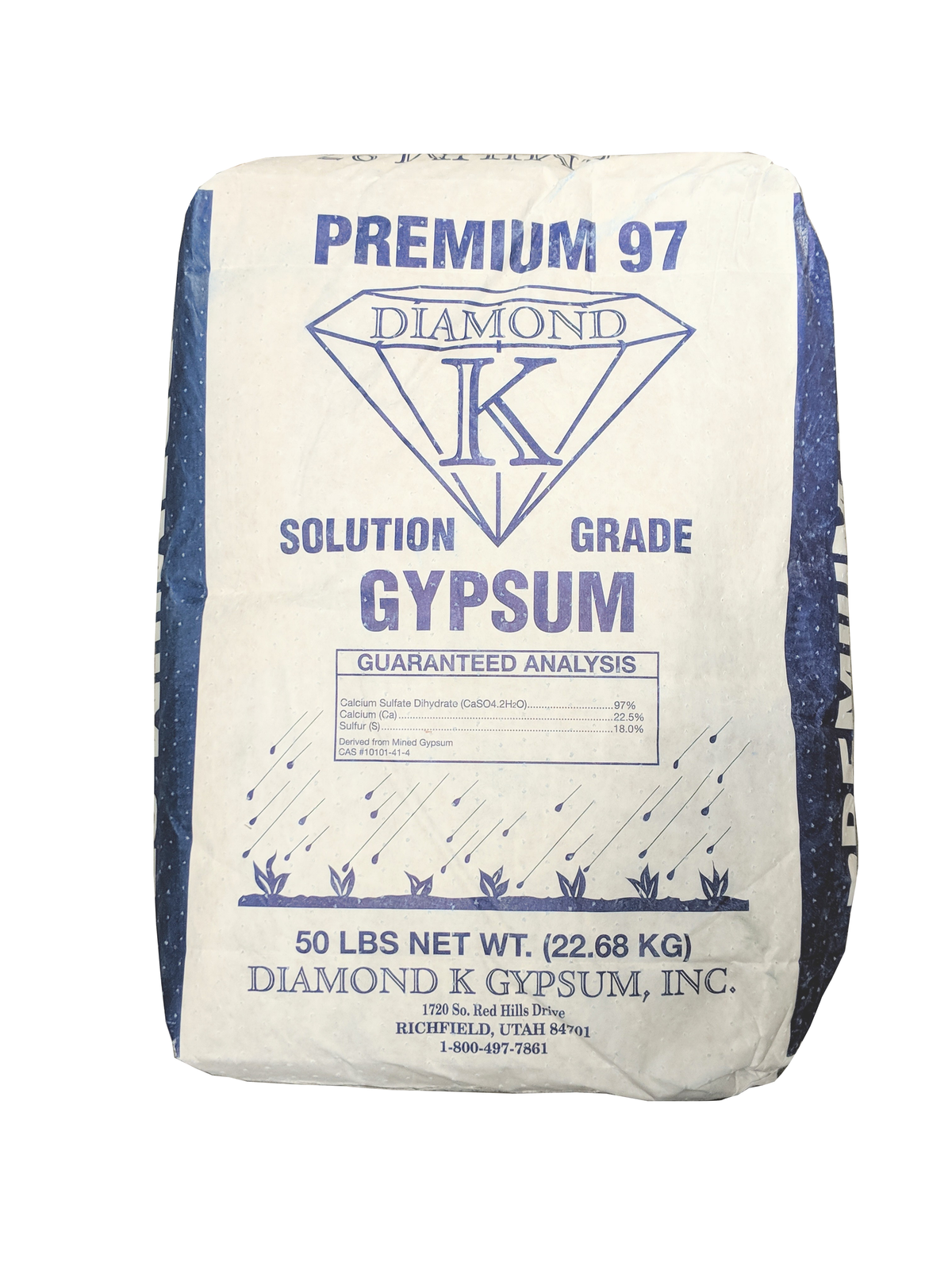
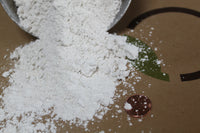
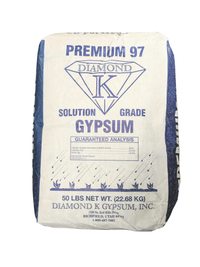
High-Quality Gypsum (Calcium Sulfate)
Premium mined agricultural gypsum delivering calcium and sulfur to improve soil structure, reclaim sodic soils, and loosen compacted clay—without changing soil pH.
Ideal Applications
FEATURES
🎯 pH-Neutral Calcium Source
Unlike lime, gypsum supplies calcium without raising soil pH, making it ideal when soil is already neutral to alkaline. Use it as a calcium sulfate soil amendment wherever pH correction is not needed.
🌱 Dual Nutrient Delivery
Provides both 23% calcium and 18% sulfur in a single application. Calcium strengthens cell walls and supports root development; sulfur is essential for protein synthesis and enzyme activation.
💧 Clay Soil Conditioner
Calcium ions from gypsum bind clay particles together (flocculation), creating pore space for improved drainage, aeration, and root penetration. Improvements in infiltration and workability may begin within weeks under suitable moisture and soil conditions, while larger structural benefits typically develop over months.
🧂 Sodic Soil Treatment
One of the most widely used and practical amendments for reclaiming sodic and many saline-sodic soils. Calcium ions replace excess sodium on soil exchange sites where leaching and drainage are possible, allowing sodium to move through the profile and restoring soil structure and fertility.
⚡ Moderate Solubility, Immediate Availability
Gypsum is moderately soluble, so calcium and sulfur become available with moisture and move into the root zone more readily than many less-soluble calcium sources—no waiting for microbial breakdown.
🌿 Root Zone Health
In some soils, gypsum can improve subsoil conditions that restrict deeper rooting. Deeper roots access more water and nutrients, supporting drought resilience and overall plant health.
🍅 Supports Healthy Fruit Development
Gypsum supplies readily available calcium to the root zone, helping reduce the risk of blossom end rot in tomatoes, peppers, and squash when low available calcium is a contributing factor. Consistent watering and balanced nutrition are also essential.
📅 Year-Round Application
Gypsum carries no burn risk at recommended rates and can be applied any time of year. Compatible with most fertilizers, organic amendments, and standard irrigation programs.
✅ Organic Compatible
Mined gypsum is generally allowed in many certified organic systems, subject to certifier review. CDFA registered and processed without synthetic additives.
🔬 Quality Tested
Sourced to agricultural quality standards and tested for compliance with applicable safety requirements, ensuring consistent purity for crop applications.
DERIVED FROM
Our gypsum is mined from high-purity natural deposits and processed to agricultural specifications—the same mineral that has been used to improve soil for centuries. Minimal processing preserves the natural dihydrate form (CaSO₄·2H₂O), which provides optimal solubility for crop applications.
Mineral Source
Mined Gypsum (CaSO₄·2H₂O)
Calcium sulfate dihydrate from natural mineral deposits. Approximately 23% calcium and 18% sulfur. pH neutral with no synthetic binders or additives.
SCIENCE BEHIND THE FORMULA
Calcium Sulfate: A Unique Soil Chemistry Tool
Gypsum works through ion exchange chemistry. When calcium ions (Ca²⁺) enter the soil solution, they displace sodium ions (Na⁺) and bridge clay platelets together—a process called flocculation. This electrochemical mechanism is what makes gypsum uniquely effective at improving structure in both sodic and heavy clay soils, without the pH shift associated with other calcium sources.
🦴 Calcium — 23%
Calcium is the primary structural nutrient in cell walls and membranes. It's largely immobile in the plant, so a steady soil supply is essential. Gypsum's calcium is in soluble sulfate form—readily available without requiring soil acidification.
🔥 Sulfur — 18%
Sulfur is required for the synthesis of the amino acids cysteine and methionine, chlorophyll formation, and enzyme function. It is the fourth most limiting macronutrient in many soils, particularly those with low organic matter or heavy leaching.
Gypsum vs. Other Calcium Sources
| Product | Supplies Calcium | Supplies Sulfur | Raises pH | Best Use |
|---|---|---|---|---|
| Gypsum (Calcium Sulfate) | Yes — 23% | Yes — 18% | No | Clay soils, sodic soils, calcium without pH change |
| Dolomite Lime | Yes | No | Yes | Acidic soils needing pH correction + calcium |
| Calcium Nitrate 15.5-0-0 | Yes | No | Minimal | Fast soluble calcium for fertigation or hydroponics |
What to Expect After Application
Improved drainage may begin as calcium enters soil solution
Clay flocculation underway; surface crusting reduces
Deeper root growth supported; subsoil conditions improve
Sodic soil reclamation progresses with continued leaching
Results vary with soil type, application rate, irrigation, and initial sodium or clay levels.
APPLICATION RATES & DIRECTIONS
Soil Amendment Applications
| Soil Condition | Application Rate | Purpose | Frequency |
|---|---|---|---|
| Heavy Clay Soils | 1–2 tons/acre (40–80 lbs/1,000 sq ft) | Improve structure & drainage | Annual or biennial |
| Sodic Soils (High Sodium) | 2–4 tons/acre (80–160 lbs/1,000 sq ft) | Sodium displacement | As needed per soil test |
| Compacted Soils | 1–1.5 tons/acre (40–60 lbs/1,000 sq ft) | Improve infiltration | Annual |
| General Maintenance | 0.5–1 ton/acre (20–40 lbs/1,000 sq ft) | Maintain soil quality | Every 2–3 years |
Crop-Specific Applications
| Crop | Rate | Timing | Notes |
|---|---|---|---|
| Peanuts | 600–1,000 lbs/acre | At pegging | Critical for pod calcium uptake |
| Alfalfa | 1–2 tons/acre | Pre-plant or early spring | High sulfur demand crop |
| Corn | 200–500 lbs/acre | Pre-plant | Band or broadcast |
| Tomatoes | 1,000–1,500 lbs/acre | Pre-plant | Supports calcium availability; pair with consistent irrigation |
| Citrus | 2–4 tons/acre | Spring/Fall | Improves fruit quality & structure |
Garden & Lawn Applications
| Application | Rate | Method |
|---|---|---|
| Lawn (Clay Soil) | 40–50 lbs/1,000 sq ft | Broadcast, water in |
| Vegetable Garden | 2–4 lbs/100 sq ft | Work into top 6 inches |
| Flower Beds | 1–2 lbs/100 sq ft | Top dress or incorporate |
| Potted Plants | 1 tbsp/gallon of soil; up to 2 tbsp for heavy-feeding crops | Mix into potting mix at planting |
HOW TO USE
Soil & Garden Beds
- Determine your application rate based on the table above (soil type or crop).
- Broadcast gypsum evenly over the soil surface using a spreader or by hand.
- For best results, incorporate into the top 4–6 inches with a tiller or garden fork.
- Water thoroughly after application to activate and begin moving calcium into the soil profile.
Lawns (Clay Soil)
- Apply 40–50 lbs per 1,000 sq ft using a broadcast or rotary spreader.
- Surface application is fine for established lawns—no incorporation needed.
- Water in immediately after application.
- Repeat annually or as recommended by soil test results.
Sodic Soil Reclamation
- Obtain a soil test measuring SAR (Sodium Adsorption Ratio) to determine gypsum requirement.
- Apply at the calculated rate (often 2–4 tons/acre for moderately sodic soils).
- Incorporate deeply (6–12 inches if possible) or surface apply with heavy irrigation.
- Leach displaced sodium through the profile with multiple irrigation events.
- Retest soil after 6 months and reapply if SAR remains elevated.
Container & Potted Plants
- Mix 1 tablespoon of gypsum per gallon of potting soil at planting time; up to 2 tablespoons for heavy-feeding crops or high-calcium-demand situations.
- For established containers, top-dress with 1 tablespoon per gallon and water in.
- Reapply once per growing season as a maintenance application.
Pro Tip: Pair Gypsum with Tomato Fertilizer for Healthy Fruit Development
Apply 1,000–1,500 lbs/acre (approximately 2–3 lbs per 10 sq ft of bed space) of gypsum pre-plant, then follow with a complete tomato fertilizer program. Gypsum supplies available calcium directly to the root zone, helping support consistent calcium uptake throughout fruit development. Pair with steady, even irrigation for best results.
When Gypsum Is the Right Choice
- Soil pH is already adequate or alkaline and you need calcium without raising pH further
- Clay soil drains poorly or forms a hard crust after irrigation — gypsum for clay soil is one of its most proven uses
- Soil test shows elevated sodium (ESP > 15% or SAR > 13) and drainage is possible
- Growing calcium-sensitive crops: tomatoes, peppers, peanuts, brassicas
- Need to add sulfur alongside calcium in a single, easy-to-apply material
When to Consider Other Options
- Soil pH is below 6.0 and needs raising — Dolomite Lime provides calcium and pH correction together
- You need fast-acting soluble calcium for a fertigation or hydroponic system — Calcium Nitrate 15.5-0-0 delivers immediate uptake
- Sandy, well-drained soil with no sodium or compaction issues — calcium uptake may be better served by a targeted soluble source
GYPSUM CALCULATOR
SAFETY & HANDLING
Personal Protective Equipment (PPE)
- Wear gloves and safety glasses when handling large quantities
- Use a dust mask when applying in dry, windy conditions to avoid inhaling fine particles
- Wash hands thoroughly with soap and water after handling
- Change clothes if heavily soiled with product dust
Storage Guidelines
- Store in a cool, dry place in the original sealed bag or container
- Keep away from direct sunlight and excessive moisture—gypsum can clump when exposed to humidity
- Store away from children and pets
- Do not store near concentrated acids
Application Precautions
- Gypsum carries no burn risk to plants at recommended rates
- Avoid inhaling dust during spreading—use a spreader or apply when wind is calm
- Do not apply to waterways or storm drains
- Compatible with most fertilizers and amendments; no known adverse mixing reactions
First Aid
- Eye contact: Flush with clean water for 15 minutes. Seek medical attention if irritation persists.
- Skin contact: Wash affected area with soap and water. Generally causes no irritation at normal handling.
- Ingestion: Do not induce vomiting. Contact Poison Control (1-800-222-1222) or seek medical attention if large amounts are swallowed.
- Inhalation: Move to fresh air. Seek medical attention if respiratory symptoms persist.
Refer to the Safety Data Sheet (SDS) for complete safety information.
COMPLETE YOUR SYSTEM
Build a complete soil health and crop nutrition program with these complementary products.
Tomato Fertilizer 4-18-38
High-potassium formula for fruit development. Pair with gypsum pre-plant to support calcium availability and feed your crop throughout the season.
Epsom Salt (Magnesium Sulfate)
Add magnesium to complement gypsum's calcium. Both provide sulfur for a complete secondary nutrient program. Ideal for tomatoes, peppers, and roses.
Dolomite Lime
When soil pH also needs correction, dolomite lime provides calcium and magnesium while raising pH. Use lime for acidic soils; use gypsum when pH is already adequate.
Chelated Iron DTPA 11%
Correct iron chlorosis in alkaline soils alongside gypsum's pH-neutral calcium delivery. DTPA form stays plant-available up to pH 7.5.
FREQUENTLY ASKED QUESTIONS
Will gypsum change my soil pH?
No. Gypsum (calcium sulfate dihydrate) is pH neutral and does not raise or lower soil pH. This is the key difference from lime (calcium carbonate), which raises pH as it dissolves. If your soil is already at or above pH 7.0 and you need calcium, gypsum is the correct choice. For acidic soils that need both calcium and pH correction, consider Dolomite Lime instead.
How often should I apply gypsum?
For general maintenance on clay soils, once per year is typical. Sandy soils may only need an application every 2–3 years. For sodic soil reclamation, multiple applications are often needed based on the severity of sodium levels—soil retesting after 6 months will guide subsequent applications. For crops like peanuts or tomatoes with high calcium demand, apply at each planting cycle.
What's the difference between gypsum and lime?
Both provide calcium, but they work differently. Lime (calcium carbonate) raises soil pH as it releases calcium—useful for acidic soils. Gypsum (calcium sulfate) releases calcium without changing pH. Additionally, gypsum contains 18% sulfur, improves clay soil structure through flocculation, and is one of the most widely used practical amendments for reclaiming sodic soils. Use lime to raise pH; use gypsum when pH is fine but calcium, sulfur, drainage, or sodium are the issues. For a deeper look at soil pH management, see our article on Understanding Soil pH and Nutrient Availability.
Can gypsum improve my compacted, waterlogged clay soil?
Yes—this is one of gypsum's primary applications. Clay particles carry a negative charge and naturally repel each other, which compacts the soil and limits water movement. Calcium ions from gypsum bridge these charges and cause clay particles to clump together (flocculate), creating larger pore spaces for air and water. Improvements in infiltration and workability may begin within weeks under suitable moisture and soil conditions, with continued structural improvements developing over months. For more on improving clay soils, see our article on Improving Clay Soil for Better Gardens.
Is gypsum safe for organic gardens?
Mined gypsum is generally allowed in many certified organic systems, subject to certifier review. It is a natural mineral without synthetic additives, and it does not contain pesticides or heavy metal contaminants at levels of concern. Always verify specific allowed materials with your certifying agency to ensure compliance with your organic certification requirements.
Does gypsum help with blossom end rot?
Blossom end rot in tomatoes, peppers, and squash is associated with localized calcium deficiency in developing fruit tissue. Contributing factors include low available soil calcium, irregular irrigation, root stress, and excessive ammonium nitrogen. Gypsum supplies readily available calcium to the root zone, helping reduce the risk when low available calcium is part of the problem. Consistent, even irrigation and balanced fertilization remain equally important for prevention.
Can I apply gypsum with other fertilizers?
Yes. Gypsum is compatible with NPK fertilizers, organic amendments, and most pesticides. It can be applied simultaneously with other products or as part of a standard amendment program. The calcium from gypsum may improve the uptake of several other nutrients, including potassium and magnesium, by improving root zone conditions.
GROW WITH CONFIDENCE
Quality & Purity Standards
- Packaged in our FDA-registered facility in Madera, California
- Sourced to agricultural quality standards and tested for compliance with applicable safety requirements
- CDFA registered agricultural fertilizer
- Mined from high-purity natural deposits to agricultural specifications
Hassle-Free Returns
90-day money-back guarantee. Not satisfied? Return the unused portion in its original packaging for a full refund—no questions asked.
Environmental Responsibility
- Responsibly sourced from natural mineral deposits with minimal processing
- Improves water infiltration, reducing agricultural runoff and erosion
- Supports sustainable soil management by reducing compaction and sodium buildup
- Helps protect water quality by reducing surface runoff from heavy clay soils
Charitable Contributions
1% of all profits go to our foundation focused on improving educational opportunities for children. Learn more at greenway.foundation.
About Greenway Biotech, Inc.
Family-owned since 1989. For over 35 years we've been making premium-grade fertilizers, soil amendments, and micronutrients that home gardeners and commercial growers trust. Made in Madera, California.
DOCUMENTS
Guaranteed Analysis and full safety information are available in the documents below.
DISCOVER MORE
HAVE QUESTIONS?
Check out our full FAQ page or contact our experts for personalized advice.