Organic Eucalyptus Essential Oil (Eucalyptus globulus) — 15 ml
- Regular Price
- $ 18.99
- Sale Price
- $ 18.99
- Regular Price
Sold Out
- Unit Price
- per
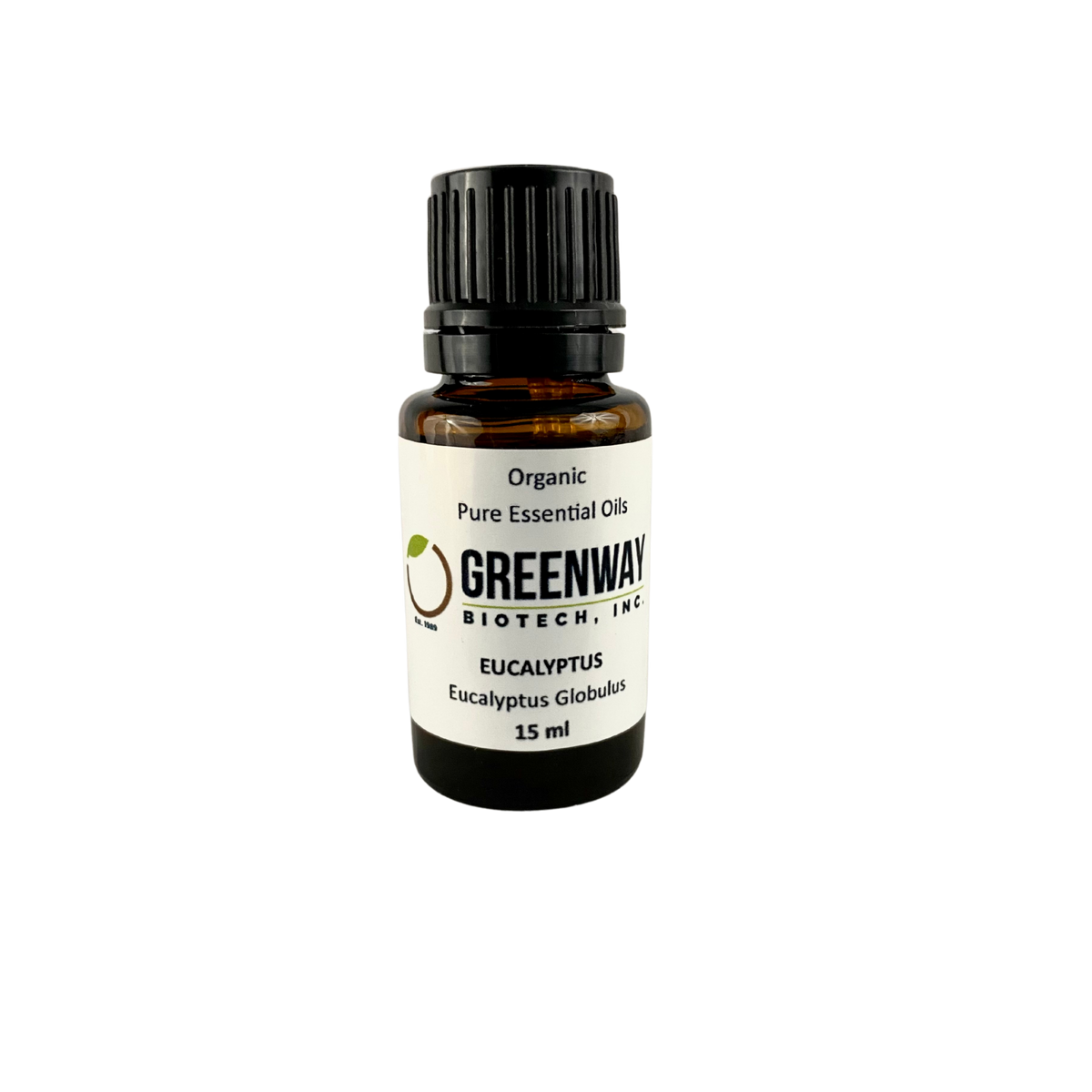
100% pure organic Eucalyptus globulus (Blue Gum) oil, steam-distilled from fresh Australian leaves and rich in 1,8-cineole. A bright top note for diffusing, shower steam rituals, post-activity massage blends, and natural cleaning sprays. 15 ml dark amber glass bottle, hand-bottled in the USA.
Find your size → See how to use itShips from California · 90-day guarantee · GC/MS available on request
100%
Pure organic Eucalyptus globulus
15ml
≈ 300 drops per bottle
60-85%
1,8-cineole (eucalyptol) — the headline
3-5yrs
Shelf life — among the longest-lasting EOs
Eucalyptus is used in moderate amounts — 3 to 5 drops in a diffuser, 8 to 12 drops in a tablespoon of carrier — and stored properly it keeps its character for three to five years. A single 15 ml bottle stretches across many seasons.
| Size | Typical Duration | Uses per Bottle | Best For |
|---|---|---|---|
| 15 ml dark amber glass | 1-3 years (typical home use) | ~300 drops | Best starter size |
| Product Type | Single-origin essential oil |
|---|---|
| Size | 15 ml (≈ 300 drops) dark amber glass with euro dropper cap |
| Key Ingredient | Eucalyptus Globulus Leaf Oil (Eucalyptus globulus) — Blue Gum eucalyptus |
| Source / Origin | Certified-organic eucalyptus groves in Australia (the genus's native range) |
| Grade / Purity | 100% pure, certified organic, GC/MS verified — no fillers, no carrier oils, no synthetic fragrance |
| Aroma | Fresh, camphoraceous, clean — sharp and penetrating with a cool, slightly sweet undertone |
| Aromatic Note | Top note — bright and immediate; fades faster than middle and base notes |
| Extraction | Steam distilled from fresh leaves |
| Phototoxic | No — no UV avoidance window required after topical use |
| Max Topical Dilution | 2.5% (~10-15 drops per tablespoon of carrier oil) |
| Safety | External use only; do not use on or near the face of children under 10; never ingest. See Safety section below for full guidance. |
Eucalyptus is one of the most versatile oils in the cabinet — diffusing, shower steam rituals, massage blends, and natural cleaning all play to its strengths.
Three to five drops in a diffuser. The bright, camphoraceous aroma fills a medium room within minutes — popular for winter and seasonal-comfort routines.
Three to five drops on the shower floor away from the drain. The hot-water steam carries a spa-like eucalyptus vapor — one of the simplest, most popular ways to enjoy this oil.
Ten to twelve drops per tablespoon of carrier oil. The cooling, penetrating quality of eucalyptol is popular in sports-style massage and post-yoga routines.
Fifteen to twenty drops in a 16 oz spray bottle of water with a teaspoon of castile soap. The clean, fresh aroma freshens bathroom and kitchen surfaces.
Combined with rosemary or lemon, eucalyptus anchors fresh, invigorating blends that work well in offices, studios, and study spaces.
There are over 700 species of eucalyptus, and the essential oils they yield are not interchangeable. E. globulus from Australia is the one most people mean when they say "eucalyptus oil" — and the one with the highest 1,8-cineole content.
Sourced from certified-organic eucalyptus groves in Australia, where E. globulus is native and grows in its ideal soil and climate. Australian eucalyptus is the global gold standard for this oil — grown in the very landscapes the genus evolved in, and harvested at maturity for full cineole development.
Gentle steam distillation from fresh-harvested leaves preserves the high 1,8-cineole content that defines this oil's character. Fresh-leaf steam distillation captures the full aromatic profile without the heat damage or solvent residues other extraction methods can introduce.
Eucalyptol (1,8-cineole) makes up 60-85% of this oil and is responsible for the fresh, cooling, penetrating character. E. globulus has one of the highest cineole percentages of any commercial essential oil — higher than E. radiata (the softer "narrow-leaf" variety) and well above non-eucalyptus cineole sources like rosemary cineole-chemotype.
What's in the bottle is steam-distilled Eucalyptus globulus leaf oil and nothing else. No synthetic additives, no carrier oils diluting the active material, no fragrance oils mimicking the aroma. The label lists one ingredient.
Each batch is independently analyzed by GC/MS to verify the constituent profile (cineole percentage, α-pinene, limonene, globulol) and screen for adulterants. Lot-coded for traceability — any bottle can be tracked back to its source grove and batch.
Eucalyptus is one of the longest-lasting essential oils — three to five years sealed and stored cool and dark. The dark amber glass bottle shields against UV (the leading cause of EO oxidation), and the euro dropper cap minimizes air exposure between uses. Hand-filled in Madera, California; backed by a 90-day money-back guarantee.
60-85% 1,8-cineole
The monoterpenoid ether responsible for the fresh, cooling character
Eucalyptus essential oil is dominated by 1,8-cineole (also called eucalyptol) — a monoterpenoid ether that makes up roughly 60-85% of Eucalyptus globulus leaf oil. Cineole is what creates the bright, camphoraceous, slightly cooling first impression that makes eucalyptus instantly recognizable. It is also the compound that earns this oil its place in chest rubs, vapor balms, and aromatherapy blends marketed for clear-breathing rituals across many cultures.
The supporting cast matters too. α-Pinene (2-10%) adds a pine-forest freshness; limonene contributes a soft citrus undertone; globulol and α-terpineol round out the lower-volatility tail of the aromatic profile. None of these are dominant on their own — together they shape the difference between a flat-feeling cineole isolate and the textured complexity of true steam-distilled eucalyptus oil.
The practical implication for users: this is a top-note oil. It announces itself immediately and fades within the first hour. Pair it with middle notes (rosemary, tea tree, lavender) and base notes (patchouli, vetiver) for blends that hold their structure longer than eucalyptus alone would.
Constituent ranges below reflect typical batch profiles for steam-distilled Eucalyptus globulus leaf oil. The current-batch GC/MS report is available on request.
The dominant monoterpenoid ether — responsible for the fresh, cooling, camphoraceous character. The compound that defines what most people recognize as "eucalyptus oil."
A monoterpene found across many conifers and the fresh-cut character of pine needles. Adds forest-bright lift to the eucalyptus profile.
The bright citrus monoterpene also dominant in sweet orange. Contributes a soft, subtly sweet citrus undertone beneath the cineole headline.
A sesquiterpene alcohol named for the species itself. Adds slight woody depth to the lower-volatility tail of the aroma profile.
A monoterpene alcohol with a soft floral-pine character. Contributes to the rounded, slightly sweet quality that sits behind the cineole.
Critical safety note: high cineole content makes this oil unsuitable for use on or near the face of children under 10 — there is documented risk of laryngospasm and respiratory distress in young children. Eucalyptus oil is toxic if ingested; never take internally. Consult a healthcare provider before topical use during pregnancy. Cats lack the liver enzymes to metabolize 1,8-cineole — do not apply to pets.
| Botanical Name | Eucalyptus globulus Labill. |
|---|---|
| Common Names | Blue Gum, Tasmanian Blue Gum, Southern Blue Gum |
| Plant Part Used | Fresh leaves |
| Extraction Method | Steam distillation |
| Country of Origin | Australia (certified organic) |
| Grade | 100% pure, certified organic, GC/MS verified |
| Color & Appearance | Clear to pale yellow, mobile liquid |
| Aroma Profile | Fresh, camphoraceous, clean — sharp, penetrating, slightly sweet undertone |
| Aromatic Note | Top note |
| Primary Constituent | 1,8-cineole / eucalyptol (60-85%) |
| Net Volume | 15 ml (≈ 300 drops) |
| Container | Dark amber glass bottle with euro dropper cap and tamper-evident seal |
| Phototoxicity | Non-phototoxic — no UV avoidance window required |
| Maximum Topical Dilution | 2.5% (Tisserand & Young, 2014) |
| Shelf Life | 3-5 years when stored sealed in a cool, dark place |
| Packaged At | Greenway Biotech facility, Madera, California |
| Testing | Third-party GC/MS verification per batch; lot-coded for traceability |
Three primary use methods. Every drop count below is consistent with the 2.5% maximum topical dilution from Tisserand & Young (2014). When in doubt, use less.
Quick answer: 10-12 drops per tablespoon (15 ml) of carrier oil for a 2-2.5% blend. Always dilute in carrier — never apply neat.
| Use | Eucalyptus Drops | Carrier Volume | Approx. Dilution |
|---|---|---|---|
| Chest & back rub (adult) | 8-10 drops | 1 tbsp (15 ml) | ~1.5-2% |
| Body / massage blend (adult) | 10-12 drops | 1 tbsp (15 ml) | ~2-2.5% |
| Spot massage for tense muscles | 5-6 drops | 1 tsp (5 ml) | ~2.5% |
| Children 10+ (face-avoiding only) | 4-6 drops | 1 tbsp (15 ml) | ~1% (half adult) |
Suitable carriers: jojoba, sweet almond, fractionated coconut, grapeseed, avocado, or coconut (solid at room temperature — makes a convenient chest rub). Available at most health-food stores. Never apply to children under 10's face — see safety section. Patch test on the inner forearm and wait 24 hours before broader use.
Quick answer: 3-5 drops in a diffuser for medium rooms; 2-3 drops in a bowl of hot water for personal steam.
| Method | Eucalyptus Drops | Duration | Notes |
|---|---|---|---|
| Small room (bathroom, closet) | 2-3 drops | 20-30 min | Tight space — start with 2 |
| Medium room (bedroom, office) | 3-5 drops | 30-40 min | Standard diffuser setting |
| Large room (living, kitchen) | 5-7 drops | 40-60 min | Take breaks between sessions |
| Personal steam (bowl) | 2-3 drops | 5-10 min | Hot, not boiling water; close eyes; drape towel; breathe through nose |
| Shower-floor ritual | 3-5 drops | One shower | Away from drain & from where you stand |
Respiratory blend starter: 3 drops eucalyptus + 2 drops Tea Tree + 1 drop Peppermint. Diffuse 30 minutes. Popular during seasonal cool-weather routines.
Quick answer: 15-20 drops per 16 oz (480 ml) of water with an emulsifier. Surface use only — not for skin.
Eucalyptus is a strong oil with a real safety profile for young children and pets. Four habits separate a comfortable experience from a regrettable one.
Mix 1 drop of eucalyptus in 1 tablespoon of carrier oil. Apply a small amount to the inner forearm and wait 24 hours. If no redness, itching, or burning appears, the dilution is workable for you. If anything appears, scale back the drops or switch to diffuser-only use.
Do not use eucalyptus oil on or near the face of children under 10. The high 1,8-cineole content has been documented to cause laryngospasm and respiratory distress in young children. For children 10 and older, use at half the adult dilution rate and stay away from the face.
Eucalyptus oil is toxic if swallowed. Even small amounts can cause serious symptoms including nausea, breathing difficulty, and central nervous system depression. Keep the bottle out of reach of children and pets, and if accidental ingestion occurs, contact Poison Control (1-800-222-1222) immediately.
Thirty to forty minutes per session with breaks between sessions is plenty for most rooms. Cats lack the liver enzymes to metabolize 1,8-cineole — when diffusing in a home with cats, keep the room well-ventilated and ensure animals have a clear exit route. Do not apply directly to pets.
Eucalyptus is a top note — bright, immediate, fast-fading. For blends that hold their structure through a full diffuser session, pair with a middle note (rosemary, tea tree, lavender) and a base note (patchouli, vetiver). Common starting ratio: 3 eucalyptus + 3 middle + 1-2 base for a balanced room blend.
Among essential oils, eucalyptus is one of the longest-lasting in storage — 3 to 5 years sealed in a cool, dark place. Refrigeration isn't required but won't hurt. Write the open-date on the bottle to track freshness.
For aromatherapy use. Dilute before topical application. Keep out of reach of children. Essential oils are not intended to diagnose, treat, cure, or prevent disease.
"Eucalyptus oil" is not one oil — different species yield meaningfully different oils. This is how Blue Gum sits next to its softer cousin and the other cool-fresh top notes in the cabinet.
| Oil | Primary Compound | Aroma Character | Max Topical | Best For |
|---|---|---|---|---|
| Eucalyptus globulus (this product) | 1,8-Cineole 60-85% | Sharp, camphoraceous, penetrating | 2.5% | Diffusing, shower steam, post-activity massage, cleaning |
| Eucalyptus radiata (Narrow-Leaf) | 1,8-Cineole 60-75% | Softer, smoother, slightly sweeter | 2.5% | Gentler diffusing; some prefer for older-child use |
| Peppermint | Menthol 30-55% | Cool, sharp, sweet-minty | 5% | Cooling blends; pairs naturally with eucalyptus |
| Tea Tree | Terpinen-4-ol & cineole | Medicinal, fresh, camphoraceous | 5% | Respiratory blends; cleaning; pairs with eucalyptus |
| Rosemary | 1,8-Cineole 40-55% (CT) | Herbaceous, woody, fresh | 3% | Focus blends; pairs with eucalyptus for fresh-herbal complexity |
Honest sorting — eucalyptus does some things very well and isn't the right pick for every household.
Eucalyptus shines brightest with the right middle and base notes. These three are its most-used partners across diffusing and massage blends.
The classic eucalyptus partner. Both share cool-fresh profiles; together they amplify the cooling sensation for post-activity massage and respiratory diffusing blends.
Essential OilA fresh, medicinal middle note that deepens eucalyptus's clean character. The pair anchors both respiratory blends and natural cleaning sprays.
Essential OilCalming lavender softens eucalyptus's sharpness. The combination makes a balanced chest rub — cooling yet soothing — popular for evening use.
Eucalyptus has a real safety profile for young children, pets, and accidental ingestion. None of these are minor. Read once and remember.
If your question isn't here, contact our team at questions@greenwaybiotech.com.
Yes. Our eucalyptus essential oil is 100% pure, certified-organic Eucalyptus globulus from Australia. It contains no synthetic additives, fillers, fragrance oils, or carrier oils. It is steam-distilled from fresh eucalyptus leaves and hand-bottled at our family-owned Madera, California facility.
Fresh, camphoraceous, and clean — sharp and penetrating with a cool, slightly sweet undertone. Eucalyptus is one of the most recognizable essential-oil scents, often described as "medicinal" but in a refreshing rather than clinical way. As a top note, it announces itself immediately when you uncap the bottle and fades faster than middle and base notes in a blend.
Both are eucalyptus oils with significant 1,8-cineole content, but they aren't identical. E. globulus (this product) is the Blue Gum variety, with 60-85% cineole — the strongest, most penetrating aroma and the one most people mean when they say "eucalyptus oil." E. radiata (Narrow-Leaved Peppermint) has a softer, smoother profile with slightly lower cineole, and some practitioners prefer it for use around older children. Both are excellent for aromatherapy; globulus is the more intense option.
Place 3-5 drops on the shower floor, away from the drain and from where you stand. Turn on a hot shower and let the steam fill the enclosure. Breathe deeply — the steam carries a spa-like eucalyptus vapor that many find invigorating during winter and seasonal-comfort routines. It's one of the most popular and simplest ways to enjoy this oil.
Maximum topical dilution is 2.5%. For an adult chest rub, use 8-10 drops per tablespoon (15 ml) of carrier oil. For body massage, use 10-12 drops per tablespoon. For children 10 and older, use half the adult drop count and avoid the face entirely. Coconut oil (solid at room temperature) makes a convenient chest-rub balm; jojoba and sweet almond work well for massage. Patch test on the inner forearm before broader use.
Do not use eucalyptus oil on or near the face of children under 10 years of age. The high 1,8-cineole (eucalyptol) content has been documented to cause laryngospasm and respiratory distress in young children. For children 10 and older, use at half the adult dilution rate and avoid the face. For diffusing in shared spaces, keep amounts modest, ventilate well, and observe for any sensitivity. Always consult a pediatrician before using essential oils around children.
No. Eucalyptus is non-phototoxic, meaning you do not need to avoid sunlight after topical application. It's safe for daytime use within the 2.5% topical limit.
Cats are particularly sensitive to cineole-rich essential oils like eucalyptus because they lack the liver enzymes to metabolize 1,8-cineole. Do not apply to pets. When diffusing, keep the area well-ventilated and ensure animals have a clear exit route. Consult your veterinarian before using any essential oil around pets, especially cats.
For chest rubs, coconut oil (solid at room temperature) creates a convenient, easy-to-apply balm. Sweet almond oil works well for muscle massage. Jojoba is non-comedogenic and absorbs cleanly. Fractionated coconut is shelf-stable and good for roll-on blends. Essential oils don't mix with bathwater, so we don't recommend adding them to a bath or to bath salts.
Approximately 300 drops using the standard euro dropper cap included with each bottle. Actual count varies slightly depending on oil viscosity and dispensing speed — but you can safely plan a year or more of regular home use from one 15 ml bottle.
Store in a cool, dark place with the cap tightly sealed. The dark amber glass bottle protects against UV light, which is the leading cause of essential-oil oxidation. Eucalyptus has a 3-5 year shelf life when stored properly — one of the longest-lasting essential oils. Refrigeration is not required but will not harm the oil. Write the open-date on the label to track freshness.
No — and this is critical. Eucalyptus oil is toxic if swallowed and can cause serious symptoms including nausea, vomiting, breathing difficulty, and central nervous system depression. Our essential oils are formulated and labeled for external aromatherapy use only. If accidental ingestion occurs, contact Poison Control (1-800-222-1222) immediately. Essential oils are not intended to diagnose, treat, cure, or prevent disease.
Some research suggests eucalyptus oil may have insect-deterrent properties. It is not a registered EPA pesticide and shouldn't be relied on as a sole tick or insect repellent. Some DIY recipes use it in outdoor sprays. For high-risk tick or mosquito environments, use proven repellents as your primary protection — Greenway's Buzz Away Bug Repellent is a CDC-recognized lemon eucalyptus blend formulated specifically for this use.
One 15 ml dark amber glass bottle. Steam-distilled in Australia from certified-organic Eucalyptus globulus leaves; hand-filled in Madera, California. Free shipping on orders over $100 in the continental US, and a 90-day money-back guarantee.
Choose your size →Ships from California · 90-day guarantee · GC/MS reports above