Gypsum (Calcium Sulfate)
- Regular Price
- $ 19.99
- Sale Price
- $ 19.99
- Regular Price
- $ 18.99
Sold Out
- Unit Price
- per
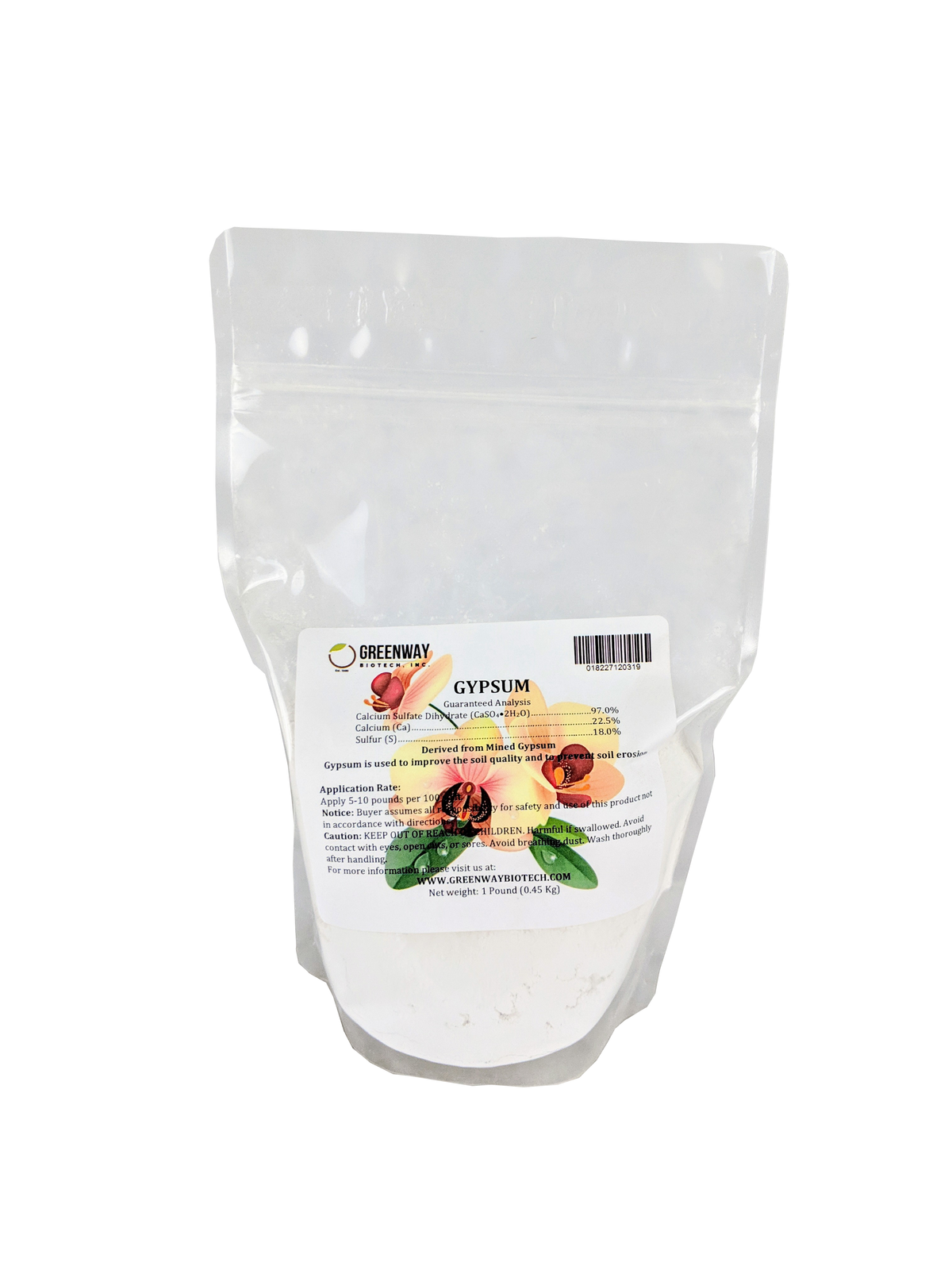
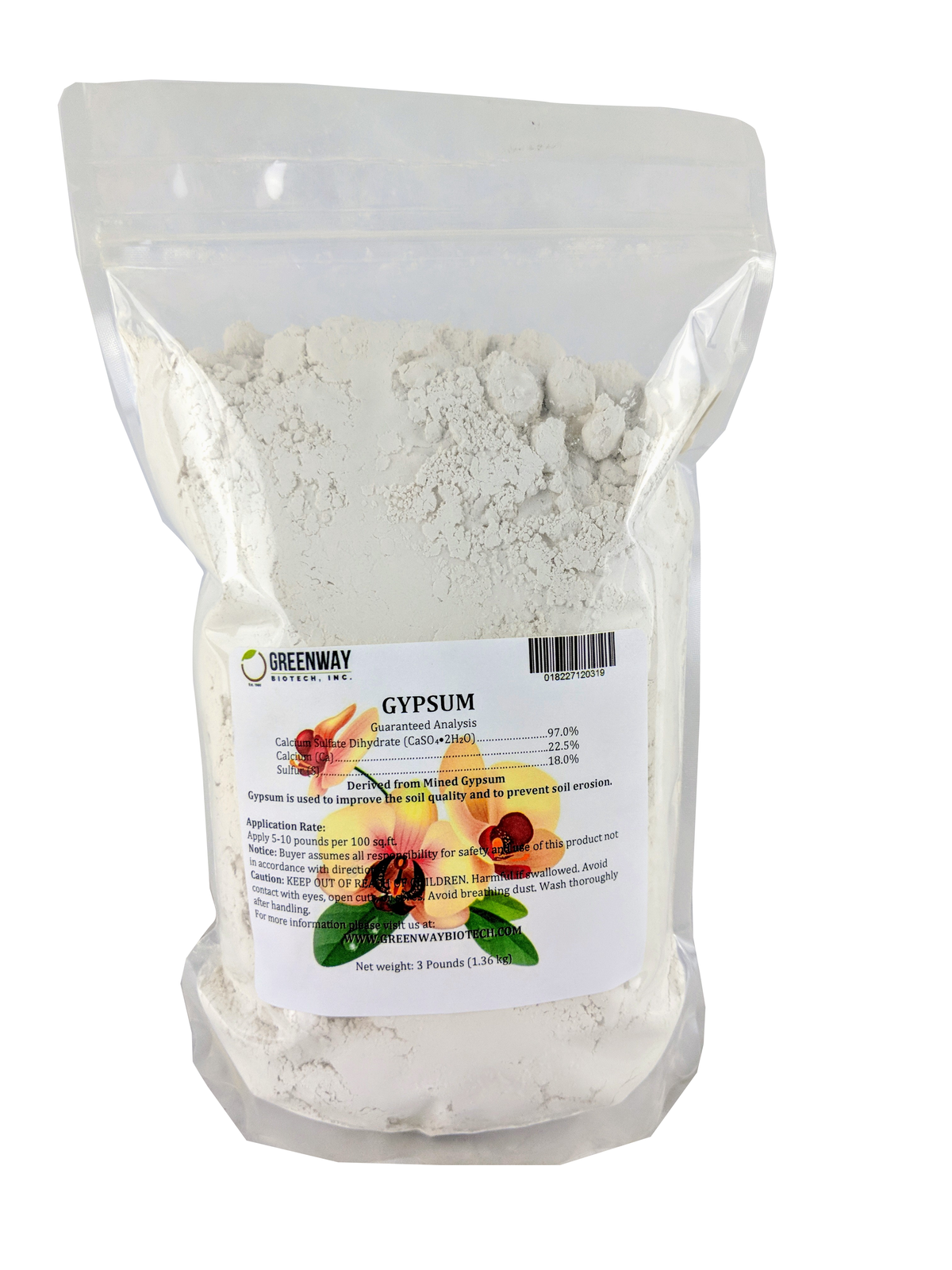
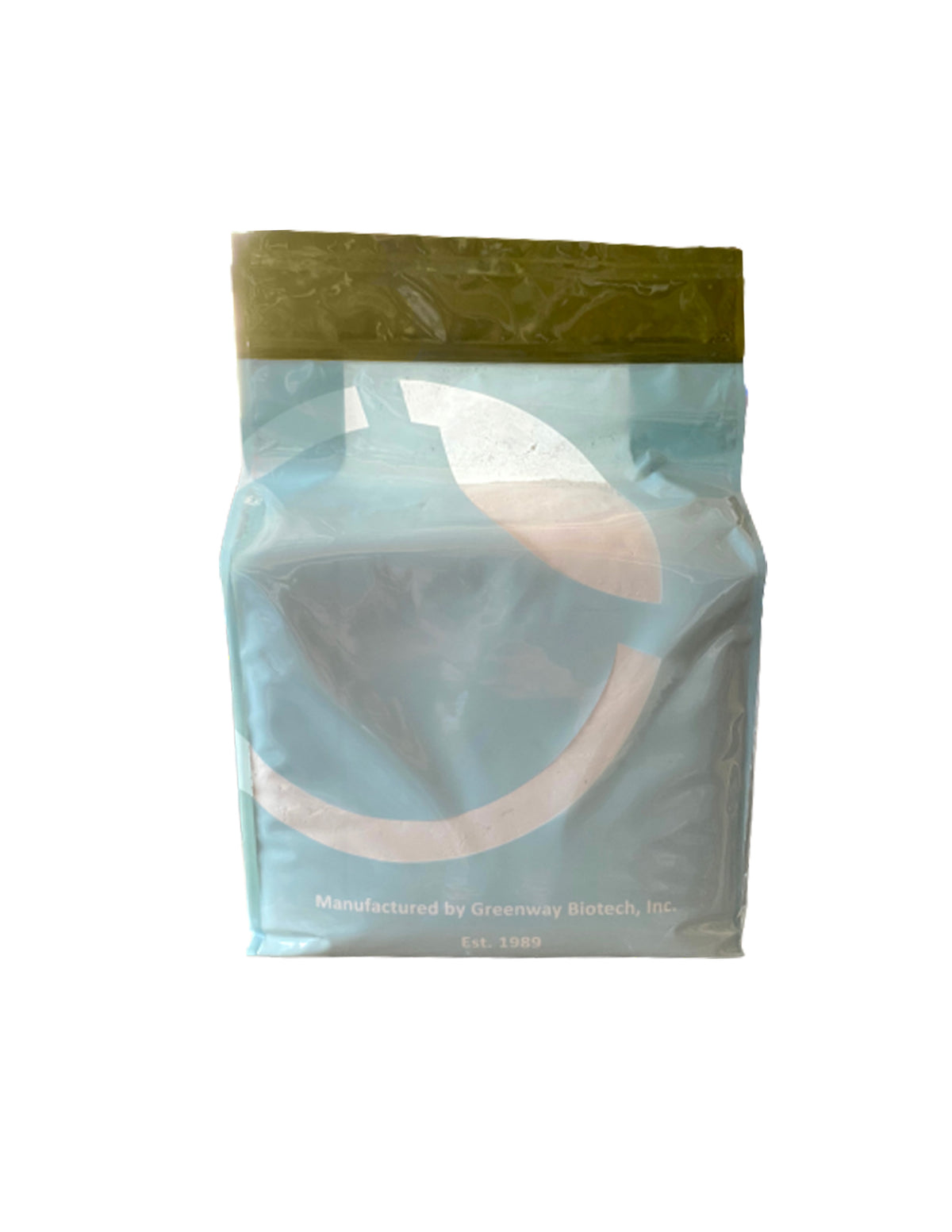
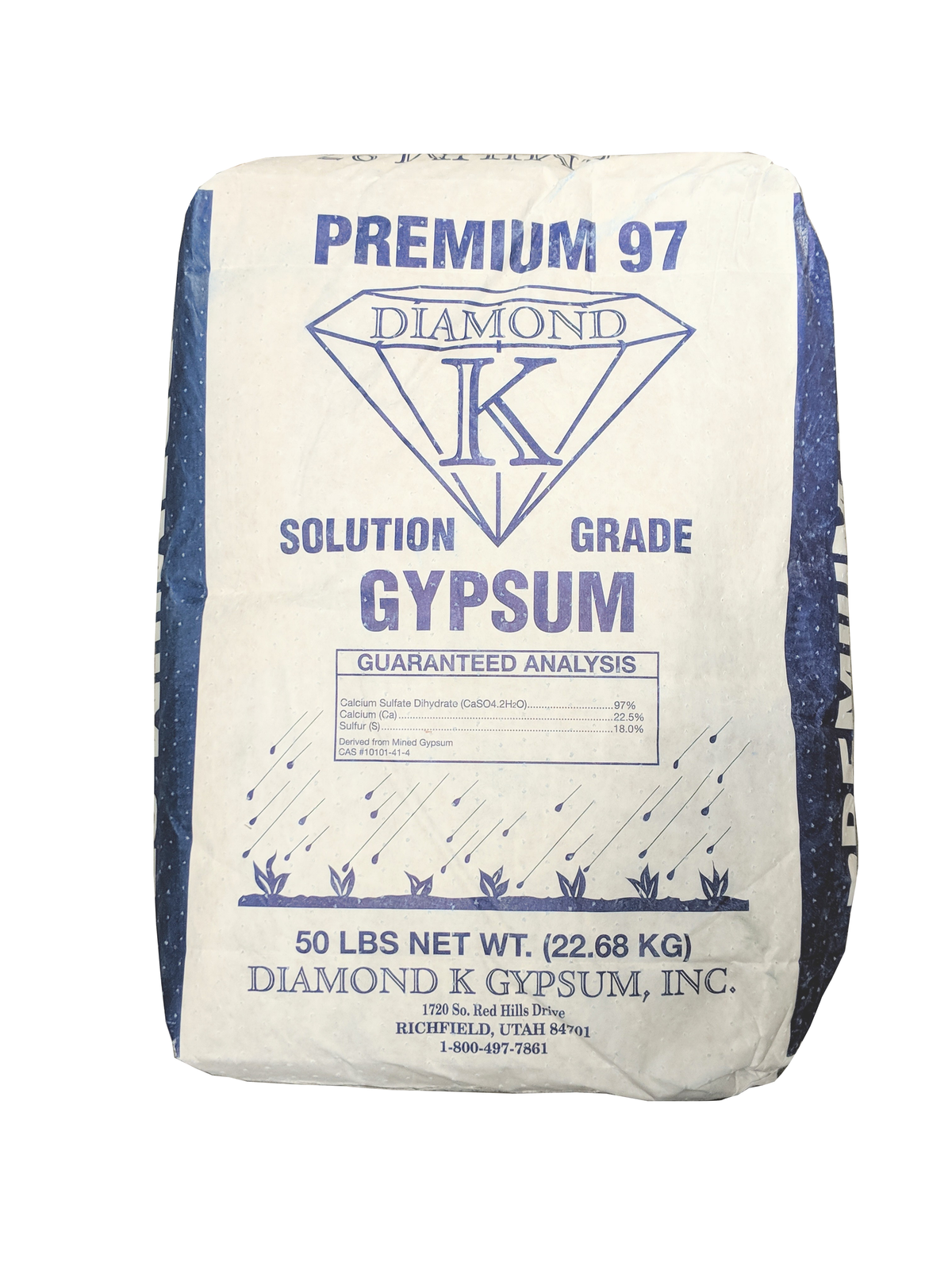
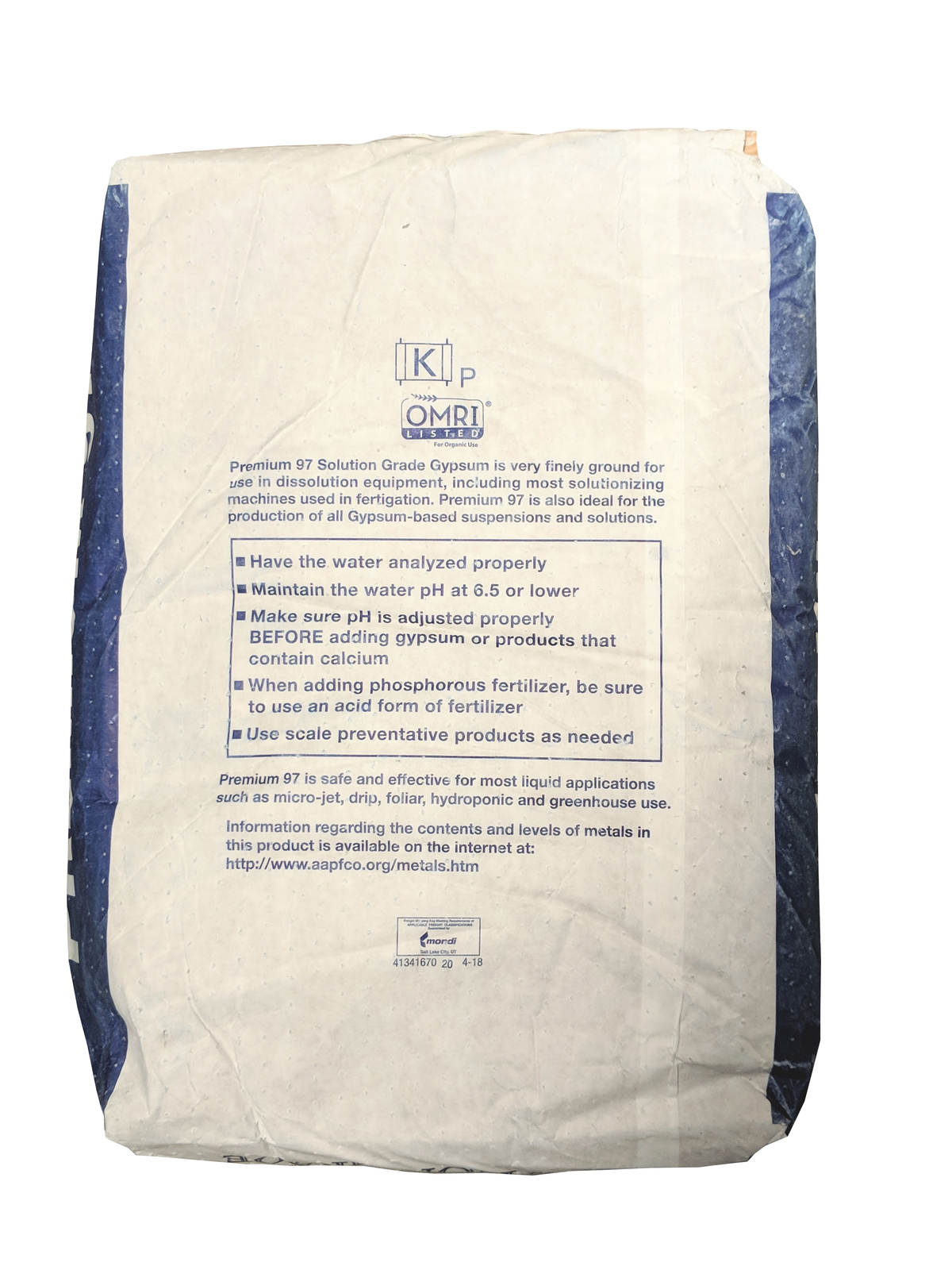
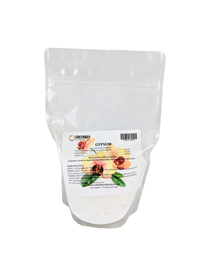
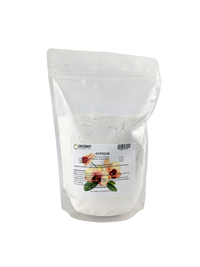
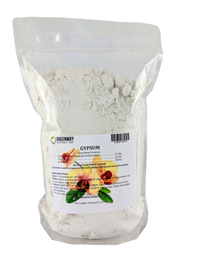
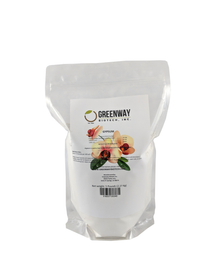
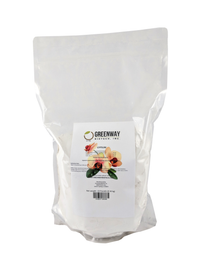
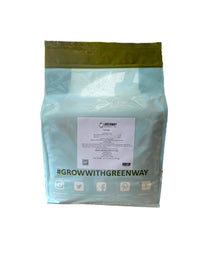
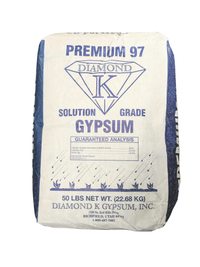
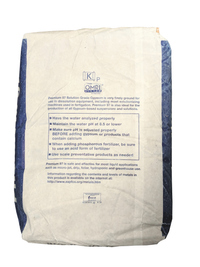
Mined calcium sulfate · 22.5% Ca · 18% S
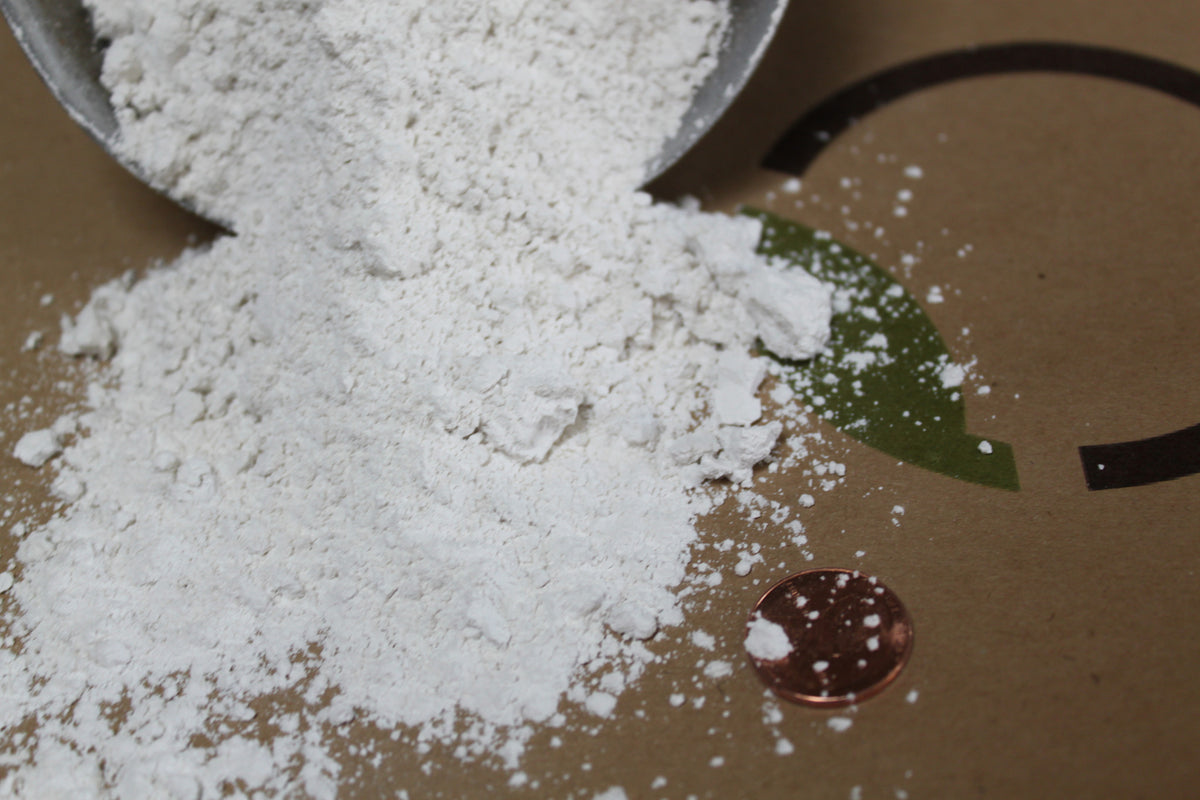
Gypsum is ground, mined calcium sulfate dihydrate (CaSO₄·2H₂O) that supplies 22.5% calcium and 18% sulfur in the sulfate form plants take up. It is a neutral salt, so it adds calcium and sulfur without raising or lowering soil pH, which makes it the calcium source for beds and fields where the pH is already right or too high for lime.
It is also the standard amendment for sodium-affected (sodic) soils, where the calcium displaces sodium so irrigation water can leach it away. Its most important limitation: gypsum does not loosen ordinary compacted clay. Its structural benefit is documented on sodium-affected and dispersive soils, so let a soil test, not the soil texture, decide whether you need it.
| Specification | Detail |
|---|---|
| Calcium sulfate dihydrate (CaSO₄·2H₂O) | 97.0% |
| Calcium (Ca) | 22.5% |
| Sulfur (S) | 18.0%, as sulfate |
| Derived from | Mined gypsum |
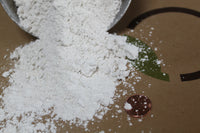
| Physical form | White to off-white fine powder; 97% passes a 200-mesh screen (safety data sheet, March 2026) |
| Solubility | About 2.1 g per liter of water (safety data sheet); Ohio State University cites 2.5 g/L, roughly 200 times agricultural lime. Enough to dissolve gradually in soil moisture, far too little for foliar sprays, drip lines, or hydroponic reservoirs. |
| Effect on soil pH | None. Gypsum is a neutral salt, not a liming material and not an acidifier (University of Arkansas Extension; UC Cooperative Extension). |
| Nitrogen, phosphate, potash | None (0-0-0) |
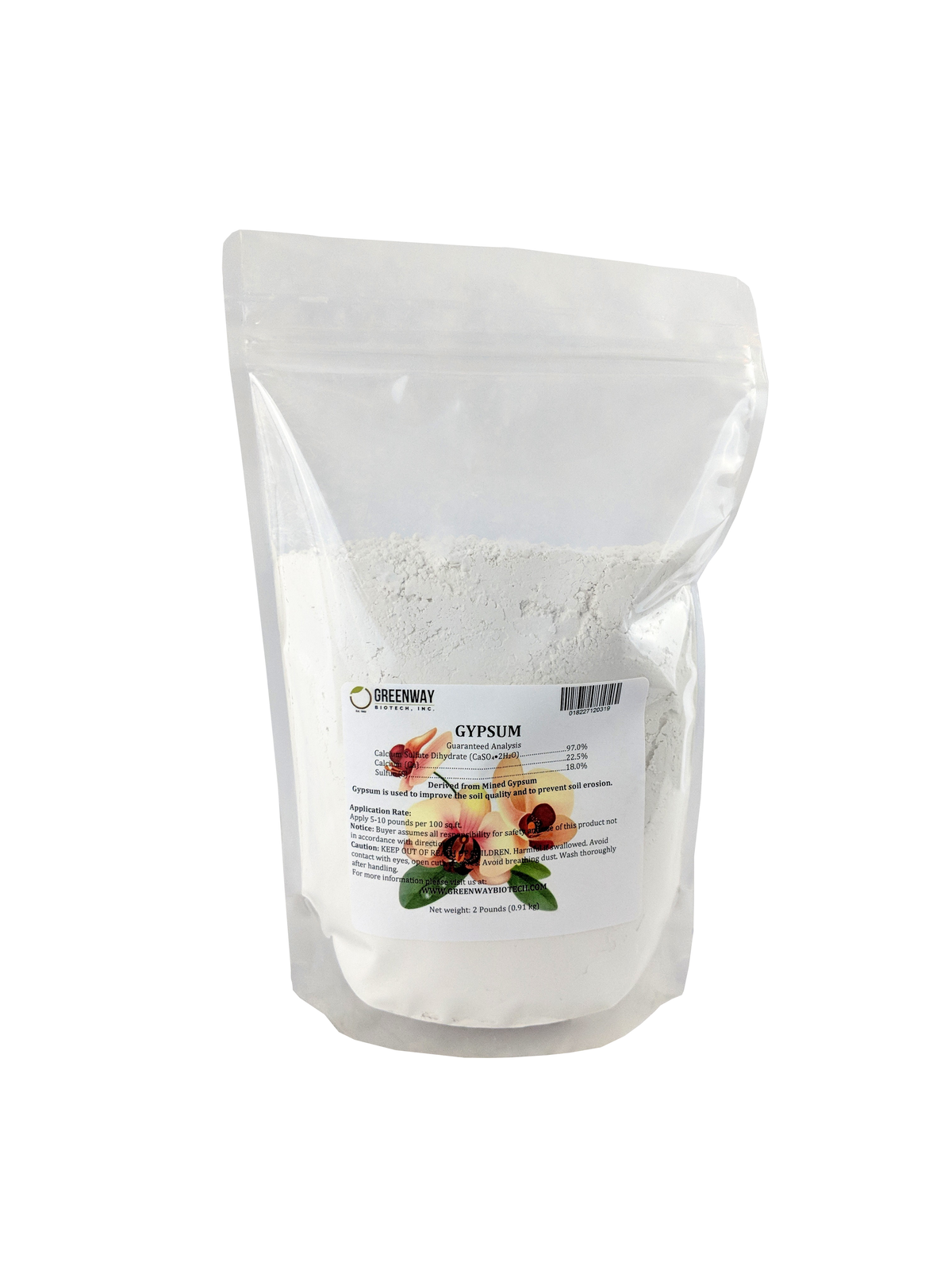
| Package sizes | 1 lb, 2 lb, 3 lb, 5 lb, 10 lb, 25 lb, and 50 lb (shipped as 2 × 25 lb bags) |
| Packaged by | Greenway Biotech, Inc., Madera, California |
Percentages are by weight of product, so 1 lb of gypsum contains 0.225 lb (3.6 oz) of calcium and 0.18 lb (2.9 oz) of sulfur, and a 25 lb bag contains about 5.6 lb of calcium and 4.5 lb of sulfur. When a soil laboratory reports a gypsum requirement, it is normally stated for pure calcium sulfate dihydrate; divide that figure by 0.97 to get the amount of this 97% product.
Choose gypsum when a soil test points to one of these four situations. In each, the calcium or sulfur is delivered without moving the pH, which is the one thing lime and elemental sulfur cannot do.
University of Georgia Extension’s tomato guide puts it plainly: if the pH test comes back normal but calcium is low, apply gypsum rather than lime. Tomatoes, peppers, brassicas, melons, and root crops all draw heavily on soil calcium; gypsum supplies it at pH 6.0–7.5 and on alkaline soils where lime would push the pH higher and tie up iron and manganese.
Sulfur is needed for protein and chlorophyll synthesis, and low-organic-matter, sandy, or heavily leached soils run short of it. Gypsum supplies sulfur as sulfate, the form roots take up, and unlike elemental sulfur or ammonium sulfate it does not acidify the soil. Use it where a soil test recommends sulfur and the pH is already where you want it.
Where sodium occupies more than about 15% of the exchange capacity (ESP above 15, or SAR above 13), clay disperses, the surface crusts, and water stops infiltrating. Calcium from gypsum replaces that sodium on the exchange sites; irrigation or rainfall then leaches the sodium below the root zone. This works only where water can drain through the profile.
Gypsum is the traditional calcium source for peanuts because the developing pods absorb calcium directly from the top few inches of soil. Georgia and Arkansas Extension recommend it at early bloom on a pegging-zone soil test; the rates are in the field table below and are regional programs, not general garden rates.
Every rate below is product weight, spread evenly and then watered in or worked into the soil. They are grouped by the evidence behind them: university Extension garden rates, the directions on the Greenway Biotech label, a soil-test calculation for sodic soils, and conversions for a laboratory sulfur or calcium recommendation. Base any application on a soil test taken within the last year; gypsum applied where it is not needed adds salts and can leach magnesium.
Weigh it. Gypsum powder settles and packs, so cups and spoons are unreliable for this product. A kitchen or bathroom scale is the accurate tool: 1 lb is 16 oz; 2.4 lb is about 38 oz.
| Situation | Rate | Calcium and sulfur delivered per 100 sq ft | Method and timing | Basis |
|---|---|---|---|---|
| Starting rate: low calcium, pH normal | 1 lb per 100 sq ft (0.16 oz per sq ft) | 0.225 lb Ca, 0.18 lb S | Tomatoes, peppers, brassicas, melons, root crops. Work into the top 4–6 inches before planting, or spread around established plants and water in; once per season | University of Georgia Extension B1271: 1 lb gypsum per 100 sq ft when pH is normal but calcium is low |
| Upper garden rate: low calcium, blossom-end rot history | 2 lb per 100 sq ft (0.32 oz per sq ft) | 0.45 lb Ca, 0.36 lb S | Same; before planting | UGA Extension, Colquitt County: 1–2 lb per 100 sq ft before planting |
| Lab says raise calcium to high, no lime | 10 lb per 100 sq ft (1.6 oz per sq ft) | 2.25 lb Ca, 1.8 lb S | Incorporate before planting; one application, then retest | Virginia Tech Extension, Soil Test Note 19: 10 lb gypsum per 100 sq ft where limestone is not recommended |
Gypsum supplies the soil-calcium side of fruit calcium nutrition; it does not cure blossom-end rot. The disorder is driven at least as much by uneven watering, root damage, and excess nitrogen or potassium as by soil calcium, and Extension trials have not shown calcium applications to fix fruit already affected. Use the starting rate, mulch, and water evenly.
| Label use | Label rate | Equivalent per acre | Apply only when | Extension context |
|---|---|---|---|---|
| Heavy clay soil | 50–100 lb per 1,000 sq ft (start at 50) | 1.1–2.2 tons per acre | A soil test shows sodium is the cause of poor structure (ESP above about 15, SAR above 13) or your laboratory recommends gypsum for dispersion or crusting. Texture alone is not a reason to apply. | OSU Extension Bulletin 945: 1,000–5,000 lb per acre is the usual range for improving physical properties. USDA NRCS Practice Standard 333 scales annual rates by CEC: about 11 lb per 1,000 sq ft below CEC 5, 23 lb at CEC 5–10, 46 lb at 10–15, and 92 lb above 15, so on low-CEC soils the label’s starting rate is already generous; let the soil-test CEC decide. |
| Sodic soils | 100–200 lb per 1,000 sq ft (start at 100) | 2.2–4.4 tons per acre | A soil test confirms sodicity and the soil can be leached with good-quality water; retest after several months of leaching before repeating | UC Cooperative Extension landscape guidance: about 20 lb per 100 sq ft (200 lb per 1,000 sq ft) followed by repeated leaching over several months; OSU Bulletin 945: 1–5 tons per acre every few years as needed |
| pH adjustment | Not a use for gypsum | — | Never. Gypsum neither raises nor lowers pH; use lime or elemental sulfur based on a soil test. | University of Arkansas Extension FSA2199: “Gypsum will not change the soil pH”; OSU Bulletin 945: a neutral salt, not a liming agent |
If your report gives exchangeable sodium percentage (ESP) and cation exchange capacity (CEC), you can calculate the gypsum requirement with the University of Arkansas rule of thumb: 1.7 tons of pure gypsum per acre replaces 1.0 cmolc/kg (1.0 meq/100 g) of exchangeable sodium. That coefficient corresponds to about a foot of soil depth, the basis used in USDA Agriculture Handbook 60.
Worked example (from FSA2199): CEC 20 cmolc/kg, ESP 15%, target 5%. Sodium to replace = 0.10 × 20 = 2.0 cmolc/kg. Pure gypsum = 1.7 × 2.0 = 3.4 tons per acre; this 97% product = 3.4 ÷ 0.97 = 3.5 tons per acre, or about 160 lb per 1,000 sq ft. Many laboratories report a “gypsum requirement” directly; use it the same way, adjusting for purity.
Drainage and leaching are the prerequisite. Gypsum only reclaims a sodic soil if the displaced sodium can be leached below the root zone with good-quality water (University of Arkansas Extension; Utah State University Extension). Where drainage is poor, tile drainage, deep ripping, or a change in irrigation water must come first. USDA NRCS caps gypsum at 5 tons per acre per year; split larger requirements over more than one season, retest after several months of leaching, and do not apply more than the calculation calls for, because excess gypsum raises soil salinity.
When a soil test recommends a quantity of sulfur or calcium, convert it with the label guarantee: lb of gypsum = lb of sulfur recommended ÷ 0.18, or lb of gypsum = lb of calcium recommended ÷ 0.225, on the same area basis as the recommendation. Broadcast before planting and incorporate where practical. Sulfate leaches, so gypsum may need reapplying every couple of years in wet climates or on irrigated fields (OSU Bulletin 945); let the soil test decide.
| Crop or purpose | Rate of this product | Condition and timing | Basis |
|---|---|---|---|
| Sulfur replacement, corn, soybean, or wheat | About 170 lb per acre (30 lb S) | Pre-plant, broadcast or banded, where a soil test or tissue test shows sulfur is short | OSU Extension Bulletin 945, Table 4-3 (suggested rates based on harvest removal plus leaching losses), converted at 18% S |
| Sulfur replacement, alfalfa | About 390 lb per acre (70 lb S) | Pre-plant or early spring; alfalfa has a high sulfur demand | OSU Bulletin 945, Table 4-3, converted at 18% S |
| Sulfur replacement, tomato or cotton | About 560 lb per acre (100 lb S) | Pre-plant | OSU Bulletin 945, Table 4-3, converted at 18% S |
| Peanut, pegging-zone calcium (Georgia) | 1,000 lb per acre | At early bloom. All seed peanut fields receive it; other fields are tested in the pegging zone (top 4 inches), where a response is unlikely above 500 lb Ca per acre with a Ca:K ratio of 3:1 or higher | University of Georgia Extension peanut fertilization guidance |
| Peanut, pegging-zone calcium (Arkansas) | 1,500 lb per acre | When Mehlich-3 calcium in the pegging zone is below 600 ppm | University of Arkansas Extension FSA2199 |
| Reducing dissolved phosphorus in runoff (conservation practice) | At least 1 ton per acre, broadcast; about 2 tons per acre was the most effective and cost-efficient rate in Ohio research | Where soil-test phosphorus is more than twice the optimum, or within 5 days after manure application; no more than 5 tons per acre per year | USDA NRCS Conservation Practice Standard 333 (2024); OSU Bulletin 945; OSU ANR-0153: two 1-ton-per-acre applications cut dissolved reactive phosphorus in runoff by 41% |
Positive yield responses to gypsum are uncommon where soil sulfur and calcium are already adequate: a 2024 Ohio State review of 62 gypsum trials found yield increases in only four. Apply for a tested need, not as insurance.
Size your order with the calculator, which applies the rates above.
Formula: pounds of gypsum = area × rate. For garden calcium at the starting rate, area in sq ft × 0.01 (1 lb per 100 sq ft). For the label’s sodic starting rate, area in sq ft × 0.10 (100 lb per 1,000 sq ft). For a laboratory gypsum requirement in tons per acre, multiply by 2,000 × acres and divide by 0.97 for this 97% product. For a sulfur recommendation, divide the pounds of sulfur by 0.18.
Worked examples: a 240 sq ft vegetable bed testing low in calcium at pH 6.8 needs 240 × 0.01 = 2.4 lb at the starting rate; a 3 lb bag covers it. A 2,500 sq ft sodic patch at the label’s 100 lb per 1,000 sq ft needs 250 lb: five 50 lb orders (each shipped as 2 × 25 lb bags). A laboratory requirement of 1.2 tons per acre on 0.5 acre is 1.2 × 2,000 × 0.5 ÷ 0.97 = 1,237 lb, which is a bulk order; contact us for a quote above 500 lb.
| Bag | Garden calcium, 1 lb per 100 sq ft | Label heavy clay (sodium-affected), 50 lb per 1,000 sq ft | Label sodic soil, 100 lb per 1,000 sq ft |
|---|---|---|---|
| 1 lb | 100 sq ft | 20 sq ft | 10 sq ft |
| 2 lb | 200 sq ft | 40 sq ft | 20 sq ft |
| 3 lb | 300 sq ft | 60 sq ft | 30 sq ft |
| 5 lb | 500 sq ft | 100 sq ft | 50 sq ft |
| 10 lb | 1,000 sq ft | 200 sq ft | 100 sq ft |
| 25 lb | 2,500 sq ft | 500 sq ft | 250 sq ft |
| 50 lb (2 × 25 lb) | 5,000 sq ft | 1,000 sq ft | 500 sq ft |
The calculator below applies these rates, converts a laboratory gypsum, sulfur, or calcium requirement, shows the calcium and sulfur you are adding, and recommends the lowest-price bag combination that covers the amount (and the least-leftover combination when that differs). Prices are shown in USD; tax and shipping are added at checkout, and availability is confirmed when you add to cart.
The calculator needs JavaScript. If it does not appear, use the formula and coverage table above to choose a size.
Gypsum dissolves slowly in soil water, releasing calcium (Ca²⁺) and sulfate (SO₄²⁻) ions. Both are taken up directly by roots: calcium builds cell walls and root tips and is barely mobile once inside the plant, so a steady soil supply matters, and sulfate is the form of sulfur that plants use to make the amino acids cysteine and methionine. Because neither ion consumes or releases acidity, the soil pH does not change. Our guide to calcium in plants covers the plant side in more depth.
The structural effect is a matter of which cation sits on the clay. Sodium ions carry a single charge and a large shell of water, so they are weakly held; sodium-dominated clay particles repel one another, disperse, seal the surface, and stop water moving. Calcium ions are held tightly and let clay particles flocculate into stable aggregates with pores between them. Add gypsum to a sodic soil and the calcium displaces sodium from the exchange sites; the sodium sulfate that forms is soluble and leaches away with irrigation. That is why gypsum needs drainage to work, and why it is measured in tons per acre on badly sodic fields. University of Arkansas Extension notes that surface crusting is a significant problem on some silt loam soils, where the same dispersion mechanism is at work.
On clay that is compacted by traffic or tillage, calcium is usually already the dominant cation, so adding more changes nothing about the structure. Gypsum does raise the calcium in the soil solution enough to move some magnesium and potassium off the exchange sites and down the profile, which is a benefit on magnesium-dominated soils and a risk on sandy or magnesium-poor ones. The evidence above concerns gypsum in general; it is not a trial of this finished product, and the response you see will depend on your soil test, water, and drainage.
Calcium can come from several Greenway products, and they differ in speed, pH effect, and what else they carry. Analyses below are each product’s label guarantee as shown on its page. For a longer discussion, read calcium nitrate vs. gypsum vs. lime.
| Product | Analysis | pH effect | Choose it when | Limitation |
|---|---|---|---|---|
| Gypsum (Calcium Sulfate), this product | 22.5% Ca, 18% S | None | Soil calcium or sulfur is low at a pH that should not change, or sodium must be displaced | Slow (weeks); not for foliar, drip, or hydroponic use; no help for non-sodic compaction; can leach Mg and K |
| Dolomite Lime | 22.7% Ca, 11.8% Mg | Raises pH | Soil is acid and needs both pH correction and calcium plus magnesium | Wrong choice where pH is already 6.5 or higher; slow |
| Calcium Nitrate 15.5-0-0 | 15.5% N, 19% Ca | Little | Fast soluble calcium plus nitrate nitrogen for fertigation, hydroponics, or a quick soil drench | Adds nitrogen every time; never mixed in concentrate with phosphate or sulfate fertilizers |
| Cal-Mag Plus 2-0-0 | 2% N, 3.2% Ca, 1.2% Mg, 0.1% Fe | Little | Balanced calcium, magnesium, and iron for reservoirs, coco, and RO water | Low analysis; a liquid concentrate, not a soil amendment |
| Organic Bone Meal 3-15-0 | 3% N, 15% P₂O₅, 24% Ca | Slight rise over time | A soil test calls for phosphorus and calcium together, for bulbs and transplants | Adds phosphorus whether or not it is needed; slow; attracts dogs |
| Crustacean Meal 4-0-0 | 4% N, 12% Ca, 1.3% Mg | Little | An organic calcium and nitrogen source that feeds soil biology | Slow (2–3 months); lower calcium per pound; no sulfur |
To lower pH rather than supply calcium, the comparable Greenway product is Elemental Sulfur Powder; it is not a calcium source and is not interchangeable with gypsum.
No. Gypsum is a neutral salt; at any recommended rate it neither raises nor lowers soil pH. To raise pH you need a liming material such as dolomite lime, and to lower it you need elemental sulfur. Gypsum is the calcium source for soil whose pH is already right or is too high for lime.
Both supply calcium, but lime (calcium carbonate or dolomite) neutralizes acidity and raises pH as it dissolves, while gypsum (calcium sulfate) leaves the pH alone and adds sulfur. Use lime when a soil test says the pH is too low; use gypsum when the pH is fine but the test shows low calcium, low sulfur, or excess sodium. They are not interchangeable in either direction.
Only if sodium is the reason the clay is dispersed and sealed, which a soil test (ESP or SAR) will show. On sodium-affected soil, gypsum replaces the sodium with calcium so the clay can re-aggregate and drain. On ordinary compacted clay, where calcium is already the main cation, university trials show no change in structure from gypsum; organic matter, avoiding work on wet soil, and mulch are what help.
Calculate it from your soil test: 1.7 tons of pure gypsum per acre replaces 1 cmolc/kg of exchangeable sodium (University of Arkansas Extension rule of thumb), and this product is 97% pure, so divide by 0.97. The worked example under Application rates shows the arithmetic. A typical moderately sodic field lands between 2 and 5 tons per acre, applied no faster than 5 tons per acre per year, and it only works if the soil can be leached with good-quality water. The label’s 100–200 lb per 1,000 sq ft covers most garden and lawn cases.
Not by itself. Blossom-end rot is a calcium delivery problem inside the fruit, driven by uneven watering, root damage, rapid growth, and excess nitrogen or potassium as much as by soil calcium. Where a soil test shows calcium is low and the pH is fine, gypsum at 1–2 lb per 100 sq ft before planting supplies the soil calcium the test shows is missing; mulch and steady irrigation do the rest. Calcium applied after fruit is affected does not repair it.
Every pound of product contains 0.225 lb of calcium and 0.18 lb of sulfur by the label guarantee, so a 5 lb bag adds about 1.1 lb of calcium and 0.9 lb of sulfur, and a 25 lb bag about 5.6 lb of calcium and 4.5 lb of sulfur. To convert a soil-test sulfur recommendation, divide the pounds of sulfur by 0.18; for calcium, divide by 0.225.
No. Gypsum dissolves only to about 2–2.5 grams per liter, so it leaves residue on leaves, settles in reservoirs, and clogs emitters. For soluble calcium use Calcium Nitrate 15.5-0-0, or Cal-Mag Plus 2-0-0 where you also need magnesium and iron.
Apply for a tested need, then retest rather than repeating on a schedule. Garden calcium is usually a once-per-season pre-plant application. Sodic reclamation may take more than one application, guided by a retest after several months of leaching. Sulfate leaches, so on sandy or irrigated soils a sulfur application may be needed every year or two when the test shows a shortfall. Never exceed 5 tons per acre in a year.
Mined gypsum is a natural mineral that many organic certifiers allow, but this product does not carry an OMRI listing or a California Organic Input Material registration of its own. If you grow under certification, confirm its status with your certifier before use; we can supply the label and safety data sheet your certifier asks for.
It can on sandy, low-CEC, or magnesium-poor soils, and on acid soils, because the extra calcium pushes magnesium and potassium off the exchange sites and lets them leach. This is one reason to apply only the tested amount. If your test shows magnesium is already low, address it separately and keep the gypsum rate at the low end.
Every rate and claim above traces to a university Extension publication, USDA NRCS, or the product label and safety data sheet. The references are listed here for growers, advisors, and certifiers who want to check them.
Rates and sources reviewed September 9, 2026.
Not sure whether your soil needs gypsum, lime, or neither? Email your soil test to questions@greenwaybiotech.com or call (562) 351-5168, Monday to Friday, 7 AM to 5 PM Pacific, and we will read it with you. Every order carries a 90-day satisfaction guarantee.
Ready to buy? Run the calculator to size your order, or choose a bag from the size selector at the top of this page. For requirements above 500 lb, contact us for a bulk quote.
Greenway Biotech, Inc. is a family-owned fertilizer manufacturer in Madera, California, blending and packaging specialty fertilizers and soil amendments since 1989.