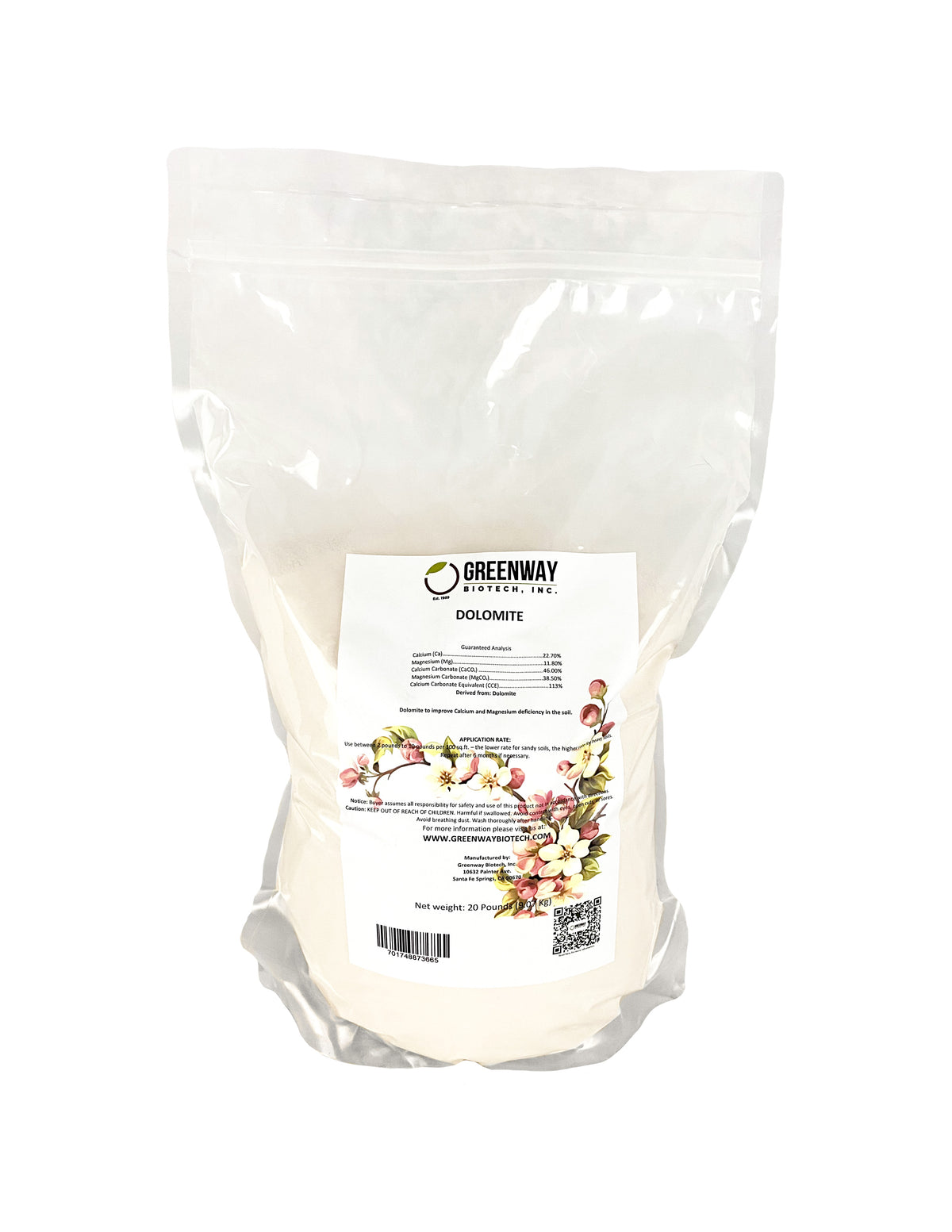
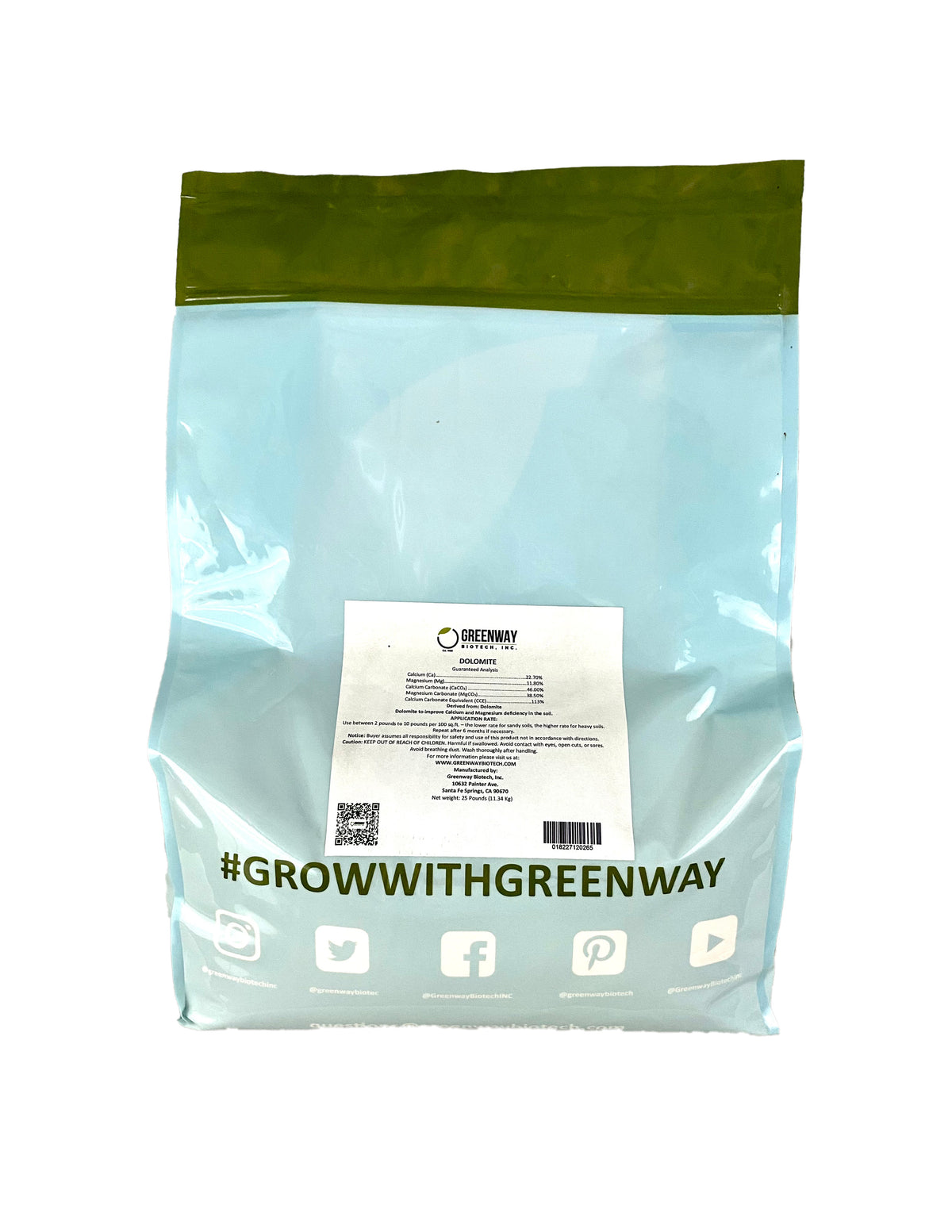
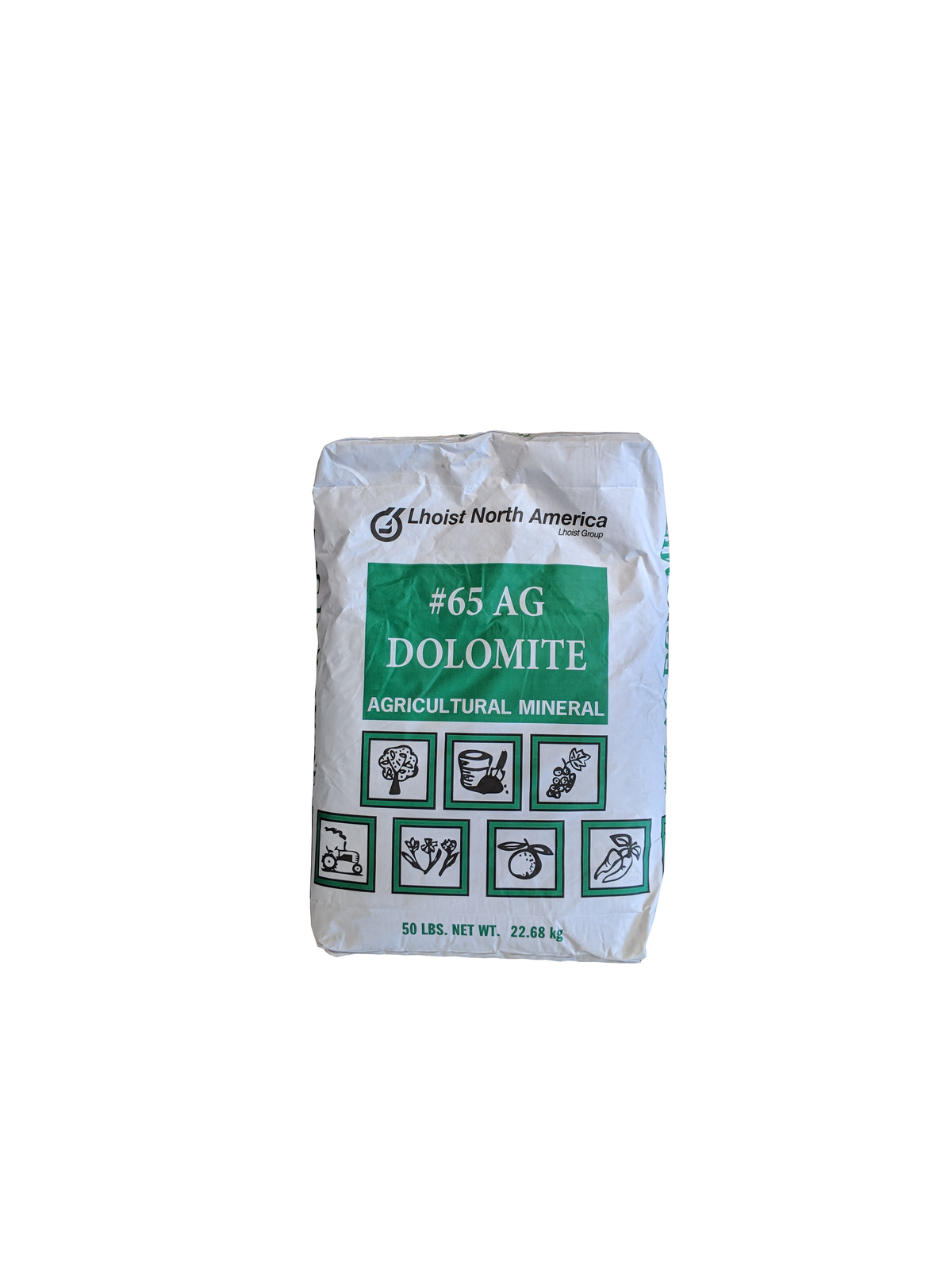
Dolomite
- Regular Price
- $ 19.99
- Sale Price
- $ 19.99
- Regular Price
- $ 17.99
- Unit Price
- per
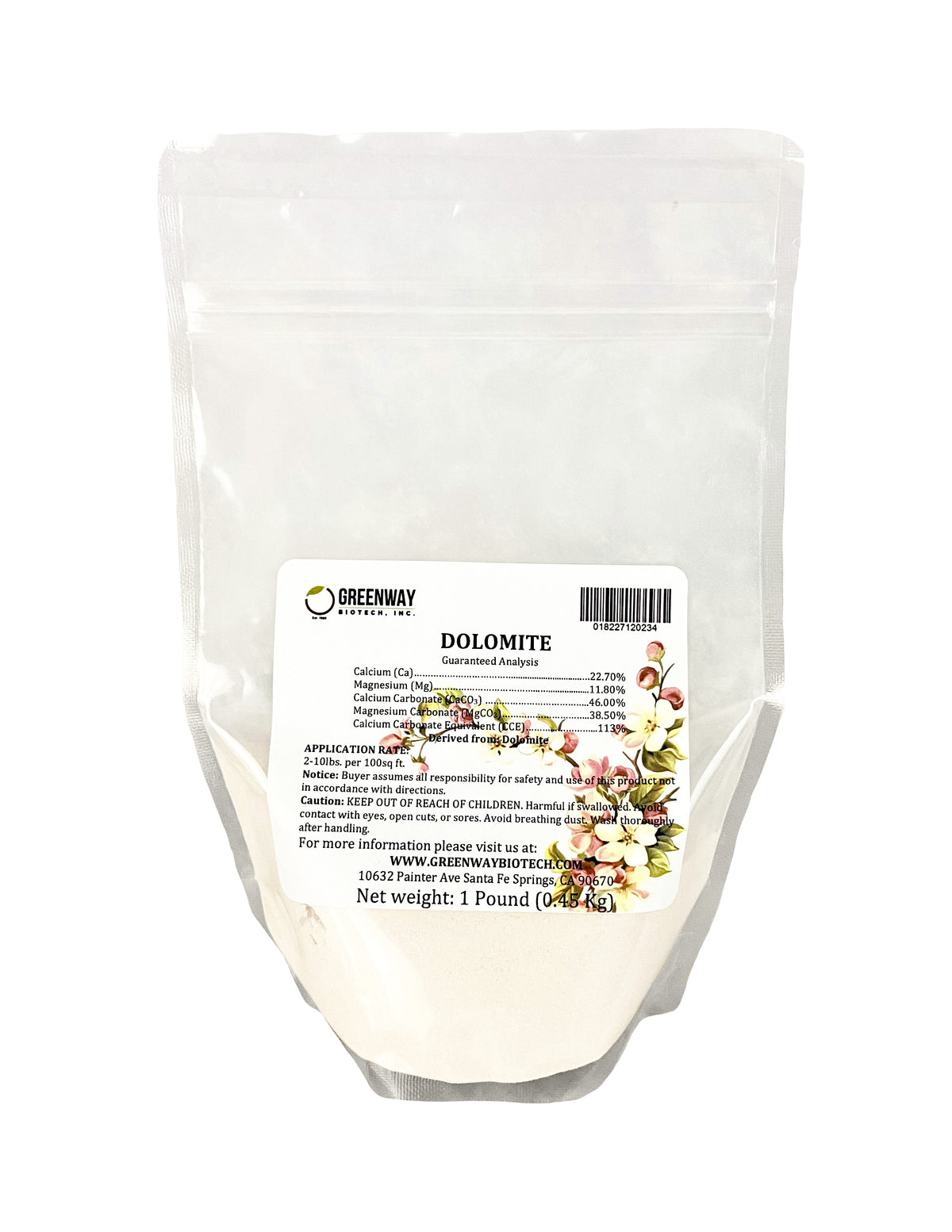
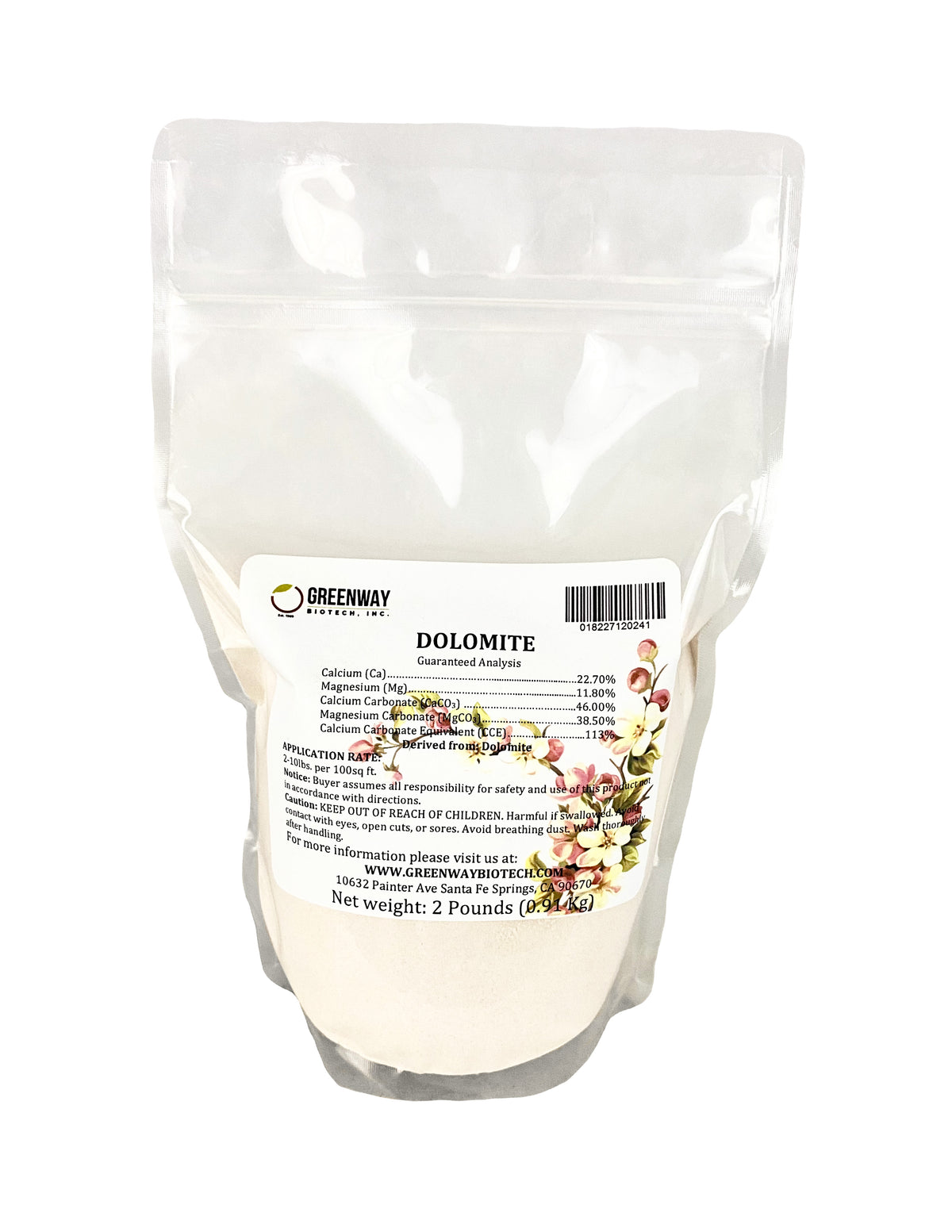
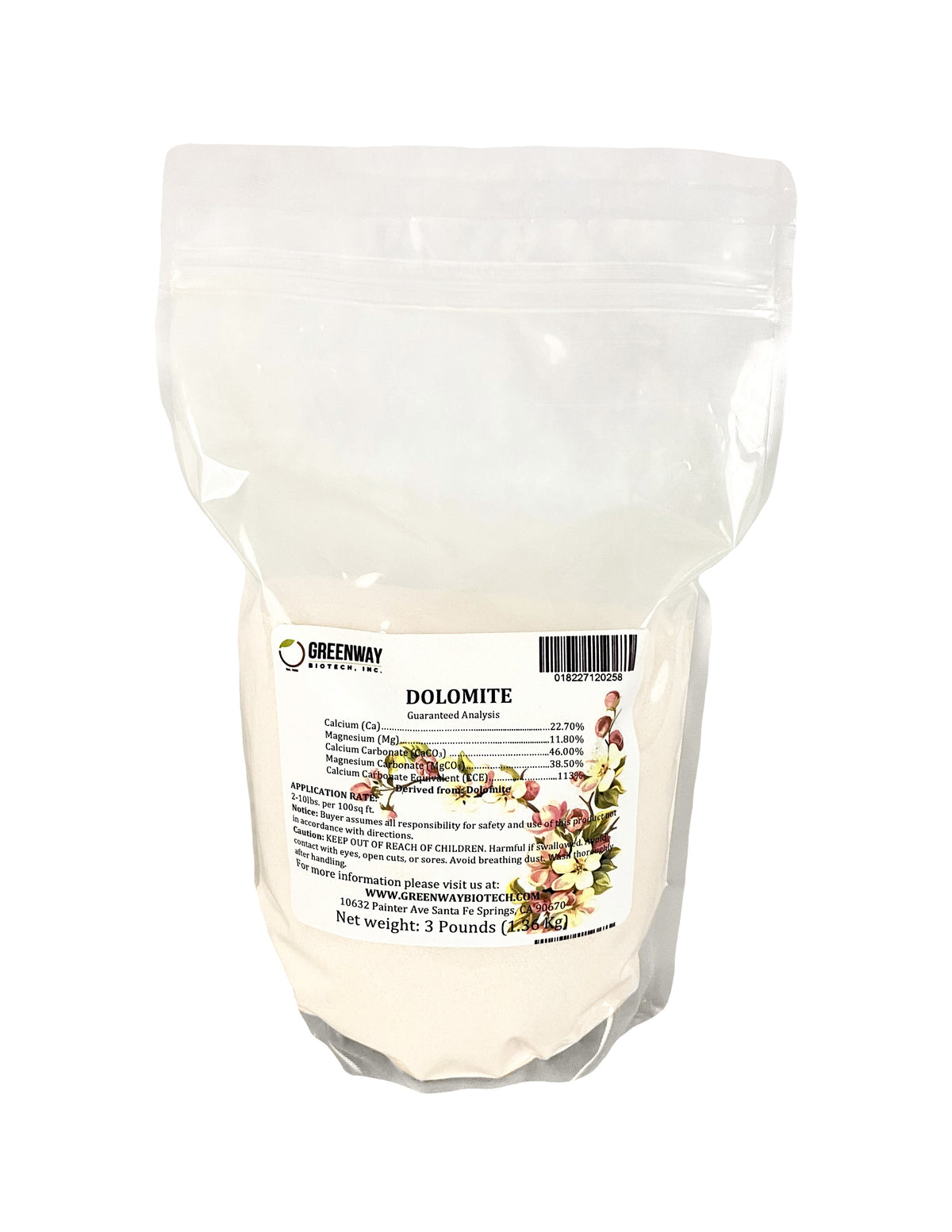
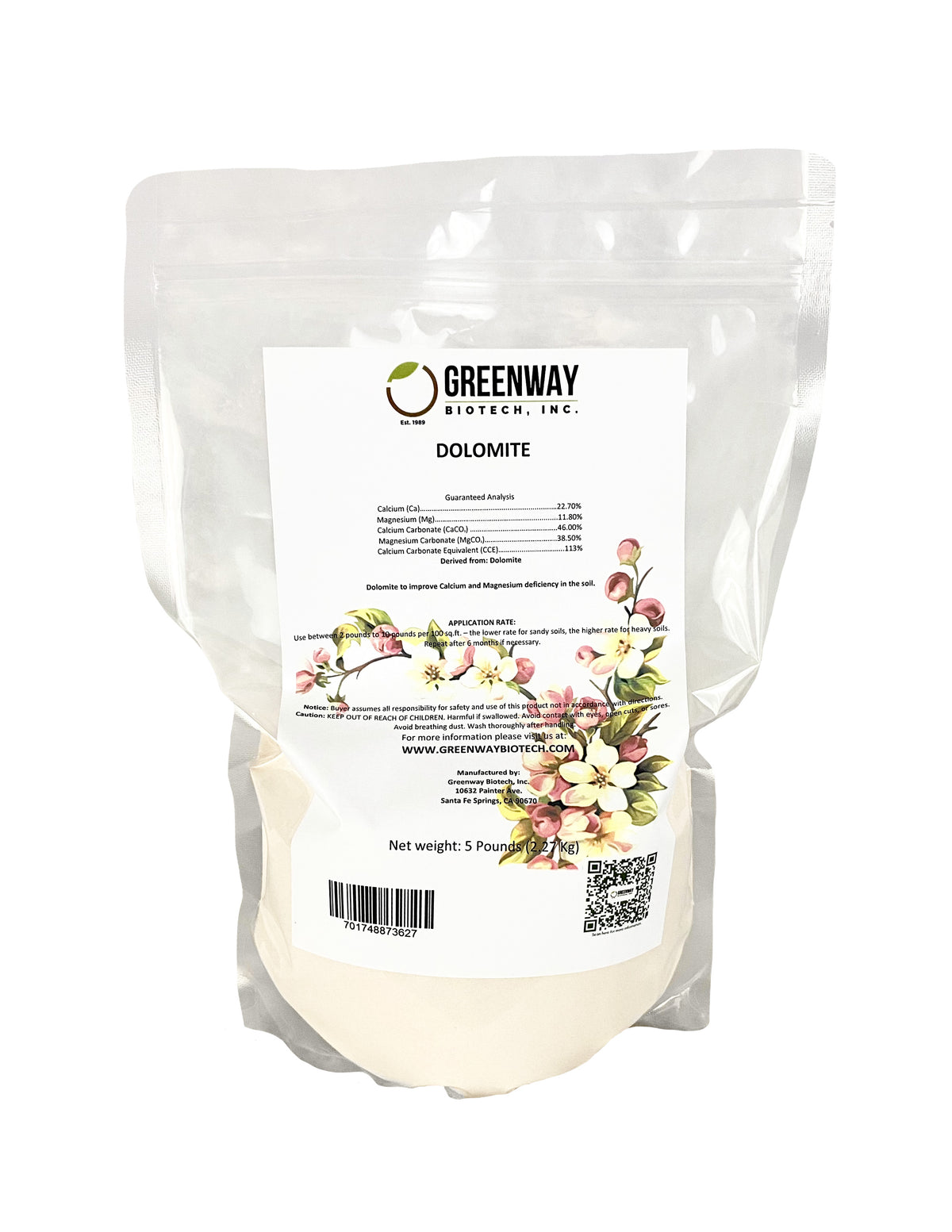
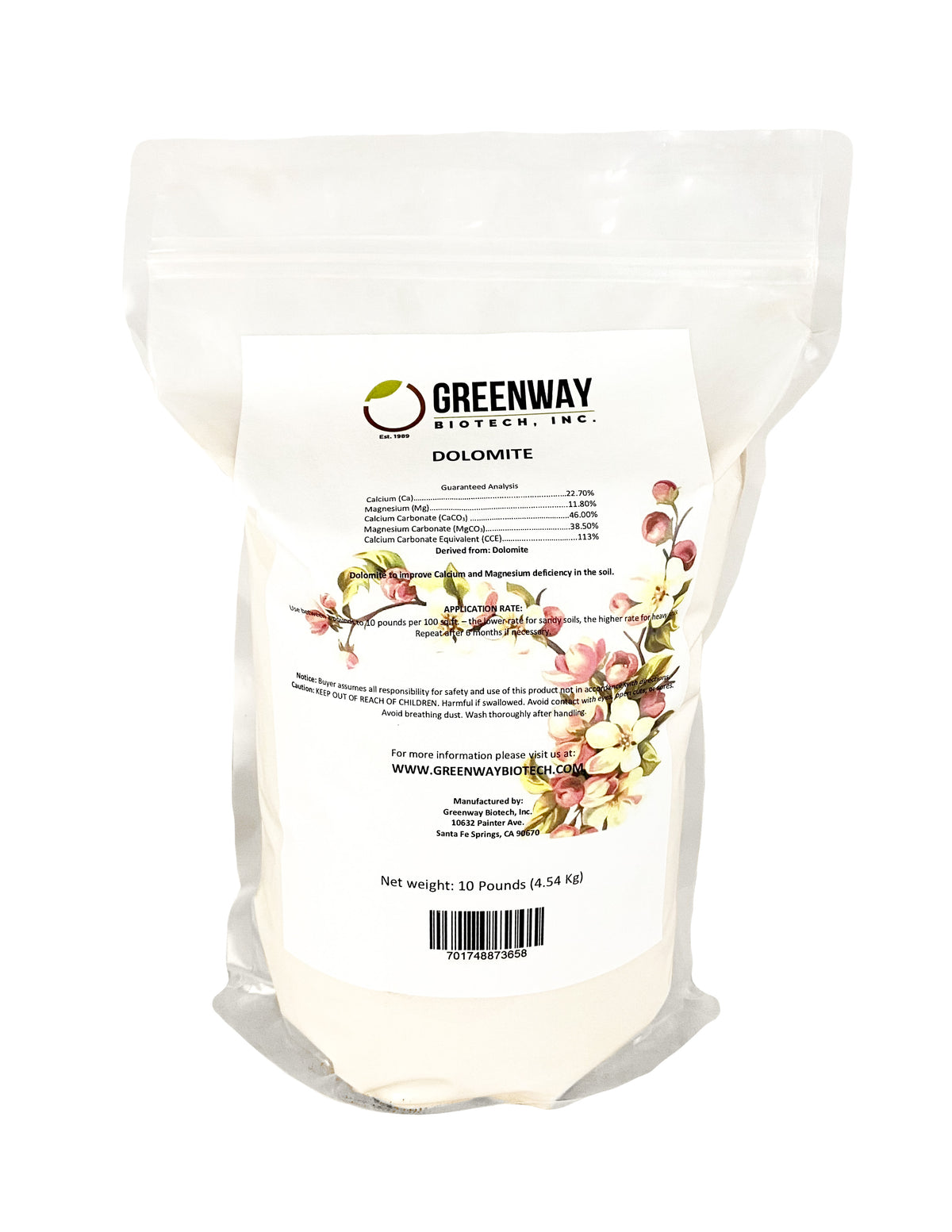
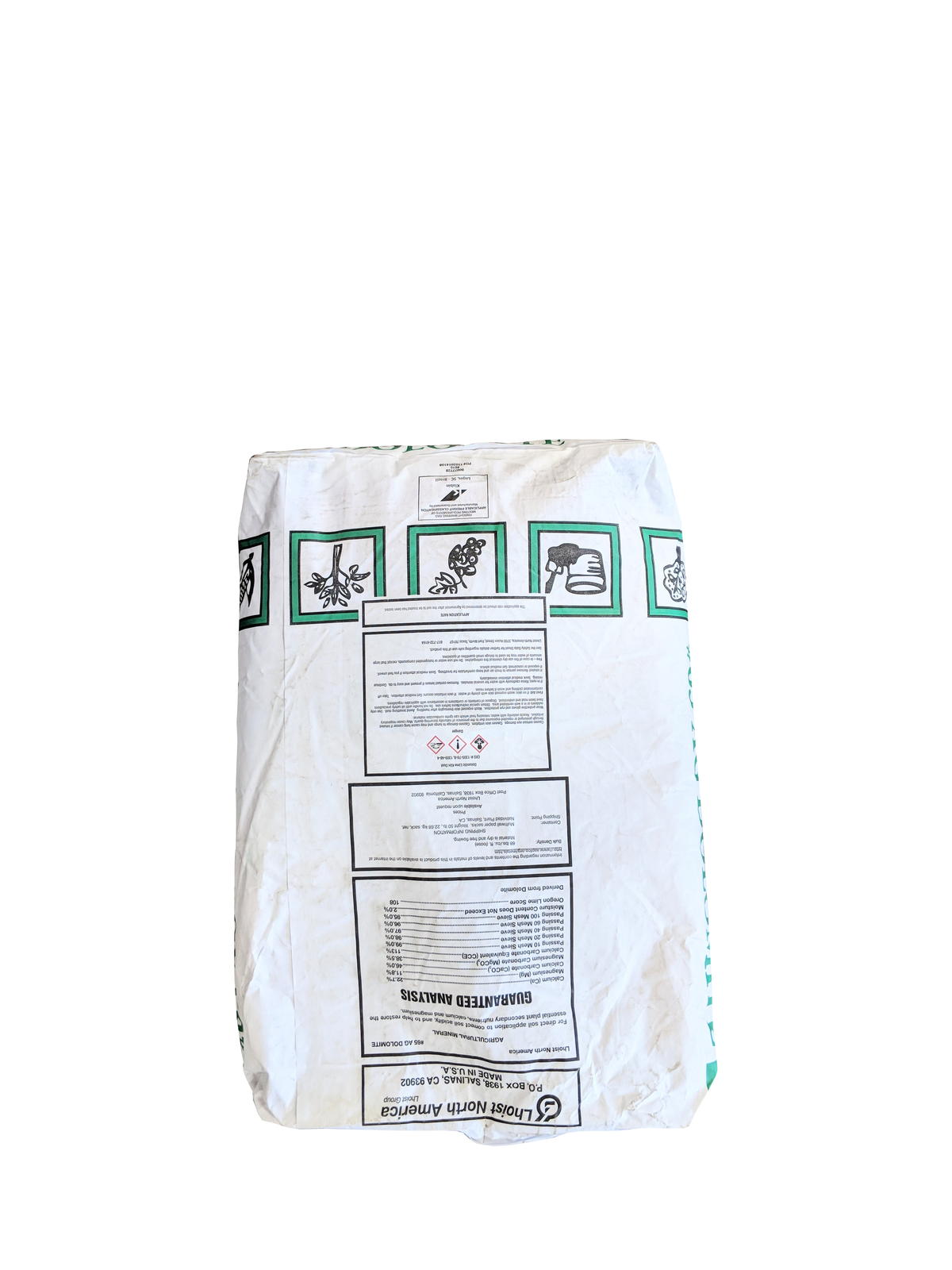
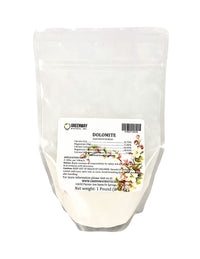
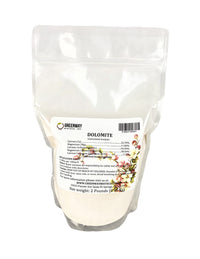
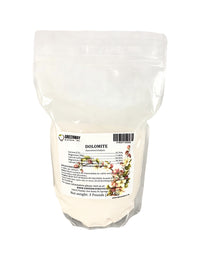
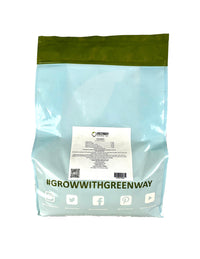
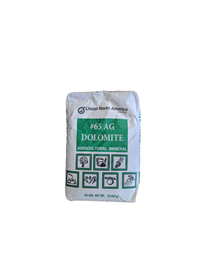
Dolomite Lime (22.7% Ca + 11.8% Mg)
A natural limestone soil amendment that neutralizes acidic soil while supplying both calcium and magnesium — two nutrients most lime products deliver only one of. Apply before planting for stable, long-lasting pH correction throughout the growing season.
Ideal Applications
FEATURES
📈 Raises Soil pH
Neutralizes acidic soils in the pH 4–6 range, bringing them toward the 6.0–7.0 window where nutrient uptake is most efficient for most crops.
🌿 22.7% Calcium
Calcium strengthens plant cell walls, supports root tip development, and helps prevent calcium-deficiency disorders like blossom end rot in tomatoes and tip burn in lettuce.
💚 11.8% Magnesium
Magnesium is the central atom of the chlorophyll molecule. Adequate magnesium is essential for photosynthesis and corrects the interveinal yellowing (chlorosis) caused by Mg deficiency.
⚖️ Balanced Ca:Mg Ratio
The near 2:1 calcium-to-magnesium ratio in dolomite mirrors the ratio plants typically need, reducing the risk of antagonism between these two competing cations.
⏱️ Slow-Acting, Long-Lasting
Dolomite dissolves more gradually than calcitic lime, providing stable pH correction over months rather than a rapid spike that can overshoot the target range.
🎯 Fine Powder Form
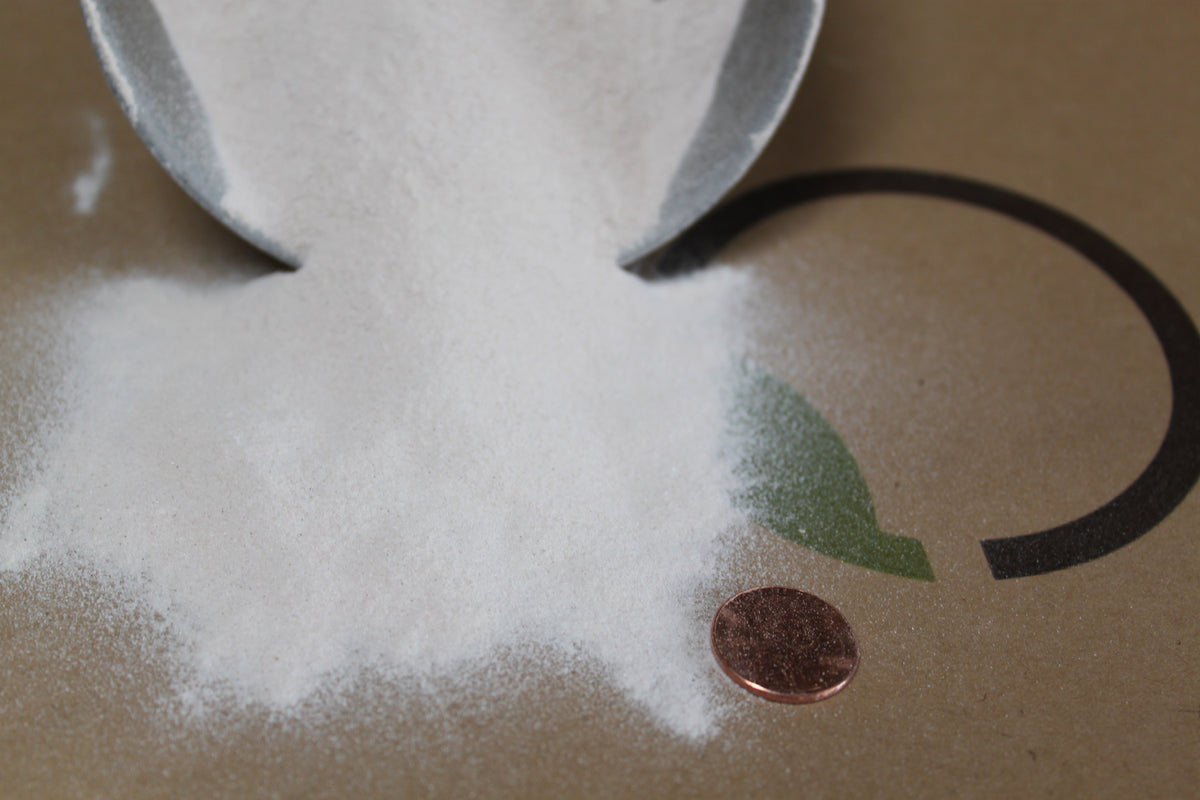
A finely ground powder has greater surface area than pelletized or coarse lime, which means faster dissolution, more thorough mixing, and more consistent soil contact.
🦠 Supports Soil Biology
Many beneficial soil bacteria and fungi thrive in near-neutral pH. Correcting acidity with dolomite creates a more hospitable environment for the microbial communities that drive nutrient cycling.
♻️ Effective in Compost
Adding dolomite between compost layers neutralizes acidic breakdown products, reduces odors, and enriches finished compost with calcium and magnesium.
🌍 Multi-Purpose Amendment
Suitable for vegetable gardens, lawns, orchards, flower beds, compost piles, and as a calcium-magnesium supplement in animal feeds — one product with wide utility.
✅ CDFA Registered
Registered with the California Department of Food and Agriculture and independently tested for heavy metal content, providing documented quality assurance for commercial and home use.
DERIVED FROM
Dolomite lime is a naturally occurring sedimentary rock composed of calcium carbonate (CaCO₃) and magnesium carbonate (MgCO₃) that formed over millions of years from mineral-rich marine sediments. It is mined, crushed, and finely ground — no synthetic additives, no chemical processing. The result is a pure mineral amendment with a naturally consistent calcium and magnesium profile.
Mineral Source
Dolomite Rock (CaMg(CO₃)₂)
A double carbonate mineral that supplies both calcium and magnesium simultaneously. When it reacts with soil water and acids, it releases Ca²⁺ and Mg²⁺ ions directly into the soil solution while neutralizing hydrogen ions (H⁺) that cause acidity.
Complementary Mineral Amendments
Gypsum (Calcium Sulfate)
Adds calcium and sulfur without affecting soil pH — ideal when pH is already in range but calcium or drainage improvement is needed.
Epsom Salt (Magnesium Sulfate)
Fast-acting soluble magnesium for immediate correction of Mg deficiency, without the slow-release buffer of dolomite.
SCIENCE BEHIND THE FORMULA
How Dolomite Neutralizes Soil Acidity
Soil acidity is caused by an excess of hydrogen ions (H⁺). When dolomite's carbonate compounds dissolve in soil moisture, they react with these hydrogen ions and neutralize them — raising pH in a buffered, gradual process. Because dolomite contains magnesium carbonate in addition to calcium carbonate, it dissolves more slowly than pure calcitic lime, which produces a more stable, longer-lasting pH correction.
🌿 Calcium — 22.7%
Calcium strengthens cell walls, aids root development, and is involved in cell division. It also improves soil structure in clay soils by flocculating (clumping) fine particles to improve drainage and aeration.
💚 Magnesium — 11.8%
Magnesium is the central atom of every chlorophyll molecule and is required for activating over 300 plant enzymes. Without sufficient magnesium, plants cannot photosynthesize effectively — shown as interveinal chlorosis (yellowing between leaf veins) on older leaves.
⚗️ Carbonate (CO₃²⁻)
The carbonate component is the pH-raising agent. It reacts with soil acids to form carbon dioxide and water as byproducts — a clean neutralization reaction with no residual chemical burden on the soil.
Why Dolomite Instead of Calcitic Lime?
🔄 Two Nutrients at Once
Calcitic lime provides only calcium. Dolomite addresses both calcium and magnesium in a single application — the right choice when soil tests show deficiency in both, or when magnesium levels are borderline.
🐌 Slower, More Stable Correction
Magnesium carbonate dissolves more slowly than calcium carbonate. This makes dolomite more forgiving — less likely to overshoot target pH — and extends the period of effective soil buffering.
📊 Nutrient Balance
High calcium without adequate magnesium can suppress magnesium uptake through cation competition. Dolomite's balanced ratio helps maintain an appropriate Ca:Mg ratio in the soil exchange complex.
pH Correction Timeline
Timeline assumes adequate soil moisture and temperatures above 50°F. Sandy soils react faster; clay soils require more time and higher application rates.
APPLICATION RATES & DIRECTIONS
Garden & Lawn Application
| Application Area | Rate | Frequency | Notes |
|---|---|---|---|
| Garden Beds — Sandy Soil | 2–4 lbs/100 sq ft | Test after 6 months | Light soils need less |
| Garden Beds — Clay Soil | 8–10 lbs/100 sq ft | Test after 6 months | Heavy soils need more |
| New Gardens | 5–10 lbs/100 sq ft | 3–4 weeks before planting | Test soil first |
| Lawns | Match annual fertilizer | Once in winter | Balances fertilizer acidity |
| Fruit Trees | 5–8 lbs per tree | Annually if needed | Broadcast under drip line |
| Flower Beds | 3–5 lbs/100 sq ft | Test after 6 months | Avoid acid-loving plants |
pH Adjustment Guide
| Current pH | Target pH | Dolomite per 100 sq ft | Time to Effect |
|---|---|---|---|
| 4.0 | 6.5–6.8 | 12 lbs | 3–6 months |
| 4.5 | 6.5–6.8 | 10 lbs | 3–6 months |
| 5.0 | 6.5–6.8 | 7 lbs | 2–4 months |
| 5.5 | 6.5–6.8 | 5 lbs | 2–3 months |
| 6.0 | 6.5–6.8 | 2–3 lbs | 1–2 months |
- Always test soil pH before applying — do not guess
- For applications over 50 lbs per 1,000 sq ft, split into two treatments 6 months apart
- Avoid applying immediately before seeding — wait at least 2–3 weeks
- Water thoroughly after application to begin activation
HOW TO USE
Garden Beds & New Plantings
- Test soil pH using a home test kit or send a sample to a lab.
- Use the pH Adjustment Guide above to determine how much dolomite to apply.
- Spread dolomite evenly over the soil surface using a broadcast spreader or by hand.
- Work into the top 6–8 inches of soil with a tiller or garden fork.
- Water thoroughly to begin the neutralization reaction.
- Wait 3–4 weeks before planting, then retest pH after 3–6 months.
Lawns & Turf
- Apply once in late fall or winter when the lawn is dormant.
- Broadcast evenly at the rate that matches your annual fertilizer nitrogen rate.
- Water in lightly after application.
- Retest soil pH every 1–2 years to determine if reapplication is needed.
Fruit Trees & Established Perennials
- Broadcast 5–8 lbs per tree evenly under the drip line (edge of the canopy).
- Do not pile lime against the trunk.
- Water in thoroughly.
- Retest soil pH the following season before reapplying.
Compost Piles
- Sprinkle 1–2 cups of dolomite per cubic foot between layers as you build the pile.
- Mix or turn pile after adding to distribute evenly.
- Repeat with each new layer of green or brown material.
When Dolomite Is the Right Choice
- Soil pH is below 6.0 and you want gradual, stable correction
- Soil tests show magnesium deficiency alongside low pH
- You're growing brassicas, beets, asparagus, or other calcium-demanding crops
- You want to neutralize compost acidity while adding minerals
- You're applying before a new planting and have 3–6 weeks lead time
When to Consider Other Options
- You need rapid pH correction in less than 4 weeks — calcitic lime reacts faster
- Your soil already has high magnesium — excess Mg can compete with calcium uptake; use Gypsum instead
- You're growing acid-loving plants (blueberries, azaleas, rhododendrons, potatoes) — these prefer pH 4.5–5.5; do not lime
- You need immediate magnesium for a foliar deficiency — use fast-acting Epsom Salt instead
DOLOMITE LIME CALCULATOR
SAFETY & HANDLING
Personal Protective Equipment (PPE)
- Wear gloves when handling — prolonged skin contact may cause mild irritation
- Wear safety glasses or goggles to prevent dust contact with eyes
- Use a dust mask or N95 respirator when applying in dusty conditions or indoors
- Wash hands thoroughly with soap and water after handling
Storage Guidelines
- Store in a cool, dry location in the original sealed bag
- Keep away from moisture — dolomite will absorb water and clump if exposed
- Keep out of direct sunlight and away from heat sources
- Store away from children and pets
- Do not store near acidic materials, which can react with the carbonate
Application Precautions
- Do not apply to acid-loving plants — dolomite will raise pH above their tolerance range
- Do not apply in excess — over-liming can raise pH above 7.5, locking out manganese, boron, and iron
- Avoid applying in high winds to prevent dust inhalation and drift
- Wet down loose soil after application to minimize dust
- Do not mix directly with ammonium-based fertilizers in the same application — lime can volatilize ammonium nitrogen
First Aid
- Eye contact: Flush with clean water for 15 minutes. Seek medical attention if irritation persists
- Skin contact: Wash affected area thoroughly with soap and water
- Ingestion: Do not induce vomiting. Contact Poison Control (1-800-222-1222) or seek medical attention
- Inhalation: Move to fresh air. Seek medical attention if coughing or shortness of breath persists
Refer to the Safety Data Sheet (SDS) for complete safety information.
COMPLETE YOUR SYSTEM
Dolomite lime corrects pH and supplies calcium and magnesium — pair it with these amendments for a complete soil health program.
Gypsum (Calcium Sulfate)
Adds calcium and improves soil structure without raising pH — ideal for soils that need calcium but are already at target pH.
pH DownElemental Sulfur
Lowers soil pH for acid-loving plants like blueberries and azaleas. Use when pH is too high rather than too low.
OptionalEpsom Salt (Magnesium Sulfate)
Fast-acting, water-soluble magnesium for foliar or soil application when immediate correction is needed without pH adjustment.
FREQUENTLY ASKED QUESTIONS
What is dolomite lime and how does it differ from regular lime?
Dolomite lime is a naturally occurring limestone that contains both calcium carbonate and magnesium carbonate, giving it 22.7% calcium and 11.8% magnesium. Regular calcitic lime is composed almost entirely of calcium carbonate — it raises pH faster but supplies only calcium. Dolomite is slower-acting and the better choice when a soil test shows magnesium deficiency alongside low pH. Learn more in our article The Helpful Benefits of Dolomite Lime in Your Garden.
When and how should I apply dolomite lime?
The best time to apply is in fall, giving the lime a full winter to react before spring planting. At minimum, apply 3–4 weeks before planting. Spread evenly, work into the top 6–8 inches of soil, and water thoroughly. Always test pH first to determine the correct rate, and retest after 3–6 months to evaluate the effect.
Pro tip: Split applications over 50 lbs per 1,000 sq ft into two treatments spaced 6 months apart to avoid overshooting the target pH.
Which plants benefit from dolomite lime?
Plants that prefer a near-neutral pH (6.0–7.0) are the best candidates: brassicas (cabbage, broccoli, kale), beets, asparagus, spinach, apple and cherry trees, most lawn grasses, and flowers like clematis and delphiniums. For more on what calcium does for plant health, see What's the Function of Calcium (Ca) in Plants?
Do not apply dolomite to: blueberries, azaleas, rhododendrons, potatoes, hydrangeas (for blue flowers), or pine and oak trees — these plants require or prefer acidic soil (pH 4.5–5.5).
What does magnesium deficiency look like and will dolomite fix it?
Magnesium deficiency typically appears as interveinal chlorosis — yellowing between the leaf veins while the veins themselves stay green — usually on older, lower leaves first. It's common in sandy soils, heavily leached soils, or soils that have received repeated high-calcium applications without magnesium. Dolomite's 11.8% magnesium content can correct the deficiency over several months. For an immediate response, combine with fast-acting Epsom Salt as a soil drench or foliar spray. Learn more in What's the Function of Magnesium (Mg) in Plants?
Can I use dolomite lime in my compost pile?
Yes. Sprinkle 1–2 cups per cubic foot between layers as you build the pile. Dolomite neutralizes the acidic byproducts of decomposition, reduces sulfur odors, speeds microbial activity by maintaining a better pH environment, and adds calcium and magnesium to the finished compost.
Can too much dolomite lime harm my plants?
Yes. Over-liming is a real risk. Raising soil pH above 7.5 can lock out manganese, boron, iron, and zinc — creating deficiencies even in soils that have adequate levels of those nutrients. Always apply based on a soil test result, never guess, and retest before reapplying. If you suspect you've over-limed, Elemental Sulfur can be used to lower pH back toward the target range.
GROW WITH CONFIDENCE
Product Quality Guaranteed
- Natural dolomite limestone, mined and processed in the USA
- Independently tested for heavy metal content by third-party laboratories
- Registered with the California Department of Food and Agriculture (CDFA)
- Consistent calcium and magnesium content verified per lot
90-Day Money-Back Guarantee
If you're not completely satisfied with your purchase, return the unused portion in its original packaging within 90 days for a full refund — no questions asked.
Environmental Responsibility
- Natural limestone source requiring minimal processing
- Transitioning to compostable and recyclable packaging
- Supports organic and sustainable farming practices
- Approved for use in certified organic production
Charitable Contributions
1% of all profits go to our foundation, focused on improving educational opportunities for children.
DOCUMENTS
DISCOVER MORE
HAVE QUESTIONS?
Check out our full FAQ page or contact our experts for personalized advice.