Chelated Iron DTPA Fertilizer
- Regular Price
- $ 31.99
- Sale Price
- $ 31.99
- Regular Price
- $ 29.99
Sold Out
- Unit Price
- per


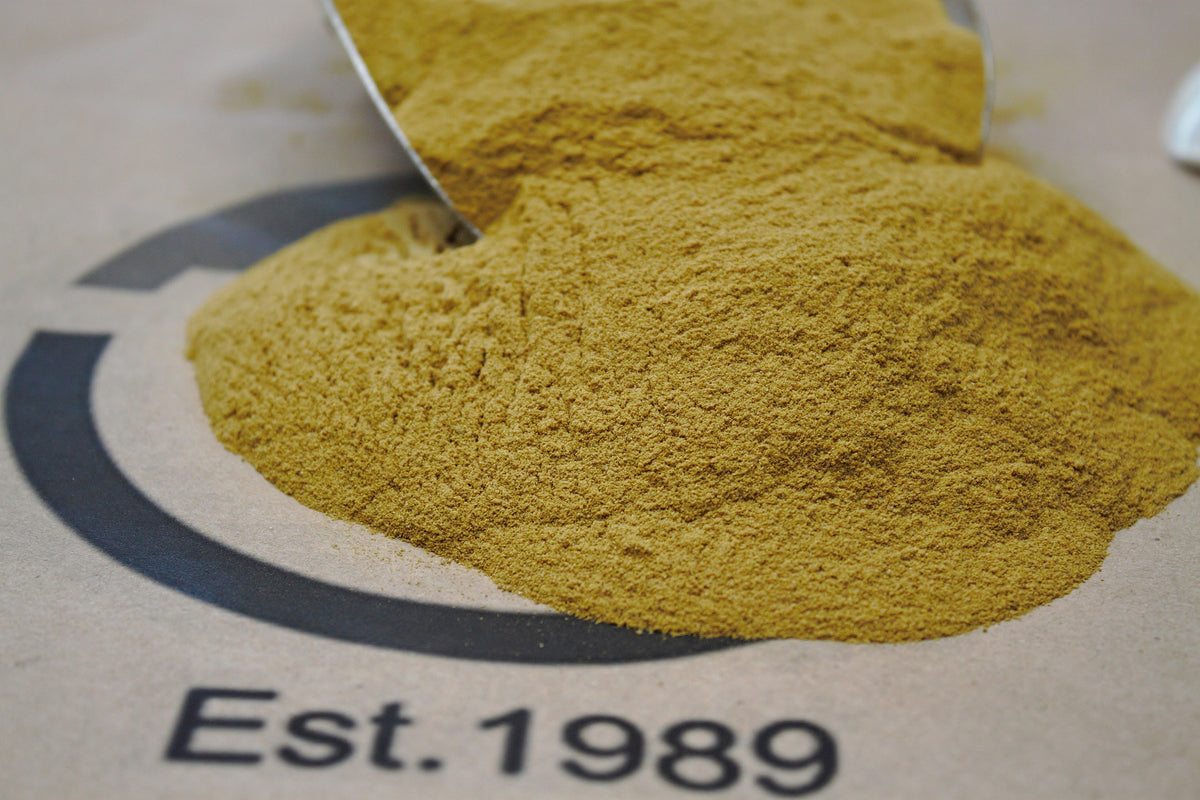


A fully water-soluble, DTPA-chelated iron powder for correcting iron chlorosis in neutral to moderately alkaline conditions. DTPA chelation keeps iron plant-available up to about pH 7.5 - past the point where standard EDTA chelates begin to fail - making it a practical choice for soil drench, foliar spray, hydroponics, and aquaponics. CDFA registered and third-party tested for heavy metals.
Find your size → Calculate how much I need11%
Chelated iron, verified against the CDFA label
7.5pH
Stays plant-available up to moderately alkaline pH
100%
Water-soluble for drip, sprayer, and reservoir use
35+yrs
Family-owned California fertilizer manufacturing
Coverage figures below are planning estimates for a corrective greenhouse drench at roughly 5 oz of product per 100 gallons. Actual use varies with target ppm Fe, deficiency severity, and how often you reapply - use the calculator for your specific case.
| Bag Size | Greenhouse Solution | Typical Use | Best For |
|---|---|---|---|
| 1 lb | ~320 gallons | Small home grow | Houseplants and small gardens |
| 2 lb | ~640 gallons | Season of garden use | Home gardeners and hobby hydroponics |
| 5 lb | ~1,600 gallons | Multi-season supply | Most popular |
| 25 lb | ~8,000 gallons | Commercial volume | Best value |
DTPA-chelated iron dissolves completely and works across several delivery methods. Match the method to your growing system and the severity of the deficiency.
Iron applied to the leaf surface for the fastest visible response. Test a small group of plants first and avoid spraying in temperatures above 85°F.
Watered into the root zone for slower but more sustained correction. A practical first-line choice when substrate pH has drifted above the target range.
Maintains a standing iron concentration in recirculating nutrient solution. DTPA holds its complex well across the typical hydroponic pH band.
A common choice for fish-plant systems, which often run near pH 6.8-7.0. Dose conservatively and gradually rather than correcting all at once.
Corrective drench for soilless substrate, dosed by target ppm Fe. The best-documented use case for Fe-DTPA in the extension literature.
Used for chlorosis in trees and landscape soil. For strongly calcareous field conditions, EDDHA-based iron is often the more reliable choice - see the comparison below.
Iron deficiency is rarely a shortage of iron in the soil - it is iron locked up by pH. The chelating agent determines how high a pH the iron can survive. Here is what DTPA does for you.
EDTA-chelated iron begins losing its grip on iron as pH climbs past roughly 6.5. DTPA, with five binding sites instead of four, keeps iron in a plant-available complex up to about pH 7.5 - the range common across the American West and limestone-rich regions. If your soil or water trends above 6.5, see Chelated Iron EDTA 13% for the acidic-soil alternative, or read more in our sulfate vs. chelated comparison.
The powder goes fully into solution with no residue or settling, so it runs cleanly through drip emitters, foliar sprayers, fertigation injectors, and recirculating reservoirs without clogging.
Registered with the California Department of Food and Agriculture as a specialty fertilizer. The guaranteed analysis - 11% chelated iron - is verified against the registered label, not marketing copy.
Foliar applications can show early color change within several days, with fuller recovery in new growth over two to three weeks. Note that severely chlorotic older leaves often do not fully regreen - judge success by the color and vigor of newly expanding foliage.
Every Greenway Biotech product carries a 90-day money-back guarantee. If it is not working for your plants, contact our team and we will make it right.
5binding sites
DTPA - Diethylenetriaminepentaacetic acid
Iron is among the most abundant elements in the earth's crust, yet iron deficiency is one of the most common micronutrient problems growers face. The reason is chemistry, not scarcity: above roughly pH 6.5, free ionic iron rapidly converts to insoluble iron hydroxides that roots cannot absorb. The deficiency shows as interveinal chlorosis - yellow tissue between green veins - on the youngest leaves first, because iron does not move freely within the plant.
A chelating agent wraps the iron ion in an organic molecule that shields it from those pH-driven reactions and keeps it in solution. The agent matters: EDTA binds iron through four coordination sites and starts releasing it as pH rises past about 6.5, while DTPA binds through five sites and holds its complex up to about pH 7.5. For soils or solutions above that ceiling, EDDHA - a still stronger chelator - is the appropriate step up. Matching the chelate to your measured pH is the single most important decision in correcting iron chlorosis.
One caveat worth stating plainly: a chelate corrects iron availability, not the underlying cause of high pH. Alkaline irrigation water high in bicarbonate continuously pushes rhizosphere pH upward, so if the inducing cause is not addressed, symptom relief can be temporary. Treat the iron deficiency and the water chemistry together for durable results.
For a fuller breakdown of how sulfate and chelated micronutrient forms compare across pH and cost, see Sulfate vs. Chelated Fertilizers, and for diagnosing yellowing leaves generally, see 8 Reasons Why Plant Leaves Turn Yellow.
Rates below are drawn from 2026 university-extension research for Fe-DTPA at 11% iron. Greenhouse, hydroponic, and aquaponic figures are the best-substantiated; field and tree figures are orienting estimates - always confirm against the product label and a soil or water test.
Use the calculator to convert your volume and target ppm Fe into an exact amount, then follow the steps for your delivery method.
Iron deficiency shows as interveinal chlorosis on the youngest leaves first. If yellowing starts on older leaves, suspect a different nutrient. Check soil or solution pH - iron lock-up above pH 6.5 is the usual driver.
Enter your solution volume and target ppm Fe in the calculator. It returns the exact weight of product for greenhouse, hydroponic, or aquaponic dosing, plus a bag recommendation.
Add the powder to clean water and stir until fully dissolved. For a foliar spray, adjust spray water toward pH 6.0-6.5 and apply in cool conditions. For a drench, wet the whole root ball, then rinse foliage. For reservoirs, dose and confirm with a meter.
Fe-DTPA breaks down under UV light - keep reservoirs shaded and pause UV sterilizers after dosing. In aquaponics, dose gradually and never bulk-correct. Judge success by new growth, not by whether old chlorotic leaves regreen.
The chelating agent - not the iron itself - decides how high a pH the product can survive. Match the chelate to your measured pH. For the full chemistry, see our sulfate vs. chelated comparison.
| Product | Iron Content | Effective pH | Best For | Notes |
|---|---|---|---|---|
| Chelated Iron DTPA 11% (this product) | 11% Fe | Up to ~7.5 | Neutral to moderately alkaline soil; hydroponics; aquaponics | Holds iron where EDTA releases it |
| Chelated Iron EDTA 13% | 13% Fe | ~4.0-6.5 | Acidic to slightly acidic soil | Highest iron content; most cost-effective below pH 6.5 |
| Iron EDDHA | ~6% Fe | Up to ~9.0 | Strongly calcareous, highly alkaline soil | Lower iron content; unmatched stability at high pH; contact us |
| Ferrous Sulfate | ~20% Fe | Below ~6.0 | Acidic soil; sulfur supplementation | Low cost; precipitates quickly in neutral or alkaline conditions |
DTPA fills the middle of the pH range. Use this split to confirm it fits your conditions before you buy.
Micronutrient deficiencies often appear together in alkaline soils. These companions round out a complete chelated micronutrient program.
Manganese deficiency mimics iron chlorosis with similar interveinal yellowing and often occurs alongside it in alkaline soils.
ZincZinc deficiency is common in high-pH, sandy, or over-irrigated soils. A natural pairing for a full micronutrient program.
Iron, acidic soilKeep EDTA on hand for acidic beds and DTPA for alkaline zones - switch based on your soil test results.
Calcium + NitrogenA common fertigation partner supplying soluble calcium and nitrogen. Keep calcium and phosphate in separate stock tanks.
Chelated Iron DTPA is a fertilizer material, not a hazardous chemical - but sensible handling protects you, your equipment, and your plants.
If your question isn't here, contact our team at questions@greenwaybiotech.com.
Iron DTPA uses diethylenetriaminepentaacetic acid as its chelating agent, which binds iron through five coordination sites compared with EDTA's four. That stronger grip keeps iron plant-available up to about pH 7.5, whereas EDTA-chelated iron begins releasing iron as pH climbs past roughly 6.5. In practice, DTPA continues delivering available iron in the neutral to moderately alkaline conditions common across California and the Western US, where EDTA-chelated products lose effectiveness. If your soil pH is consistently above 6.5, DTPA is the appropriate choice; below that, Chelated Iron EDTA 13% is more economical.
The signature symptom is interveinal chlorosis - yellow tissue between green veins - appearing on the youngest leaves first, because iron does not move freely within the plant. If yellowing starts on older, lower leaves instead, the cause is more likely nitrogen or magnesium. Manganese deficiency looks very similar to iron deficiency; if an iron application does not resolve the yellowing within a week or two, test for manganese. Our guide on 8 reasons plant leaves turn yellow walks through the full diagnostic picture.
Foliar applications typically show early color change within several days, with fuller recovery in new growth over two to three weeks. Soil drenches take longer to show results but provide more sustained availability. An important expectation to set: severely chlorotic older leaves often will not fully regreen - recovery is most visible in new foliage emerging after treatment. For faster correction of severe chlorosis, a foliar spray for immediate uptake can be combined with a soil drench for ongoing availability.
Hydroponic systems dose iron as a standing target concentration rather than a per-area rate. Most crops do well with a solution iron level in the 1-5 ppm range, with around 3 ppm a sensible general target. As a working figure, roughly 13 grams of this 11% product per 100 gallons raises the solution about 1 ppm Fe. Iron is consumed continuously, so confirm with a meter and replenish as readings drop. The calculator on this page converts your reservoir size and target into an exact amount. For broader hydroponic nutrient guidance, see the best fertilizers for hydroponics.
Fe-DTPA is a common choice for aquaponics because it stays effective at the slightly higher pH these systems typically run. Peer-reviewed research found Fe-DTPA concentrations up to about 4 mg/L relatively harmless to the fish tested, but iron toxicity in fish is driven by iron flocs forming on gill tissue, so the safe approach is to hold a conservative target of about 2 ppm Fe, split applications instead of bulk-correcting, and take extra care with fry and fingerlings, which are far more sensitive than adult fish. Always verify with an iron test kit and adjust gradually.
Yes. Fe-DTPA is photodegradable - UV light breaks the bond between the iron and the chelating agent, and degradation under strong sunlight can be rapid. In practice this means shielding hydroponic and aquaponic reservoirs from direct sunlight and, if your system uses a UV sterilizer, pausing it for 6-12 hours after each dose so plants can take up the iron before it breaks down. Covered, shaded reservoirs preserve far more of the iron you add.
It mixes cleanly with many soluble fertilizers, with some precautions. Add the iron chelate to water first, then add other fertilizers - never add it to an already-concentrated solution. Keep iron separate from calcium and from high-phosphate fertilizers in concentrated stock form, since iron can precipitate as iron phosphate. If you plan to combine it with other micronutrient chelates such as copper, zinc, or manganese, run a jar test first: mix small amounts in the intended proportions and watch for 30 minutes before proceeding.
Plants with high iron demand and sensitivity to soil pH include citrus, roses, pin oaks, azaleas, rhododendrons, gardenias, and most berry crops. Any plant grown with alkaline irrigation water is at ongoing risk, because bicarbonates continuously raise rhizosphere pH and reduce iron availability even in soils that test adequate for total iron. Preventive applications timed before the spring growth flush are especially effective for citrus and ornamental trees.
No - and this is worth understanding clearly. A chelate corrects iron availability, but it does not lower soil pH or neutralize the alkalinity in irrigation water. If high-bicarbonate water or calcareous soil keeps pushing pH upward, the symptom relief can be temporary. For durable results, address the iron deficiency and the underlying water or soil chemistry together rather than relying on repeated corrective applications alone.
Chelated Iron DTPA 11% ships in 1, 2, 5, and 25 lb sizes - enough for a single chlorotic tree or a full commercial operation. Free shipping on orders over $100, and every order is backed by our 90-day money-back guarantee.
Choose your size →