Organic Boric Acid
- Regular Price
- $ 19.99
- Sale Price
- $ 19.99
- Regular Price
- $ 16.99
Sold Out
- Unit Price
- per


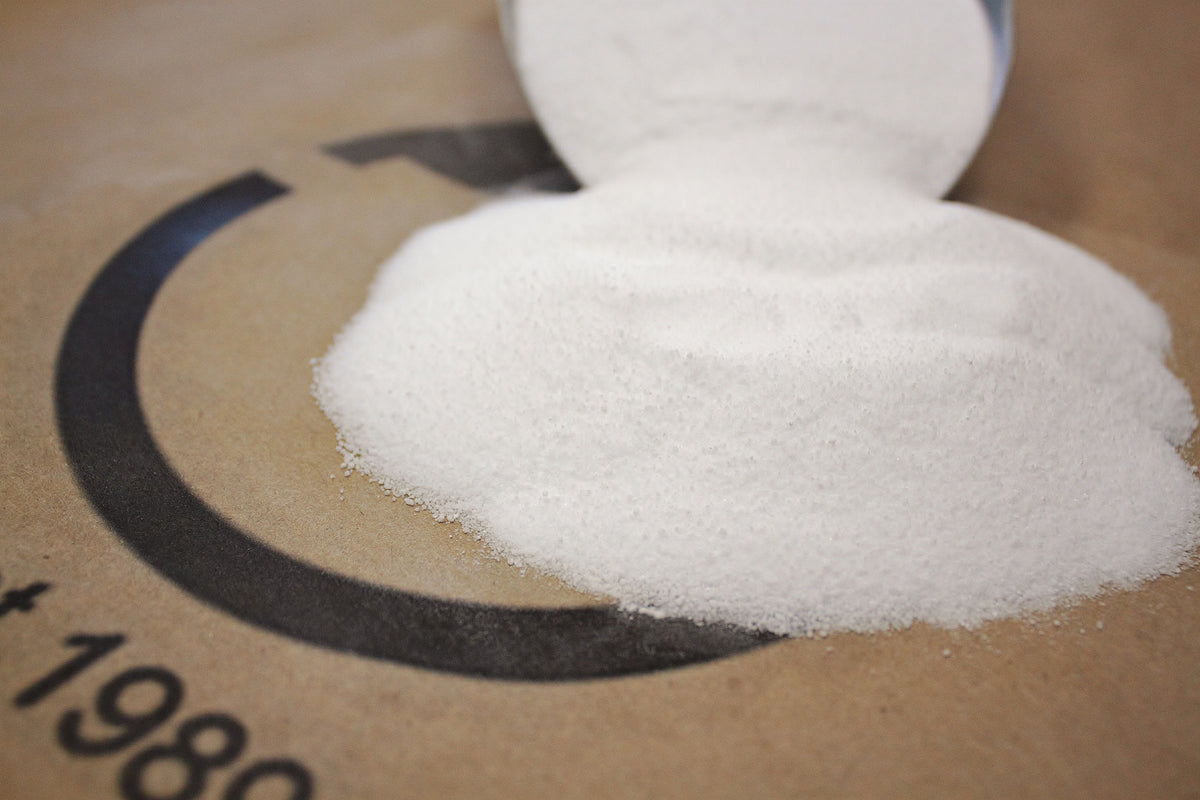


Laboratory-grade boric acid refined to 99.9% purity, delivering 17% elemental boron in a fully water-soluble form. CDFA registered, third-party lab tested for heavy metals, and approved for certified organic growing systems. One product handles soil broadcast, foliar spray, fertigation, hydroponics — and doubles as a natural ant and cockroach deterrent.
Find your size → Calculate how much I need17% B
Elemental boron content — one of the most concentrated B sources available
99.9% pure
Laboratory-grade boric acid — no fillers, no carrier agents
5.5–7.5 pH
Plant-available across the full range of common growing conditions
35+yrs
Family-owned California fertilizer manufacturer since 1989
Boron is a low-rate micronutrient — a little goes a long way. Coverage figures below assume a moderate soil-deficiency rate of about 1.5 lbs per acre. Foliar and hydroponic programs typically use a fraction of these amounts. Confirm with a soil or tissue test before ordering large quantities.
| Bag Size | Soil Coverage (≈1.5 lb/ac) | Foliar Tank Mix | Best For |
|---|---|---|---|
| 8 oz | ~⅓ acre | ~250 gallons of foliar spray | Home garden trial / pest control |
| 1 lb | ~⅔ acre | ~500 gallons of foliar spray | Most popular |
| 3 lbs | ~2 acres | ~1,500 gallons of foliar spray | Small farm / orchard block |
| 10 lbs | ~6.5 acres | ~5,000 gallons of foliar spray | Best value |
17% boron in a clean, water-soluble form means precise dosing across every common delivery method — and a useful second life as a natural pest deterrent.
0.5–3 lbs per acre depending on deficiency severity. Confirm with a soil test before applying — boron is persistent and over-application is hard to reverse.
0.1–0.3 lbs per 100 gallons (≈0.5–1.4 g/gal) for routine support; up to 0.5 lb/100 gal for intensive correction. Always apply pre-bloom or pink bud.
Target 0.1–0.5 ppm boron in solution. Most crops perform best at 0.2–0.3 ppm. Test weekly with a calibrated meter — 0.5 ppm is the practical ceiling.
A pre-bloom or pink-bud foliar spray directly supports pollen tube germination — research links adequate boron at bloom to improved fruit set in tomatoes, cucurbits, apples, and stone fruit.
Pink-bud through early-growth applications for orchard crops. Apple and almond translocate boron well — a single well-timed spray can carry through the demand window.
Effective against ants, cockroaches, and silverfish in bait stations and crack-and-crevice applications. Keep away from pets, children, and food prep areas.
Boron has the narrowest sufficiency-to-toxicity window of any plant micronutrient. A 99.9% pure, 17% boron source lets you hit the right dose without the guesswork of diluted carrier products.
Borax tops out around 11% boron; Solubor sits at about 20.5% but is usually a less pure industrial grade. At 17% elemental B and 99.9% purity, this product delivers consistent, predictable dosing across every application method — exactly what you want when the gap between deficiency and toxicity is measured in fractions of a ppm.
Fine crystalline powder dissolves completely in warm water. Compatible with drip irrigation, fertigation injectors, foliar sprayers, hydroponic reservoirs, and standard backpack sprayers. No precipitate, no filter clogging, no settling in the bottom of the tank.
Unlike iron, zinc, manganese, and copper — which benefit from EDTA chelation for pH stability — boron as boric acid is naturally stable and plant-available across most agricultural pH ranges. No chelation required, no separate stock tank for pH-sensitive forms.
Boric acid dissolves directly into solution as borate ions, the exact form that plants absorb through roots and leaves. There's no microbial conversion, no soil chemistry step, no waiting period. Uptake begins as soon as the nutrient reaches the root zone or leaf surface.
Beyond plant nutrition, diluted boric acid disrupts the digestive systems of ants, cockroaches, and silverfish when ingested. Insects don't develop resistance to its physical mode of action — and in bait-station applications, workers carry it back to the colony for broader effect. See our guide to natural pest control for setup details.
Registered with the California Department of Food and Agriculture and processed at our Madera, CA facility. Every batch is third-party lab tested for heavy metal content with results consistently well below required limits. Backed by our 90-day money-back guarantee.
0.5ppm
Approximate threshold between deficiency and sufficiency in soil solution — toxicity can occur above ~2 ppm
Boron is required in very small quantities — typically 0.1–0.5 ppm in hydroponic solution and 0.5–3 lbs per acre in soil. Despite that tiny dose, boron is structurally integrated into plant cell walls via cross-linking of pectin molecules. Without adequate boron, new growth becomes brittle, distorted, and prone to cracking, especially in rapidly dividing meristematic tissue at growing tips and developing fruit.
It's also the master regulator of sugar transport. Boron facilitates the loading and movement of sugars through phloem tissue — deficient plants accumulate starch in leaves while starving roots and reproductive tissues of energy. The result is poor root development, reduced yield, and the classic hollow-stem symptom in brassicas. At bloom time, boron becomes critical for pollen tube germination and elongation; low boron directly reduces pollination success and fruit set in fruiting crops.
In most species boron is phloem-immobile — once delivered to a leaf, it doesn't redistribute to new growth or developing fruit. That's why a single foliar spray rarely sustains a season-long requirement, and why timing applications to coincide with flowering or fruit set tends to matter more than total dose. A handful of species (apple, almond, celery, some brassicas) translocate boron as polyol complexes, which is why a well-timed pink-bud or full-bloom foliar spray delivers disproportionate value in those crops.
For deeper coverage, see essential micronutrients for healthier plants and major vs trace elements: why your plants need both.
Conservative, research-grounded rates from university extension and peer-reviewed sources. Always start at the low end of each range and confirm with a soil or tissue test before increasing.
Quick answer: For moderate deficiency, broadcast 1–2 lbs of boric acid per acre, incorporate into the top 2–4 inches of soil, and water in thoroughly.
📋 Field & Acreage Rates: The per-acre figures below are general references for medium-testing soils. Actual rates should be based on a current soil test and local nutrient removal estimates. Consult your local extension service for site-specific recommendations.
| Deficiency Level | Application Rate | Area Coverage | Frequency |
|---|---|---|---|
| Light | 0.5–1 lb | Per acre | As needed (soil test first) |
| Moderate | 1–2 lbs | Per acre | As needed |
| Severe | 2–3 lbs | Per acre | Split into 2 applications |
| Tier | Representative crops | Recommended approach |
|---|---|---|
| High-requirement | Alfalfa, sugar beet, broccoli, cauliflower, cabbage, swiss chard, spinach, canola, celery, sunflower | Moderate-to-severe soil tier (1–3 lbs/acre) where soil tests confirm deficiency |
| Medium-requirement | Carrot, cucurbits, eggplant, onion, strawberry, sweet corn, tomato, potato, apple, asparagus | Light-to-moderate tier (0.5–2 lbs/acre) |
| Low-requirement | Pepper, sweet potato | Light tier only (~0.5–1 lb/acre) |
| Boron-sensitive — avoid broadcast | Field corn, small grains (wheat, oats, barley), soybean, dry beans, peas | Use low-rate foliar instead. Cornell Extension reports corn injury from as little as 1–1.5 lbs B/acre broadcast. |
Quick answer: For most vegetables, 0.45–0.9 g per gallon (≈⅛–¼ tsp/gal). For fruit trees at pink bud, 0.9–1.4 g/gal (≈¼–⅓ tsp/gal). Never exceed 0.5 lb per 100 gallons in a single spray.
Foliar safety check: Boric acid foliar rates are intentionally well below soil rates — boron has the narrowest sufficiency-to-toxicity window of any micronutrient. Typical working range is 0.45–2.3 g per gallon. Always apply in early morning or late afternoon, avoid spraying above 85°F, never spray during open bloom (pollinator safety), and wait at least 14 days between applications.
| Crop Type | Rate per 100 Gal | Rate per Gallon | Timing | Notes |
|---|---|---|---|---|
| Vegetables (general) | 0.1–0.2 lbs (45–90 g) | 0.45–0.9 g/gal (≈⅛–¼ tsp) | Pre-bloom | Apply early morning; avoid hot sun and open bloom |
| Fruit Trees (apple, pear, stone fruit, almond) | 0.2–0.3 lbs (90–135 g) | 0.9–1.4 g/gal (≈¼–⅓ tsp) | Pink bud stage | Apple and almond translocate boron well; do not spray open bloom |
| Row Crops (cotton, canola, sunflower) | 0.1–0.3 lbs (45–135 g) | 0.45–1.4 g/gal (≈⅛–⅓ tsp) | 4–6 leaf stage | Early morning application preferred |
| Cucurbits & berries | 0.1–0.2 lbs (45–90 g) | 0.45–0.9 g/gal (≈⅛–¼ tsp) | 3 sprays before early fruiting | Phloem-immobile in most cucurbits — repeat as needed |
| Intensive correction (B-deficient orchards) | 0.4–0.5 lbs (180–225 g) | 1.8–2.3 g/gal (≈⅓–½ tsp) | One-time deficiency-correction spray | Maximum recommended rate. Monitor for tip burn 7–14 days post-spray |
Seed priming alternative: Where soil boron is marginal but a full broadcast isn't warranted, a 0.1% boric acid solution (1 g/L, ≈¼ tsp/gallon) used as a 10-hour seed soak before sowing has been shown to improve emergence and early vigor in wheat and other small grains. Dry seed before planting. Especially useful for boron-sensitive crops that don't tolerate broadcast application.
Quick answer: Target 0.2 ppm boron in solution for most crops. Most performance hits the sweet spot at 0.2–0.3 ppm. Never exceed 0.5 ppm — toxicity damage is rapid and difficult to reverse.
Hydroponic safety check: Concentrations above 0.5 ppm B reduce growth in sensitive crops; above ~5 ppm, damage occurs in nearly any crop. Test boron levels weekly with a calibrated meter and flush the system immediately if leaf tip burn or cupping appears.
| System Type | Target Boron (ppm) | Stock Solution | Monitoring |
|---|---|---|---|
| NFT / DWC | 0.1–0.3 ppm | 1 g/L | Weekly |
| Drip / Ebb & Flow | 0.2–0.5 ppm | 2 g/L | Bi-weekly |
| Aeroponics | 0.1–0.2 ppm | 0.5 g/L | Daily |
Stock-tank rule: Boric acid is broadly compatible with most hydroponic stock solutions but always dilute it into the reservoir directly with circulation running, rather than mixing it into concentrated stock with calcium or phosphate sources. Boric acid can slightly lower solution pH — check pH after addition.
Quick answer: For ant baits, 1% boric acid in sugar water gives the best colony transfer; 5% gives faster kill. For silverfish perimeter, mix at 10% concentration in water.
Pest safety reminders: Keep bait stations in enclosed containers away from children and pets. Avoid food preparation areas. Do not apply near water bodies — boric acid can be toxic to aquatic organisms at elevated concentrations.
| Target Pest | Method | Rate | Notes |
|---|---|---|---|
| Ants (colony elimination) | Sugar-water bait stations | 1% solution | Slower kill, but workers survive long enough to share food with the colony |
| Ants (faster kill) | Sugar-water bait stations | 5% solution | Faster mortality but reduced colony transfer |
| Cockroaches | Dust in cracks/crevices | Light dusting (dry powder) | Avoid food prep surfaces |
| Silverfish | Perimeter treatment | 10% solution | Reapply monthly; keep away from pets |
See our guide to pollinator-friendly pest control with boric acid for setup details and pollinator-safe application practices.
Boron's narrow safety margin makes precision the entire job. The calculator on the right handles the math; the steps below cover the technique.
Boron deficiency is common in sandy soils, high-rainfall regions, and soils with pH above 7.0. Visual symptoms (hollow stems, corky fruit, poor fruit set, dieback of growing tips) help, but only a test confirms it. Skip this step and you risk over-application — which is far harder to reverse than under-application.
Pre-dissolve in a small volume of warm water before adding to your main spray tank, reservoir, or fertigation line. This guarantees complete dissolution and prevents settling. For foliar, add a compatible non-ionic surfactant to improve leaf coverage.
Apply early morning or late evening, never during peak heat or open bloom. For fruiting crops, pink-bud through pre-bloom is the highest-impact window — it directly supports pollen tube germination and fruit set. Wait at least 14 days between applications, and never exceed 0.5 lb per 100 gallons in a single spray.
Field corn, small grains, soybeans, dry beans, and peas can be injured at broadcast rates as low as 1 lb B/acre. If correction is needed for these crops, use a low-rate foliar spray or a 0.1% seed-prime soak before sowing — never a broadcast soil application.
The right boron source depends on purity needs, application method, and what else is in your nutrient program. Here's how the main options compare.
| Product | % Boron | Solubility | Best For | Notes |
|---|---|---|---|---|
| Boric Acid 17% B (this product) | 17% B | 100% water-soluble | Foliar, fertigation, hydroponics, precision soil | 99.9% pure, near-neutral pH effect, organic-approved, doubles as pest deterrent |
| Borax (sodium tetraborate) | ~11% B | Slow-dissolving | Low-precision soil broadcast, household use | Adds sodium; not preferred for foliar or hydroponics |
| Solubor (industrial sodium borate) | ~20.5% B | Highly soluble | Commercial foliar programs | Typically industrial grade, not organic-approved |
| Micro Green 2-0-3 | 0.20% B (in blend) | 100% water-soluble | Complete micronutrient programs | Includes Fe, Mn, Zn, Cu, B, Mo — use for routine maintenance, not targeted correction |
Targeted, precise boron correction is what this product does best. For other situations, here's what to reach for instead.
Boron deficiencies often co-occur with other micronutrient deficiencies, particularly in sandy, leached, or high-pH soils. These products pair naturally with a boron correction program.
Corrects iron chlorosis alongside boron deficiency — both are common in high-pH soils. EDTA chelation keeps iron plant-available in alkaline conditions.
ZincZinc and boron deficiencies often co-occur in sandy or leached soils. Pair both for a complete trace element correction program.
Calcium + NCalcium and boron work together for cell wall integrity and fruit development. Applying both supports structural integrity from cell level to harvest.
MolybdenumMolybdenum complements boron in nitrogen metabolism and legume nodulation. Together they support complete trace element nutrition.
Boron has the narrowest sufficiency-to-toxicity window of any plant micronutrient. Precision and a few simple precautions handle every common risk.
If your question isn't here, contact our team at questions@greenwaybiotech.com.
Boron deficiency is one of the most common micronutrient disorders in plants — particularly in sandy soils, high-rainfall areas, and soils with pH above 7.0. Symptoms include stunted growing tips, hollow or corky stems, poor fruit set, thick and brittle leaves, and misshapen produce. Boric acid provides immediately plant-available boron (as borate ions) that plants absorb through both roots and leaves. Because boric acid is 17% boron, even small applications deliver meaningful correction. See our guide to essential micronutrients and why they matter.
Yes — boric acid is approved for use in certified organic growing systems when applied according to recommended rates. Our 99.9% pure formula contains no synthetic additives or carriers. Boric acid is a naturally occurring boron compound that provides essential nutrition without disrupting soil biology when used at correct rates. As with all micronutrients, the key is precision: boron has a narrow sufficiency range, so accurate application is essential for both plant health and soil safety.
Boric acid disrupts the digestive systems of insects such as ants, cockroaches, and silverfish when ingested. It also damages their exoskeletons through desiccation over time. One key advantage over chemical pesticides is that insects do not develop resistance to boric acid's physical mode of action. In bait station applications, worker insects carry the boric acid back to the colony before it takes effect, providing broader control. For more natural pest control strategies, see our guide to natural herbicides, pesticides, and fungicides for your garden.
When used as a plant fertilizer at recommended rates, boric acid applied to soil or as a pre-bloom foliar spray poses minimal direct risk to pollinators. However, avoid applying foliar sprays directly to open flowers or during active pollinator foraging hours. For pest control applications, place bait stations in sheltered locations away from foraging areas. See our article on creating a pollinator-friendly garden and how boric acid fits into that approach.
The most reliable way to confirm boron deficiency is a soil test or plant tissue test. Visual symptoms — hollow stems, rough or corky texture on fruit, poor fruit set, death of growing tips — are helpful indicators but can overlap with other issues. Boron deficiency is most common in sandy soils, soils with pH above 7.0, and areas with high annual rainfall that leaches micronutrients. We recommend testing before applying so you can dial in the correct rate and avoid the risk of over-application.
Both are sources of boron, but the math is different. Boric acid (H₃BO₃) is 17% elemental boron; borax (sodium tetraborate, Na₂B₄O₇·10H₂O) is about 11% boron. So you need roughly 1.5 times as much borax as boric acid to deliver the same dose. Boric acid also dissolves more cleanly in water and has a near-neutral effect on solution pH, which makes it the preferred form for foliar spraying, fertigation, and hydroponics. Borax is more often used as a household cleaning agent or in low-precision soil applications. For garden and crop nutrition where accuracy matters — especially given boron's narrow safety window — boric acid is generally the better choice.
For most vegetables, the working rate is about 0.45–0.9 grams per gallon — roughly ⅛ to ¼ teaspoon. Fruit trees at pink-bud go a touch higher: 0.9–1.4 g per gallon (about ¼ to ⅓ teaspoon). For intensive deficiency correction in a boron-depleted orchard, you can go up to about 1.8–2.3 g per gallon (≈⅓ to ½ teaspoon), but treat that as a ceiling — leaf-burn risk climbs sharply above 0.5 lb per 100 gallons (2.3 g/gal). Always dissolve in warm water first, apply early morning or evening, never spray open bloom, and wait at least 14 days between sprays. The calculator above handles this math automatically.
Field corn, small grains (wheat, oats, barley), soybeans, dry beans, and peas are unusually sensitive to boron — Cornell Extension reports corn injury from broadcast rates as low as 1–1.5 lbs B per acre. Because boron's sufficiency-to-toxicity window is narrower than for any other plant micronutrient, the safety margin disappears fast on these crops. If correction is needed, use a low-rate foliar spray instead, or a 0.1% boric acid seed-prime soak before sowing.
When used as a fertilizer at agronomic rates and properly watered in, boric acid poses minimal risk to pets once incorporated into the soil. For pest control applications, keep bait stations in enclosed stations that pets cannot access, and avoid dusting surfaces where pets walk or rest. Do not allow pets to consume concentrated powder or undiluted solutions. As with any garden input, store securely and keep out of reach of animals.
Available in 8 oz through 10 lb bags — sized for everything from a backyard garden test to a multi-acre orchard correction program. Free shipping on orders over $100. Backed by our 90-day money-back guarantee — if it doesn't work for you, return the unused portion for a full refund.
Choose your size →Easy to order , good quality product, the shipping took little longer than expected
I bought it for my strawberries and it perked them right up! They had been in tubs for years and all the BA had washed out.
It was flawless .
Great, fast shipping, received in about two days.
I use it on vegetables. Vegetables grow well 👍
Delivery was prompt, products are good quality, prices are competitive. Wide range to choose from. As a hydroponics growers flexibility with nutrients is essential and being able to source everything in one place is a big bonus.
I used this to cur some bamboo before drying and it worked for purging the water from the bamboo.
Ruined all 7 of my plants
I spread this product over my winter crop yesterday. In a couple weeks Ill know what happens. I mixed six tablespoons with several gallons of water. Should have plenty of boron in the soil next spring
Great product good for tomatoes!
I purchased this as a lawn shrub perennial support for soil on my east coast location.where soil samples showed extremely low boron. However at 1/2 teaspoon per gallon-- the amount for my needs --is much less than purchased. I am counting on the product to certainly raise the boron levels.....
This was the only online place I could find that would sell the product on want in smaller size. It was smooth transaction. Came onetime, I was provided with tracking number and was a correct order
TKU
Excellent: I would definitely buy from you again
Product is exactly what it is supposed to be.
Arrives in heavy gauge plastic bag such that I ordered three separate products/packages and none were punctured.
great, great service