Zinc Sulfate
- Regular Price
- $ 19.99
- Sale Price
- $ 19.99
- Regular Price
- $ 19.99
Sold Out
- Unit Price
- per

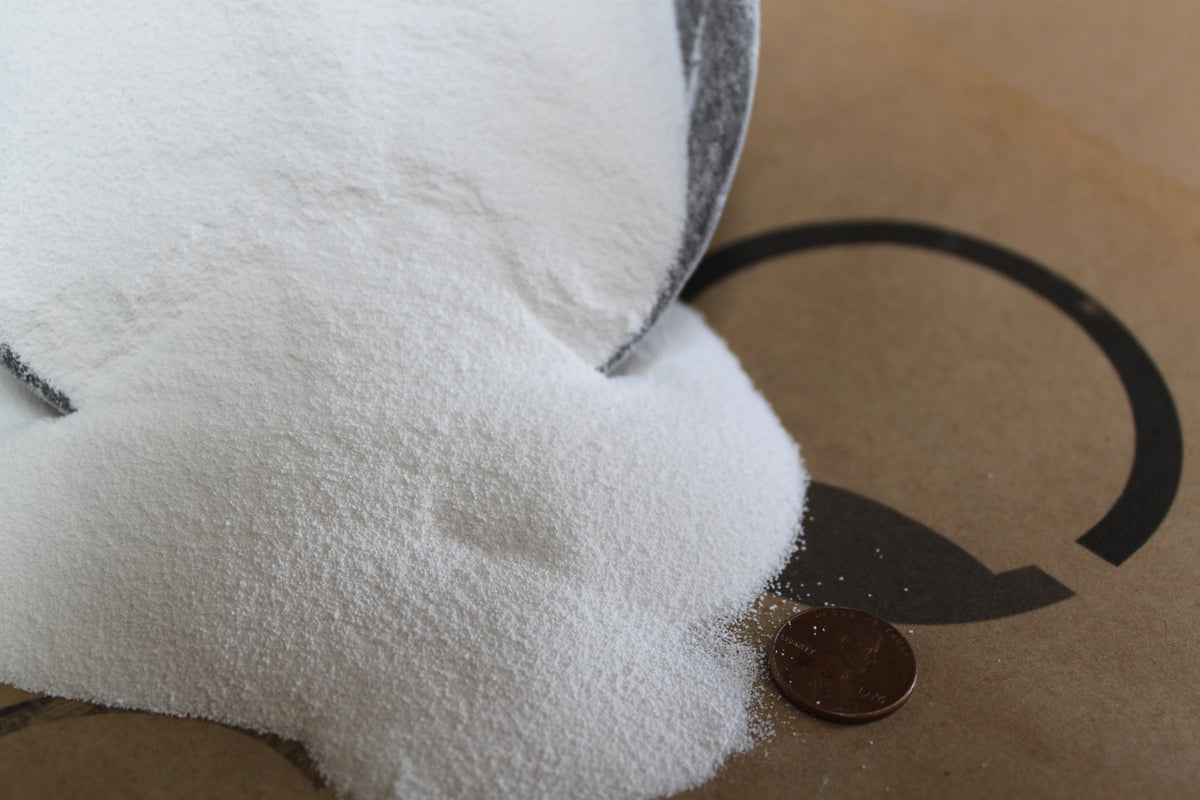

Greenway Biotech Zinc Sulfate is a 100% water-soluble monohydrate crystalline powder delivering 35.5% zinc and 16.5% sulfur in a single application. Formulated for soil-test-confirmed zinc deficiency in pecans, citrus, corn, and other high-demand crops — with published guidance for moss treatment and spot weed management on hardscapes.
Find your size → Calculate how much I need35.5%
Actual zinc by weight — among the highest concentrations in any dry source
16.5%
Sulfur delivered alongside zinc — two essential nutrients in one application
54%
More zinc per pound than heptahydrate — less product handled, shipped, dissolved
35+yrs
Family-owned fertilizer experience in California
Zinc sulfate is available in seven bag sizes from 1 lb (home gardener trial run) to 50 lb (commercial orchard or multi-acre field). Coverage estimates use a planning rate of 1 tbsp per gallon at ~100 sq ft of canopy per gallon — the typical foliar maintenance rate. Pecan and soil broadcast rates use product faster; see the Application Rates section below for crop-specific rates.
| Bag Size | Spray Solution Yield | Foliar Coverage | Best For |
|---|---|---|---|
| 1 lb | ~30 gal | ~3,000 sq ft | Home garden trial, single tree |
| 2 lb | ~60 gal | ~6,000 sq ft | Backyard orchard, raised beds |
| 5 lb | ~150 gal | ~15,000 sq ft | Most popular |
| 10 lb | ~300 gal | ~30,000 sq ft | Multi-tree pecan or citrus block |
| 25 lb | ~750 gal | ~75,000 sq ft (~1.7 acres) | Commercial orchard maintenance |
| 50 lb | ~1,500 gal | ~150,000 sq ft (~3.4 acres) | Best value |
Zinc sulfate handles soil-confirmed zinc deficiency on the crops most likely to need it — plus two non-nutritional uses on hardscapes where local regulations permit. Each application has its own rate; the calculator below figures it for you.
Highest zinc demand of any tree crop. Foliar 2–3 lbs per 100 gal when leaves are ⅓–⅔ expanded; add ¼ tbsp urea per gal.
Foliar 1–2 tbsp per gallon when new growth appears. Stay at the lower end on young trees during heat.
Soil-test based. Broadcast 14–30 lbs per acre or band 3–17 lbs per acre at planting in row starter.
Foliar ½–1 tbsp per gallon. Use lower end on sensitive crops; test a small area first; avoid full sun.
Roofs, walkways, patios only. 2–3 oz per gallon spray; contain runoff away from plants and waterways.
Non-crop hardscape edges only. 4–8 oz per gallon — non-selective at this rate. Follow local regulations.
Six reasons growers reach for zinc sulfate monohydrate over heptahydrate, chelated zinc, or zinc oxide for soil-confirmed deficiency.
Each pound delivers approximately 5.7 oz of actual zinc — about 54% more than heptahydrate forms (ZnSO₄·7H₂O at ~23% Zn). Less product to handle, ship, store, and dissolve for the same deficiency correction.
Sulfur supports formation of the amino acids cysteine and methionine, supports chlorophyll production, and can improve nitrogen use efficiency. In soils that test low for both zinc and sulfur, one product covers two needs — useful where Epsom Salt already covers magnesium but a zinc gap remains.
Dissolves cleanly for foliar sprays, soil drenches, and fertigation injection. Mix in warm water first for fastest dissolution. For recirculating hydroponics, see Chelated Zinc EDTA instead — sulfate forms can precipitate with phosphates in concentrated stocks.
Zinc serves as a cofactor in hundreds of plant enzymes governing auxin synthesis, protein formation, and carbohydrate metabolism. In pecans, citrus, corn, and other high-demand crops, even mild deficiency can produce interveinal chlorosis, small leaves, rosette growth, and yield loss.
Registered with the California Department of Food and Agriculture as a commercial fertilizer. Independently tested for heavy metals — results consistently well below required limits. Packed in Madera, California by a family-owned company, in business since 1989.
If you're not satisfied with your results, return the unused portion within 90 days for a full refund. No questions asked. Every Greenway product carries the same guarantee.
Zn2+
The ionic form plants absorb (ZnSO₄·H₂O)
Among essential mineral nutrients, zinc is one of seven micronutrients required in trace quantities but absolutely critical to plant function. It serves as a structural cofactor in enzymes that synthesize indole-3-acetic acid (the primary plant auxin), build proteins from amino acids, and regulate carbohydrate metabolism. Without enough zinc, plants develop interveinal chlorosis, shortened internodes that produce a rosette appearance, small or distorted leaves, and reduced yields.
Our zinc sulfate is the monohydrate form (ZnSO₄·H₂O) — one water molecule per formula unit. The compound is approximately 35.5% zinc and 16.5% sulfur by weight, with the remainder being the bound water and oxygen that complete the crystal structure. The heptahydrate (seven waters) only reaches ~23% zinc because the additional water molecules dilute the active fraction. Both forms work agronomically; the monohydrate just delivers more zinc per pound shipped, stored, and dissolved.
Once dissolved, zinc sulfate dissociates to Zn2+ and SO₄2− ions. The free zinc ion is the form plants actually absorb — whether through root hairs from soil solution or through the leaf cuticle from a foliar spray. In soils below approximately pH 6.5, Zn2+ stays soluble and available, which is why zinc sulfate is among the most cost-effective zinc sources in acidic and neutral soils. Above pH 6.5, zinc can react with carbonates and phosphates to form poorly soluble compounds — the situation where chelated forms typically deliver better uptake per dollar.
For deeper coverage of how plants use zinc, see our guide on What's the Function of Zinc (Zn) in Plants? and our comparison of Sulfate vs. Chelated Fertilizers.
Five distinct rate tables for the most common zinc sulfate applications. Click a tab to switch — quick-answer summaries above each table for the most common case, full table below for everything else.
Quick answer: For most crops, mix ½–1 tbsp per gallon for general maintenance, or 1–2 tbsp per gallon for confirmed deficiency on tolerant crops. Pecans take 2–3 tbsp per gallon. Always test a small area first.
| Crop Type | Application Rate | Frequency & Notes |
|---|---|---|
| General plants — maintenance | ½–1 tbsp per gallon | Use lower rate on sensitive or unknown crops; test a small area first |
| General plants — confirmed deficiency | 1–2 tbsp per gallon | Apply to tolerant crops only; avoid during heat stress |
| Pecan trees (home orchard) | 2–3 tbsp per gallon | Early season when leaves ⅓–⅔ expanded; add ¼ tbsp urea per gal |
| Citrus trees | 1–2 tbsp per gallon | Apply when new growth appears; lower end on young trees |
| Vegetables & beans | ½–1 tbsp per gallon | Every 2–3 weeks as needed; lower end on first application |
| Field crops (commercial) | 1–2 lbs per 100 gallons | Per local extension guidance; soil-test based |
Quick answer: Home garden 0.5–1 lb per 1,000 sq ft worked into the top 4–6 inches. Field broadcast 14–30 lbs/acre or band 3–17 lbs/acre — rates depend on soil test and yield goal.
📋 Soil-test based: Zinc programs for field crops should always be based on a current soil test and estimated crop removal. The ranges below are general reference figures for medium-testing soils at typical yield goals. Actual rates may be higher or lower depending on soil test level, expected yield, soil texture, and local extension recommendations.
| Application Method | Rate | Details |
|---|---|---|
| Broadcast (field crops) | 14–30 lbs per acre (≈ 5–10 lbs Zn per acre) | Use higher rate on high-pH or high-phosphorus soils where Zn availability is reduced |
| Band (at planting) | 3–17 lbs per acre (≈ 1–6 lbs Zn per acre) | Apply in row starter; rate depends on soil test zinc level |
| Home garden | 0.5–1 lb per 1,000 sq ft | Work into top 4–6 inches; water in thoroughly after application |
| Container plants | Test before applying | Confirm with a media test first — container Zn rates vary widely and over-application can cause toxicity |
Quick answer: Commercial pecan orchards use 2–3 lbs per 100 gallons (or 2–3 tbsp per gallon for small sprayers) when leaves are ⅓–⅔ expanded. Add ¼ tbsp urea per gallon to support uptake.
Pecans have among the highest zinc demand of any tree crop. Apply foliar zinc sulfate early in the season when leaves are ⅓ to ⅔ fully expanded. Repeat at 2–3 week intervals through the early growing season is common in commercial operations. Per-tree soil rates vary widely with tree size, age, and soil test — consult your local extension service rather than applying a flat rate.
| Application | Rate | Notes |
|---|---|---|
| Foliar — commercial | 2–3 lbs per 100 gallons | Add ¼ tbsp urea per gal to support zinc uptake |
| Foliar — home orchard | 2–3 tbsp per gallon | Same per-gallon concentration as commercial, scaled to small sprayers |
| Foliar timing | Leaves ⅓–⅔ expanded | Repeat 2–3 week intervals through early growing season |
| Soil — per tree | Consult local extension | Per-tree rates vary widely by tree size, age, and soil test |
Quick answer: Mix 2–3 oz per gallon and spray evenly on roofs, walkways, and patios. Apply on a dry day; contain runoff away from plants and waterways.
| Surface Type | Application Rate | Method & Notes |
|---|---|---|
| Roofs | 3 oz per gallon | Spray evenly; contain runoff away from plants and waterways |
| Walkways & patios | 2–3 oz per gallon | Apply and let dry; rinse after 24 hours if needed |
| Other structures | 2 oz per gallon | Test small area first to confirm no surface staining |
| Expected results | 7–14 days | Moss typically browns and detaches; sweep or pressure-wash away once dry |
Quick answer: 4–6 oz per gallon for broadleaf weeds, 6–8 oz per gallon for grasses. Spot application on hardscape edges only — non-selective at these rates.
| Target | Application Rate | Method & Notes |
|---|---|---|
| Broadleaf weeds | 4–6 oz per gallon | Spot spray on sunny day; avoid desired plants and prevent runoff |
| Grass weeds | 6–8 oz per gallon | Direct spot application; non-selective at this rate |
| Site restriction | Hardscape edges only | Not for use on lawns, gardens, or near desired plants |
Four application methods cover everything zinc sulfate is good for. The calculator on the right does the math for whichever you pick.
Dissolve the calculated amount in warm water first for fastest dissolution, then add to the spray tank and fill with remaining water. Apply in early morning or late afternoon to avoid leaf burn. Focus on undersides of leaves where absorption is highest. For pecans, add ¼ tbsp urea per gallon to support uptake. Test a small area first on unfamiliar or sensitive crops.
Calculate required amount based on soil test results. Broadcast evenly over the area or band along rows. Work into top 4–6 inches of soil for best results. Water in thoroughly after application. Allow 2–4 weeks for visible improvement on new growth.
Mix at the rate for your surface type (2–3 oz per gallon). Apply on a dry day with no rain expected for 24 hours. Spray evenly over the moss-covered area. Moss typically browns and detaches within 7–14 days. Sweep or pressure-wash dead moss away once dry. Protect nearby plants and waterways from drift and runoff.
Zinc sulfate can precipitate with phosphates in concentrated stock solutions, clogging drip lines and locking up both nutrients. For recirculating hydroponic systems, use Chelated Zinc EDTA instead. Zinc sulfate is acceptable in non-recirculating systems where pH is maintained at 5.5–6.5.
Zinc sulfate is one of several micronutrient corrections in our catalog. Use this side-by-side comparison to choose the right source for your situation. Interveinal chlorosis can come from zinc, iron, or manganese deficiency — and high-pH soils often produce more than one at once. A soil test is the most reliable diagnostic.
| Product | Analysis | Best For | Effective pH | Notes |
|---|---|---|---|---|
| Zinc Sulfate 35.5% (this product) | 35.5% Zn + 16.5% S | Soil-confirmed Zn deficiency; combined Zn + S needs | Below ~6.5 | Highest Zn concentration in any dry zinc source — lowest cost per lb of zinc in acidic/neutral soils |
| Chelated Zinc EDTA | 14% Zn (chelated) | Zinc deficiency in alkaline soils, hydroponics, fertigation | Stable up to ~7.0 | Preferred zinc form for hydroponic systems; resists tie-up by carbonates and phosphates |
| Chelated Iron DTPA | 11% Fe (chelated) | Iron chlorosis when soil tests adequate Zn but low Fe | Stable up to ~7.5 | Iron chlorosis can look identical to zinc chlorosis — a soil test distinguishes them |
| Manganese Sulfate | 31% Mn + 18% S | Manganese deficiency (palm frizzle top, soybean Mn chlorosis) | Below ~7.0 | 50 lb size repackaged from OMRI Listed® material; same enzyme-cofactor role pattern as zinc |
| Ferrous Sulfate | 20% Fe + 12% S | Iron deficiency in acidic soils; lawn moss management | Below ~6.0 | Mild soil acidifier; iron precipitates above pH 6.0 — chelated iron preferred in alkaline soils |
Zinc sulfate is the workhorse for soil-confirmed zinc deficiency in acidic to neutral soils. For a few specific use cases, a different product is a better match — see the right column.
Zinc sulfate corrects zinc deficiency. For a complete micronutrient and pecan-orchard program, pair it with these complementary products.
For interveinal chlorosis in alkaline soils where zinc and iron deficiencies often co-occur. Stays soluble up to pH 7.5 — reliable when sulfate forms can't hold.
Foliar partnerAdd at ¼ tbsp per gallon to a zinc foliar spray. A long-standing pecan and citrus practice that may support zinc uptake through the leaf cuticle.
Magnesium + sulfurRounds out a secondary nutrient package with magnesium and additional sulfur — useful in soils testing low for Mg and S alongside zinc.
Manganese correctionManganese deficiency presents nearly identically to zinc deficiency. If a soil test shows both, this addresses Mn in high-pH soils where sulfate forms lock up.
Zinc sulfate is safe when used as directed. These five rules cover the most common mistakes.
If your question isn't here, contact our team. We'd rather over-explain on the front end than disappoint on the back end.
Zinc sulfate is a micronutrient fertilizer containing 35.5% zinc and 16.5% sulfur in our monohydrate form (ZnSO₄·H₂O). Zinc is a cofactor in hundreds of plant enzymes governing protein synthesis, growth hormone production, and carbohydrate metabolism. Without adequate zinc, plants can develop interveinal chlorosis, stunted growth, and reduced yields. For a deeper look at zinc's role in plant biology, see What's the Function of Zinc (Zn) in Plants?
Zinc deficiency symptoms vary by plant but commonly include interveinal chlorosis (yellowing between leaf veins while veins remain green), stunted growth and shortened internodes that produce a rosette appearance, small or malformed leaves, and delayed maturity. In pecans, look for small leaflets, wavy margins, and "mouse ear" symptoms. In corn, look for white or yellow stripes on leaves.
Zinc deficiency is most common in alkaline soils (pH above 7.0), sandy soils, and soils high in phosphorus. Soil tests showing less than ~1.0 ppm available zinc typically indicate deficiency. For a broader guide, read Essential Micronutrients: Boost Your Garden Soil for Healthier Plants.
The key difference is zinc concentration. Monohydrate (ZnSO₄·H₂O) contains approximately 35.5% zinc, while heptahydrate (ZnSO₄·7H₂O) contains approximately 23% zinc. The monohydrate form delivers about 54% more zinc per pound, so less product is needed per application for the same zinc delivery. Both forms are hygroscopic and should be stored tightly sealed.
Zinc sulfate is most cost-effective in soils below pH 6.5 and for foliar sprays. Above pH 6.5, sulfate forms can react with carbonates and phosphates to form poorly soluble compounds, reducing plant availability. Chelated Zinc EDTA stays soluble across a wider pH range and is the preferred choice for hydroponic systems, fertigation, concentrated stock solutions, and alkaline soils. Many growers in alkaline soils use both — chelated zinc for soil applications and zinc sulfate for foliar sprays. For a deeper comparison, see Sulfate vs. Chelated Fertilizers.
For foliar application, mix 2–3 lbs per 100 gallons of water (or 2–3 tbsp per gallon for small sprayers). Adding ¼ tbsp of urea per gallon is a long-standing practice that may support zinc absorption.
Apply early in the season when leaves are ⅓ to ⅔ fully expanded, focusing on lower leaf surfaces. For per-tree soil application rates, consult your local extension service — needs vary considerably with tree size, age, and soil test results.
Our zinc sulfate is independently lab tested for heavy metal content, with results consistently well below required limits — current results are posted on the Zinc Sulfate Heavy Metal Analysis page. The product is suitable for use on edible crops when applied as directed. Always follow recommended application rates and observe appropriate intervals between application and harvest as specified on the label.
Published guidance for both uses on hardscapes is available in the Application Rates section above. These are non-nutritional uses — apply only on roofs, walkways, patios, or non-crop areas where runoff can be controlled. For moss, mix 2–3 oz per gallon and spray evenly; results are typically visible within 7–14 days. For spot weed management, use 4–6 oz per gallon for broadleaf weeds or 6–8 oz for grasses — non-selective at these rates. Always protect nearby plants and waterways, test on a small area first, and follow all local regulations. For broader natural weed management strategies, see How to Masterfully Manage Weeds in the Garden.
The chemistry is similar — both are zinc sulfate compounds — but the regulatory positioning is different. Our product (zinc sulfate monohydrate, ZnSO₄·H₂O, 35.5% Zn) is sold as a CDFA-registered fertilizer. Materials sold and labeled specifically as roof-moss products carry different label requirements under California pesticide regulations. Use this product as directed on the fertilizer label and the published moss-treatment guidance, follow all local regulations, and contain runoff away from waterways and storm drains.
For recirculating hydroponic systems, Chelated Zinc EDTA is generally a better choice — it stays soluble across a wider pH range and is less likely to precipitate in concentrated stock solutions or when mixed with phosphate-rich nutrients. Some hydroponic operators do use zinc sulfate when the system pH is maintained in the 5.5–6.5 range, but chelated zinc is the safer default for stock-tank stability.
No. Our zinc sulfate is technical-grade fertilizer material, not feed-grade. We do not recommend using it as a component in livestock mineral programs or animal feed. For feed-grade zinc, source a product specifically labeled for that use from a feed supplier.
From a 1 lb home-garden trial to a 50 lb commercial season supply, we've shipped zinc sulfate from Madera, California to growers in all 50 states. Free shipping on orders over $100. 90-day money-back guarantee on every order.
Choose your size →