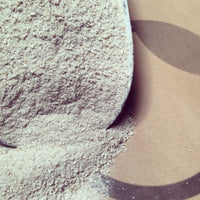
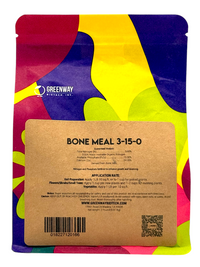
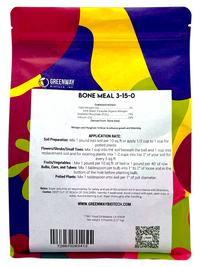
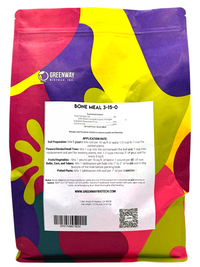
Organic Bone Meal Fertilizer 3-15-0
- Regular Price
- $ 19.99
- Sale Price
- $ 19.99
- Regular Price
- $ 17.99
- Unit Price
- per
Organic Bone Meal 3-15-0 Fertilizer
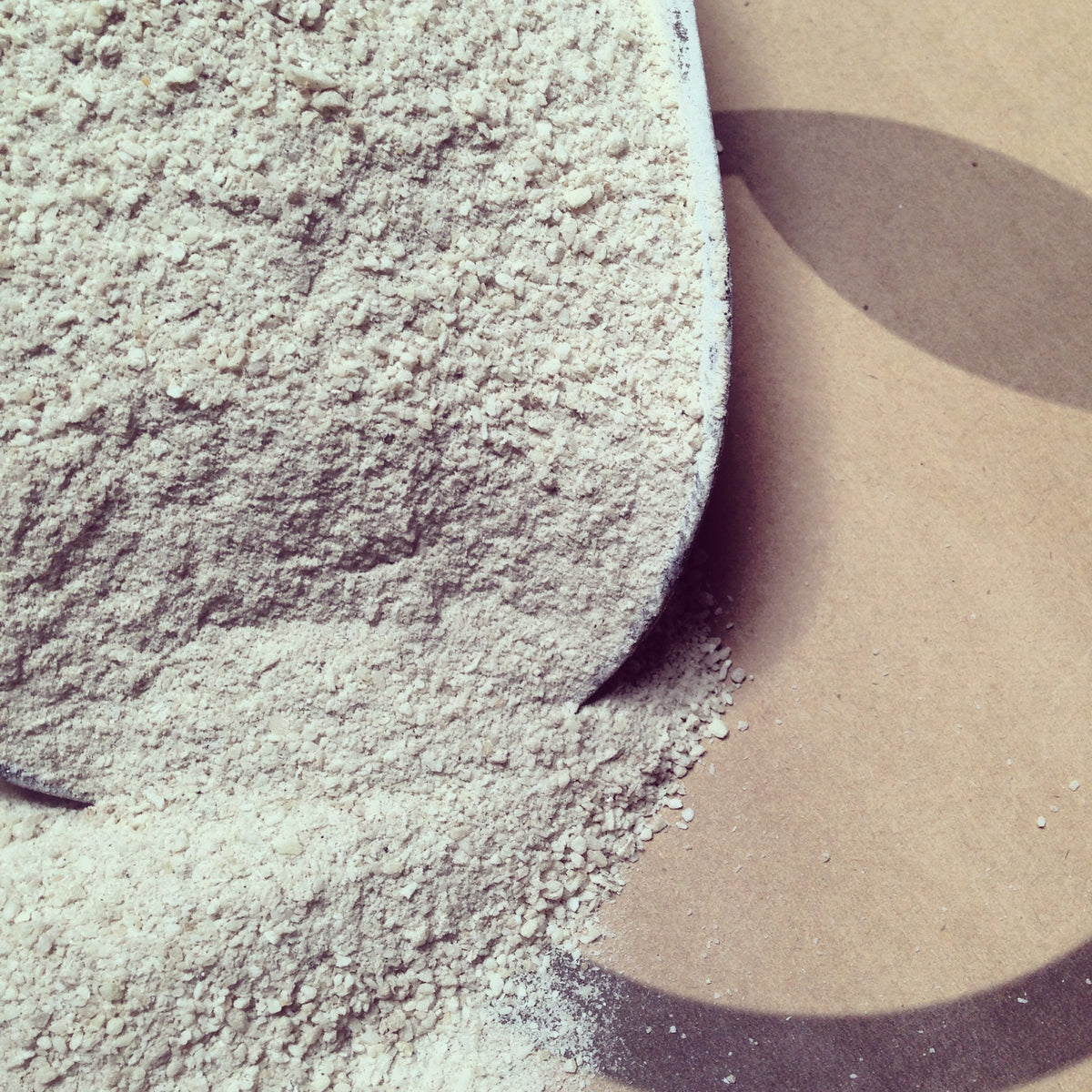
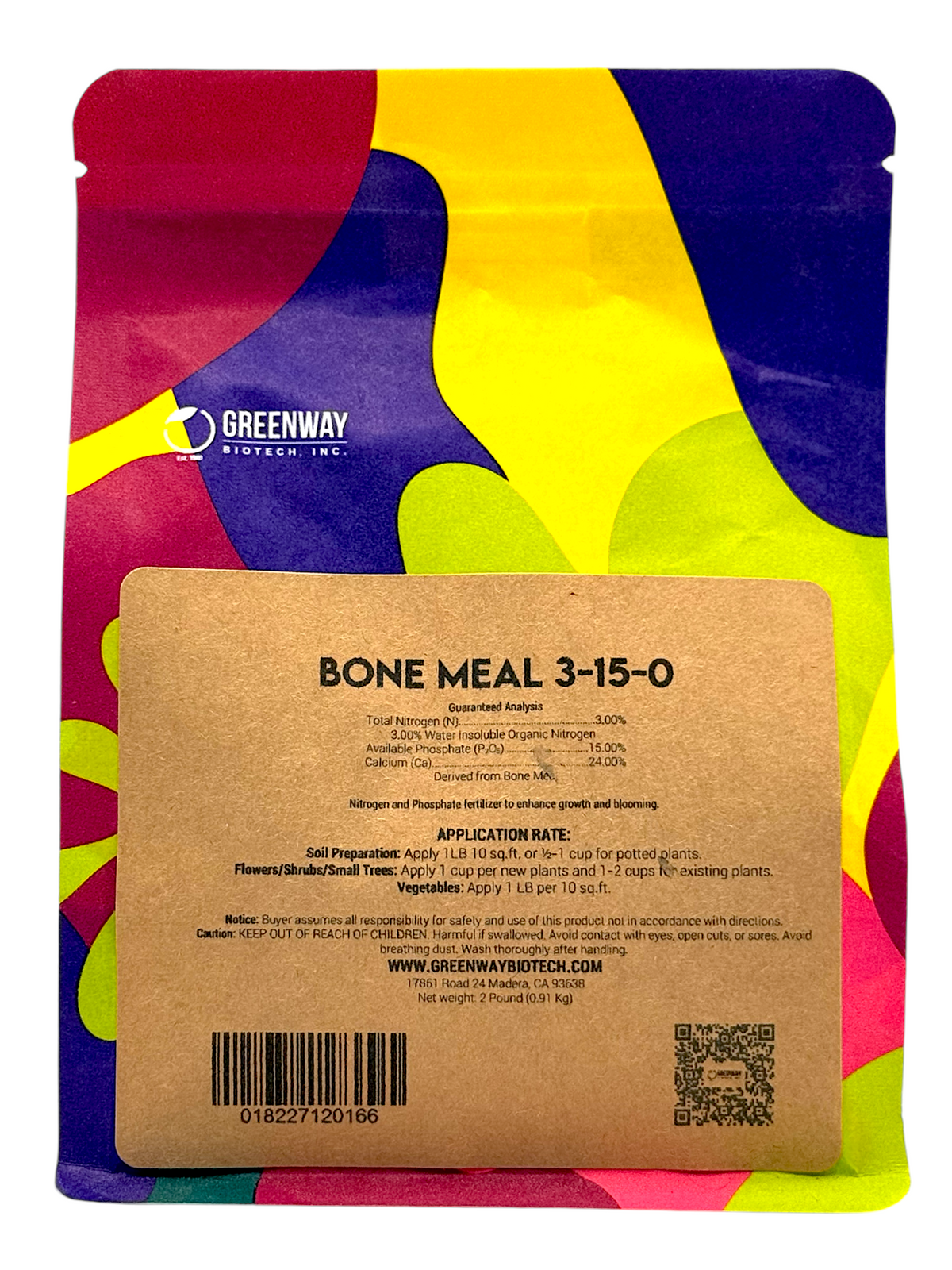
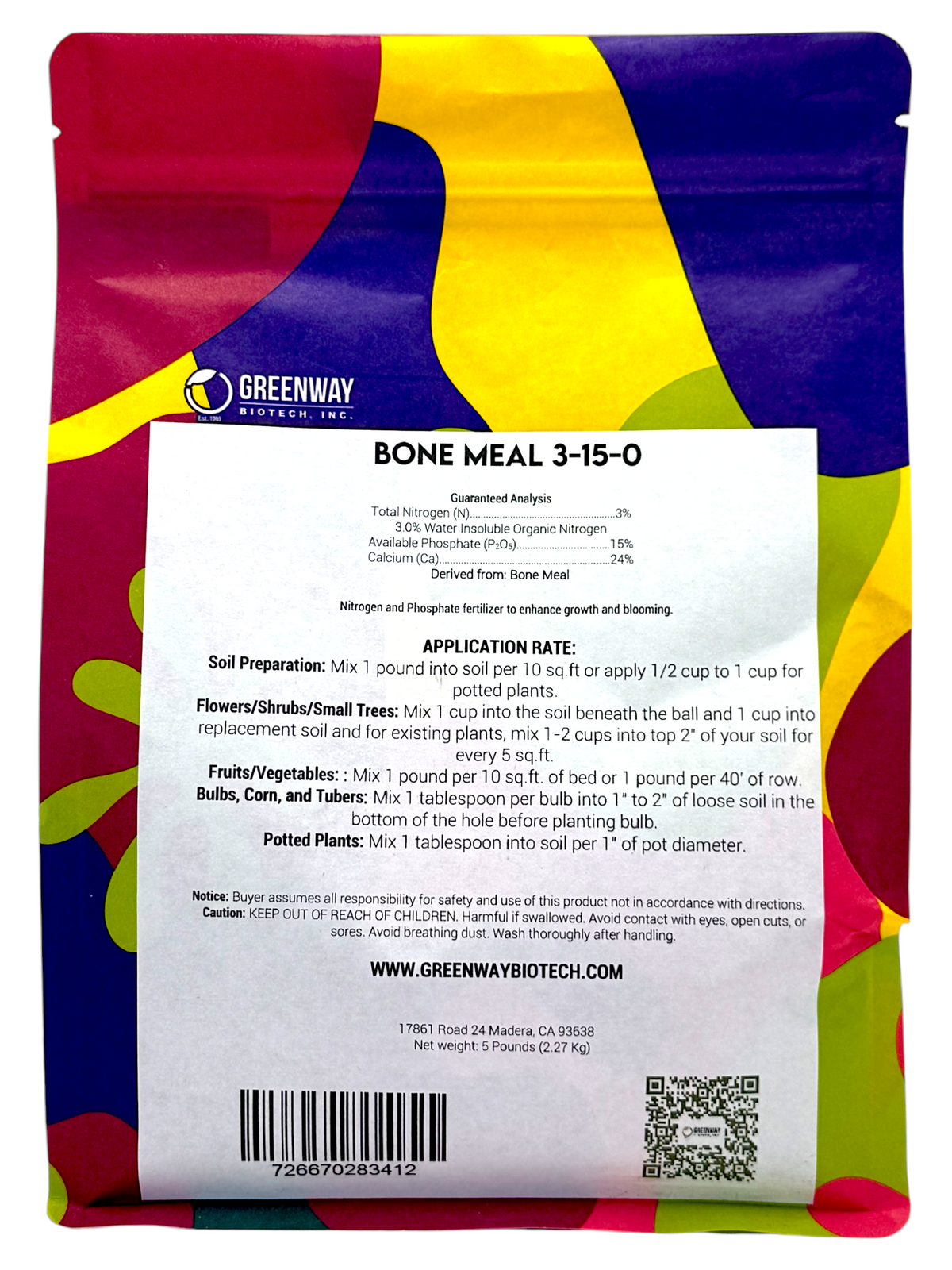
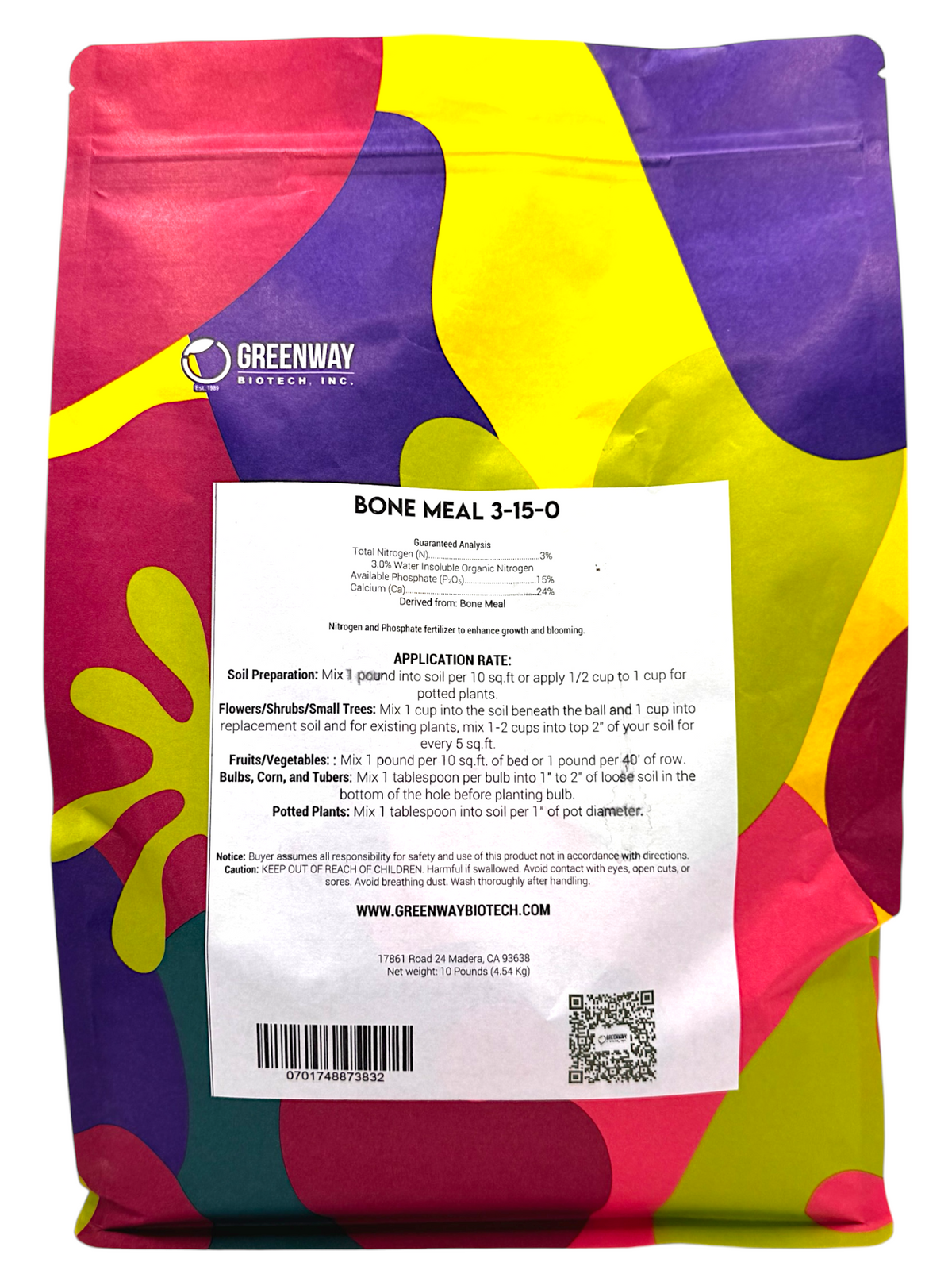
Premium bovine bone meal with 15% available phosphate (P₂O₅) and 24% calcium. Slow-release organic nutrition for robust roots, abundant blooms, and stronger plants — one application feeds for 3–4 months.
Ideal Applications
FEATURES
🦴 15% Slow-Release Available Phosphate (P₂O₅)
Delivers steady available phosphate (P₂O₅) over 3–4 months, promoting strong root development, abundant flowering, and quality fruit production with low burn risk when used as directed.
💪 24% Calcium for Cell Strength
One of the highest organic calcium concentrations available. Strengthens cell walls, can help prevent blossom end rot in tomatoes, and supports overall plant structure.
🌱 Organic & Non-GMO Sourced
Sourced from certified organic, non-GMO bovine bone meal. Safe for certified organic gardens and sustainable growing practices.
⏰ Season-Long Feeding
One application at planting can last 3–4 months as soil microorganisms gradually break down the bone meal, releasing nutrients when plants need them most.
🌷 Premier Bulb Fertilizer
A go-to amendment for tulips, daffodils, and other flowering bulbs. Place below bulbs at planting to fuel root establishment and spring blooms.
🦠 Feeds Beneficial Soil Biology
As bone meal decomposes, it nourishes beneficial soil microorganisms that can improve nutrient cycling, soil structure, and long-term fertility.
🔥 Low Burn Risk
Gentle, slow-release formula is safe for transplants, seedlings, and established plants when applied at recommended rates.
🌿 3% Nitrogen Bonus
Provides a small but steady nitrogen supply for early-season leaf growth without overstimulating foliage at the expense of roots and flowers.
🍅 Blossom End Rot Prevention
The 24% calcium content makes bone meal one of the most effective organic tools for addressing calcium-related disorders in tomatoes, peppers, and squash.
🌍 Versatile Garden Application
Works in vegetable gardens, flower beds, orchards, containers, and raised beds. Compatible with most organic and conventional fertilizer programs.
DERIVED FROM
Our bone meal is sourced from 100% organic, non-GMO bovine bone that is steam-processed and finely ground for consistent application and nutrient availability.
Source Material
Bovine Bone Meal
Steam-processed cattle bones providing 15% available phosphate (P₂O₅), 3% nitrogen, and 24% calcium. Certified organic source material, non-GMO.
Complementary Nutrient Sources
SCIENCE BEHIND THE FORMULA
3-15-0: A Phosphorus-Forward Organic Formula
Bone meal naturally delivers high available phosphate (P₂O₅) and calcium with moderate nitrogen — a profile that excels at root building, flowering, and fruit quality. Best performance occurs when soil temperatures are above 50°F and soil is kept evenly moist, as microbial activity drives nutrient release.
🌿 Nitrogen — 3% (Gentle Growth Support)
Provides slow-release nitrogen for steady vegetative growth without overstimulating foliage. Supports protein synthesis in plant tissues during the critical establishment phase.
🌸 Available Phosphate (P₂O₅) — 15% (Root & Bloom Engine)
The primary nutrient in bone meal. Available phosphate (P₂O₅) drives root development, energy transfer (ATP), flowering initiation, and fruit set. Essential for bulb establishment and transplant success. For a deeper look, see our article on The Function of Phosphorus in Plants.
⭐ Potassium (K₂O) — 0% (Pair for Complete Nutrition)
Bone meal naturally contains no significant potassium. For complete nutrition, pair with Potassium Sulfate 0-0-53 for disease resistance and fruit quality.
🦴 Calcium — 24% (Structural Integrity)
Calcium strengthens plant cell walls, supporting disease resistance and structural rigidity. Critical for helping prevent blossom end rot in tomatoes, peppers, and squash. Also supports root tip growth and nutrient uptake. See our guide to Best Calcium Fertilizers for context on how bone meal compares.
Why Bone Meal Outperforms Other Phosphorus Sources
⏰ Sustained Release Advantage
Unlike fast-release synthetic phosphorus sources (MAP, TSP), bone meal releases available phosphate (P₂O₅) gradually over 3–4 months as soil microbes break it down, reducing the risk of phosphorus runoff.
🦠 Microbial Activation
Decomposing bone meal feeds beneficial soil organisms including mycorrhizal fungi, which in turn can extend root reach and improve nutrient uptake far beyond the root zone. Learn more about how soil microbes affect plant health.
💎 Dual Nutrient Delivery
Few fertilizers deliver both available phosphate (P₂O₅) and calcium in a single organic package. This dual action can address two of the most common deficiencies in garden soils simultaneously.
What to Expect After Application
Results vary with soil temperature, moisture, and microbial activity. Best performance when soil temps are above 50°F.
COMMON PROBLEMS BONE MEAL SOLVES
APPLICATION RATES AND DIRECTIONS
Apply bone meal at planting time for best results. Work into soil before planting or mix into planting holes. Application rates are general guidelines — always consider soil test results, as phosphorus can accumulate in soil over time.
General Application Rates
| Application Type | Rate | Instructions |
|---|---|---|
| Soil Preparation | 1 lb per 10 sq ft | Mix into top 6" of soil |
| Flowers | 1 cup per plant | Mix into soil around root zone |
| Shrubs & Small Trees | 1 cup under root ball | Plus 1 cup in backfill soil |
| Vegetables | 0.5–1 lb per 10 sq ft | Adjust based on soil P levels |
| Bulbs, Corms & Tubers | 1 tbsp per bulb | Mix 1–2" below bulb placement |
| Potted Plants | 1 tbsp per inch diameter | Mix into potting soil |
Specific Crop Guidelines
| Crop | Application Rate | When to Apply |
|---|---|---|
| Tomatoes | 2 tbsp per hole | At transplanting |
| Roses | 1–2 cups per bush | Early spring & after first bloom |
| Tulips / Daffodils | 1 tsp per bulb | Fall planting |
| Root Vegetables | 2 lbs per 25' row | Before seeding |
| Fruit Trees | 1–3 cups per tree | Early spring or at planting |
Conversion note: Approximately 2 cups per pound (varies by grind).
HOW TO USE
Soil & Garden Beds
- Test soil if possible — bone meal is most effective at pH ≤7.0.
- Spread bone meal evenly at the recommended rate (0.5–1 lb per 10 sq ft for general use).
- Work into the top 6 inches of soil with a garden fork or tiller.
- Water thoroughly to begin the microbial breakdown process.
- Reapply at the start of each growing season or every 3–4 months for heavy feeders.
Container & Potted Plants
- Measure 1 tablespoon per inch of pot diameter.
- Mix bone meal into the potting soil before planting, or work into the top 2 inches of existing containers.
- Water well after application.
- Refresh every 3–4 months during the growing season.
Bulb Planting
- Dig the planting hole to the appropriate depth for your bulb variety.
- Place 1 tablespoon of bone meal at the bottom of each hole.
- Mix lightly into the soil 1–2 inches below where the bulb will sit.
- Set the bulb and backfill with soil. Water in well.
Transplants & New Plantings
- Add 1–2 tablespoons of bone meal to each planting hole.
- Mix with the backfill soil so bone meal surrounds the root zone.
- Set the plant, fill the hole, and water thoroughly.
Pro Tip: Maximize Phosphorus Availability
Bone meal works best in slightly acidic to neutral soil (pH 6.0–7.0). In alkaline soils above pH 7.0, phosphorus binds with calcium and becomes less available to plants. If your soil pH is high, consider using MAP 12-61-0 for a faster-acting phosphorus source, or amend soil pH first.
When Bone Meal Is the Right Choice
- Planting bulbs, transplants, or establishing new garden beds
- Organic gardens needing a slow-release available phosphate (P₂O₅) and calcium source
- Helping prevent blossom end rot in tomatoes, peppers, and squash
- Building long-term soil fertility with sustained-release nutrition
- Fruit trees at planting time or post-bloom — 1–3 cups per tree can support root establishment and calcium delivery during fruit development, and may help prevent bitter pit in apples and pears
When to Consider Other Options
- If you need fast-acting phosphorus for a severe deficiency — try MAP 12-61-0 (water-soluble, immediate uptake)
- If your soil pH is above 7.5 — phosphorus availability drops significantly in alkaline conditions
- If soil tests already show high phosphorus levels — excess P can interfere with micronutrient uptake
- If you need a marine-sourced alternative — consider Fish Bone Meal 4-17-0
BONE MEAL CALCULATOR
SAFETY AND HANDLING
Personal Protective Equipment (PPE)
- Wear gloves when handling bone meal
- Avoid inhaling dust — use in well-ventilated areas or wear a dust mask
- Wash hands thoroughly after handling
Storage Guidelines
- Store in a cool, dry place in a sealed container
- Keep out of direct sunlight and away from heat sources
- Keep away from children and pets — the smell can attract animals
- Bone meal can absorb moisture; reseal bags tightly after use
Application Precautions
- Always mix bone meal thoroughly into soil — surface application attracts animals
- Water in well after application to help incorporate and reduce scent
- Consider using in fenced areas if pets or wildlife are a concern
- Do not exceed recommended application rates — phosphorus can accumulate in soil
- Most effective at soil pH ≤7.0; phosphorus becomes less available in alkaline soils
- Check soil test results before reapplying — phosphorus builds up over time
First Aid
- Eye contact: Flush with clean water for 15 minutes. Seek medical attention if irritation persists
- Skin contact: Wash affected area with soap and water
- Ingestion: Do not induce vomiting. Contact Poison Control (1-800-222-1222) or seek medical attention
- Inhalation: Move to fresh air. Seek medical attention if symptoms persist
Refer to the Safety Data Sheet (SDS) in the Documents section for complete safety information.
COMPARE WITH OTHER PHOSPHORUS SOURCES
| Feature | Bone Meal 3-15-0 | Rock Phosphate | Single Super (SSP) | Triple Super (TSP) | Blood Meal |
|---|---|---|---|---|---|
| Available Phosphate (P₂O₅) | 15% | 3–5% | 16–20% | 44–46% | 1% |
| Calcium | 24% | 30% | 18–21% | 12–14% | 0% |
| Nitrogen | 3% | 0% | 0% | 0% | 13% |
| Sulfur | 0% | 0% | 11–12% | 1–2% | 0% |
| Release Speed | Slow (3–4 mo) | Very Slow | Fast | Fast | Fast |
| Organic | Yes | Yes | No | No | Yes |
| pH Effect | Minimal | Raises pH | Lowers pH | Lowers pH | Lowers pH |
COMPLETE YOUR SYSTEM
Build a complete organic garden nutrition program around bone meal's available phosphate (P₂O₅) and calcium foundation.
Blood Meal 13-0-0
Fast-acting organic nitrogen for leafy growth. Pairs perfectly with bone meal's phosphorus for balanced NPK.
EssentialPotassium Sulfate 0-0-53
Completes the NPK trio. Can improve fruit quality, disease resistance, and drought tolerance.
OrganicFish Bone Meal 4-17-0
Marine-sourced alternative to bovine bone meal. Higher nitrogen at 4% with comparable available phosphate (P₂O₅) at 17%.
OptionalChelated Iron EDTA
Corrects iron chlorosis (yellowing) in alkaline soils where bone meal may be less effective.
OptionalMAP 12-61-0
Water-soluble available phosphate (P₂O₅) for quick correction when bone meal's slow release isn't fast enough.
FREQUENTLY ASKED QUESTIONS
What is bone meal fertilizer best for?
Bone meal excels at promoting root development, flowering, and fruiting. It's particularly well-suited for bulbs (tulips, daffodils), transplants, root vegetables, and flowering plants like roses. The high available phosphate (P₂O₅) content (15%) can trigger blooming while calcium (24%) strengthens cell walls and may help prevent disorders like blossom end rot in tomatoes. For a deeper look at why phosphorus matters, see our article on The Function of Phosphorus in Plants.
How long does bone meal last in soil?
Bone meal is a slow-release fertilizer that continues feeding plants for 3–4 months. One application at planting typically lasts an entire growing season. The nutrients become available gradually as soil microorganisms break down the organic material. Bone meal works faster in warm soils (≥50°F) with active microbial life. Learn more about how soil microbes affect nutrient release.
Can bone meal burn plants?
The risk of burn is low when bone meal is used as directed. Its slow-release nature provides gentle, sustained nutrition. However, excessive amounts can raise phosphorus levels too high, potentially interfering with micronutrient uptake, so follow recommended rates and consider soil testing before each growing season.
Is bone meal good for tomatoes?
Bone meal can be an excellent addition for tomatoes. The available phosphate (P₂O₅) supports strong root systems and fruit development, while the 24% calcium content may help prevent blossom end rot. Apply 2 tablespoons in each planting hole at transplant time. For a complete tomato feeding program, see our guide to Best Fertilizers for Tomatoes.
When should I apply bone meal?
Apply bone meal at planting time for best results. Mix it into the soil before planting or add to planting holes. For established plants, work it into the top 2 inches of soil in early spring as growth begins. Fall application works well for spring bulbs. For more on soil preparation timing, see The Organic Gardener's Guide to Soil Preparation.
Will bone meal attract animals?
Yes, the smell can attract dogs and wildlife. Always mix bone meal thoroughly into the soil and water in well after application. Store in sealed containers and consider using it in fenced areas if animals are a concern. Do not leave bone meal on the soil surface.
Will bone meal change my soil pH?
Bone meal has minimal effect on soil pH when used at recommended rates. However, the 24% calcium content can slightly raise pH with large or repeated applications. If you need calcium without raising pH, consider Gypsum (Calcium Sulfate) as a pH-neutral calcium source. For a broader look at calcium sources, see our article on Best Calcium Fertilizers.
Does bone meal smell?
Bone meal has a mild, earthy scent that is noticeable when handling but much less pungent than blood meal or fish-based fertilizers. The smell fades quickly once worked into soil and watered in. Store in a sealed container to minimize odor.
Is bone meal safe around pets?
Bone meal is generally safe when incorporated into soil as directed. However, dogs in particular may be attracted to the smell and could dig it up or consume it directly from the bag. Large quantities consumed directly can cause digestive issues. Always mix bone meal into soil, water it in, and store bags out of reach of pets.
Can I use bone meal with other fertilizers?
Bone meal pairs well with most organic and conventional fertilizers. For a complete organic program, combine with Blood Meal 13-0-0 for nitrogen and Potassium Sulfate 0-0-53 for potassium. Learn more in our guide to Organic vs Synthetic Fertilizer: Key Differences and Tips.
GROW WITH CONFIDENCE
Quality & Purity Standards
- Sourced from 100% organic, non-GMO bovine bone meal
- Consistent particle size for even application
- Tested for heavy metals — results consistently well below required limits
- Packaged at our facility in Madera, California, USA
90-Day Satisfaction Guarantee
Not satisfied with your purchase? Contact us within 90 days for a full refund or replacement. We stand behind every product in our collection.
Environmental Responsibility
- Bone meal is a byproduct of the beef industry — using it reduces waste and returns nutrients to the soil
- Slow-release formula reduces phosphorus runoff compared to fast-release synthetics
- No unnecessary fillers or synthetic additives
About Greenway Biotech, Inc.
Family-owned since 1989, Greenway Biotech has been helping gardeners grow healthier plants for over 35 years. We manufacture and package our products at our facility in Madera, California — quality you can trace from source to shelf.
Expert Support
Our gardening experts are available to answer your questions about application rates, timing, and compatibility with other fertilizers. Reach us at questions@greenwaybiotech.com.
DOCUMENTS
DISCOVER MORE
- What's the Function of Phosphorus in Plants?
- Best Calcium Fertilizers — How Bone Meal Compares
- The Organic Gardener's Guide to Soil Preparation
- How Soil Microbes Affect Plant Health
- Best Fertilizers for Tomatoes — Complete Guide
- Organic vs Synthetic Fertilizer: Key Differences and Tips
- Flower Fertilizer 101: How to Choose, Apply, and Troubleshoot
- Best Fertilizer for Fruit Trees — Timing, Rates, and Troubleshooting
- Best Organic Fertilizer for Vegetables
HAVE QUESTIONS?
Check out our full FAQ page or contact our experts for personalized advice.