Feather Meal Fertilizer 12-0-0
- Regular Price
- $ 24.99
- Sale Price
- $ 24.99
- Regular Price
- $ 22.99
Sold Out
- Unit Price
- per
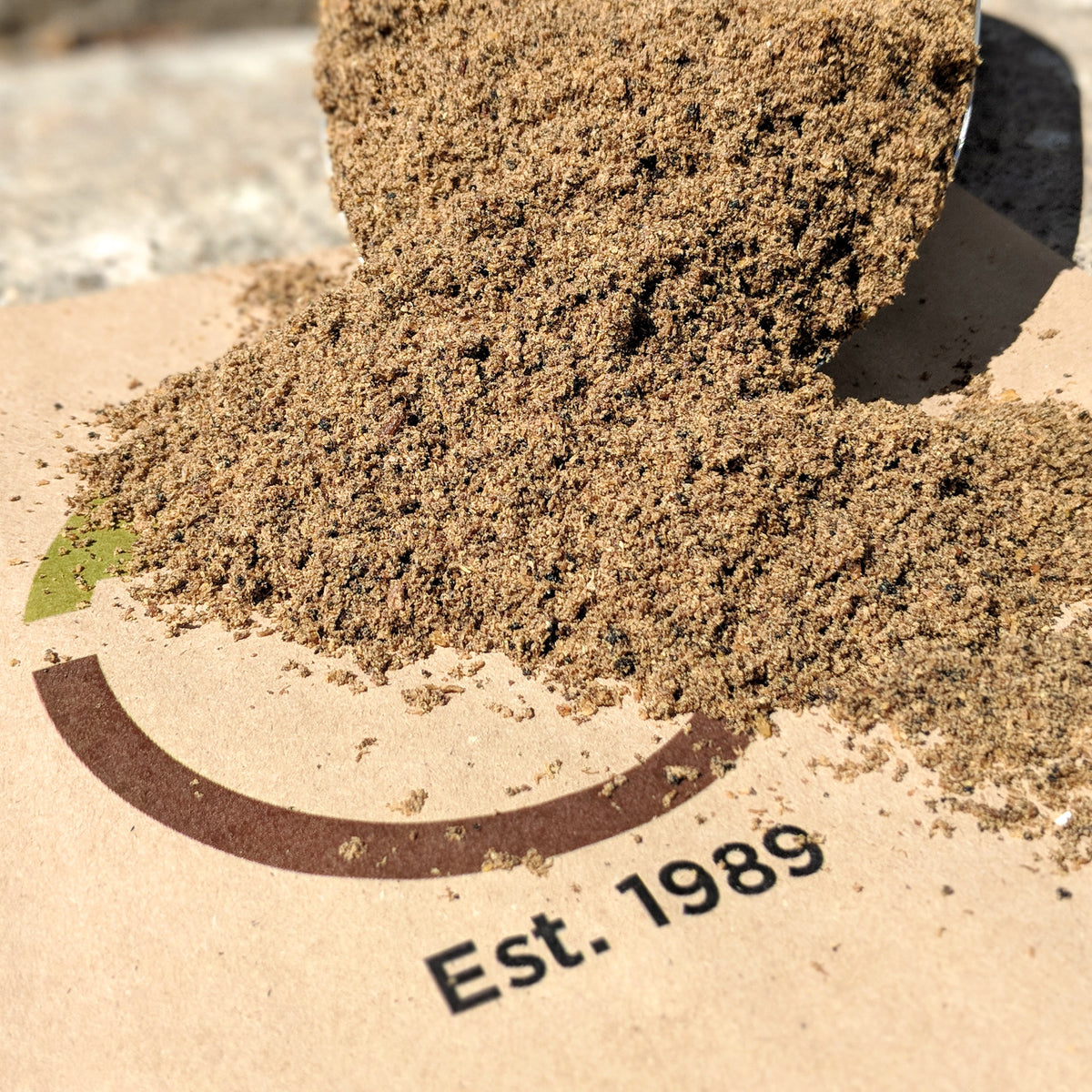
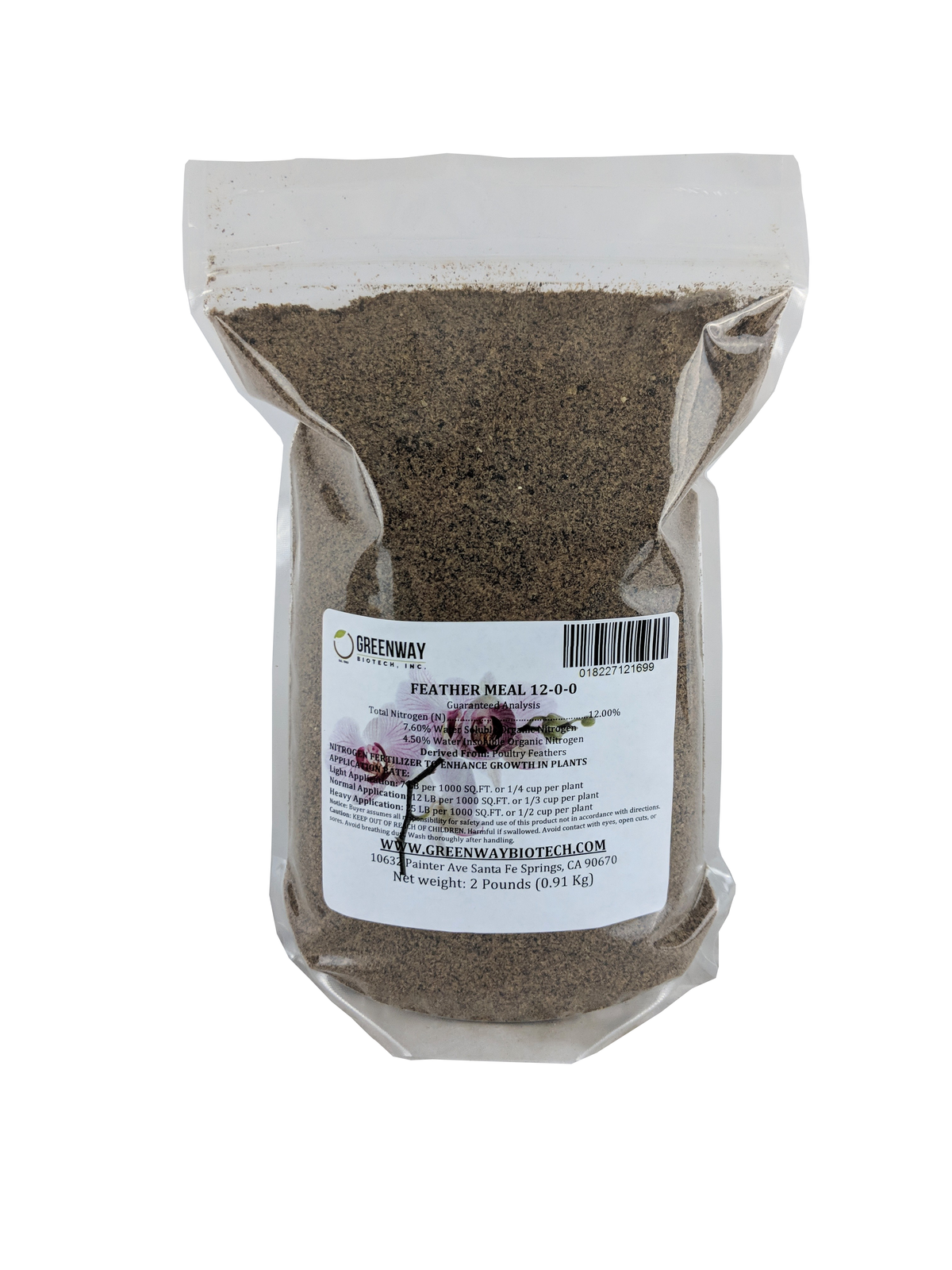
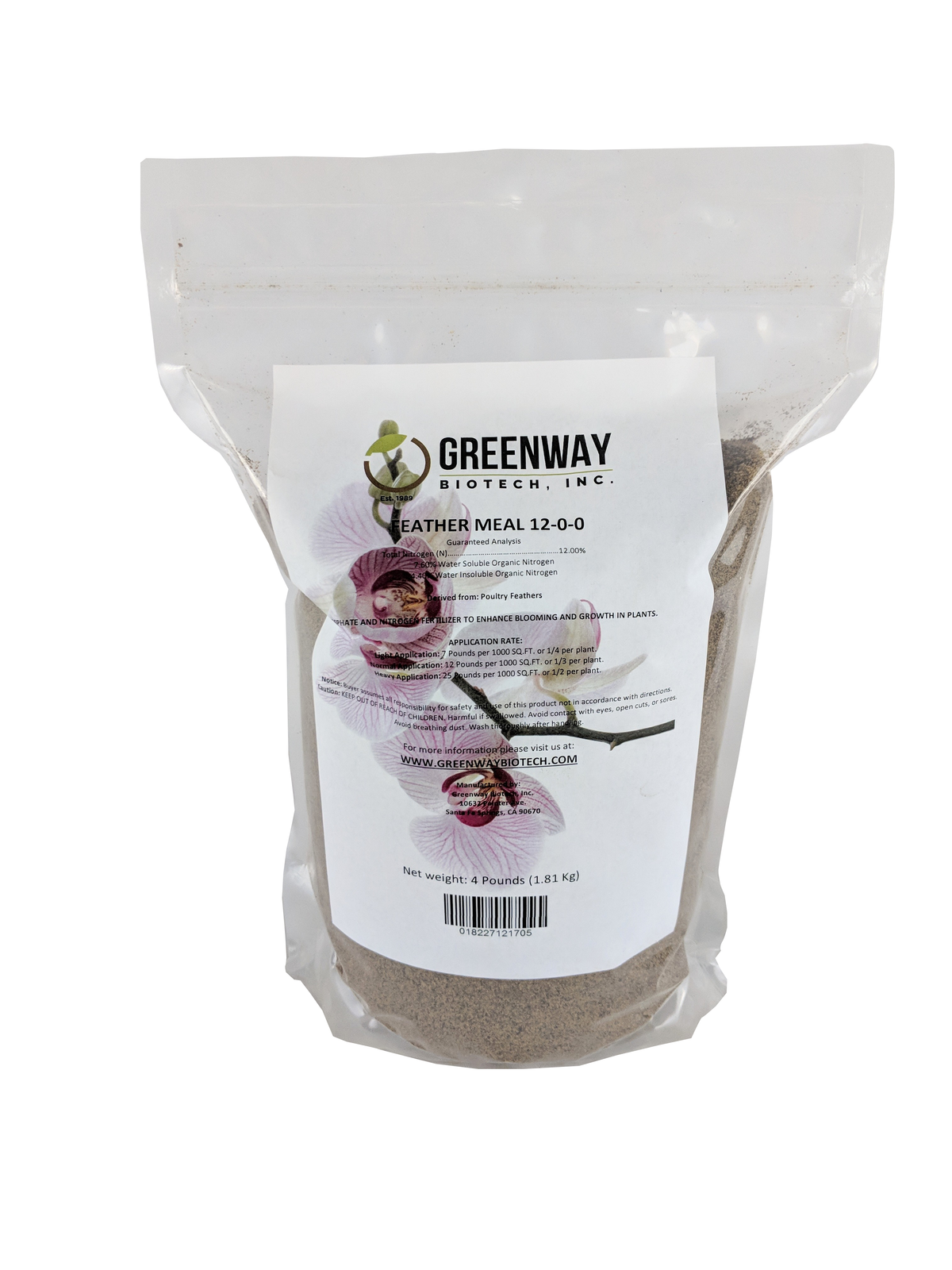
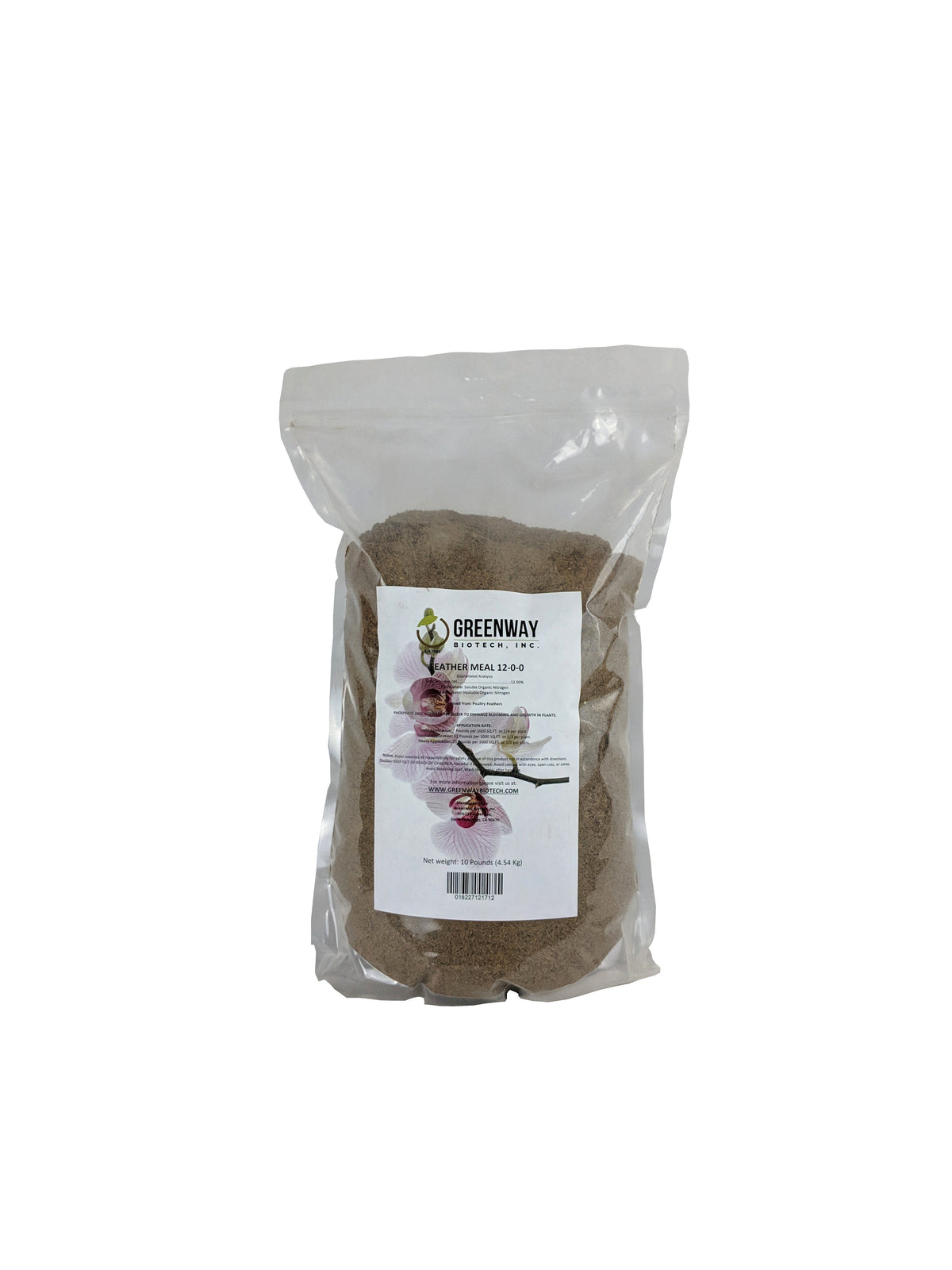
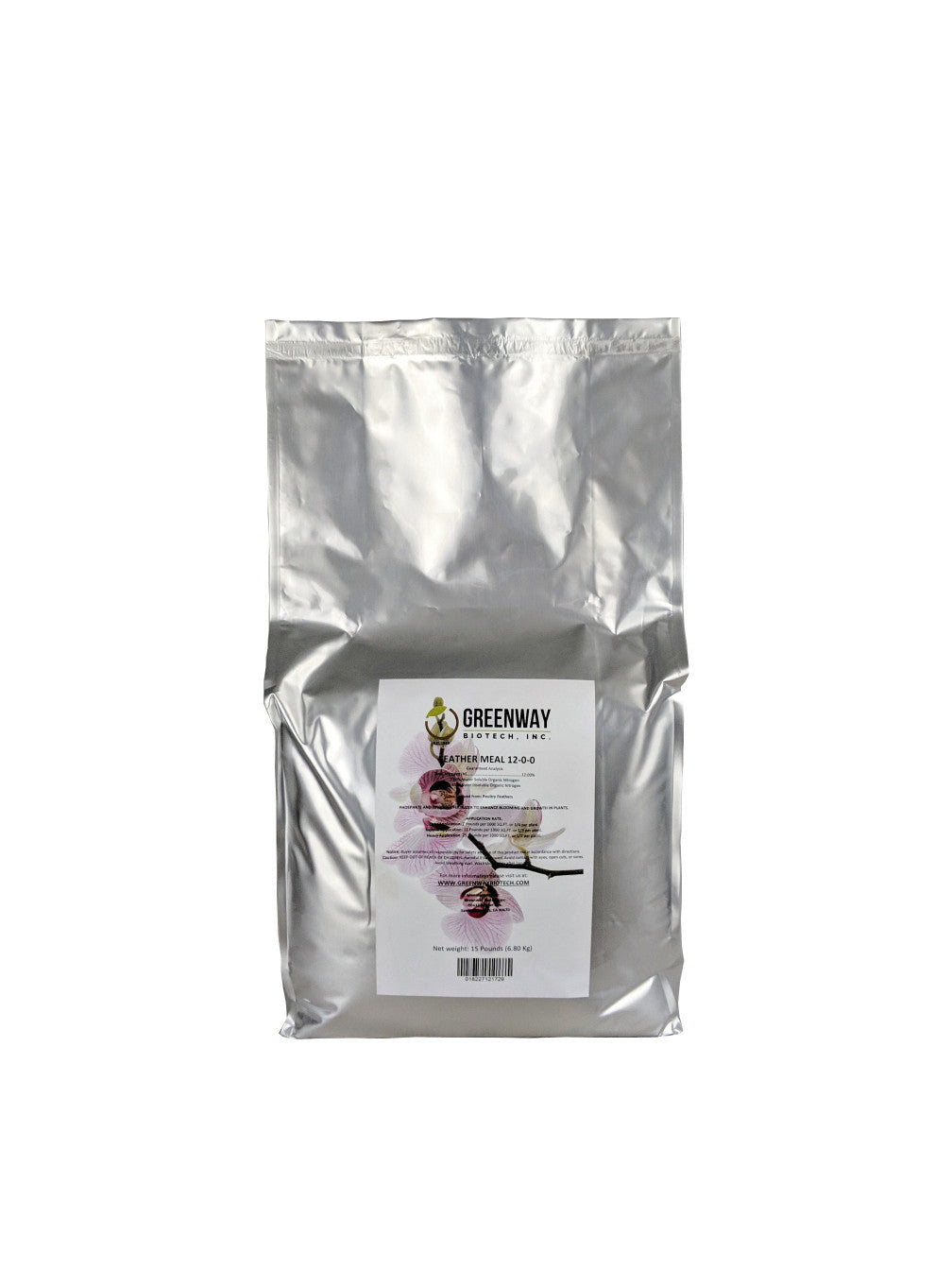
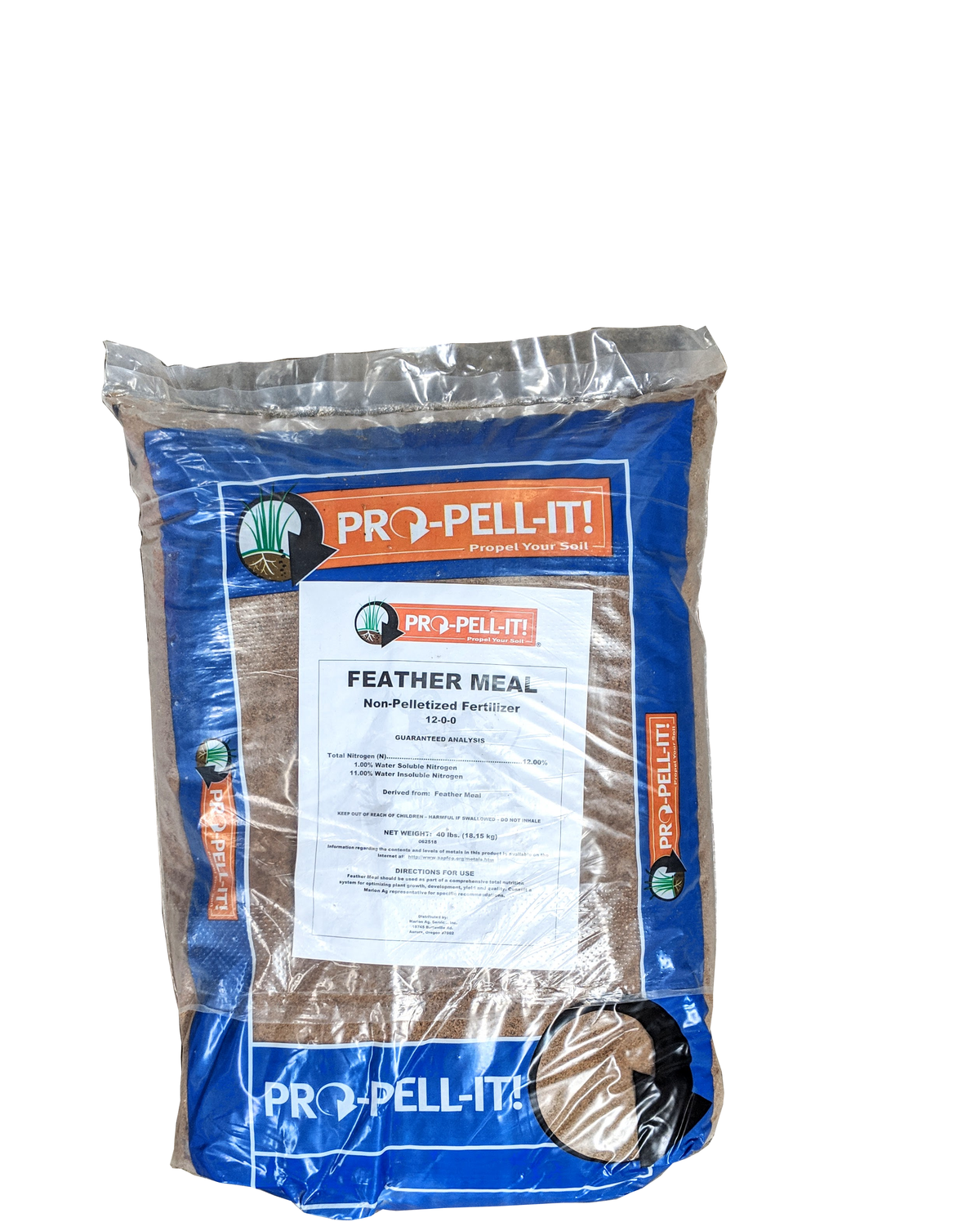
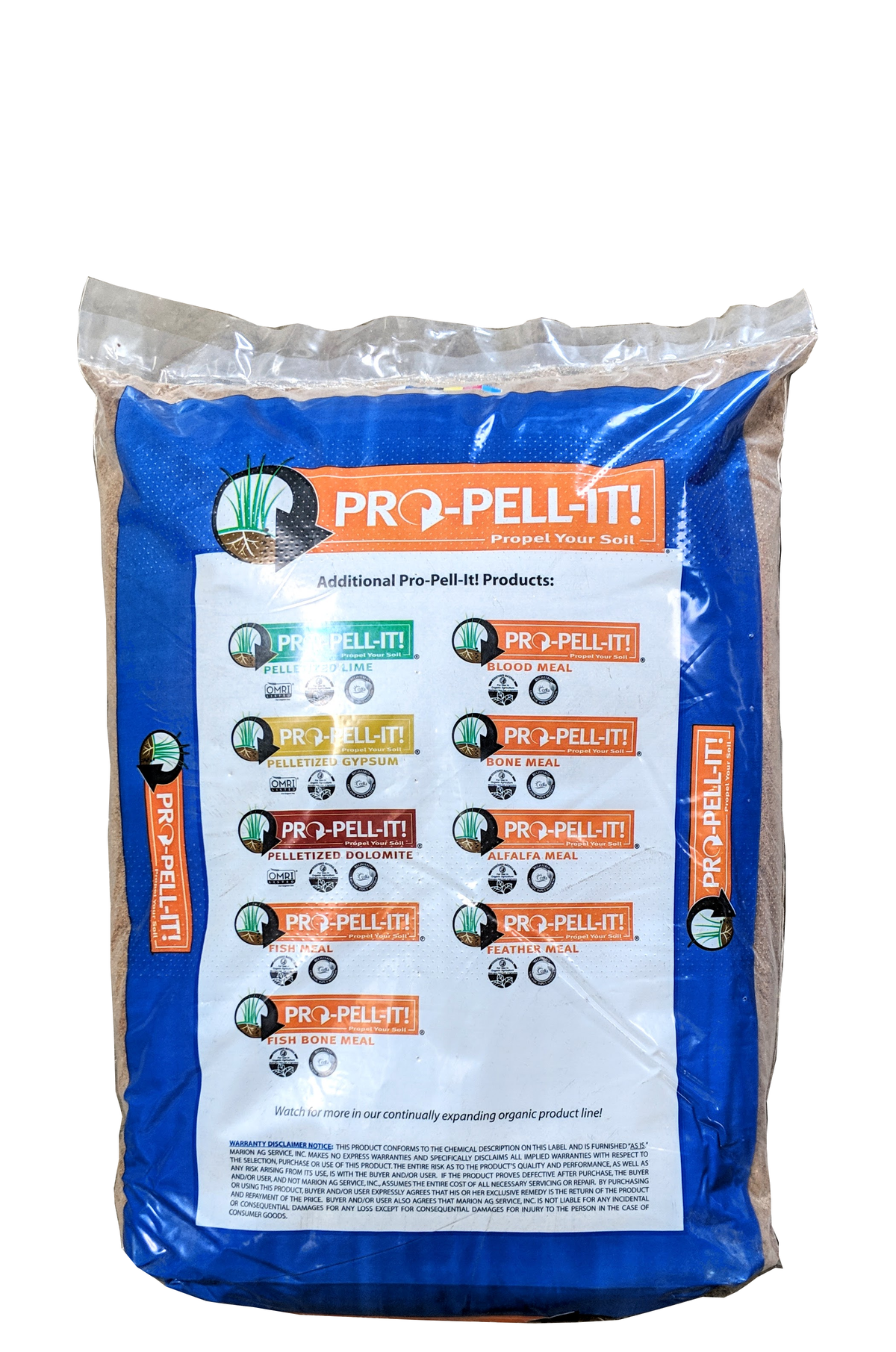
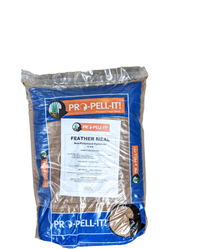
Hydrolyzed poultry feathers deliver 12% total nitrogen as water-insoluble keratin protein — released over 3 to 4 months as soil microbes break it down. One of the longest natural N curves available, with very low burn risk and an excellent fit for heavy feeders, perennials, and orchards. CDFA registered. Independently lab tested for heavy metals.
Find your size → Calculate how much I need12%
Total nitrogen as keratin protein
3–4mo
Steady microbial release window
~60%
PAN by 100 days under optimal conditions
35+yrs
Family-owned California fertilizer mfr.
Coverage figures assume a standard garden incorporation rate of 3–4 lb per 100 sq ft (worked into the top 3–4 inches before planting). Heavy-feeding crops like corn or brassicas may use up to 6 lb per 100 sq ft — adjust based on a current soil test.
| Bag Size | Garden Beds (3–4 lb / 100 sq ft) | Trees (~1 lb per inch trunk dia.) | Best For |
|---|---|---|---|
| 2 lb | ~50–65 sq ft | 1–2 small trees | Trial size, container plants |
| 5 lb | ~125–165 sq ft | 3–5 trees | Most popular |
| 25 lb | ~625–830 sq ft | 15–25 trees | Mid-sized vegetable plots, lawns |
| 50 lb | ~1,250–1,665 sq ft | 30–50 trees | Best value · Orchards, large gardens |
Feather meal earns its keep wherever a long, steady nitrogen curve matters more than a quick green-up. Soil temperature above 50°F is the one universal requirement — microbial breakdown slows dramatically below that.
Corn, brassicas, and long-season vegetables benefit most from the 3–4 month release curve. One pre-plant application can carry crops through to harvest.
Steady N supply through vegetative growth without the burn risk of fast-release nitrogen. Pair with a phosphate source like Bone Meal 3-15-0 at planting.
Lettuce, spinach, kale, and other leaf crops respond to sustained nitrogen. Apply 2–4 weeks before transplanting so initial microbial breakdown is underway.
Apply at bud swell — about 1 lb per inch of trunk diameter, spread from trunk to drip line. One feeding covers most of the growing season.
2–3 lb per cubic yard balances carbon-rich material (leaves, straw, wood chips) and feeds the microbes that drive decomposition.
Slow, steady green-up without the surge of synthetic N. ~10 lb per 1,000 sq ft at spring renovation, then 5–10 lb at maintenance applications.
The slowest natural nitrogen curve of any common organic source — longer than blood meal, longer than alfalfa, longer than most fish-based products. Backed by 30+ years of mineralization research.
Total nitrogen content is matched only by blood meal (13%) among common organic fertilizers, but the release profile is fundamentally different. Where blood meal mineralizes in 6–8 weeks, feather meal extends supply over 3 to 4 months — reducing reapplication frequency and labor.
A 2021 meta-analysis of 113 datasets (Geisseler, Journal of Environmental Quality) predicted 60–75% of total feather meal N becomes plant-available within ~100 days under optimal conditions. Hartz & Johnstone (2006, HortTechnology) measured ~60% mineralization at 4 weeks in lab incubation. Most extension services use the 60% figure for field rate calculations.
Because keratin must be enzymatically digested by soil microbes before nitrogen becomes available, the release is gradual. There's no concentrated ammoniacal salt pulse, and the salt index is far lower than urea or ammonium sulfate. Application errors are forgiving rather than catastrophic.
Registered with the California Department of Food and Agriculture as a fertilizing material. Repackaged in our Madera, California facility from premium hydrolyzed poultry feathers, with batch testing for heavy metals by independent third-party laboratories. Results consistently well below required limits.
All 12% N is in water-insoluble protein form, meaning it stays put until microbes convert it. Rain and irrigation move the nitrogen into the root zone rather than washing it past. Lower leaching and runoff risk than fast-release synthetic sources.
Microbial activity required to process keratin increases bacterial and fungal populations in the rhizosphere. Over multiple seasons, regular use can contribute to improved soil biology beyond the nitrogen contribution itself — research suggests this carries forward as improved nutrient cycling. For more on the underlying science, see The 5 Fertilizers That Also Encourage Soil Health.
12% N
Hydrolyzed keratin protein — water-insoluble
Feather meal is produced from clean poultry feathers through controlled hydrolysis — a steam-and-pressure treatment that partially breaks down the disulfide bonds in raw keratin without destroying its protein structure. The result is a slowly degradable nitrogen substrate that soil microorganisms can digest with their proteolytic enzymes.
Nitrogen release follows a predictable curve. Hartz & Johnstone (2006) measured ~60% of total N mineralized at 4 weeks under controlled lab conditions; Hadas & Kautsky (1994) reported roughly 45%, 55%, and 65% mineralized at 1, 2, and 8 weeks at 30°C; and Geisseler's 2021 meta-analysis across 113 datasets converged on ~60–75% by 100 days. In the soil, the protein is hydrolyzed to amino acids, then deaminated to ammonium, then nitrified to nitrate — the form roots actually take up.
Soil temperature is the most important field variable. The University of Maine reports mineralization roughly doubles for every 18°F increase, with minimal activity below 50°F. Cassity-Duffey and colleagues (2020) found high clay content and low pH both slow the process — on heavy clay or acidic soils, plan for ~10–15% higher application rates and longer pre-plant intervals.
The practical implication: feather meal is best applied 2–4 weeks before planting on warm soil, not at the same time as transplanting. Research by Pitchay & Díaz-Pérez (2008) and Valenzuela et al. (2001) documented that feather meal in direct contact with seeds or young transplants can transiently inhibit germination and root development due to high ammonia production in the first 1–2 weeks. Get the breakdown started first, then plant. For a deeper look at how nitrogen behaves in plants, see What's the Function of Nitrogen in Plants?.
Rates below are research-anchored to PAN at ~60% of total nitrogen (the consensus mineralization figure across the literature). Soil-test driven rates always outperform fixed recommendations — treat the numbers below as starting points and adjust to your soil and crop demand.
Quick answer: 3–4 lb per 100 sq ft worked into the top 3–4 inches, 2–4 weeks before planting.
| Crop / Use | Rate | Source | Notes |
|---|---|---|---|
| New bed preparation (broadcast & incorporated) | 2–6 lb per 100 sq ft | UMass Amherst; product label | 3–4 lb is most common research-supported rate |
| Leafy greens (lettuce, spinach, kale) | 3–4 lb per 100 sq ft | UC ANR; UGA Ext. | Apply 2–4 weeks before transplanting |
| Tomatoes & peppers | 3–4 lb per 100 sq ft | UC ANR; Hartz & Johnstone 2006 | Stop additional N once flowering begins |
| Heavy feeders (corn, brassicas) | 4–6 lb per 100 sq ft | UGA Ext.; Vann et al. 2017 | Split application improves season-long supply |
| Side-dress (established plants) | 2–4 oz per plant, monthly | Clemson Ext. | Work into soil around drip line |
| New transplants | 1–2 tbsp per planting hole | Oregon State Ext. | Mix into backfill; do not place directly under seedling roots |
📋 Timing matters: Apply 2–4 weeks before planting. Research by Pitchay & Díaz-Pérez (2008) and Valenzuela et al. (2001) documented that feather meal can transiently inhibit germination and young root development when in direct contact, due to high ammonia production in the first 1–2 weeks. Incorporate, water in, and let the initial breakdown happen before seeding or transplanting.
Sources: UC Agriculture and Natural Resources; University of Georgia Extension; UMass Amherst Center for Agriculture, Food & Environment; Clemson Cooperative Extension; Oregon State University Extension; Hartz & Johnstone 2006 (HortTechnology); Vann et al. 2017.
Quick answer: Target crop N (lb/acre) × 100 ÷ 7.2 = lb feather meal per acre, assuming ~60% PAN.
| Crop / Target N | Feather Meal Rate | Source | Notes |
|---|---|---|---|
| Corn (140 lb N/acre target) | ~1,950 lb/acre | Carolina Farm Stewardship; Vann et al. 2017 | Broadcast pre-plant; consider 50/50 split with sidedress |
| Tomatoes (90–120 lb N/acre) | 1,250–1,650 lb/acre | UC ANR; Hartz & Johnstone 2006 | Split 50% pre-plant + 50% sidedress 10 days post-transplant |
| Brassicas & leafy greens (80–120 lb N/acre) | 1,100–1,650 lb/acre | UC ANR; UGA Ext. | Single broadcast pre-plant usually sufficient |
| General row crops (50 lb N/acre) | ~700 lb/acre | U. Maryland Ext. | Adjust per soil test and crop removal |
| General row crops (100 lb N/acre) | ~1,400 lb/acre | UGA AESL formula | Adjust per soil test and crop removal |
📋 Soil test first: Field crop rates above are general guidelines based on typical soil test levels and crop removal estimates. Actual rates should be confirmed by a current soil test and consultation with your local cooperative extension service, as needs vary significantly by soil type, crop variety, and regional conditions. The PAN-corrected formula (target lb N/acre × 100) ÷ 7.2 = lb feather meal/acre applies the 60% mineralization figure from the literature.
Sources: Carolina Farm Stewardship Association; University of California Agriculture and Natural Resources; University of Georgia Agricultural & Environmental Services Laboratory; University of Maryland Extension; Hartz & Johnstone 2006 (HortTechnology 16:39–42); Geisseler 2021 (Journal of Environmental Quality); Cassity-Duffey et al. 2020; Vann et al. 2017.
Quick answer: 1 lb feather meal per inch of trunk diameter, spread from trunk to drip line, lightly incorporated.
| Plant | Rate | Source | Timing |
|---|---|---|---|
| Fruit trees (established) | 1 lb per inch of trunk diameter | Oregon State Ext. | Apply at bud swell for season-long N |
| Young trees (1–3 yr) | 0.25–0.5 lb per tree | UMass Ext. | Spread evenly around drip line |
| Shrubs & ornamentals | 0.25–1 cup per plant | Clemson Ext. | Mix into top 2–3 inches of soil |
| Container plantings (new) | 1–2 tbsp per gallon of soil | OSU Ext. | Mix thoroughly into potting mix |
| Bulk potting mix | 5–10 lb per cubic yard | UMass Ext. | Blend before filling containers |
Keep clear of stems and trunks: Maintain 2–3 inches of clearance from the trunk to avoid scorching bark or feeder roots. Water in thoroughly after application to start microbial breakdown and reduce surface scent.
Sources: Oregon State University Extension; UMass Amherst Center for Agriculture, Food & Environment; Clemson Cooperative Extension.
Quick answer: ~10 lb per 1,000 sq ft for new lawn prep; 5–10 lb per 1,000 sq ft for established turf, spring and fall.
| Use | Rate per 1,000 sq ft | Source | PAN delivered |
|---|---|---|---|
| New lawn / overseeding prep | ~10 lb | U. Minnesota Ext. | ~0.72 lb actual N |
| Established turf — light maintenance | 5 lb | U. Maine Ext. | ~0.36 lb actual N |
| Established turf — standard application | 7–10 lb | U. Minnesota Ext. | ~0.50–0.72 lb actual N |
| Heavy recovery / damaged turf | 10–12 lb | UMass Ext. | ~0.72–0.86 lb actual N |
Timing: Apply in early spring (soil > 50°F), again in mid-summer, and once more in early fall. Spread evenly with a broadcast spreader and water in thoroughly. Slow, steady green-up without the surge or burn risk of fast-release synthetic lawn fertilizers.
Sources: University of Minnesota Extension; University of Maine Cooperative Extension; UMass Amherst Center for Agriculture, Food & Environment.
Quick answer: 2–3 lb per cubic yard of carbon-rich material, mixed in thoroughly.
| Compost Volume | Feather Meal | Source | Purpose |
|---|---|---|---|
| Per cubic yard (carbon-rich) | 2–3 lb | UC ANR; UMass Ext. | Balances C:N ratio of leaves, straw, wood chips |
| Standard 3×3×3 ft bin (~1 cu yd) | 2–3 lb | UC ANR | Standard backyard bin |
| 5-gallon bucket (~0.025 cu yd) | ~1 oz (1–2 tbsp) | UC ANR | Small-batch composting |
| 32-gallon trash bin (~0.16 cu yd) | ~5–7 oz (1/4–1/3 cup) | UC ANR | Tumbler-scale composting |
Why it works: Carbon-rich materials (browns) lack enough nitrogen for microbes to multiply and drive decomposition. Adding feather meal supplies the protein nitrogen that microbes convert to ammonium, then to biomass, then to humus. For more on the topic, see Should You Add Fertilizer to Your Compost Pile?
Sources: UC Agriculture and Natural Resources; UMass Amherst Center for Agriculture, Food & Environment.
Feather meal rewards patience. Get the breakdown started 2–4 weeks ahead of planting and nitrogen is waiting when the crop needs it.
Apply when soil temperature is at or above 50°F and trending warmer. Below 50°F microbial activity is minimal — nitrogen release stalls until the soil warms.
Broadcast the calculated amount evenly across the bed. Work into the top 3–4 inches with a garden fork, hoe, or tiller. Surface application slows breakdown and can attract dogs and wildlife.
Moisture activates the microbial process. Water deeply once after incorporation, then maintain even soil moisture through the breakdown window. Dry soil dramatically slows release.
Do not place feather meal in direct contact with seeds or young transplant roots. Initial ammonia production in the first 1–2 weeks can transiently inhibit germination and root development — the 2–4 week pre-plant interval solves this.
All deliver nitrogen, but the release curve, burn risk, and best-fit crops differ substantially. For a deeper breakdown of every common N source, see What is the Best Nitrogen Fertilizer?
| Product | Total N | Release Window | Burn Risk | Best For |
|---|---|---|---|---|
| Feather Meal 12-0-0 (this product) | 12% | 3–4 months | Very low | Heavy feeders, orchards, perennial beds, season-long feeding |
| Blood Meal 13-0-0 | 13% | 6–8 weeks | Moderate | Spring green-up, rapid N correction, leafy crops |
| Alfalfa Meal 2.5-0-2.5 | 2.5% | 2–4 weeks | Very low | Gentle feeding, soil structure, triacontanol growth boost |
| Crustacean Meal 4-0-0 | 4% | 2–3 months | Very low | Calcium + chitin, root zone biology |
| Urea 46-0-0 | 46% | 1–3 weeks | High | Fast deficiency correction, lawn flush; not for certified organic |
| Ammonium Sulfate 21-0-0 | 21% | 2–4 weeks | Moderate–High | Acid-loving crops; mild soil acidification; not for certified organic |
Honest about where it fits and where another product earns its place instead.
Build a balanced organic nutrient program by adding phosphate, potash, and trace minerals based on soil test results.
Adds 15% available phosphate (P₂O₅) and 24% calcium — supports root development, flowering, and fruit calcium nutrition.
Potash + Sulfur53% soluble potash (K₂O) with 17% sulfur — supports stress tolerance, fruit quality, and overall plant vigor.
Trace + HormonesNaturally occurring trace minerals, cytokinins, and 4% potash — supports root development and stress recovery.
Broad MineralVolcanic mineral source with 70+ trace elements — rounds out organic programs and supports long-term soil mineralization.
Feather meal is a low-hazard organic amendment, but the dust is fine and the protein content is attractive to animals. A few sensible practices keep it safe and effective.
If your question isn't here, contact our team at questions@greenwaybiotech.com.
Initial nitrogen release begins within 2–4 weeks of incorporation, and feeding continues for 3 to 4 months. Research by Geisseler (2021) found that 60–75% of total feather meal nitrogen becomes plant-available within ~100 days under optimal conditions, with Hartz & Johnstone (2006) reporting ~60% mineralization at 4 weeks in lab incubation. Breakdown rate depends on soil temperature, moisture, and microbial activity — warmer, moist soils process feather meal faster than cold or dry soils. For background on how nitrogen works in plants, see What's the Function of Nitrogen in Plants?
Feather meal and blood meal contain similar total nitrogen (12% vs 13%), but they release that nitrogen very differently. Feather meal's release window is 3–4 months — roughly two to three times longer than blood meal's 6–8 weeks. That makes feather meal a better fit for season-long feeding of heavy crops like corn or tomatoes, perennial beds, and orchards. Blood meal is the better fit when you need a faster green-up or a quick correction of nitrogen deficiency. For a full side-by-side comparison, see What is the Best Nitrogen Fertilizer?
Apply 2–4 weeks before planting, once soil temperatures reach 50°F or higher. The pre-plant interval matters because feather meal produces ammonia in the first 1–2 weeks after application, which research (Pitchay & Díaz-Pérez 2008; Valenzuela et al. 2001) has documented can transiently inhibit seed germination and young root development if seeds or transplants are in direct contact. For lawns, apply in early spring, summer, and fall. For fruit trees, apply at bud swell for season-long feeding.
Use the PAN-corrected formula (target lb N/acre × 100) ÷ 7.2 = lb feather meal/acre, which applies the consensus ~60% mineralization figure. For example, corn at 140 lb N/acre needs ~1,950 lb feather meal/acre, broadcast pre-plant. Tomatoes at 100 lb N/acre need ~1,400 lb/acre. Always confirm against a current soil test and consultation with your local cooperative extension service — site-specific rates outperform generic ranges.
Yes — feather meal is an excellent compost activator. Its high nitrogen content balances carbon-rich materials (leaves, straw, wood chips) and feeds the microbes that drive decomposition. Add 2–3 lb per cubic yard of brown material and mix thoroughly. For more on the topic, see Should You Add Fertilizer to Your Compost Pile?
Yes. The University of Maine reports that feather meal mineralization roughly doubles for every 18°F increase in soil temperature, with minimal activity below 50°F. Cassity-Duffey and colleagues (2020) also found that high clay content and low pH both slow the process. In cold, heavy, or acidic soils, expect a slower release curve — and consider 10–15% higher application rates if you need a similar amount of nitrogen available in the same timeframe.
Feather meal has minimal effect on soil pH. As it decomposes, microbial activity may produce a very slight acidifying effect, but this is generally negligible for most garden soils. It is safe to use without worrying about significant pH shifts — unlike ammonium sulfate or elemental sulfur, which are designed to acidify.
Feather meal has a mild organic, earthy odor — much less pungent than blood meal or fish-based fertilizers. Once worked into the soil and watered in, the smell dissipates within a day or two. Some animals (raccoons, dogs) may still be attracted to the protein scent if it's left on the surface, so always incorporate and water in well.
Feather meal is generally safe when applied as directed and worked into the soil. Keep bags stored away from animals, as pets may be attracted to the scent. While non-toxic, ingestion of large amounts could cause digestive upset. Always wash hands after handling and follow standard garden chemical safety practices around small children.
If feather meal is left on the soil surface in moist conditions, you may see white or gray mold growth. This is harmless microbial activity — actually a positive sign that the beneficial decomposition process is underway. For best results, always work feather meal into the top 3–4 inches of soil at application and water in well to keep it covered and start the breakdown process.
Bags from 2 lb trial size up to 50 lb best-value. Free shipping on orders over $100. 90-day money-back guarantee — return unused portion in original packaging for a full refund. Built for growers who want results without the chase.
Choose your size →