Fish Bone Meal Fertilizer 4-17-0
- Regular Price
- $ 24.99
- Sale Price
- $ 24.99
- Regular Price
- $ 19.99
Sold Out
- Unit Price
- per
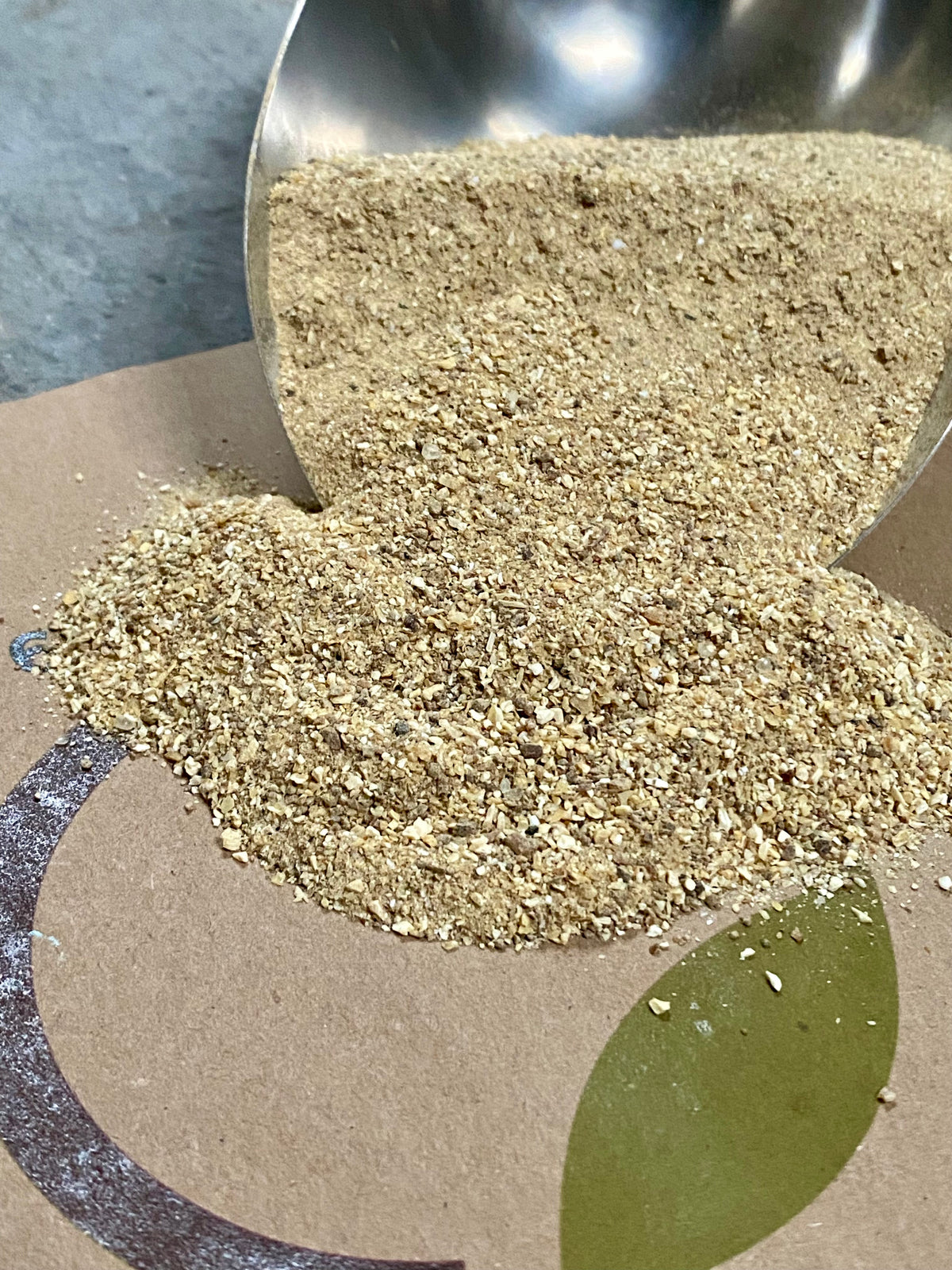
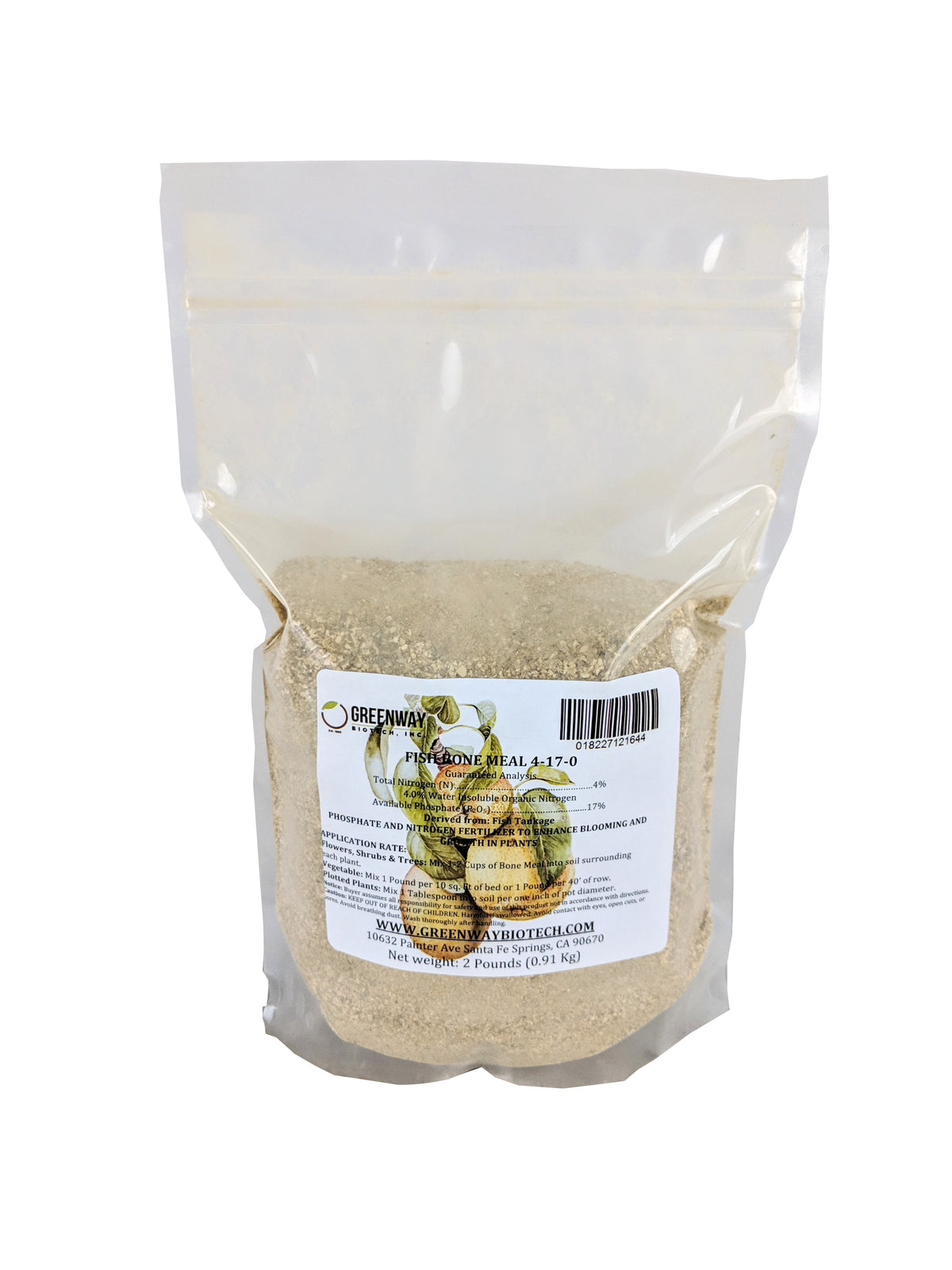
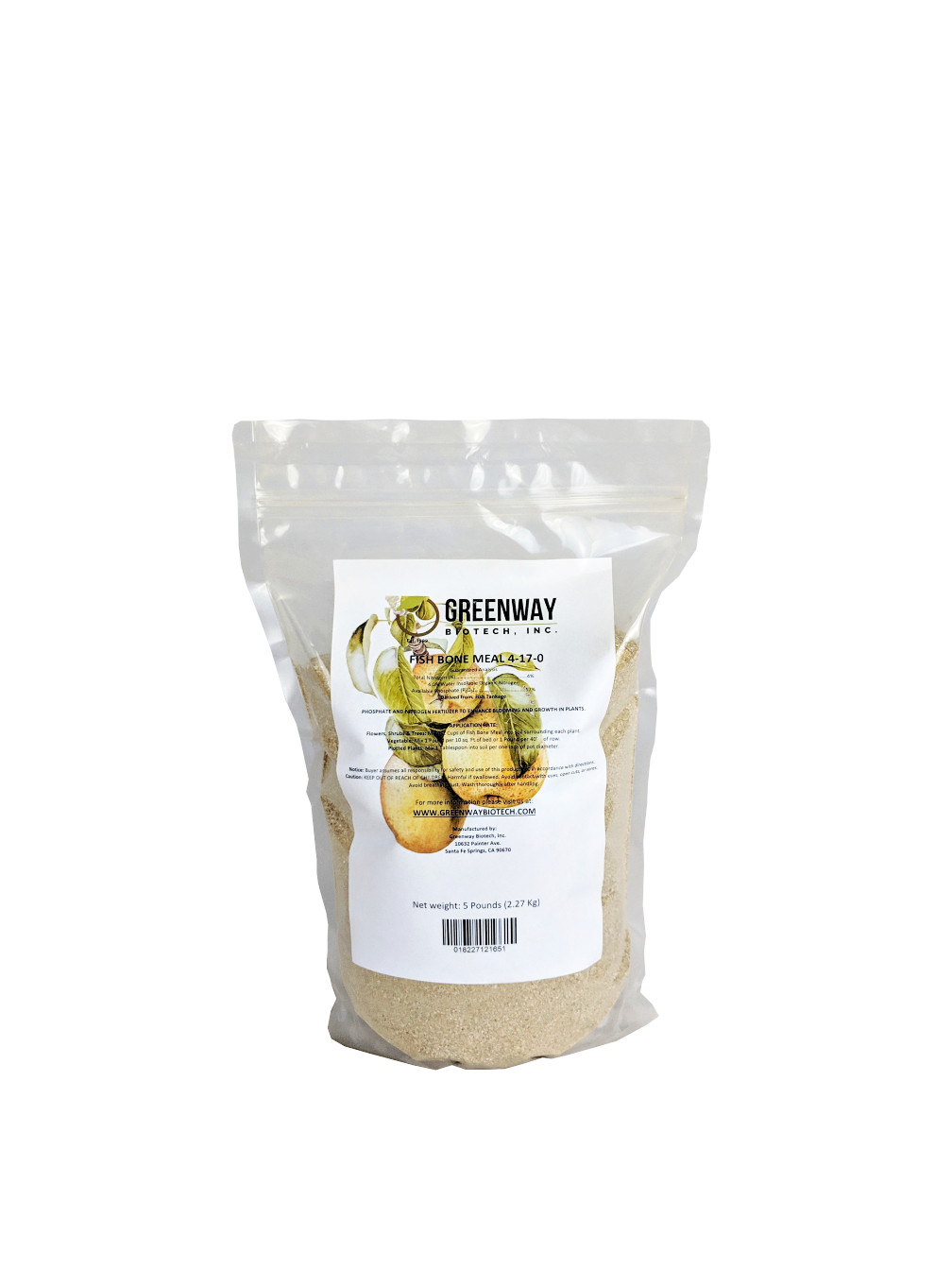
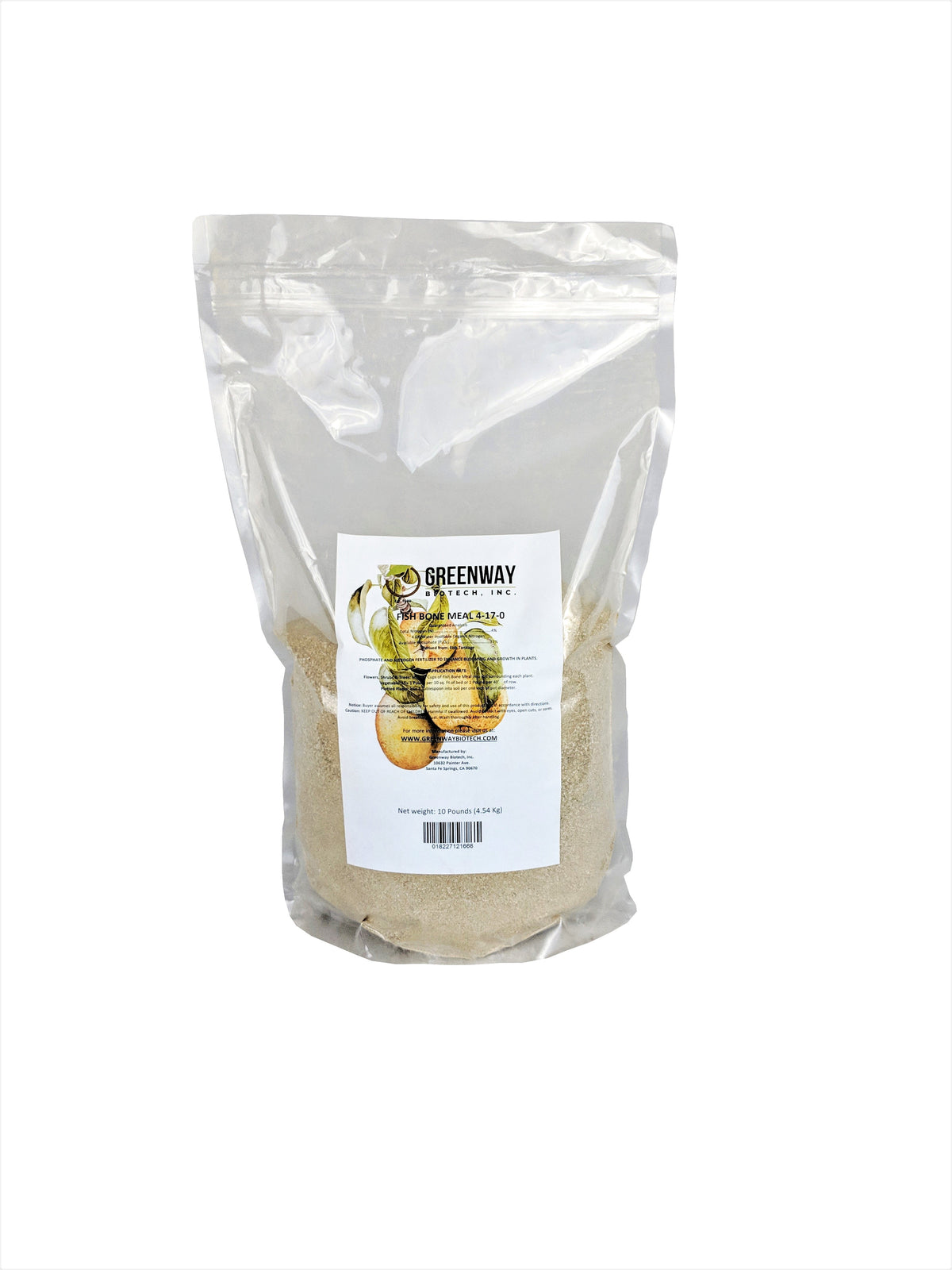
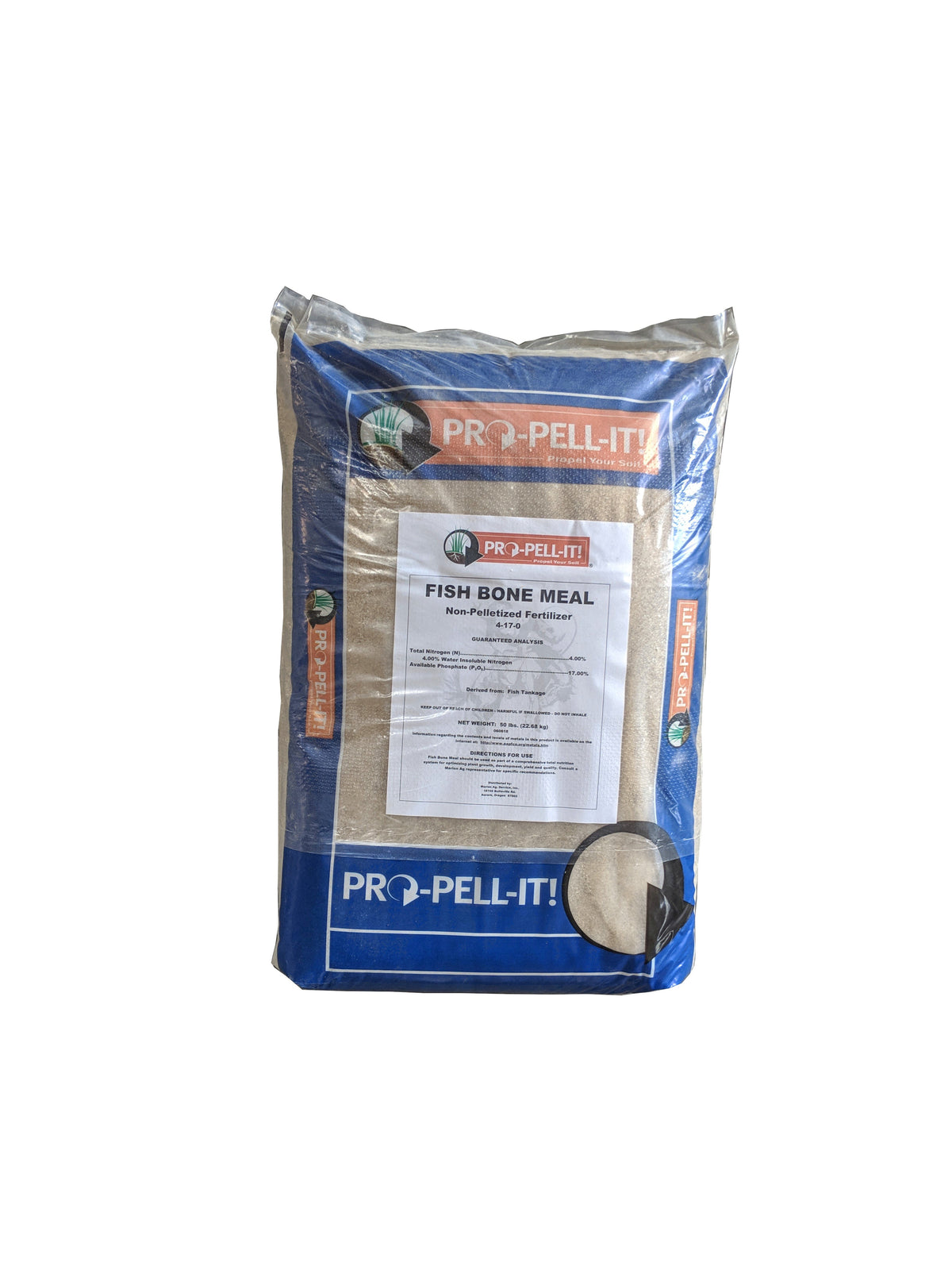
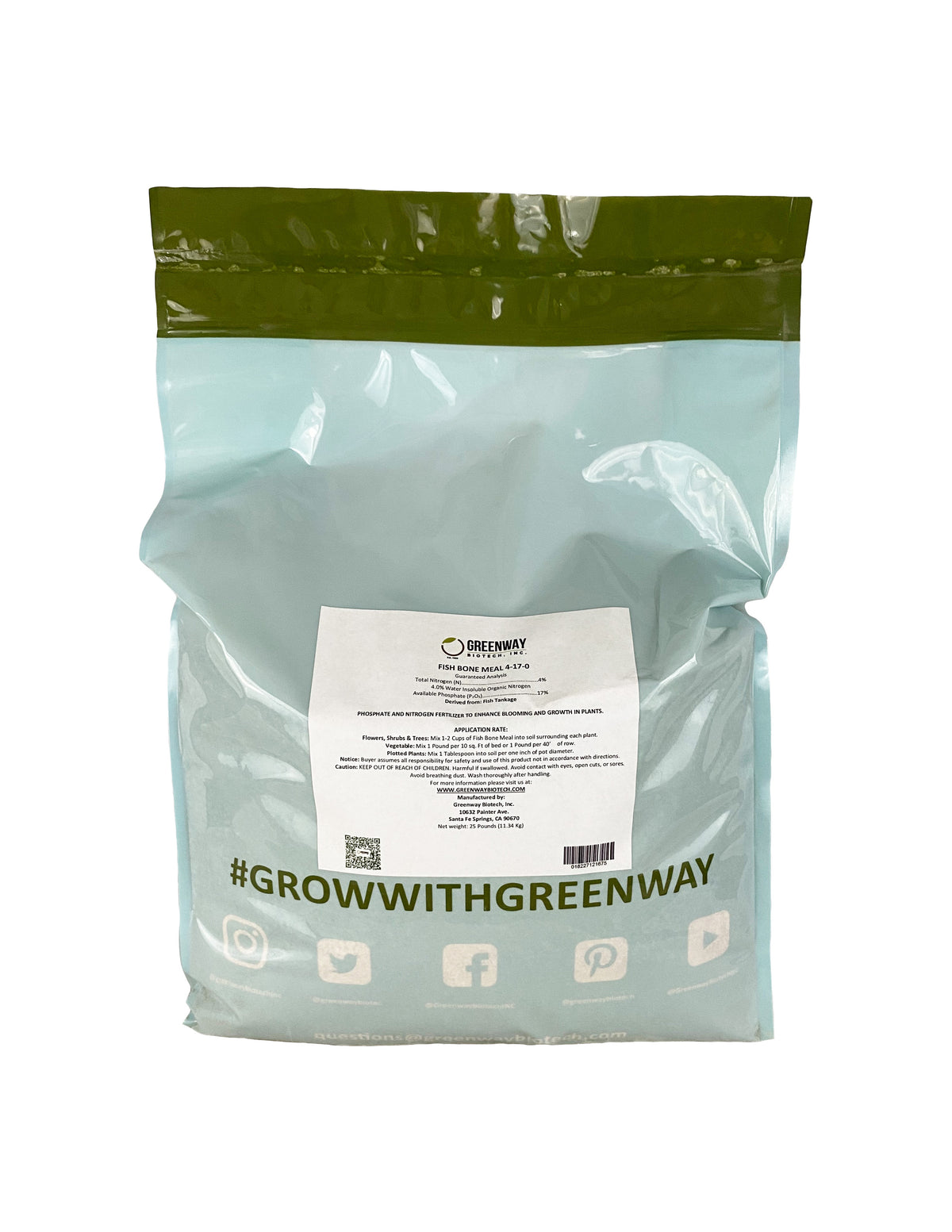
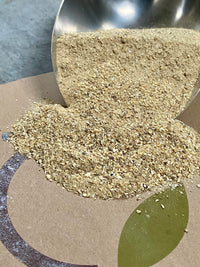
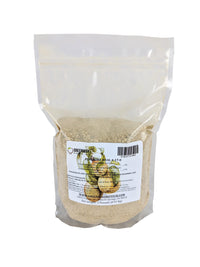
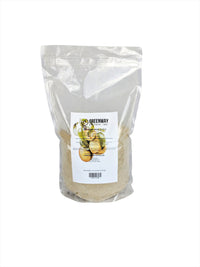
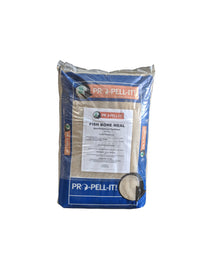
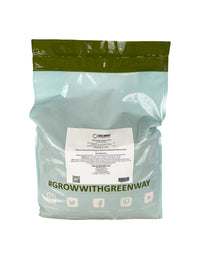
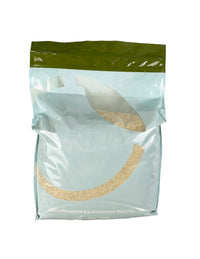
A CDFA-registered organic phosphate amendment derived from fish tankage — 17% available phosphate (P₂O₅) and 4% nitrogen in a single ingredient. Faster microbial release than traditional bovine bone meal in warm, biologically active soils. Independently lab tested for heavy metals with results consistently well below required limits.
Find your size → Calculate how much I need17%
Available phosphate (P₂O₅) — the concentrated bloom and root driver
4%
Water-insoluble nitrogen — gentle canopy support without push
5.9lb/lb P₂O₅
Product weight to deliver one pound of available phosphate
35+yrs
Family-owned fertilizer manufacturer in Madera, California
Coverage figures below assume garden incorporation at the standard pre-plant rate of 1 lb per 100 sq ft. Heavy-feeding crops or low-phosphorus soils may use closer to 2 lbs per 100 sq ft — adjust based on a current soil test.
| Bag Size | Coverage at 1 lb / 100 sq ft | Plants / Trees | Best For |
|---|---|---|---|
| 5 lb | ~500 sq ft | 10–20 transplants or 5–10 small shrubs | Small home gardens, raised beds, container programs |
| 10 lb | ~1,000 sq ft | 20–40 transplants or ~10 trees | Most popular Mid-size gardens, mixed beds, fruit-tree programs |
| 25 lb | ~2,500 sq ft | 50–100 transplants or ~25 trees | Larger gardens, orchards, perennial bed renovation |
| 40 lb | ~4,000 sq ft | 80–160 transplants or 40+ trees | Best value Market gardens, small farms, bed-prep at scale |
Fish bone meal is at its best where root establishment and flowering matter most — anywhere a season-long phosphate supply pays back through stronger plants and more fruit.
Side-dress at flower-cluster appearance to support the reproductive transition where phosphorus demand peaks. Pair with a calcium source for tomato programs where calcium nutrition matters too.
One pre-bulb application gives bulbs a phosphate reserve right where roots will grow. Excellent for tulips, daffodils, alliums, lilies, and dahlias.
Bloom-forward nutrition for established roses and ornamentals. Side-dress in spring and again early summer for continued flowering vigor.
Pre-plant in the backfill for new trees, or under the dripline for established trees with low soil-test phosphorus. Skip if soil P is already high.
Broadcast and incorporate at bed prep — phosphorus is immobile in soil and must reach the root zone to work. Banding 2 inches below seed is most efficient.
Mix into potting media at new container builds, or 1–2 tablespoons into transplant holes to accelerate root establishment and reduce transplant stall.
Fish bone meal's higher nitrogen and finer protein matrix make it more microbially responsive than traditional bone meal. In a warm, biologically active garden, plant-available phosphate begins showing up in weeks rather than months.
One of the most concentrated organic granular phosphate sources commonly available to gardeners. At 17% P₂O₅, every 100 lb of product delivers 17 lb of available phosphate — so about 5.9 lb of product supplies one pound of P₂O₅. Read more on what phosphorus does in What's the Function of Phosphorus in Plants?
Water-insoluble nitrogen at 4% supports a healthy canopy without pushing the lush vegetative flush that pulls energy away from flowering and fruit set. Ideal for bloom-stage tomatoes, peppers, roses, and bulbs where bovine bone meal (typically 1–2% N) leaves nitrogen short.
UC ANR research suggests banded phosphate is roughly four to five times more efficient than surface broadcast for row crops. Place fish bone meal in the root zone — top 3–6 inches at bed prep, in transplant holes, or 2 inches below seed — and you'll get more flowering response per pound applied.
Phosphate release is driven by soil microbes. Performance picks up sharply above 55°F with consistent moisture; in cold or dry soils, release is slow. Plan applications for active growing-season conditions, or apply in fall so material is in place when soil warms.
CDFA-registered organic fertilizer input. Independently lab tested for heavy metal content, with results consistently well below required limits. For certified organic production, confirm acceptance with your certifying agency before use.
Compared to bovine bone meal (typically 3-15-0), fish bone meal delivers more nitrogen and more phosphate per pound, with a faster release profile in active soils. For gardeners who need bloom response within the season rather than over multiple seasons, the math typically pencils out.
P₂O₅available phosphate
Calcium phosphate matrix (hydroxyapatite) released by microbial breakdown
Phosphorus is the energy currency of the plant cell. ATP, ADP, and the nucleic acids that carry genetic information are all built on phosphate. When a seedling pushes its first true leaves, when a bulb sets next year's bloom, when a tomato translates flower into fruit — phosphate is doing the underlying work. A plant short on phosphorus may look superficially fine but consistently underperforms at the reproductive transitions that gardeners actually care about.
Fish bone meal supplies phosphate as a fine particulate calcium-phosphate matrix — chemically, the same hydroxyapatite mineral that makes up vertebrate bone. Soil microbes and root-exudate enzymes (phosphatases, organic acids) gradually solubilize this matrix, releasing orthophosphate ions (HPO₄⁻, H₂PO₄⁻) that plant roots can absorb. This is a fundamentally different mechanism from soluble synthetic phosphates like MAP or MKP, which dissolve fully in water on contact. The trade-off is timing: organic phosphate is slower in the first weeks but stays available longer, and it contributes organic matter to the soil as it works.
Two practical implications. First, phosphate from fish bone meal is most available between soil pH 6.0–7.0. Above pH 7, calcium binds phosphate into less-soluble compounds; below pH 5.5, iron and aluminum do the same in the opposite direction. Check soil pH before applying. Second, phosphorus is immobile in soil — it doesn't move with water the way nitrogen does — so surface broadcasts that aren't worked in largely fail to reach roots. Always incorporate, band, or place in the planting hole.
For a deeper look, see What's the Function of Phosphorus in Plants?
Rates compiled from university extension research and peer-reviewed field trials. For accurate planning, multiply rates by 1.3–1.5× in the first year of an organic program to account for ~50–70% first-year availability, then reduce in subsequent years as the residual fraction mineralizes.
Quick answer: Most home vegetable gardens with average soil need roughly 1–1.5 lb fish bone meal per 100 sq ft worked into the top 3–4 inches at bed prep. Heavy-feeding fruiting crops sit at the higher end.
| Crop Category | P₂O₅ Need (lb/acre) | Fish Bone Meal Rate (lb/acre) | Small Garden Rate | Source |
|---|---|---|---|---|
| Leafy greens (lettuce, spinach, chard, kale) | 40–80 | 235–470 | 0.5–1 lb / 100 sq ft | UMass Ext. |
| Brassicas (broccoli, cabbage, cauliflower) | 60–100 | 350–590 | 0.8–1.4 lb / 100 sq ft | UMass Ext. |
| Tomatoes | 80–120 | 470–705 | 1.1–1.6 lb / 100 sq ft | UMN Ext. (100 lb P₂O₅/ac at 10 ppm Olsen P) |
| Peppers & eggplant | 80–120 | 470–705 | 1.1–1.6 lb / 100 sq ft | UMass Ext. |
| Cucurbits (cantaloupe, squash, cucumber) | 100–120 | 590–705 | 1.4–1.6 lb / 100 sq ft | UC ANR |
| Watermelon | 100–115 | 590–675 | 1.4–1.5 lb / 100 sq ft | UF/IFAS (115 lb P₂O₅/ac) |
| Beans & legumes | 80–100 | 470–590 | 1.1–1.4 lb / 100 sq ft | UC ANR (banded) |
| Sweet corn | 55–90 | 325–530 | 0.8–1.2 lb / 100 sq ft | MSU Ext. (~55 lb P₂O₅/ac typical) |
| Root crops (carrots, beets, potatoes, onions) | 80–120 | 470–705 | 1.1–1.6 lb / 100 sq ft | UMass Ext. |
📋 Soil Test First: These ranges assume average soil-test phosphorus. Phosphorus does not leach readily and accumulates with repeated applications — excess P above roughly 100 lb P₂O₅/acre in already-rich soils can induce zinc and iron deficiencies, particularly above pH 7. Confirm with a current soil test and consult your local cooperative extension service before applying.
Application method: Broadcast and incorporate into the top 3–4 inches at bed prep, or band 2 inches below seed (banding is roughly 4–5× more efficient than broadcast per UC ANR). For transplants, mix 1–2 tablespoons per planting hole.
Sources: University of Massachusetts Amherst Center for Agriculture, Food & Environment; University of Minnesota Extension; UC ANR (University of California Agriculture & Natural Resources); UF/IFAS Extension; Michigan State University Extension; Colorado State University Extension.
Quick answer: Mix 1 cup into the backfill at planting for new trees, or apply 2–4 cups per inch of trunk diameter under the canopy of established trees with low soil-test phosphorus. Skip if soil P already tests high.
| Tree Type | Field Rate | Source | Notes |
|---|---|---|---|
| Apple, pear (pre-plant, low soil-test P) | 100–150 lb P₂O₅/ac = 590–880 lb/ac fish bone meal | Maryland Nutrient Mgmt. | Incorporate before planting |
| Apple, pear (established) | Soil-test driven; typically minimal P needed | UVM / Spectrum | Build to "Good" then maintain |
| Peach, nectarine, plum (pre-plant) | 100–150 lb P₂O₅/ac = 590–880 lb/ac fish bone meal | Maryland Nutrient Mgmt. | Calcium in fish bone meal may support peach cold hardiness |
| Cherry (pre-plant) | 80–120 lb P₂O₅/ac = 470–705 lb/ac | UConn Ext. | Pre-plant incorporation |
| Citrus | Only if soil test low; ~2 lb P removed per 100 boxes fruit | UF/IFAS | Mature groves rarely need P; apply only at establishment on sandy soils |
| Fig, persimmon, pomegranate | 50–80 lb P₂O₅/ac = 295–470 lb/ac | UC ANR | Light feeders |
| Tree Age / Stage | Rate per Tree | Method |
|---|---|---|
| At planting (new tree) | 1 cup (~0.5 lb) | Mix into backfill, disperse in root zone (NOT bottom of hole) |
| Young trees (1–3 years) | 1–2 cups (0.5–1 lb) | Work into top 4 inches at the dripline |
| Established trees | 2–4 cups (1–2 lb) per inch of trunk diameter | Broadcast under canopy, water in thoroughly |
📋 Soil Test First: Established orchard trees rarely need phosphorus once soil P is built to "Good" or higher. Establishment is the high-leverage moment — confirm with a current soil test and consult your local cooperative extension service. UConn Extension establishes the baseline that ~5.9 lb of fish bone meal supplies 1 lb P₂O₅ per 1,000 sq ft (the bovine bone meal equivalent is 6.75 lb at 3-15-0).
Sources: Maryland Nutrient Management; University of Connecticut Extension; UF/IFAS Extension; University of Vermont (UVM) / Spectrum Analytic; UC ANR.
Quick answer: Strawberries take about 0.7 lb per 100 sq ft pre-plant. Brambles (raspberry, blackberry) take 1–1.5 lb per 100 sq ft. Use caution on blueberries — see note below.
| Crop | P₂O₅ Recommendation | Fish Bone Meal Rate | Source |
|---|---|---|---|
| Strawberries (pre-plant) | 50 lb P₂O₅/ac | ~295 lb/ac or 0.7 lb / 100 sq ft | UMass Ext. |
| Raspberry & blackberry (pre-plant) | 60–100 lb P₂O₅/ac | 350–590 lb/ac | UMass Ext. / MSU Ext. |
| Highbush blueberry (if deficient) | 75–100 lb P₂O₅/ac | 440–590 lb/ac — see caution below | MSU Ext. |
| Southern highbush / rabbiteye blueberry (establishment) | ~90 lb P₂O₅/ac | ~530 lb/ac — see caution below | UGA Ext. |
| Grapes (pre-plant) | 60–100 lb P₂O₅/ac | 350–590 lb/ac | UC ANR |
| Currants, gooseberries | 60–80 lb P₂O₅/ac | 350–470 lb/ac | UMass Ext. |
⚠️ Caution for blueberries and acid-loving crops: Fish bone meal carries naturally occurring calcium, which can gradually shift soil pH in a direction less than ideal for acid-loving plants. Blueberries require pH 4.5–5.5; while extension services do recommend phosphate at establishment, use fish bone meal cautiously and monitor pH closely. For phosphate in established acid-loving plantings, a pH-neutral source like MKP 0-52-34 may be a better fit.
📋 Soil Test First: Confirm rates against a current soil test and consult your local cooperative extension service.
Sources: University of Massachusetts Amherst Center for Agriculture, Food & Environment; Michigan State University Extension; University of Georgia Extension; UC ANR.
Quick answer: Work 0.5–1 lb per 10 sq ft into new flower beds, mix 1 tablespoon into each bulb planting hole, or side-dress established roses with 1–2 tablespoons twice per season.
| Application | Rate | Source |
|---|---|---|
| New planting / bed preparation | 0.5–1 lb per 10 sq ft worked into top 6 inches | UConn Ext. |
| Per planting hole (shrubs) | 1/2 to 1 cup mixed into backfill | UConn Ext. |
| Established roses & shrubs | 1–2 tbsp per plant, 2× per year (spring / early summer) | UConn Ext. |
| Bulbs (tulips, daffodils, lilies, alliums) | 1 tbsp per hole for average bulbs; more for large bulbs | UConn Ext. |
| Dahlia tubers, larger bulbs | 1–2 tbsp per hole, mixed into backfill | UConn Ext. |
⚠️ Avoid on strongly acid-loving ornamentals: Azaleas, rhododendrons, camellias, and mountain laurel prefer pH 4.5–5.5. The calcium content of fish bone meal can shift pH out of their preferred range with repeated use. For these crops, choose a pH-neutral phosphate source.
Sources: University of Connecticut Soil Nutrient Analysis Laboratory; Colorado State University Extension.
Quick answer: Most medium-testing fields take 500–1,000 lb fish bone meal per acre broadcast pre-plant, or 100–250 lb/ac banded at planting (4–5× more efficient).
| Use Case | Rate (lb/ac) | Source | Notes |
|---|---|---|---|
| Broadcast pre-plant, medium-testing soils | 500–1,000 lb/ac | UMass Ext. / UC ANR | Incorporate into top 3–6 inches |
| High soil-test P fields (maintenance only) | 200–400 lb/ac | UMass Ext. | Reduce or skip if not removing phosphorus from the field |
| Banded at planting (4–5× more efficient) | 100–250 lb/ac | UC ANR | Place 2 inches below or beside seed |
| Building deficient soils (split over 2 seasons) | 1,000–1,500 lb/ac total | UMass Ext. | Avoid loading more than 1,000 lb/ac in one season |
| Sustainability MDPI field-trial reference | ~1.0 t/ha meat-and-bone meal supplied 45 kg P/ha (crop-equivalent to mineral fertilizer) | Stępień & Wojtkowiak 2022 (Sustainability MDPI) | 6-year Polish peer-reviewed field trial; comparable mineralization to bone-based products |
📋 Soil Test First: Field-crop application rates above are general guidelines based on typical soil-test levels and crop removal estimates. Actual rates should be confirmed by a current soil test and consultation with your local cooperative extension service, as needs vary significantly by soil type, crop variety, and regional conditions. Phosphorus accumulates with repeated applications — excess above ~100 lb P₂O₅/ac in already-rich soils can induce zinc and iron deficiencies (UC ANR).
First-year availability note: Most extension recommendations are written for synthetic P₂O₅ sources (triple superphosphate, MAP, DAP), which are essentially 100% available in year one. For fish bone meal, the University of Minnesota Extension explicitly notes "expect lesser amounts of plant-available P compared to total P." Realistic first-year availability is ~50–70% of label P₂O₅ — multiply rates by 1.3–1.5× in the first year to compensate, then reduce in subsequent years as the residual fraction mineralizes.
Sources: University of Massachusetts Amherst Center for Agriculture, Food & Environment; UC ANR; University of Minnesota Extension; Stępień & Wojtkowiak 2022 (Sustainability MDPI).
Quick answer: Mix 2.5–5 lb fish bone meal per cubic yard of potting medium, or 1–2 tablespoons per gallon of soil for individual containers.
| Use Case | Rate | Method |
|---|---|---|
| New container mix (bulk blending) | 2.5–5 lb per cubic yard of potting medium | Blend uniformly with potting components |
| Individual container (new plant) | 1–2 tablespoons per gallon of soil | Mix into the upper 4–6 inches of the container |
| Top-dress established containers | 2–4 oz per month during growing season | Sprinkle on surface, scratch in, water thoroughly |
| Transplant hole for container plants | 1 tablespoon per gallon of pot volume | Mix into backfill at the root zone |
Note: Container media run drier and warmer than garden beds, with limited microbial buffering. Water consistently to keep microbial activity steady — fish bone meal release stalls in dry potting mix. For hydroponic reservoirs and drip emitters, organic meals do not dissolve and will clog systems; use a fully soluble phosphate like MAP 12-61-0 or MKP 0-52-34 instead.
Sources: Colorado State University Extension; University of Connecticut Extension.
Fish bone meal is a dry granular amendment applied to soil and worked into the root zone. Surface broadcasts without incorporation largely fail to reach roots — phosphorus is immobile in soil.
Use the calculator at right or the rate tables above. For bed prep, measure by area. For transplants, measure by plant count. For trees, measure by trunk diameter or canopy size.
Broadcast evenly over the soil surface, then work into the top 3–4 inches with a garden fork or rake. For transplants, mix 1–2 tablespoons into the planting hole and disperse in the backfill — not at the bottom of the hole. Banding 2 inches below seed is the most efficient placement for row crops.
Avoid direct contact with plant stems to prevent contact burn from the calcium content. Water in thoroughly after application — phosphate release depends on soil moisture and microbial activity to begin.
Fish bone meal does not dissolve in water and will clog hydroponic emitters and pumps. It is also not formulated for foliar feeding. For soluble phosphate, use MAP 12-61-0 or MKP 0-52-34 instead.
Phosphate fertilizers vary widely in concentration, release speed, and soil chemistry impact. Pick by what you need: bloom-stage organic feeding, hydroponic solubility, or season-long soil building. For deeper coverage, see What's the Function of Phosphorus in Plants?
| Product | NPK | P₂O₅ Release | Best For | Notes |
|---|---|---|---|---|
| Fish Bone Meal 4-17-0 (this product) | 4-17-0 | Moderate (weeks in warm, active soil) | Bloom stage, transplants, bulbs, fruit set | Marine-sourced; higher N than bovine bone meal; faster release |
| Bone Meal 3-15-0 | 3-15-0 + 24% Ca | Slow (months) | Long-season bed prep, bulb planting, BER-prone crops needing calcium | Bovine source; higher calcium; slower release |
| MKP 0-52-34 | 0-52-34 | Immediate (water-soluble) | Hydroponics, fertigation, foliar feeding, acid-loving plants | PH-neutral; very high P; high K too; not organic |
| MAP 12-61-0 | 12-61-0 | Immediate (water-soluble) | Hydroponic vegetative phase, soluble starter fertilizer | Slight pH-lowering; highest P concentration available; not organic |
| Crustacean Meal 4-0-0 | 4-0-0 + 12% Ca | Slow (months) | Soil biology building, chitin-rich amendment, calcium + N | No phosphate; pair with a phosphate source |
Match the source to the job. Fish bone meal earns its place in active organic gardens; in hydroponic reservoirs or strongly acidic plantings, other sources do better.
Fish bone meal supplies phosphate and a modest amount of nitrogen. For a complete organic feeding program, add a dedicated nitrogen source and a potassium-and-trace source.
Fast-release organic nitrogen for heavy-feeding leafy crops and quick transplant establishment. Pairs with fish bone meal's moderate N for a balanced organic program.
Slow NitrogenSlow-release nitrogen that feeds over 3–4 months. Combines with fish bone meal for a sustained N-P program across the entire growing season.
Potassium + TraceAdds potassium and 60+ naturally occurring trace minerals fish bone meal does not provide, along with natural plant growth hormones and stress-fighting compounds.
Soil BiologyBalanced N + K plus organic matter that feeds soil biology. Contains naturally occurring triacontanol, a growth-stimulating compound prized by rose exhibitors.
Fish bone meal is a low-risk organic amendment, but it is an animal-origin product with a mild marine scent. A few sensible practices keep things tidy.
If your question isn't here, contact our team at questions@greenwaybiotech.com.
Fish bone meal generally becomes plant-available faster than many traditional bovine bone meal products — often within weeks under warm, moist, biologically active soil conditions — whereas bovine bone meal (typically 3-15-0) may act more slowly. Fish bone meal also carries higher nitrogen (4% vs. typically 1–2% for bovine sources) and contributes naturally occurring trace minerals and marine-derived organic matter as it decomposes. For gardeners who need phosphate available within a single growing season, fish bone meal is generally the more responsive choice. For deeper background, see What's the Function of Phosphorus in Plants?
Fresh fish bone meal has a mild marine scent that can attract dogs, raccoons, and other animals if left on the soil surface. To minimize this, work the meal into the top 3–4 inches of soil immediately after applying, then water thoroughly. The scent typically dissipates within 24–48 hours once the product is incorporated and wetted. Fish bone meal has a noticeably less intense scent than fish emulsion or blood meal.
Fish bone meal works best when applied 1–2 weeks before planting (worked into soil at bed prep) or at the time of transplanting (mixed into the planting hole). For established plants, side-dress at the beginning of the flowering stage to support bloom set. Applications during active soil microbial activity — when soil is warm above 55°F and consistently moist — give the fastest results. For seasonal timing across organic amendments, see Fertilizing Your Organic Garden.
Yes. Fish bone meal is a dry granular amendment and does not create the precipitation issues associated with mixing soluble calcium and phosphate sources in the same stock-tank solution. Fish bone meal does carry naturally occurring calcium, so if you are also applying calcium nitrate, run a soil test first to avoid overshooting calcium and potentially shifting soil pH out of the optimal range for your crops.
Use caution. Fish bone meal contributes calcium, which can gradually shift soil pH in ways that are less than ideal for strongly acid-loving crops. Blueberries, azaleas, rhododendrons, and gardenias prefer pH 4.5–5.5, and repeated fish bone meal applications can push pH higher over time. Extension services do recommend phosphate for blueberry establishment specifically, but for phosphorus in established acid-loving plantings, a pH-neutral source like MKP 0-52-34 may be a better fit. Always monitor soil pH when using any calcium-containing amendment.
Purple or reddish leaf coloration can be caused by several factors including phosphorus deficiency, cold stress, anthocyanin pigmentation in some varieties, or genetics. A soil test or recent crop history is the most reliable way to confirm the cause before amending. Where phosphorus deficiency is confirmed or strongly suspected based on poor root growth, delayed flowering, or low soil-test P, fish bone meal is a useful organic phosphate source to consider.
One pre-plant application typically delivers most of its plant-available phosphate over the first 1–4 months in warm, biologically active soil, with the residual hydroxyapatite fraction continuing slow release for 6+ months. Realistic first-year availability is approximately 50–70% of the label P₂O₅ — University of Minnesota Extension notes growers should "expect lesser amounts of plant-available P compared to total P" with bone-based products. For accurate planning, multiply rates by 1.3–1.5× the first year, then reduce in subsequent years as the residual fraction mineralizes.
No. Fish bone meal does not dissolve in water and will clog hydroponic emitters and pumps. For hydroponic reservoirs, fertigation, and any system requiring immediately soluble phosphorus, use a water-soluble phosphate salt: MAP 12-61-0 for the vegetative phase or MKP 0-52-34 for bloom and fruiting phases.
It has a mild fishy or oceanic scent when first applied, especially in warm conditions, but it is much less intense than fish emulsion or blood meal. The odor typically fades within 24–48 hours after watering in. Applying in the morning and watering immediately minimizes any lingering scent during the day.
When applied and watered in as directed, fish bone meal is generally safe in gardens where pets are present. However, dogs in particular may be attracted to the scent and attempt to dig up or consume freshly applied meal. Keep pets away from treated areas until the product has been fully incorporated and watered in. If a pet consumes a significant quantity, contact your veterinarian.
Available in 5, 10, 25, and 40 lb bags. Free shipping on orders over $100. Every order backed by our 90-day money-back guarantee — if your plants aren't responding, we'll make it right.
Choose your size →